This Underwater California Exhibit Still Feels Like Walking Through A Living Ocean Forest In 2026
Some exhibits make you pause. This one makes you stop completely.
You step closer without thinking. The glass disappears. For a moment, it feels like you are standing inside the ocean itself.
It might be the most mesmerizing thing you will see at a California aquarium.
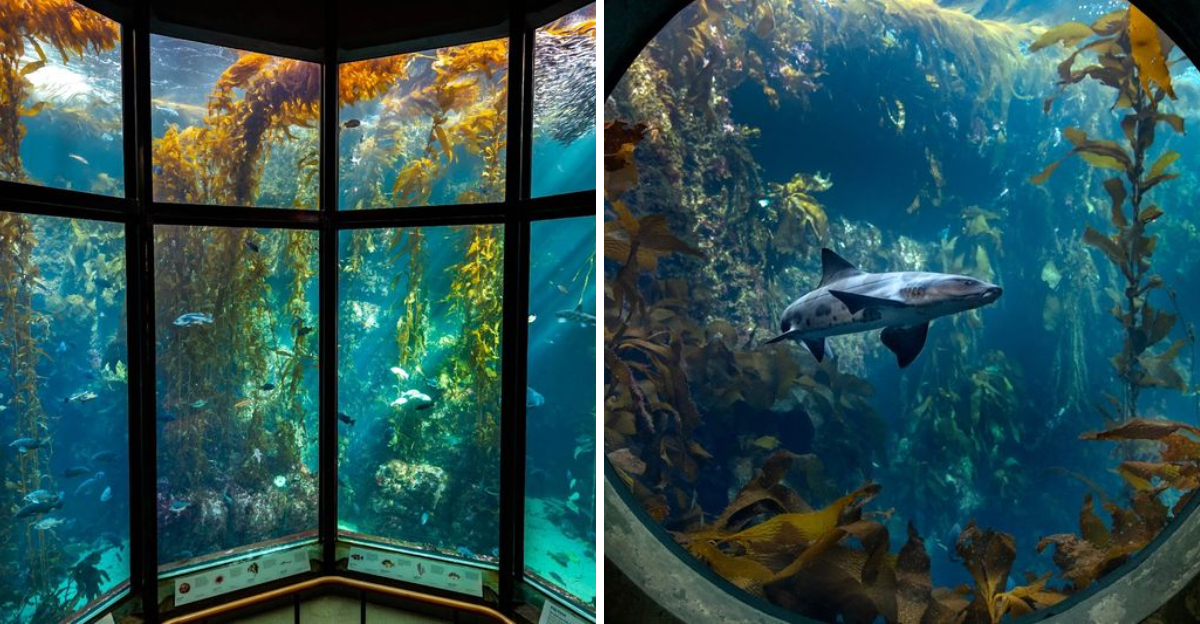
Everything moves. Slowly. Naturally. Giant strands of kelp rise and fall in a rhythm that feels almost hypnotic, pulled by currents designed to mimic the real thing.
Fish drift through the scene like they belong there, not like they are being watched. Sharks glide past without urgency. Schools of sardines catch the light and turn it into flashes of silver that ripple across the water.
It is quiet in a way that feels rare. Conversations fade. People linger longer than they expected. You do not rush through it. You stay.
The scale is what makes it unforgettable. Nearly three stories tall. Wide enough to pull your full attention. It does not feel like an exhibit you observe. It feels like a place you step into.
1. A Structure That Reaches Nearly Three Stories High
Most aquarium tanks feel contained, like looking through a window into a small room.
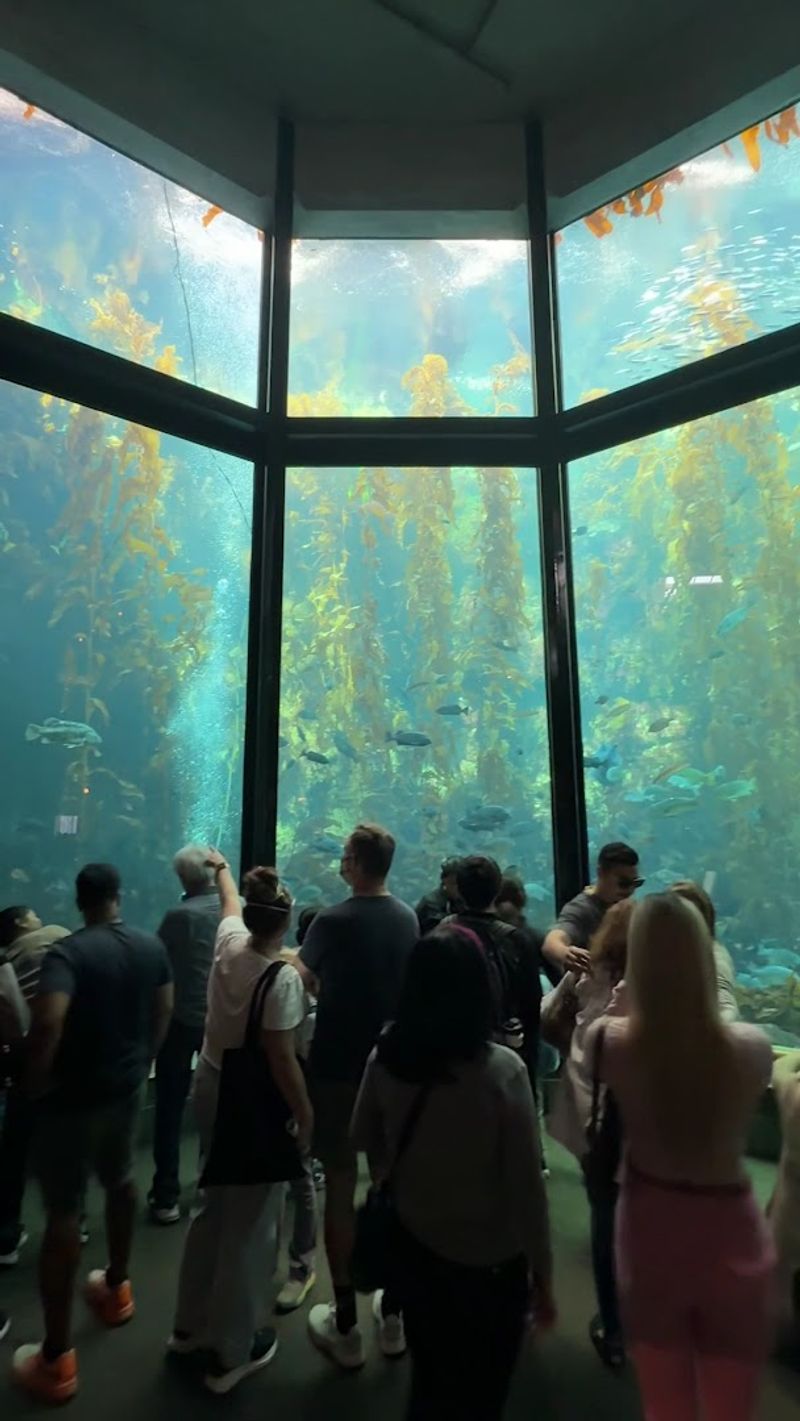
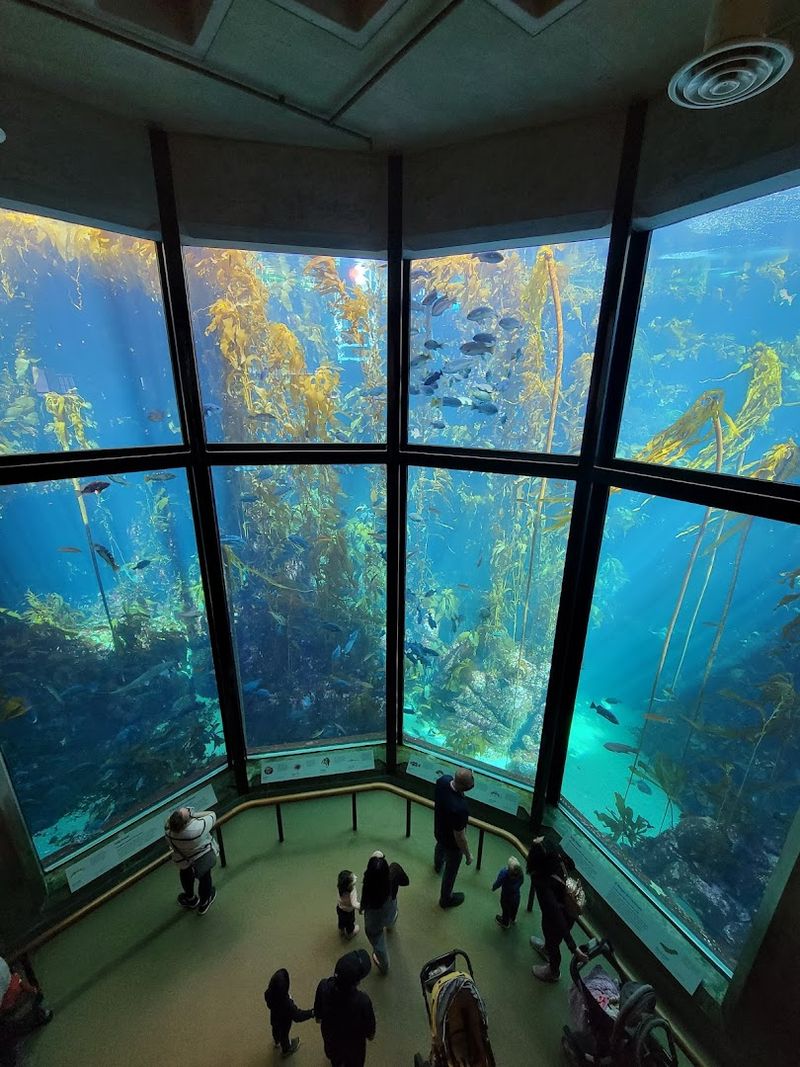
The Kelp Forest at the Monterey Bay Aquarium in California breaks that feeling entirely by stretching 28 feet tall and 65 feet wide, making it one of the tallest aquarium exhibits anywhere in the world.
Standing at the base of the viewing panels, the top of the tank is far enough away that kelp fronds disappear into a hazy green canopy overhead.
That vertical scale changes everything about how the exhibit feels, because the eye naturally follows the kelp upward and the brain starts filling in the rest of the ocean above it.
The aquarium is located at 886 Cannery Row, Monterey, CA 93940, and this exhibit sits as one of its most iconic centerpieces.
For first-time visitors, the sheer height of the tank tends to be the first thing that draws a genuinely surprised reaction, even from adults who thought they knew what to expect.
2. The First Living Kelp Forest Exhibit Ever Built
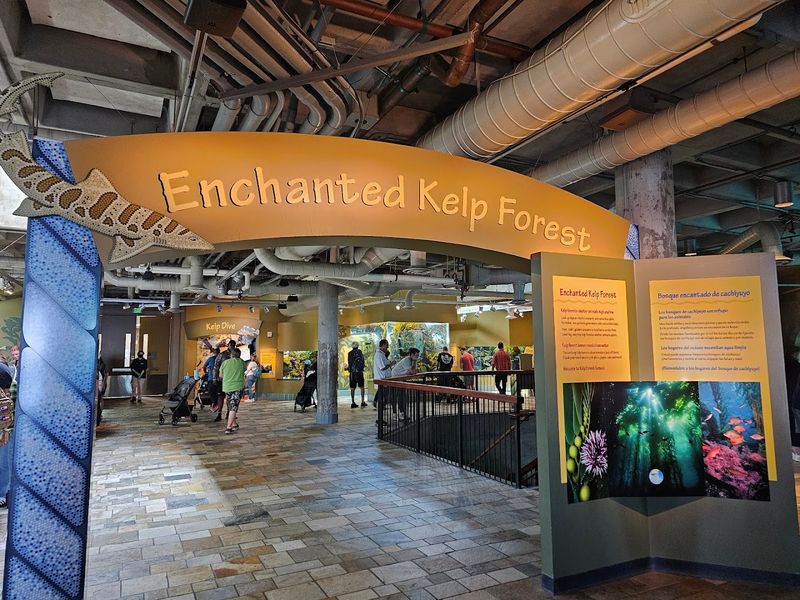
Back in 1984, nobody had ever successfully maintained a living kelp forest inside an aquarium.
The Monterey Bay Aquarium changed that when it opened its doors and introduced the world to the first exhibit of its kind, built around actual growing giant kelp rather than artificial replicas or static displays.
Getting live kelp to survive in a tank required solving problems that had never been tackled before, including how to replicate the water movement, light levels, and nutrient delivery that kelp depends on in the wild.
The team spent years developing systems that could keep the kelp alive and growing continuously rather than slowly dying off after a few weeks.
More than four decades later, the exhibit is still running and still growing real kelp, which makes it not just a historic first but also a lasting proof of concept.
The fact that it has been operating successfully since 1984 says a lot about the engineering and ecological thinking that went into its original design, and the ongoing care that keeps it functioning year after year.
3. Giant Kelp That Grows 3-5 Inches In A Single Day
Giant kelp is already one of the fastest-growing organisms on the planet, and the conditions inside the Kelp Forest exhibit allow it to perform at close to its natural best.
On average, the kelp in the tank grows about four inches per day, but under ideal conditions it can push up to eight inches in a single 24-hour period.
That rate of growth means the exhibit is never truly static.
Fronds that were short one week can be brushing the surface of the tank the next, and the overall texture and density of the canopy shifts noticeably over time.
Aquarium staff have to manage that growth carefully to keep the tank balanced and ensure enough light reaches the lower parts of the exhibit.
For visitors who come back after a few months away, the kelp forest can look noticeably different from the last visit, which gives the exhibit a living, seasonal quality that most aquarium displays simply cannot replicate.
Growth like this is part of what makes the exhibit feel genuinely dynamic rather than frozen in place.
4. Up To 2,000 Gallons Of Real Seawater Pumped In Every Minute
There is a direct physical connection between the Kelp Forest exhibit and Monterey Bay itself, and it runs at a pace that most people find genuinely staggering.
The aquarium pumps up to 2,000 gallons of raw seawater per minute from the bay directly into the exhibit, keeping the water chemistry, temperature, and nutrient levels as close to natural conditions as possible.
That flow rate means the water inside the tank is constantly being refreshed with real ocean water rather than heavily filtered and recycled water alone.
The fish and kelp inside the exhibit are essentially living in a version of the bay, just contained within glass panels and a carefully managed structure.
This approach also means that small organisms, plankton, and natural particles from the bay can enter the system, which supports the food web inside the tank in ways that a closed-loop system simply could not.
The connection to a real, living bay outside the building is one of the key reasons the Kelp Forest exhibit has stayed so vibrant and biologically active for over 40 years.
5. Daily Feeding Demonstrations That Bring The Exhibit To Life
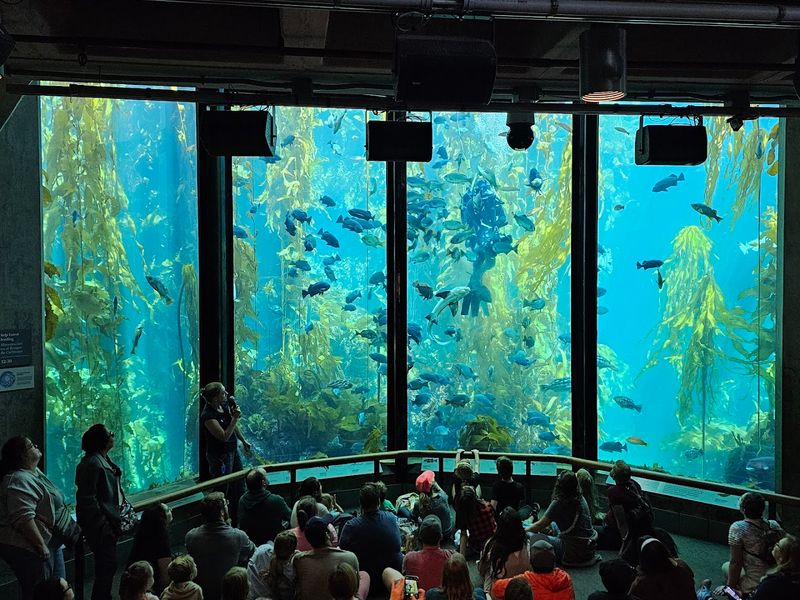
Watching a diver drop into the Kelp Forest tank during a scheduled feeding is a noticeably different experience from simply observing the exhibit on its own.
The fish respond immediately, changing their behavior in ways that reveal how each species interacts with food and with each other, and the whole tank seems to shift into a higher gear of activity.
Feeding demonstrations happen daily at the aquarium and are timed so that visitors can plan their visit around them.
During the feeding, aquarium staff often communicate with guests through a microphone system, explaining what each species is eating and how their dietary habits connect to their role in the broader kelp forest ecosystem.
For families with kids, the feeding tends to be a highlight of the entire aquarium visit, partly because of the visible excitement of the fish and partly because the explanations make the biology feel accessible and interesting rather than textbook-dry.
Adults often find themselves equally absorbed, especially when the diver moves through the kelp and the fish crowd around in a way that looks genuinely wild rather than staged.
6. A Community Of Sharks, Wolf-Eels, Sardines, And Rockfish
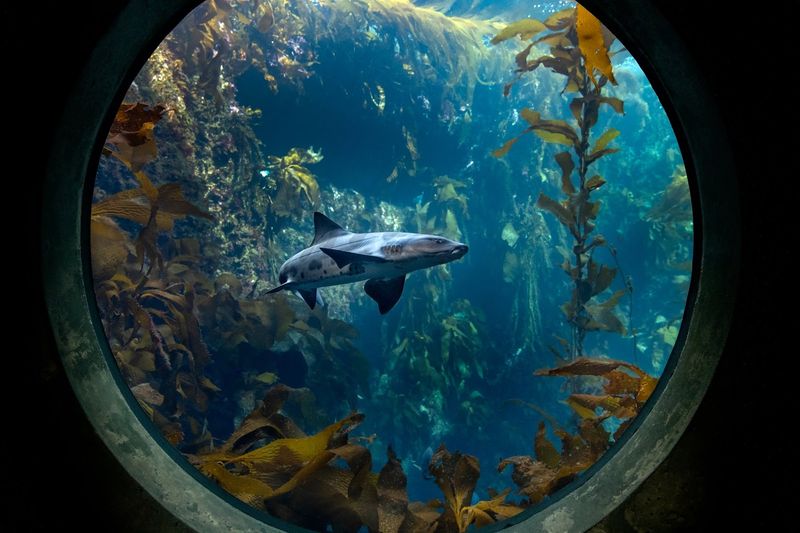
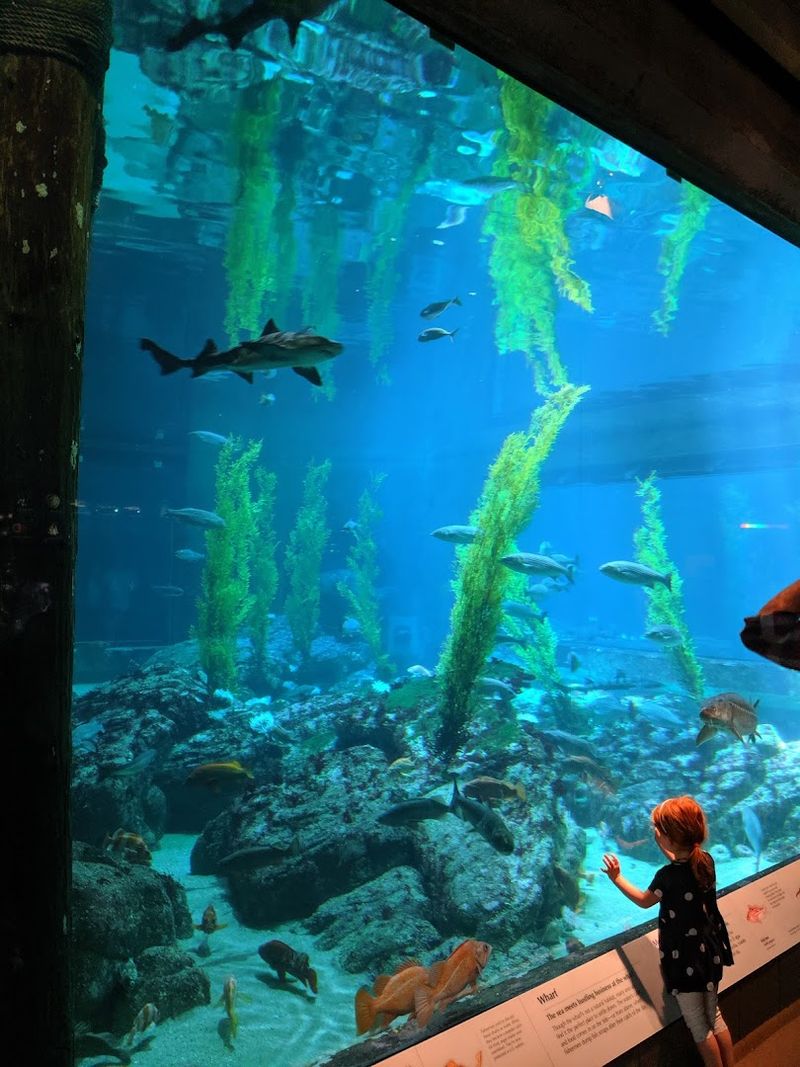
Leopard sharks move slowly along the sandy bottom while schools of sardines shift direction in unison overhead, and somewhere tucked into the rockwork a wolf-eel watches everything with its distinctively wrinkled face.
The Kelp Forest exhibit houses a wide range of species that actually coexist in the wild kelp forests of Monterey Bay, which gives the display a layered, ecologically realistic quality.
Different species occupy different parts of the tank, just as they would in the ocean.
Rockfish tend to hover near the rocky structures, sardines prefer the open water column, and the sharks patrol the lower sections of the exhibit in slow, unhurried loops.
Watching how each species uses the space differently is one of the more quietly educational aspects of spending time in front of the tank.
The combination of predator and prey species living together in one exhibit also raises interesting questions for younger visitors about how marine ecosystems actually function.
The exhibit does not sanitize that dynamic but instead presents it honestly, which makes the experience feel more like observing real ocean life than watching a curated performance.
7. An Engineered Surge Machine That Mimics Ocean Currents
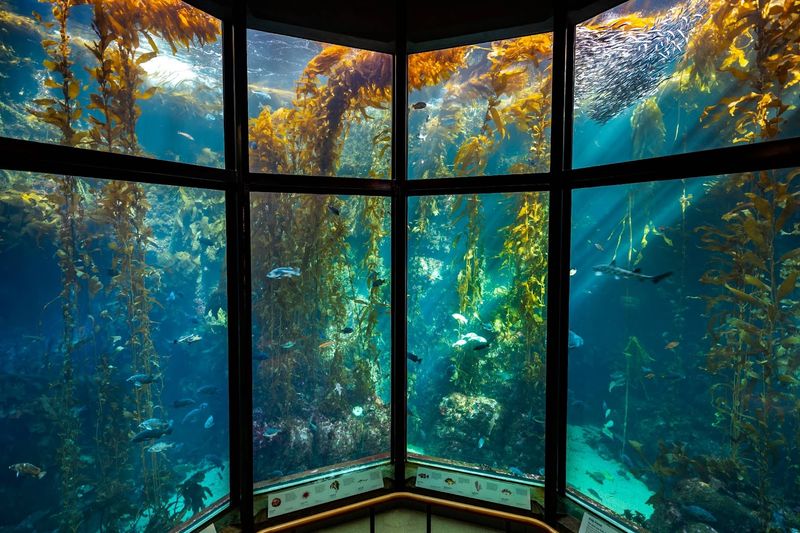
Kelp does not just need water to survive.
It needs moving water, specifically the kind of rhythmic surge that ocean currents and wave action provide, because that movement is what allows kelp to absorb nutrients through its surface rather than relying on a root system the way land plants do.
To replicate that process inside a tank, the Monterey Bay Aquarium built a surge machine into the Kelp Forest exhibit that creates a constant, back-and-forth water movement throughout the tank.
The effect is visible in the way the kelp fronds sway gently in one direction and then ease back, over and over, in a rhythm that feels natural rather than mechanical.
That swaying motion is actually one of the first things most visitors notice when they approach the exhibit, and it contributes heavily to the immersive quality of the space.
Standing in front of the tank while the kelp moves in unison creates a meditative, almost hypnotic effect that is hard to describe but very easy to feel.
The engineering behind it is sophisticated, but the result reads as completely natural.
8. A Major Reconstruction Effort In 2023
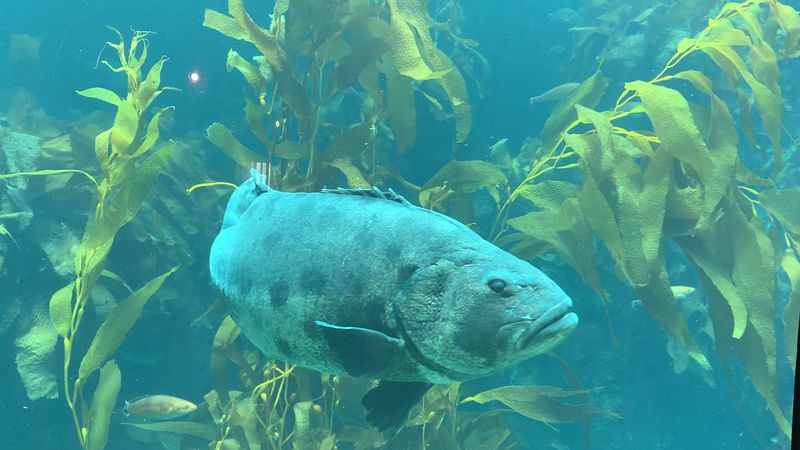
In 2023, the Monterey Bay Aquarium undertook a significant reconstruction of the Kelp Forest exhibit that involved replacing damaged rockwork while carefully preserving as much of the existing ecosystem as possible.
Projects like this are complicated by the fact that the living components of the exhibit, including the kelp and the fish, cannot simply be paused while construction happens around them.
The aquarium’s team worked to minimize disruption to the biological community inside the tank while addressing structural issues that had developed over decades of continuous operation.
Rockwork that had deteriorated over time was replaced with new materials designed to support the same types of organisms and hiding spots that the original structures provided.
The result of that reconstruction is a Kelp Forest exhibit that in 2026 still looks and feels as robust as it did in its earlier years, with the added benefit of updated infrastructure underneath the surface.
For visitors who had not been to the aquarium in several years, the post-reconstruction exhibit tends to look noticeably cleaner and more structurally detailed than they remembered, which adds to the overall experience of the space.
9. A Portal Into The Cold, Nutrient-Rich Waters Of Monterey Bay
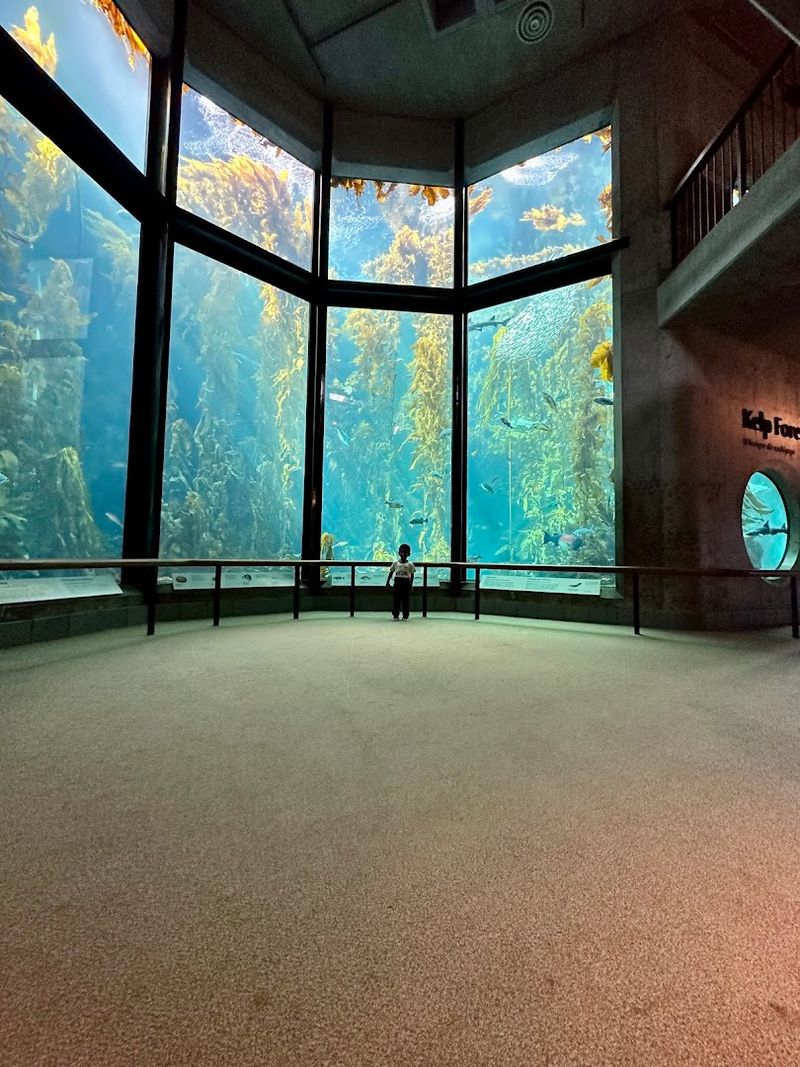
Cold water carries more dissolved oxygen and nutrients than warm water, which is one reason the kelp forests of Monterey Bay are so biologically productive.
The Kelp Forest exhibit captures that quality by maintaining water temperatures and chemistry that reflect actual bay conditions rather than warming the water to make it more hospitable for tropical species.
Standing in front of the viewing panels, there is a noticeable coolness that radiates off the glass, and the color of the water inside the tank has the same blue-green, slightly murky quality that characterizes real cold-water kelp forests.
Those sensory details combine to make the exhibit feel less like a display and more like a window into a specific, real place just outside the building.
The aquarium sits directly on the edge of Monterey Bay, which means the ecosystem being represented inside the tank is literally the same one visible from the observation decks outside.
That geographic connection gives the exhibit a grounding quality that purely thematic aquarium displays tend to lack, and it makes the conservation message feel immediate and local rather than abstract.
10. A Conservation Message Rooted In Real Ecological Stakes
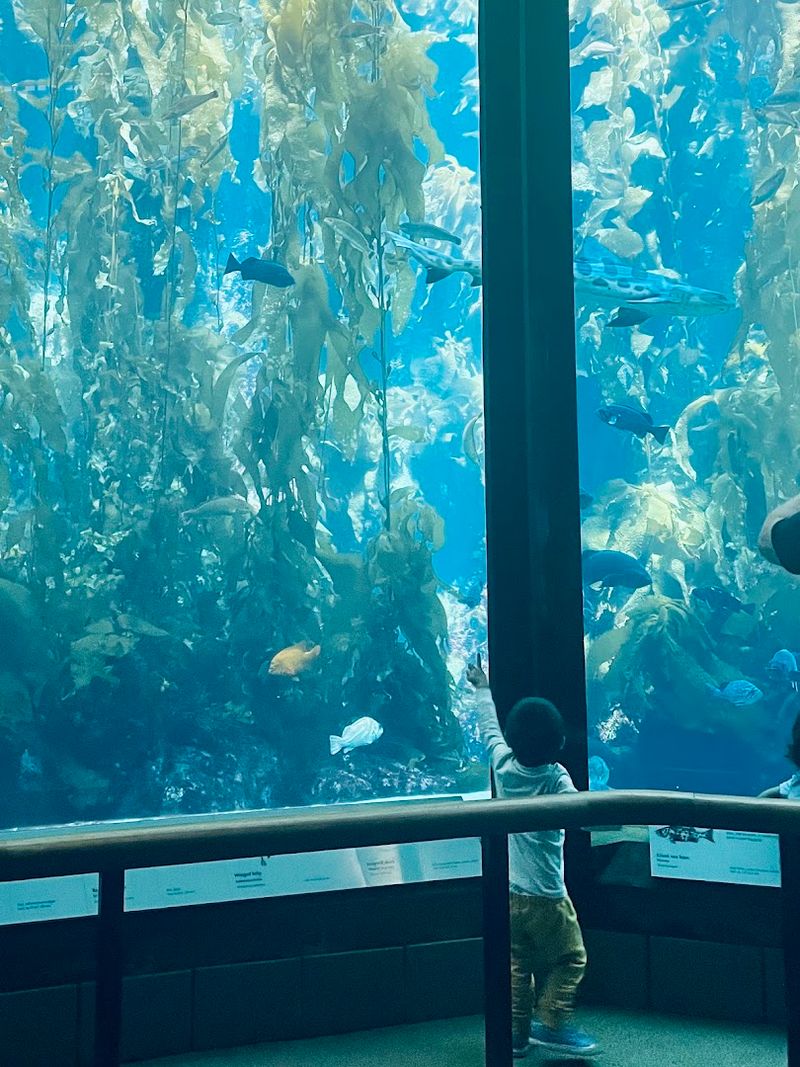
Kelp forests along the California coast have faced serious pressure in recent decades from warming ocean temperatures, sea urchin population explosions, and other ecological disruptions.
The Kelp Forest exhibit at the Monterey Bay Aquarium uses its platform to make those threats visible and understandable to a general audience without reducing the message to simple alarm.
Interpretive materials around the exhibit explain how kelp forests function as nurseries for juvenile fish, as carbon-absorbing structures, and as habitat for hundreds of species that depend on the canopy for shelter and food.
The information is presented in layers, so younger visitors can engage with the basics while adults can read deeper into the ecological science if they choose.
The aquarium has long been known for connecting its exhibits to active conservation work rather than treating them purely as entertainment.
The Kelp Forest fits that approach well because the species inside the tank are the same ones affected by real-world habitat loss happening just outside the building, which makes the conservation framing feel honest and grounded rather than performative.
11. A Diver’s-Eye View That No Other Format Can Replicate
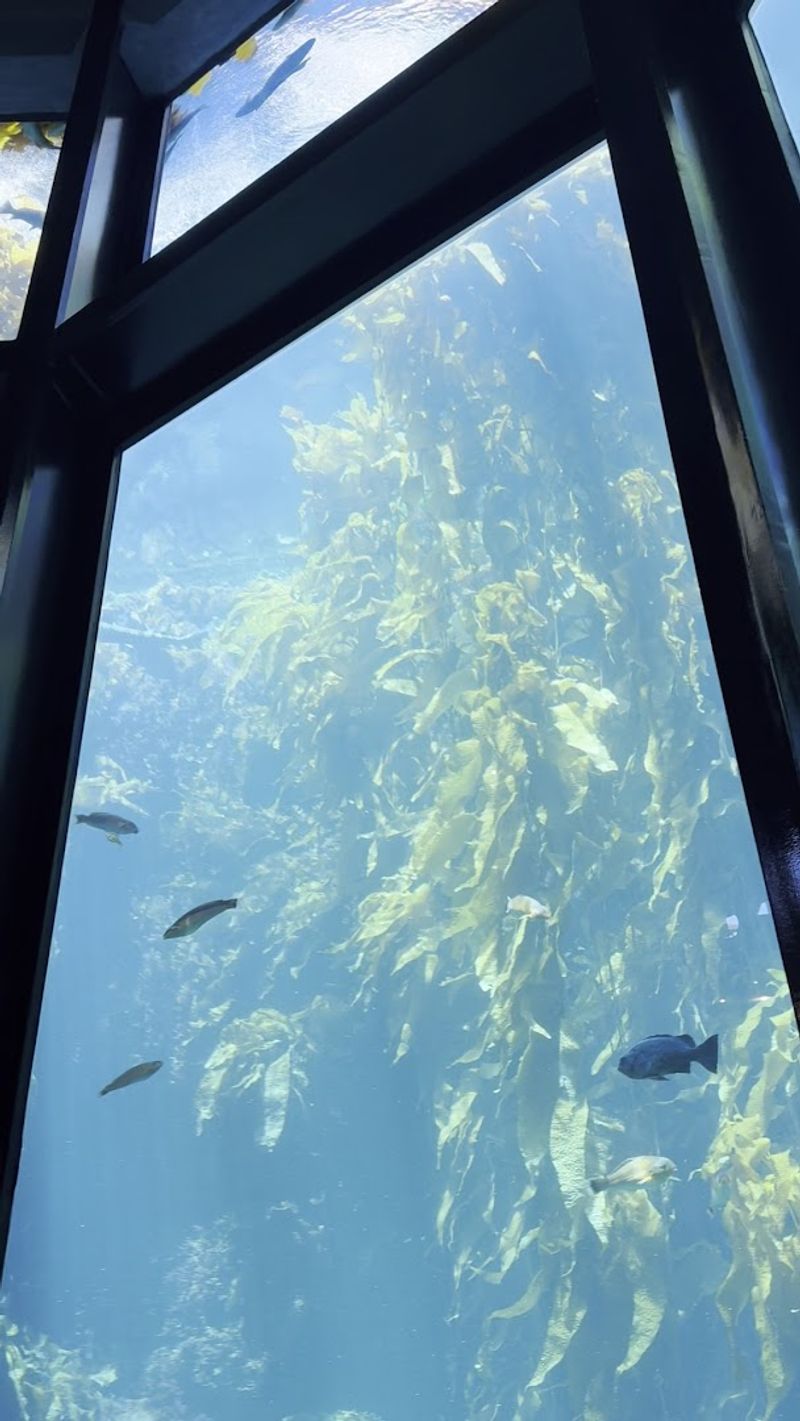
Scuba divers who have spent time in California’s wild kelp forests often describe the experience as one of the most visually striking environments they have ever entered, with light filtering down through a canopy of fronds and fish moving at every depth around them.
The Kelp Forest exhibit at the Monterey Bay Aquarium is the closest most people will ever get to that experience without a wetsuit.
The viewing panels are positioned at multiple heights along the exhibit, which means visitors can observe the tank from a low angle near the sandy bottom or look straight across at mid-water level where the kelp trunks are thickest.
Each vantage point reveals a different layer of activity and a different quality of light inside the tank.
Children tend to press as close to the glass as possible, which puts their eyes right at the level where leopard sharks patrol, and the proximity creates a sense of being inside the ecosystem rather than outside it.
That feeling of immersion is what makes the Kelp Forest one of the most talked-about exhibits at the aquarium, and one of the reasons it continues to draw visitors back in 2026.