10 Mountain Escapes In North Carolina Perfect For Your Spring Break Adventure
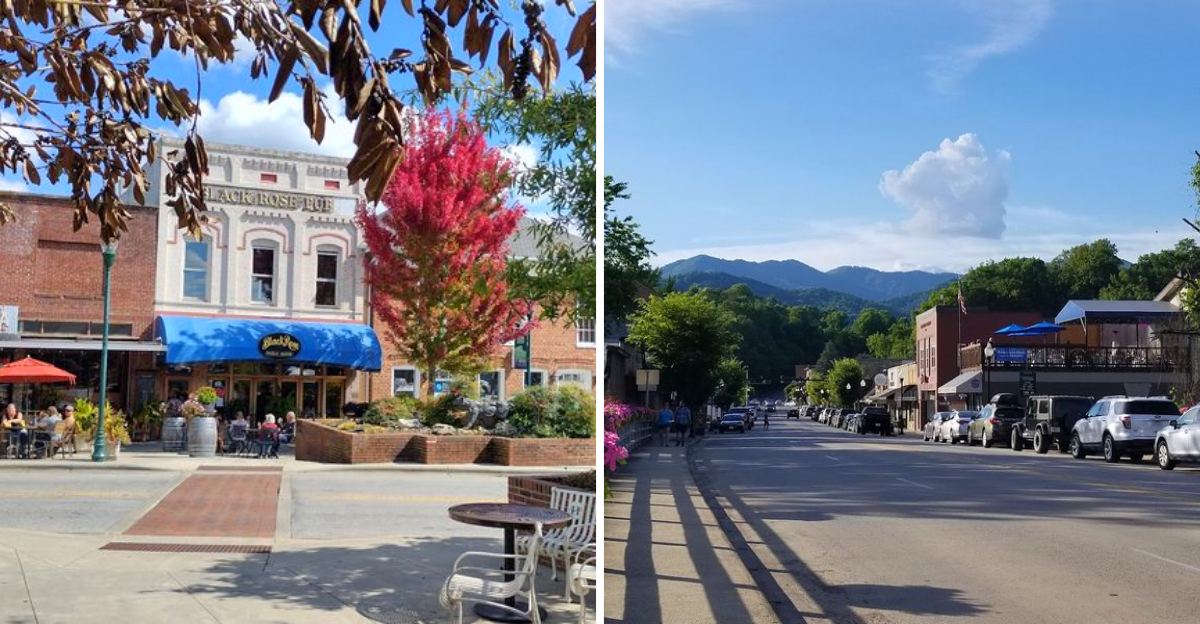
Wild spring break parties are not for everyone. Spring break in North Carolina’s mountains feels very different from a typical beach trip.
Cool mountain air replaces ocean heat, and the scenery shifts from sand to ridgelines, forests, and waterfalls.
Across the Blue Ridge and Smoky Mountain regions, spring signals a clear seasonal change. Wildflowers begin appearing along hiking trails.
Waterfalls run stronger from seasonal rain and melting snow. Mountain towns also come back to life as restaurants, shops, and local events pick up after the quieter winter months.
Travelers visiting western North Carolina during spring often split their time between outdoor activities and exploring small-town downtowns.
Hiking, scenic drives, and waterfall visits are common highlights. At the same time, many towns offer breweries, art galleries, and historic main streets worth wandering.
Are you someone who likes to take it easy and relax? Some mountain towns are well-known and busy during peak seasons. Others remain quieter, with lakes, overlooks, and trails that feel more relaxed.
Take a look at these ten mountain destinations scattered across western North Carolina that are especially worth considering for a spring getaway.
Each one offers its own mix of scenery, outdoor adventures, and small-town atmosphere that makes exploring the region feel fresh every time.
1. Asheville
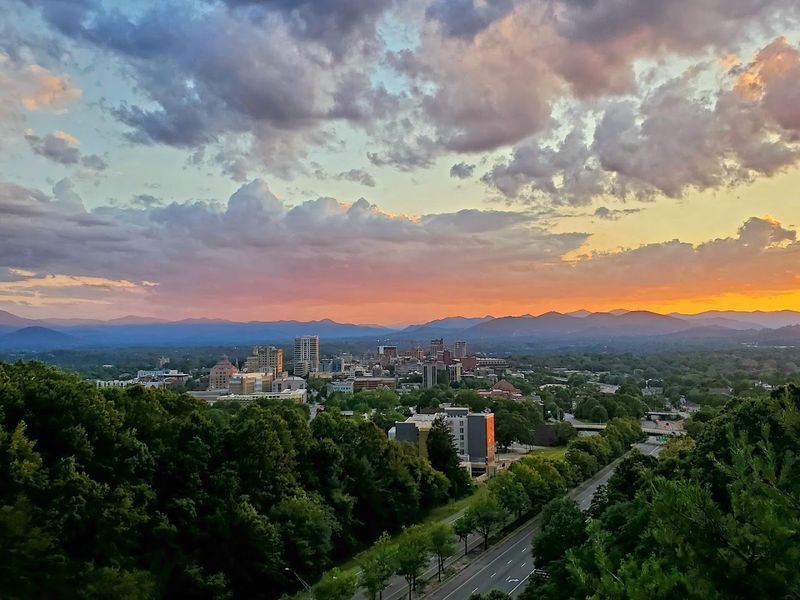
The first thing people tend to notice about Asheville is how alive it feels. Few mountain cities match the creative energy Asheville, North Carolina, seems to produce so naturally.
The city sits about 2,134 feet above sea level in the Blue Ridge Mountains. Outdoor scenery and a thriving arts culture blend together here in a way that feels effortless.
Spring is one of the best seasons to visit. Redbud trees and wildflowers begin covering the hillsides, adding color to the mountain landscape. A drive along the nearby Blue Ridge Parkway often feels like moving through a long, unfolding painting.
The River Arts District stands out as one of Asheville’s most interesting areas. Former industrial buildings now house working studios and galleries filled with local artists.
Visitors can watch painters, sculptors, and printmakers at work while exploring the district.
Downtown Asheville is compact and easy to explore on foot. Independent bookstores, small shops, and creative restaurants line the streets. The atmosphere feels lively without becoming overwhelming.
Outdoor options sit just minutes away from the city center. Trails at places like Craggy Gardens lead to wide ridge views across the mountains. Even shorter hikes often deliver impressive scenery.
The combination of art, nature, and mountain scenery gives Asheville a distinct personality. It is the kind of place where a quick visit can easily turn into a longer stay.
2. Boone
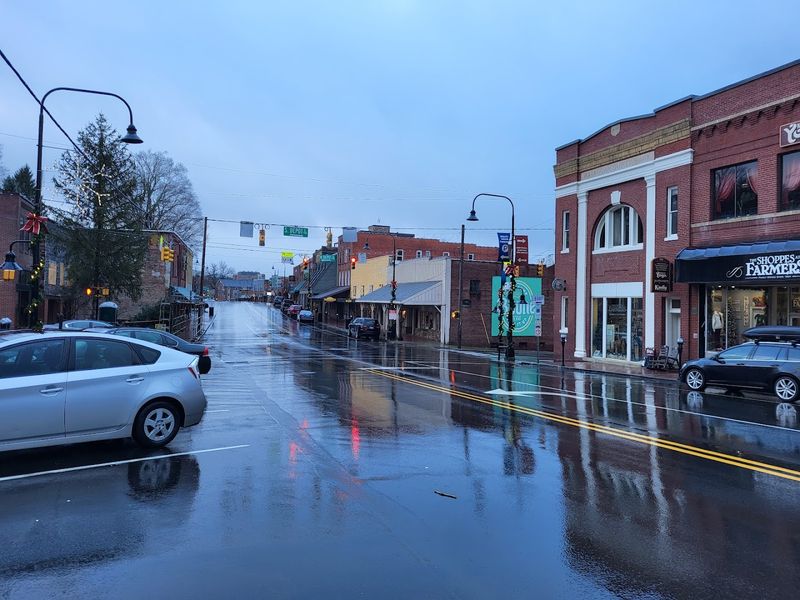
Unlike most mountain towns, Boone feels a lot more energetic and attracts a crowd that matches its vibe.
Boone, North Carolina sits high in the Blue Ridge Mountains at more than 3,300 feet. The town has the lively spirit that often comes with a college community.
Appalachian State University anchors the area and gives Boone a youthful, welcoming atmosphere that visitors notice quickly.
When spring arrives in the High Country, the mountains begin turning green again and temperatures stay comfortably mild.
The Blue Ridge Parkway runs just outside town and includes several scenic overlooks nearby. Trails such as Rough Ridge and the Tanawha Trail lead hikers to sweeping views across layered mountain ridges that stretch toward the horizon.
Adventure options are easy to find in the surrounding area. Several zip-lining companies operate in the nearby mountains and run regular spring schedules.
Planning ahead helps secure a spot during popular weekends. Hiking, photography, and scenic drives often fill most visitors’ itineraries.
Between outdoor outings, Boone’s downtown area offers plenty to explore. Local restaurants, cozy coffee shops, and independent stores line the walkable streets.
The atmosphere feels active but still relaxed, making it easy to spend an afternoon browsing or stopping for a meal.
Just beyond town, the New River winds through the valley. Often described as one of North America’s oldest rivers, it moves slowly through calm sections that work well for tubing or paddling.
Boone blends mountain scenery, outdoor recreation, and small-town character in a way that keeps people returning.
3. Blowing Rock, North Carolina
If you are searching for a relaxing town that still offers challenges where you can reach new heights, then this town is for you.
Blowing Rock sits about 3,500 feet above sea level in North Carolina’s High Country. The small mountain town has a relaxed pace that encourages visitors to slow down. Its compact downtown makes it easy to park once and explore on foot.
Streets in the center of town are lined with local boutiques, art galleries, and cozy cafés. Many of the businesses feel rooted in the community rather than designed purely for tourism.
Window shopping and short café stops often turn into an easy afternoon of wandering.
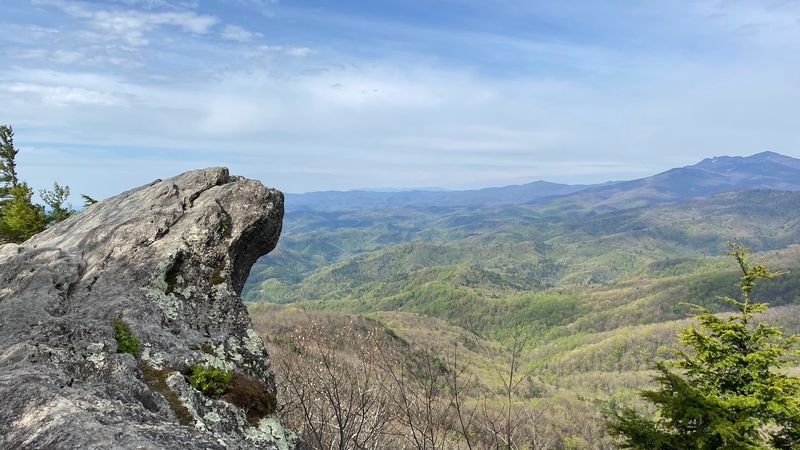
The town takes its name from a nearby natural attraction known as The Blowing Rock. This cliffside outcropping rises above Johns River Gorge and is known for unusual wind currents.
Strong updrafts can push lightweight objects upward rather than letting them fall. The overlook also delivers wide views toward the Grandfather Mountain range, which appear especially sharp on clear spring mornings.
Nature options continue just outside town. Bass Lake and Cone Manor sit a short drive away within Moses H. Cone Memorial Park along the Blue Ridge Parkway.
Wide carriage roads circle the lake and pass through open meadows and forest. In April, blooming dogwoods add bright white blossoms to the landscape.
Blowing Rock blends mountain scenery with an inviting village atmosphere. It is the sort of place where a short visit easily stretches longer than planned.
4. Banner Elk
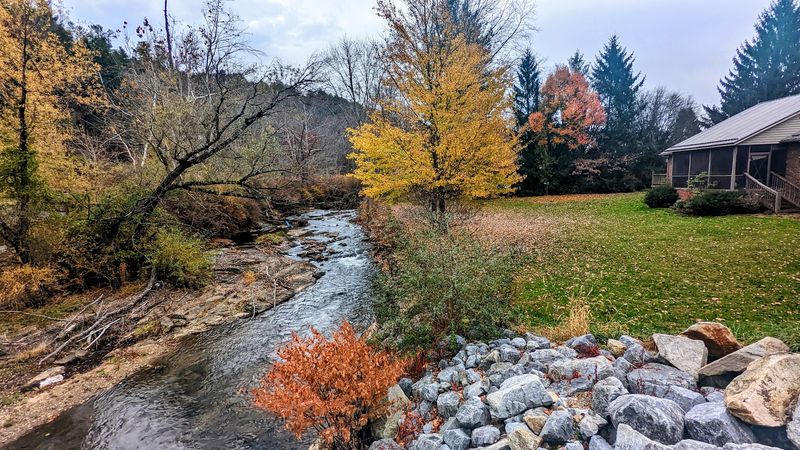
Sometimes a mountain town just feels right the moment you see it, and Banner Elk tends to have that effect on people. The town rests between Beech Mountain and Sugar Mountain, giving it a relaxed alpine character.
The pace feels noticeably slower here, which many visitors find refreshing.
Spring brings a shift in the landscape. Ski season ends, and the surrounding mountains begin turning green again. Hiking trails reopen and the air feels milder, making outdoor exploration much easier.
Grandfather Mountain State Park lies only a short drive from town. It is widely considered one of the most impressive outdoor destinations in North Carolina.
The Mile-High Swinging Bridge stands out as the park’s signature attraction. Crossing the bridge places visitors above steep cliffs with views that stretch across several mountain ranges on clear days.
The park also features wildlife habitats that highlight native species. Black bears, river otters, cougars, and bald eagles live within protected areas designed for observation and education. Families often spend hours exploring the exhibits and scenic overlooks.
Banner Elk itself maintains a small but inviting downtown. Restaurants, cafés, and local shops create a welcoming atmosphere without feeling crowded. Lees-McRae College adds a quiet academic presence to the community.
Spring wildflowers appear along nearby mountain trails as temperatures warm. The colorful blooms and wide mountain views often make the area memorable for hikers and nature enthusiasts alike.
5. Brevard
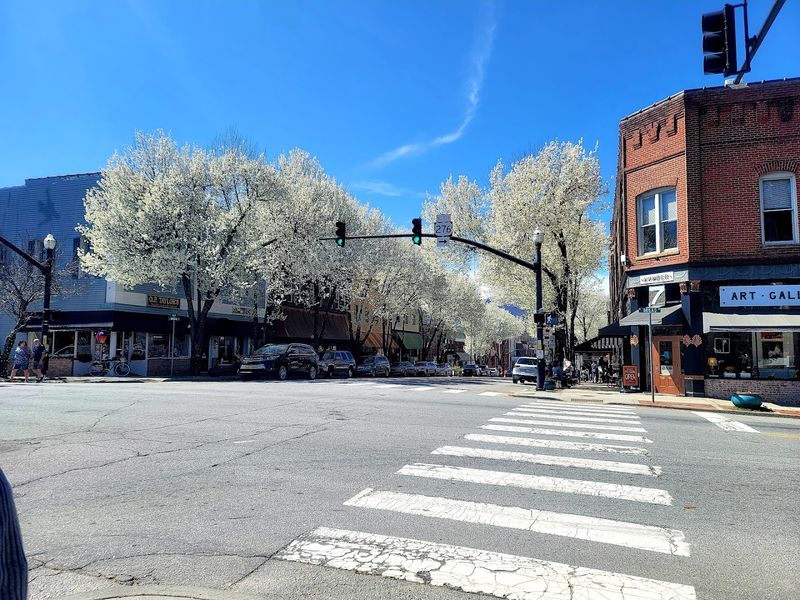
Brevard carries the nickname “Land of Waterfalls,” and the title is well-earned. The town sits in Transylvania County at the entrance to Pisgah National Forest. From this base, visitors can reach more than 250 named waterfalls within a relatively short drive.
Few places in the eastern United States offer such a dense concentration of cascades.
Spring tends to be the most dramatic season for waterfall viewing. Snowmelt from the mountains combines with steady April rains. Streams swell and the waterfalls run stronger than they do during most of the year.
Several of the region’s best-known falls sit close to the road. Looking Glass Falls is one of the most photographed in North Carolina. The roadside viewpoint allows visitors to see the full drop without a long hike.
Other waterfalls reward those willing to explore deeper into the forest. Hooker Falls and Triple Falls lie along trails in Dupont State Recreational Forest. These sites often feel quieter and more secluded than the roadside viewpoints.
Brevard itself offers more than outdoor scenery. The downtown area includes art galleries, local restaurants, and small shops that reflect a creative community.
The town is also known for its unusual population of white squirrels. Residents take pride in the animals, and the squirrels have become a quirky symbol of the town’s identity.
6. Bryson City, North Carolina
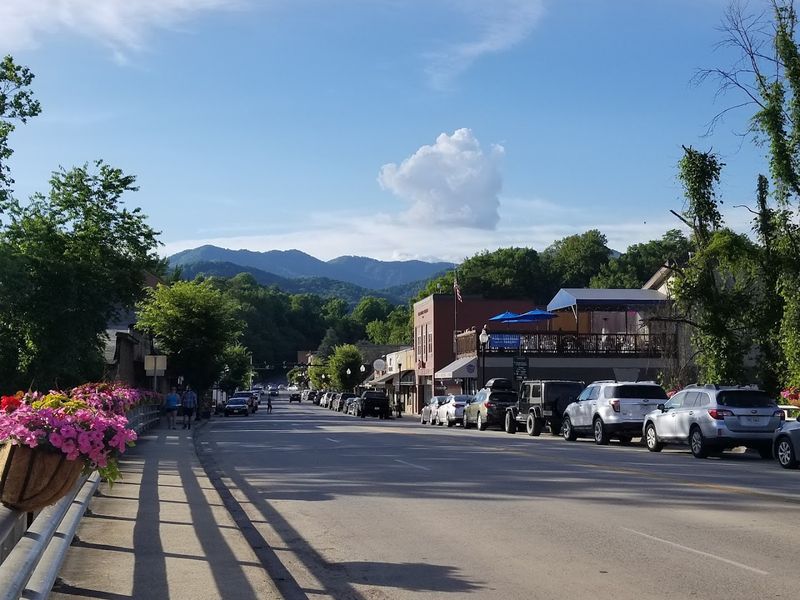
Bryson City often feels like a place many travelers overlook. Yet people in North Carolina have quietly enjoyed it for years.
The town sits in the Nantahala Gorge near the edge of Great Smoky Mountains National Park. Its location places visitors within minutes of some of the most dramatic landscapes in western North Carolina.
Outdoor adventure shapes much of the town’s appeal. The Nantahala River draws paddlers from across the region each spring.
Rafting trips range from gentle family floats to faster whitewater sections when water levels rise. Local outfitters organize guided runs that make the river accessible even for beginners.
Another highlight begins right in the center of town. The Great Smoky Mountains Railroad departs from Bryson City and winds through forested valleys and mountain tunnels.
The train follows rivers and narrow gorges, giving passengers wide views of remote parts of the Smokies.
Spring adds another layer of color to the mountains. Wildflowers begin covering the forest floor across the national park. Trilliums, flame azaleas, and other blooms appear along hiking trails and riverbanks.
Downtown Bryson City remains compact and easy to explore. A few restaurants, outdoor gear shops, and local outfitters line the streets. The pace feels relaxed compared with larger tourist towns.
The combination of mountain scenery and outdoor adventure gives Bryson City a distinct personality. Visitors often arrive for rafting or hiking and discover the town itself is part of the appeal.
7. Hendersonville
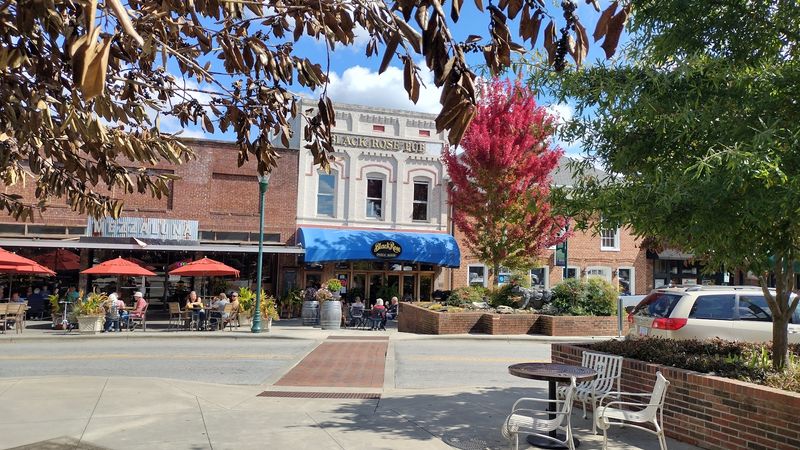
The town moves at a slower pace than many nearby mountain destinations. Visitors often notice how relaxed the atmosphere feels compared with busier tourist hubs.
Historic Main Street remains the center of daily life in Hendersonville. The street is lined with independent shops, local restaurants, and small art galleries. Many of the businesses are long established and give the downtown area a strong sense of character.
Spring brings an especially scenic moment for the surrounding countryside. Henderson County is widely known as North Carolina’s apple-growing capital.
In April, orchards across the valley begin their blooming cycle. Rows of apple trees fill the landscape with pale blossoms and soft color.
A short drive from town leads to the Carl Sandburg Home National Historic Site in nearby Flat Rock. The property preserves the home of the well-known American poet.
Walking trails cross the former farm and pass through open fields, wooded areas, and small pastures.
Another nearby highlight is Jump Off Rock. The overlook sits just minutes from downtown Hendersonville. From the viewpoint, visitors can see across the valley toward several layers of distant mountains.
The grassy overlook often draws families and photographers alike. The setting encourages people to sit for a while and watch the changing light over the hills.
8. Waynesville, North Carolina
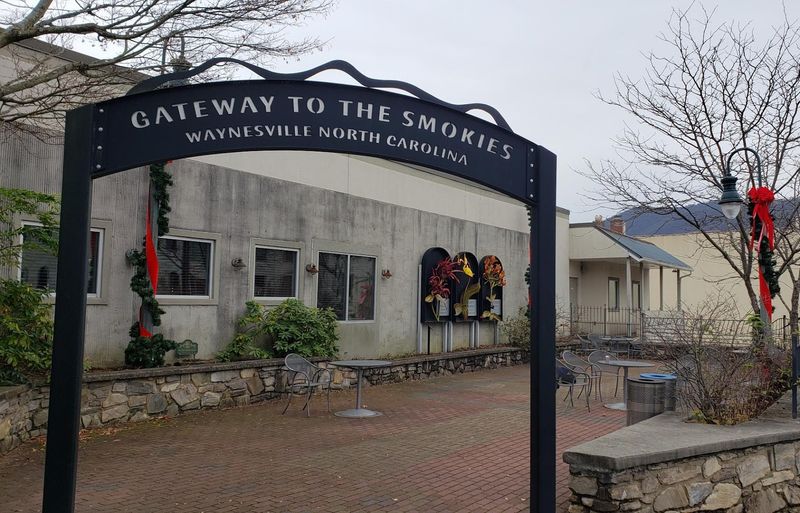
Gateway towns near national parks often get overlooked, even though they’re usually the first places that give a trip its personality.
Waynesville manages to stand out on its own. The town sits in Haywood County near the entrance to Great Smoky Mountains National Park.
Appalachian culture and a strong local arts scene shape its identity.
Main Street forms the center of town life. Historic buildings line the street, many carefully restored over the years. Inside them, visitors find art galleries, bookstores, and locally owned restaurants.
The walkable layout makes it easy to explore several blocks without needing a car.
Spring adds extra energy to the area. Festivals and small events often appear on the local calendar. The surrounding forests also begin filling with wildflowers.
Photographers frequently travel to the region to capture the seasonal color.
The nearby Blue Ridge Parkway offers one of the most scenic drives in western North Carolina. The stretch between Waynesville and Cherokee becomes especially striking in April and May.
Fresh green leaves and mountain views line nearly every mile of the road.
Another memorable destination sits not far from town. Cataloochee Valley, a remote section of the Smokies, can be reached by mountain roads outside Waynesville.
The valley is known for its herd of reintroduced elk. Visitors often arrive early or near sunset to watch the animals grazing quietly in open meadows.
9. Black Mountain
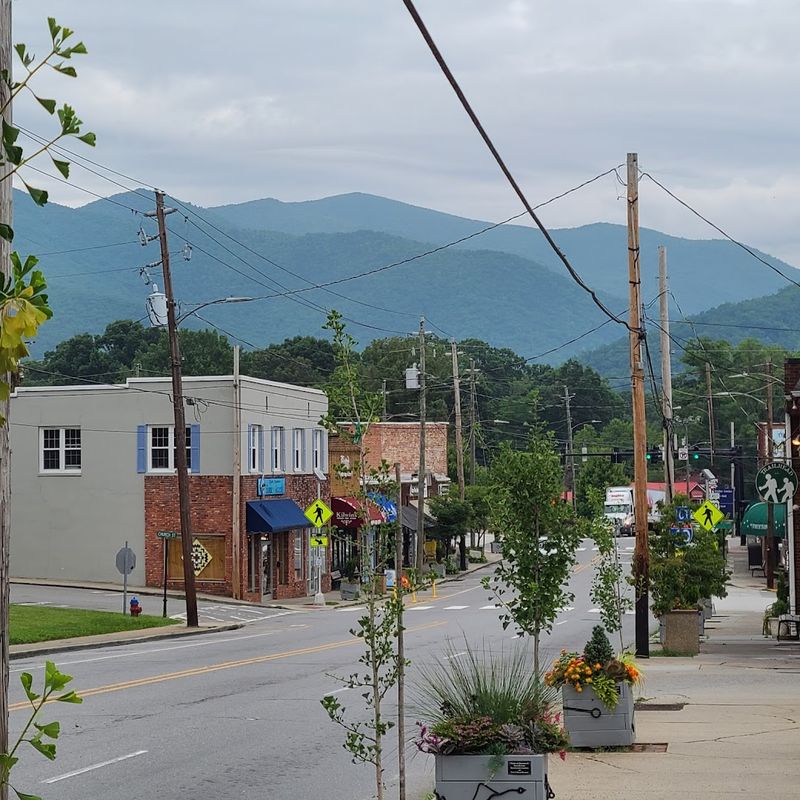
Only fifteen miles east of Asheville, Black Mountain has carved out a creative identity that feels entirely its own. Much of that reputation traces back to Black Mountain College.
The experimental arts school operated here in the mid-20th century and influenced many American artists, writers, and musicians. Its legacy still shapes the town’s cultural character today.
Downtown Black Mountain feels lively and inviting. Small streets are lined with vintage shops, pottery studios, bookstores, and casual restaurants.
Murals and public art appear throughout the area, turning parts of downtown into a kind of open-air gallery. Local spaces such as Seven Sisters Gallery continue to highlight artists connected to the region.
Outdoor recreation plays a large role in the town’s appeal. The nearby Black Mountain range includes some of North Carolina’s highest peaks. Trails in this area attract hikers who enjoy steep climbs and wide mountain views as a reward.
Not every outing here requires a strenuous hike. The Swannanoa River Greenway runs through town and offers a much gentler option. The paved path follows the river and works well for walking, cycling, or relaxed family outings.
Black Mountain manages to balance art, nature, and small-town life with ease. The town’s long creative history gives it depth without making the atmosphere feel overly polished or staged.
10. Highlands
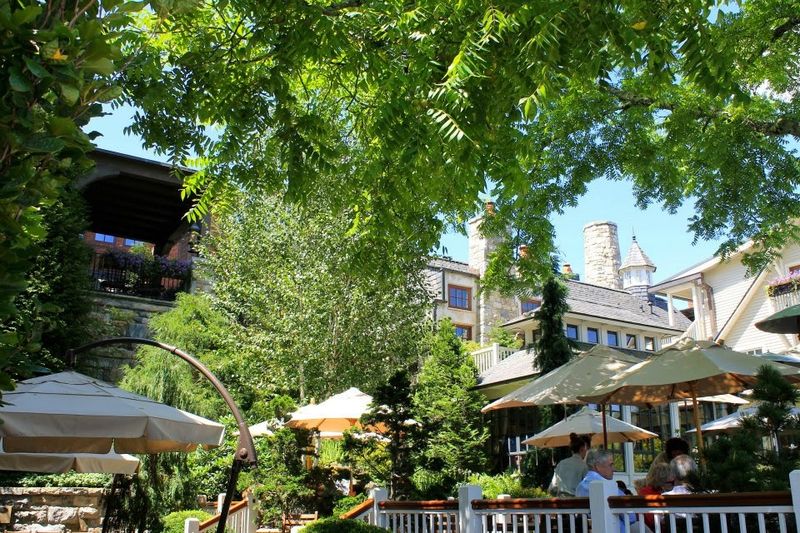
High in the mountains of Macon County, Highlands rests on a plateau at about 4,118 feet above sea level. That elevation makes it one of the highest incorporated towns east of the Mississippi River.
Surrounded by Nantahala National Forest, the setting feels both secluded and scenic. Waterfalls are a major draw here. Dry Falls stands out because a paved path leads behind the curtain of water.
Visitors can walk beneath the cascade while staying mostly dry.
Nearby Bridal Veil Falls and Cullasaja Gorge offer additional dramatic scenery within minutes of town.
Spring is an especially rewarding time to visit. Wildflowers appear along local trails as the forest begins to wake up. Trout lilies, jack-in-the-pulpit, and flame azaleas bloom gradually through April and May.
Seasonal rainfall also keeps the waterfalls running strong.
Downtown Highlands adds another layer of appeal. Main Street features boutique shops, well-known restaurants, and a performing arts center. The atmosphere feels relaxed yet polished, giving the town a distinct mountain character.
Many visitors come for the waterfalls first. The calm pace of Highlands often becomes the reason they return.