13 North Carolina Forests That Feel Like Untouched Wilderness
North Carolina hides a landscape that most travelers drive right past. The silence in these places is equally peaceful and heavy.
These are not collections of manicured parks. The state holds a mix of coastal forests shaped by salt air and high mountain ridges where fog can quickly reduce visibility on higher ridges.
You will stand in groves where the trees have stood here long before the oldest roads. You will navigate soil that smells of ancient iron and damp rot.
In the deep backcountry, the vastness invites you to leave your plans behind and truly immerse yourself in the landscape.
These forests offer a rare chance to disconnect from a signal and follow a more natural pace.
1. Green Swamp Preserve, Supply
The air at Green Swamp Preserve carries a specific weight, humid and faintly medicinal.
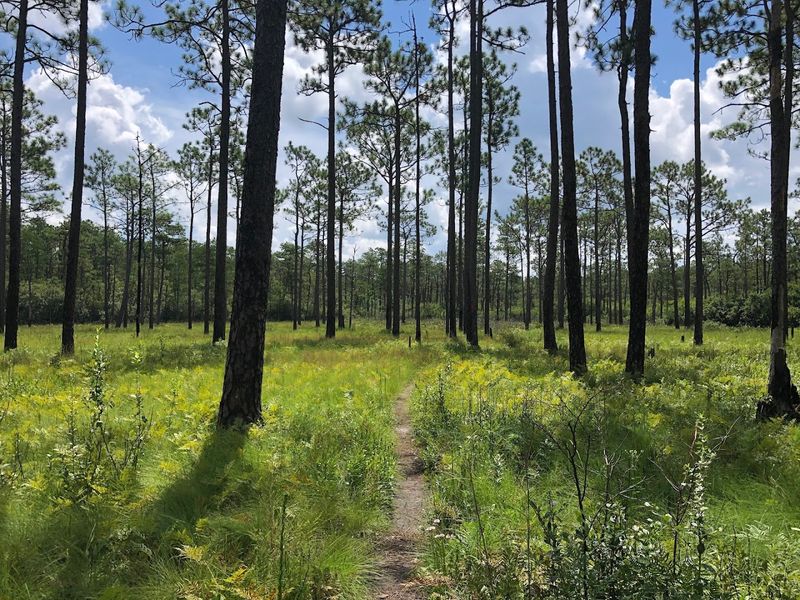
Located near Supply in Brunswick County, this tract of longleaf pine savanna sits close enough to the coast to taste salt on the wind.
What makes this place unusual? Venus flytraps are not exhibits here.
They push up through the white sand in small clusters, doing exactly what they have done for millennia.
You might find yourself crouching low to the ground, occasionally catching the quick snap of a trap by a wandering ant.
The longleaf pines overhead are widely spaced, letting light reach the ground in long columns that illuminate the wiregrass.
Pull off on Hwy 211, roughly 5.5 miles north of the Hwy 17 intersection, and look for a gravel lot with a small kiosk. The silence here is often broken only by the hum of rare pollinators.
Can you imagine a more delicate balance than a flower that must consume life to survive in such nutrient-poor soil?
2. Holly Shelter Game Land, Burgaw
Have you ever stood in a place so vast and silent that you could hear the blood pumping in your own ears?
Sixty-four thousand acres of managed land outside Burgaw does not announce itself. There are no grand entrance signs or color-coded maps to guide your way.
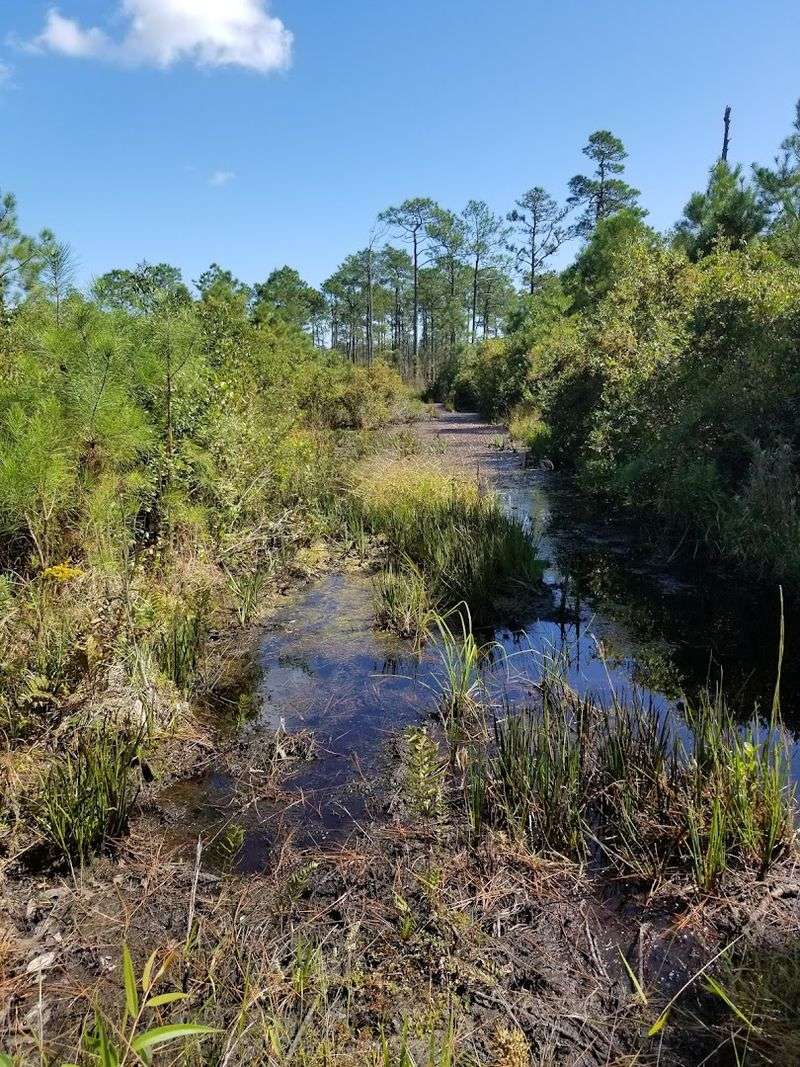
Holly Shelter simply begins and keeps going in every direction longer than you expect. The forest is a mix of pond pine and pocosin wetland, producing a dense, low-canopy tangle that swallows sound.
It is the kind of place where you can drive for miles and feel the modern world slowly dissolving in your rearview mirror. Pond pines sprout branches directly from their trunks after fire, giving them a shaggy, chaotic profile.
Access comes off Lodge Road from US-17, where unpaved roads extend past a shooting range into more remote sections. Deeper inside, turning off the engine reveals a stillness in the swamp that feels both heavy and immersive.
3. Joyce Kilmer Memorial Forest, Robbinsville
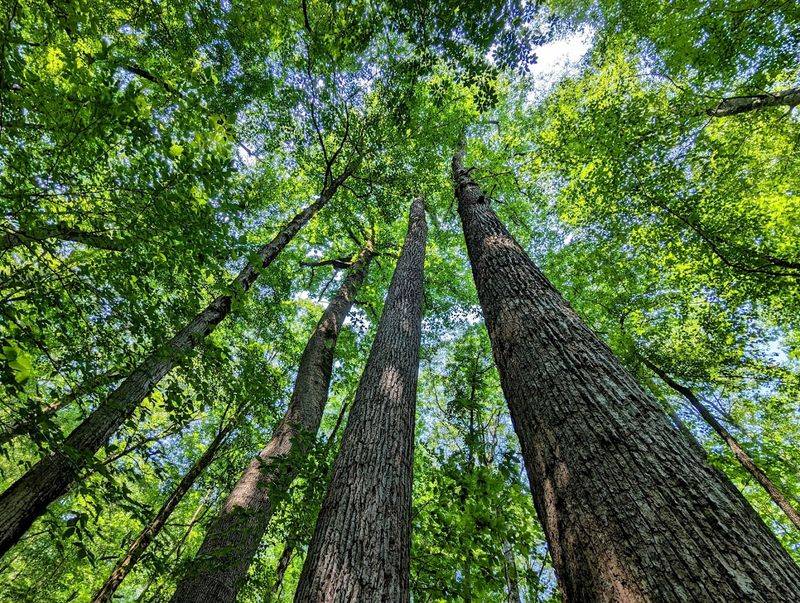
Some trees here have been standing since before the American Revolution. Tucked into Nantahala National Forest, this site holds one of the most intact old-growth stands in the East.
Walking through it produces a specific vertigo that comes from being small. You will likely find yourself tilting your head back until your neck aches, trying to find the tops of trees that seem to touch the clouds.
The tulip poplars are the main event, with trunks exceeding eight feet in diameter and deeply furrowed gray bark. The forest floor is carpeted in ferns and moss, broken by root systems that arch like enormous ribs.
Take Joyce Kilmer Rd, or SR 1134, off the Cherohala Skyway to reach the loop trailhead. There is a profound, grounding energy in these hollows that makes even a short walk feel like a major pilgrimage.
These giants serve as a living reminder of what the entire continent once looked like before the modern era.
4. Bladen Lakes State Forest, Elizabethtown
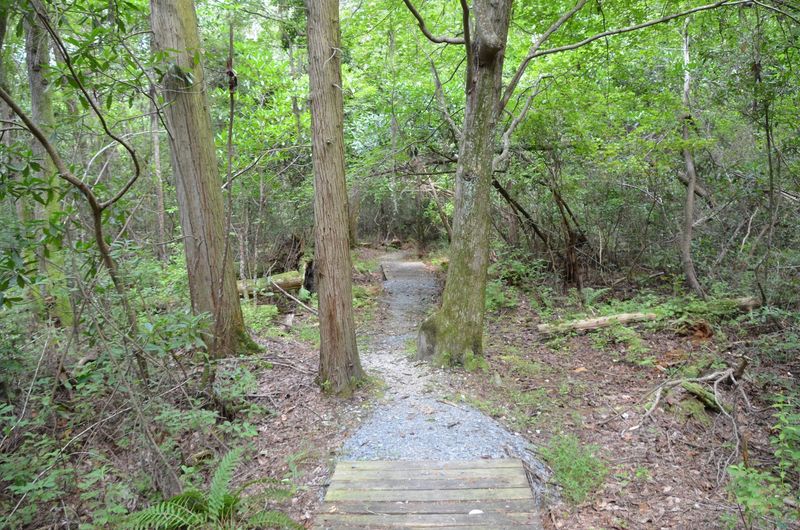
The water in Bladen Lakes State Forest is the color of strong tea. Tannins from the soil stain every creek to a deep amber-brown.
Forest headquarters sit at 4470 Hwy 242 North, and some interior areas may require permits for access.
This is a blackwater country, operating by its own logic. You might cup the dark water in your hands only to see it turn surprisingly translucent against your skin.
The forest covers pine flatwoods, Carolina Bay wetlands, and swamp systems that shift with the seasons. Carolina Bays are elliptical landforms whose origins are still debated by geologists.
Standing in the middle of a Carolina Bay, you’ll feel the weight of a landscape that keeps its secrets.
5. Nags Head Woods Preserve
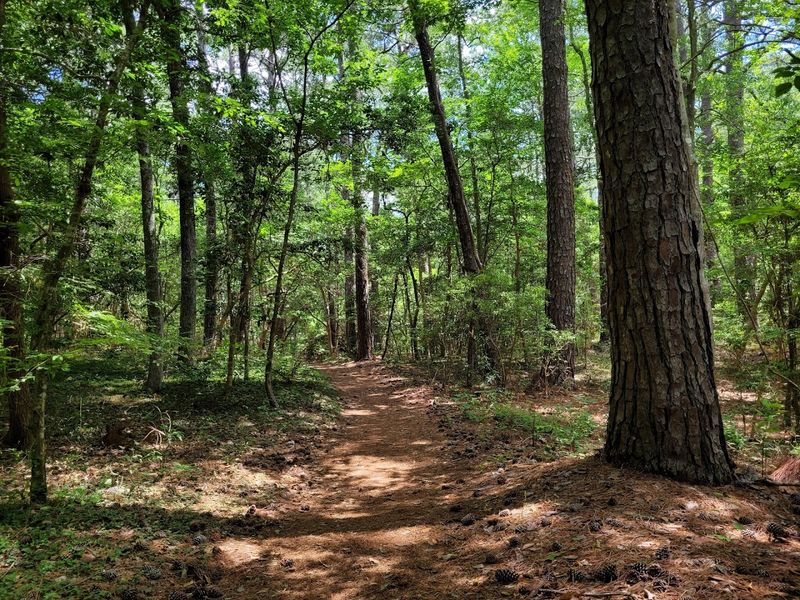
A forest on a barrier island sounds like a contradiction. Nags Head Woods exists because ancient dunes created a sheltered microclimate on the Outer Banks.
This allowed hardwoods to persist while the ocean worked on everything else. You will feel the temperature drop the moment you step off the sand and into the deep shade of the live oaks.
The canopy includes branches covered in resurrection fern that turns green within hours of rain. Freshwater ponds sit in the dune swales, dark and still.
Access comes via Ocean Acres Drive, heading west to the visitor center and trailhead. It is a jarring, beautiful experience to realize how much life can thrive just a few hundred yards from the salt spray.
The forest stands as a resilient wall of green, seemingly oblivious to the shifting ocean tides just beyond the dunes.
6. Wilson Creek, Pisgah National Forest, Collettsville
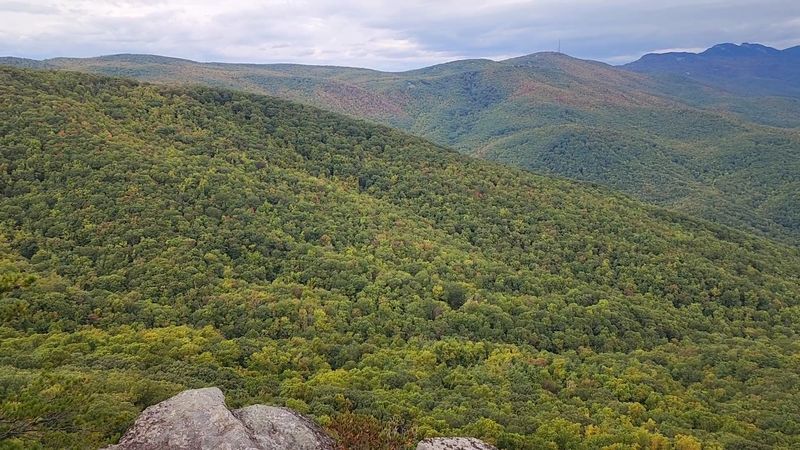
Wilson Creek earned its Wild and Scenic River designation by being difficult terrain. This section of Pisgah National Forest runs through steep ridges outside Collettsville.
The forest is dense, shaped by regular flooding and its own recovery. On the slopes, the hardwood forest is multi-layered and complex.
Thick rhododendron thickets fill the lower draws, their roots exposed by centuries of high water.
In late June, white and pink blooms turn the creek corridor into a disorienting tunnel of color. Silver, skeletal hemlocks stand against the green canopy, killed by the woolly adelgid.
They mark a loss the forest is slowly absorbing. Adako Road, or SR 1328, is the primary access to this rugged backcountry.
Trailheads here lead to remote spots like Lost Cove and Hunt-Fish Falls. Stream crossings lack bridges, and trails gain elevation sharply.
In spring, the creek is so loud you feel it as a vibration before you see the water. This mix of life and decay makes Wilson Creek feel remote and lightly developed.
7. Birkhead Mountains Wilderness
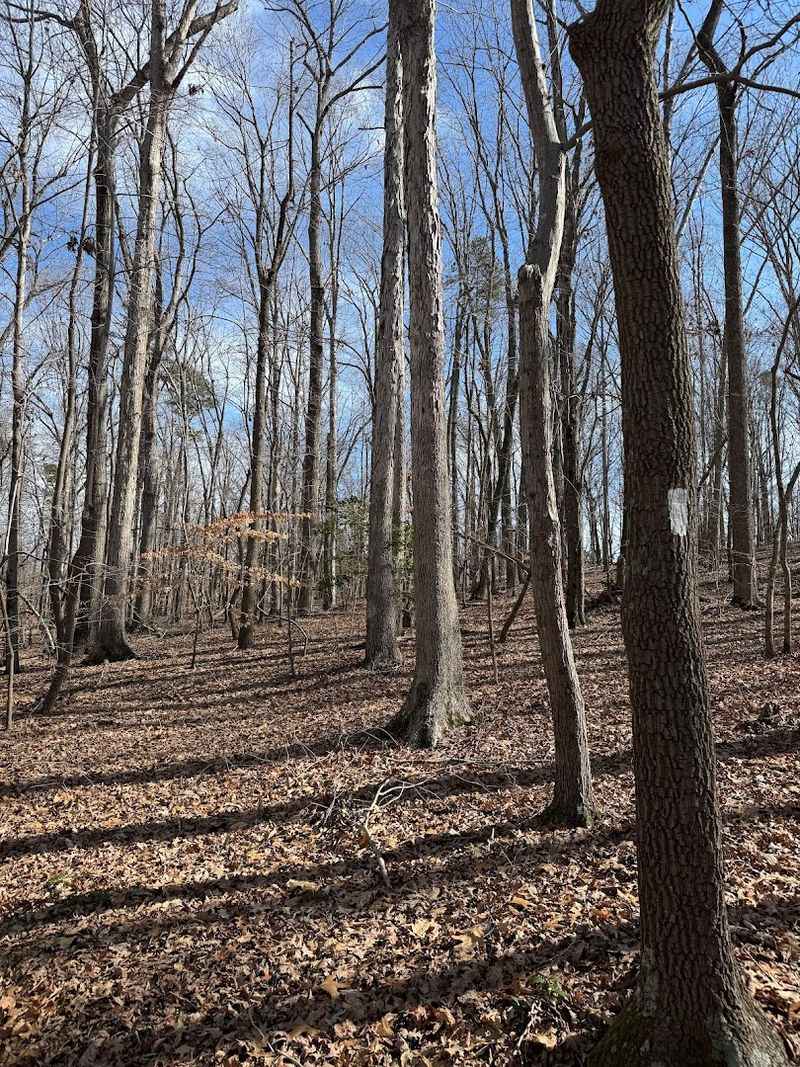
The Uwharrie Mountains are among the oldest mountain formations in North America. These eroded remnants once rivaled the Rockies but are now low, rounded ridges.
The Birkhead Mountains Wilderness sits among them like a secret kept by geography. You can spend an entire afternoon tracking the glint of white quartz through the dark leaf litter of the forest floor.
The terrain is oak-hickory forest over rocky, mineral-thin soils. Exposed rock faces carry patches of lichen that take decades to establish.
Reach the Robbins Branch Trailhead at the end of Lassiter Mill Rd, signed as SR 1107. There’s a quiet satisfaction in following a trail shaped by the mountains.
Over millions of years, rain has worn sharp peaks into gentle, rolling hills.
8. Croatan National Forest
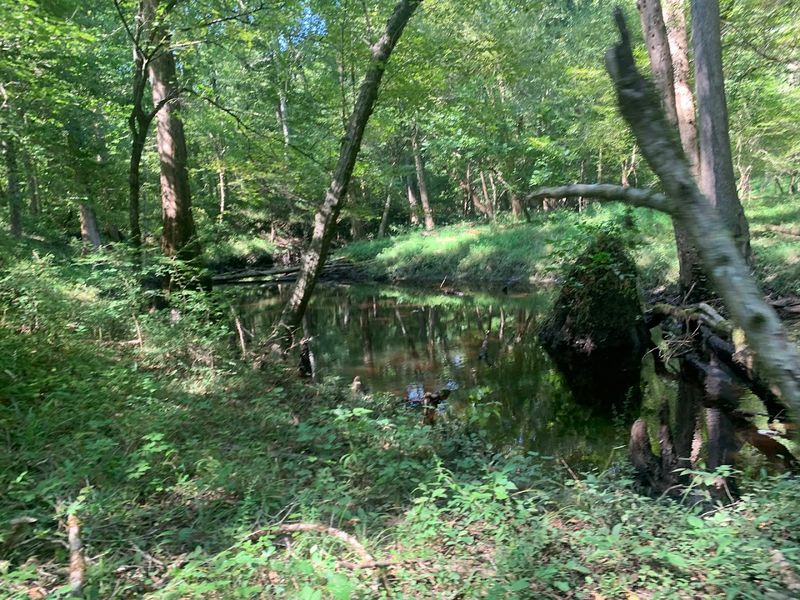
Croatan National Forest receives less attention than mountain forests, which makes it worth the drive.
Located east of Pollocksville, this section operates at a pace the mountains do not offer. The Island Creek Trailhead sits on Pollocksville-New Bern Rd, designated SR 1004.
The forest is a mosaic of pocosin wetland, longleaf pine, and coastal hardwoods. You might notice the air here carries a different tune, filled with the layered calls of birds echoing over the flat water.
Island Creek moves slowly through the lowland forest with soft, undercut banks. The water is the pale brown of diluted coffee.
Walking here invites a slower rhythm, where you stop checking your watch and start noticing the texture of the moss on the damp forest floor.
When was the last time you let the slow, creeping tide of a coastal swamp dictate the speed of your day?
9. Panthertown Valley, Glenville
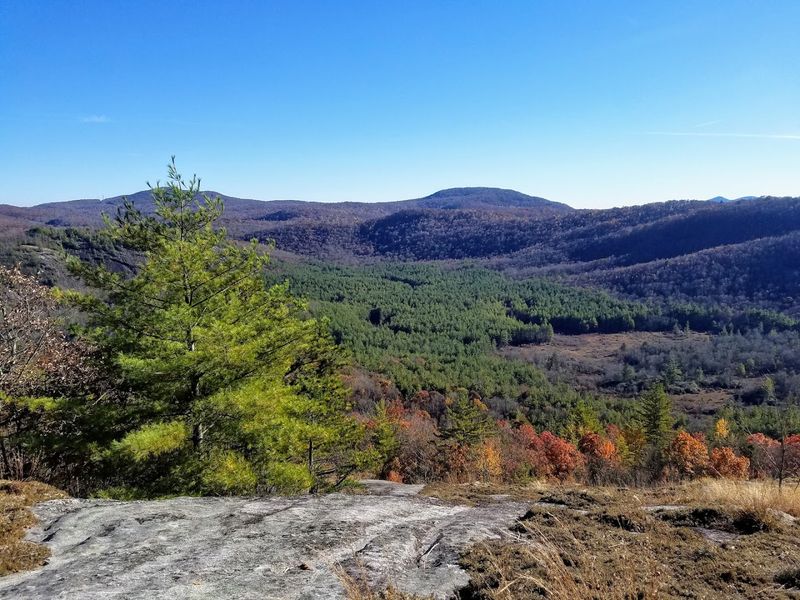
Panthertown Valley sits at high elevation and functions as its own contained world. Granite domes rise above the forested floor, their surfaces bare and streaked with dark water lines.
The valley floor holds a tangle of streams that converge and split. You will likely lose track of time tracing the white sand bogs and hidden plunge pools tucked behind rhododendron walls.
The forest surrounding the water is dense with mountain laurel. Access comes from Salt Rock Gap at the end of Breedlove Road.
The smell after rain, a mix of wet granite and bruised fern, is a scent you will find yourself trying to describe for weeks.
Navigation is a bit of a challenge, but the reward is finding a valley that feels like it has escaped the touch of time. It offers a rare glimpse of a landscape that feels truly ancient and unmanaged.
10. DuPont State Recreational Forest
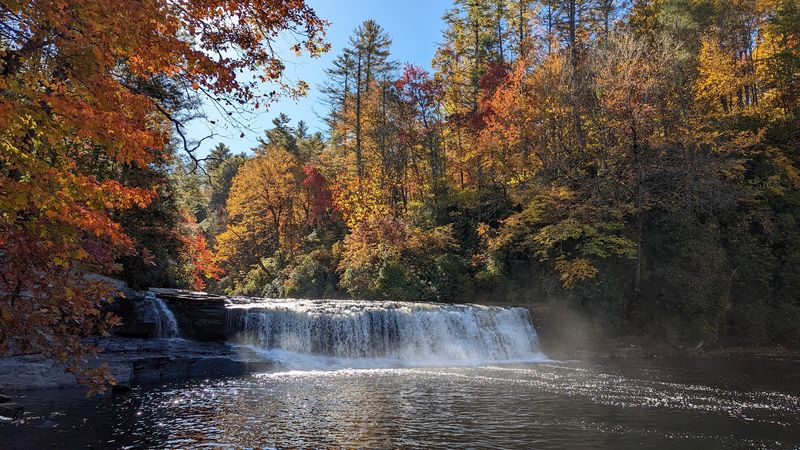
Most visitors to DuPont go straight for the waterfalls and stay in crowds. The Corn Mill Shoals section is a different proposition located near Cedar Mountain.
This area draws a fraction of the usual traffic. You will find yourself lingering on the wide, flat rock shelves where the water spreads thin and warm under the August sun.
The forest here has a settled quality that the waterfall corridors lack, composed of hardwoods over rolling terrain. The Little River cuts through, reminding you that water organizes this whole watershed.
You can park at the Corn Mill Shoals Parking Area on Cascade Lake Road.
It is a relief to leave the tourist maps behind and find a corner of the forest that feels entirely your own.
The steady whisper of the shoals offers a peace that the thunder of a crowded waterfall simply cannot match.
11. Headwaters State Forest
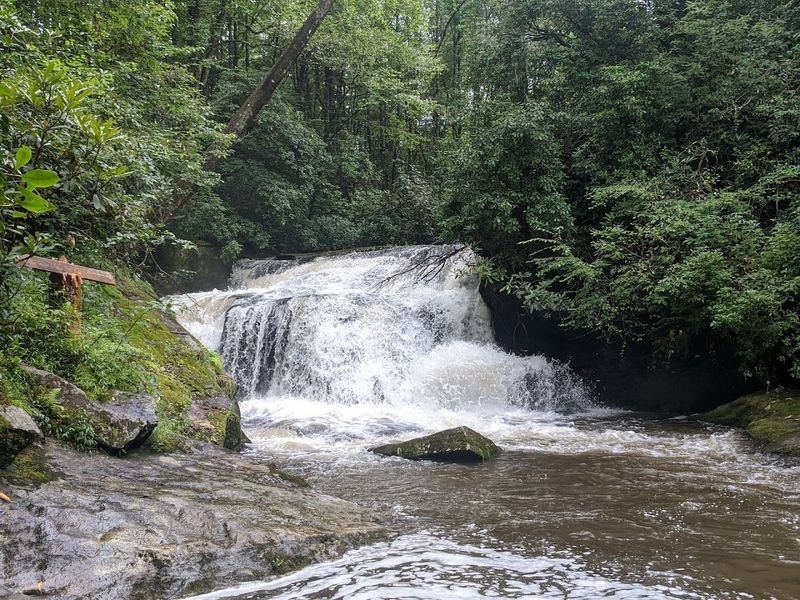
Would you recognize the mighty French Broad if you saw it as nothing more than a silver thread in the mud?
Headwaters State Forest protects the source waters of the French Broad River. This mandate has kept it quieter than most public forest land in the west.
Outside Rosman, the forest covers steep slopes where the river begins as cold seeps. You can almost feel the pull of the water as it trickles down the mountain to form the French Broad River.
It’s often described as one of the oldest rivers in North America.
The terrain is uneven, and the slopes are genuine enough to feel the next morning. Spring wildflower season is exceptional because the slopes face multiple directions, stretching the bloom times.
Access points are along East Fork Road, with small roadside pull-offs between US-276 and US-178.
There’s something powerful about standing at the start of a river before it has a name. It’s humbling to see the French Broad as a thin, silver thread through the forest.
12. Bent Creek Experimental Forest, Asheville
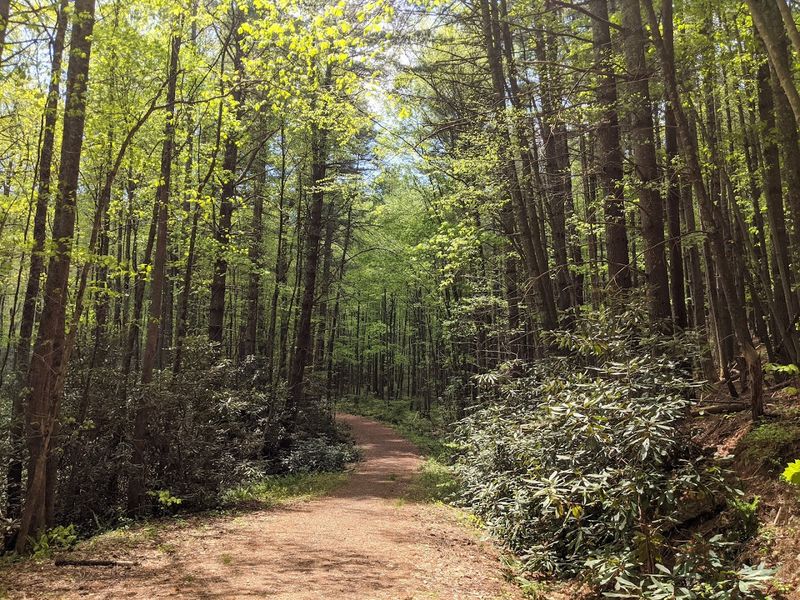
Bent Creek has been a working research site since 1925. Adjacent to Asheville, the land holds a record of timber harvests and natural recovery.
It is one of the most scientifically observed woodlands in the Southeast. Access is available from the Hardesty Lane Gate or Ledford Branch parking areas.
You might find yourself pausing at a numbered research plot, wondering what secrets the trees have shared with foresters over the last century.
Walking here, you notice the variation from past experiments, with some stands being dense and even-aged. Bent Creek itself is a cold stream that supports native brook trout and large sycamores.
There is something fascinating about walking through a forest that is being read like a living textbook every single day.
Even an ordinary oak stand carries the weight of a hundred years of carefully documented growth and survival.
13. Uwharrie National Forest, Dutchman’s Creek, Troy
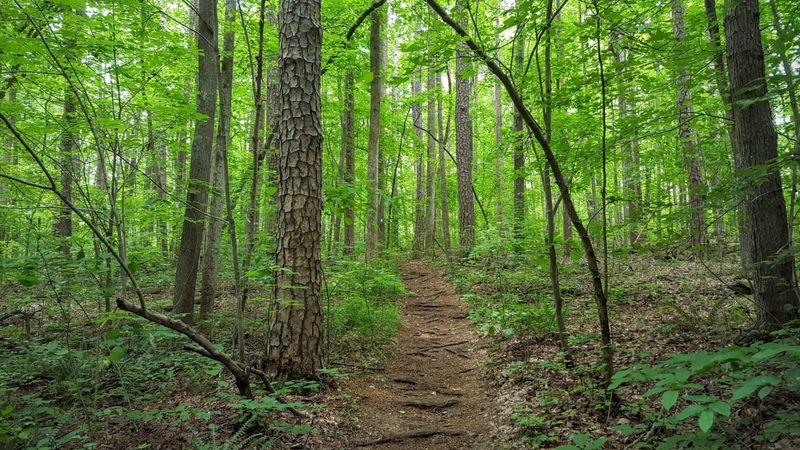
The Uwharrie National Forest occupies some of the oldest exposed rock in North America. These metamorphic formations were once the roots of a mountain range.
Geologic time spans here make human history feel small. You might pick up a stone and realize you are holding a piece of a mountain that stood before the dinosaurs existed.
The Dutchman’s Creek area reflects this ancient substrate in the soil and the canopy of chestnut oak and hickory. The creek is small and clear, running over flat rock shelves cut into the bedrock.
It’s accessible from the Woodrun Trailhead at 246 Woodrun Rd off Hwy 24/27. It carries a particular, ancient quiet that stays with you long after you’ve driven back to the city.
Walking on ground that has witnessed the rise and fall of entire continents provides a perspective you will rarely find anywhere else.