This North Carolina Road Trip Takes You Inside Caves And Hidden Underground Spots
I never thought crawling through a hole in the ground would become one of my favorite things to do in North Carolina. Yet here I am, mud on my knees, headlamp strapped on, completely hooked.
This state hides a whole world beneath its surface, one most people drive right past without ever knowing it exists. The caves and caverns here stretch from the misty Blue Ridge mountains to dense forest hollows, each one shaped by millions of years of patience.
Some drip with crystal formations that look almost unreal. Others carry stories older than the state itself.
If you think you’ve seen everything this state has to offer above ground, trust me, you haven’t even started.
A Road Trip Through North Carolina’s Mountain Landscapes
Forget the destination for a second. The road to the caves is half the adventure.
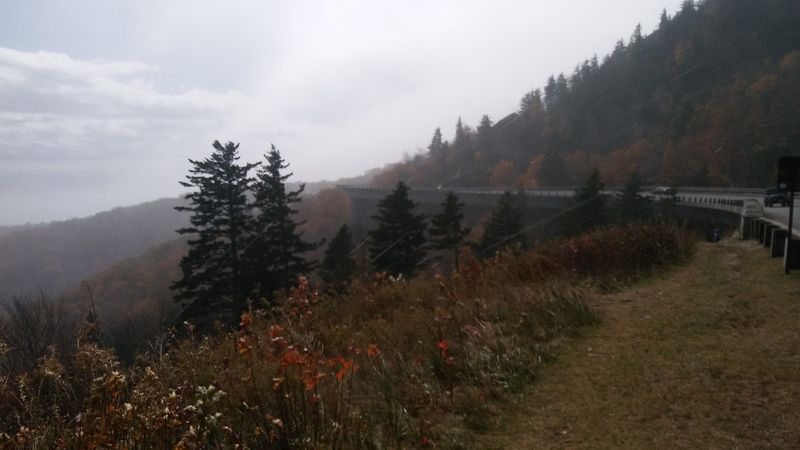
Before you even see a single stalactite, the drive earns its spot on the highlight reel. The mountain roads twist through landscapes that feel almost unreal, especially in the western part of the state where the Blue Ridge Parkway runs like a ribbon across the ridgelines.
The scenery shifts constantly. One moment you are passing through dense forest, the next you are looking out over wide open valleys with farms spread across the folds of the hills.
Pull over whenever you feel like it because the overlooks are genuinely worth the stop.
This trip works best when you treat the road as part of the experience, not just the means to get somewhere. Pack snacks, download a good playlist, and give yourself more time than you think you need.
The mountains reward slow travelers with the best views.
A good starting point is Asheville, which sits right in the heart of the western part of the state and gives easy access to most of the cave sites on this route. From there, the whole journey fans out naturally across the region.
The roads are well-maintained and the signage is clear, so navigation stays simple even in the more rural stretches.
Starting Underground At Linville Caverns
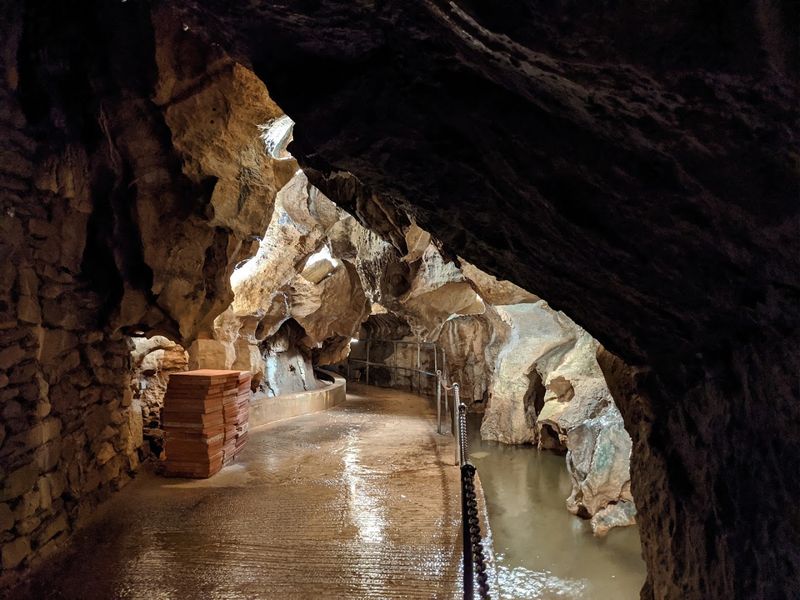
Trout led the way. In 1822, fishermen noticed fish swimming straight into a rock face on Humpback Mountain and decided to follow.
What they found was Linville Caverns, the only show cave in North Carolina open to the public year-round.
Linville Caverns sits in McDowell County and has been welcoming visitors on guided tours since 1937. The temperature inside holds steady at about 50 degrees Fahrenheit no matter the season, so bring a light jacket even if it is blazing hot outside.
The cool air hits you the moment you walk through the entrance.
Tours last about 35 minutes and run Thursday through Monday. Your guide walks you through chambers filled with stalactites hanging from the ceiling and stalagmites rising from the floor, some of them thousands of years old.
The formations are delicate, so the no-touching rule is taken seriously.
One moment always catches people off guard. At some point during the tour, the lights go out completely.
The darkness is total, the kind you almost never experience above ground. It lasts only a few seconds, but it sticks with you long after you climb back into the sunlight.
Linville Caverns is located at 19929 US-221, Marion, NC 28752, and is well worth the drive into the mountains.
Chimney Rock And Its Hidden Fissures
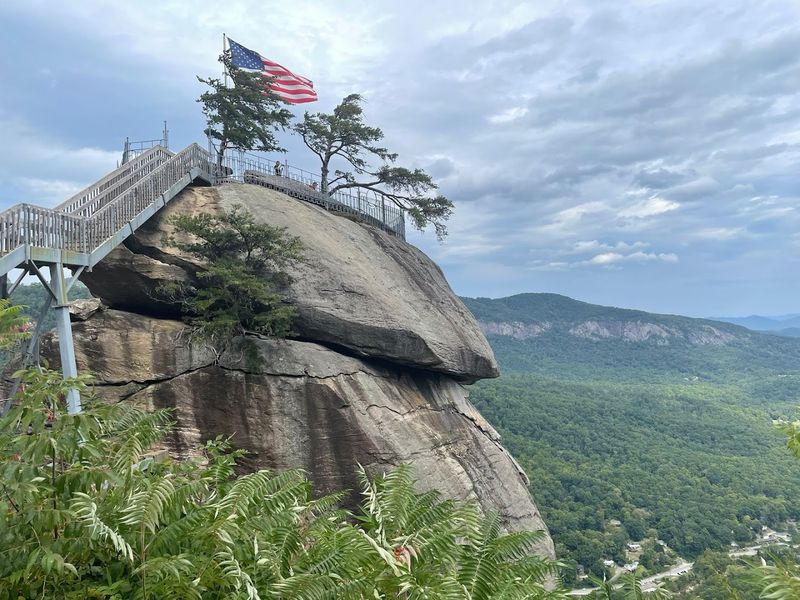
Not every cave on this trip requires a guided tour or an admission booth. Chimney Rock State Park offers something wilder.
Think natural rock fissures and crevices you can explore at your own pace, no schedule required.
The park is dramatic. A massive granite monolith rises 315 feet above the surrounding forest.
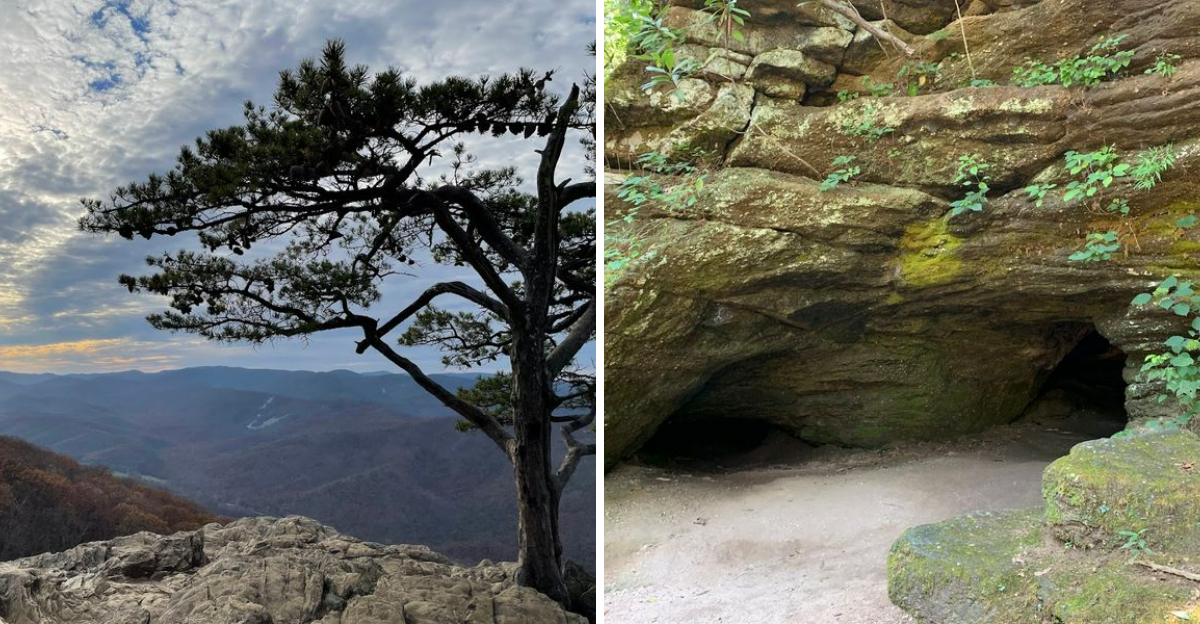
Trails wind around it and pass through narrow passages between boulders that feel genuinely cave-like. Some spots are tight enough that you have to turn sideways to squeeze through.
The hike up is moderate. The payoff at the top is a sweeping view of Lake Lure and the valley below.
Most visitors come for that view, which means the rock passages are often quieter than you would expect. Take your time on the side trails.
That is where the interesting geology hides.
Chimney Rock is currently accessed through a temporary entrance at 174 Chimney Rock Park Rd, Chimney Rock, NC 28720. Parking fills up fast on weekends, so arrive early.
The park opens at 8:30 AM most days. Wear sturdy shoes because the rock surfaces can be uneven and some sections need careful footwork.
A Detour To Tory’s Den At Hanging Rock State Park
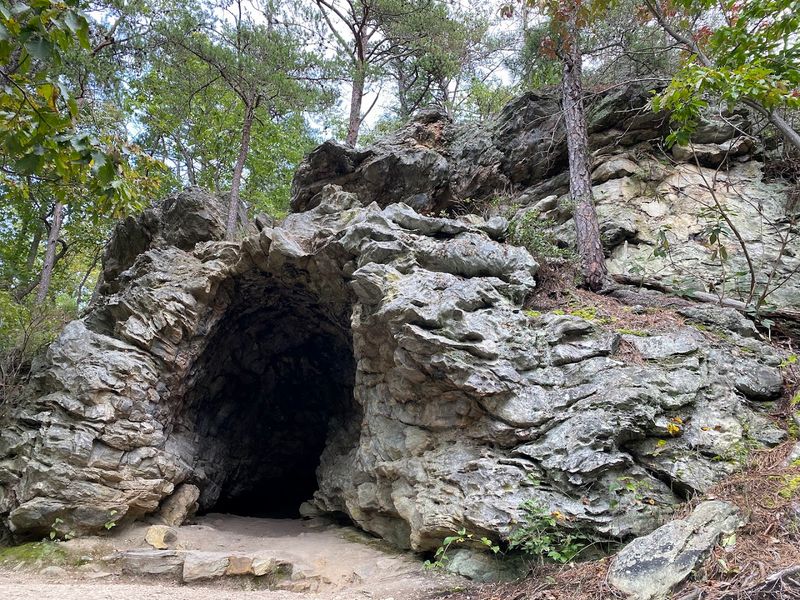
History and geology collide at Tory’s Den. This cave in Stokes County carries a name tied to the American Revolution.
Local legend says Loyalists used it as a hiding place during the war. That story stuck for over two centuries, and the name stuck with it.
Tory’s Den sits inside Hanging Rock State Park. The trail to reach it winds through hardwood forest and past a creek before opening up to the rocky outcropping where the cave waits.
The cave is not enormous. The atmosphere around it, though, is genuinely eerie in the best possible way.
The park is located at 1790 Hanging Rock Park Road, Danbury, NC 27016, and is free to enter. Trail maps are available at the visitor center.
Ask the staff for the exact route to Tory’s Den because the signage can be easy to miss.
Spring and fall are the best times to visit. The forest is either blooming or turning color, and the hike feels like something out of a storybook.
Summer works too since the canopy keeps most of the trail shaded. Wildlife sightings are common, especially early in the morning.
The quickest access to Tory’s Den is from the parking area at 1185 Charlie Young Road in Westfield.
Climbing Higher At Grandfather Mountain
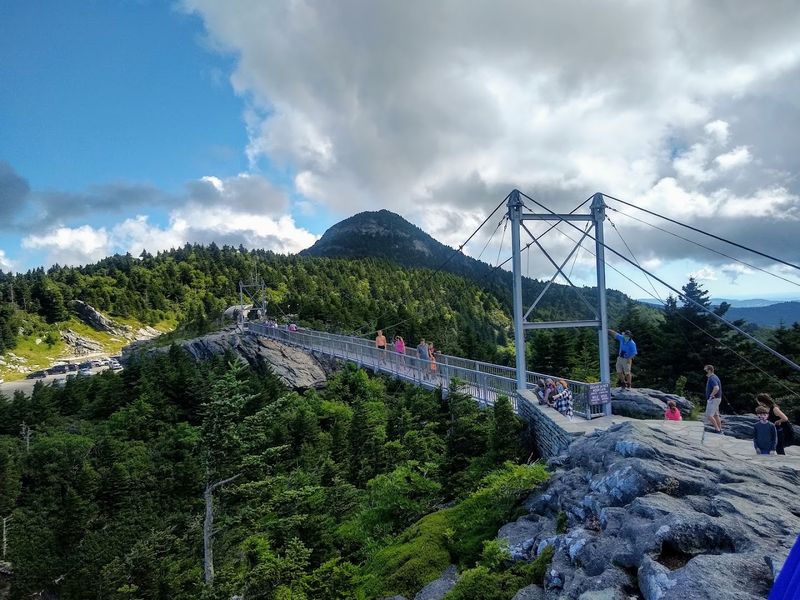
Few places in the eastern United States pack as much geological drama into a single mountain as Grandfather Mountain.
The exposed ridgeline, the swinging bridge at a mile above sea level, and the ancient quartzite rock that makes up the peaks all tell a story that goes back hundreds of millions of years.
While Grandfather Mountain is not a cave destination in the traditional sense, the rocky overhangs and natural shelters along the trails offer the same sense of going underground without a formal entrance.
The Grandfather Trail, which runs along the ridge, passes through several of these rocky passages that require the use of ladders and iron rungs to navigate.
The mountain sits near Linville and is accessible from the Blue Ridge Parkway. Admission is charged for the privately operated Grandfather Mountain attraction, which includes access to the Mile High Swinging Bridge, wildlife habitats, and the Wilson Center for Nature Discovery.
The museum does a solid job of explaining the geology of the region in terms that make the rock formations you see on the trail actually mean something.
Weather on the summit changes fast. Temperatures can drop significantly even in summer, and afternoon thunderstorms are common from June through August.
Checking the forecast before heading up is genuinely useful, not just cautionary advice. The views from the bridge on a clear day are worth every step of the climb and then some.
Exploring Boone’s Cave Park Up Close
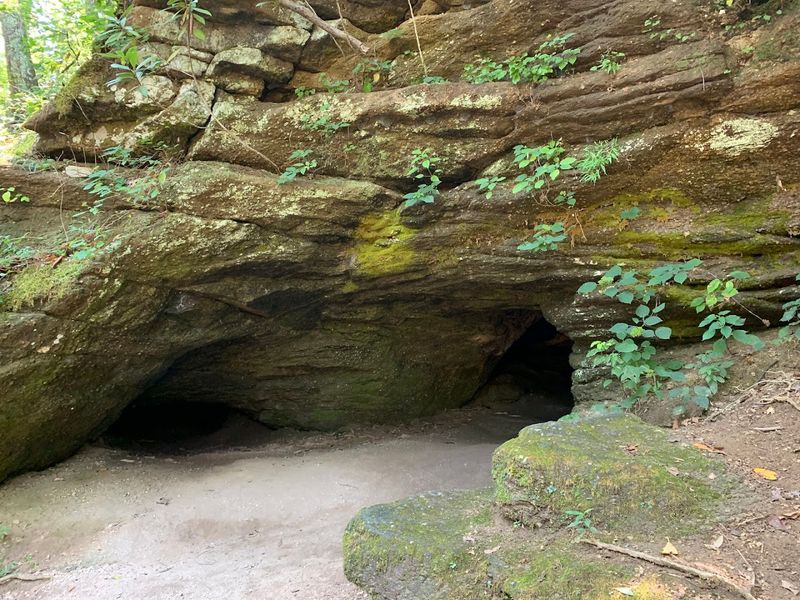
Legend has it that Daniel Boone himself used this cave as a hideout, earning it the nickname Devil’s Den long before it became a public park. Whether the story is entirely true or just a good tale that grew over time, the cave itself is real and genuinely worth crawling into.
Boone’s Cave is narrow and requires crawling through much of the passage requires getting down on hands and knees. The entrance stands only two to three feet high, so there is no grand Hollywood moment of walking upright into the darkness.
What you get instead is something more personal and a little more adventurous.
The park sits in Davidson County along the Yadkin River, and the setting is quietly beautiful. Picnic tables, walking trails, and river access make it a good spot to spend a few hours before or after the cave.
The combination of legend, landscape, and low-key outdoor activity makes this stop feel different from the more polished cave experiences on the trip.
Boone’s Cave Park is located at 3552 Boone’s Cave Road, Lexington, NC 27292. Admission is free, and the park is open during daylight hours.
Wear clothes you do not mind getting dirty because the cave floor is earthy and the crawl through is the real deal. It is the kind of experience that feels earned rather than packaged.
The Scenic Roads And Overlooks Along The Way
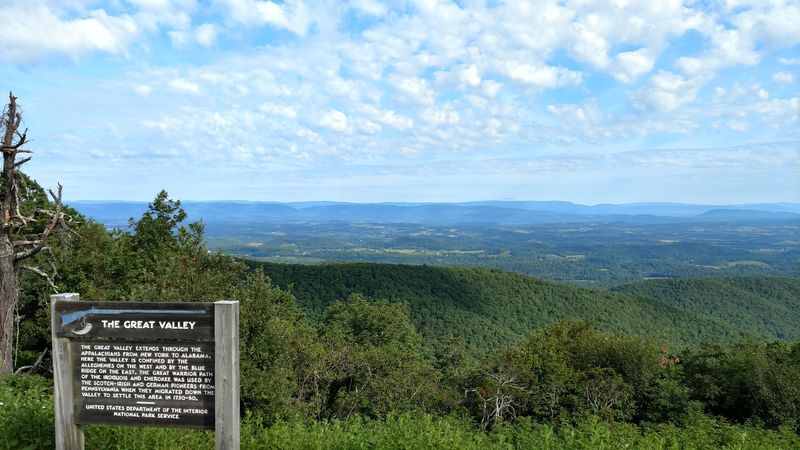
Getting from one cave to the next is half the fun on this trip, and the road network here makes it easy to stay on scenic routes almost the entire way.
The Blue Ridge Parkway alone offers dozens of official overlooks where you can stop, breathe, and take in views that stretch for miles across the Appalachian ridges.
US-221 connects several of the key stops on this route and passes through small mountain towns where gas stations, bakeries, and roadside stands give you a reason to slow down. The road itself is not in a hurry, and neither should you be.
Some of the best moments on a trip like this happen between destinations.
Overlooks near Linville and Grandfather Mountain offer some of the most memorable ridge views along this route.
Downloading offline maps before the trip is a smart move because cell service in some mountain areas is spotty at best. A paper map is not a bad backup either, and visitor centers along the route usually stock them for free.
The point is not to rush this trip but to let the roads do what they were built to do, which is show off the landscape at its very best.
How The Experience Changes With The Seasons
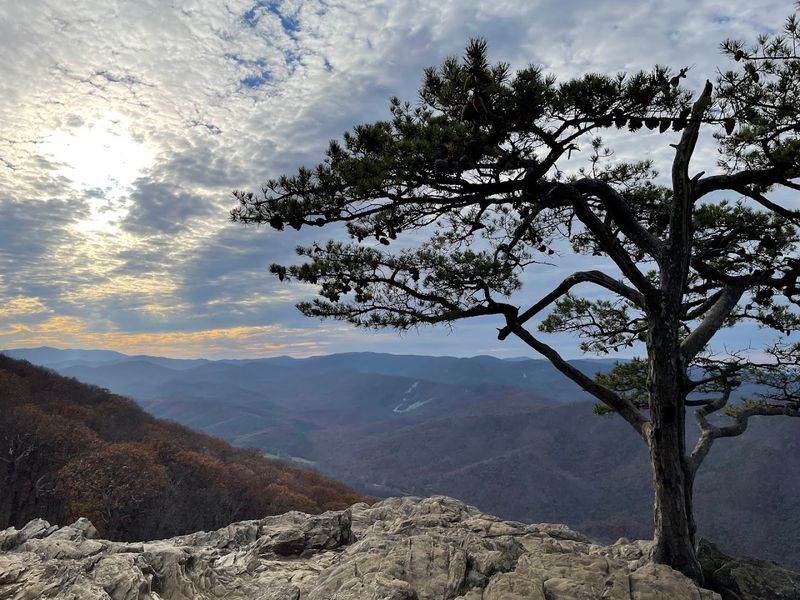
Timing a cave trip changes the experience more than you might expect. The caves themselves stay at the same temperature year-round, but everything outside those cave entrances shifts dramatically depending on the season you choose to visit.
Fall is the most popular time for this kind of road trip, and for good reason. The foliage in the western mountains peaks between mid-October and early November, turning the drives between stops into something genuinely breathtaking.
The air is crisp, the crowds are manageable on weekdays, and the light in the afternoons is golden and soft.
Spring brings a different kind of beauty. Wildflowers bloom along the trails near Hanging Rock and Grandfather Mountain, and the waterfalls that feed some of the cave-forming streams run full and loud.
Rain is more frequent in spring, but a rainy day in the mountains has its own moody appeal that photographs surprisingly well.
Summer works best for families because the school schedule lines up and the longer daylight hours give you more time on the trails. The caves offer a natural escape from the heat, which makes the cool air inside Linville Caverns feel almost luxurious after a morning hike.
Winter is quiet and uncrowded, with some sites having reduced hours, so checking ahead before visiting in January or February is a practical step worth taking.
Planning This North Carolina Road Trip From Start To Finish

A trip like this rewards anyone who plans the order of stops before leaving home. Start in Asheville and move north toward Linville Caverns.
Then loop through Grandfather Mountain and Chimney Rock before heading east to Boone’s Cave and Hanging Rock. That circuit keeps backtracking to a minimum.
Budget at least three to four days for the full loop. Two days is doable but leaves little room for spontaneous detours, and those often become the best memories.
A long weekend works well for most people driving in from within the state.
Accommodations in the mountain towns fill up fast during fall foliage season. Booking a few weeks ahead in October is necessary, not just a suggestion.
Boone, Banner Elk, and Blowing Rock all have lodging options at various price points and sit close to several stops on this route.
Most cave sites charge modest admission fees. Some, like Boone’s Cave Park and Hanging Rock State Park, are free.
Pack a small daypack with water, snacks, and a light layer. That covers most situations you will encounter, from cool cave air to warm trail climbs above the treeline.