How North Carolina’s Amish Communities Keep Their Old-World Charm Alive
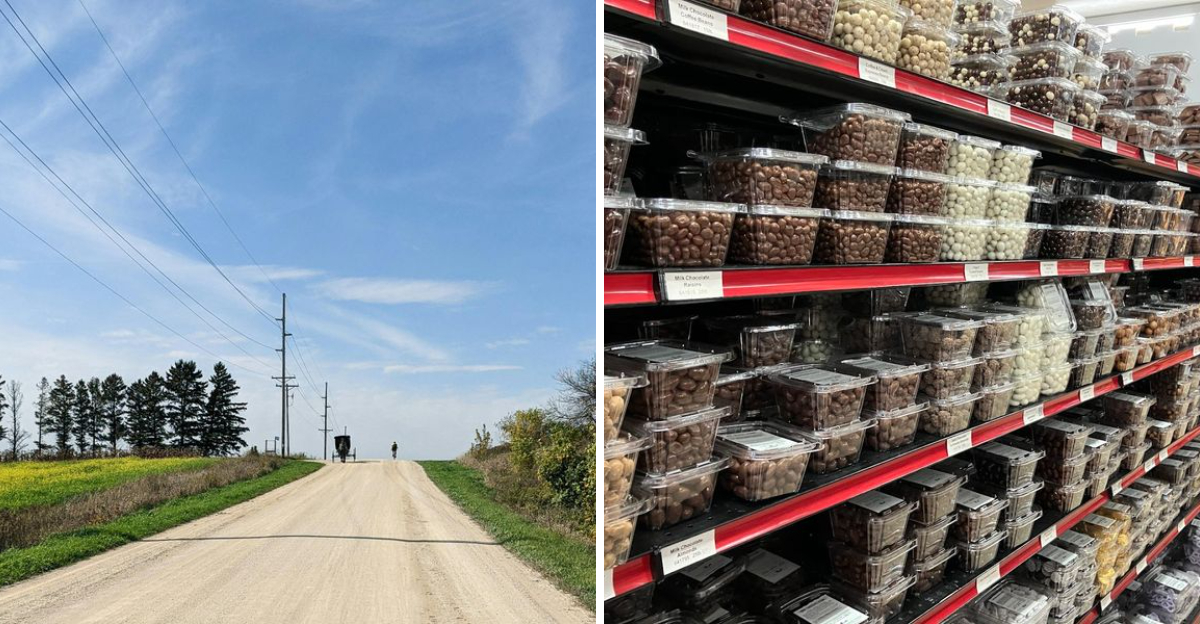
Somewhere between Asheville and nowhere in particular, I turned off the main highway onto a gravel road and the twenty-first century just kind of stopped.
No notifications, no background noise, no sense that anything needed to happen urgently. Just a horse and buggy moving at a pace that made me feel slightly embarrassed about how fast I had been living before I got there.
North Carolina is not the first place most people think of when they think about Amish communities, which is exactly why the ones here have managed to hold onto something genuinely rare.
Settled mostly in the western and central parts of the state, these communities are small, quietly productive, and completely unbothered by the fact that the rest of the world cannot seem to slow down.
They are not performing simplicity for visitors. They are simply living it, and spending even a short time around that has a way of making your own life feel like it could use some editing.
1. Handcrafted Furniture Made With Old-World Skill
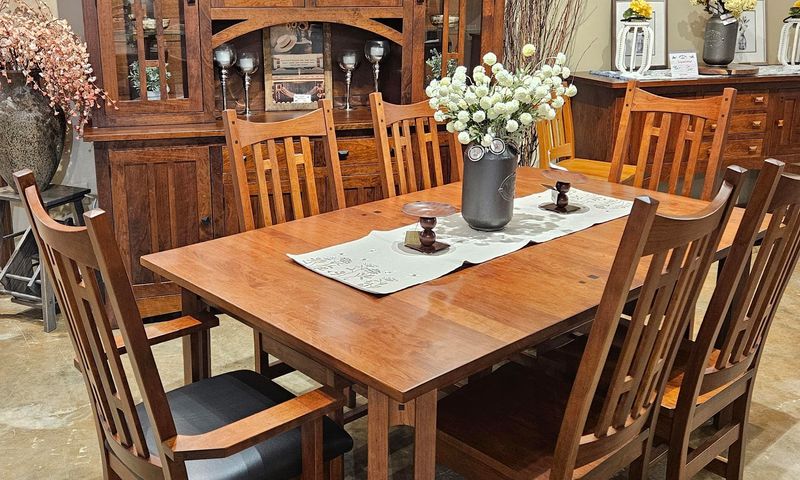
You can tell the difference between furniture built to last and furniture built to sell.
Amish woodworking falls firmly in the first category, and once you run your hand across a hand-planed tabletop, you will never look at a flat-pack bookshelf the same way again.
Amish craftsmen in North Carolina work primarily with solid hardwoods like oak, cherry, and walnut.
They use traditional joinery techniques that have been passed down through generations, often without nails or screws holding the key joints together. The result is furniture that can outlast the people who buy it.
Many Amish woodworkers in the state sell directly from their workshops or through small local shops. Prices are honest and reflect the actual labor involved.
You are not paying for a brand name.
You are paying for someone’s skill, time, and genuine care.
What makes Amish furniture especially interesting is the quiet pride behind it. These craftsmen are not chasing trends or designing for Instagram.
They are building things meant to be used every single day, passed down, and still standing strong decades later. That kind of intention is rare and worth every penny.
2. Fresh-Baked Goods From Traditional Recipes

Walking past an Amish bakery is basically an ambush on your willpower. The smell alone, warm bread, cinnamon, and something buttery, will stop you mid-step every single time.
Amish baking traditions are rooted in simplicity and quality. Recipes are passed down through families, often handwritten in notebooks worn soft at the edges.
There are no artificial preservatives, no shortcuts, and no ingredient lists that require a chemistry degree to decode. Just real food made with real ingredients.
Common offerings include homemade bread, shoofly pie, apple butter, cinnamon rolls, and seasonal fruit pies.
Everything is made from scratch, often before sunrise, so visiting early in the day means the best selection. Show up late and you might find only crumbs, which is honestly a compliment to the baker.
Buying baked goods directly from an Amish family is one of the most satisfying food experiences North Carolina has to offer. You are not just getting a pie.
You are getting a recipe that survived multiple generations, made by someone who genuinely cares about getting it right. Bring cash, bring an appetite, and definitely bring a cooler for the drive home.
3. Roadside Produce Stands Overflowing With Fresh Harvest

Some of the best food I have ever eaten came from a wooden table on the side of a two-lane road with no sign, no website, and no app to find it. Just a hand-painted board and a pile of tomatoes so red they looked painted.
Amish produce stands in North Carolina operate on a refreshingly simple model. Families grow what they sell, sell what they grow, and price things honestly.
You will find seasonal vegetables, fresh herbs, homemade jams, pickles, and sometimes eggs or honey alongside the produce. Everything changes with the season because that is how farming actually works.
Many stands operate on an honor system, especially smaller ones. You take what you need, leave your payment in a box, and trust goes both ways.
It sounds almost too wholesome, but it works because the community is built on exactly that kind of mutual respect.
Stopping at a roadside Amish stand is one of those experiences that reminds you food does not need to travel thousands of miles to reach your plate.
It just needs good soil, hard work, and someone willing to wake up early enough to make it happen. That combination is hard to beat.
4. Rolling Farmland That Stretches To The Horizon
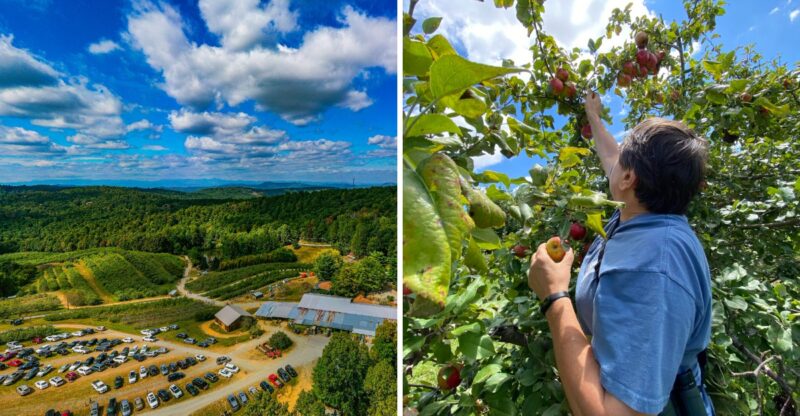
Flat land does not excite me much, but rolling farmland in North Carolina is a completely different thing. The hills rise and fall in a rhythm that feels almost musical, and the fields stretch out in every shade of green you can name.
Amish farms in North Carolina tend to be smaller and more diversified than conventional operations. Families grow a variety of crops, raise livestock, and manage their land without relying on chemical shortcuts.
The result is farmland that actually looks healthy, full of life, and clearly cared for over many years.
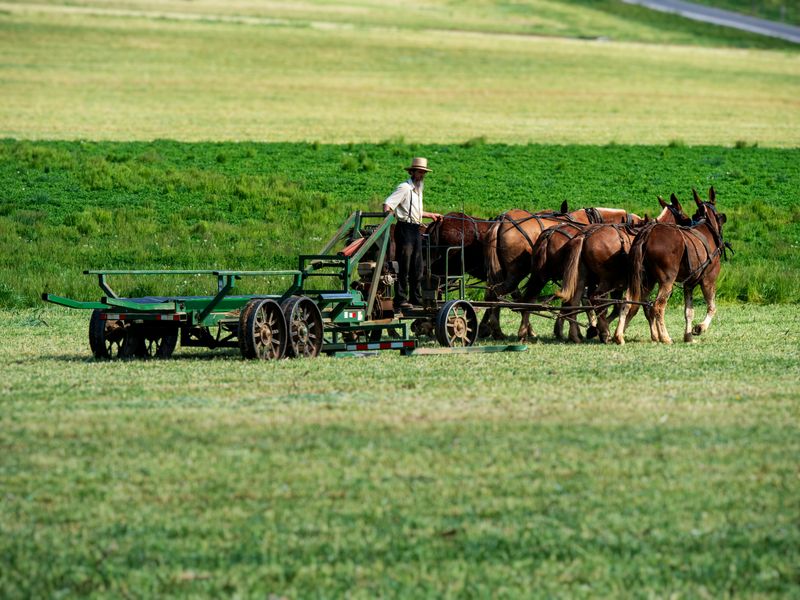
Because Amish farmers use horse-drawn equipment instead of heavy machinery, the soil stays less compacted and more productive over time.
It is an older approach, but the science behind it is sound. Healthy soil grows healthy food, and healthy food builds healthy communities.
Driving through this landscape on a clear morning, with mist still sitting low in the valleys and cows moving slowly across a hillside, is one of those experiences you do not plan.
It just happens, and then you find yourself pulling over to stare at it for longer than you expected. Some views earn that kind of pause.
5. Quilts Stitched With Love And Tradition
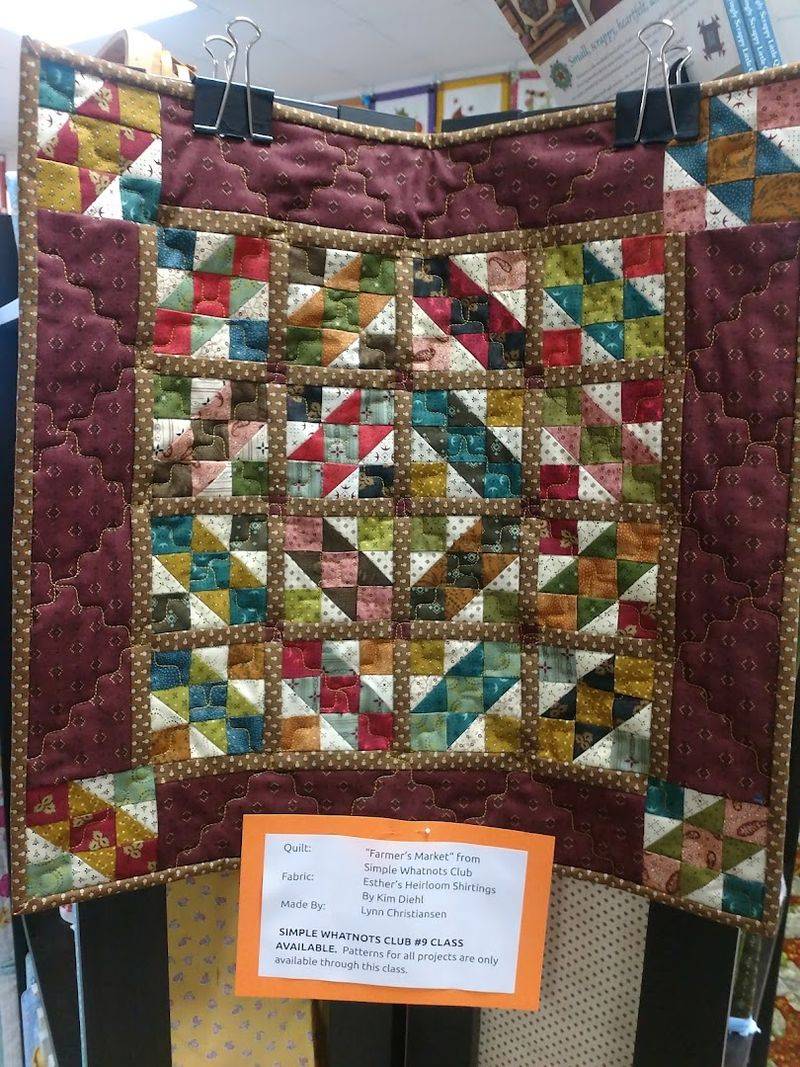
Every Amish quilt tells a story, and not in the vague, decorative way that phrase usually gets used.
The patterns, colors, and stitching carry real meaning, and the hours behind each one are genuinely staggering when you stop to think about them.
Amish quilting in North Carolina follows traditional patterns with names like Log Cabin, Double Wedding Ring, and Star of Bethlehem.
These designs have been used for generations, and quilters often add subtle personal touches that make each piece unique. No two are exactly alike, even when the pattern is the same.
Quilting is also a deeply communal activity. Women gather for quilting bees, working together on large projects while sharing conversation, laughter, and community news.
The social element is just as important as the finished product. It is one of the ways Amish communities stay connected to each other in a meaningful, practical way.
Purchasing an Amish quilt directly from the maker is one of the most personal souvenirs you can bring home from North Carolina.
You are not buying decor. You are buying something that took weeks of focused, careful work and will likely keep someone warm long after you are gone.
That is a pretty solid investment by any measure.
6. One-Room Schoolhouses Where Simplicity Reigns
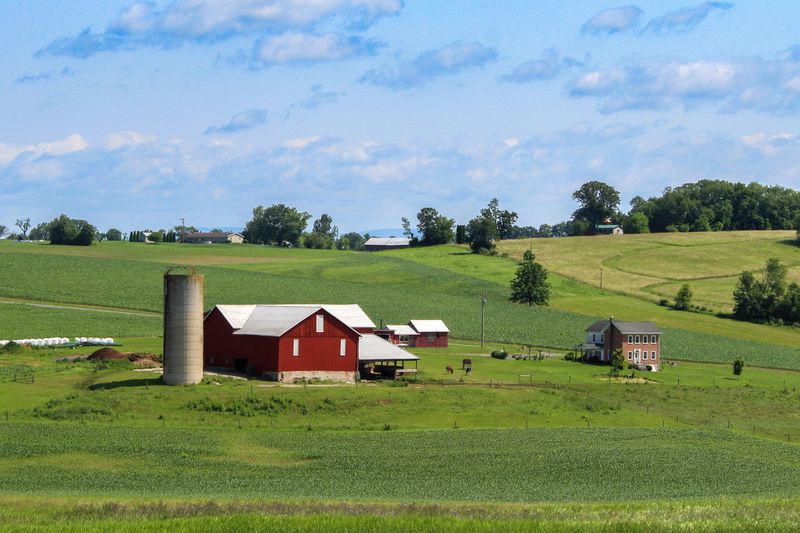
Before there were standardized tests, school apps, and cafeteria loyalty cards, there were one-room schoolhouses.
Amish communities in North Carolina still use them, and the concept is simpler and smarter than it might first appear.
Amish children typically attend school through eighth grade in small community-run schoolhouses. Classes combine multiple age groups, which means older students regularly help younger ones with their work.
That kind of peer learning builds patience, responsibility, and genuine understanding in ways that rote memorization rarely can.
The curriculum focuses on practical skills alongside core academics. Reading, writing, arithmetic, and Pennsylvania Dutch language are central subjects.
Lessons connect directly to the community’s daily life and values, which gives students a clear sense of why learning matters. Education with a purpose tends to stick better than education without one.
Amish schoolteachers are often young women from the community who completed their own schooling in the same type of building.
They bring personal experience and cultural understanding to the classroom that no outside textbook can replicate.
Watching a schoolyard full of children playing without a single screen in sight is genuinely refreshing and serves as a quiet reminder that focused learning has always worked when given the right environment.
7. Peaceful Sundays Without Commercial Hustle
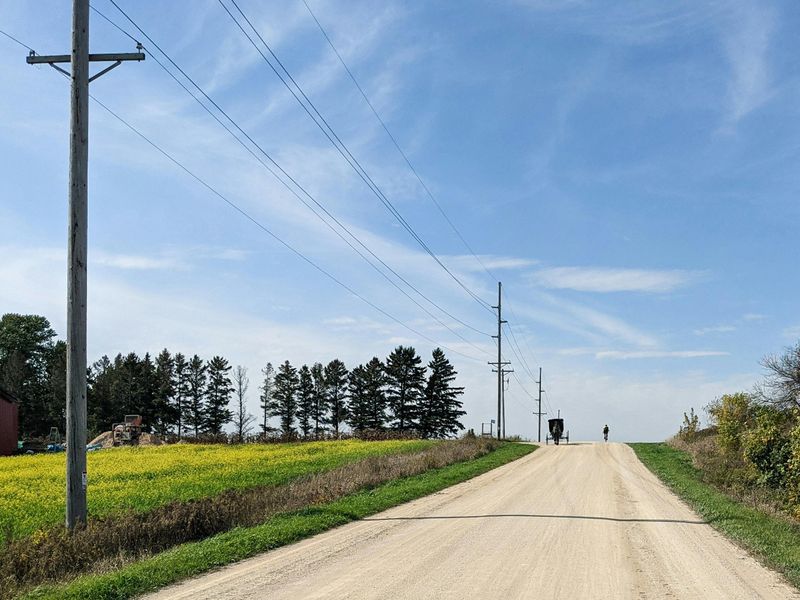
Sunday in Amish country feels different the moment you arrive. The roadside stands are closed.
The workshops are quiet. Even the horses seem to be taking it easy. It is the most deliberate kind of rest I have ever witnessed.
For Amish communities, Sunday is a sacred day of worship and rest.
Church services are held in rotating homes rather than a dedicated building, which keeps the community physically connected across different families throughout the year.
After the service, the afternoon is spent with family and neighbors, sharing a meal and genuine conversation.
No commercial activity happens on Sunday. No selling, no buying, no running errands.
The decision is not about inconvenience. It is about protecting time that matters.
In a culture that often treats busyness as a virtue, watching an entire community choose stillness once a week is striking.
Visitors passing through Amish areas on a Sunday will notice the quiet almost immediately. It is the kind of quiet that makes you realize how much background noise you have gotten used to.
The experience does not require you to share any particular belief. It just asks you to notice what a full, genuine day of rest actually feels like.
Most people find the answer surprisingly powerful.
8. Authentic General Stores Stocked With Necessities
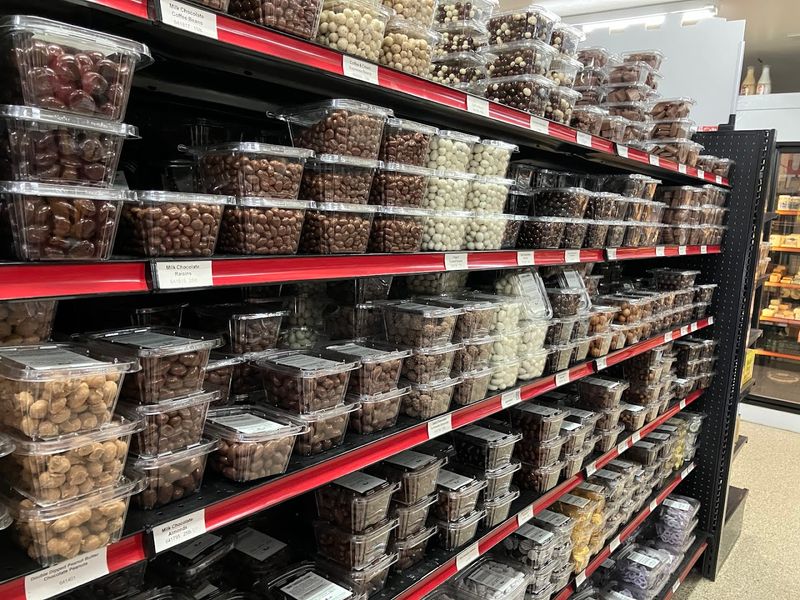
There is a particular pleasure in a store that sells exactly what people need and nothing they do not. No impulse buy displays.
No loyalty point systems. Just shelves stocked with things that actually get used. Amish general stores in North Carolina serve as community hubs as much as retail spaces.
You will find dry goods, canned preserves, fabric, hardware, seeds, and sometimes locally made cheese or honey all under one roof.
The selection is practical and deliberate, chosen to serve real daily needs rather than seasonal marketing trends.
Many of these stores also carry bulk foods at prices that make grocery store markups feel almost embarrassing.
Buying a pound of oats, dried beans, or whole grain flour directly from an Amish bulk store is both economical and deeply satisfying. You leave with more food and fewer regrets than most supermarket trips.
The atmosphere inside is unhurried and friendly. Owners know their regular customers by name and take time to actually talk with them.
Transactions feel like interactions between people rather than between a consumer and a system. If you have forgotten what that feels like, a stop at an Amish general store in North Carolina will remind you quickly and pleasantly.
9. Starlit Nights Undimmed By Light Pollution

Most people have forgotten what a truly dark sky looks like. I had, until I spent a night near an Amish community in rural North Carolina and looked up to find a sky so crowded with stars it almost felt like a different planet.
Because Amish communities do not use electric lighting outside their homes, and because they tend to settle in rural areas far from urban centers, the night sky above their farms remains largely undisturbed by artificial glow.
On a clear night, the Milky Way is visible with the naked eye. That is not a small thing.
Roughly one-third of the world’s population can no longer see it from where they live.
Stargazing near Amish country in North Carolina requires nothing more than a blanket, a clear night, and the willingness to sit still for a while. No equipment necessary.
No app required. Just your eyes and enough patience to let them adjust to the dark.
There is something humbling about looking at a sky that has looked the same for thousands of years. The Amish commitment to a simpler way of life preserves that view as a quiet side effect.
It is one of those unexpected gifts that comes with choosing a different kind of relationship with the world around you.
10. Horse-Drawn Buggies On Scenic Country Roads
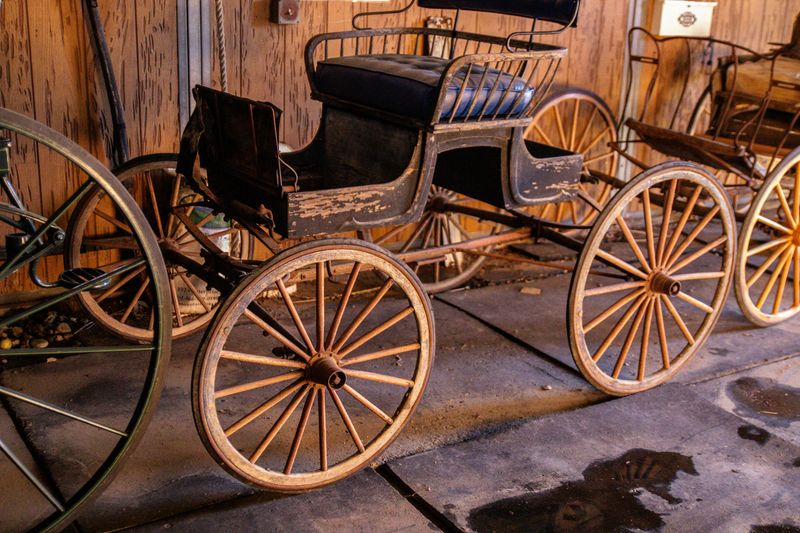
There is something almost cinematic about rounding a bend on a country road and finding a horse-drawn buggy clip-clopping ahead of you at a steady, unhurried pace.
You slow down. You breathe. And for a moment, the whole world feels less frantic.
North Carolina’s Amish communities rely on horse-drawn buggies as their primary mode of transportation, and it is not just tradition for tradition’s sake.
The choice reflects a deeply held belief that community and simplicity should come before convenience. Horses keep families close to the land and to each other.
The buggies themselves are well-built and practical, typically black, with reflective triangles for road safety. Watching a family ride by in one feels like catching a glimpse of something real.
No GPS. No road rage.
Just a horse, a family, and wherever they are headed together.
Visitors driving through Amish country in North Carolina should always give buggies plenty of room and pass slowly. It is basic courtesy, and honestly, it gives you a few extra seconds to appreciate the view.
Not every commute comes with scenery like that.