These Storybook California Towns Feel Like Europe In April
You don’t plan on stopping long. That’s usually how it starts. Then something shifts. The light feels softer, the streets quieter, the air just a little warmer, and suddenly leaving doesn’t feel so urgent anymore.
There are towns across the state that don’t quite feel like California at all. Windmills turn slowly above quiet streets. Flower boxes spill over beneath windows.
Narrow lanes curve past stone facades and hidden courtyards that look like they belong somewhere across the Atlantic. It doesn’t take much for the illusion to settle in.
April is when everything sharpens. Colors feel richer, the crowds haven’t fully arrived, and the pace slows just enough to notice the details most people miss. A quick walk turns into an afternoon. A short stop becomes the highlight of the trip.
Some places are easy to pass through. These aren’t. Once you find them, you’ll understand why people keep coming back – and why they never seem to stay for just one visit.
1. Solvang
Few places in the United States carry the weight of cultural identity quite like Solvang does.
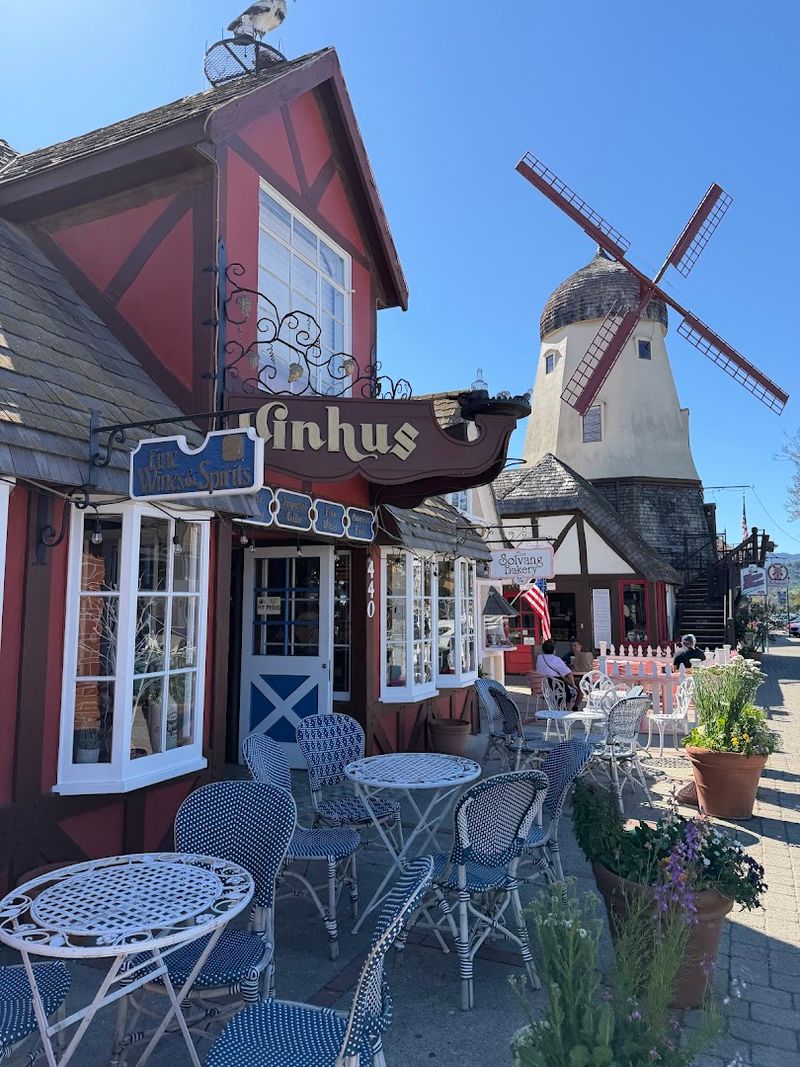
Founded in 1911 by Danish immigrants who wanted to preserve their homeland’s traditions, this small Santa Barbara County town became a living museum of Scandinavian architecture and custom.
The half-timbered buildings, four working windmills, and hand-painted signs give the streets a texture that feels genuinely transplanted from Northern Europe.
April is a particularly good time to visit because the crowds are manageable and the spring flowers around the town center are in full bloom.
Bakeries along Copenhagen Drive sell fresh aebleskiver, which are round Danish pancake puffs traditionally served with jam and powdered sugar.
The smell drifting from the open bakery doors alone tends to slow foot traffic considerably.
Beyond the pastries, Solvang has a handful of small museums, a replica of Copenhagen’s famous Round Tower, and a quaint shopping district that leans into its Danish heritage without feeling overdone.
The Hans Christian Andersen Museum at 1680 Mission Dr, Solvang, CA 93463 is a worthwhile stop for those interested in the town’s literary and cultural roots.
Evenings here tend to be quiet and cool, with the gas-style street lamps giving the whole town a warm amber glow.
2. Carmel-By-The-Sea
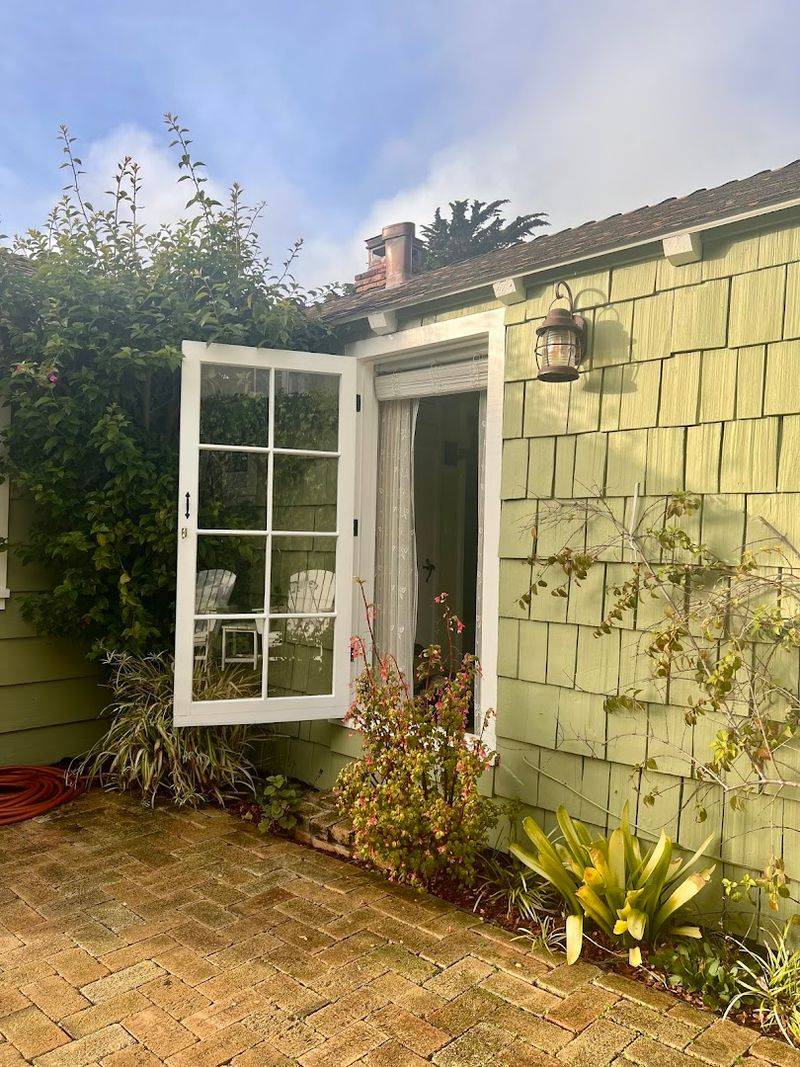
Stone cottages with thatched-style roofs, narrow winding lanes, and a white-sand beach at the end of Ocean Avenue give Carmel-by-the-Sea a quality that feels more like a Cotswolds village than a California town.
The architecture here was deliberately kept whimsical and small-scale, with a long-standing tradition of resisting chain restaurants and neon signs.
That commitment to a certain kind of quiet elegance has held for over a century.
April brings softer light and fewer tourists than the summer months, which makes strolling the residential streets feel genuinely peaceful.
Art galleries line the main commercial blocks, and the quality tends to be high since Carmel has been an artists’ colony since the early 1900s.
The cypress trees along the 17-Mile Drive nearby are dramatically shaped by coastal winds and add to the moody, cinematic atmosphere.
Carmel Beach itself is dog-friendly and often has a fine mist rolling in from the Pacific in the mornings, clearing by afternoon.
The town has no traffic lights and strongly encourages walking over driving.
Parking can be tight on weekends, so arriving early in the day tends to make the experience noticeably more relaxed and enjoyable.
3. Nevada City
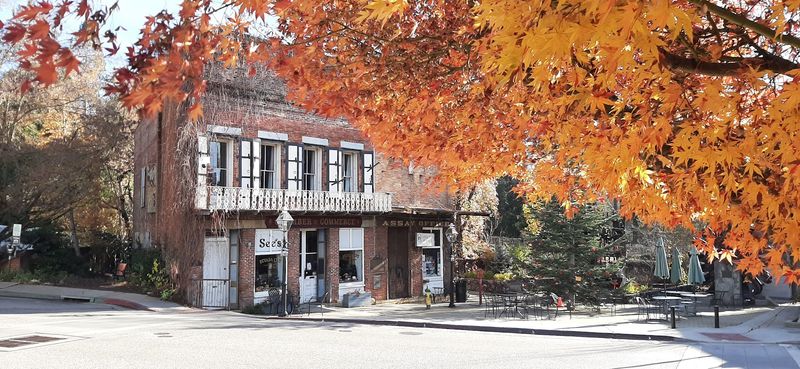
Nestled in the Sierra Nevada foothills at about 2,500 feet elevation, Nevada City has the kind of Gold Rush-era Victorian architecture that makes it feel like time slowed down sometime around 1880 and never quite caught up.
Brick storefronts, cast-iron balconies, and gas-style street lamps line Broad Street in a way that could pass for a small English market town on a foggy morning.
April here is particularly lovely because the surrounding forests are green from winter rain and the temperatures are mild without the summer heat.
The town supports an active arts community with live music venues, independent bookshops, and local theater that keeps the streets lively without feeling touristy.
The National Hotel at 211 Broad St, Nevada City, CA 95959, one of the oldest continuously operating hotels in California, anchors the downtown with a sense of deep historical character.
Hikers and nature lovers will find easy access to trails along Deer Creek and the South Yuba River nearby.
The weekly farmers market brings out local produce and handmade goods that reflect the town’s creative and community-minded culture.
Nevada City rewards slow exploration, and the best way to experience it is simply to walk without a set itinerary and see what unfolds around each corner.
4. Ferndale
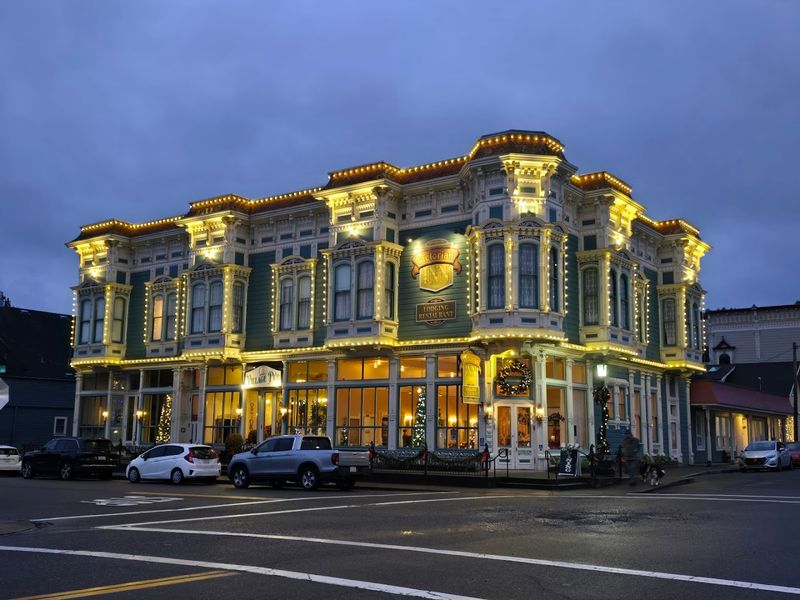
Tucked into the Eel River Valley near the Humboldt County coast, Ferndale is one of the most intact Victorian villages in the entire western United States.
The main street is lined with elaborately painted Queen Anne and Eastlake-style buildings that locals call “Butterfat Palaces,” a nod to the dairy wealth that funded their construction in the late 1800s.
April is a green and misty time in Ferndale, when the surrounding pastures are deeply saturated with color and the fog rolls in softly from the coast.
The town has a genuine working community feel rather than a museum-piece quality, with hardware stores and family-run shops sitting alongside galleries and boutiques.
The Ferndale Museum at 515 Shaw Ave, Ferndale, CA 95536 gives solid context for the town’s agricultural and cultural history without being overwhelming.
The Kinetic Grand Championship, a quirky human-powered sculpture race, culminates in Ferndale each May, but the April buildup often brings early visitors and a festive energy to the streets.
Walking the residential blocks reveals some of the most ornate Victorian homes in California, many of which are privately owned and well-maintained.
The quietness of Ferndale compared to more popular destinations is itself a significant part of its appeal.
5. Ojai
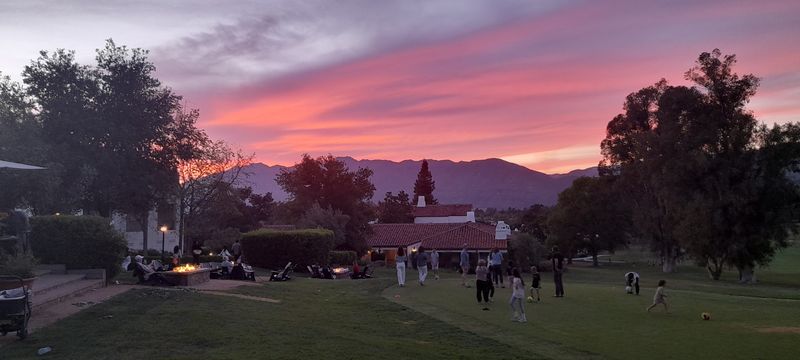
Surrounded by the Topatopa Mountains and filled with the scent of orange blossoms in spring, Ojai has a meditative quality that feels borrowed from a small Andalusian town in southern Spain.
The arcaded storefronts along Ojai Avenue, the terracotta rooftops, and the wide pedestrian-friendly main street give it a European village rhythm that invites slow afternoons rather than rushed itineraries.
April is widely considered one of the best months to visit because the wildflowers on the surrounding hillsides are blooming and the famous “Pink Moment,” when the setting sun turns the mountains a deep rose color, is especially vivid in clear spring air.
The town is small enough to cover on foot or by bicycle, with galleries, farm-to-table eateries, and wellness studios tucked into shaded courtyards and along quiet side streets.
The Ojai Valley Trail is a paved path that runs through the valley and is popular with cyclists and walkers looking for a gentle way to take in the landscape.
Libbey Park in the town center hosts outdoor events and has towering eucalyptus trees that shade the lawn.
Ojai tends to attract visitors seeking a slower pace, and the town’s character strongly reflects that preference for stillness over spectacle.
6. Julian
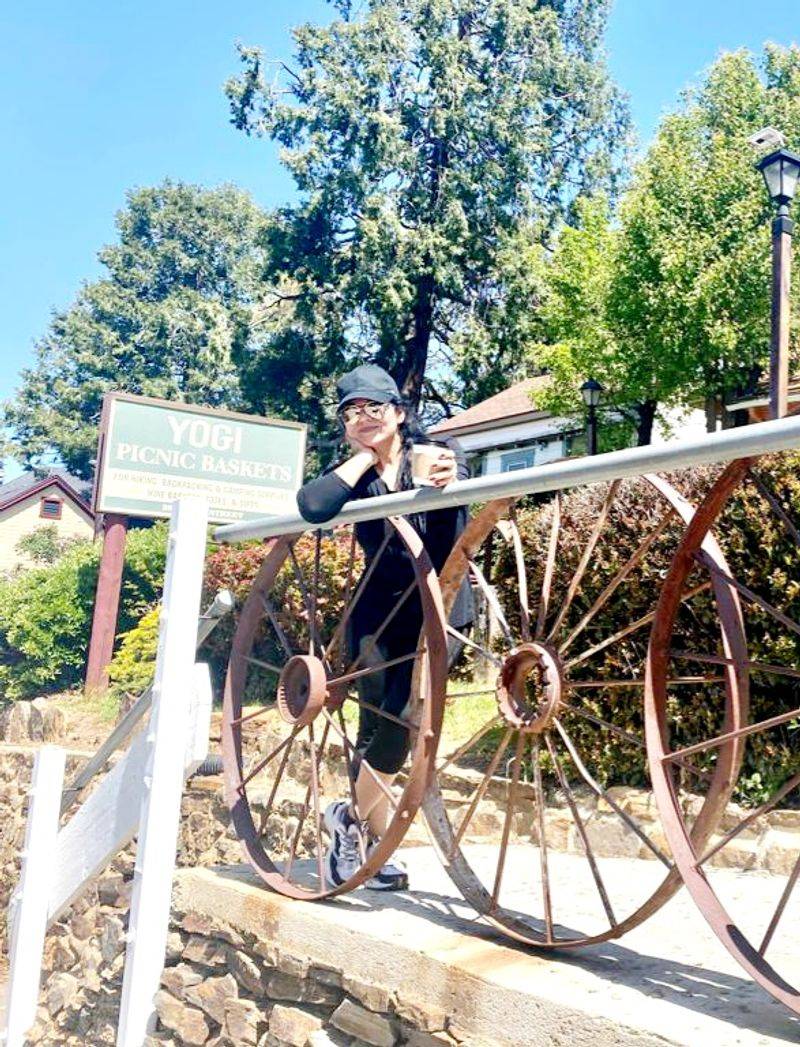
Perched at 4,200 feet in the Cuyamaca Mountains east of San Diego, Julian carries the spirit of a small Swiss or Austrian mountain village with its cool air, pine forests, and historic stone and timber storefronts.
The town became famous for apple orchards and apple pie, but in April the focus shifts to wildflowers as the surrounding hills burst into bloom with poppies and lupine.
The main street has a frontier quality that has been carefully preserved, with wooden sidewalks and hand-lettered shop signs that feel genuinely old rather than artificially themed.
The Eagle and High Peak Mine at 2320 C Street, Julian, CA 92036, one of the original gold mines from the 1870s, offers underground tours that give real historical grounding to the town’s Gold Rush identity.
Julian has managed to stay small and locally owned, which keeps the atmosphere from feeling commercialized.
April weekends can draw visitors from the San Diego area looking for mountain air and open space, so weekday visits tend to be quieter.
The drive up through the Laguna Mountains from the coast is scenic and worth taking slowly.
Julian Pie Company and Mom’s Pie House are two long-standing local bakeries that have been part of the town’s identity for decades and are worth stopping into.
7. Mendocino
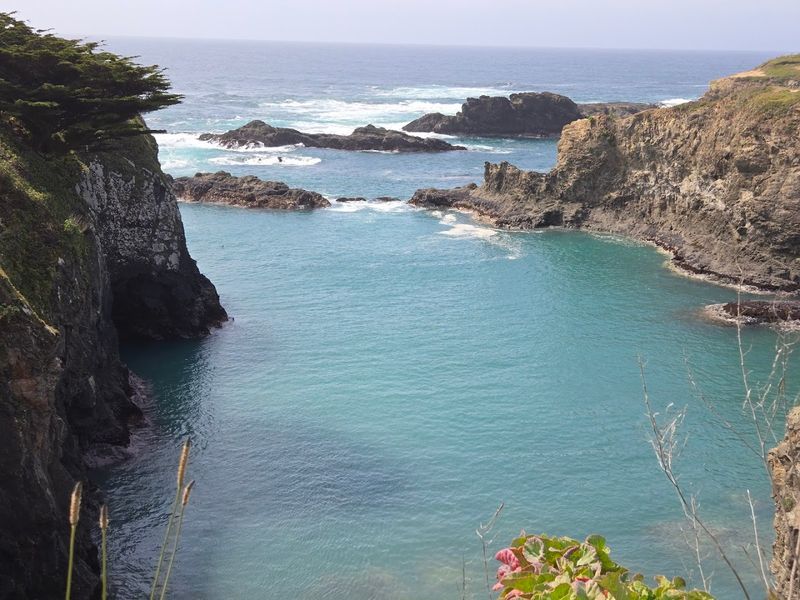
Standing on the headlands above the Pacific, Mendocino looks like a New England fishing village that somehow drifted to the California coast and decided to stay.
The white clapboard churches, Victorian water towers, and weathered wood buildings give it a texture that feels genuinely old-world, especially when the morning fog softens the edges of everything in sight.
April brings some of the year’s best wildflower displays along the coastal bluffs, with bright yellow oxalis and blue iris dotting the green headland.
The town has long been a haven for artists and writers, and that creative energy shows in the quality of the galleries, the independent bookshop, and the small theater that operates year-round.
Mendocino is compact enough to walk completely in an afternoon, though most people find themselves slowing down considerably once they arrive.
The Mendocino Headlands State Park surrounds the town on three sides and offers free access to dramatic cliff-top walking paths.
Whale watching is still possible in April as gray whales continue their northward migration.
The town has no large chain stores or fast-food restaurants, which preserves a quietness and independence that is increasingly rare.
Lodging options range from small inns to historic bed-and-breakfast properties, many of which book out early for spring weekends.
8. Sausalito
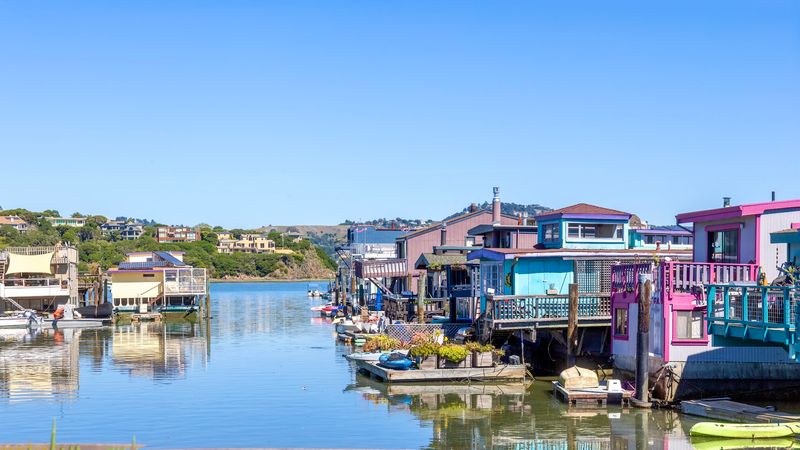
Clinging to the hills above San Francisco Bay just north of the Golden Gate Bridge, Sausalito has the layered, sun-warmed feel of a Mediterranean harbor town.
Restaurants and shops step down toward the waterfront in terraces, and the bay views from almost every vantage point give the town an openness that feels distinctly Italian Riviera in its framing.
April light on the bay tends to be brilliant and clear, making the famous floating home community along the northern waterfront look particularly photogenic.
The houseboat community here is one of the largest and most architecturally diverse in the country, with residents having customized their floating homes into everything from minimalist studios to elaborate multi-story structures.
Walking the waterfront path from downtown toward the houseboats takes about 20 minutes and passes galleries, small parks, and working boatyards.
The Bay Area Discovery Museum sits at 557 McReynolds Rd, Sausalito, CA 94965 and is a worthwhile stop for families.
Ferries run regularly between Sausalito and San Francisco’s Ferry Building, making it easy to combine both destinations in a single day trip.
Parking in town can be limited on weekends, and arriving by ferry from the city is often the most relaxed and scenic way to approach Sausalito.
9. Healdsburg
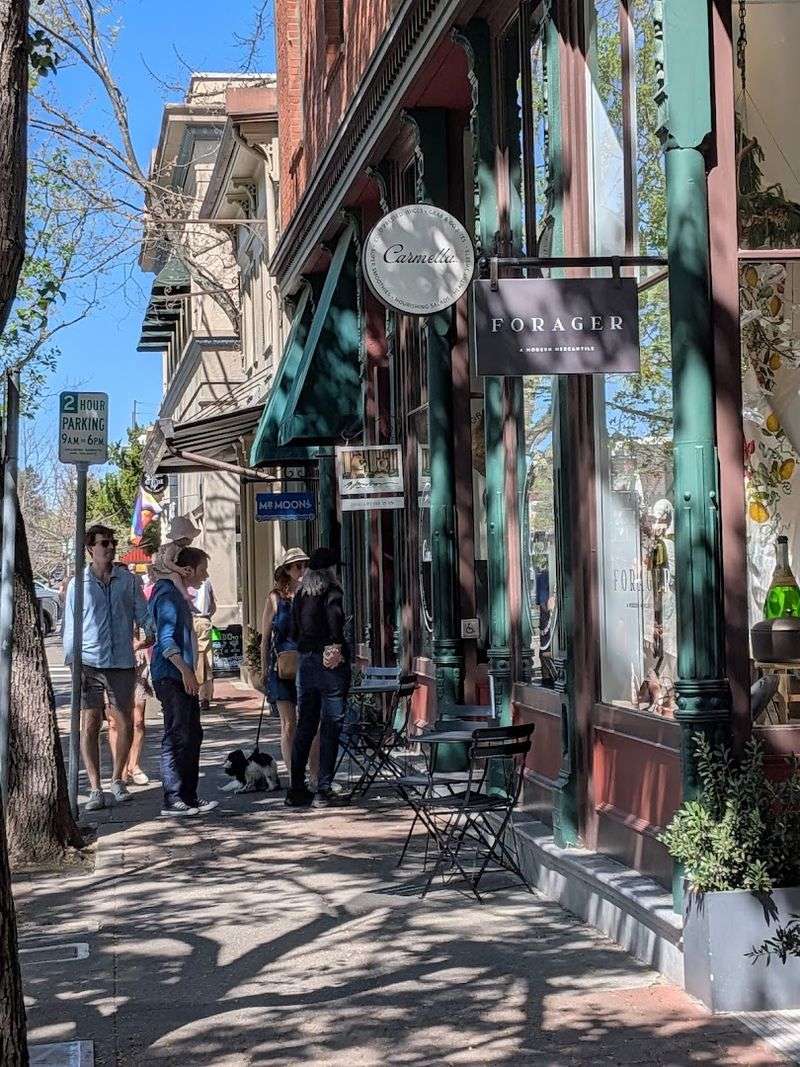
Built around a classic Spanish-style central plaza shaded by ancient trees, Healdsburg in Sonoma County has the relaxed elegance of a small Provencal or Tuscan town without the transatlantic flight.
The plaza is surrounded by independent boutiques, specialty food shops, and farm-focused restaurants that reflect the agricultural richness of the surrounding Dry Creek and Alexander valleys.
April is a lovely time to sit at an outdoor table on the plaza and watch the town move at its own unhurried pace.
The surrounding wine country landscape is green and lush from winter rains, and the mustard flowers that bloom between vineyard rows in late winter are often still visible in early April.
Healdsburg has a well-curated quality that feels intentional without being sterile, and the town’s commitment to local producers shows in nearly every shop and menu.
The Healdsburg Museum at 221 Matheson St, Healdsburg, CA 95448 offers a grounded look at the region’s agricultural and cultural history and is free to enter.
The Russian River runs just outside town and provides a scenic backdrop for afternoon walks.
Healdsburg tends to attract a thoughtful, curious type of visitor, and the overall atmosphere rewards those who slow down and pay attention to the details rather than rushing between attractions.
10. Grass Valley
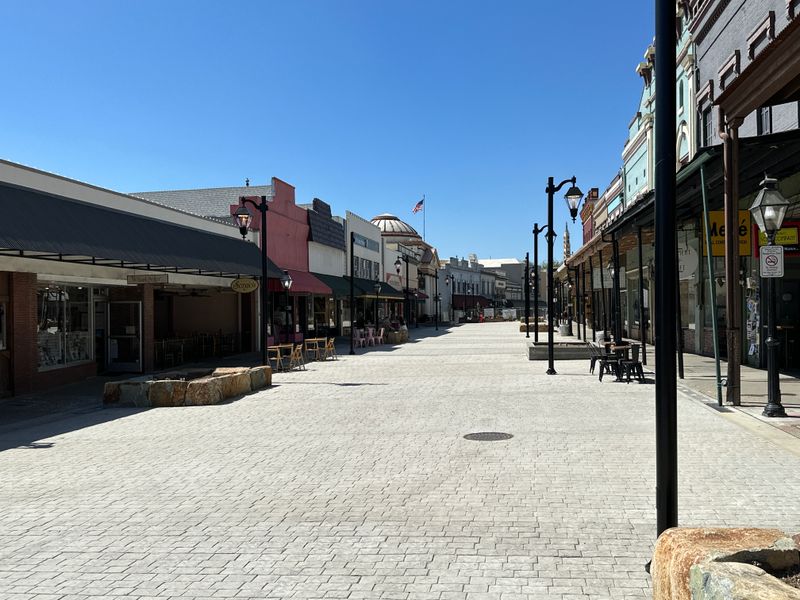
Just a few miles from Nevada City in the Sierra Nevada foothills, Grass Valley has a slightly grittier, more working-class version of the Gold Rush aesthetic that makes it feel like a small Welsh or Cornish mining town.
The connection to Cornwall is not accidental: thousands of Cornish miners came to Grass Valley in the 1850s and brought their food, their building traditions, and their culture with them.
The Cornish pasty, a hand-held meat pie originally eaten by miners underground, is still sold at local shops and has become a point of local pride.
Mill Street and Main Street form the core of the historic downtown, where brick buildings with iron shutters and deep-set windows line the sidewalks in a way that feels genuinely 19th century.
The Empire Mine State Historic Park at 10791 E Empire St, Grass Valley, CA 95945 is one of the best-preserved gold mine sites in California and offers walking tours of the surface facilities.
April temperatures in Grass Valley are mild and comfortable for walking, and the surrounding ponderosa pine forests add a fresh, resinous scent to the air.
The town has a strong local arts scene centered around The Center for the Arts on Neal Street, which hosts concerts, theater, and visual arts exhibitions throughout the year.
11. Cambria
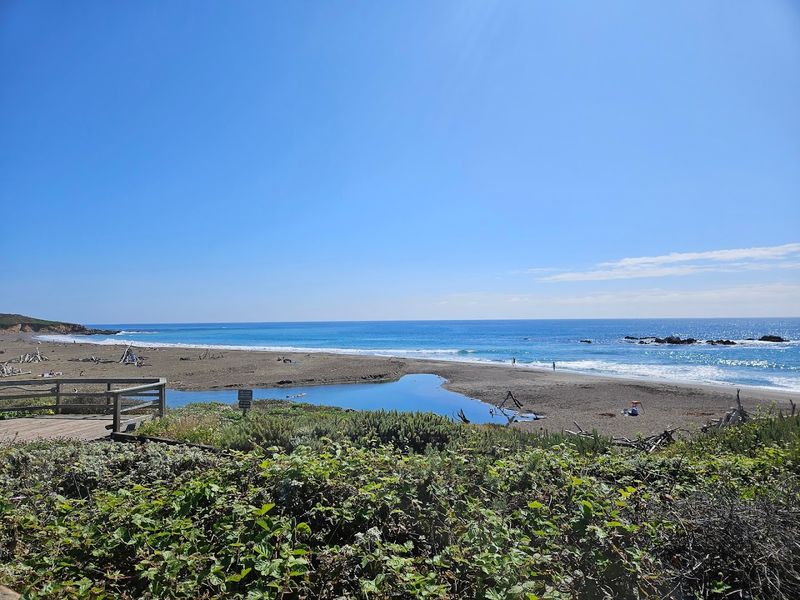
Sitting between San Simeon and Morro Bay on the Central Coast, Cambria has the quiet, slightly windswept character of a small Scottish or Irish coastal village.
Pine trees grow right down to the rocky shoreline, and the main village is divided into two sections called East Village and West Village, each with its own personality and collection of small shops and eateries.
April is a particularly good time to visit because the gray whale migration is winding down and elephant seals are still visible at the Piedras Blancas rookery just north of town.
The Moonstone Beach Boardwalk runs along the coast and offers easy walking with consistent ocean views and smooth stones tumbling in the surf below.
The boardwalk is free and accessible, making it one of the most popular spots in town for a slow morning walk.
Cambria’s East Village has a concentration of art studios, antique shops, and a few long-standing local restaurants that give it a community feel separate from the coastal tourism of the West Village.
The Hearst San Simeon State Historical Monument at 750 Hearst Castle Rd, San Simeon, CA 93452, better known as Hearst Castle, is just a few miles north and adds a dramatic architectural contrast to Cambria’s rustic simplicity.
Combining both in a single visit gives a fuller picture of the Central Coast’s range.
12. Los Olivos
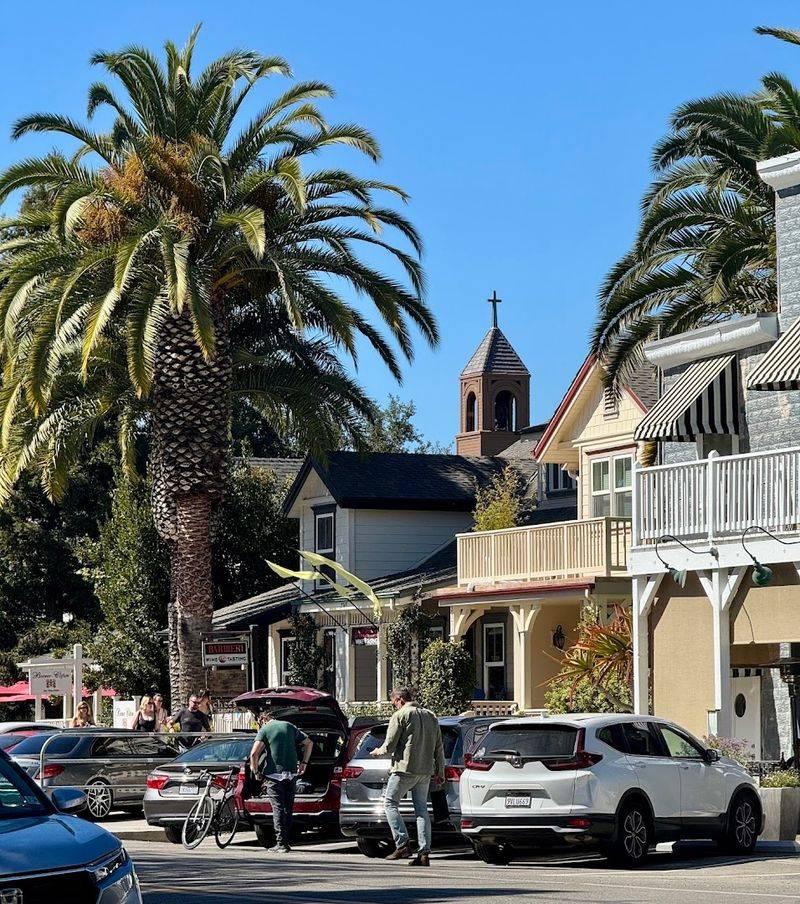
Barely more than a crossroads in the Santa Ynez Valley, Los Olivos has the concentrated charm of a tiny French village that happens to be surrounded by California oak savanna and vineyards.
Grand Avenue, the town’s main street, is only a few blocks long but packs in a surprising number of art galleries, tasting rooms, and specialty shops within easy walking distance of each other.
April brings a particularly warm golden light to the valley, and the surrounding hills are green from winter rainfall before the summer dry season sets in.
The pace in Los Olivos is genuinely slow, and the town seems designed for an afternoon rather than a full day, which makes it an ideal stop on a longer Central Coast road trip.
Mattei’s Tavern at 2350 Railway Ave, Los Olivos, CA 93441, a historic stagecoach inn that has operated in various forms since 1886, anchors the town with a sense of deep local history.
The surrounding Santa Ynez Valley has a strong equestrian culture, and it is not unusual to see horses being led along the roadside near town.
Local galleries tend to focus on landscape and Western art that reflects the valley’s character.
Los Olivos rewards visitors who are happy to wander slowly, browse without pressure, and appreciate the particular quiet of a small town that has no desire to be anything larger.
13. St. Helena
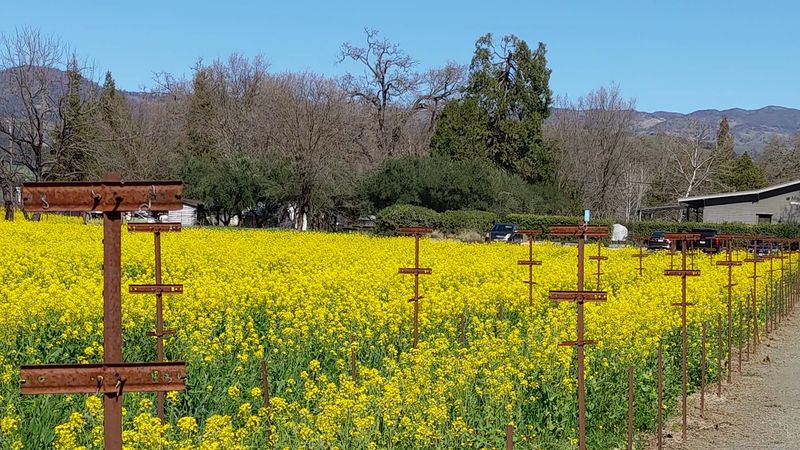
Running through the heart of Napa Valley, St. Helena has the composed, well-tended elegance of a small Burgundy or Bordeaux village, where the landscape is shaped entirely by the rhythm of agriculture and the seasons that govern it.
Main Street is lined with stone and brick buildings from the late 1800s that house independent bookshops, specialty food stores, and farm-focused restaurants that take their sourcing seriously.
April is one of the most visually striking times to visit because the vineyard rows are pushing out their first bright green leaves and the mustard flowers that bloom between vines are at their peak in the lower valley.
The Napa Valley Museum Yountville at 55 Presidents Cir, Yountville, CA 94599 is a short drive south and offers rotating exhibitions on the valley’s art and agricultural heritage.
St. Helena itself has a walkable downtown that rewards slow exploration rather than checklist tourism.
The Beringer Vineyards Rhine House, a Victorian mansion built in 1884, sits at the northern end of Main Street and the entire estate is a registered California Historical Landmark that can be visited during regular operating hours.
The surrounding hills have hiking trails with valley views that require no fee to access.
St. Helena tends to feel quieter on weekday mornings, which is when the town’s everyday character is most visible and unhurried.
14. Sonoma
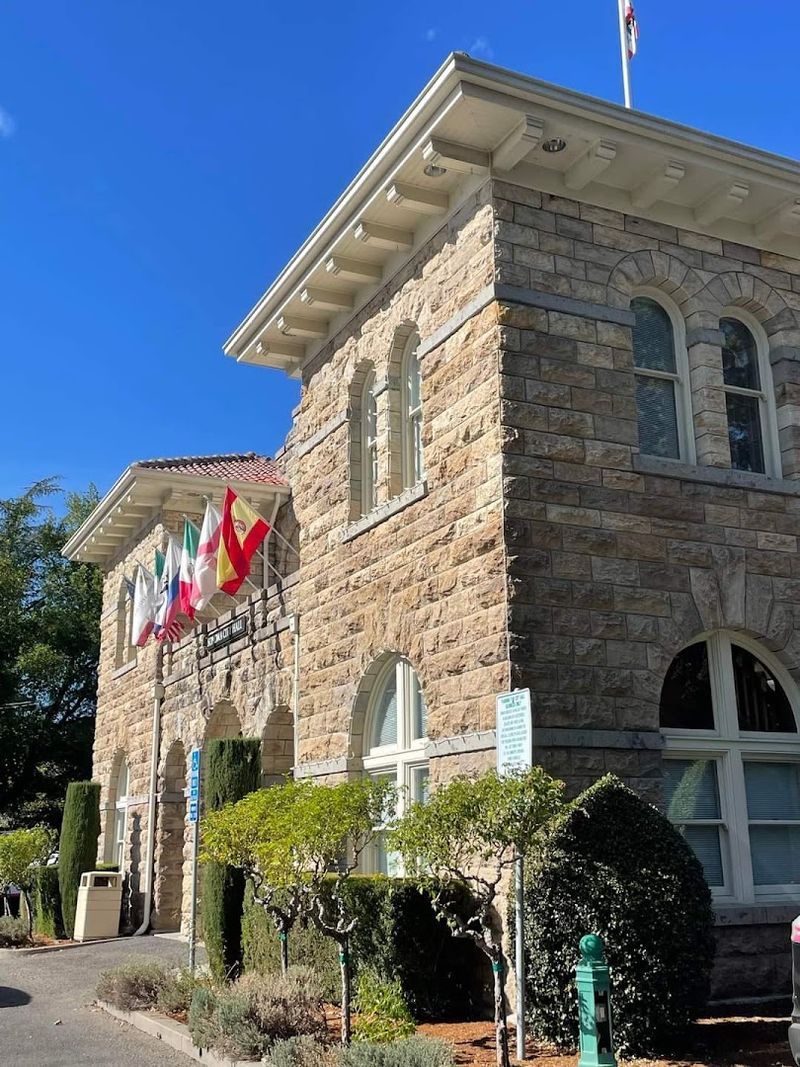
Centered on the largest historic plaza in California, Sonoma has a Spanish Colonial quality that evokes the plazas of small towns in Andalusia or Castile.
The 8-acre plaza is surrounded by adobe buildings, the historic Mission San Francisco Solano, and the Sonoma Barracks, both of which are part of the Sonoma State Historic Park at 20 E Spain St, Sonoma, CA 95476 and open to visitors for a modest fee.
April afternoons on the plaza are warm and easy, with families and visitors spread across the grass under mature trees while the surrounding shops and eateries hum at a relaxed pace.
The Sonoma Valley has a slightly warmer and drier microclimate than some neighboring Sonoma County regions, which means spring comes a bit earlier and the wildflowers on Sonoma Mountain tend to bloom reliably in late March and early April.
The weekly farmers market held on the plaza brings out local producers and adds a lively community energy to weekend mornings.
Sonoma’s historic district is compact and almost entirely walkable, making it easy to combine a visit to the mission and barracks with lunch and a browse through the independent shops along Spain Street and First Street East.
The town has a genuine year-round resident community that gives it a grounded, non-touristy energy even during busy spring weekends.
15. Capitola
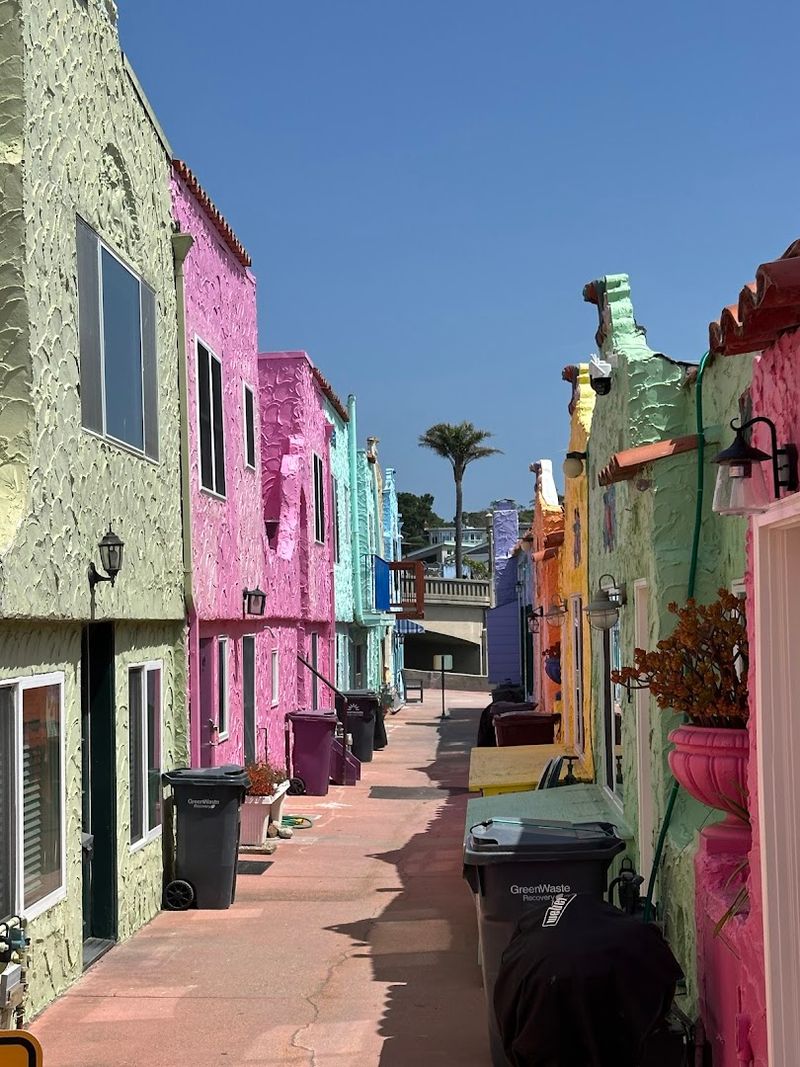
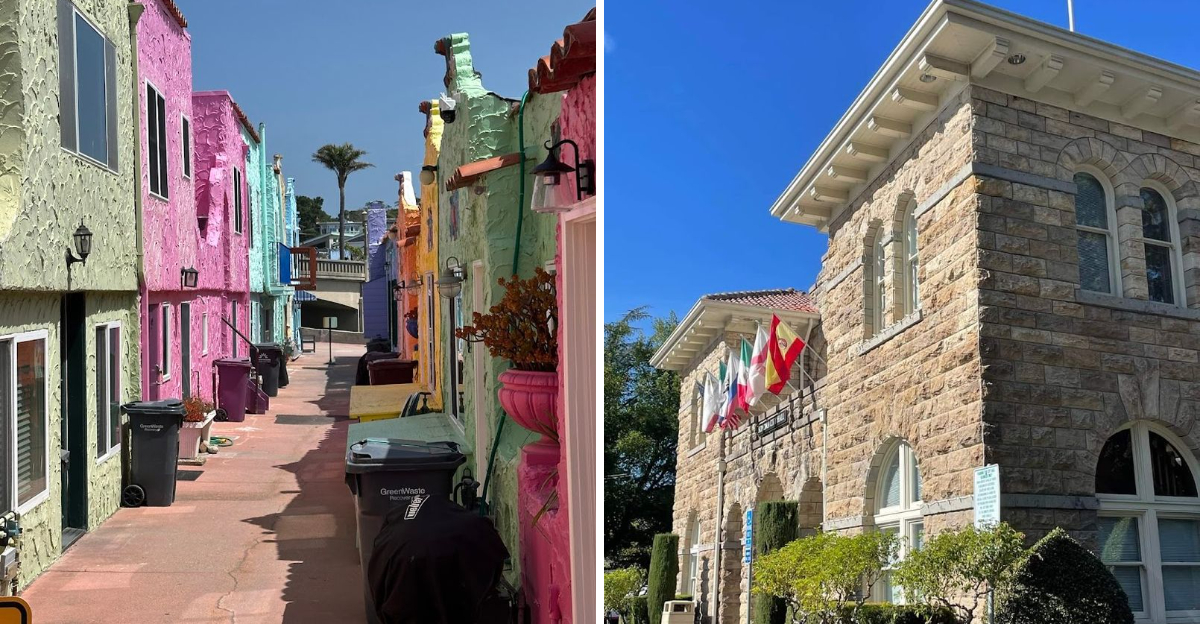
Painted in sherbet tones of peach, coral, yellow, and turquoise, Capitola lines the edge of Soquel Creek where it meets the Pacific in a way that looks remarkably like a small Italian or Greek coastal village.
The cluster of brightly colored buildings along the beach has been a defining image of the town since the early 20th century, and the low-rise, human-scaled layout keeps the atmosphere intimate and unhurried.
April in Capitola is quiet compared to summer, when the beach fills quickly and parking becomes a challenge.
The spring crowds are lighter and the ocean light is soft and clear, making the colored facades of the beachfront buildings reflect beautifully in the calm creek water.
The Capitola Village has a mix of surf shops, local restaurants, and small boutiques that feel genuinely embedded in the community rather than dropped in for tourists.
The Capitola Wharf at 1400 Wharf Rd, Capitola, CA 95010 extends into the bay and is a popular spot for fishing and watching pelicans drift in formation above the waterline.
The surrounding cliffs are home to nesting seabirds in spring, adding a natural dimension to the already vivid visual landscape.
Capitola is only minutes from Santa Cruz, making it easy to combine both in a single coastal day trip without feeling rushed or overscheduled.