10 Places In North Carolina Where The Sun Sets Like Magic
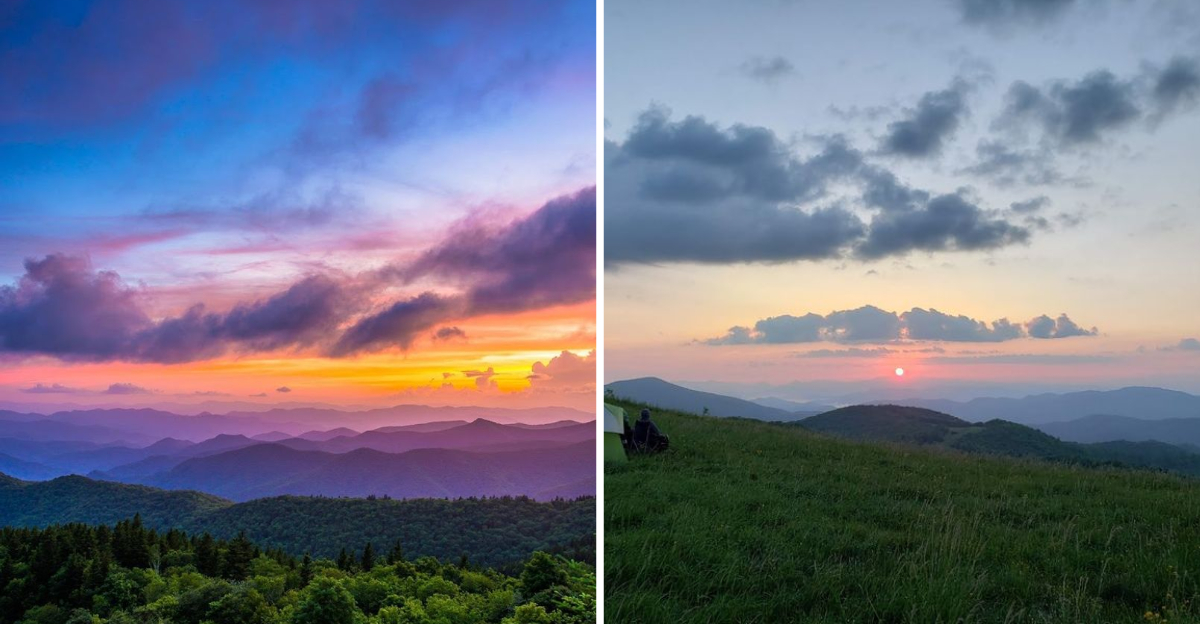
There’s something about a North Carolina sunset that just feels different.
Maybe it’s the way the sky turns all sorts of colors. Maybe it’s just the quiet at the end of the day.
I’ve spent a lot of evenings chasing that perfect view. I have to be honest, I can’t decide which spot is more beautiful.
If you’re looking for destinations where the sun sets like magic, you’re at the right place.
These are the spots across the state that really stand out. Grab your camera, or just sit back and watch. These sunsets are truly worth your time and attention.
1. Jockey’s Ridge State Park
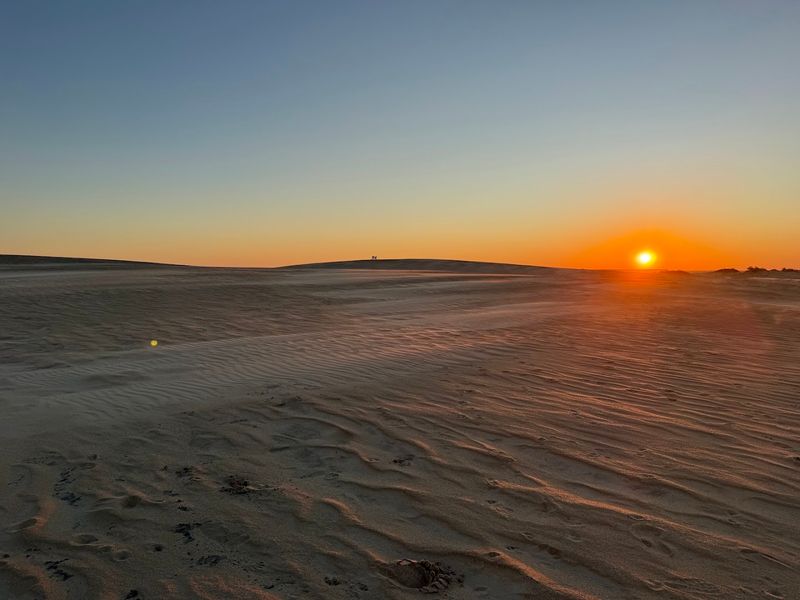
You probably would not expect this, but stay with me for a moment. Being on top of the home to the tallest active sand dune system on the East Coast feels like being on top of the world.
It sounds cliche, I know. The experience is especially powerful when the sun starts its descent toward the Roanoke Sound.
Jockey’s Ridge State Park, found in Nags Head on North Carolina’s Outer Banks, is home to dunes that rise nearly 80 feet high.
That elevation gives you a sweeping, unobstructed near 360-degree views of the surrounding landscape. Colors shift from gold to deep orange and then to soft purple.
Hikers, kite flyers, and hang gliders all share this space during the day. By late afternoon, most people slow down and simply watch the sky.
Bring shoes that can handle loose sand for the climb. Arrive at least 30 minutes before sunset to claim your spot at the top.
The park is free to enter for all visitors. The walk to the summit takes about 10 to 15 minutes from the main parking area.
One of the most unexpected things about this spot is how quiet it gets. The crowd thins out significantly as the sun begins to dip.
The sound of wind moving across the dunes creates a unique atmosphere. Combined with that massive burning sky, it is a moment no photograph can fully capture.
2. Ocracoke Island
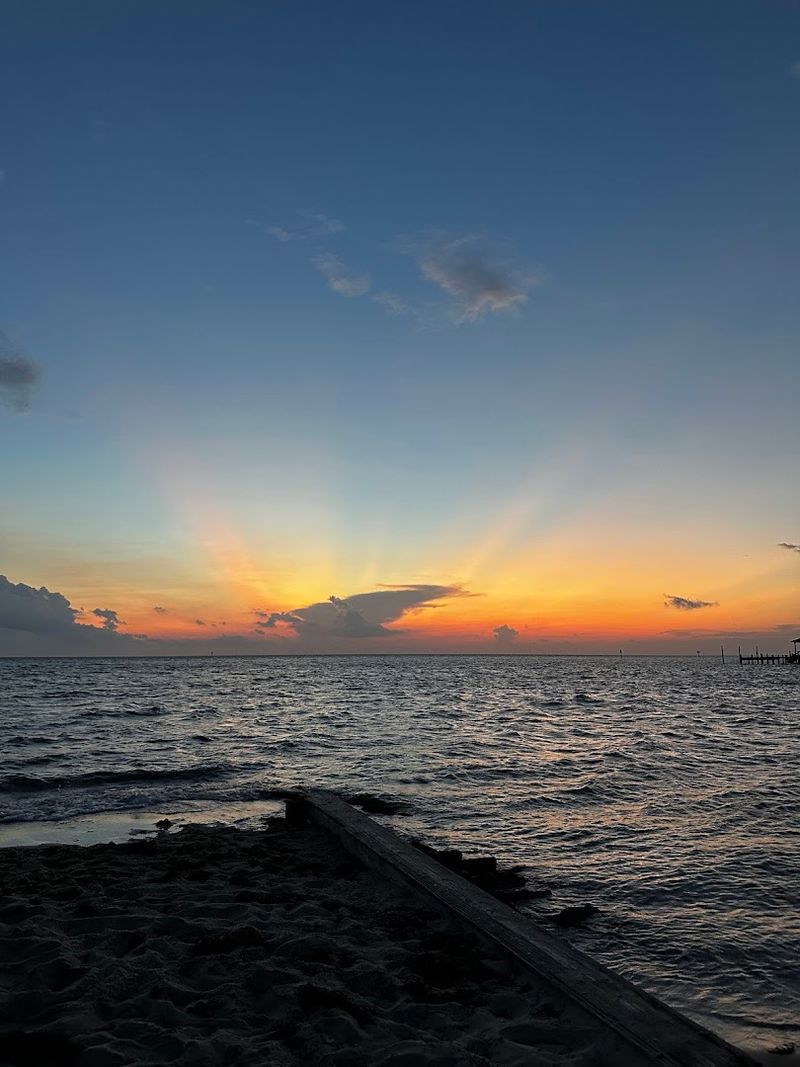
Let me be honest for a second about how we travel. There is something almost dreamlike about a place you can only reach by ferry. That sense of remoteness makes every sunset feel like a private showing.
Ocracoke Island, which sits off the coast in Hyde County, is part of the Cape Hatteras National Seashore.
This is one of the most unspoiled places on the entire East Coast. The island has a permanent population of just fewer than 1,000 permanent residents.
This small population means the beaches stay calm and uncrowded even in summer. Watching the sun go down here is a slow and relaxed experience.
The soft light bounces off the sound while marsh grasses sway in the breeze.
The Ocracoke Lighthouse adds a striking silhouette to the evening sky. As the oldest operating lighthouse in the state, it provides a sense of history.
The ferry ride itself from Cedar Island or Swan Quarter sets the mood. It offers wide open water views before you even arrive at your destination.
Ocracoke rewards the patient traveler who makes the effort. Those who arrive are treated to sunsets that feel completely earned.
3. Wrightsville Beach
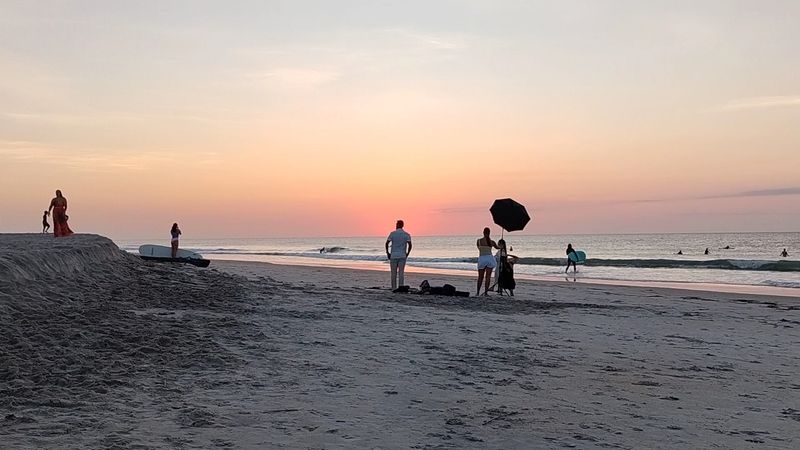
This might sound a little dramatic, but hear me out on this one. Most visitors head straight to the Atlantic-facing shore, but locals know a secret.
They turn around and face the other direction when the sun starts going down.
Just east of Wilmington in New Hanover County, Wrightsville Beach offers a front-row seat to the Intracoastal Waterway.
As the sun dips toward the mainland, the water turns into a mirror. You can see kayakers and paddleboarders silhouetted against the rose gold glow.
The Banks Channel area near the south end is especially popular. Residents bring folding chairs and coolers to watch the show from the shore.
The nearby Wrightsville Beach Park features a grassy area with water views if you prefer that over the sand. The combination of boat traffic and calm waterway reflections makes this spot stand out.
The warm light bouncing off the marsh creates a truly stunning visual.
It is the kind of sunset that makes you understand the local charm. You will see why so many people choose to never leave this little beach town.
4. Bird Island Reserve
I did not think much of it at first either when I heard the story. A mailbox in the middle of an uninhabited island sounds like the start of a riddle.
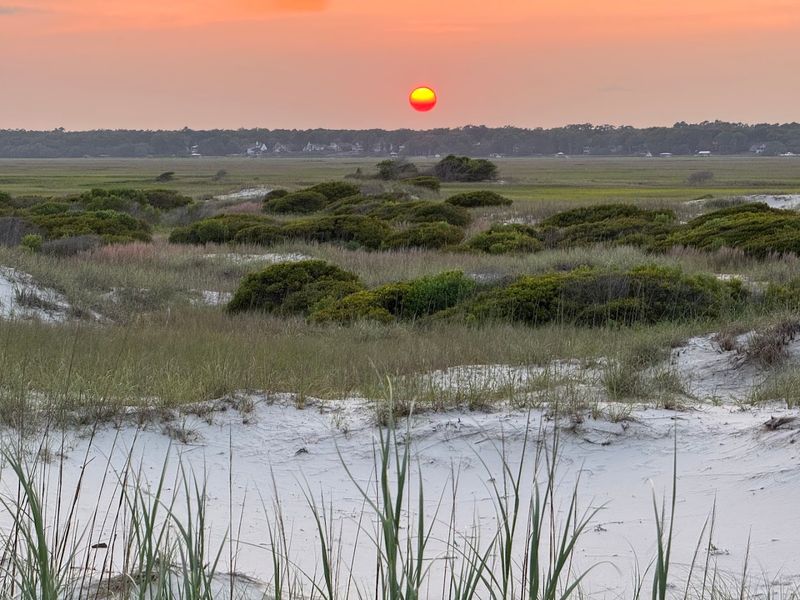
However, this landmark is one of the most beloved spots on the coast. Bird Island Reserve is an undeveloped barrier island situated just west of Sunset Beach in Brunswick County.
The island is most easily accessible only by foot along the shoreline, especially during low tide. The two-mile walk from the western tip of Sunset Beach is part of the experience.
Shorebirds, shells, and open sky keep you company the whole way. Once you arrive, the solitude is almost startling in the best possible way.
There is nothing but dunes, sea oats, and horizon stretching in every direction. The Kindred Spirit mailbox contains notebooks filled with handwritten notes from visitors.
This tradition has continued since the 1980s for everyone who visits. Reading a few pages before the sun goes down adds an emotional layer to the day.
Sunsets here are unhurried and deeply peaceful for the soul. The sky turns shades of peach and lavender over the calm coastal waters.
Check tide charts before heading out to ensure a safe trip. Wear a light jacket because the ocean breeze picks up as the evening rolls in.
5. Fort Fisher And Carolina Beach, Southeastern NC
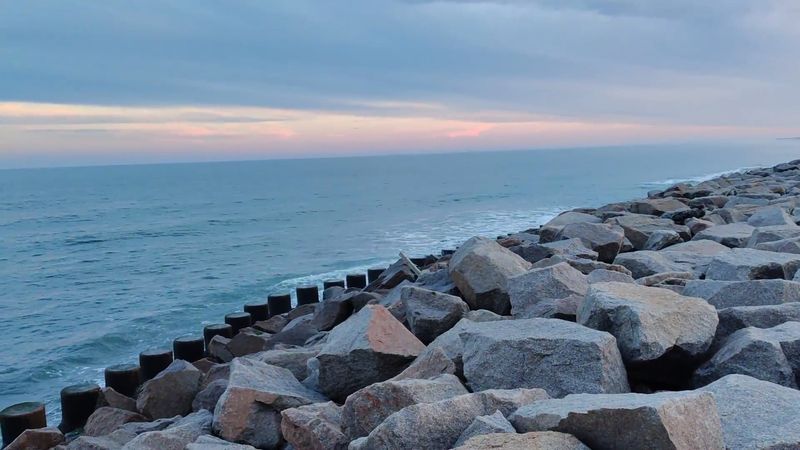
Here is the thing no one really talks about regarding this area. These two locations offer some of the most dramatically lit sunset views on the coast.
They often seem to be less crowded than other popular beach destinations. Carolina Beach and Fort Fisher sit at the southern tip of a long barrier island in New Hanover County.
Fort Fisher itself is a historic Civil War site with a unique atmosphere. The earthworks and marshland surrounding it create a moody, layered backdrop for light.
The State Recreation Area stretches along both the ocean and the Cape Fear River. This gives visitors multiple angles from which to watch the sunset unfold.
The river-facing side is particularly striking in the late afternoon. The wide expanse of water catches the light and spreads it in sweeping bands.
A few miles north, Carolina Beach has a fun boardwalk area. It offers a more social vibe if you want company while you watch the show.
The Fort Fisher Aquarium is also nearby for an afternoon stop. It is a great place to visit before you settle in for the evening view.
This area tends to stay quieter because it is further from the main tourist corridors. Sunsets here have an untamed quality that feels very personal.
6. Blue Ridge Parkway
You might want to remember this one for your next road trip. Few roads in the country can compete with this route when it comes to scenic impact.
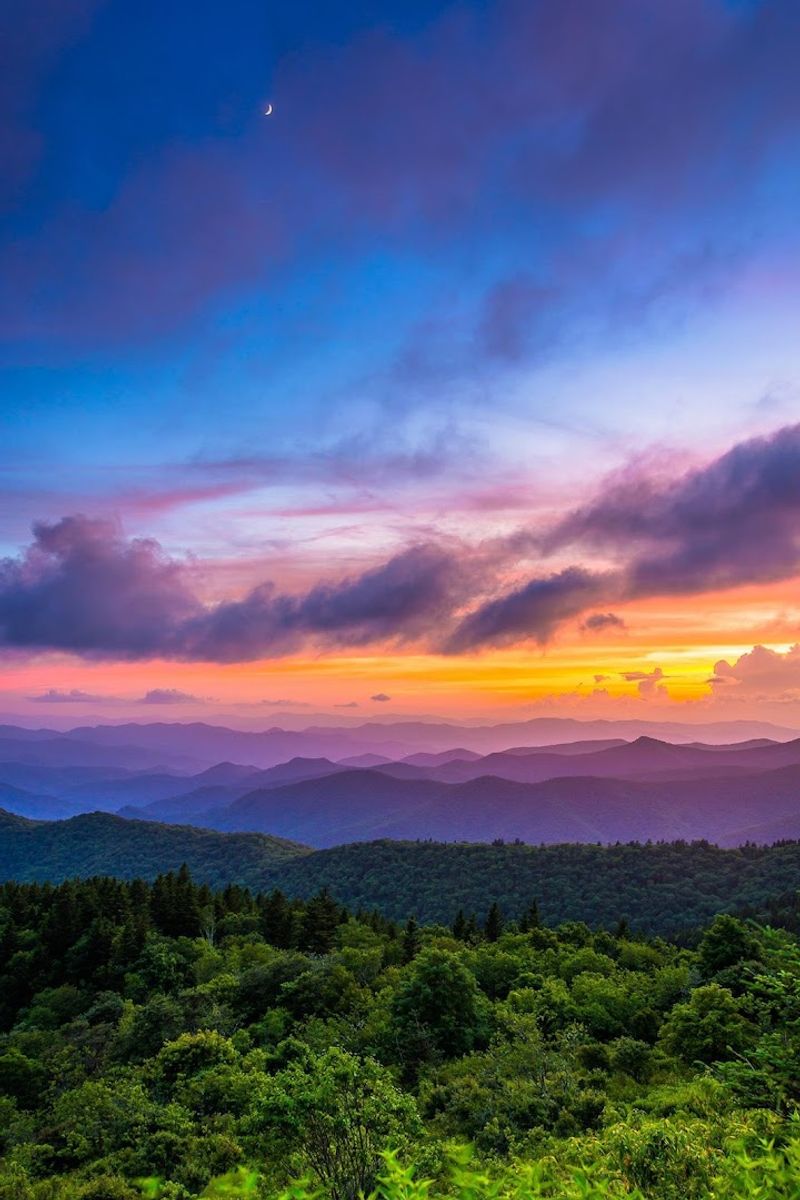
The overlooks here provide some of the most breathtaking views in the state. Running through western North Carolina near Asheville, the Blue Ridge Parkway offers dozens of named overlooks for travelers.
You can pull over and watch the sun disappear behind layered ridgelines. Craggy Gardens, Rough Ridge, and Graveyard Fields are all popular stops.
Each location offers a slightly different perspective on the mountain landscape. The famous blue haze of the mountains becomes even more vivid at sunset.
The distant peaks turn into soft watercolor layers of indigo and gold. Autumn is the most popular time to visit for very good reason.
The foliage adds fiery reds and yellows to an already spectacular view. Speed limits on the Parkway are low to ensure a safe and scenic drive.
Driving from overlook to overlook is a relaxed and leisurely experience. Bring a blanket and a snack to enjoy while leaning against a guardrail.
There is a reason people have been pulling over on this road for decades. One golden hour visit will show you exactly why it remains so iconic.
7. Max Patch
It is not what you think at all until you actually stand there. At 4,629 feet above sea level, this place makes your jaw drop instantly.
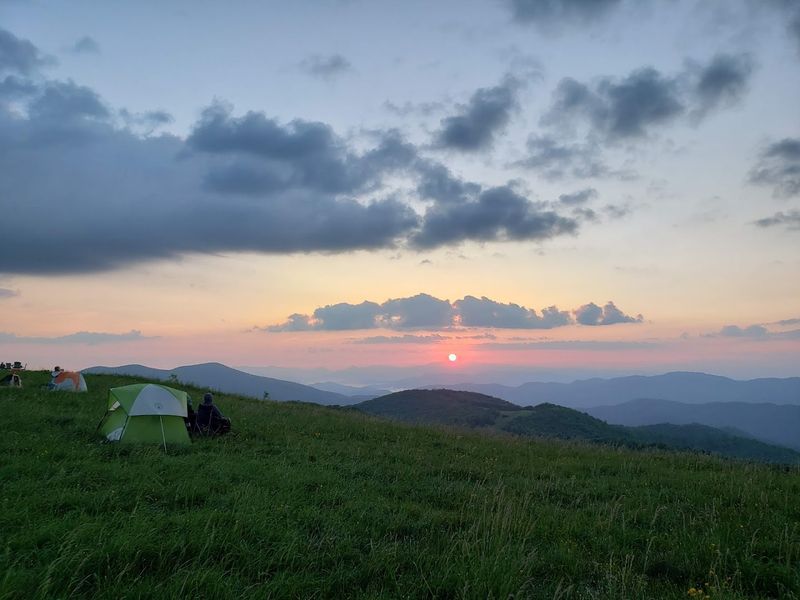
The views are incredible even before you catch your breath from the hike. Max Patch is an open mountain bald in the Pisgah National Forest near the Haywood and Madison County border.
It offers one of the most complete 360-degree views in the Appalachian region. The Appalachian Trail crosses directly over the summit for hikers.
On any given evening, you might share the hilltop with long-distance thru-hikers. As the sun descends, the surrounding ridgelines catch the light in waves.
The grassy bald glows a warm amber that feels almost otherworldly. The trail to the summit is about 1.4 miles round trip from the parking area.
This makes the peak accessible to most hikers with moderate fitness levels.
Parking fills up fast on weekends, especially during the summer and fall. Arriving by mid-afternoon gives you the best chance of a smooth experience.
The openness of this summit leaves nothing blocking the sky in any direction. Every sunset here seems like the first and the last one you will ever see.
8. Kuwohi (Clingmans Dome)
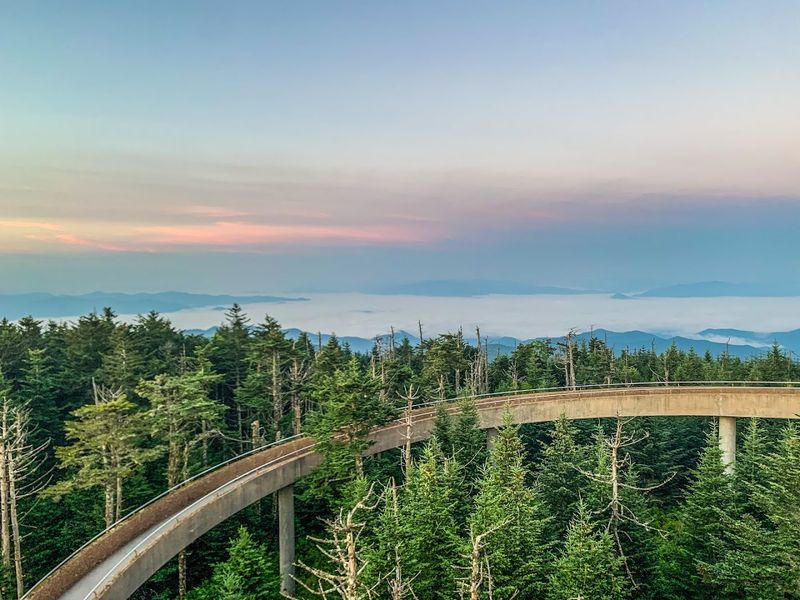
I almost skipped this completely because of the steep climb. However, rising to 6,643 feet, this spot offers an experience above the clouds.
On clear evenings, the sunset looks like it is happening in another world.
Kuwohi, also widely known as Clingmans Dome, is the highest point in the Great Smoky Mountains National Park.
The observation tower at the summit is shaped like a flying saucer. It gives people an elevated platform to watch the sun melt into the ridgelines.
On days with low cloud cover, you can actually look down at the clouds. The sky above burns with color while the ground below is hidden.
The half-mile paved trail from the parking area is quite steep.
Take your time and pace yourself if you are not used to the elevation. The road to the summit is typically closed from December through March.
Late spring through early November is the ideal window for a visit. Crowds tend to thin out in the final hour before the sun disappears.
Watching the light fade from the highest peak in the Smokies is rare. It is a travel moment that stays with you long after you have driven down.
9. Omni Grove Park Inn
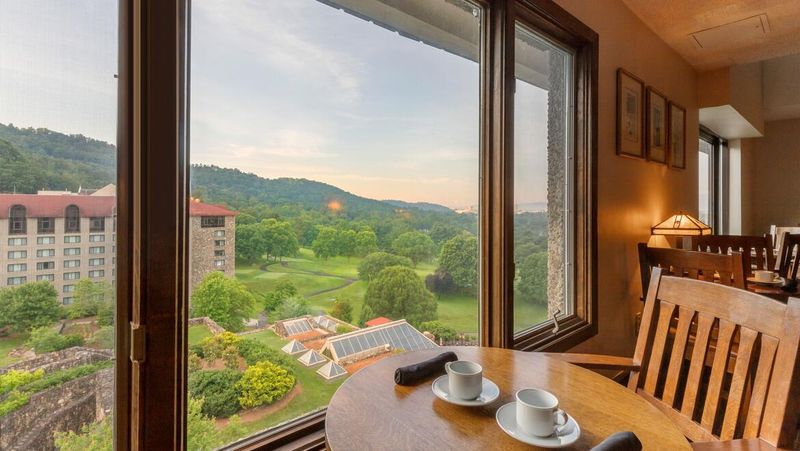
This is where things get interesting for those who love history. This resort, perched on the side of a mountain, has been welcoming guests since 1913.
The view from its terraces has been making people stop mid-sentence for a century. The Omni Grove Park Inn, located in Asheville on Sunset Mountain, sits at a perfect elevation above the city.
It provides a direct sightline toward the layered Blue Ridge ridgelines. The main terrace and outdoor fire pits fill up quickly in the late afternoon.
People gather here to watch the sky change color behind the mountains. You do not have to be a hotel guest to enjoy the view.
The outdoor spaces and the Sunset Terrace restaurant are open to the public. Reserving a table for dinner around golden hour is a very practical move.
It allows you to secure a great seat without having to wait in line. The resort’s Arts and Crafts architecture is built from local granite.
This adds a warm, earthy visual element that complements the mountain backdrop. Presidents and famous artists have all passed through these stone walls.
Watching the sun go down here seems like a well-deserved ceremony. It is more than just a casual outing, it is an experience in elegance.
10. Lake Lure And Lake Glenville, Western North Carolina
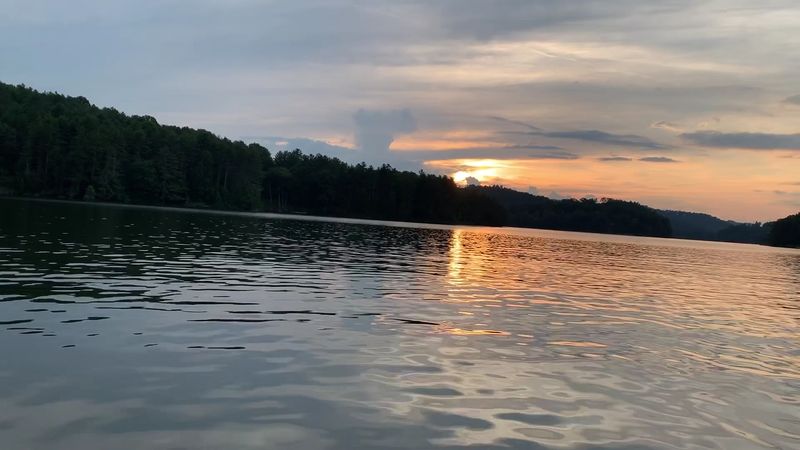
You are going to want to see this if you enjoy mountain water. Mountain lakes have a particular kind of magic when the day ends.
Western North Carolina has two specific lakes that deserve your attention. Lake Lure and Lake Glenville are stunning destinations found in Rutherford and Jackson County.
Lake Lure is tucked into the Hickory Nut Gorge near Chimney Rock. It is surrounded by steep cliffs that frame the evening sky theatrically.
The calm surface of the water doubles the sunset through reflection. It can be hard to tell where the mountain ends and the lake begins.
Lake Glenville sits at about 3,500 feet of elevation in the hills. It is one of the higher-elevation lakes in the eastern United States.
That altitude means the surrounding ridgelines catch the last light at dramatic angles. Shadows and color play across the water in slow and shifting patterns.
Both lakes have public access points and nearby picnic areas for visitors. Kayaking or canoeing during golden hour is one of the most peaceful activities.
The combination of elevation and still water creates a unique visual. These two lakes offer a sunset experience that rewards anyone making the drive.