11 North Carolina Road Trips With Stops You Will Not Want To Miss
North Carolina will make you feel like you discovered something nobody else knows about. I mean that seriously.
One weekend here and suddenly every other road trip feels like a consolation prize. I have pulled over on mountain highways just to breathe the air.
I have sat on empty beaches at sunrise wondering why I ever lived anywhere else. This state does that to people.
From Cherokee to Corolla, North Carolina holds more beautiful stops per mile than almost anywhere in the country. Waterfalls hidden behind country roads.
BBQ joints with lines out the door at 10 a.m. Small mountain towns.
Lighthouses. Vineyards carved into hillsides.
I drove all of it. Every route on this list comes with stops you will not want to skip.
1. Blue Ridge Parkway
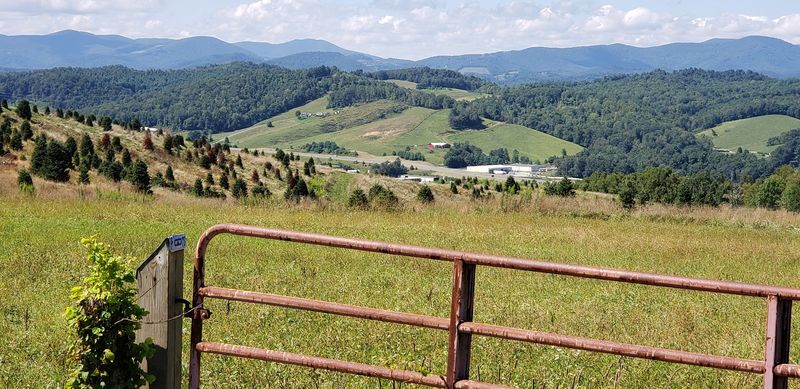
Some roads are built for speed. This one was built to make you slow down.
The Blue Ridge Parkway stretches 469 miles through the Appalachian Highlands. The North Carolina section alone could fill a week with memories.
Starting near Cherokee and winding north toward the Virginia border, the route passes through some of the most dramatic scenery east of the Rockies.
The Linn Cove Viaduct at Grandfather Mountain hugs the mountainside like it belongs there. Craggy Gardens blooms purple with rhododendrons every June.
Linville Falls is worth every step of the short hike to the overlook.
Mount Mitchell stands at 6,684 feet, the highest point east of the Mississippi River. On a clear day, the view from the summit feels almost unfair.
The Folk Art Center near Asheville is a perfect stop for locally made crafts before getting back on the road.
Plan at least two days for this stretch. The speed limit tops out at 45 mph, and every overlook deserves five minutes.
Bring layers because mountain temperatures drop fast, even in summer. This is one of those drives you will talk about long after you get home.
2. Forest Heritage Scenic Byway
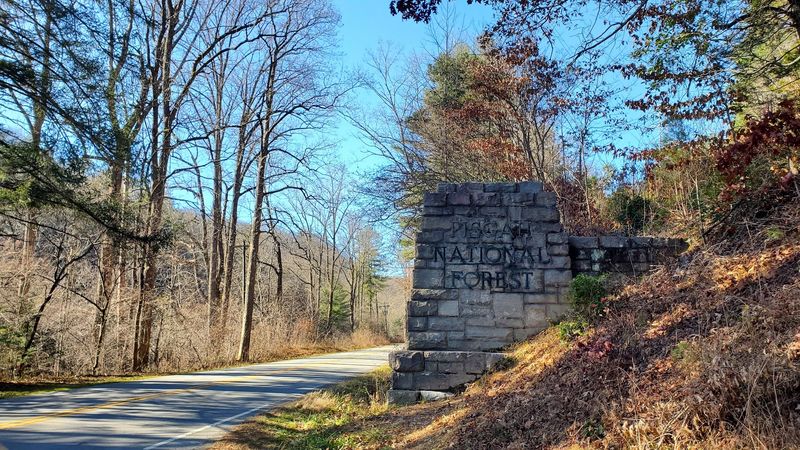
Sixty-eight miles does not sound like much. Until every single one of them has a waterfall.
The Forest Heritage Scenic Byway loops through Pisgah National Forest, starting and ending near Brevard. It follows US Highway 276 and NC Highway 215 through some of the most rewarding scenery in the state.
Looking Glass Falls is one of the most photographed waterfalls in the region. It sits right off the road, so you do not even have to hike to feel rewarded.
Sliding Rock is exactly what it sounds like. A natural waterslide over a 60-foot rock face into a pool below.
Cold, slippery, and completely worth it.
The Cradle of Forestry sits nearby and tells the story of America’s first forestry school, founded here in the late 1800s. It is more interesting than it sounds.
Sunburst Falls and Mount Pisgah round out a route that keeps delivering something new around every bend.
Short detours onto the Blue Ridge Parkway lead to Devils Courthouse. A steep but short trail rewards you with panoramic views across four states on a clear day.
The whole loop is manageable in a single day if you start early. Bring good walking shoes.
And do not skip Sliding Rock, no matter how cold the water looks.
3. The Asheville Cultural Circuit

Asheville operates on its own frequency, and once you tune in, it is hard to leave. This loop starts and ends in the city, but it reaches out in every direction to pull in mountain views, historic grandeur, and serious creative energy.
The Biltmore Estate is the anchor of any Asheville visit. Built by George Vanderbilt and completed in 1895, it remains the largest privately owned home in the United States at 178,926 square feet.
The gardens, designed by Frederick Law Olmsted, are worth the visit on their own.
Downtown Asheville’s arts district pulses with galleries, street murals, and independent shops that reflect the city’s deep creative identity. The River Arts District lines the French Broad River with working artist studios housed in converted industrial buildings.
You can watch painters, potters, and glassblowers at work, which beats any museum for pure entertainment.
Spur drives off the Blue Ridge Parkway take you to overlooks like the Black Balsam Knob area, where the terrain opens into grassy balds with views that stretch for miles. The cultural circuit here is not just about checking boxes.
It is about spending a full weekend at a pace that lets each stop actually sink in. Asheville rewards the unhurried traveler more than almost any city in the South.
4. The Blowing Rock
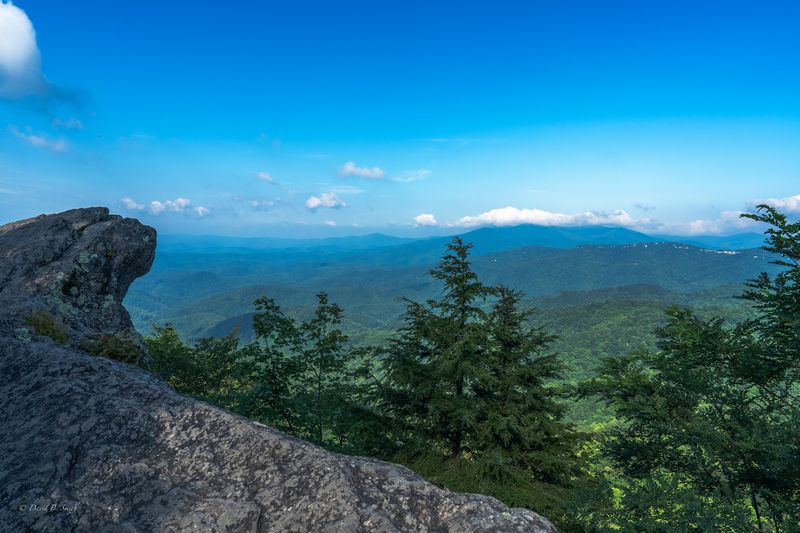
Two towns, one short drive, and more character per mile than you would expect from a stretch of road under 10 miles long.
Boone and Blowing Rock sit close together but feel entirely different, which makes the run between them genuinely interesting.
Boone is home to Appalachian State University and carries the energy of a college town with good restaurants, independent bookstores, and a lively downtown. It sits at 3,300 feet, making it one of the highest elevation towns in the eastern United States.
Summers here are noticeably cooler than the rest of the state.
Blowing Rock is quieter, more polished, and built around its famous overlook. The legend behind the name involves a Cherokee brave who was swept back up by the wind after leaping from the cliff, returning to the woman he loved.
Tweetsie Railroad offers a fun detour for families, and Grandfather Mountain is close enough to justify a half-day side trip. The mile-high swinging bridge there is an experience that earns its reputation.
Price Lake Overlook on the Blue Ridge Parkway sits just between the two towns and is one of the quieter, more reflective stops on the whole route. Do not rush this one.
5. Pamlico Sound & Inner Banks Coastal Drive
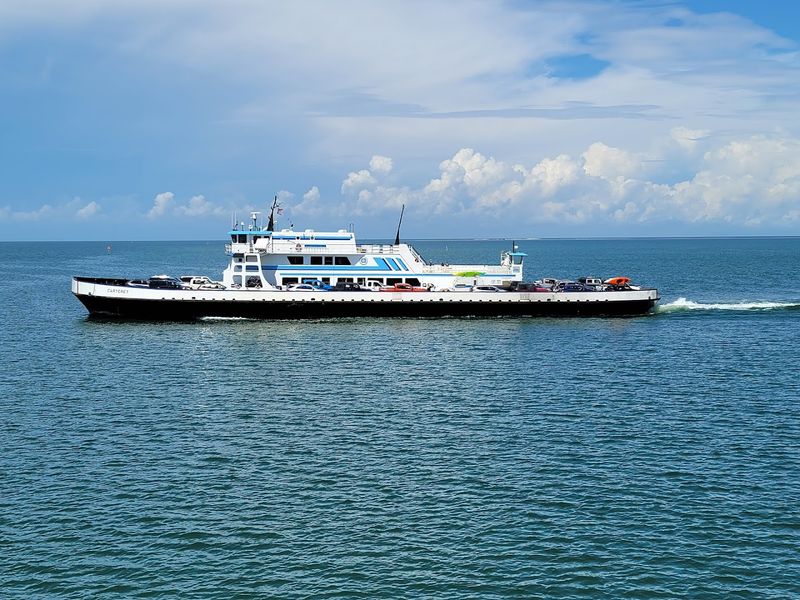
Flat, wide, and quietly spectacular, the Inner Banks coastal drive runs about 122 miles from Washington to Cedar Island. It is nothing like the Outer Banks.
This is the part of the state that most road trippers never find.
Little Washington, often called the original Washington in the United States, sits at the head of the Pamlico River. It has a lovely waterfront with historic buildings and a relaxed pace.
The riverfront boardwalk is a good place to stretch your legs and watch the water move.
Pamlico Sound ferry crossings add a rhythm to this drive that feels genuinely different from a standard road trip. You park the car, step onto the deck, and watch the flat water stretch in every direction.
Hammocks Beach State Park requires a ferry to reach Bear Island, a pristine barrier island with undeveloped beaches that feel almost impossibly quiet.
Coastal fishing villages along this stretch carry an unpretentious charm that is harder to find every year. Local seafood shacks, old churches, and hand-painted signs remind you that this region has its own identity, completely separate from the tourist-heavy coast.
Give this drive a full day and bring binoculars. The birdlife here is outstanding.
6. The Uwharrie Mountains Byway
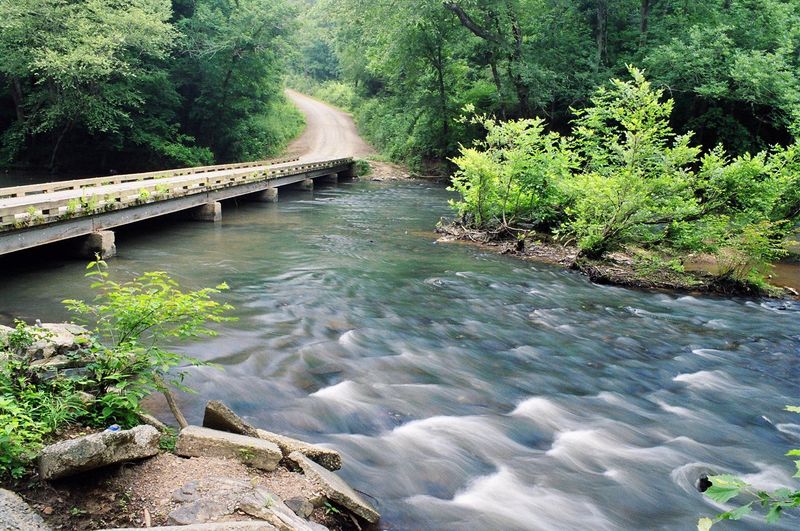
Ancient does not begin to cover it. The Uwharrie Mountains are among the oldest mountain ranges in North America, worn down over hundreds of millions of years into gentle, forested ridges that feel more like a secret than a destination.
The byway runs from Asheboro to Troy through Uwharrie National Forest, where trails cut through hardwood forest that feels genuinely wild.
The Birkhead Wilderness is one of the least-visited wilderness areas in the eastern United States, and hiking its trails feels like stepping back before the highways arrived. Silence is the main attraction here, and it delivers every time.
Pisgah Covered Bridge near Asheboro is one of the few remaining covered bridges in North Carolina. Built in 1911, it spans Richland Creek and is a genuinely photogenic stop that takes about five minutes to visit and earns its place in every photo roll.
The town of Denton, located along NC Highway 109, is home to an impressive collection of restored barns, churches, mills, and general stores that give this byway real historical weight.
This route does not compete with the mountain drives for drama. Instead, it offers something rarer: a quiet, unhurried landscape where the history is subtle and the beauty is the kind that sneaks up on you.
Pack a picnic and plan a full day to do it properly.
7. Great Smoky Mountains National Park
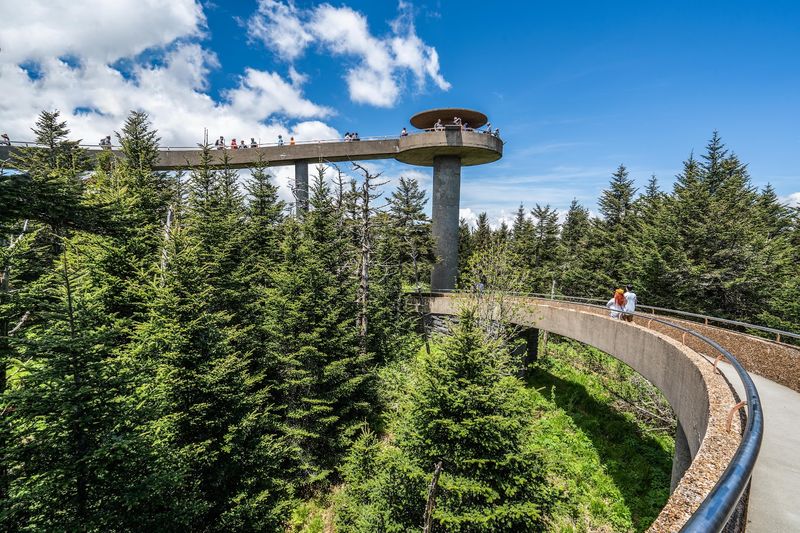
Free to enter and consistently the most visited national park in the country, the Great Smoky Mountains loop from Cherokee, NC packs more into a single drive than most parks offer in a week. Over 800 miles of trails.
More than 100 species of trees.
Arriving at the Oconaluftee Visitor Center just after dawn gives you a real chance of spotting elk in the meadow. The park reintroduced elk here in 2001, and the herd has grown steadily since.
Mingo Falls sits just outside the park boundary near the Cherokee community. It drops 120 feet and is one of the most impressive waterfalls in the area.
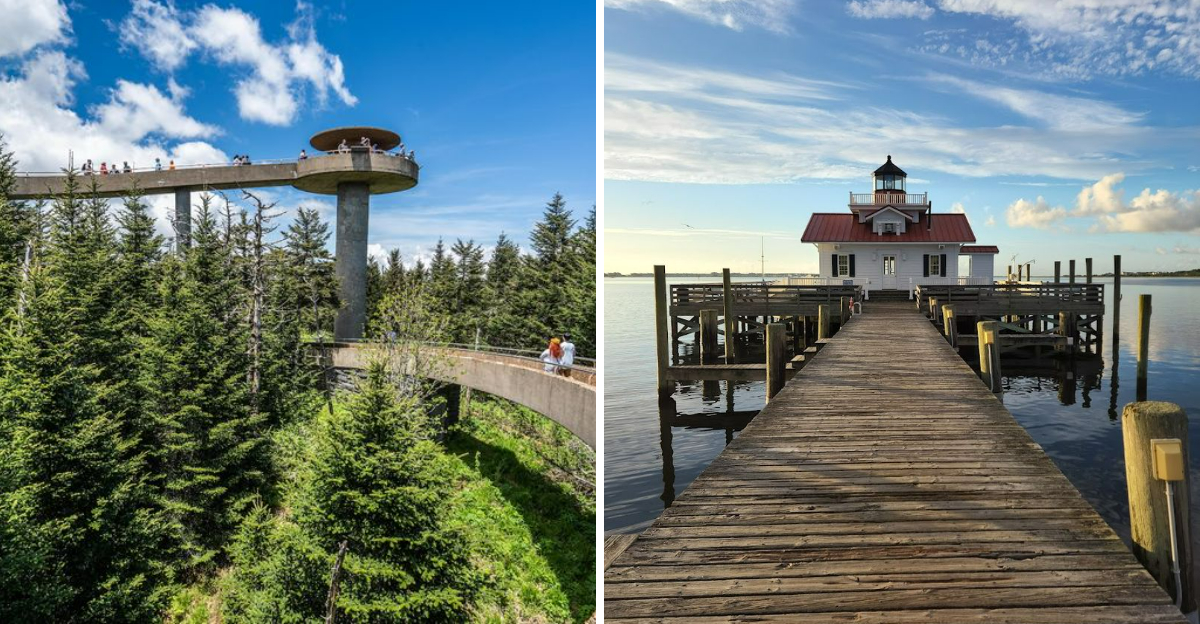
Kuwohi rises to 6,643 feet. The paved trail to the observation tower is steep but only half a mile.
On clear days, the views stretch above the clouds in every direction.
The Museum of the Cherokee People in Cherokee covers 11,000 years of history through exhibits, artifacts, and multimedia presentations. It adds real depth to the landscape you just drove through.
The loop runs roughly 32 miles from Cherokee to the Dome and back. Side roads and short hikes will stretch your day in the best way.
Go early, go slow, and expect to share the road with deer who treat the pavement as their personal sidewalk.
8. The Outer Banks Lighthouse Loop
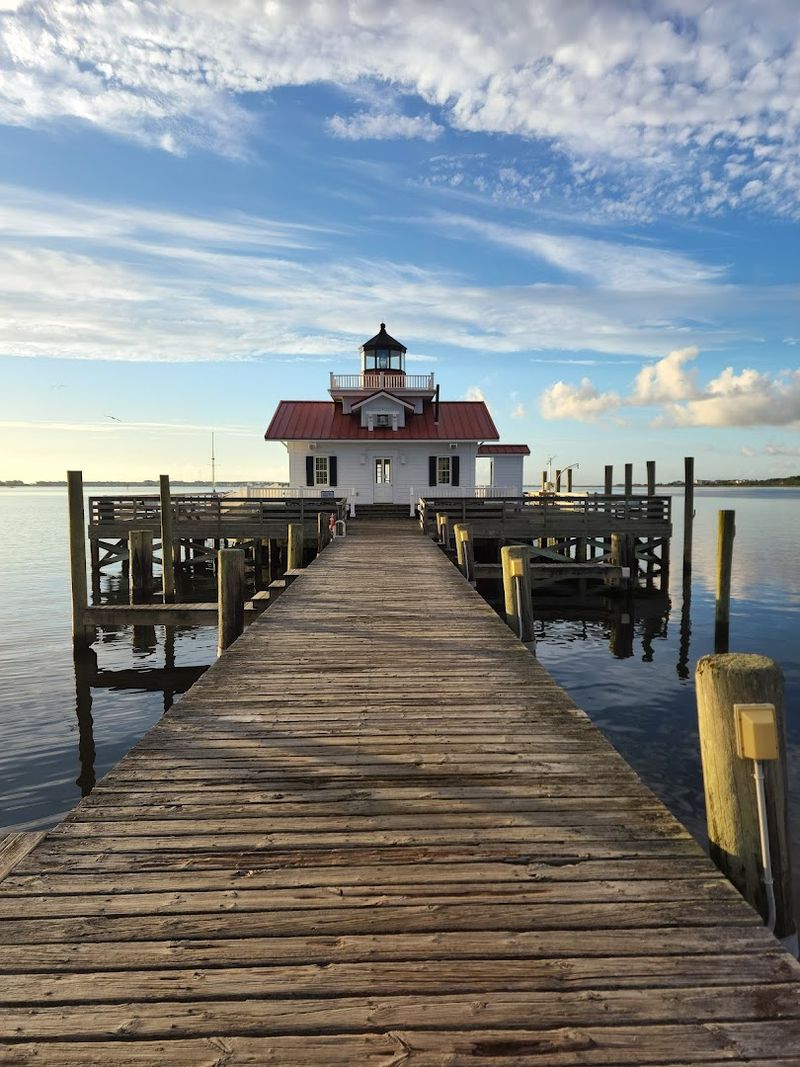
There is something about a lighthouse that feels like a promise. The Outer Banks Lighthouse Loop runs from Nags Head down to Ocracoke, and every mile of it earns its place on a bucket list.
Bodie Island Lighthouse is your first major stop, a classic black-and-white striped tower with a visitor center that explains the history of the surrounding marshlands. Cape Hatteras Lighthouse is the tallest brick lighthouse in the United States at 198 feet, and yes, you can climb it.
The 257 steps are absolutely worth it for the view from the top.
A ferry ride takes you across to Ocracoke Island, where time moves a little slower and the village is genuinely charming without trying too hard. The wild horses near Corolla are a highlight that surprises most first-time visitors.
These are Colonial Spanish Mustangs, descendants of horses brought by early explorers, and seeing them roam freely along the shore is something you will not forget.
The whole loop covers roughly 140 miles and includes ferry crossings that add a relaxed, unhurried rhythm to the trip. Pack sunscreen, comfortable shoes, and a cooler.
The Outer Banks has a way of stretching a single day into something that feels much longer in the best possible way.
9. DuPont State Forest Waterfall Trail
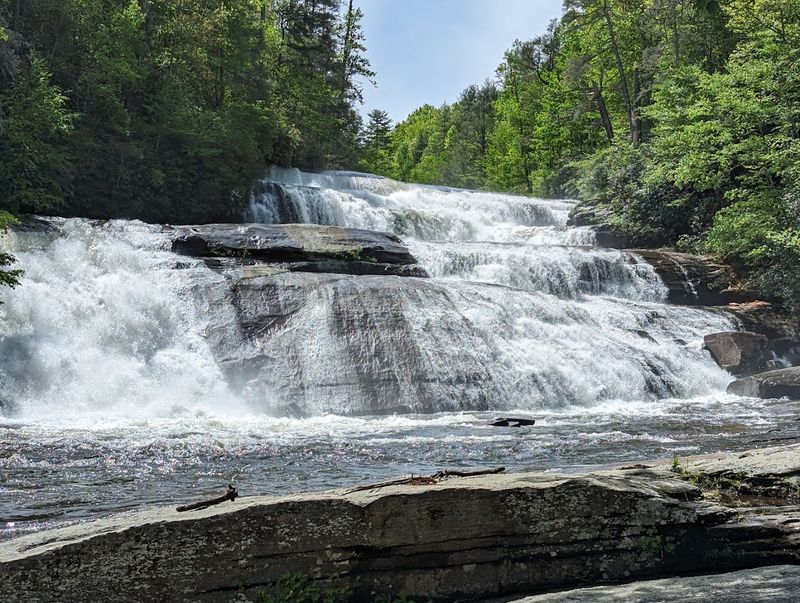
Some places earn their reputation immediately. DuPont State Recreational Forest near Brevard is one of those rare spots where reality actually exceeds the photos.
And the photos are very good.
Triple Falls is the showstopper. A three-tiered cascade that drops over flat granite shelves in a way that looks almost architectural.
High Falls is the tallest in the forest at roughly 120 feet. The view from the top trail is the kind that makes you stop mid-sentence.
Both are accessible via well-marked trails from the parking areas off Staton Road.
Hooker Falls is the most accessible waterfall in the forest. It sits less than a mile from the trailhead and runs wide enough that everyone can spread out along the banks.
Lake Julia offers a calmer experience after a morning of waterfall hopping.
Graveyard Fields, just outside the forest boundary on the Blue Ridge Parkway, adds two more waterfalls and a broad open meadow that turns golden in the fall.
The whole circuit can be done in a single full day if you move at a steady pace. Most trails are moderate with well-maintained surfaces.
Bring water shoes. The temptation to wade in at every pool is basically irresistible.
DuPont State Forest is accessible from Brevard via Crab Creek Road.
10. Winston-Salem & Old Salem History Drive
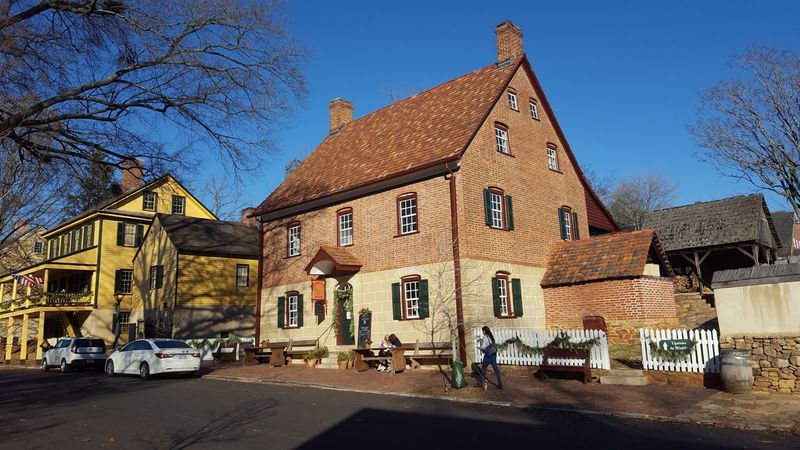
History you can actually walk through feels different from history behind a velvet rope. Old Salem Museums and Gardens in Winston-Salem delivers exactly that.
It is one of the most authentically preserved colonial communities in the entire country.
Old Salem was founded by Moravian settlers in 1766. The district today preserves over 100 original structures along brick-paved streets.
Costumed interpreters demonstrate trades like pottery, candle-making, and baking using 18th-century methods.
Reynolda House Museum of American Art sits inside the historic estate of R.J. Reynolds.
It holds a strong collection of American paintings, sculptures, and decorative arts spanning three centuries. The surrounding Reynolda Gardens are open to the public and offer a peaceful break between stops.
The Southeastern Center for Contemporary Art adds a sharp contrast, with rotating modern exhibitions that keep the day feeling fresh.
Pilot Mountain State Park sits about 24 miles north of Winston-Salem on US Highway 52. The distinctive quartzite monadnock rises 2,421 feet and is visible from miles away.
Trails around the base offer solid hiking without requiring a technical climb.
Winston-Salem rewards the curious traveler who takes time to look past the surface.
11. Alligator River Wildlife
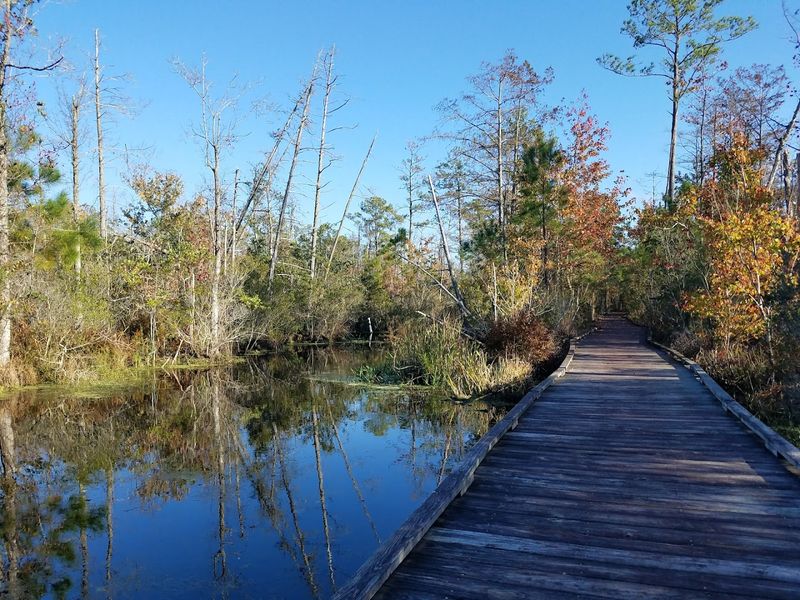
Flat roads through swamp country have their own kind of drama. The Alligator River Wildlife Refuge drive cuts through Dare County and Hyde County in eastern part of the state.
It is one of the most atmospheric routes you will find.
The refuge covers over 152,000 acres of wetlands, pocosins, and swamp forests. American black bears are common here.
In fact, this refuge holds one of the largest black bear populations in the eastern United States. Pulling over at dawn or dusk significantly increases your chances of spotting one near the road.
Migratory birds use this corridor in massive numbers, particularly in fall and spring. Tundra swans arrive by the thousands at nearby Pocosin Lakes National Wildlife Refuge between November and February.
Mattamuskeet Lake, the largest natural lake in the state, is a critical wintering ground for waterfowl and wading birds. Bring binoculars.
This is serious bird-watching territory.
The red wolf was reintroduced to this refuge in 1987 as part of a federal recovery program. It is the only place in the world where wild red wolves exist outside of captivity.
Milltail Road offers a good 12-mile loop through the swamp forest with minimal traffic and maximum wildlife exposure. The refuge entrance is accessible from US Highway 64 in Dare County.
Go slow and keep the windows down.