13 Places Across Pennsylvania That Deserve More Attention
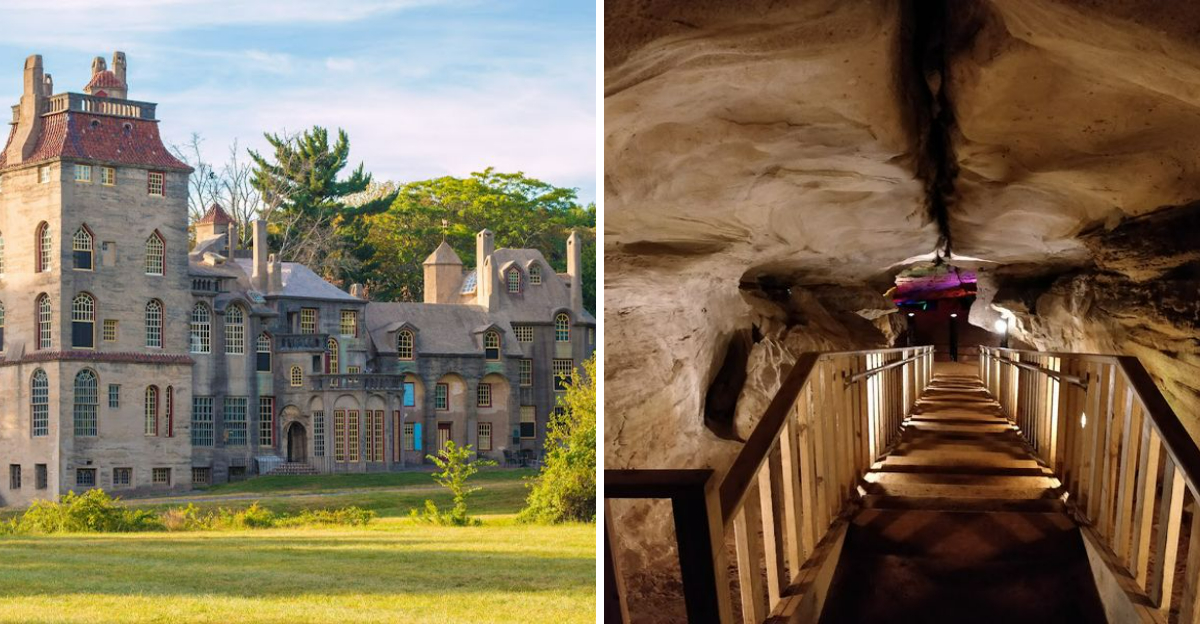
Most people know Pennsylvania for Philadelphia cheesesteaks and Pittsburgh steel. That is where the story usually ends.
But this state has more going on than anyone gives it credit for. There are roadside stops here that have been around for over a century, small towns that somehow never made it onto any map worth buying, and landmarks that locals pass every single day without a second glance.
I drove through Pennsylvania expecting nothing new. I was wrong.
The state has a habit of doing that to you. You think you have it figured out, then some exit ramp leads you somewhere that completely changes the picture.
These are the spots that deserve a proper look.
1. Mercer Museum
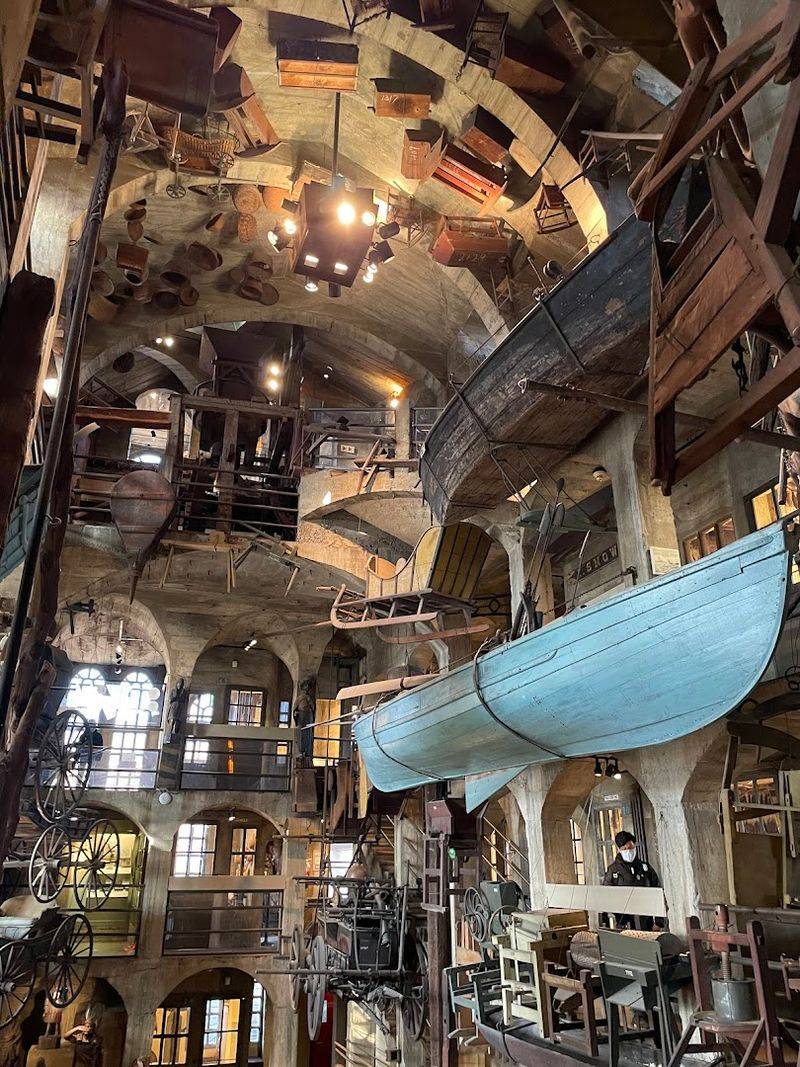
Imagine a six-story concrete castle stuffed floor-to-ceiling with over 50,000 objects, and you are still not fully prepared for what waits inside. The Mercer Museum in Doylestown is one of the most genuinely jaw-dropping buildings I have ever stepped into.
A full-size Conestoga wagon and a whaling boat hang from the ceiling like giant ornaments.
Henry Mercer built this place in the early 1900s to preserve everyday tools before the industrial age wiped them from memory. Shoemaking equipment, printing presses, fire engines, and farm tools are stacked in every direction.
The scale of it feels almost unreal. You spend more time looking up than anything else.
Located at 84 S Pine St, Doylestown, PA 18901, the museum is open Tuesday through Sunday. Admission is affordable, and the visit easily fills two to three hours.
What makes it special is how personal it feels. These are not polished exhibits behind glass.
They are raw, real objects from real lives, crammed together in a way that somehow makes history feel urgent and alive. This is the East Coast museum that deserves far more attention than it gets.
2. Ringing Rocks Park
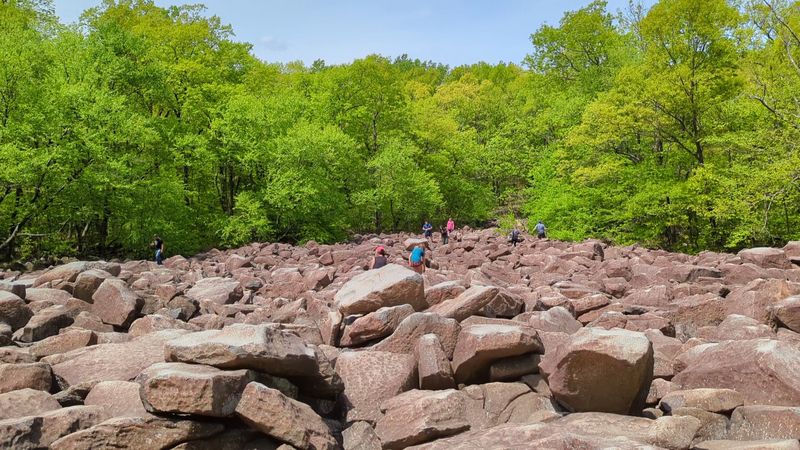
Science has not fully explained this place, and that alone should be enough to get you in the car. Ringing Rocks Park in Bucks County contains a massive open field of ancient diabase boulders that produce a clear metallic ringing sound when struck.
Not all of them ring, but enough do to make the whole experience feel genuinely strange.
The park covers 128 acres and admission is completely free. You bring a hammer, walk out onto the boulder field, and start tapping.
Some rocks sound like bells. Others produce a lower, hollow tone.
Groups of people spread out across the field and the combined sound is oddly musical. Kids absolutely love it, and honestly, so do adults who should know better.
Located on Ringing Rocks Rd, Upper Black Eddy, PA 18972, the park is open from dawn to dusk year-round. Wear sturdy shoes because the boulders are uneven and require some careful stepping.
Researchers have studied the acoustic properties for decades without reaching a definitive answer about why the rocks behave this way. The leading theories involve internal stress and mineral composition, but the mystery remains.
Sometimes the best experiences are the ones nobody can fully explain.
3. Columcille Megalith Park
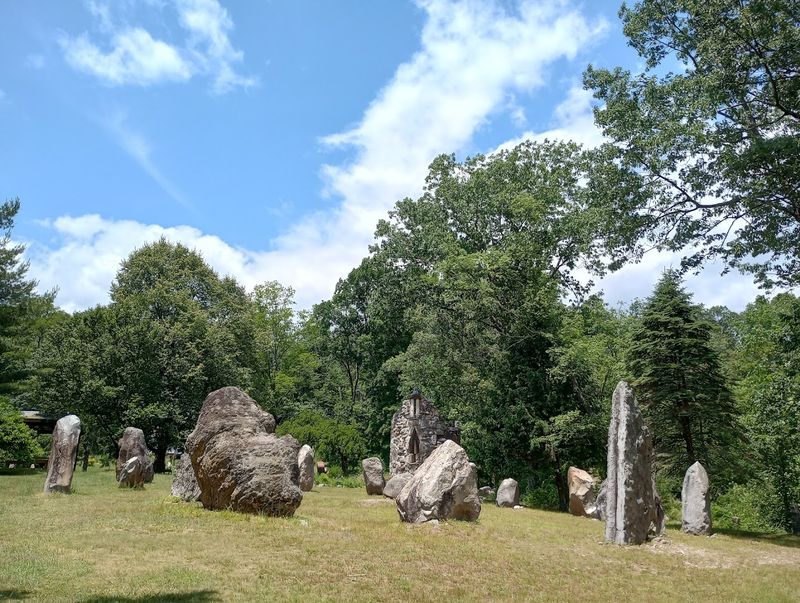
The state has its own version of Stonehenge, and almost nobody knows it exists. Columcille Megalith Park sits on 20 wooded mountain acres in Bangor, with more than 90 standing stones arranged across the landscape in a way that feels both ancient and intentional.
Because it is intentional, just not ancient in the way you might expect.
The park was created in the 1970s by a man named William Cohea Jr., inspired by the sacred Isle of Iona off the coast of Scotland. The stones were sourced locally and placed with real spiritual purpose.
Walking among them, especially in the early morning when mist rolls through the trees, produces a quiet that feels hard to find anywhere else.
Admission is free, and the park at 2155 Fox Gap Rd, Bangor is open from dawn to dusk every day of the year. There are no crowds, no gift shop, and no guided tours.
It is just you, the stones, and the sound of wind moving through the forest. Some visitors come to meditate.
Others come out of pure curiosity. Both are equally valid reasons.
This is one of those places that rewards the people who actually look for it.
4. Randyland
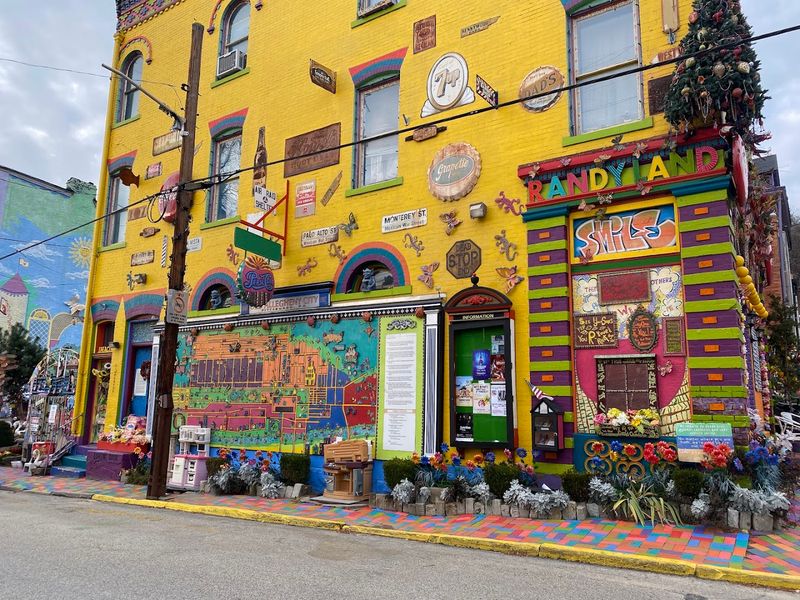
Nothing on the block prepares you for what you see when you turn the corner onto Arch Street. Randyland is a completely free outdoor art space where artist Randy Gilson has covered every inch of his North Side home and courtyard in color, sculpture, and found-object creativity.
It is chaotic in the best way.
The whole property is a living artwork that Gilson has been building for decades. Painted faces, mirrors, salvaged furniture, bright geometric patterns, and hand-lettered messages cover every surface.
Anthony Bourdain visited and loved it, which tells you something about the energy of the place. It does not take itself too seriously, and that is exactly what makes it work.
The address is 1501 Arch St, Pittsburgh, PA 15212, and the space is open daily. No ticket, no reservation, just show up and look around.
Gilson is often on site and has been known to chat with visitors. The art carries a genuine message about joy, community, and making something beautiful from what others throw away.
Spend thirty minutes here and you will leave in a better mood than when you arrived. That is not a small thing.
That is the whole point of the place.
5. Ephrata Cloister
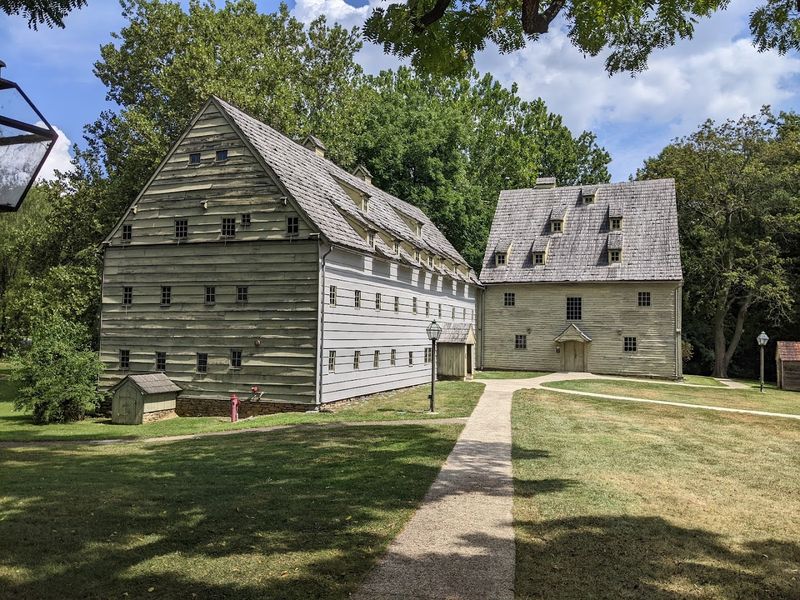
Founded in 1732, the Ephrata Cloister is one of the oldest intentional religious communities in America, and most people have never even heard the name. That is a real shame, because what happened here is genuinely fascinating.
A group of German settlers created a self-sufficient religious society built around strict spiritual practice, communal living, and extraordinary music.
The women composers at Ephrata are the first documented female composers in North American history. They wrote original hymns that survive to this day.
The architecture on the grounds is unlike anything else in Pennsylvania, drawing from medieval German design with steep roofs, narrow doorways, and whitewashed interiors that feel austere and striking at the same time.
Admission is just $10, making it one of the best value historic sites in the state. The cloister at 632 W Main St, Ephrata, PA 17522 is open Wednesday through Sunday.
Guided tours walk you through the original buildings, which are remarkably well preserved. The whole visit takes about ninety minutes and covers early American religious life, gender history, music history, and architecture all at once.
Few places pack that much substance into a single afternoon. Go with an open mind and you will leave knowing something you did not before.
6. Cook Forest State Park
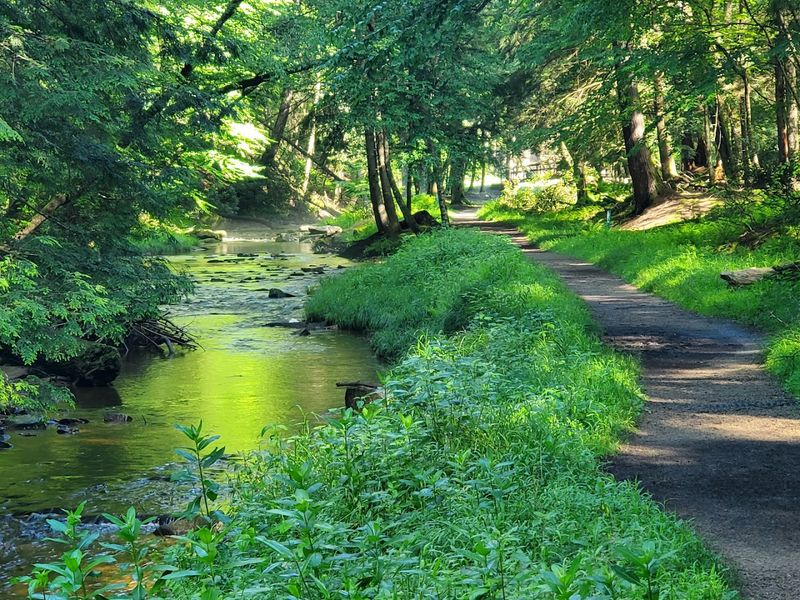
Standing inside Cook Forest feels like time stopped somewhere around 1700. The white pines and hemlocks here are 300 years old, reaching 180 feet straight up.
This is one of the last old-growth forests left in the eastern United States, and the National Park Service recognized it as a National Natural Landmark for good reason. Most people have never even heard of it.
These trees were never logged. While the rest of the state was being cleared throughout the 1800s, this stretch somehow survived.
Walking among them produces a kind of quiet that younger forests simply do not have. The light moves differently under a canopy this old and this dense.
It takes a few minutes to adjust, and then you stop wanting to leave.
Beyond the trees, the park at 100 Rt 36, Cooksburg offers canoeing on the Clarion River, a fire tower with open views across the forest, and trails that range from easy walks to full-day hikes. The park stays open year-round, and each season changes the experience completely.
Fall color here is exceptional because the canopy is so layered and deep. Summer brings shade and cool air that the surrounding area simply cannot match.
The drive into the park is worth mentioning too. It gets more beautiful the further in you go.
7. Trough Creek State Park
Some parks announce themselves loudly. Trough Creek does not bother, and that is part of the appeal.
This compact central park holds more geological surprises per square mile than almost anywhere else in the state, and most people outside the region have no idea it exists.
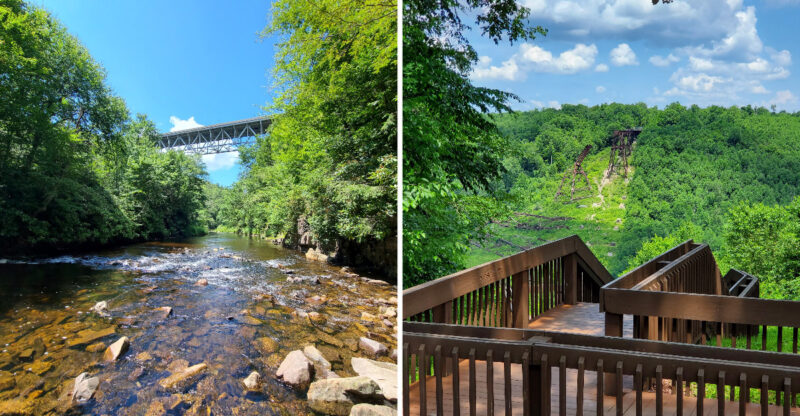
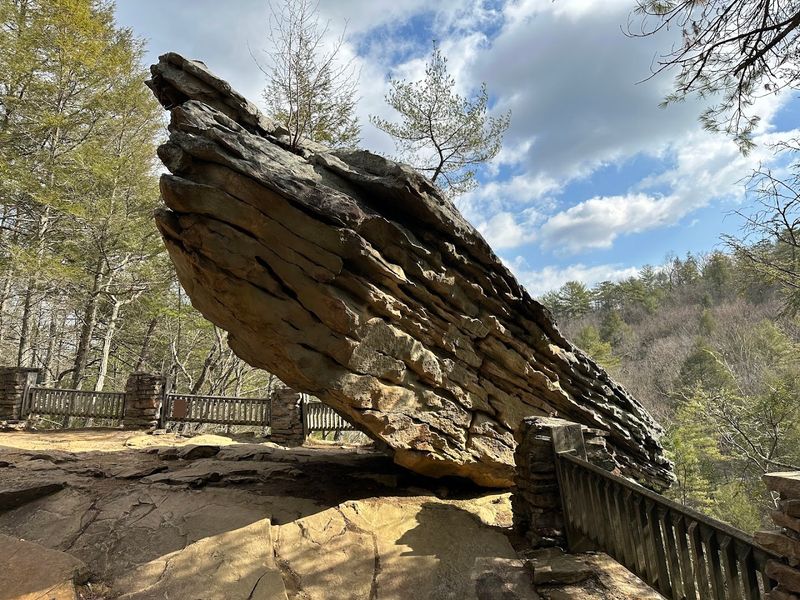
The highlights come fast once you start exploring. A gravity-defying Balanced Rock sits perched at an angle that looks physically impossible.
A suspension bridge crosses rushing water with a satisfying sway. Rainbow Falls drops into a narrow gorge.
The Ice Mine is the most genuinely baffling feature of all. In summer, it produces ice.
In winter, it melts. Scientists have studied it and the explanation involves cold air circulation, but standing in front of it in July and feeling cold air pour out of the ground is still strange every time.
The park is located at 16362 Little Valley Rd, James Creek and is open year-round with no admission fee. Trails connect most of the major features into a single loop that takes about two to three hours at a comfortable pace.
Bring good shoes because the terrain gets rocky. The combination of geology, water, and forest makes this one of the most varied short hikes in the state without question.
8. Fonthill Castle
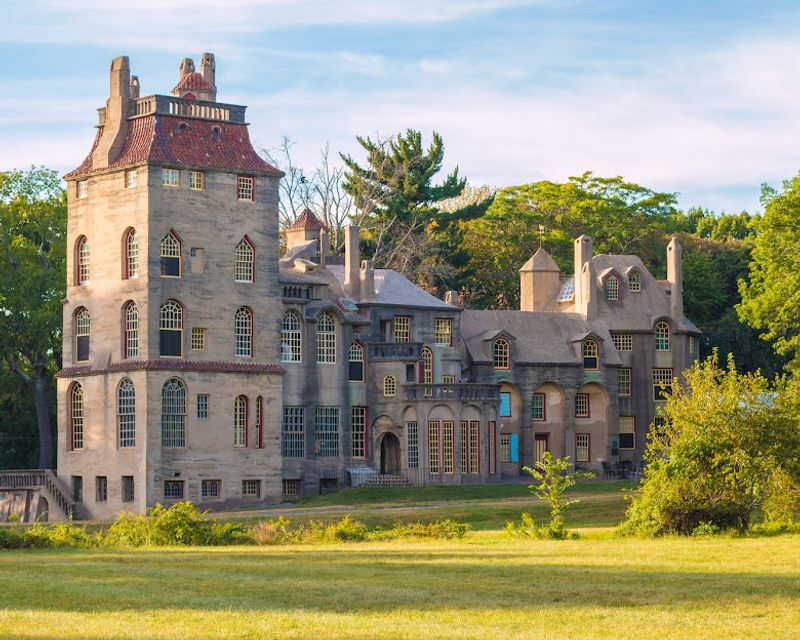
Most people do not know that Doylestown has two castles. The second one, Fonthill, is where Henry Mercer actually lived, and it is every bit as wild as the museum he built nearby.
The man poured concrete by hand into 44 rooms, each one completely different from the last.
Every wall, ceiling, and floor is covered in handcrafted tiles. Mercer made thousands of them himself in his own pottery.
Some feature scenes from history, mythology, and literature. Others are purely decorative.
No two rooms feel like they belong to the same building, which makes touring it feel like exploring a puzzle someone never quite finished.
Fonthill is a Smithsonian-affiliated historic site, which sounds impressive but still does not prepare you for the experience. The address is 525 E Court St, Doylestown, PA 18901.
Tours run daily and are guided, meaning you get context that makes the tiles and strange architectural choices make more sense. Mercer was eccentric in the best possible way.
He designed the staircases after he built the rooms, which explains a few tight corners. Plan ahead and book your tour in advance because spots fill up fast on weekends.
9. Laurel Caverns State Park
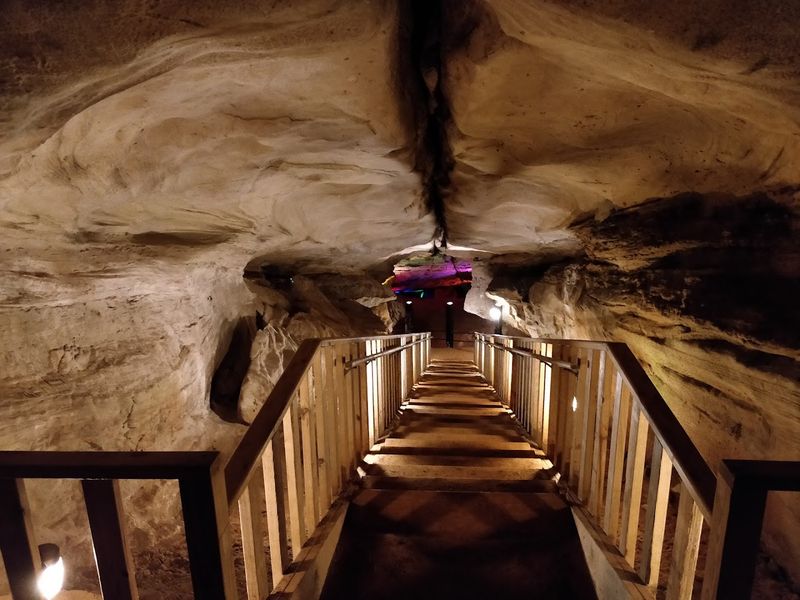
Laurel Caverns is about to become the state’s 125th state park on April 22, 2026, making it one of the newest entries on the list and one of the most unusual. Most state parks are forests or lakes.
This one is entirely underground.
The cave system here is the largest in the state, with four miles of passages cutting through limestone beneath the Laurel Highlands. Guided tours take visitors through formations that took millions of years to develop.
The temperature inside stays around 52 degrees year-round, so bring a layer regardless of what the weather is doing above ground.
The address is 1065 Skyline Dr, Farmington, and guided tours are available for different experience levels. Beginners can take the standard walking tour, while more adventurous visitors can explore crawl passages with a guide.
The cave environment is genuinely different from anything you experience at the surface. Sound behaves differently down there.
The darkness is total when the lights go off. Laurel Caverns is the kind of place that resets your sense of scale in a way that sticks with you long after you drive back out into daylight.
10. Penn’s Cave And Wildlife Park
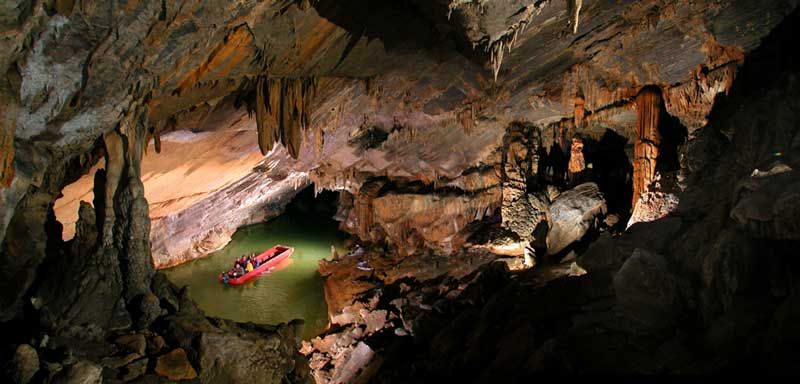
Every other cave tour in America makes you walk. Penn’s Cave puts you in a boat.
That single difference changes everything about the experience. You glide through a limestone cavern by flat-bottomed boat, watching formations reflect in the water beneath you.
The whole thing feels more like a slow-moving dream than a typical tourist attraction.
Penn’s Cave is the only all-water cavern in America, which already makes it worth the drive. It is also the only cave in the state listed on the National Register of Historic Places, and it has been welcoming visitors since 1885.
The formations inside, stalactites, stalagmites, and cave curtains, are genuinely dramatic. The underground lake and the cave river connecting to it create an atmosphere that photographs simply cannot capture.
Find it at 222 Penns Cave Rd, Centre Hall. The cave is open daily from spring through fall, and the property also includes a wildlife park with bison, elk, and other native animals roaming in open fields.
Combining the cave tour with the wildlife walk makes for a solid half-day out. Families with kids consistently rank it among the best day trips in the central part of the state.
The boat tour lasts about 45 minutes and covers nearly a mile of underground passage.
11. Elk Country Visitor Center
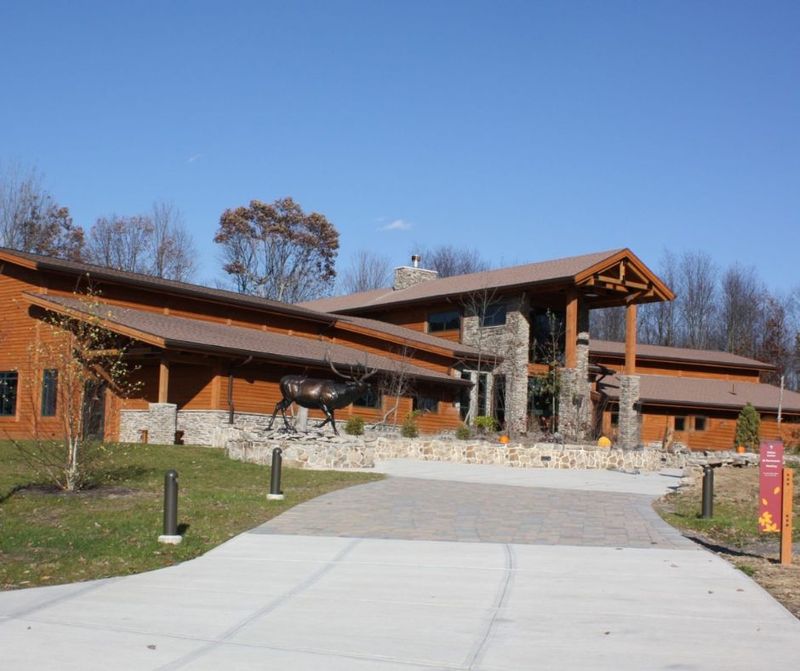
Seeing wild elk in the northeastern United States is not something most people think is possible. The state has a herd of over 1,400 animals roaming the north-central region, and the Elk Country Visitor Center in Benezette is the best place to actually watch them.
Dawn and dusk are the peak viewing windows. A clear morning out here is genuinely hard to forget.
During the fall rut in September and October, bulls bugle across the meadows and the sound carries for what feels like miles. Even outside rut season, sightings from the hillside overlooks are frequent and close enough to be impressive without any optical equipment.
The surrounding Elk State Forest adds trails and scenic drives that extend a visit well beyond the viewing area. Benezette itself is a tiny community, so plan to bring food or stop in nearby Ridgway before heading out.
The drive through this part of the state is worth the trip on its own, with rolling forested ridges and open farm valleys that see almost no tourist traffic. This is the kind of wildlife experience most people travel much farther to find.
12. Ohiopyle State Park
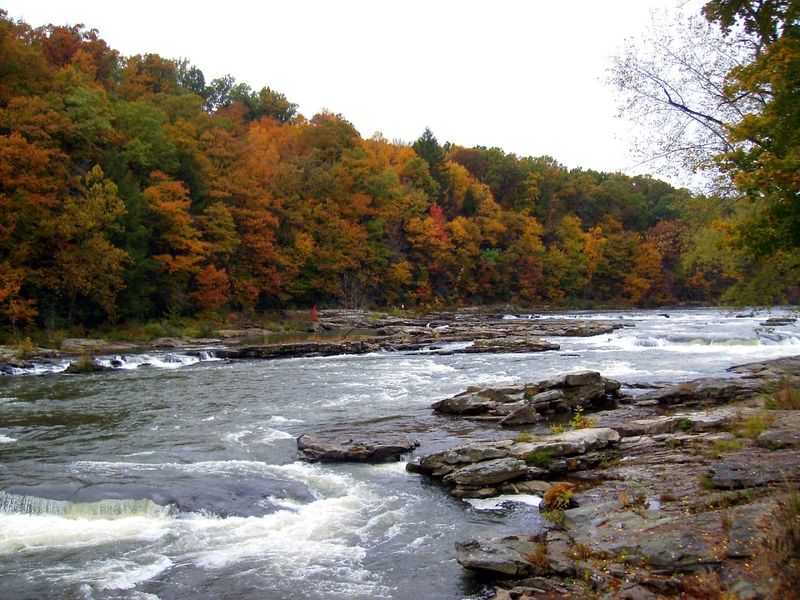
The Youghiogheny River through Ohiopyle does not ease you in gently. Class III and IV rapids move fast through a deep river gorge, and the surrounding Laurel Highlands make the whole setting look like something from a travel magazine.
Somehow, this park still feels like a regional secret to anyone living outside western Pennsylvania.
Whitewater rafting gets the most attention, but Ohiopyle State Park offers far more than that. Natural waterslides formed by smooth rock ledges are a summer favorite.
Cucumber Falls drops into a quiet pool that rewards the short hike to reach it. Eighty miles of trails cross the park for hikers and mountain bikers.
The Yough Trail connects to a larger rail trail network that extends well beyond the park boundaries.
The park entrance is at 124 Main St, Ohiopyle, PA 15470, and it sits within 90 minutes of Pittsburgh. Open year-round, the park shifts its character with every season.
Fall color in the gorge is spectacular. Winter brings ice formations along the riverbanks.
Spring pushes the river flows up and makes the rapids even more intense. Summer fills the natural waterslides with kids who have clearly figured out the best free activity in the region.
Ohiopyle earns every visit it gets and then some.
13. Jim Thorpe
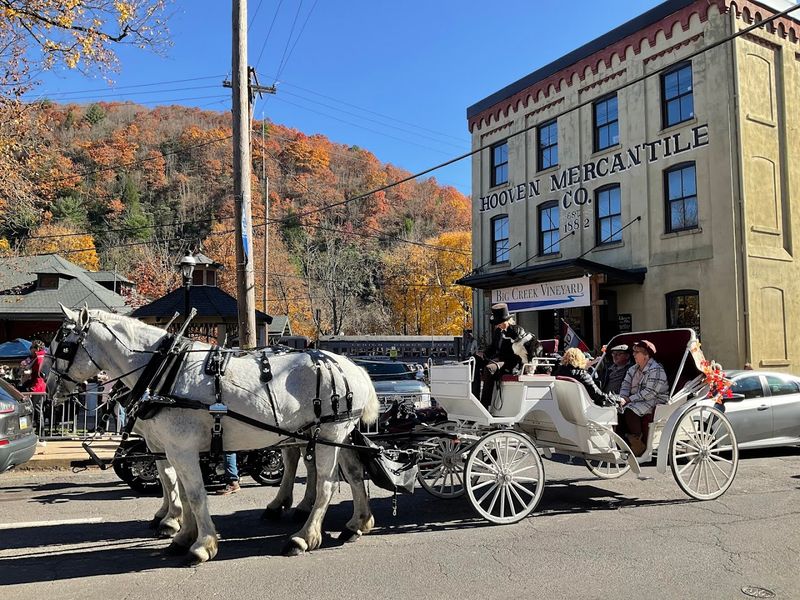
People rushing to the Poconos blow right past one of the most visually striking small towns in the state.
Jim Thorpe sits in a dramatic Lehigh River gorge in Carbon County, with a Victorian-era historic district that climbs the hillside in layers of ornate architecture, stone churches, and painted storefronts. The nickname, the Switzerland of America, was given in the 1800s and still fits.
The outdoor options here are serious. Rail trails follow the river gorge for miles.
Whitewater kayaking runs through the Lehigh. Hiking trails climb the surrounding ridges with views that get genuinely impressive in fall.
The Old Jail Museum tells a dark and compelling piece of American labor history that draws visitors from across the country.
The town is easy to navigate on foot. Most of the historic district sits within a short walk of the main square.
Shops, cafes, and galleries line the streets without overwhelming the character of the place. Jim Thorpe rewards a full weekend stay rather than a quick afternoon stop.
Come in October when the gorge foliage peaks and the town fills with color from the ridge tops all the way down to the river. Few places in the state look better than this one does in fall.