9 Colorado Alpine Ghost Towns Where Old Saloons Still Stand
My first ghost town nearly broke my ankle. Loose boards, no warning signs, and altitude that made every step feel earned.
Colorado has over 300 abandoned mining settlements scattered across its mountains, but a rare few still have a saloon standing, and that changes everything. The State preserves the bones, but these buildings hold the soul.
I’ve driven washboard roads at 11,000 feet just to press my hand against a bar where men once spent their last silver dollar before heading back underground. Some of these towns nearly vanished completely.
The state stepped in for some, locals fought for others, and a stubborn few just refused to fall down. These stops are specific, personal, and nothing like a typical road trip list.
1. Ashcroft, Castle Creek Valley
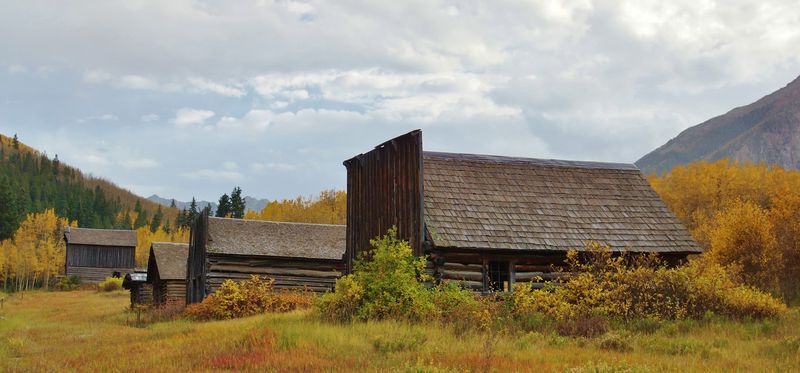
Twenty saloons once poured drinks for over 2,000 silver-chasing residents here. Now one still stands.
That fact alone feels almost miraculous.
Ashcroft sits about 11 miles from Aspen at 9,521 feet in the Castle Creek Valley. It peaked in the early 1880s before the silver ran out and the crowd followed the ore elsewhere.
What got left behind was a full town, frozen mid-sentence, like everyone just walked away between rounds.
The Blue Mirror Saloon is the crown jewel of what remains. Walk right through the door.
The last paying customer probably left sometime in the 1880s, and that thought hits you the moment you step inside. The building earned a National Register Historic Site designation in 1974, and the Aspen Historical Society keeps it in solid shape.
It’s one of the few saloons in Colorado where you can actually go inside and feel the room rather than just photograph it through a fence.
Nearby, you can peek at the old post office, the jail, and the remnants of six competing hotels. Interpretive signs fill in the gaps where the walls can’t speak.
Each stop adds another layer to the story.
Ashcroft is free to visit and open year-round, though the road gets tricky in deep winter. Come on a weekday morning in summer and you’ll have the whole place nearly to yourself.
That kind of quiet is hard to find anywhere else in Colorado.
2. Dunton, San Juan Mountains
A name carved into a bartop can say more than any history book. At Dunton, deep in the San Juan Mountains at 8,921 feet, the story goes that Butch Cassidy spent time here after a Telluride bank job.
He left behind a simple carving in the wood. It’s still there.
Dunton operates today as a luxury resort built around the remains of a genuine ghost town. Hand-hewn log cabins have been carefully restored, and the old saloon now serves as a communal dining space where meals are shared family-style.
It’s a surprising level of comfort for somewhere this remote.
The setting does something to you. Surrounded by the San Juans with no real town nearby, it feels less like a resort and more like a place the modern world simply forgot to reach.
What sets Dunton apart is the chance to stay overnight inside the ghost town itself. Trails lead directly into the surrounding landscape, and natural hot springs are there when your legs need a rest after a long day outside.
You’ll find it at 52068 West Fork Road in Dolores. Reservations are required and spots fill up fast.
Planning ahead is part of the experience, and in this case, it’s worth every bit of the effort.
3. St. Elmo, Chalk Creek Canyon
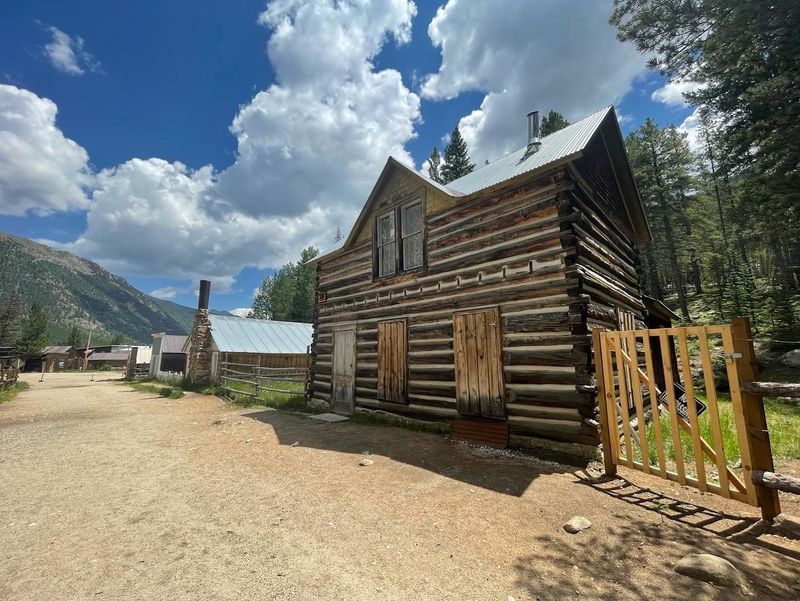
St. Elmo peaked in 1881 and never really let go. Forty-three original structures still line its dirt main street, which is remarkable for a town that has spent over a century facing Colorado mountain winters alone.
The town sits at 9,961 feet in Chalk Creek Canyon near Buena Vista. Five hotels once operated here, along with general stores, a schoolhouse, and enough saloons to keep nearly 2,000 silver dreamers entertained on a Saturday night.
That energy is gone now, but the bones of it are all still there.
The saloon building still anchors the main drag. Its weathered facade looks like it was built to outlast everything around it.
Honestly, it did.
A general store operates seasonally and sells snacks, souvenirs, and cold drinks that somehow taste better at altitude. Historic cabin rentals are available nearby if you want to wake up inside the ghost town itself.
That experience is genuinely hard to replicate anywhere else.
The surrounding roads open up solid four-wheel-drive routes into the old mining areas above town. Each trail leads deeper into what this place used to be.
St. Elmo sits off County Road 162 near Nathrop. The drive up Chalk Creek Canyon deserves your full attention on its own.
Add the ghost town at the end and you have one of the better half-days this part of Colorado can offer.
4. Gothic, Gunnison County
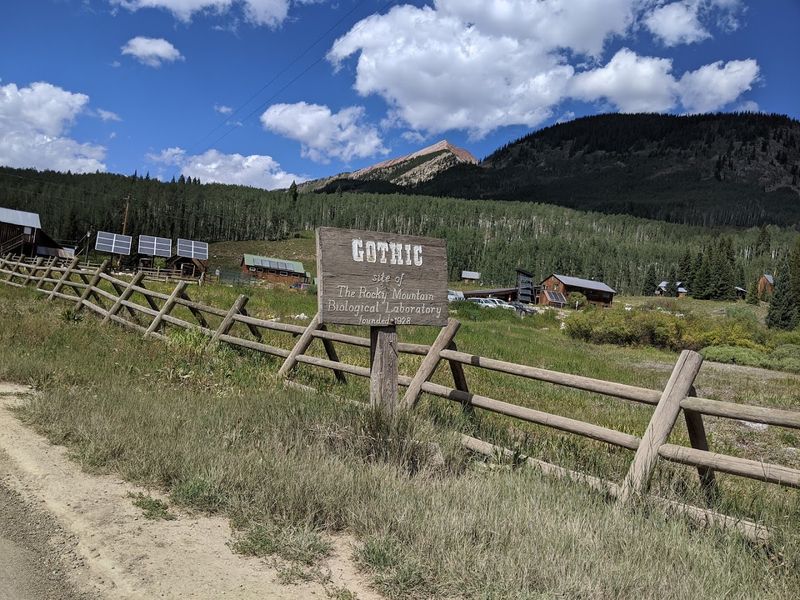
Silver towns rise fast and fall faster, and Gothic is a textbook example. Founded in 1879, the town boomed hard for a few years before the ore gave out and the miners scattered, leaving behind frame and log buildings that the mountain winters slowly reclaimed.
One hundred and twenty-six years after its founding, only the original saloon structure from that first building boom still stands in recognizable shape.
Here’s the twist: the Rocky Mountain Biological Laboratory, one of the most respected field research stations in North America, now uses Gothic as its base.
Scientists studying alpine ecosystems work here every summer, which gives the place a quietly serious energy that feels completely different from a typical tourist ghost town.
Visitors are welcome to walk through the old saloon, now used as a visitor center, and take in the restored interior. The surrounding Gothic Natural Area features some of the most spectacular wildflower meadows in the entire region, usually peaking in late July.
Gothic sits at the end of Gothic Road north of Crested Butte, Gunnison County, CO. Getting here requires a short drive on unpaved road, but the payoff is a ghost town that also happens to be one of the most scientifically significant places in the Rockies.
5. Animas Forks, Alpine Loop
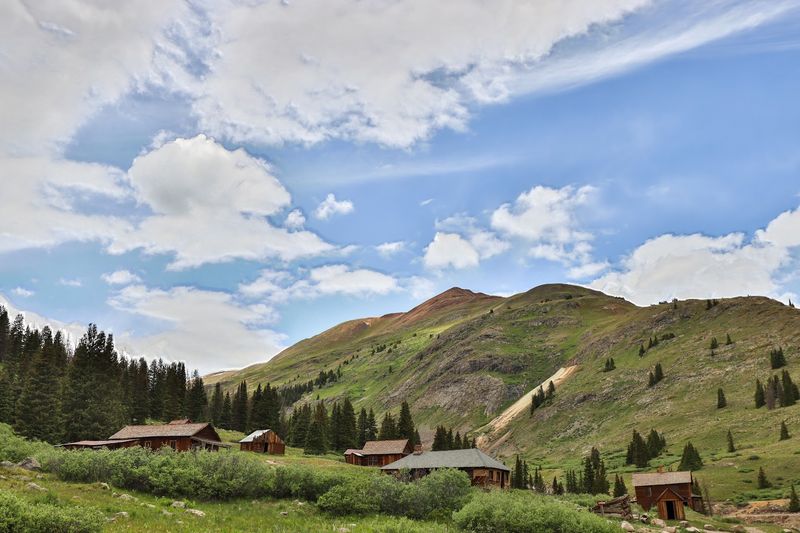
At 11,200 feet, Animas Forks is not playing around. The air is thin, the views are enormous, and the silence between gusts of San Juan wind is the kind that makes you stop mid-sentence and just listen.
Prospectors built the first cabins here in 1873, about 12 miles northeast of Silverton, and by 1876 the community had grown into a real town with 30 cabins, a hotel, a saloon, a post office, and a general store.
The saloon still stands, though the roof and walls have opened themselves to the sky and the weather over the decades. Its timber has turned silver with age, which sounds poetic until you’re actually standing inside it and realizing you’re looking straight up at the clouds.
Entry to all the buildings is unrestricted, but some structures are fragile enough that you should look more than you touch.
Reaching Animas Forks requires either a high-clearance four-wheel-drive vehicle on the Alpine Loop Scenic Byway or a serious mountain bike commitment. The Duncan House, one of the most photographed structures on the loop, sits nearby.
Plan your visit for July or August when the road is reliably passable. The effort to reach this place is part of what makes it feel genuinely earned.
6. Independence, Independence Pass
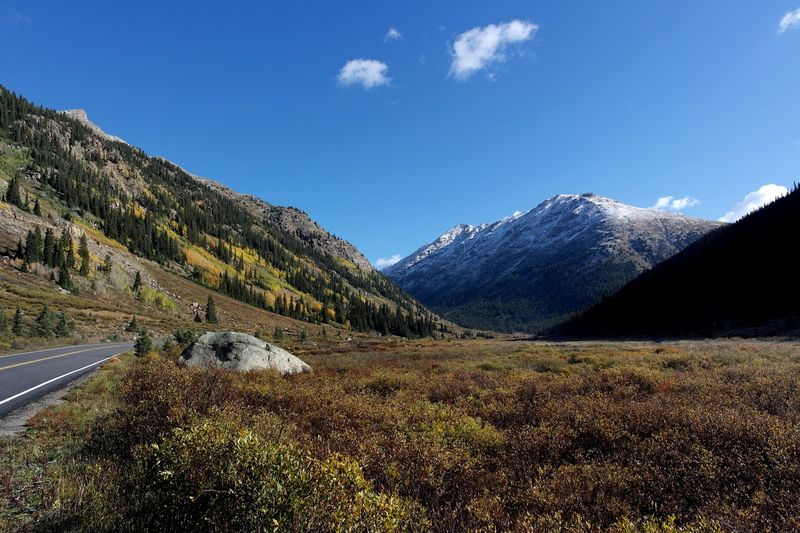
Few ghost towns in the Rockies have a setting this dramatic. Independence sits at roughly 10,900 feet on Independence Pass, one of the highest paved mountain passes in the country, and the ruins spread across an open hillside with views that go on forever in every direction.
The gold lode was discovered here in 1879, and by 1882 more than 1,500 residents had moved in, supporting four grocery stores, four boarding houses, and three saloons.
The Aspen Historical Society manages the site and provides a summer docent stationed in a restored log cabin near the entrance. A self-guided tour with interpretive stations leads you past the saloon ruins, the old stable, and several weathered structures in various states of graceful collapse.
The signage is genuinely good and makes the history feel immediate rather than dusty.
Independence Pass Road, also known as Highway 82, closes to vehicles every winter, so this is strictly a warm-weather destination. The site sits directly on the road between Aspen and Twin Lakes, which means you can pair it easily with a drive over the pass itself.
Stopping here on a clear morning, with the peaks reflecting the early light and no other cars in the lot, is one of those experiences that quietly becomes a favorite memory without you even planning for it.
7. Tincup, Gunnison County
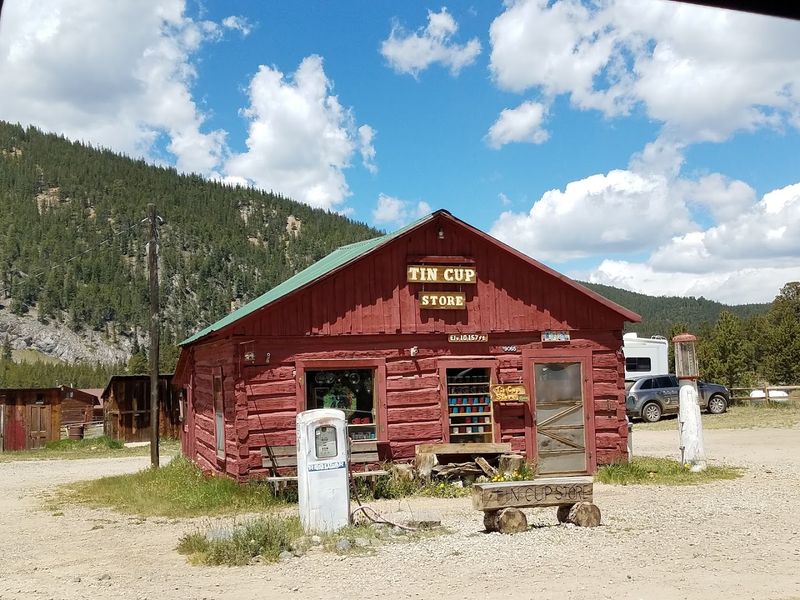
Tincup’s early days were anything but quiet. By 1882, around 6,000 people lived here.
Dozens of businesses lined the streets, including more than 20 saloons that kept the town loud and alive well into the night.
One of the most well-known gathering spots was Frenchy’s Place. It served as the social hub during peak years, the kind of room where deals got made and arguments got settled.
That legacy carries on in a quieter way today. A seasonal cafe sits near a small fishing pond where Frenchy’s once stood, offering cold drinks and a view that makes it easy to lose track of time.
Tincup sits in Gunnison County off Taylor Park Road. The drive through Taylor Park Reservoir country is beautiful on its own terms and worth slowing down for.
The town retains a handful of original structures and a small cemetery that deserves more attention than it usually gets. The atmosphere feels genuinely far removed from its chaotic past.
That contrast is part of what makes Tincup worth the drive.
Visit in summer. The road into town can be rough or completely impassable after early snow.
The fishing nearby is excellent, and on a clear weekday you may have the whole area almost entirely to yourself.
8. Crystal, Gunnison County
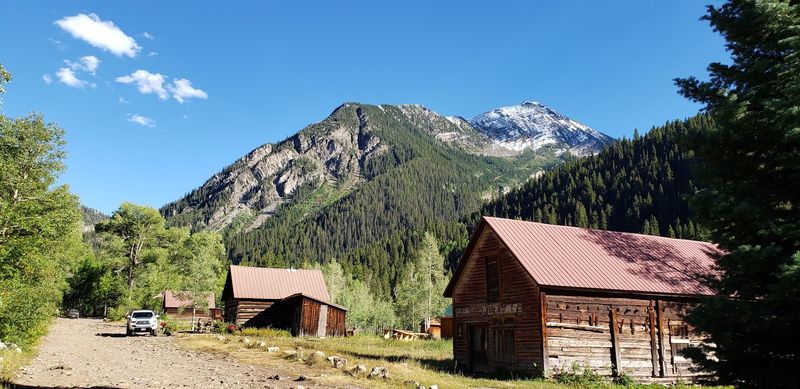
Getting to Crystal is the kind of adventure that makes the destination feel like a reward you actually earned.
The town sits six miles east of Marble up a notoriously rough four-wheel-drive road that requires a high-clearance vehicle, a patient attitude, and a willingness to share a narrow shelf road with oncoming traffic.
Crystal sits at 8,931 feet in Gunnison County, and it had nearly become a full ghost town by 1917.
Several original structures survive, including the remains of the town’s original watering hole, still intact enough to stop beside and peer into. The building stands quietly among the trees, its weathered boards holding more history per square foot than most places twice its size.
Mining remnants scatter the surrounding landscape, giving the whole area a sense of industry frozen mid-motion.
Right next door, the Crystal Mill sits above a waterfall on a rocky outcrop and is one of the most photographed spots anywhere in the Rockies. Most visitors come for the mill and stay longer than planned once they realize the rest of the ghost town is equally compelling.
The road access is from Marble, CO, and you should check road conditions before attempting it in early summer or after heavy rain. This one absolutely rewards preparation.
9. Nevadaville, Gilpin County
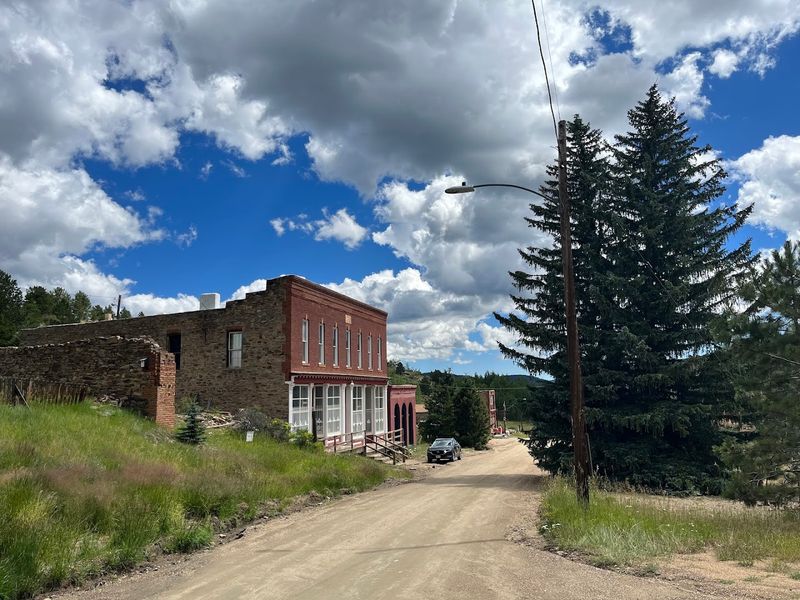
Counting saloons was apparently the official census method in early Gilpin County mining towns. By that measure, Nevadaville was doing extremely well.
Thirty-six saloons and seven dance halls served a population somewhere between 1,000 and 1,500 people. Sit with that ratio for a moment.
Nevadaville today is a near-ghost on the outskirts of Central City. It sits at 9,100 feet in Gilpin County with a handful of original buildings still standing.
The preserved saloon structure looks like it could have closed last decade rather than last century. A few full-time residents still live here year-round, which gives the place an unusual energy, somewhere between ghost town and living neighborhood.
That mix of past and present is hard to find anywhere else in Colorado.
The practical advantage here is pure accessibility. Nevadaville is one of the easiest high-altitude ghost towns to reach from the Denver Metro area.
A realistic afternoon trip, not a full expedition. Take Highway 119 toward Central City and follow the signs toward Nevadaville Road in Gilpin County.
Pair it with a stop in Central City for context. Central City shows you what a boomtown looks like when it finds a second life.
Nevadaville shows you what happens when it doesn’t. Together, the two stops tell a much more complete story than either one could alone.