These California Day Trips Feel Nothing Like The Rest Of The State
California can feel familiar until a day trip suddenly changes the whole mood.
Some corners of the state trade palm trees and predictability for landscapes, towns, and little surprises that seem to belong somewhere else entirely.
That shift is what makes these escapes so appealing.
A short drive can lead into stillness, odd beauty, or the kind of atmosphere that makes the usual California story feel far away for a while.
Familiar scenery gives way to something stranger or simply more unexpected than people imagine.
You leave in the morning thinking you know the state pretty well, then come home feeling as if you slipped into a completely different version of it for a few hours.
1. Mono Lake South Tufa
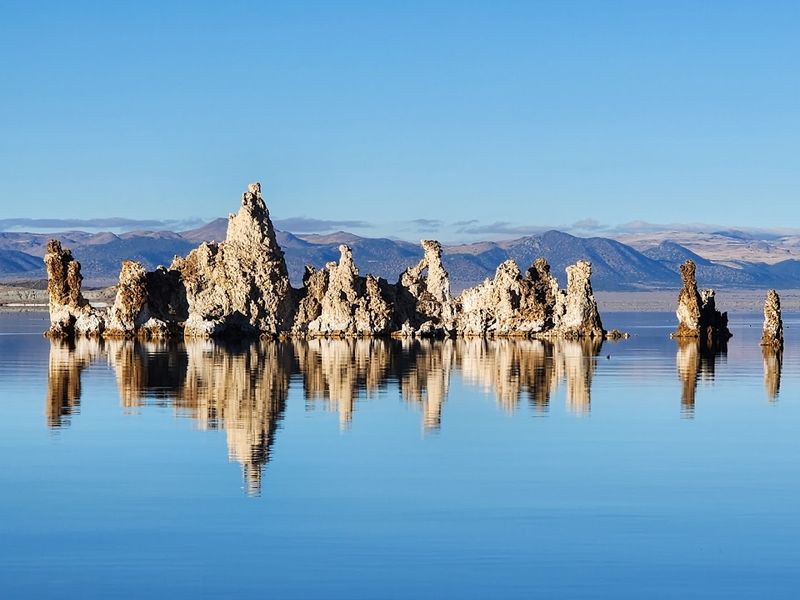
Standing at the edge of Mono Lake feels genuinely disorienting in the best possible way.
The tufa towers, which are tall columns of calcium carbonate that formed underwater over thousands of years, jut out of the salty surface like something from a science fiction set.
The high-desert silence and the pale, mineral-rich water give the whole scene an otherworldly texture that is hard to find anywhere else in California.
South Tufa is the most accessible area of the lake for visitors, with a self-guided trail that winds through the formations.
California State Parks and Mono County both recognize it as a signature stop. The trail is relatively flat and short, making it manageable for most visitors without requiring serious hiking gear.
The best light tends to hit the tufa towers in the early morning or late afternoon, when the reflections off the water turn the whole scene golden.
Bring layers because the elevation sits above 6,000 feet, and temperatures can shift quickly even in summer.
Admission fees apply to enter the South Tufa area, so checking the current fee schedule before heading out is a smart move.
2. Bodie State Historic Park
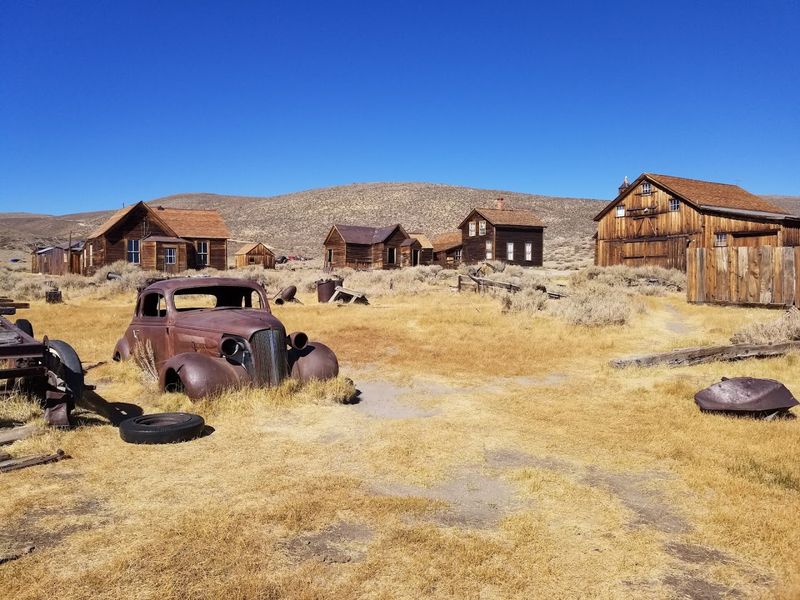
There are very few places left in California where you can walk through a genuine gold-rush ghost town without any reconstruction or theatrical staging.
Bodie is one of them, and that authenticity is exactly what makes it feel so removed from the polished, curated California most people expect to find.
The buildings lean, the paint has peeled away in layers, and the interiors are frozen exactly as they were left decades ago.
California State Parks maintains Bodie in a state of arrested decay, meaning structures are preserved without being restored, which keeps the atmosphere raw and honest.
The park is open daily, and as of April 2026, Highway 270 remains open and passable for standard vehicles, making the drive feasible for a full day trip.
Elevation here sits around 8,375 feet, so sun protection and water are non-negotiable. Walking through the town takes about two to three hours depending on pace.
There is a small museum on site with artifacts from the mining era, and rangers are usually available to answer questions about the history of the town.
3. Salvation Mountain and Slab City
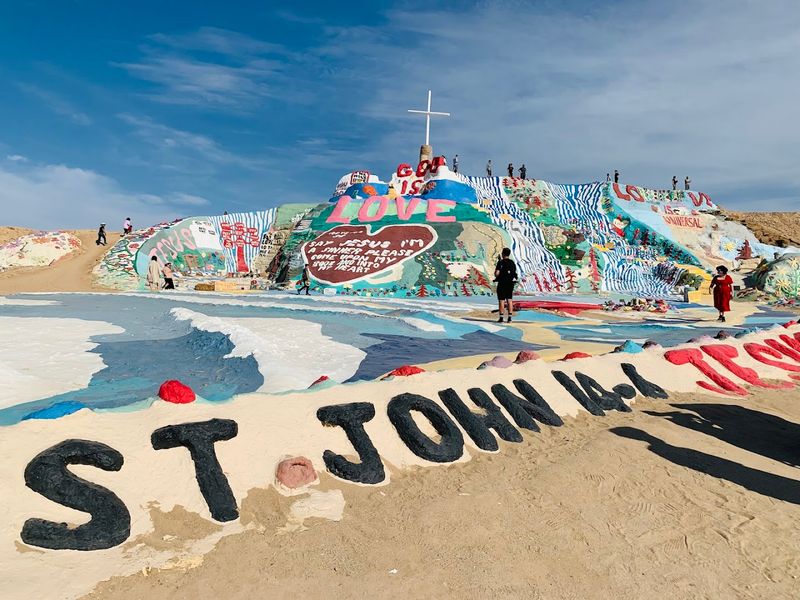
Bright paint applied in thick layers over adobe and straw creates a five-story structure in the middle of the Sonoran Desert that stops people cold the moment it comes into view.
Salvation Mountain is a folk-art project that took decades to build and covers an area roughly 150 feet wide, decorated with flowers, trees, suns, and religious messages in every color imaginable.
The contrast between the vivid colors and the flat, beige desert surrounding it is genuinely startling.
Visit California describes it as one of the most distinctive roadside attractions in the state, and the site itself is open from sunrise to sunset every day of the year.
No admission is charged, though donation boxes are present for those who want to contribute to its ongoing maintenance.
The site is located near Niland in Imperial County, and the access road is unpaved but typically passable for regular cars in dry conditions.
Just beyond Salvation Mountain sits Slab City, a community of off-grid residents living on the concrete slabs of an old military base.
The two together create a day trip that feels completely outside the California mainstream.
Temperatures in this area can be extreme, especially from May through September, so visiting in cooler months is strongly recommended.
4. Solvang
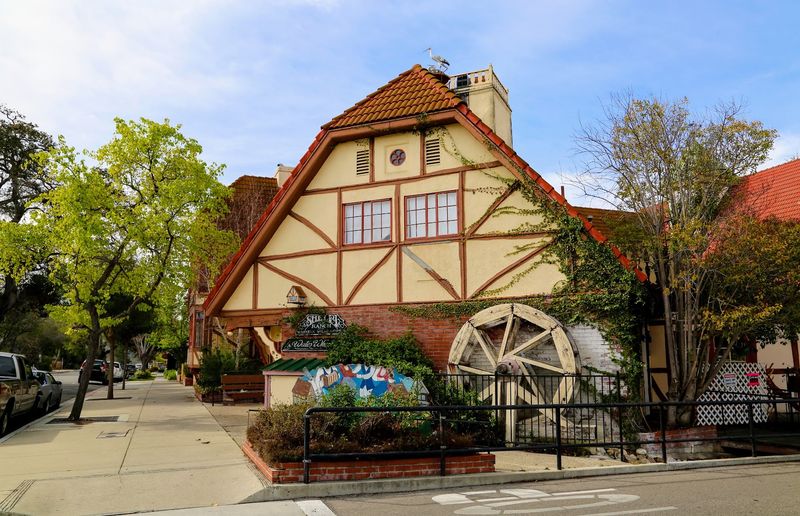
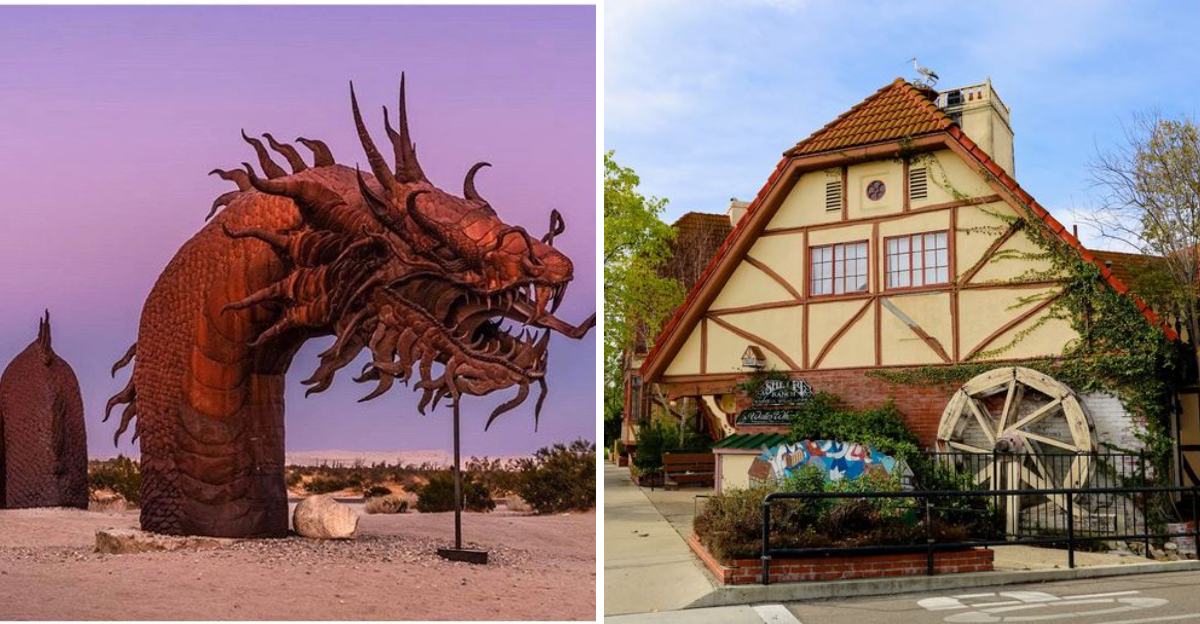
Arriving in Solvang for the first time tends to produce a double-take because the architecture, the windmills, and the hand-painted signs look more like a village from northern Europe than a town in the Santa Ynez Valley.
Founded in 1911 by Danish settlers, the town was deliberately built to reflect Danish heritage, and that identity has remained central to its character ever since.
The streets are walkable and compact, making it easy to spend a full day moving between bakeries, shops, and cultural sites without needing to drive.
The Elverhoj Museum of History and Art documents Danish-American culture and the founding of the community, offering a grounded look at how the town came to exist.
Solvang’s official tourism pages frame the experience around windmills, traditional Danish pastries, and European-style streets, and the reality matches that description closely.
Danish aebleskiver and pastries are available at multiple bakeries throughout the town.
Weekends tend to draw larger crowds, so arriving earlier in the day helps with parking and a more relaxed pace.
The surrounding Santa Ynez Valley also offers scenic drives through rolling hills and farmland.
Solvang sits about 35 miles north of Santa Barbara, making it a natural pairing for a longer day out on the central coast.
5. Pioneertown
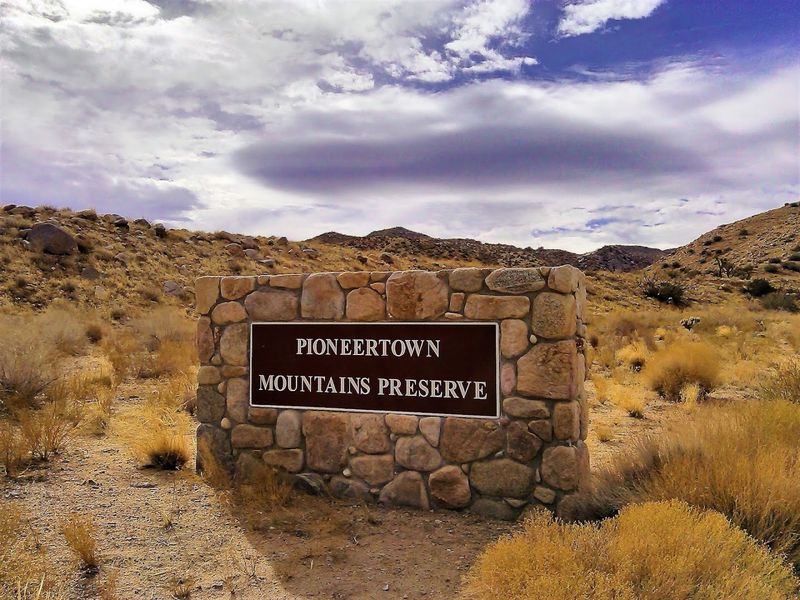
Mane Street in Pioneertown looks exactly like the set of an old Western film because it literally was one.
Built in 1946 as a functioning movie set that could also serve as a real community, the town was designed by a group of investors including Hollywood actors who wanted a permanent location for Western productions.
The storefronts are original, the wooden boardwalks are weathered, and the whole place carries the feeling of stepping sideways out of the present day.
Visit California notes that Pioneertown began as an Old West movie set built to function as a real place, and the current official visitor site confirms that Mane Street remains open to the public 365 days a year.
No admission is required to walk the street, and the low-key atmosphere makes it easy to explore at a relaxed pace.
The surrounding high desert landscape of the Morongo Valley adds to the isolated, cinematic quality of the visit.
Pioneertown sits about 4 miles north of Yucca Valley and is easy to reach by car. The area near Joshua Tree National Park means many visitors pair the two stops into a single day.
The unpaved road into the main area is generally fine for standard vehicles in dry weather, though checking conditions ahead of time is always a reasonable precaution.
6. Catalina Island, Especially Avalon
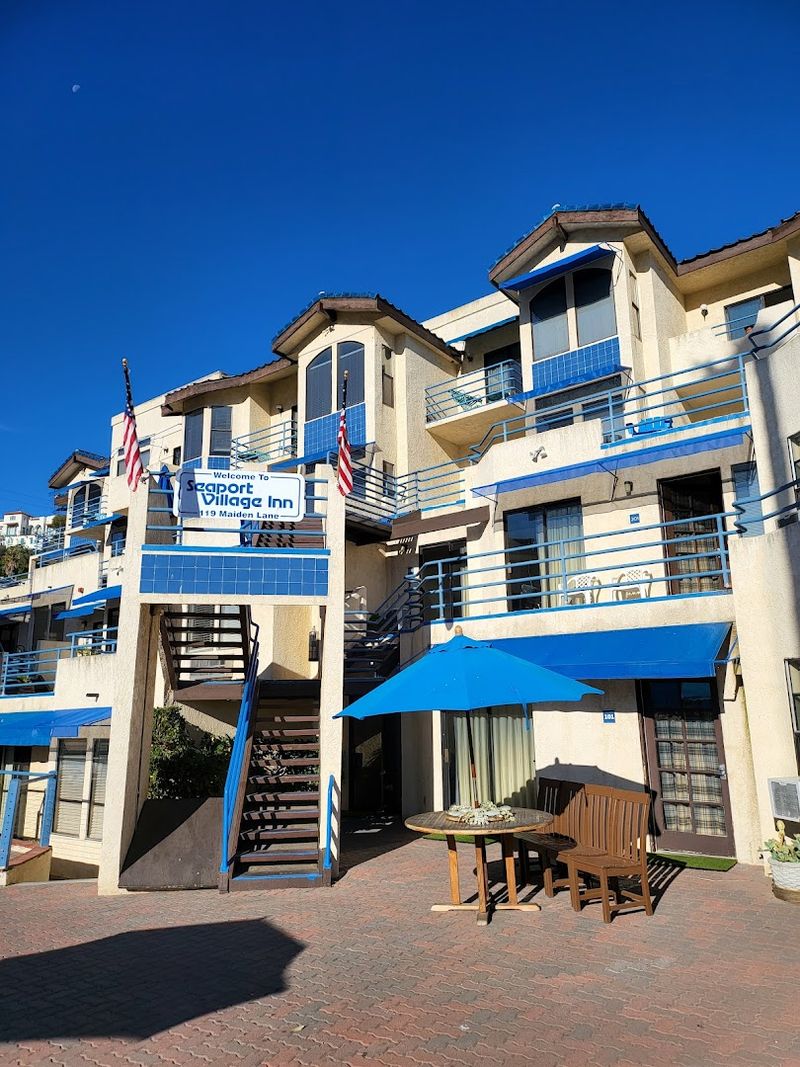
Getting to Avalon requires a ferry ride of roughly one hour from the Southern California mainland, and that short stretch of water creates a surprisingly complete psychological shift.
The pace slows, the views open up, and by the time the harbor comes into sight the whole mood of the trip feels different from anything on the coast.
Avalon is a small, walkable town where golf carts are a primary mode of transportation and the waterfront is lined with low-rise buildings in warm colors.
Official Catalina sources note that ferry service connects the island to multiple mainland departure points including San Pedro, Long Beach, and Dana Point.
The town itself offers snorkeling, hiking, kayaking, and glass-bottom boat tours, giving visitors a range of ways to spend the day depending on energy level and interest.
Most of the town is reachable on foot from the ferry terminal.
Catalina Island is technically part of Los Angeles County, but it feels more like a Mediterranean island escape than anything associated with the mainland city.
Day-use fees and ferry tickets should be booked in advance during summer and holiday weekends, as availability fills quickly.
Bringing a light jacket is smart because the sea breeze can be cool even when the mainland is warm.
7. Lava Beds National Monument
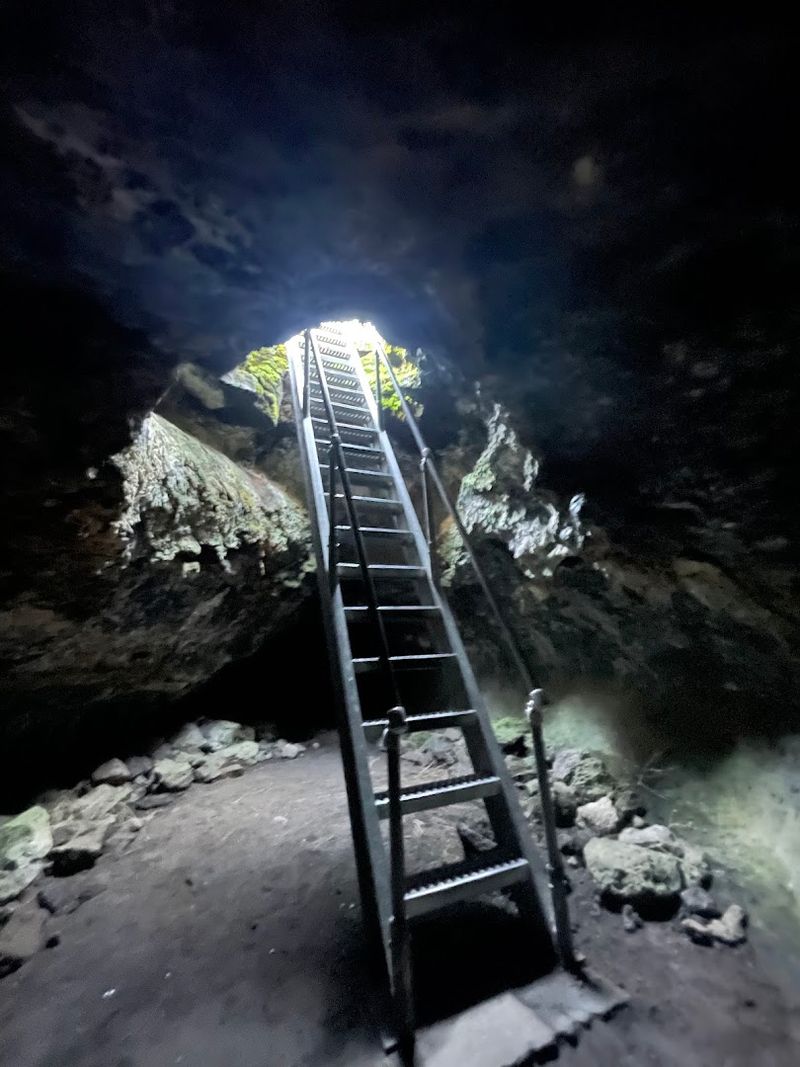
More than 800 caves run beneath the surface of Lava Beds National Monument, carved out by ancient lava flows that left hollow tubes behind as they cooled.
The National Park Service manages the site and describes it as a place where volcanic features, rock art sites, and historic battlefields all exist within the same landscape.
That combination of geology and history makes it one of the most layered and unusual national monuments in the entire western United States.
Located in far northern California near the Oregon border, the monument sits far outside the usual day-trip radius for most urban Californians, making it a genuine discovery for those willing to make the drive.
Several caves are open for self-guided exploration, and the park provides helmets and headlamps for a rental fee at the visitor center.
The terrain above ground is stark and volcanic, with low shrubs and wide open views that feel nothing like the forested or coastal California most visitors know.
Summer is the most popular season, but spring and fall offer cooler temperatures and fewer crowds. Cave temperatures stay around 55 degrees Fahrenheit year-round regardless of outside conditions.
Checking the park’s current cave-access status before visiting is recommended since some caves may close seasonally for bat protection.
8. Anza-Borrego Desert State Park, Slot Canyon Area
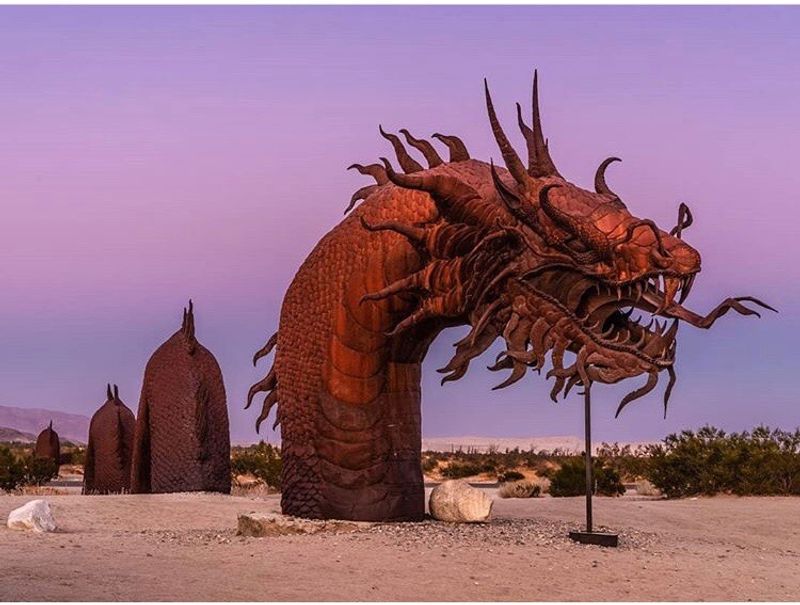
Narrow walls of sandstone rise on both sides as you move through the slot canyons of Anza-Borrego, and the scale of the rock makes the experience feel both intimate and enormous at the same time.
The canyon walls display layers of color ranging from pale cream to deep rust, shaped by millions of years of water erosion cutting through the desert floor.
The visual texture of the stone up close is something that photographs rarely capture with full accuracy.
Anza-Borrego Desert State Park is the largest state park in California, covering more than 600,000 acres of badlands, desert washes, and open sky.
The California State Parks page confirms active day-use access for the Slot Canyon area, identifying it as a major current visitor zone within the park.
No technical climbing gear is required for the main slot canyon routes, though sturdy closed-toe shoes and plenty of water are essential.
The best time to visit is between October and April when temperatures are manageable and wildflower blooms sometimes add unexpected color to the desert floor.
Summer heat in this area can be dangerous, with temperatures regularly exceeding 100 degrees Fahrenheit.
Cell service is limited in much of the park, so downloading offline maps and trail information before arrival is a practical step worth taking.
9. Pinnacles National Park
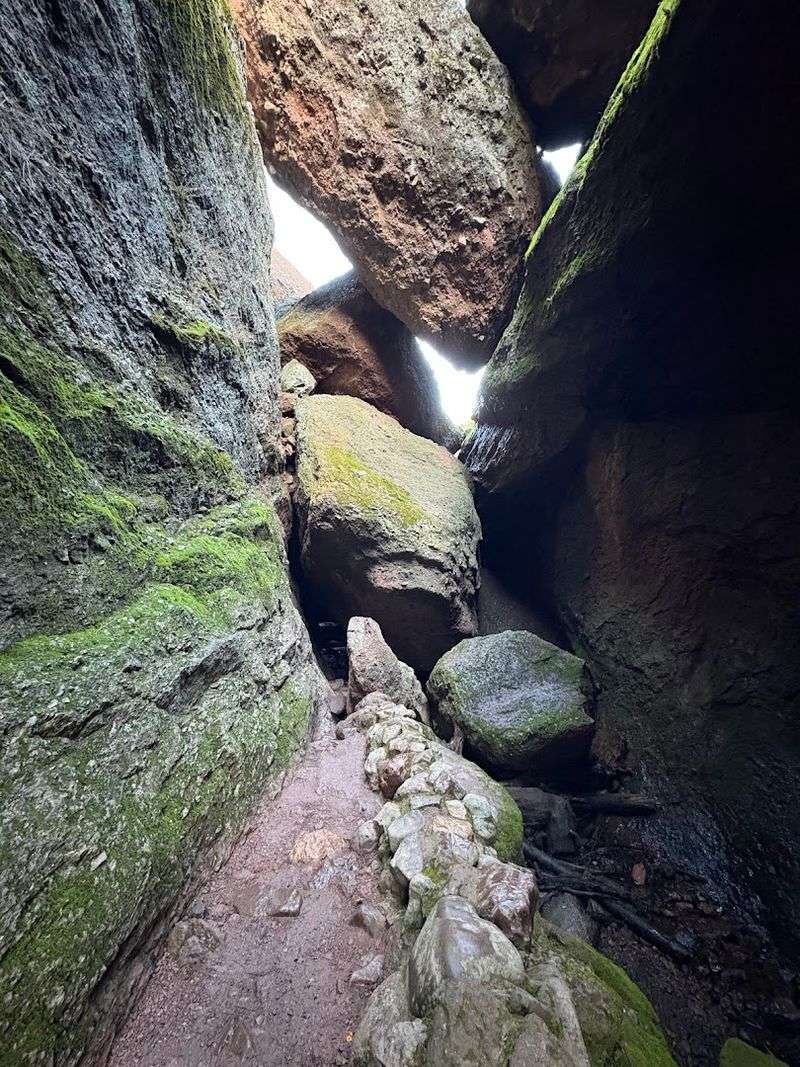
Rock spires that look like they belong in a fantasy landscape jut up from the Gabilan Mountains in Pinnacles National Park, creating a skyline that surprises most first-time visitors who expect something more conventionally scenic from a California park.
The formations are the eroded remains of an ancient volcano, and over millions of years the rock has been shaped into towers, caves, and boulder piles that reward exploration at ground level.
The park sits about 80 miles south of San Jose and 130 miles south of San Francisco.
The National Park Service highlights two main cave systems within the park: Balconies Cave and Bear Gulch Cave.
As of current park status, Balconies Cave is open and Bear Gulch Lower Cave is also open, making it possible to experience the talus caves on a day trip without needing special permits.
Headlamps or flashlights are required inside the caves since sections are completely dark.
California condors nest and soar in the area, and sightings are possible especially in the morning hours when the birds ride thermal currents over the rock formations.
The east side of the park tends to be sunnier and warmer while the west side stays cooler longer into the day. Arriving early on weekends helps with parking since the lots fill quickly during peak spring months.