These 10 Georgia Parks Offer Views You Won’t Forget
Georgia does not announce itself. It does not put up billboards telling you that something extraordinary is about to appear around the next bend in the road.
It just lets the landscape do the work, and the landscape, it turns out, is extremely good at its job.
I have spent more weekends than I can count driving through this state with no particular plan, and I keep ending up somewhere that makes me pull over and just stand there for a moment.
A gorge that drops away beneath your feet without warning. A waterfall that sounds impossible before it comes into view.
A swamp so still and prehistoric it feels like time stopped somewhere around the Jurassic period and simply forgot to start again.
Georgia’s state parks carry that specific quality of places that are genuinely better than anything you read about them beforehand, which is a rarer thing than it should be and a very good reason to start exploring.
1. Cloudland Canyon State Park
Standing at the rim of Cloudland Canyon for the first time feels like the ground just decided to disappear beneath a forest.
Located at 122 Cloudland Canyon Park Rd, Rising Fawn, this park sits on the western edge of Lookout Mountain and drops nearly 1,000 feet into a dramatic gorge carved by Sitton Gulch Creek.
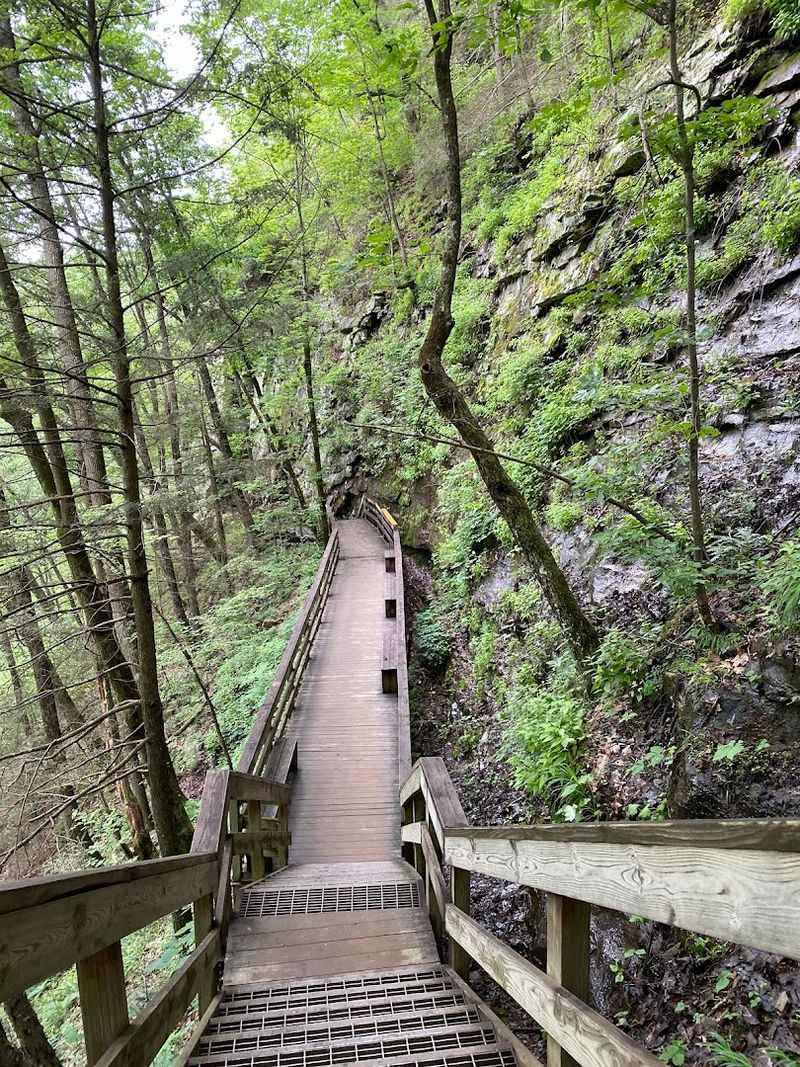
The overlook trail is short but delivers views that would embarrass most postcards. Two waterfalls hide inside the gorge, and reaching them means descending hundreds of wooden stairs.
It’s worth every step.
Sunrise from the canyon rim is something else entirely. The fog rolls through the gorge below you like something from a nature documentary.
Campsites, cottages, and backcountry options make it easy to stay long enough to catch both sunrise and sunset. This park is one of Georgia’s crown jewels, and it earns that title every single visit.
2. Amicalola Falls State Park
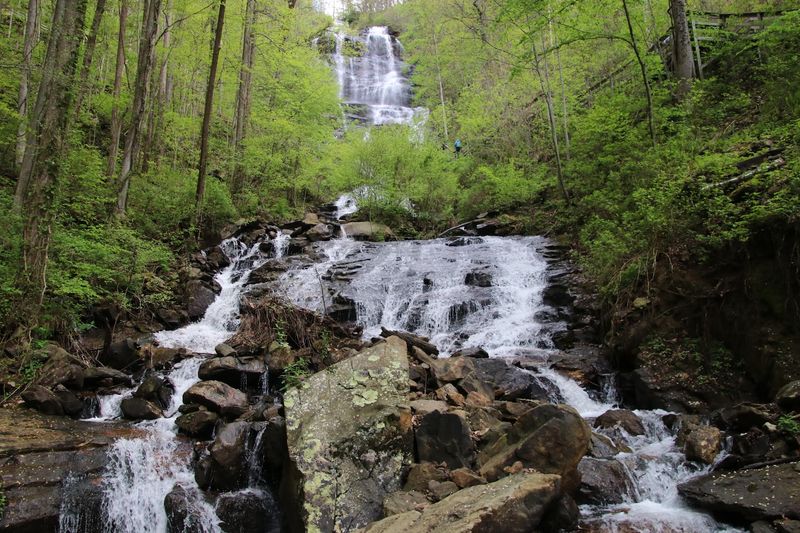
Amicalola Falls does not ease you into the experience. It hits you immediately, all 729 feet of it, making it the tallest cascading waterfall east of the Mississippi River.
At 418 Amicalola Falls State Park Rd, Dawsonville, this park is equal parts breathtaking and humbling.
The falls tumble in layers down a rocky mountain face, and you can view them from multiple angles along the trail system.
There is a bridge at the base that puts you close enough to feel the mist on your face. It’s the kind of refreshing that makes you feel genuinely alive.
The park also serves as the approach trail to the Appalachian Trail, so there is real energy here. Hikers with full packs pass through with that focused, purposeful look.
Even if a 2,000-mile trek is not on your agenda, the lodge overlook and surrounding trails give you a full day of stunning scenery without needing a single blister. Come early on weekends.
The falls are worth the crowd, but the morning light hits perfectly.
3. Tallulah Gorge State Park
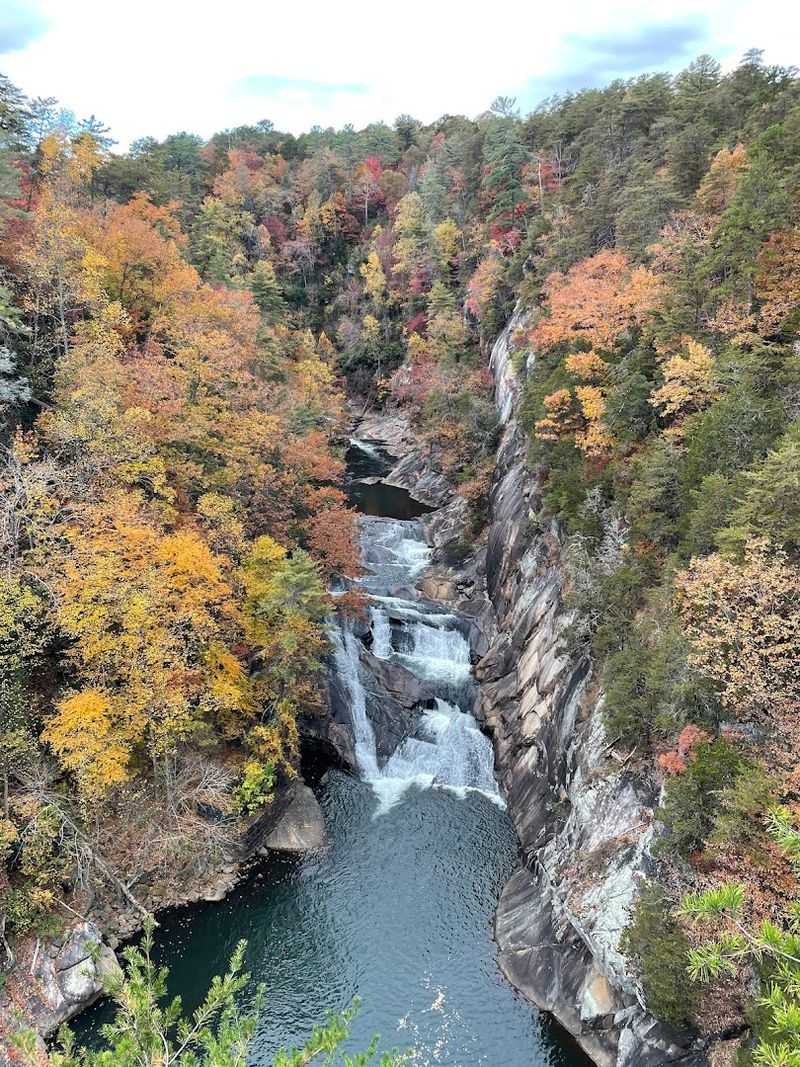
Few places in the Southeast have the dramatic intensity of Tallulah Gorge.
The gorge stretches nearly two miles long and plunges up to 1,000 feet deep, making it one of the most spectacular natural features in the eastern United States.
The park sits at 338 Jane Hurt Yarn Rd, Clayton, and it pulls visitors in from all directions.
A suspension bridge hangs across the gorge, and walking it with the canyon yawning open below you is a genuine thrill. The bridge sways just enough to remind you that nature is in charge here.
Trails lead down into the gorge floor, but permits are required and limited, which keeps the experience from feeling crowded.
The Tallulah River once carved all of this over thousands of years, and you can see that patient, relentless work in every exposed rock face.
Skilled kayakers tackle the gorge during special release events when the river runs high. Watching that from the rim overlook is entertainment you did not know you needed.
Jane Hurt Yarn Interpretive Center inside the park adds helpful context to everything you’re seeing.
4. Black Rock Mountain State Park
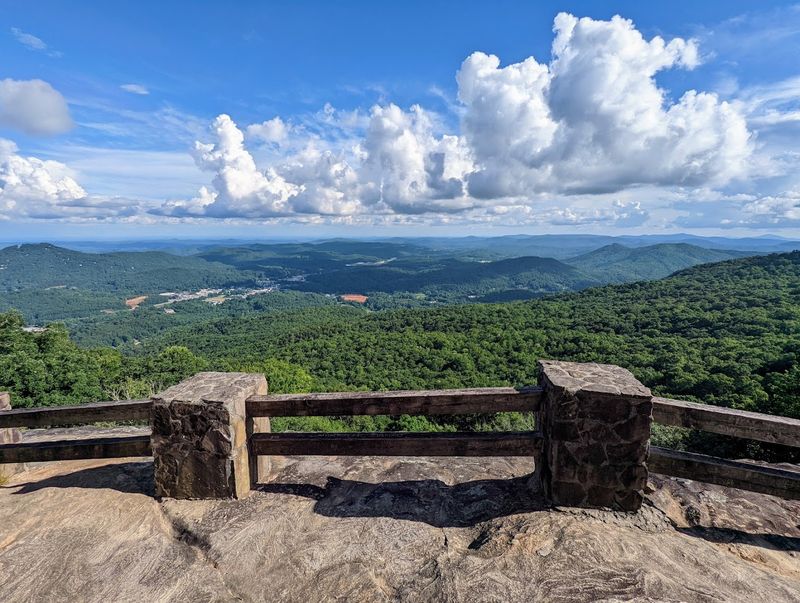
At 3,640 feet above sea level, Black Rock Mountain is the highest state park in Georgia, and it is not shy about showing off.
The views from the summit stretch across four states on a clear day, which is the kind of scenery that makes your phone camera feel completely inadequate.
The dark-colored metamorphic rock that gives the park its name adds a moody, rugged look to the landscape. Rhododendron tunnels along the trails bloom brilliantly in late spring.
Fall foliage here is world-class. The elevation means the leaves turn earlier than in the valleys below, giving you a longer window to catch the colors.
The park is located at 3085 Black Rock Mountain Pkwy, Mountain City, right in the heart of the Blue Ridge Mountains.
The 10-mile Tennessee Rock Trail is the best way to experience the full range of the park, offering multiple overlooks and ridge-line views that keep rewarding you around every bend.
Cottages and tent sites are available, and waking up above the clouds is a morning experience that genuinely resets your perspective on the week ahead.
5. Vogel State Park
Vogel State Park has been doing this longer than almost any park in Georgia. Opened in 1931, it is one of the oldest state parks in the state, and it wears its history comfortably.
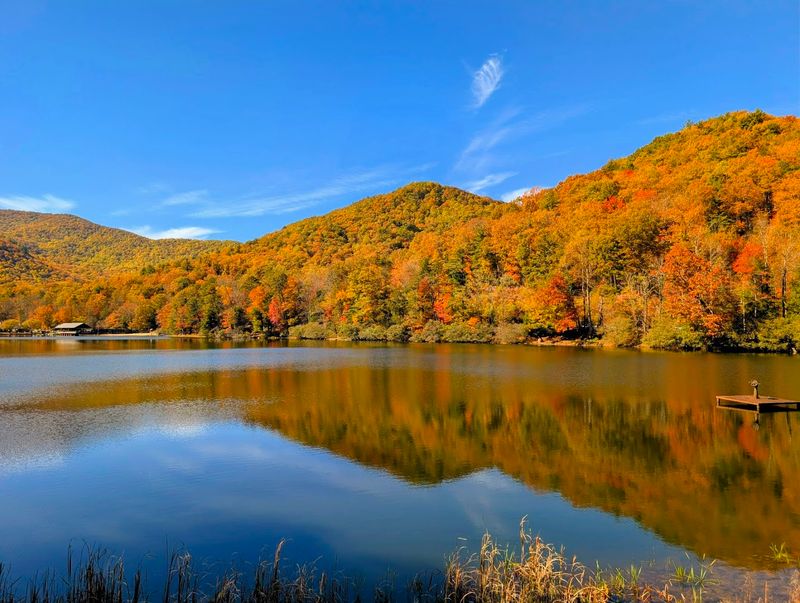
Nestled at the base of Blood Mountain near 405 Vogel State Park Rd, Blairsville, the park centers around a beautiful 22-acre lake that mirrors the surrounding peaks perfectly.
The lake is calm enough for paddleboats and fishing, and the mountain backdrop makes every photo look professionally composed. Fall is the undisputed peak season here.
The ridge above the park explodes in red, orange, and gold, and the reflection on the lake doubles the effect.
The Trahlyta Lake loop is a gentle walk that most visitors can handle, but the park also connects to more challenging trails heading up to Blood Mountain, the highest peak on Georgia’s section of the Appalachian Trail.
Camping here feels classic in the best sense. Campfire smell, cool mountain air, and the sound of the creek running nearby are details that stay with you.
Vogel is the kind of park that brings people back every single year without fail.
6. Unicoi State Park
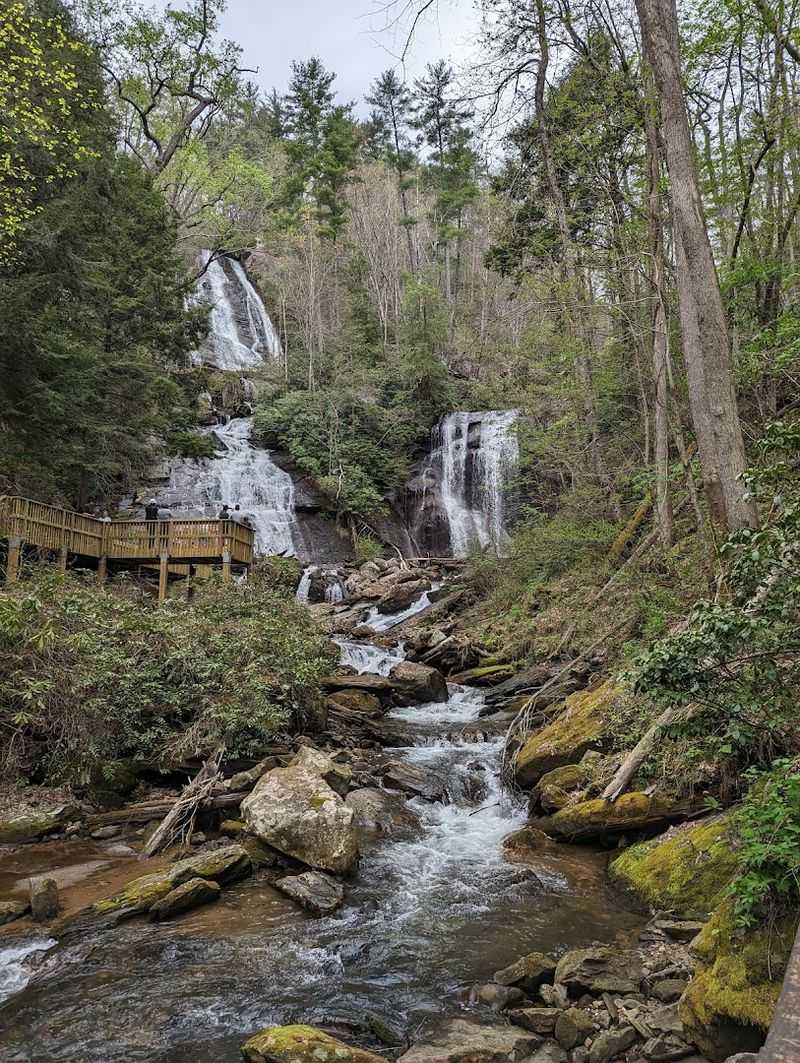
Unicoi State Park sits just outside the alpine-themed town of Helen, at 1788 GA-356, and it offers a completely different vibe from the kitschy Bavarian architecture a mile down the road.
Here, it is all about Anna Ruby Falls, one of the most photographed natural features in North Georgia.
The falls are actually two separate waterfalls, Curtis Creek and York Creek, converging at the same point.
Standing at the viewing platform and watching both streams crash together is a genuinely satisfying payoff for the short hike in. The trail is paved, making it accessible for most visitors.
Beyond the falls, Unicoi Lake provides a peaceful contrast. Kayak rentals, fishing, and a sandy beach area make it a full-day destination rather than just a quick stop.
The lodge and conference center overlook the lake and provide solid accommodation options for those who want to stay longer.
Trail options range from easy loops around the lake to more rugged paths connecting to the Appalachian Trail system.
Unicoi is one of those parks where you arrive planning two hours and somehow end up spending the whole day without noticing where the time went.
7. Providence Canyon State Park
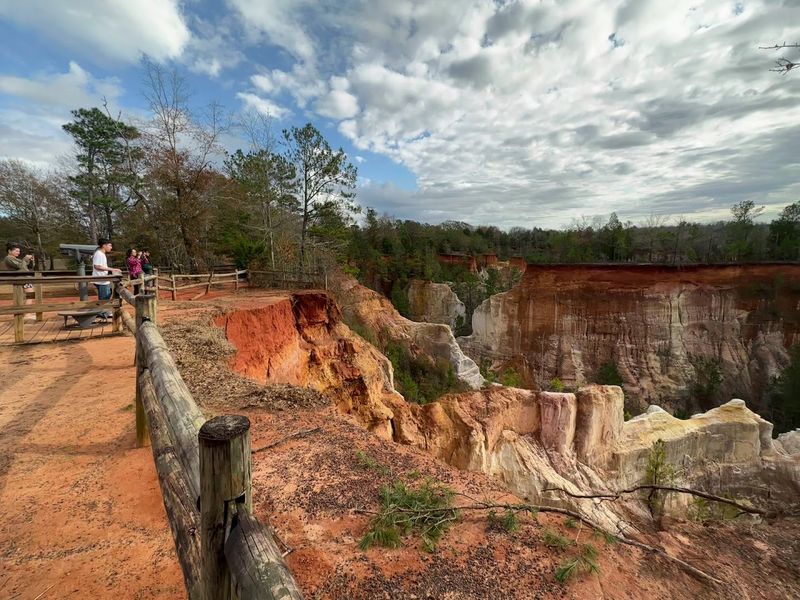
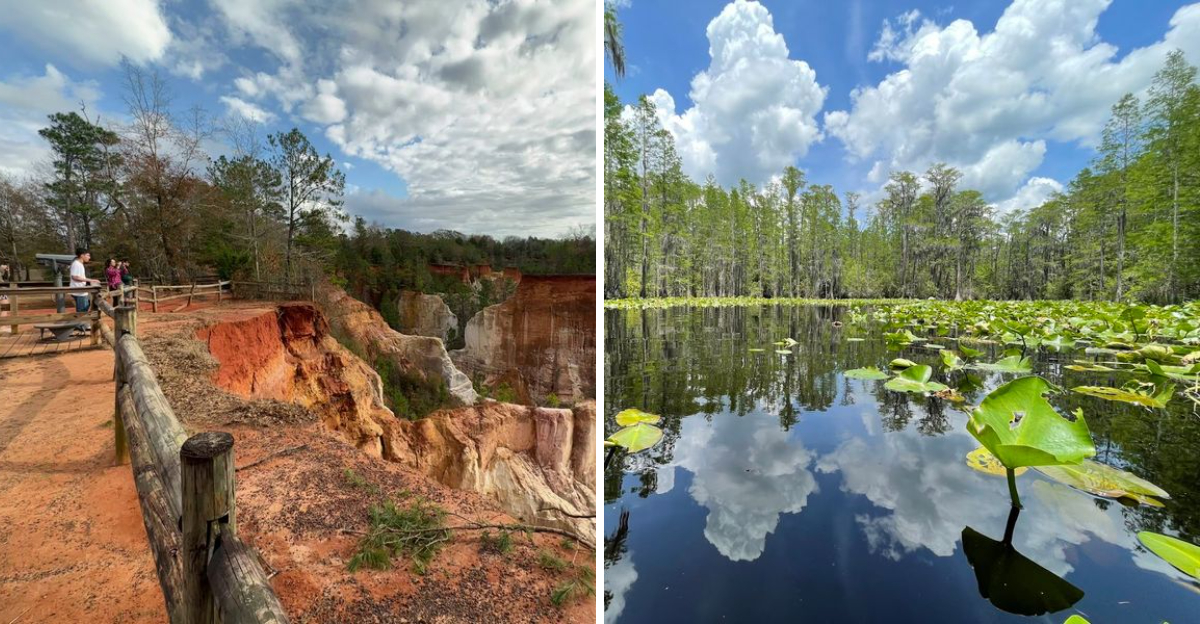
Georgia’s Little Grand Canyon is a nickname that sounds like marketing until you actually see it.
Providence Canyon is a geological oddity, a series of canyons up to 150 feet deep that formed not over millions of years but over just the last two centuries due to poor farming practices in the 1800s.
Located at 8930 Canyon Rd, Lumpkin, this place is equal parts humbling and visually stunning.
The canyon walls are streaked with bands of pink, red, purple, orange, and white soil layers that look almost painted. Morning light and late afternoon shadows bring out the colors dramatically.
The rim trail gives you overlook after overlook without requiring serious hiking experience.
Inside the canyon, the terrain shifts completely. Rare plumleaf azaleas bloom in late summer, adding bursts of orange against the pale canyon walls.
It is one of only a few places in the world where this plant grows naturally.
The canyon floor has its own quiet, almost surreal atmosphere. You’re walking through something that should not exist and yet here it is, spectacular and strange and completely worth the drive to southwest Georgia.
Most visitors are surprised how far it is from the mountains and how different it feels.
8. Stephen C. Foster State Park
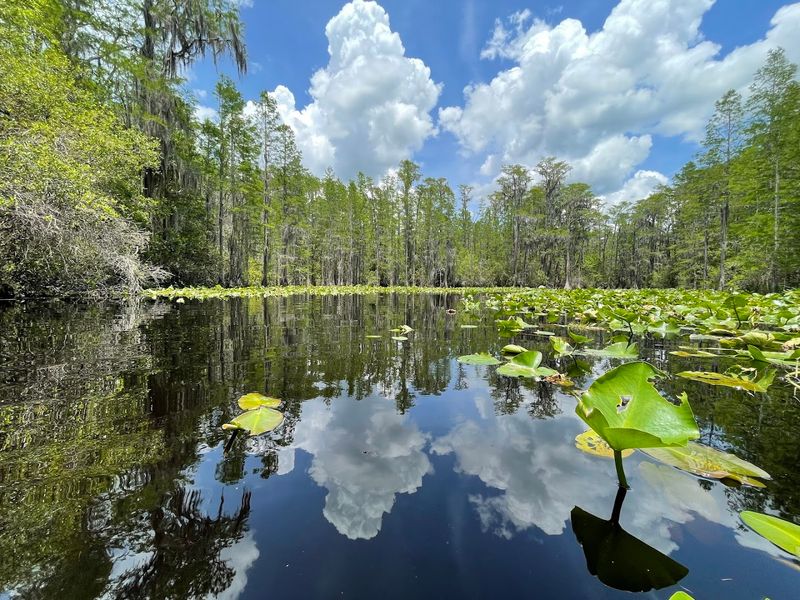
Not every unforgettable view involves mountains. Stephen C.
Foster State Park proves that flat, dark, mirror-still water surrounded by ancient cypress trees can stop you just as cold as any canyon overlook.
The park serves as a gateway into the Okefenokee National Wildlife Refuge, one of the largest intact freshwater ecosystems in North America.
Paddling through the swamp at sunrise is something I genuinely struggle to describe. The water is tea-colored and perfectly still.
Spanish moss hangs from every branch.
Alligators float like logs near the bank. It is prehistoric and peaceful at the same time.
The park sits at 17515 GA-177, Fargo, and offers boat tours for those who prefer a guided experience, and the interpretive center does a solid job explaining the ecology of the swamp without making it feel like a classroom.
Birding here is exceptional, with sandhill cranes, herons, and wood storks making regular appearances.
Cottages right on the water let you extend the stay, and evenings in the swamp have their own kind of magic.
The sounds alone, frogs, birds, and the occasional splash, create an atmosphere that feels completely removed from the rest of the world.
9. George L. Smith State Park
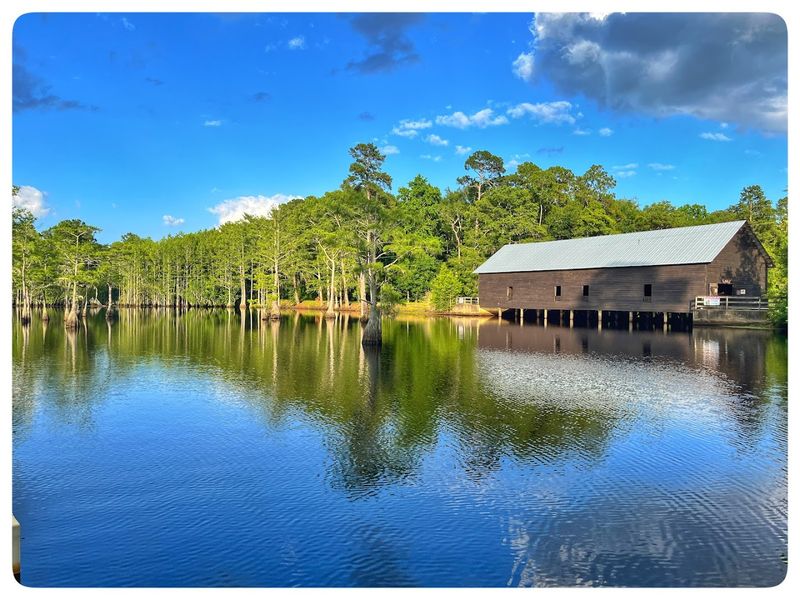
George L. Smith State Park is the kind of place that sneaks up on you.
You arrive expecting a pleasant enough outing and leave genuinely moved by how quietly beautiful it is.
The park is located at 371 George L. Smith State Park Rd, Twin City, and its centerpiece is a 412-acre millpond dotted with bald cypress trees draped in Spanish moss.
A historic 1880s grist mill and covered bridge sit at the edge of the pond, perfectly reflected in the still, dark water below. The image is almost impossibly picturesque.
Kayaking or canoeing through the flooded cypress forest is the best way to experience the park’s full atmosphere.
The trees grow right out of the water, their knobby roots rising above the surface like something from a fairy tale. Wildlife is abundant and unbothered here.
Otters, turtles, wood ducks, and great blue herons are common sightings along the water trails. Fishing is popular, and the park has a boat ramp for easy access.
Camping is available for those who want to stretch the visit into a full weekend. George L.
Smith is one of Georgia’s most underappreciated parks, and that quiet reputation is part of its charm.
10. Sweetwater Creek State Park
Just twenty miles west of Atlanta, Sweetwater Creek State Park manages to feel like a complete escape from the city, which is genuinely impressive given how close everything is.
The park sits at 1750 Mt Vernon Rd, Lithia Springs, and combines natural beauty with a compelling piece of Civil War history that most visitors do not expect to find.
The ruins of the New Manchester Manufacturing Company mill stand along the creek bank, burned during Sherman’s March to the Sea in 1864.
The red brick walls still rise above the rushing water, covered in moss and vines, creating a striking contrast against the surrounding forest.
The creek itself is fast and rocky, with a deep blue-green color that photographs beautifully.
The Yellow Trail is the most popular route, following the creek closely and offering multiple spots to sit by the water.
The park also has a reservoir with kayak and canoe rentals, adding another layer to the outdoor options. For Atlanta residents, this is the easiest full-nature day trip available.
For visitors passing through the city, it is well worth the short detour. The combination of rushing water, historic ruins, and dense forest makes Sweetwater Creek genuinely hard to forget once you have been there.