This Dreamy New York Arboretum Looks Like Something Straight Out Of A Painting
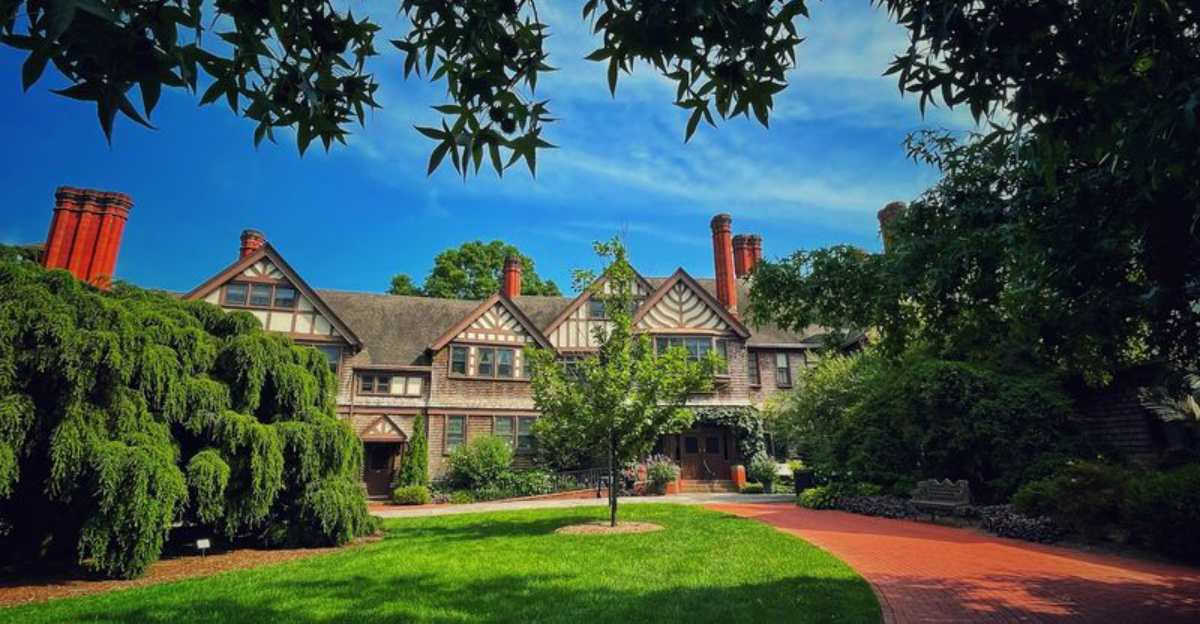
Some places make you forget you had a schedule. I almost drove past this one.
A quick detour, no expectations, just curiosity pulling me off the main road. Then suddenly, I was standing in the middle of something I had no words for.
Ancient trees arching overhead, light filtering through in ways that felt almost staged. The state of New York holds a lot of surprises, but nothing quite prepared me for this.
People talk about places that feel like paintings, and I always rolled my eyes a little. Not anymore.
This state has a habit of hiding its most extraordinary corners in plain sight, and this arboretum is proof. I took maybe a hundred photos and none of them came close to the real thing.
The Olmsted-Designed Landscape That Changes Everything
Frederick Law Olmsted designed Central Park, and he also shaped this stunning landscape. That alone should tell you something remarkable is waiting here.
The grounds feel intentional but never stiff, like nature and art made a quiet agreement.
The design dates back to 1887, which means these trees have had over a century to grow into their full, dramatic forms. Walking through feels less like a stroll and more like moving through a living timeline.
Every turn reveals something you did not expect to see.
The 691 acres stretch along the Connetquot River, creating a natural corridor that feels genuinely wild in places. If you want to find it yourself, plug in 440 Montauk Hwy, Great River, New York and let the road do the rest.
Paved and gravel paths guide you without ever making the experience feel forced. You can follow the river loop, which covers about two miles, and feel completely removed from the busy world outside.
The landscape rewards slow walkers. Benches appear exactly where you want them, framing views that look almost too beautiful to be real.
Visiting at different seasons changes the entire mood of the place, making every return trip feel like a brand new experience worth having.
The Conifer Collection That Will Make Tree Lovers Weak
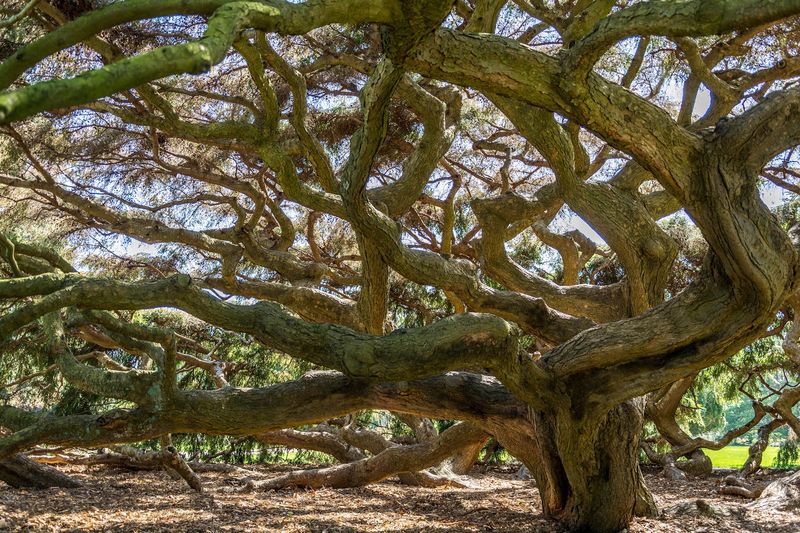
Not everyone gets excited about conifers, but one walk through this collection changes minds fast. William Bayard Cutting built this collection with serious botanical advice, and it shows in every needle and cone.
Some of these specimens are the largest of their kind on Long Island.
The collection was developed with guidance from Charles Sprague Sargent, one of the most respected botanists of his era. That partnership produced something genuinely rare.
You are not just looking at pretty trees; you are standing inside a living archive of botanical history.
In 2016, a dedicated Conifer Garden was added to the property. It features dwarf conifers, Japanese maples, heaths, and heathers arranged with clear care and intention.
The contrast between the ancient towering specimens and the compact new garden is surprisingly moving.
Textures here are extraordinary. Some bark looks like braided rope, while certain branches spread like open hands reaching for light.
Bring a camera with a good close-up setting because the details on these trees deserve serious attention. Even visitors who came purely for the river views end up spending far more time here than they planned.
Westbrook Manor House And Its Tiffany Windows
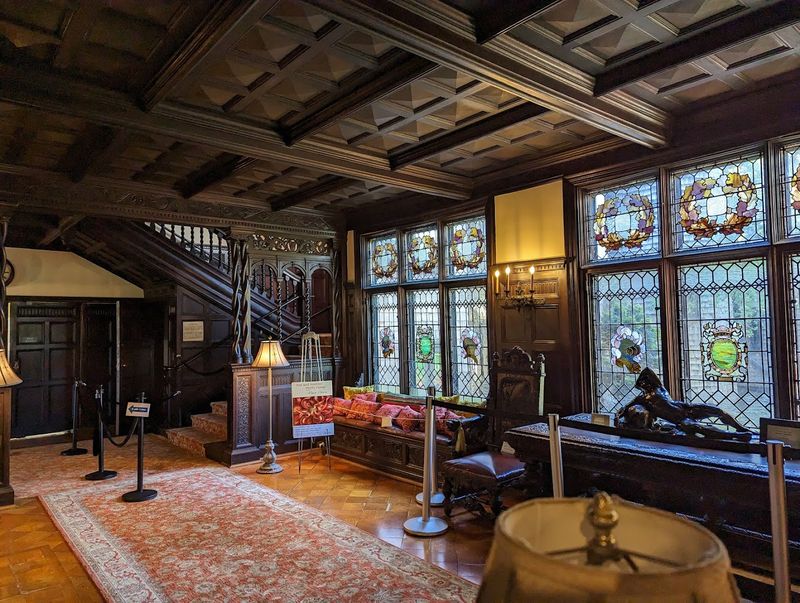
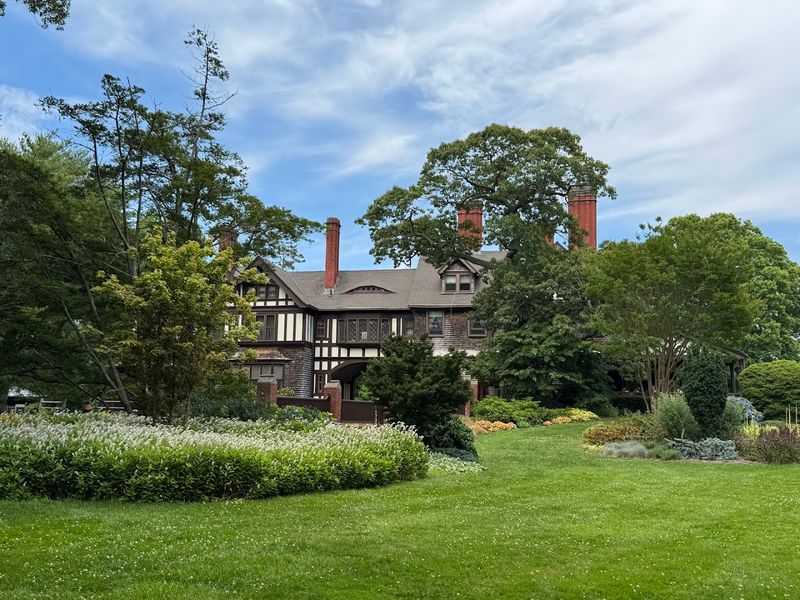
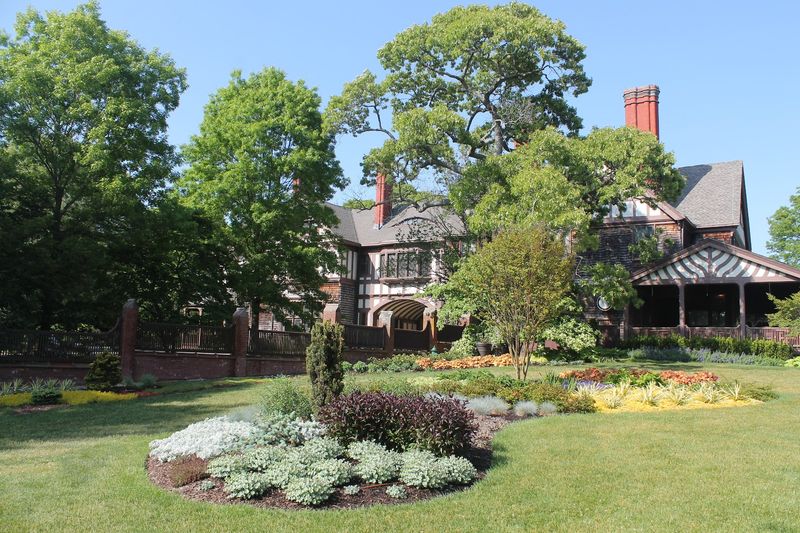
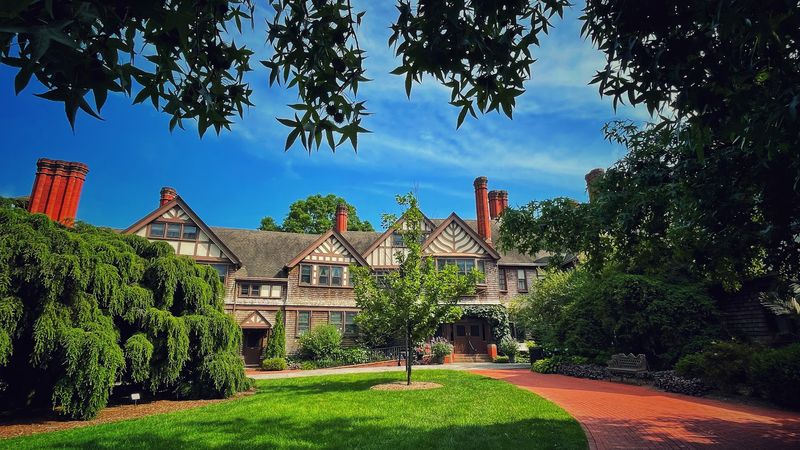
Standing in front of a 19,000-square-foot Tudor-style manor house was not something I expected from a state park visit. Westbrook Manor House is the kind of building that makes you stop walking mid-sentence.
It was designed by architect Charles C. Haight and carries every detail of its era with confidence.
Inside, original oak furniture fills rooms that feel preserved rather than restored. Louis Comfort Tiffany stained-glass windows filter light into colors that shift throughout the day.
Imported fireplaces anchor the larger rooms with a warmth that feels both historic and completely livable.
The manor has appeared on screen more than once. HBO Max used it for filming scenes in The Gilded Age, and Martin Scorsese chose it as a location for The Age of Innocence.
Standing inside a room that Scorsese filmed in is a quietly thrilling experience.
Tours of the manor are available to the public, and the Hidden Oak Cafe operates inside the building. Victorian Tea service is offered by reservation, which adds an unexpectedly elegant option to an already impressive day out.
The manor overlooks the Connetquot River, giving every window view a natural painting of its own.
The Royce Rhododendron Garden In Full Bloom
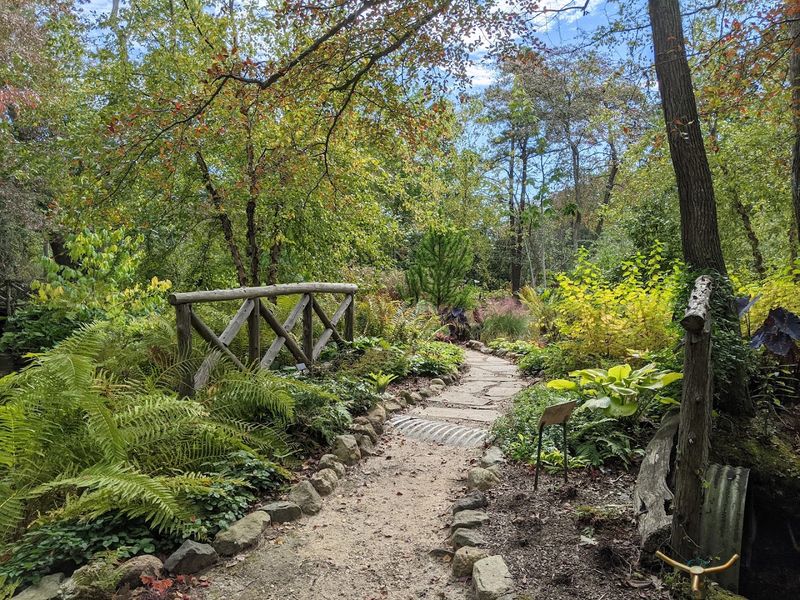
Rhododendrons have a way of making an entire garden feel theatrical, and the Royce Rhododendron Garden here fully commits to that drama. When these shrubs peak, the color is almost overwhelming in the best possible way.
Walking through feels like the garden is performing just for you.
The blooms range from soft white to deep purple, with every shade of pink imaginable in between. The arrangement feels natural rather than arranged, which makes the experience feel more like discovery than display.
Paths wind through in a way that reveals new clusters around every turn.
Spring is the obvious time to visit for rhododendrons, but the garden holds interest well beyond peak bloom. The evergreen foliage stays rich and glossy through other seasons, giving the garden a permanence that many flower displays lack.
Even in winter, the structure of these plants creates compelling shapes against bare ground.
Photographers tend to linger here longer than anywhere else on the property. The combination of filtered light, layered color, and natural framing makes almost every shot look effortless.
If you visit only once, time it for late spring and make the rhododendron garden your first stop without hesitation.
The Dahlia Garden That Peaks Like A Grand Finale
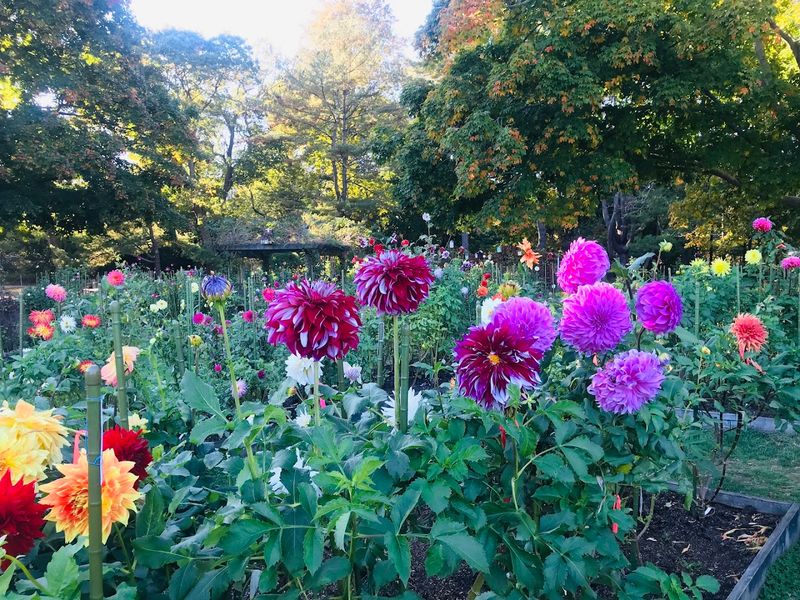
Late September at this arboretum feels like the garden saved its best performance for last. The Dahlia Garden reaches its peak around that time, turning a section of the grounds into a dense tapestry of color.
Reds, oranges, and deep pinks compete for attention in the most satisfying way.
Dahlias are dramatic flowers by nature, and seeing dozens of varieties together amplifies that energy considerably. Some blooms are the size of dinner plates, while others are tight and geometric like little pinwheels.
The variety on display here goes well beyond what you find at a typical garden center.
One regular visitor described returning every other week just to watch the dahlia garden transform through the season. That kind of repeat draw says a lot about how compelling this space becomes in late summer.
Planning a visit around the peak bloom is genuinely worth adjusting your schedule for.
The garden sits near other planting areas, so you naturally flow from one visual experience to the next. Bees work the dahlias enthusiastically, which adds a pleasant layer of activity to the whole scene.
Watching them move from bloom to bloom while the late afternoon light catches the petals is a simple pleasure that stays with you.
Oak Park And The Holly Walk Worth Every Step
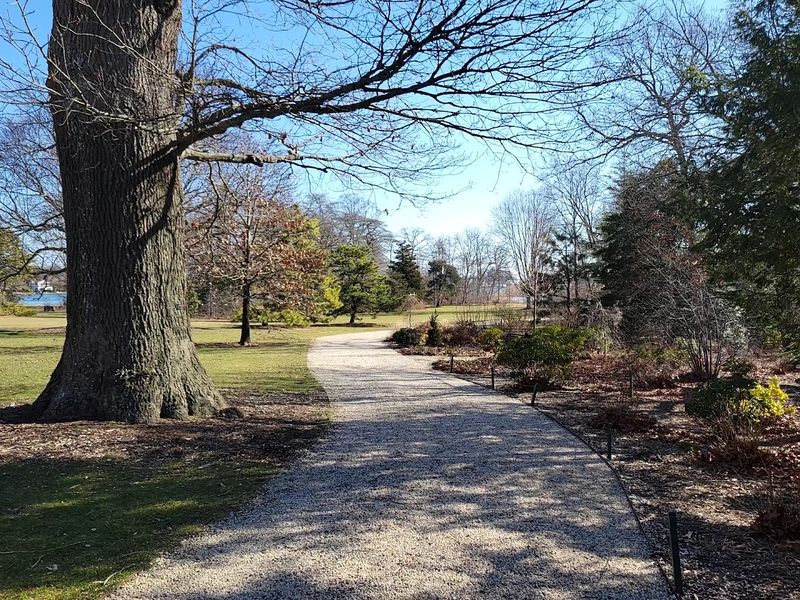
Fourteen species of oak in one elegant collection sounds like a botany textbook, but Oak Park at this arboretum is anything but dry. The canopy overhead creates a shifting pattern of light and shadow that changes with every breeze.
Walking under these trees feels genuinely ancient, like the park has been holding its breath for centuries.
The Holly Walk runs as its own distinct experience nearby. Dense, glossy green foliage lines the path on both sides, creating a corridor that feels almost ceremonial.
In winter, when red berries appear against the dark leaves, the visual contrast becomes remarkably striking.
Both areas reward careful attention. Oaks at this scale develop deeply furrowed bark and spreading forms that no young tree can replicate.
The Holly Walk changes character with the seasons in subtle ways that regular visitors notice and appreciate over time.
These sections of the arboretum tend to be quieter than the areas near the manor house. That relative calm makes them ideal for visitors who want to slow down and actually absorb what they are seeing.
Bring a notebook or just sit on one of the many well-placed benches and let the scale of these trees do the talking for you.
Wildlife Along The Connetquot River
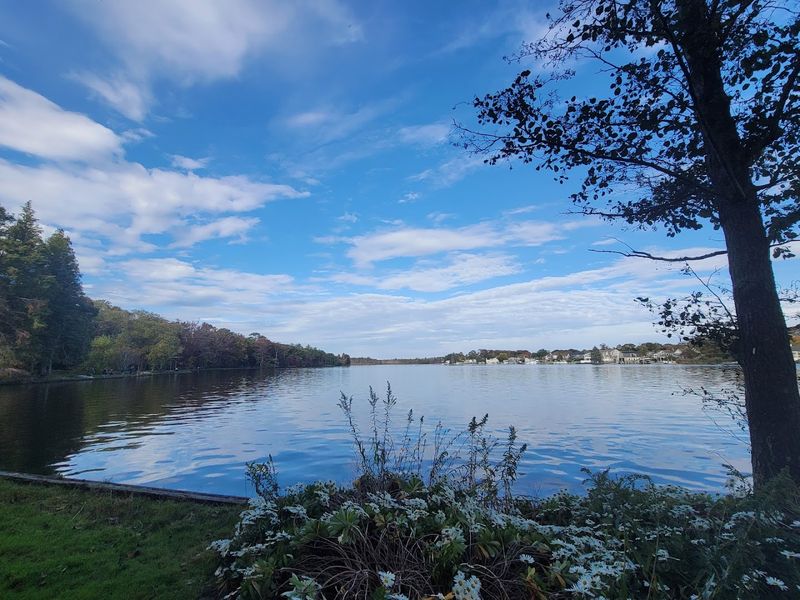
Swans on a river surrounded by century-old trees is the kind of scene that makes you question whether you accidentally walked into a film set. The Connetquot River runs through the property and attracts a genuinely impressive range of wildlife.
Osprey, egrets, waterfowl, and the occasional fox all call this landscape home.
Turtles surface near the water’s edge with a patience that puts most visitors to shame. Hawks circle overhead while swans glide below, creating a layered wildlife experience that feels effortless and unscripted.
One visitor spotted wild turkeys on a weekday morning, which is exactly the kind of unexpected encounter that makes a park memorable.
The ponds and streamlets throughout the property add additional habitat beyond the main river. These smaller water features attract birds that prefer calmer, shallower conditions, increasing the overall variety of species you might encounter.
Bringing binoculars is a genuinely good idea here, not just a suggestion.
Wildlife watching here requires no special skill or equipment beyond patience and quiet movement. The animals are accustomed to respectful visitors and often allow remarkably close observation.
Standing still near the riverbank for just a few minutes regularly produces sightings that feel completely out of proportion to the minimal effort involved.
The Working Farm That Makes This Arboretum Even More Special
A farm producing over 150 varieties of vegetables, berries, herbs, and flowers inside an arboretum is not something most people expect to find. The CSA farm here has been operating since 2012, quietly adding a productive agricultural layer to an already rich landscape.
It connects the arboretum to the surrounding community in a very practical and grounded way.
One hundred fifty hens contribute eggs to the operation, and their coop sits within view of the walking paths. Watching chickens go about their day inside a 691-acre botanical landscape is genuinely amusing.
It gives the property a lived-in quality that formal gardens sometimes lack.
The farm grows culinary herbs alongside ornamental flowers, blurring the line between practical growing and visual beauty. That overlap feels intentional and reflects the arboretum’s broader philosophy of making plants useful and appreciated at the same time.
Visiting in summer means seeing the farm at its most productive and visually varied.
Children respond particularly well to this section of the property. Seeing where food actually comes from, surrounded by some of the most beautiful landscaping on Long Island, creates a learning experience that is hard to replicate elsewhere.
It is one of those details that elevates a great park into something genuinely special and worth returning to.
Planning Your Visit To This Peaceful Long Island Escape
Getting the logistics right makes the difference between a good visit and a great one. Bayard Cutting Arboretum is open Tuesday through Sunday from 9 AM to 5 PM during the warmer season, with shorter winter hours.
Monday is the one day the park stays closed, so plan accordingly.
Parking is eight dollars when the vehicle entrance fee is collected, with dates varying by season. Seniors aged 62 and older get free parking on weekdays, excluding holidays, which is a genuinely appreciated perk.
An Empire Pass also covers parking, but bring the physical card rather than the app version to avoid any issues at the gate.
The Hidden Oak Cafe inside the manor house offers food and refreshments, and Victorian Tea is available by reservation. Most trails are paved or packed gravel, though some riverside paths can be tricky for wheelchairs and strollers.
Pets, bikes, and outside food are not permitted on the grounds, which helps maintain the calm atmosphere everyone comes here to enjoy.
Arriving early on a weekday gives you the best chance of experiencing the grounds in near-total quiet.