15 California Hidden Beaches That Feel Calmer Than The Famous Ones
Famous beaches can be a lot. Parking drama. Crowds everywhere. Someone always bringing a speaker.
Calmer sand feels like a reward for knowing where to look.
California has hidden beaches where the coast feels more like a secret you walked into at the right time.
No giant production or need to fight for a patch of towel space.
Just waves, cliffs, tide pools, soft wind, and that rare beach-day feeling where your shoulders drop before you even sit down.
The catch? The best quiet spots usually make you work a little.
A short walk. A narrow road. A turn most people miss. Honestly, that only makes the first view better.
1. Mattole Beach, Petrolia
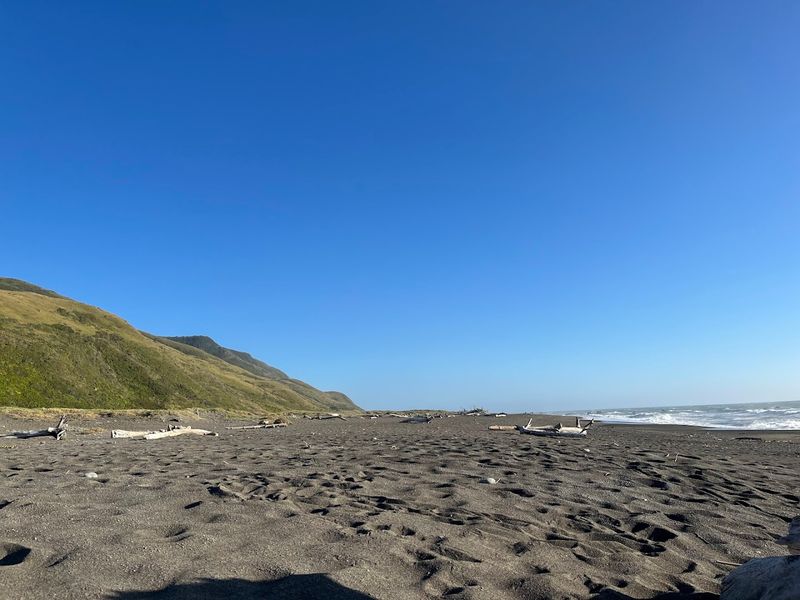
Far from the nearest traffic light and even farther from a parking fee booth, Mattole Beach sits at the edge of the Lost Coast in Humboldt County.
Getting there requires driving through winding backcountry roads that pass through cattle ranches and redwood-lined valleys, which is part of what keeps the crowds away.
The beach itself is wide, dark-sanded, and shaped by powerful ocean winds that give it a raw and almost untouched feeling.
Wildlife sightings here are genuinely common, with shorebirds, harbor seals, and even black bears occasionally spotted near the river mouth where the Mattole River meets the sea.
Camping is available right at the beach through the Bureau of Land Management, making it a solid choice for an overnight trip.
The facilities are minimal, so packing everything needed in advance is strongly recommended.
2. Westport-Union Landing State Beach, Westport
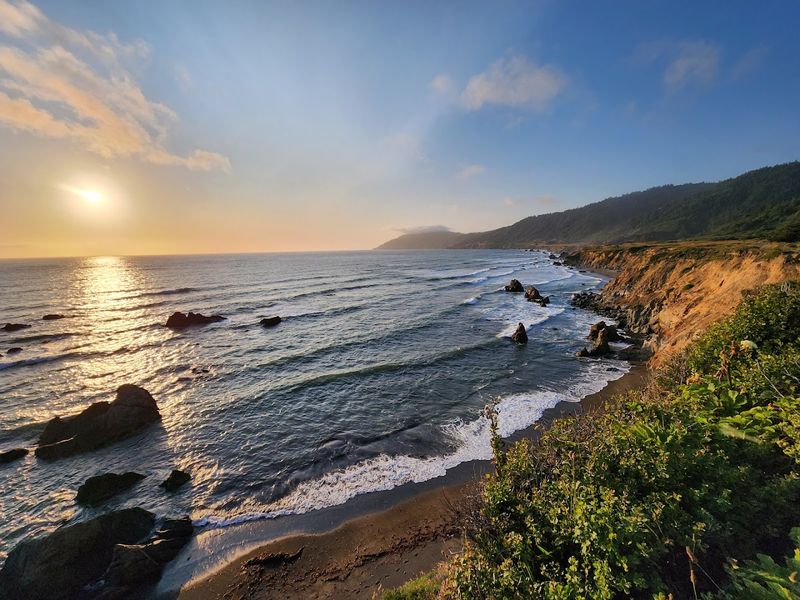
Perched on bluffs above the Pacific in Mendocino County, Westport-Union Landing State Beach is one of those places that rewards patience and curiosity in equal measure.
The drive up Highway 1 to reach it is already scenic enough to justify the trip on its own.
Once there, the combination of elevated bluff views and beach access below creates a layered experience that changes depending on where a visitor chooses to spend time.
Camping directly on the bluffs is one of the main draws here, with sites positioned so close to the edge that falling asleep to the sound of waves is essentially guaranteed.
The beach below is rocky in places and requires careful footing, but tidepooling along the shoreline can turn up sea stars, anemones, and small crabs tucked into crevices.
Foot traffic stays light because the town of Westport itself is very small and not widely known outside of Northern California.
3. Bowling Ball Beach, Point Arena
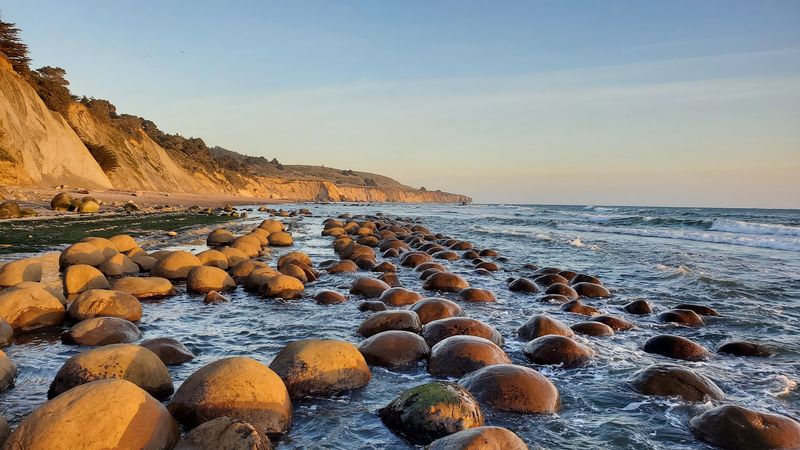
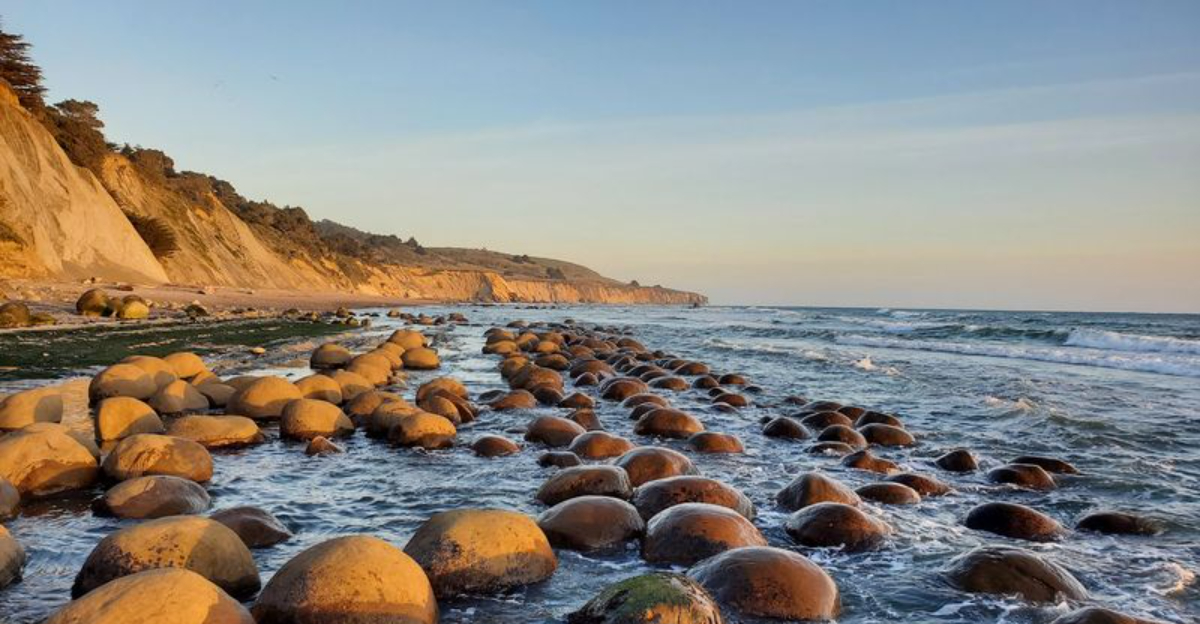
At low tide, something almost impossible to believe emerges from the base of the cliffs at Bowling Ball Beach near Point Arena: hundreds of nearly perfect spherical boulders lined up along the shoreline like oversized marbles left behind by the ocean.
These formations are called concretions and they develop over millions of years as minerals accumulate around a central object in the sedimentary rock.
The result is one of the most visually unusual beaches on the entire California coast.
Access to the boulders requires timing a visit around low tide, so checking a tide chart before heading out is genuinely important here.
The trailhead is located at Schooner Gulch State Beach, and a short walk down a bluff path leads to the beach.
Point Arena is a small coastal town with a lighthouse and a modest but friendly local scene, making it a reasonable base for a day or two of exploring the Mendocino coast.
4. Cooks Beach, Gualala
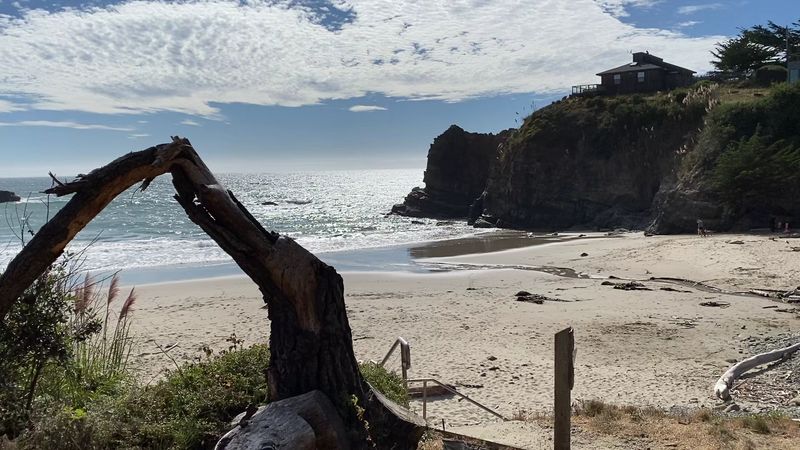
Tucked just south of the town of Gualala along the Mendocino coast, Cooks Beach is the kind of place that locals know about and visitors rarely stumble upon without a tip from someone in the area.
Reaching it involves a short hike down a bluff trail through coastal scrub, which helps filter out anyone not genuinely committed to the journey.
The beach below is sandy and sheltered enough to feel noticeably calmer than more exposed stretches of coastline nearby.
The Gualala River estuary sits close by, and the area around the river mouth tends to attract a variety of shorebirds and waterfowl depending on the season.
The combination of river, beach, and bluff makes for a compact but genuinely varied outdoor experience without requiring a long drive or complicated logistics.
Gualala itself has a grocery store, a few restaurants, and some lodging options that make a longer stay practical.
5. Gray Whale Cove State Beach, Montara
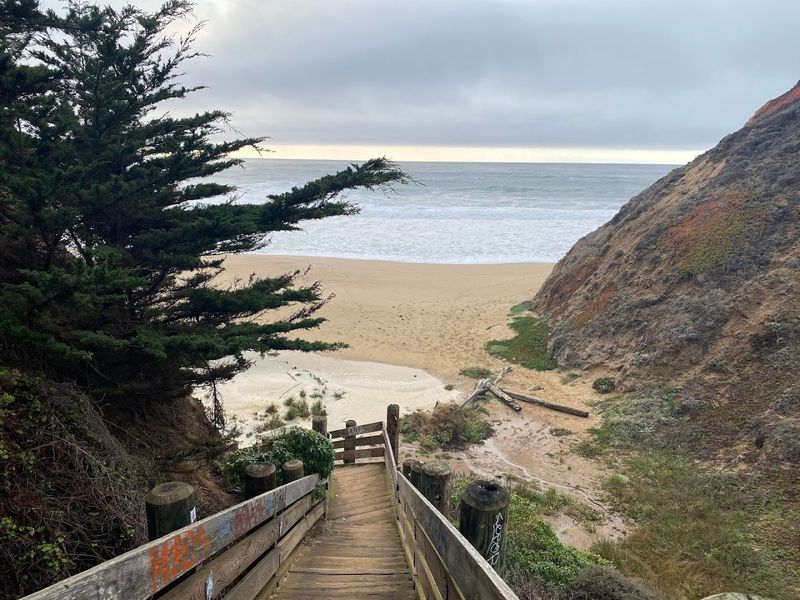
Sandwiched between Pacifica and Half Moon Bay along the San Mateo County coast, Gray Whale Cove State Beach sits at the base of a steep bluff just off Highway 1.
A staircase leads down from a parking area to the cove below, and the descent alone signals that this is not a beach designed for casual drop-ins.
That slight barrier is exactly what keeps it calmer than the more accessible beaches nearby.
The cove is relatively small and framed by dramatic cliffs that block the wind from certain directions, making it feel more enclosed and sheltered than much of the surrounding coastline.
Historically the beach operated as a clothing-optional area, and while that designation may vary by current regulation, it has long contributed to the beach’s reputation as a low-key and judgment-free environment.
Wildlife in the area includes harbor seals and brown pelicans, and gray whale sightings from the bluff above are possible during migration season between December and April.
6. Cowell Ranch State Beach, Half Moon Bay
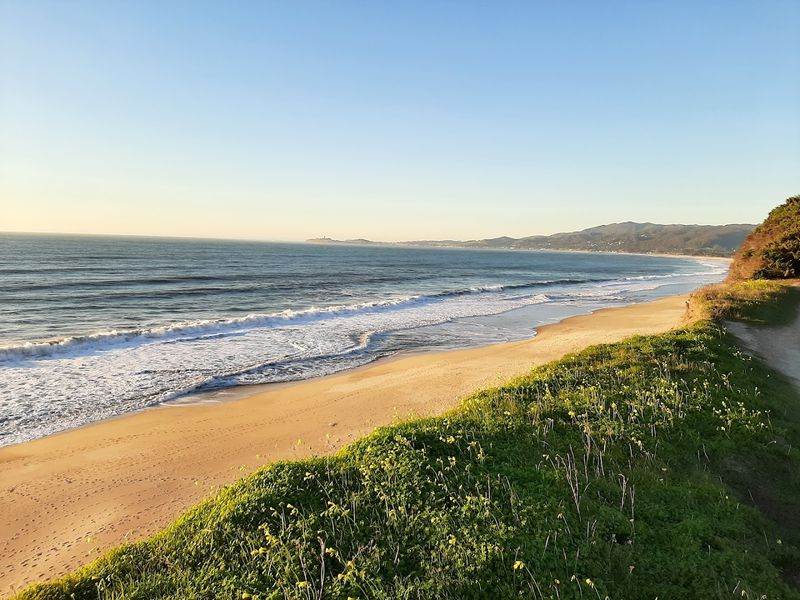
Just north of the more famous Francis Beach in Half Moon Bay, Cowell Ranch State Beach offers a similarly beautiful stretch of coastline with a fraction of the foot traffic.
Getting there requires a roughly one-mile walk from the parking area along a bluff trail that passes through former ranch land, which naturally limits the number of visitors who make it all the way down.
The trail itself is pleasant and provides elevated views of the coastline before the beach comes into view.
Surfing is popular here among those who know the spot, and the waves can be consistent depending on the swell.
Tidepooling along the rocky edges of the beach is another draw, particularly during lower tide cycles when more of the reef is exposed.
Half Moon Bay is well-served by restaurants and shops, so combining a beach visit with lunch in town is an easy and satisfying way to spend a full day on the coast.
7. Fort Ord Dunes State Park Beach, Marina
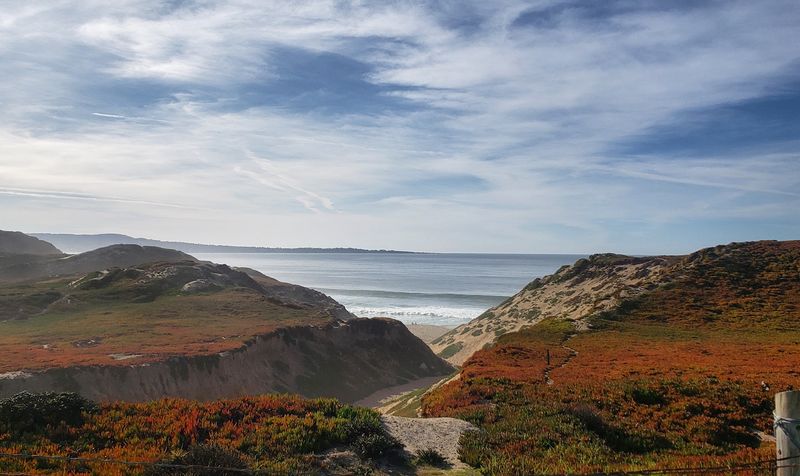
Located in Marina just north of Monterey, Fort Ord Dunes State Park Beach occupies land that was once part of a military base, which is part of why it remained undeveloped and relatively unknown for so long.
The dunes here are substantial, rising well above the beach and creating a natural barrier that gives the shoreline a protected and windswept character.
Walking through the dunes before reaching the water adds a sense of arrival that flat beach access simply does not provide.
The park is large enough that visitors can spread out considerably without feeling crowded, even on weekends.
The beach stretches for several miles and connects to adjacent coastal areas, making it suitable for long walks without retracing steps.
Sand conditions tend to be soft and dry, which means the dunes require some effort to climb but reward the effort with sweeping views of the Monterey Bay.
8. Garrapata State Park Beach, Big Sur
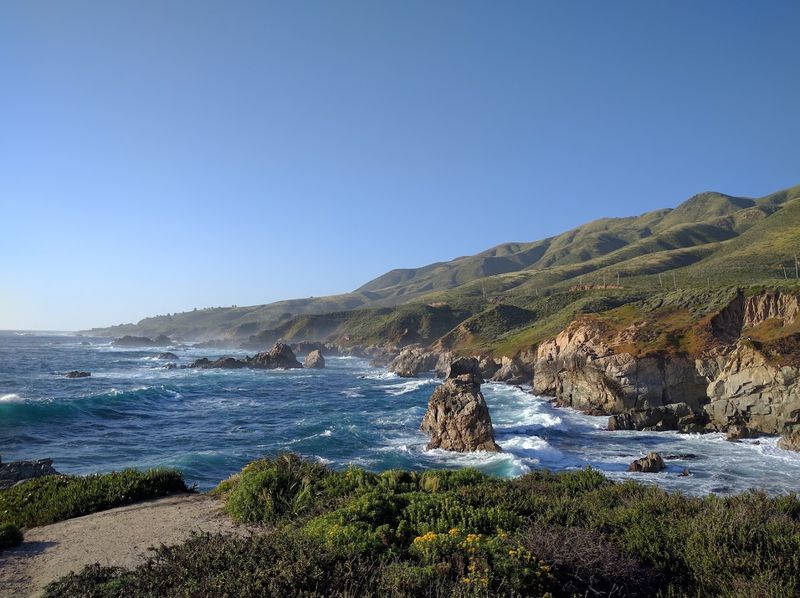
Garrapata State Park sits along one of the most photographed stretches of coastline in the world, yet the beach access points within the park remain genuinely underused compared to the overlooks further south.
The park spans several miles of Highway 1 frontage with multiple unmarked pullouts that lead to trails winding down to the shore.
The beaches within the park tend to be rocky and dramatic rather than wide and sandy, which suits visitors looking for scenery and solitude more than sunbathing.
Whales are visible from the bluffs during migration season, and harbor seals haul out on rocks near some of the cove areas.
Wildflowers bloom along the coastal bluff trails in spring, adding color to the already striking landscape.
Big Sur as a region can be challenging to access during heavy rain or after significant storms when Highway 1 occasionally closes, so checking road conditions before a visit is genuinely important.
9. Sand Dollar Beach, Big Sur
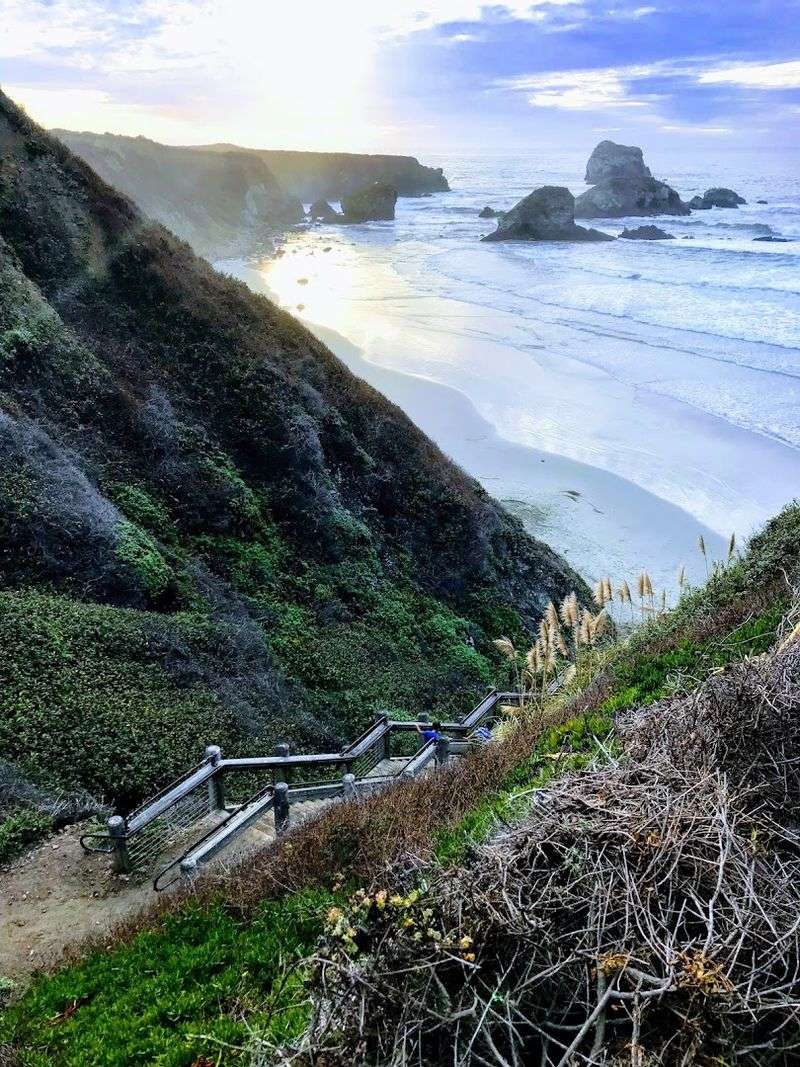
Among the few genuinely sandy beaches in Big Sur, Sand Dollar Beach stands out for its size and relative accessibility compared to other coastal spots in the area.
A short trail from the parking area leads down to the beach, which is one of the longest sandy stretches in the Big Sur region.
The cliffs that frame it on both sides create a natural amphitheater effect that makes the sound of the waves feel especially immersive.
Jade hunting is a tradition at this beach, as the rocks and gravel along the shoreline occasionally yield small pieces of nephrite jade carried down from the hills by erosion.
Finding a piece requires patience and a good eye, but the search itself gives the beach visit a playful and purposeful quality.
A day use fee applies and can be paid at the parking area, so having cash or a card ready is useful.
10. Spooner’s Cove, Montana de Oro State Park, Los Osos
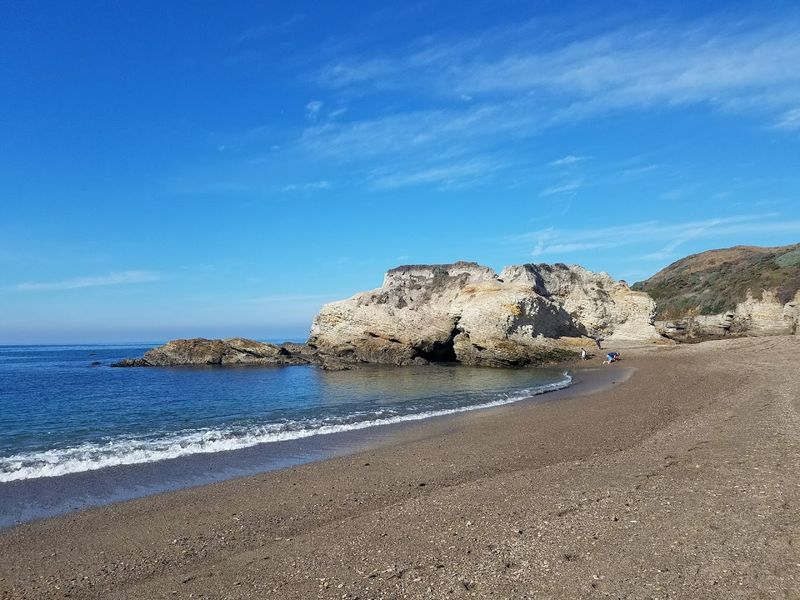
Montana de Oro State Park near Los Osos is one of the most underappreciated parks on the Central California coast, and Spooner’s Cove is its most iconic feature.
The cove is framed by layered sandstone bluffs that glow warm amber in afternoon light, and the small beach at its center tends to hold a pocket of calmer water compared to the open coast on either side.
The visual contrast between the golden cliffs and the blue-green ocean is striking in a way that photographs rarely do full justice.
Tidepools at the edges of the cove are rich with marine life, including sea stars, urchins, hermit crabs, and various anemone species.
The park also offers miles of hiking trails along the bluffs above, making it easy to combine a beach visit with a longer walk that reveals multiple coastal viewpoints.
Wildlife including deer, foxes, and raptors can be spotted in the inland sections of the park.
11. Pirates Cove Beach, Avila Beach
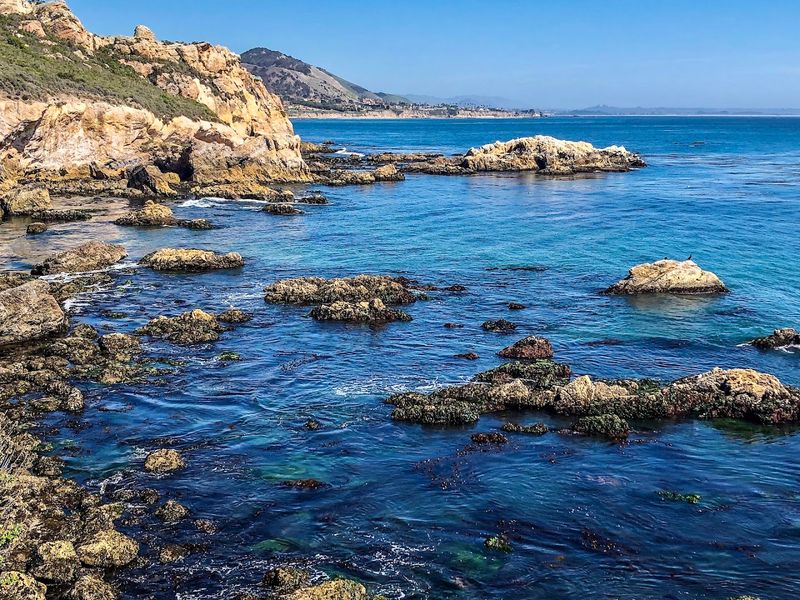
Sheltered by dramatic sandstone cliffs just around the headland from Avila Beach, Pirates Cove is one of those spots that feels like a discovery even when others are present.
The walk to reach it follows a short but rugged trail along the bluffs, and the cove comes into view suddenly and dramatically as the path rounds a corner.
The protected position of the cove means the water is often noticeably calmer than the open beach at Avila, making it popular with swimmers and kayakers.
The cliffs surrounding the cove are tall and visually striking, with layered sedimentary rock in shades of tan, gold, and rust that reflect warmly in afternoon sun.
The beach itself is sandy and relatively flat, with enough space for a comfortable afternoon without feeling cramped.
Avila Beach proper is just a short drive away and has a good selection of restaurants and shops for before or after a beach visit.
12. Jalama Beach County Park, Lompoc
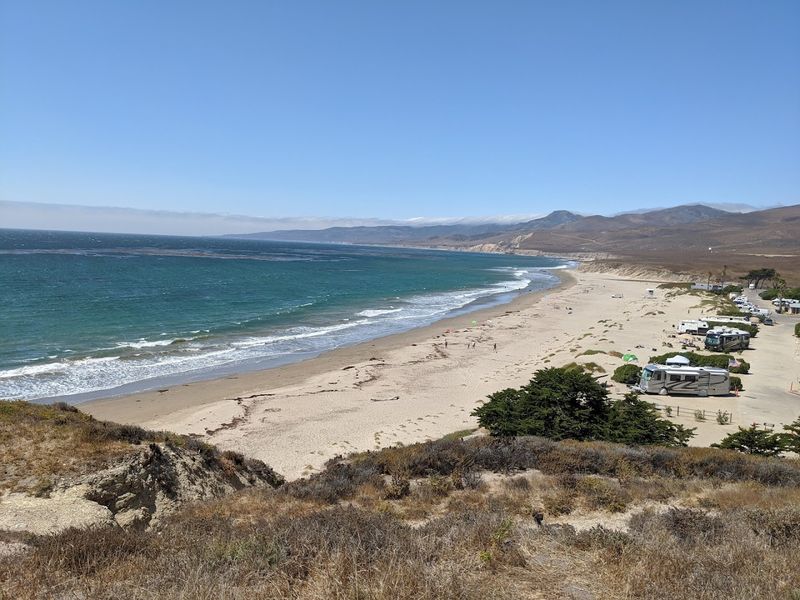
Getting to Jalama Beach requires driving about fourteen miles down a single winding road from Highway 1 near Lompoc, and that road is the only way in or out.
That geographic reality is what keeps Jalama feeling genuinely remote despite being a managed county park with camping, a store, and a snack bar.
The beach is wide and exposed to the full force of the Pacific, making it a favorite among windsurfers and those who appreciate raw, unpolished coastline.
The county park store and snack bar are a surprisingly welcome feature after the long drive in, offering basics like firewood, food, and supplies without requiring a separate trip back to town.
Camping here tends to book up well in advance on weekends, particularly in summer, so planning ahead is important for anyone hoping to stay overnight.
Sunsets at Jalama are frequently spectacular due to the westward-facing orientation of the beach and the lack of development on the horizon.
13. El Matador State Beach, Malibu
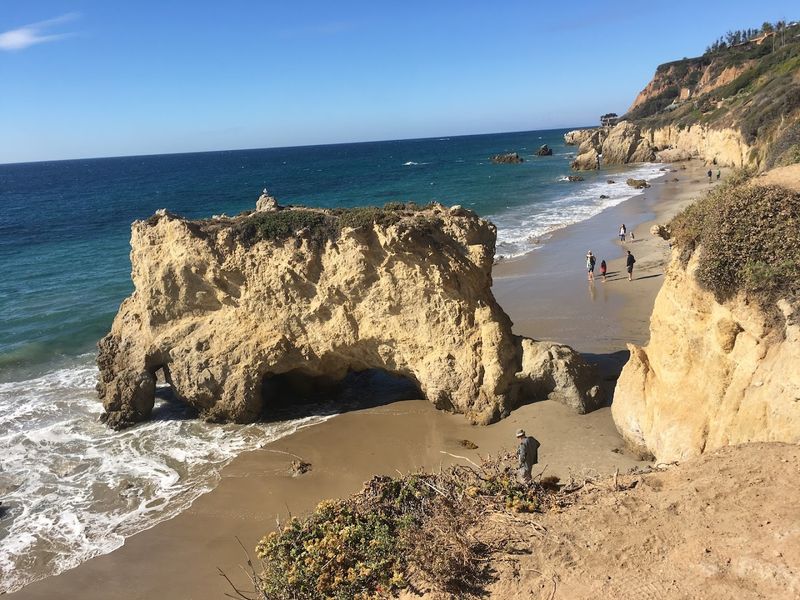
El Matador is technically one of the more well-known beaches on this list, but it still draws far fewer visitors than the flat sandy beaches of central Malibu simply because of its physical design.
A steep staircase descends from a small clifftop parking lot to a beach defined by enormous sandstone rock formations, sea caves, and arched boulders that break the shoreline into a series of smaller coves.
Navigating between those coves requires scrambling over rocks and timing movements around the waves.
That active and slightly adventurous quality is what gives El Matador its distinct personality compared to more conventional Malibu beaches.
Early morning visits, particularly around sunrise, tend to offer the most atmospheric lighting and the fewest other visitors.
Parking is limited to a small lot off Pacific Coast Highway and fills quickly on weekends and holidays, so arriving before 8 in the morning is strongly recommended.
14. Escondido Beach, Malibu
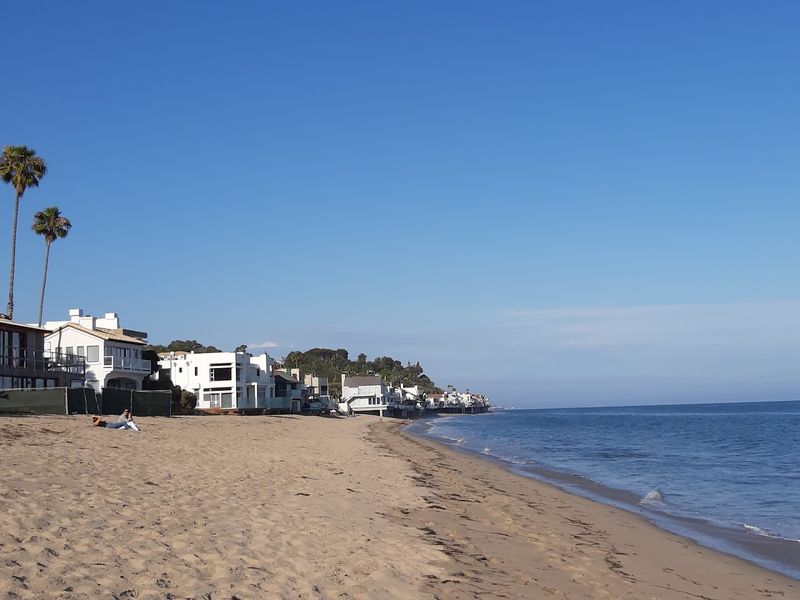
Escondido Beach sits along a stretch of Malibu coastline where private homes line the bluffs and the beach itself is easy to miss without knowing exactly where to look.
Public beach access is legally guaranteed in California, and a marked public access path leads down to the sand between private properties.
The access point is narrow and easy to walk past, which contributes significantly to the beach’s low visitor count on most days.
Once on the sand, the beach opens up to a calm and relatively wide stretch that feels worlds away from the crowded parking lots of better-known Malibu beaches nearby.
The water here tends to be clear on calm days, and the lack of commercial activity along the shore gives it a quieter, more residential atmosphere.
Malibu Creek State Park and several other natural areas are within a short drive, making Escondido a good anchor for a broader day of coastal and inland exploration.
15. Thousand Steps Beach, Laguna Beach
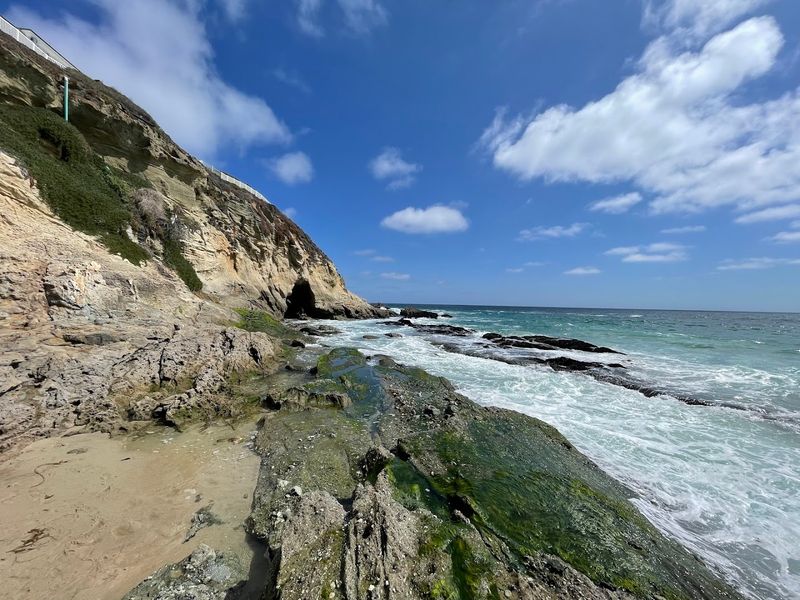
Despite its name, the staircase leading down to Thousand Steps Beach in Laguna Beach contains far fewer than a thousand steps, but the climb back up after a few hours on the sand can certainly make it feel that way.
The beach sits at the base of a bluff in South Laguna and is reached by a long concrete staircase from the street above.
That staircase serves as a natural filter, keeping the beach quieter than the flat-access beaches in central Laguna Beach.
The shoreline here is rocky and textured, with tidepools scattered across the reef areas that are exposed during lower tides.
The beach faces southwest, which means late afternoon light hits the cliffs and water in a particularly warm and flattering way.
Laguna Beach has a well-established arts scene, several quality restaurants, and a walkable downtown area that makes it easy to pair a beach visit with a full day of exploring the town.