New York Has A Stunning Private Art Museum Tucked Inside One Of The City’s Grandest Historic Residences
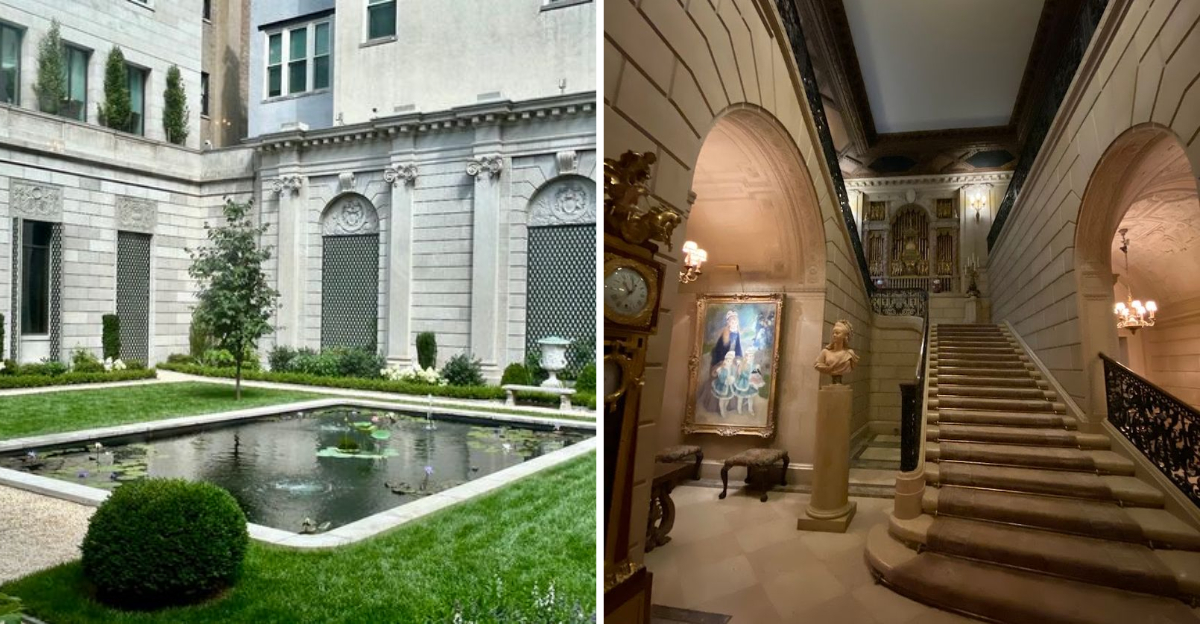
Many travelers pass the building without realizing a private museum operates quietly inside today.
Throughout New York, few cultural spaces combine lavish architecture with intimate galleries.
Detailed ceilings, polished staircases. Carefully arranged collections. Together they create unforgettable surroundings for visitors exploring slowly.
I immediately notice how peaceful the atmosphere feels compared with larger crowded museums nearby.
Each room reveals paintings, sculptures, and decorative pieces connected through thoughtful presentation and history.
Do you wonder what stories once unfolded inside these magnificent halls before public tours became available regularly?
The experience truly feels refined, immersive, and surprisingly personal from the very beginning.
A Mansion With A Remarkable History
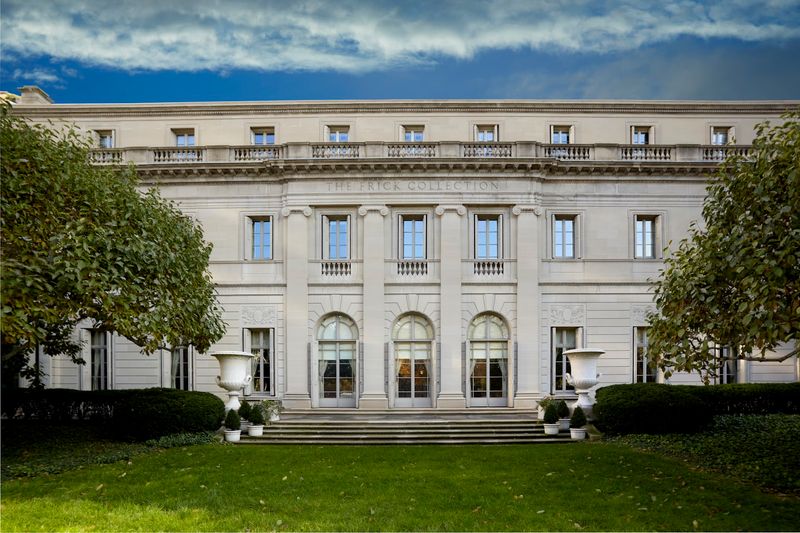
Would you believe me if I told you that Henry Clay Frick was not the kind of man who did things halfway.
The Pittsburgh steel and coke magnate commissioned architect Thomas Hastings to design his New York City residence in the early 1910s, and the result was a Beaux-Arts limestone mansion that still turns heads more than a century later.
Frick was a serious collector who spent decades acquiring European masterworks, and he always intended for his home to become a public museum after his passing. True to that vision, the mansion opened to visitors in 1935.
The building is listed on the National Register of Historic Places and recognized as a U.S. National Historic Landmark, a distinction that reflects both its architectural beauty and its cultural weight.
New York has no shortage of impressive institutions, but few carry this kind of layered story. The mansion was designed for both living and displaying art, which means every room feels purposeful.
Knowing that a real family moved through these halls adds a quiet, almost electric sense of history to every visit. Construction finished in 1914, and the address, 1 E 70th St, sits right at the edge of Central Park on Fifth Avenue.
The Grand Renovation Revealed
Few museum renovations in recent memory have generated as much anticipation as the one at this Upper East Side landmark.
One of the most talked-about additions is a slender bridge of bronze and glass that now connects the original mansion to the adjacent library building.
It floats lightly between the two structures, feeling more like a quiet architectural whisper than a bold statement. A new 218-seat auditorium sits at the lower level, offering lectures and programs that bring the collection to life in a completely different way.
Previously closed rooms on the second floor are now open to the public for the first time, giving visitors access to spaces that were once part of the Frick family’s private living quarters.
The Breakfast Room and the Boucher Room, with its Rococo decorative panels, are among the highlights up there.
New York keeps proving it can honor the past while thoughtfully building toward something better, and this renovation is a perfect example of exactly that spirit.
Masterworks That Stop You Cold
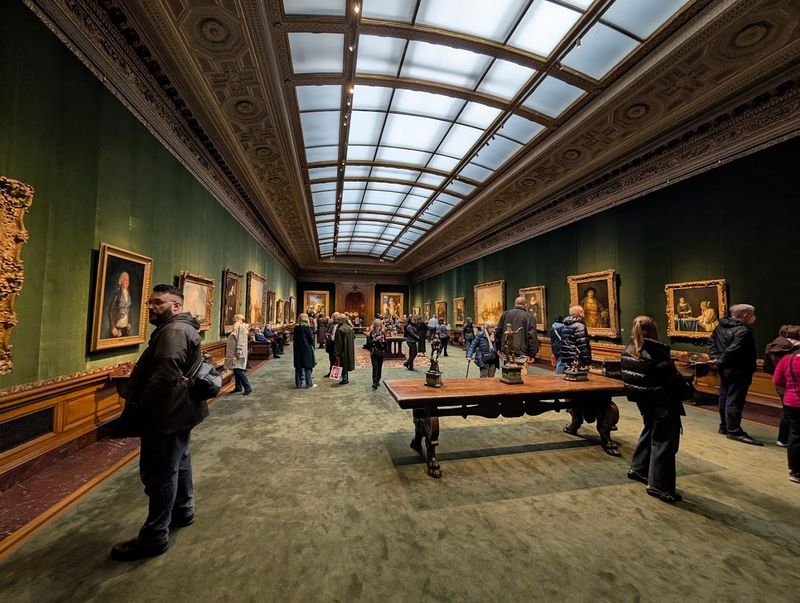
There is a moment that happens to almost every visitor here.
You turn a corner, and there it is, a Vermeer, glowing with that impossibly quiet northern light, hanging at eye level in a room the size of a comfortable sitting area.
The Frick Collection holds three Vermeers, which is an almost absurd concentration of genius in one place. Rembrandt, Velazquez, Holbein the Younger, Gainsborough, Reynolds, Goya, Bellini, and Fragonard all have significant works on display as well.
Gilbert Stuart’s portrait of George Washington anchors the collection with quiet authority, while the Progress of Love series by Jean-Honore Fragonard fills an entire room with Rococo romance.
What makes the experience so different from visiting a large encyclopedic museum is the scale. You are never overwhelmed, and you are never far from something extraordinary.
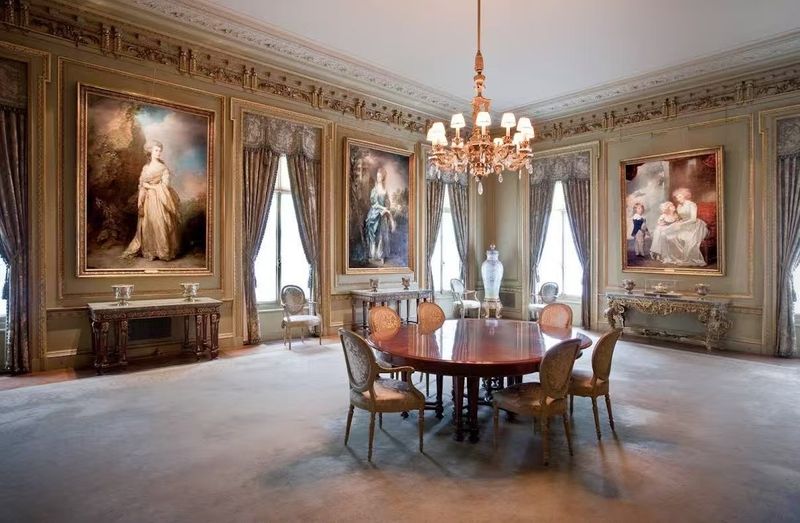
The paintings are arranged within rooms that feel lived-in rather than institutional, so the art breathes alongside furniture, sculpture, and decorative objects.
The Garden Court Atmosphere
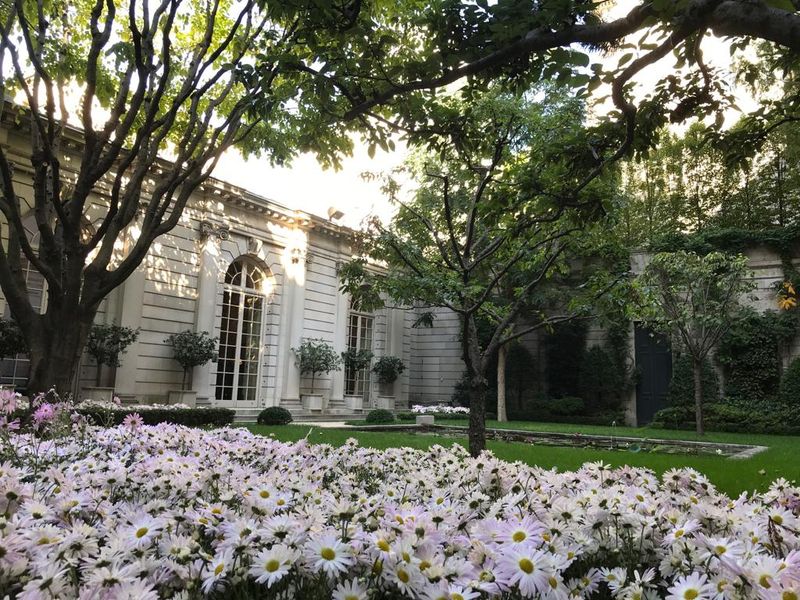
Right at the heart of the mansion sits a space that feels genuinely removed from the noise and pace of New York City outside.
The Garden Court, also called the Grand Fountain Room, is a sky-lit interior courtyard where stone columns frame a rectangular reflecting pool with a gently murmuring fountain at its center.
Greenery and classical sculptures surround the water, and natural light filters down from above.
This is the one area inside the building where photography is openly encouraged, and for good reason. The space photographs beautifully from almost any angle, and visitors tend to slow down naturally here.
It serves as a reset point between gallery rooms, a place to sit, collect your thoughts, and let the experience settle before moving on to the next remarkable room.
The sound of water in the courtyard provides a soft, constant undercurrent that softens the atmosphere in a way that feels almost meditative.
The Garden Court alone justifies a visit, and it is one of those spaces that stays with you long after you have left the building and returned to the energy of the city streets outside.
The Fragonard Room Magic
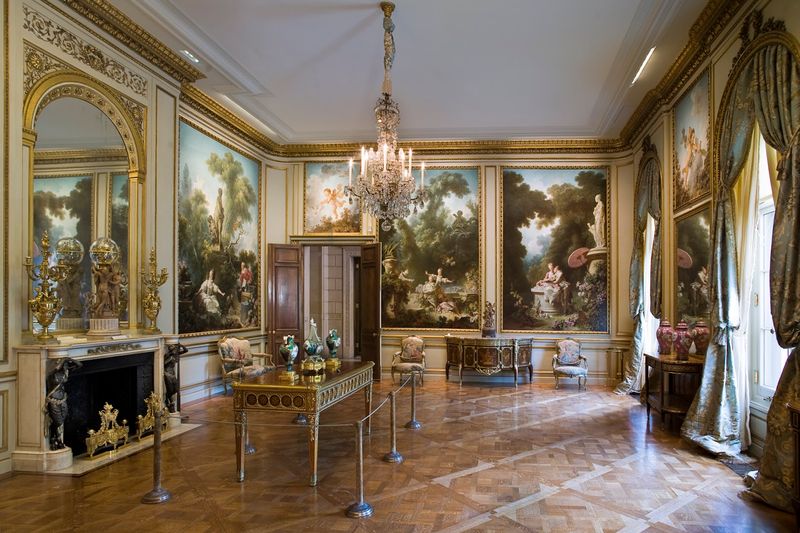
Ask any dedicated regular visitor to name their single favorite room in the entire building. There is a good chance the answer will be the Fragonard Room.
Commissioned in the 1770s, the Progress of Love is a series of large decorative panels by Jean-Honore Fragonard that trace the arc of romantic courtship from the first glance to settled affection.
The colors are soft, the figures are graceful, and the whole room hums with a kind of playful elegance.
Henry Clay Frick acquired the panels after they had passed through several notable European collections, and he had the room designed specifically to display them.
The furniture, the gilded surfaces, and the proportions of the space all work together to create an environment where the paintings feel completely at home rather than simply hung on a wall.
Spending time in this room is one of those experiences that is hard to describe to someone who has not had it. The panels wrap around you, and the stories they tell feel surprisingly immediate despite being painted nearly 250 years ago.
Practical Tips Before Visiting
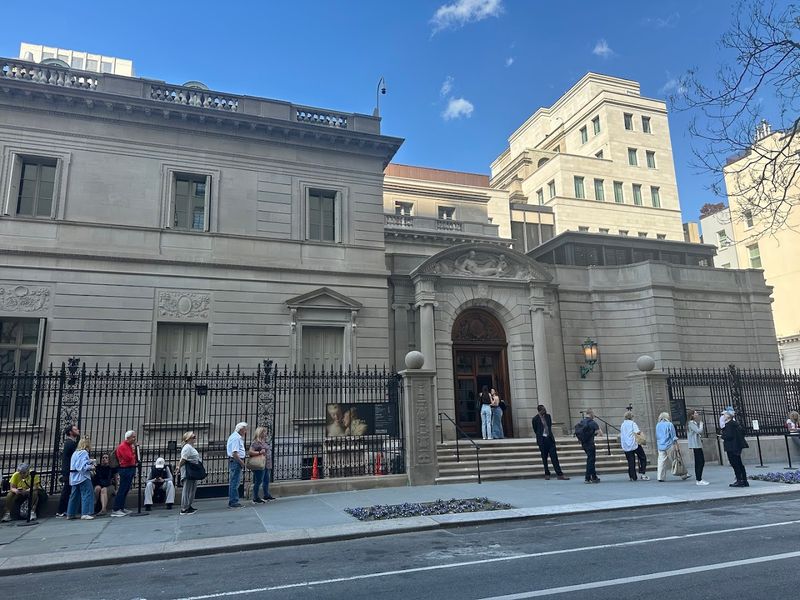
Planning ahead makes a real difference at this museum.
Timed entry tickets are required, and the standby line for walk-ins can stretch around the block on busy days. Student tickets run around seventeen dollars on regular days.
The museum is open Wednesday through Monday from 10:30 AM to 5:30 PM, and it is closed on Tuesdays. A free coat check is available at the entrance, which is worth using since bags and jackets are restricted in the galleries.
A guidebook covering the major works is available for purchase at check-in for around five dollars, and it provides far more context than the small wall labels alone.
Photography is not permitted inside the galleries, though the Garden Court is an exception where cameras are welcome. A cafe on-site serves coffee and light meals, and reservations are advisable during peak lunch hours.
Members of the museum enjoy priority entry without needing timed reservations, which makes a membership worth considering if you plan to return.
The Second Floor Revealed
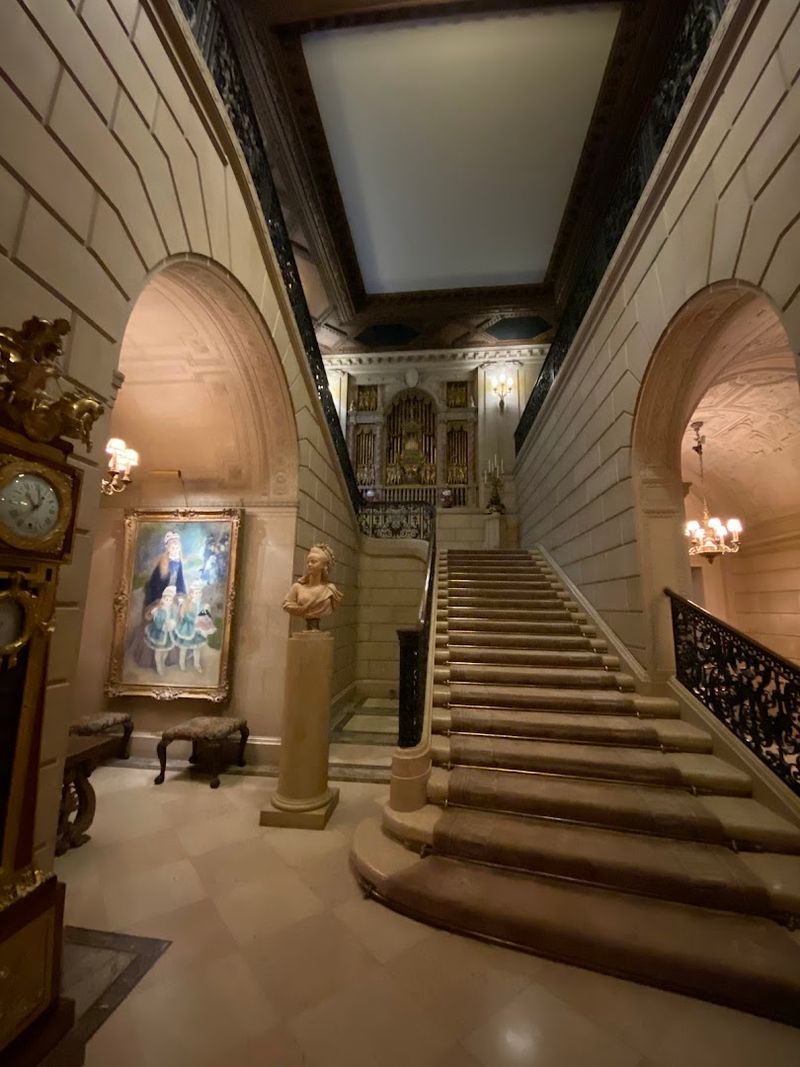
One of the most exciting results of the recent renovation is the opening of the second floor to the public.
These rooms were previously part of the Frick family’s private living quarters and had never been accessible to regular visitors.
The Impressionist galleries up here are deliberately smaller and more intimate in scale.
Works by Jean-Baptiste-Camille Corot, Edouard Manet, and Pierre-Auguste Renoir are displayed close enough that you can study individual brushstrokes and see the confidence or hesitation in each mark.
The Breakfast Room features delicate French landscape paintings that feel perfectly suited to the quiet, domestic character of the space.
The Boucher Room is another highlight, decorated with Rococo panels that create a warm, almost theatrical environment around the paintings and decorative objects displayed within it.
Portrait medals, antique timepieces, and personal objects that once belonged to the Frick family add layers of intimate detail that the main floor galleries cannot quite replicate.
The second floor turns a great museum visit into something that feels almost like a private discovery.
Why This Place Endures
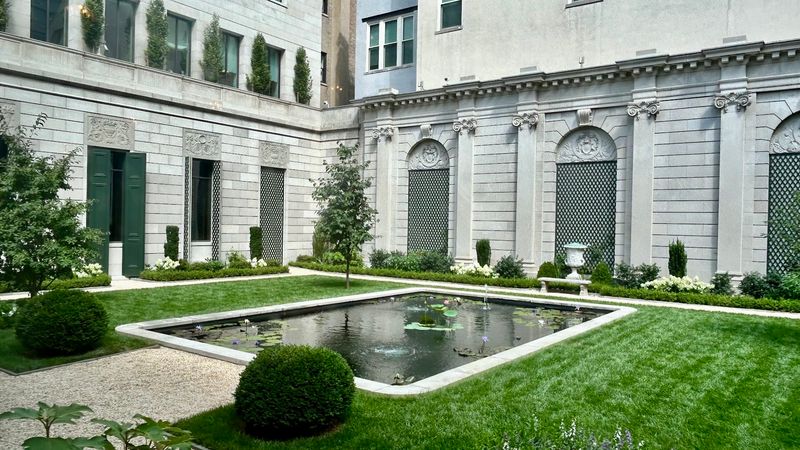
There is something almost countercultural about the experience the Frick Collection offers in the middle of one of the world’s most energetic cities.
No crowds pressing against barriers, no audio tours blasting in every ear, no gift shop merchandise competing for your attention at every turn. The museum seems to have made a deliberate choice to protect the quality of attention it asks from its visitors.
The no-photography rule inside the galleries is a good example of that philosophy in action.
It is genuinely unusual by modern museum standards, and it does occasionally frustrate first-time visitors. But it also means that people are actually looking at the art rather than at their phone screens, and the galleries feel calmer because of it.
Henry Clay Frick built this mansion to last, and the collection he assembled reflects a lifetime of serious, passionate engagement with art history.
New York has no shortage of world-class museums, but this particular address on the Upper East Side occupies a category of its own.
It is the sort of place that changes how you think about what a museum can be, and it sends you back into the streets of the state with your eyes noticeably more open than before.