The State Of New York Has A Mysterious Abandoned Castle That Looks Exactly Like A Medieval Scottish Ruin
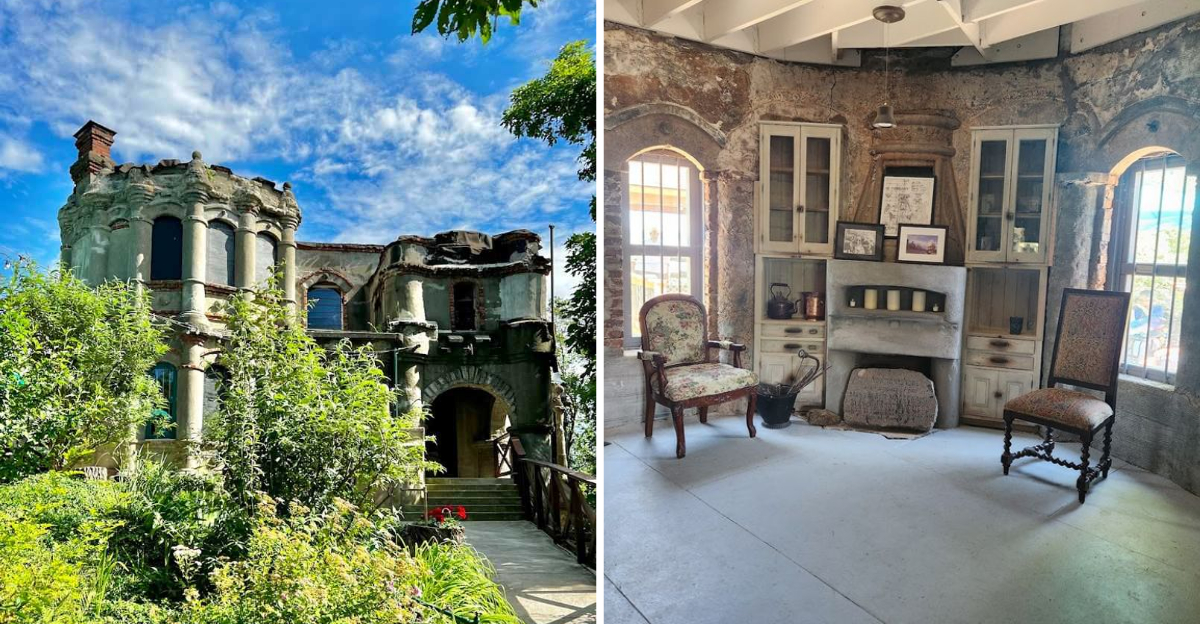
Behind thick trees, this New York abandoned structure immediately creates questions without obvious answers.
The crumbling stone walls resemble something standing deep within the Scottish countryside today.
This castle surprises visitors who expect ordinary historic landmarks instead nearby.
Weathered towers overlook the surrounding landscape with haunting beauty during every changing season outside.
I love places that seem frozen between forgotten history and unfinished stories forever.
Some visitors photograph intricate details while others quietly explore winding paths surrounding the property.
Why does this strange location feel untouched despite attracting fascinated travelers throughout recent years?
Allow me to tell you more about corners that reveal dramatic architecture that still carries medieval character.
The Story Behind The Castle
Get comfortable, and let me tell you a story. Francis Bannerman VI was not your average businessman.
He made his fortune buying and reselling military surplus after the Civil War, and by the early 1900s, he needed somewhere to store it all. That place became Pollepel Island, a small rocky outcrop in the Hudson River near Beacon.
Construction on the arsenal began in 1901. Bannerman designed the building himself, drawing inspiration from the Scottish castle architecture he admired.
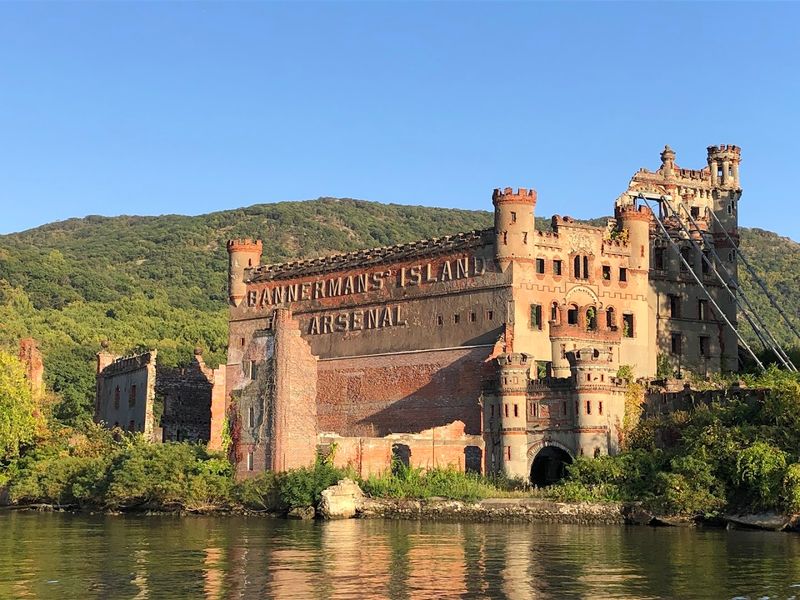
The castle walls were stamped with the Bannerman name in large letters, making it visible from passing trains and riverboats. It served as a working warehouse for years, storing weapons, uniforms, and military gear.
After Francis passed away in 1918, the family eventually sold the island to New York State in 1967.
A fire in 1969 caused serious damage to the interior, collapsing the floors and roof. What remained was the striking brick shell that visitors see today.
The history packed into those walls is nothing short of remarkable, and every crumbling corner has a story worth hearing.
The Island Setting
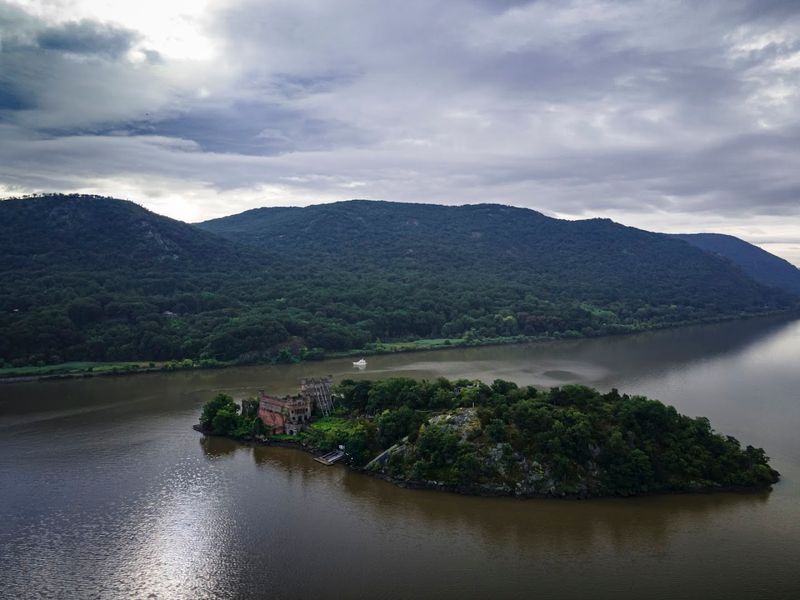
Pollepel Island is not the kind of place you stumble upon by accident.
In the middle of the Hudson River between the towns of Beacon and Newburgh, the island is only accessible by boat, which makes the whole experience feel like a proper adventure before you even arrive.
The island itself is small, roughly six acres, but it packs a surprising amount of scenery into that space. There are rocky paths, overgrown gardens, and sweeping views up and down the river that make every step feel worthwhile.
Storm King Mountain looms in the background on the west bank, and the Catskill foothills frame the northern horizon. On a clear morning, the light hits the water in a way that makes the whole scene look almost unreal.
The island feels isolated in the best possible way.
Wildlife is active throughout the warmer months, with birds nesting in the ruins and along the shoreline. The natural setting and the man-made ruins create a contrast that is genuinely hard to find anywhere else in the state.
The Boat Ride Over
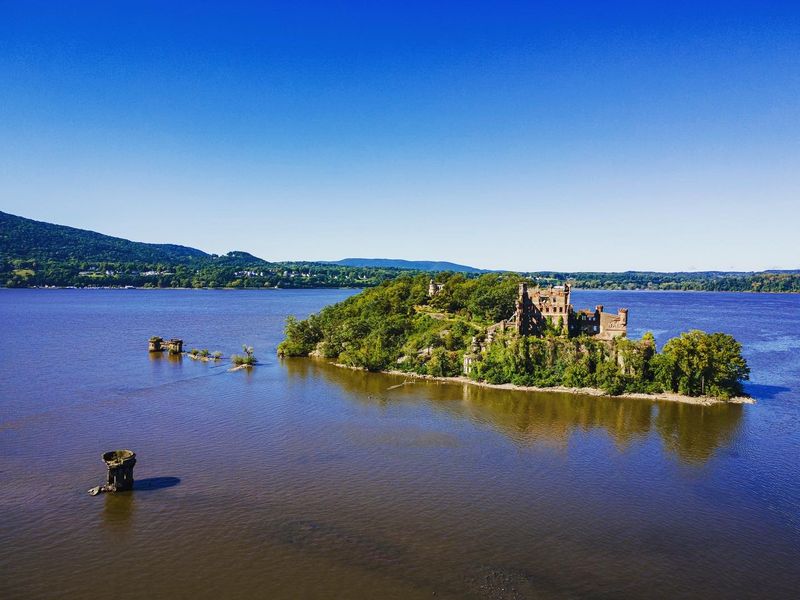
Getting to the island is half the fun, and I mean that sincerely.
The tour departs from the dock in Beacon, New York, just steps from the Metro-North train station. If you are coming from New York City, you can literally hop off the train and walk to the boat in under a minute.
The boat ride takes roughly 15 to 20 minutes each way, and the crew makes every second count. Captains and first mates share local history, point out landmarks along the riverbank, and keep the energy fun and engaging.
Passengers get a close-up look at Bannerman Castle from the water as the boat approaches the island.
Seeing those massive brick walls rise up from the river for the first time is one of those travel moments that genuinely stops conversation. Cameras come out fast.
The early morning departures, like the 9:30 a.m. option, offer softer light and smaller crowds. Parking near the Beacon train station is free on weekends, which is a welcome bonus.
The whole journey sets the tone perfectly for what waits on the island, building anticipation with every wave the boat cuts through.
The Guided Tour Experience
Once the boat docks and you climb the stairs to the island, a guide meets the group and the tour begins.
The guided portion lasts around 30 to 45 minutes, covering the castle ruins, the garden remains, and the Bannerman family residence higher up on the island.
The guides here are genuinely passionate about the place. They walk you through the history of the arsenal, explain why visitors cannot get too close to the crumbling structure, and share fascinating details about the Bannerman family and their unusual business.
Questions are welcomed, and the answers are always worth sticking around for.
The tour path is mostly flat and manageable, though some areas beyond the official route involve uneven, rocky ground. Wearing trail shoes or sturdy sneakers is strongly recommended.
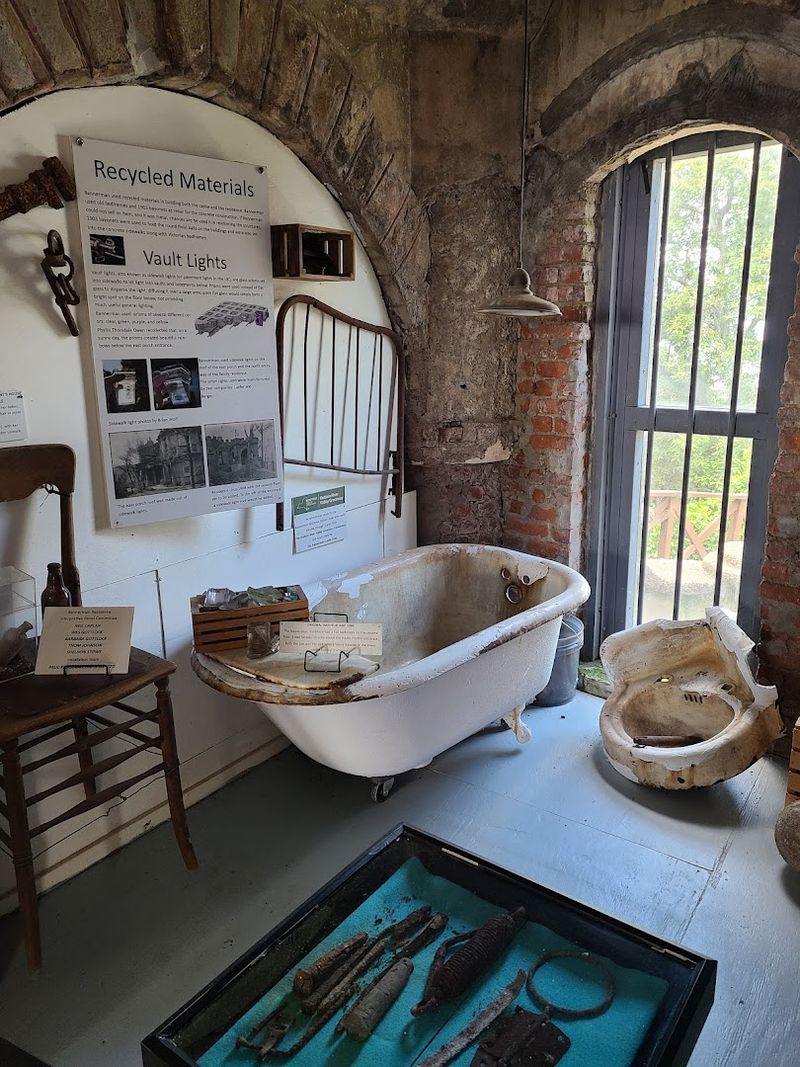
Areas like Wee Bay, tucked away from the main path, offer some of the best views on the island and are easy to miss if you do not wander a little. A small museum near the dock holds additional artifacts and information that fills in the gaps the tour leaves behind.
The Castle Architecture
Few buildings in New York look quite as dramatic as this one.
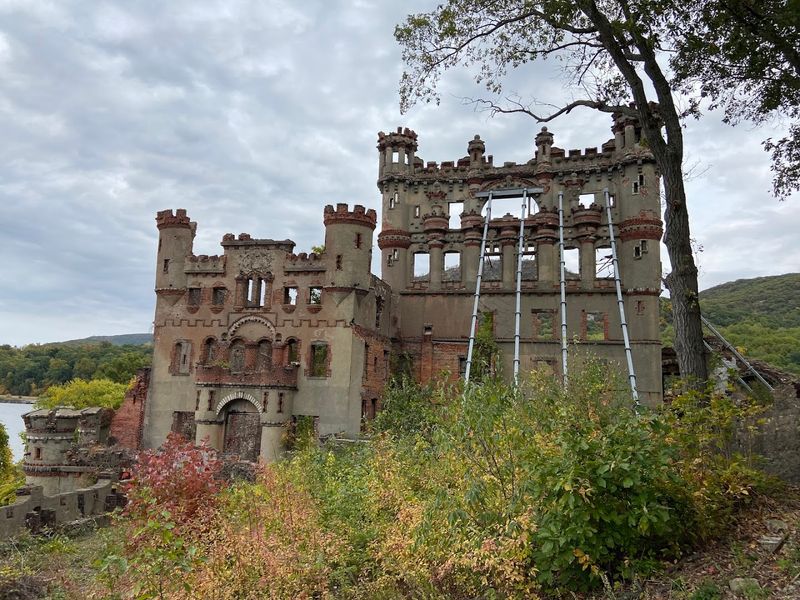
The facade of this castle was designed to resemble a Scottish medieval fortress, complete with turret-style corners, arched openings, and thick brick walls that were clearly built to impress as much as to store cannonballs.
The name Bannerman is spelled out in large letters across the main wall, a bold branding choice that made the building recognizable from passing Hudson River trains for decades.
Even in its current ruined state, that lettering is still partially visible, adding to the ghostly charm of the whole structure.
In 1920, an explosion of stored munitions caused significant damage to one section of the building. The 1969 fire finished what the explosion started, destroying the floors and roof and leaving only the outer walls standing.
Structural instability means visitors cannot approach the walls directly, but the views from the designated paths are still spectacular.
What makes the architecture so captivating is the way nature has moved in. Vines crawl up the brick, trees grow from the interior, and the whole thing looks like it has been here for five centuries rather than just over a hundred years.
Standing before it feels like witnessing something ancient, wild, and quietly magnificent all at once.
Gardens And Grounds
Beyond the castle walls, Pollepel Island holds a quieter kind of beauty.
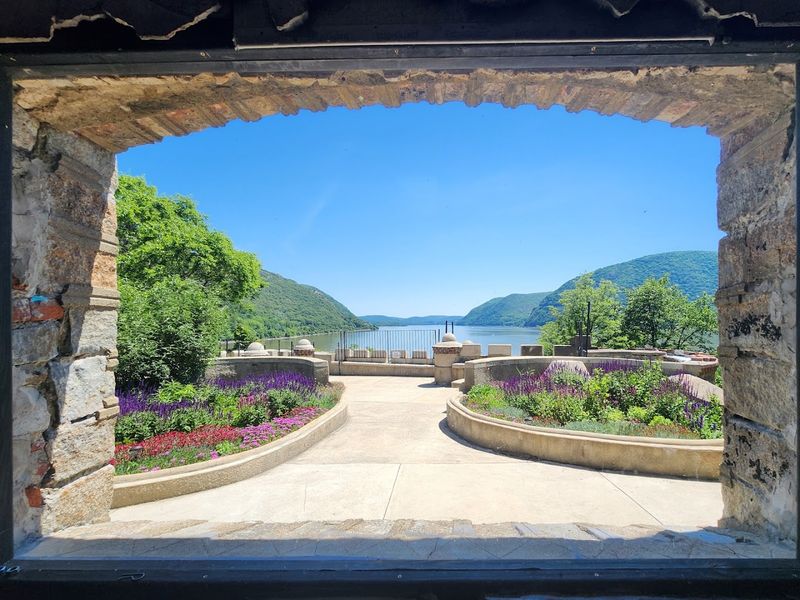
The Bannerman family planted gardens on the island during their years of occupancy, and volunteers have worked hard to restore portions of those original plantings over the years.
Flowering plants, stone borders, and carefully maintained paths give the space a peaceful quality that contrasts nicely with the dramatic ruins just up the hill. The garden donations box near the entrance helps fund ongoing restoration work.
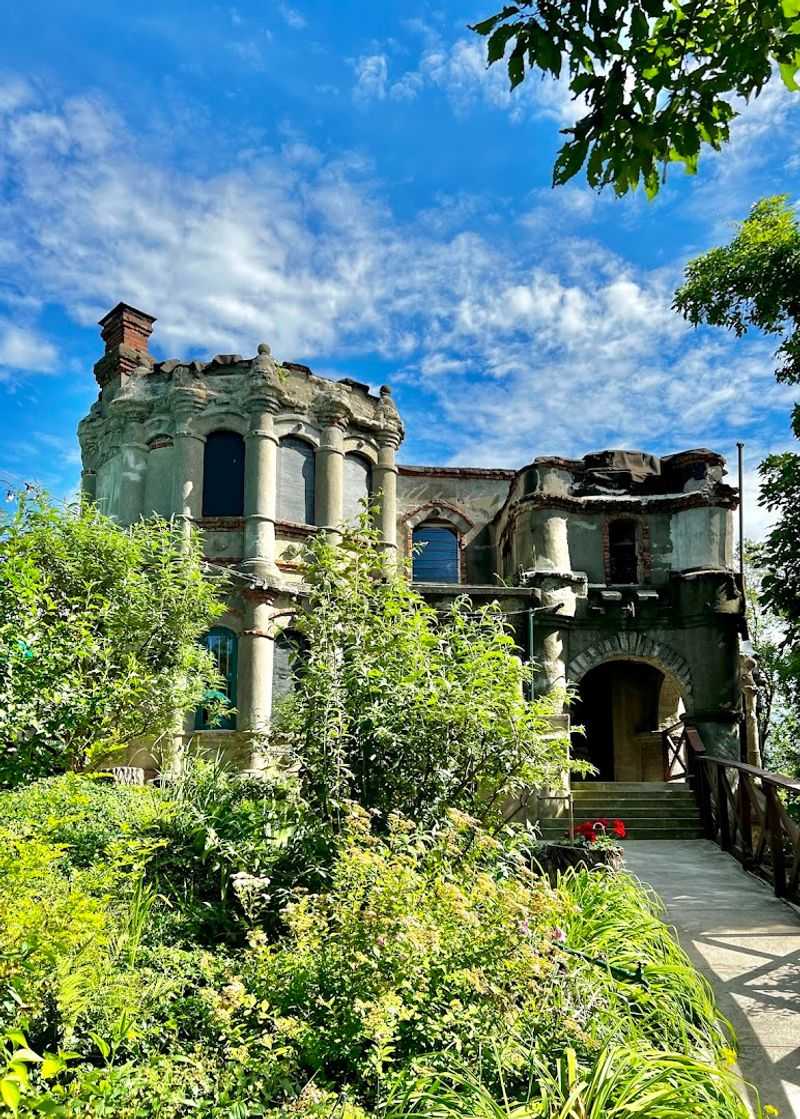
Higher on the island sits the Bannerman family residence, a separate structure from the main castle. It is smaller and more intimate, offering a glimpse into how the family actually lived during their summers on the island.
The house is not open for interior tours, but the exterior and surrounding grounds are worth the short climb.
Wee Bay, a small sheltered cove on the southern end of the island, is one of those spots that does not appear on any map handed out at the dock.
The grounds as a whole encourage slow exploration, and the island genuinely reveals more the longer you stay.
Special Events On The Island
Tours are just the beginning of what this island has to offer.
Bannerman Castle hosts a variety of special events throughout its seasonal calendar, turning the already atmospheric location into something even more memorable on select dates.
Theater performances have become one of the most talked-about events associated with the island. Productions like Dracula have been staged against the backdrop of the ruins, creating an experience that no conventional theater can replicate.
Music performances and other cultural events are also part of the programming. The island has even hosted intimate wedding ceremonies, with couples drawn to the dramatic scenery and the sense of history that surrounds every corner of the grounds.
The island is open only during warmer months, generally from spring through fall, so planning ahead is essential. Every event held here carries a weight and atmosphere that a regular venue simply cannot manufacture, no matter how hard it tries.
Planning Your Visit
A little preparation goes a long way when visiting Bannerman Castle.
Tours run on weekends during the seasonal window, and tickets should be booked in advance through the official website since spots fill up fast, especially on sunny fall weekends.
Arriving at the Beacon dock about 20 to 30 minutes early gives you time to check in smoothly. No printed ticket is required, just your name on the reservation list.
Wear comfortable, closed-toe shoes with grip. The main tour path is relatively flat, but the self-guided exploration areas involve rocky and uneven terrain.
Bringing sunscreen, a hat, and a water bottle is also a good call since shade on the island is limited during peak afternoon hours.
There is a small snack stand and gift shop on the island, but food options are minimal. Eating a proper meal before boarding or planning lunch in Beacon afterward is the smarter move.
The town of Beacon itself is worth extra time, with a charming Main Street full of independent shops and places to eat.