This Colorado Destination Lets Visitors Explore A Real Dinosaur Discovery Site
There are moments in travel that put your entire existence into perspective in a way that no motivational quote or wellness retreat has ever managed.
For me, one of those moments happened on an otherwise unremarkable afternoon in Colorado, standing on a patch of ground where dinosaurs walked approximately one hundred and fifty million years before I did.
I showed up expecting a roadside curiosity with a gift shop and a laminated sign. What I found rearranged something fundamental in my understanding of time, scale, and the sheer audacity of this planet’s history.
The tracks are real. They are enormous.
They are sitting right there in the rock, pressed in by creatures so large that the math of their existence still feels slightly fictional.
You can stand next to them without any glass between you and the ground they left their mark on.
Colorado has been quietly sitting on one of the most extraordinary prehistoric sites in the country, and it deserves far more attention than it gets.
The Place Where You Explore
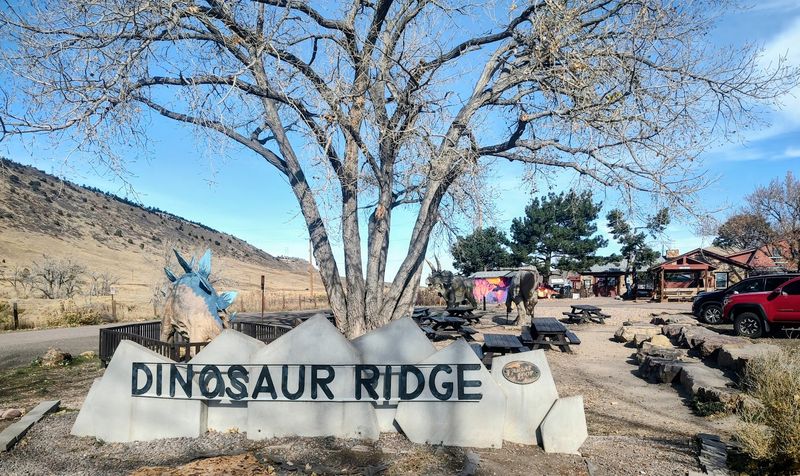
Dinosaur Ridge Main Visitor Center is the kind of place that makes you feel like a kid again the second you walk through the door.
The building sits right at the base of a dramatic sandstone ridge, and the landscape alone tells you something extraordinary happened here. This is not a replica or a recreation.
These are actual bones and tracks preserved in real rock.
The visitor center is run by the Friends of Dinosaur Ridge, a nonprofit dedicated to education and preservation.
Staff members are genuinely enthusiastic and happy to answer questions, which makes a huge difference. You can pick up maps, join guided tours, or browse exhibits that explain the geological story of the ridge.
The center sets the context before you head out onto the trail, so you actually understand what you are looking at when you see the fossils.
That context transforms the experience from a casual hike into something much more meaningful. Plan to spend at least a few minutes inside before exploring the ridge itself.
The Dinosaur Bone Quarry Site
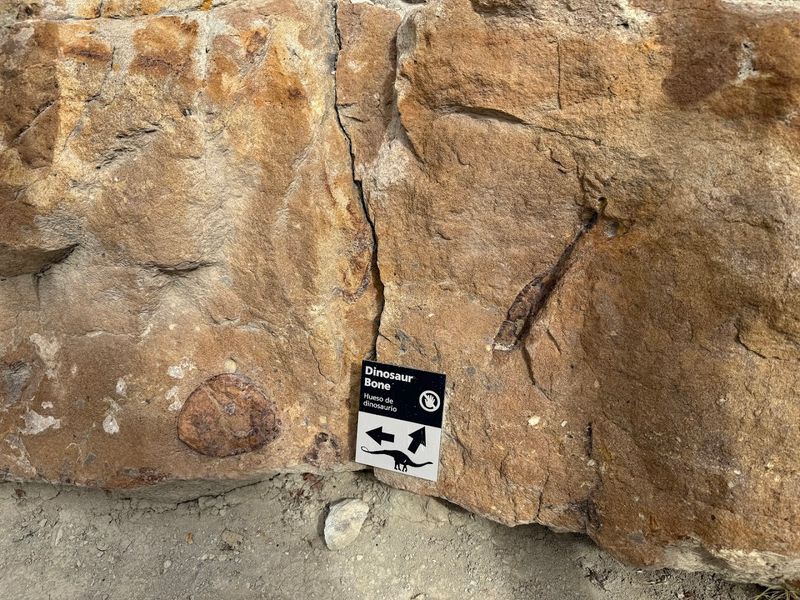
Back in 1877, a schoolteacher named Arthur Lakes spotted enormous bones sticking out of the Morrison Formation rock right here on this ridge.
That discovery kicked off one of the most significant paleontological finds in American history. The site at 16831 W Alameda Pkwy, Morrison, Colorado is now preserved and accessible to anyone willing to make the short walk up the trail.
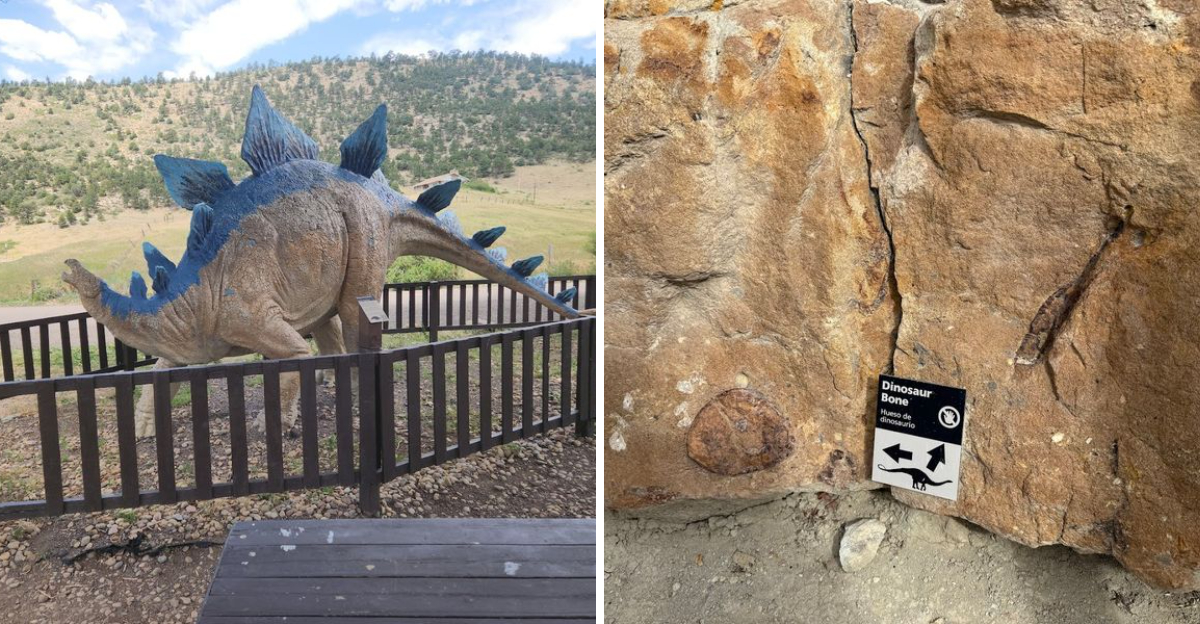
You can see actual Stegosaurus and Apatosaurus bones still embedded in the rock face. They are marked and labeled so you know exactly what you are looking at.
Standing that close to bones that are over 150 million years old is a feeling that is genuinely hard to put into words.
The bone quarry section of the trail is one of the most popular stops, and rightfully so. Bring your camera because the contrast between the beige sandstone and the darker fossil material photographs beautifully.
Kids tend to go completely silent when they realize those lumpy shapes in the rock are the real thing, not props from a museum display.
The Dinosaur Trackways
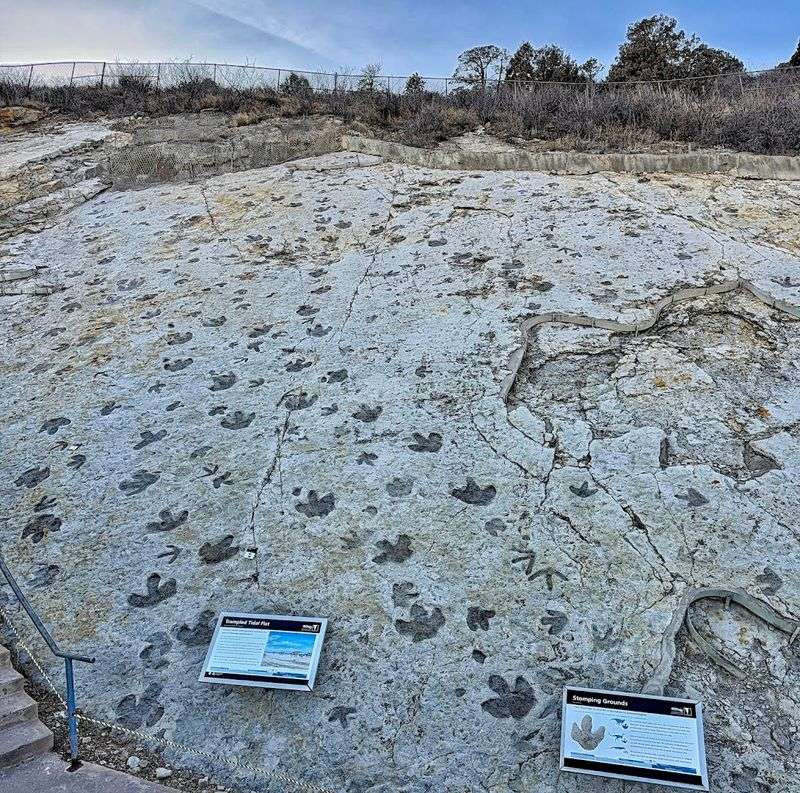
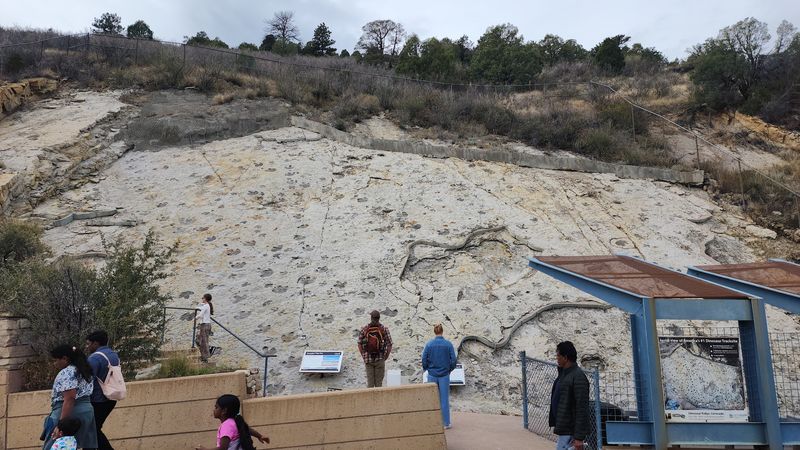
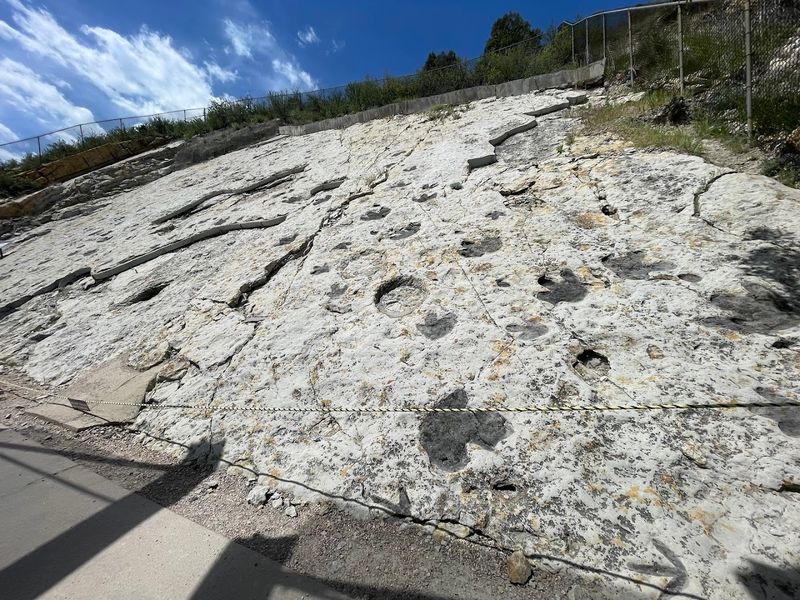
Footprints from an Iguanodon-like dinosaur are pressed into the rock at Dinosaur Ridge in a way that stops you mid-step.
The tracks run across a tilted slab of Cretaceous sandstone, and you can follow the path with your eyes just like someone watching an animal walk across fresh concrete. Except this concrete hardened about 100 million years ago.
What makes these tracks especially fascinating is the angle of the rock.
The entire formation has been tilted nearly vertical by tectonic activity, so you are essentially looking at what used to be a flat muddy surface standing up on its side.
Once someone explains that to you, the whole ridge starts to look different.
The trackways are protected behind barriers, but you can get close enough to see the individual toe impressions clearly.
Rangers and volunteer guides are often stationed nearby to explain the science behind how tracks get preserved. It is the kind of detail that turns a scenic walk into a genuine learning moment you will not forget.
The Morrison Formation Geology
The rock beneath your feet at Dinosaur Ridge is world-famous in geological circles.
The Morrison Formation is a sequence of sedimentary rock layers deposited during the Late Jurassic period, and it stretches across a massive swath of the American West.
Morrison, Colorado just happens to be the place where scientists first formally described it, which is why it carries the town name.
Walking the ridge trail, you can actually see the color changes in the rock layers. Purples, greens, grays, and tans stack on top of each other like a geological layer cake.
Each color shift represents a different environment or time period, and the visitor center materials help you decode what you are seeing.
Geology does not always get the excitement it deserves, but standing inside a real formation that defined an entire scientific category makes it click in a way no textbook can replicate.
The Friends of Dinosaur Ridge have done a great job creating signage that explains the science without making your eyes glaze over. Even non-geology people come away genuinely impressed.
The Self-Guided Trail Experience
Not everyone wants a scheduled tour, and the self-guided trail at Dinosaur Ridge respects that completely.
A paved path runs along the ridge for about one mile, passing all the major fossil and geological sites with numbered stops that correspond to a printed guide available at the visitor center.
You move at your own pace, stop as long as you want, and backtrack whenever something catches your eye.
The trail is paved and relatively flat, which makes it accessible for a wide range of visitors. Strollers can manage it, and older visitors do not have to worry about scrambling over loose rock to reach the good stuff.
That kind of accessibility without sacrificing authenticity is genuinely rare at outdoor fossil sites.
I did the self-guided version on a weekday morning and had stretches of the trail almost entirely to myself. The quiet made the whole experience feel more personal and a little surreal.
There is something about reading a sign explaining 150-million-year-old bones while standing three feet from them in total silence that just lands differently than any museum exhibit ever could.
Guided Tram Tours Of The Ridge
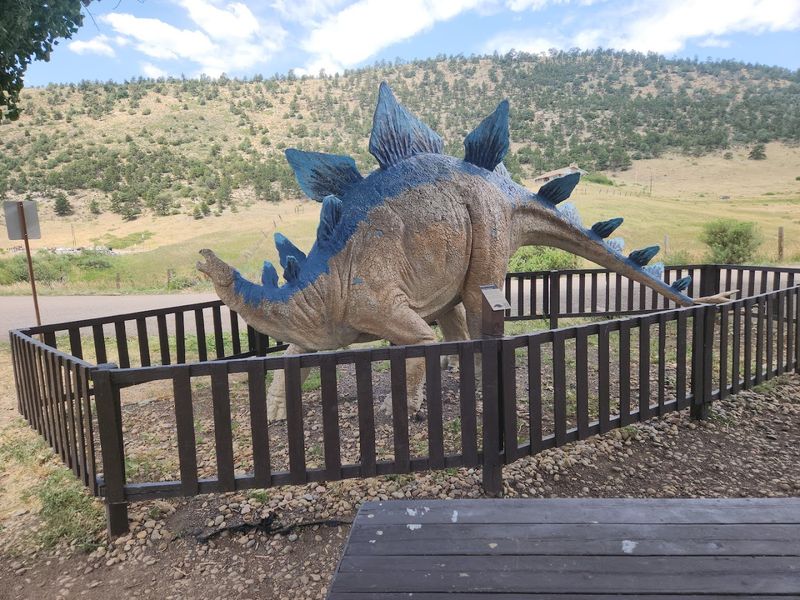
If you prefer someone else to do the explaining, the guided tram tours at Dinosaur Ridge are absolutely worth booking.
A knowledgeable guide narrates the entire route, pointing out details you would almost certainly walk right past on your own. The trams run on weekends and during peak season, and they fill up faster than you might expect.
What the guides bring to the experience is context you simply cannot get from a sign.
They tell stories about the original discoveries, explain how paleontologists extract fossils from hard rock, and field questions from curious kids and adults alike without missing a beat. The enthusiasm is real, not rehearsed.
The tram format also means you cover the full ridge without worrying about turnaround time or tired legs.
Groups with young children especially appreciate having a structured, narrated experience that keeps everyone engaged.
Check the Friends of Dinosaur Ridge website for current tour schedules and pricing before you visit, since availability varies by season and day of the week.
The Prehistoric Ripple Marks And Raindrop Impressions
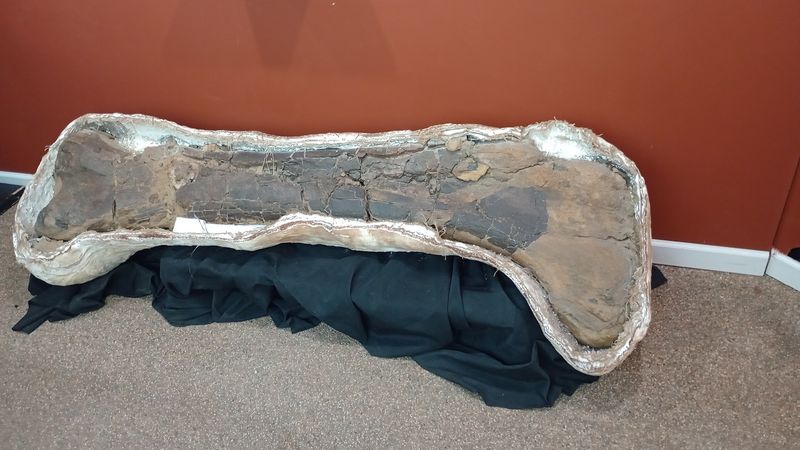
Here is something that genuinely surprised me during my visit: the fossils at Dinosaur Ridge are not limited to bones and tracks.
Preserved in the same rock surfaces are ripple marks left by ancient water currents and actual raindrop impressions from storms that happened over 100 million years ago.
Tiny pockmarks in sandstone, frozen in time, from rain that fell before humans existed.
These features are easy to overlook if nobody points them out, which is another reason the guided experience or at least a good trail map is so helpful.
Once you know what to look for, they become one of the most thought-provoking parts of the whole site. A raindrop impression is somehow more personal than a giant bone.
It feels intimate.
The science behind how these delicate features survived millions of years of geological change is explained clearly on the trail signage.
Basically, the sediment hardened quickly after the impressions formed, which locked them in place before erosion could erase them.
It is a lucky accident of geology, and standing there staring at prehistoric raindrops feels like reading a very old diary.
Planning Your Visit To Dinosaur Ridge
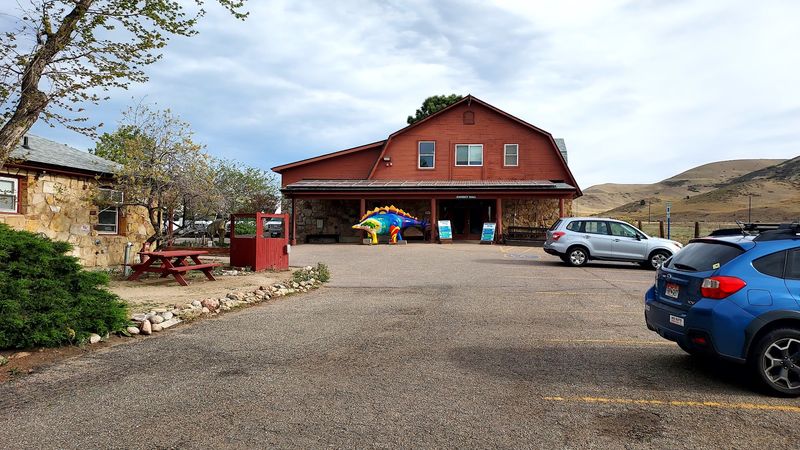
Getting to Dinosaur Ridge is straightforward. The visitor center sits right off West Alameda Parkway in Morrison, Colorado, about 15 miles southwest of Denver.
Parking is available near the visitor center, and the site is well-signed from the main road. Arriving early on weekends is smart because the trail and tour slots get busy by mid-morning.
Admission to walk the trail is free, though donations to the Friends of Dinosaur Ridge are genuinely appreciated since they fund ongoing preservation and education programs.
Guided tram tours carry a small fee. The visitor center itself has a gift shop with books, fossils, and educational materials that are actually good quality rather than the usual tourist shop filler.
Comfortable shoes are recommended even though the trail is paved, and sunscreen is a must because the ridge offers very little shade. Bring water, especially in summer.
The site is open most days of the year, but hours vary seasonally, so checking the official Friends of Dinosaur Ridge website before heading out saves potential frustration.
This place rewards a little planning and delivers far more than you expect.