This Underrated Minnesota State Park Has Fascinating Rock Formations You Have To See To Believe
Nobody warned me. Not a single person I know had ever mentioned this place, and honestly, that might be the most shocking part of the whole story.
I showed up knowing almost nothing, and left feeling like I had accidentally stumbled onto one of the best kept secrets in the entire Midwest. The rocks here do not look real.
They look sculpted, intentional, almost cinematic. Standing in front of them, I kept thinking about how long they had been sitting there, completely ignored by most of the world.
This Minnesota state park has existed for decades, hiding in plain sight, while people rushed past toward more famous destinations. Some places earn their reputation loudly.
This one just waits, patient and ancient, for the right person to finally pay attention.
The Glacial Potholes That Will Make Your Jaw Drop
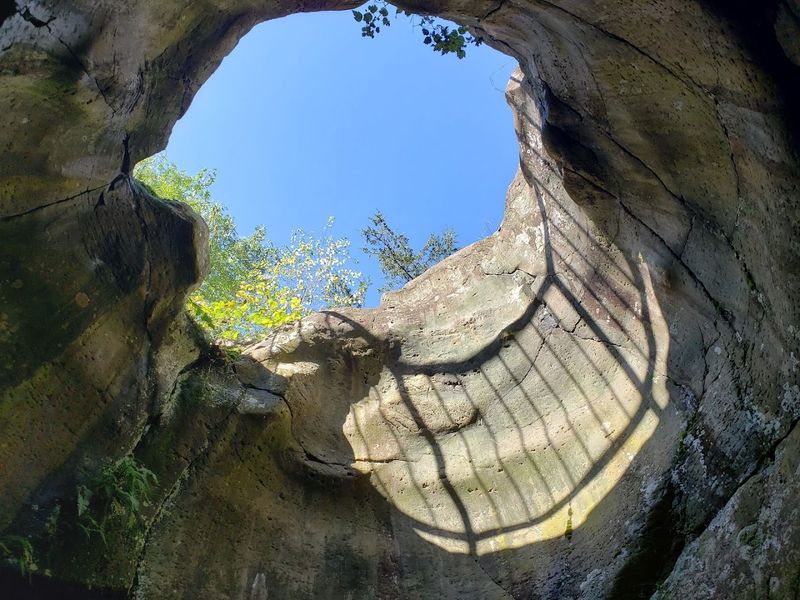
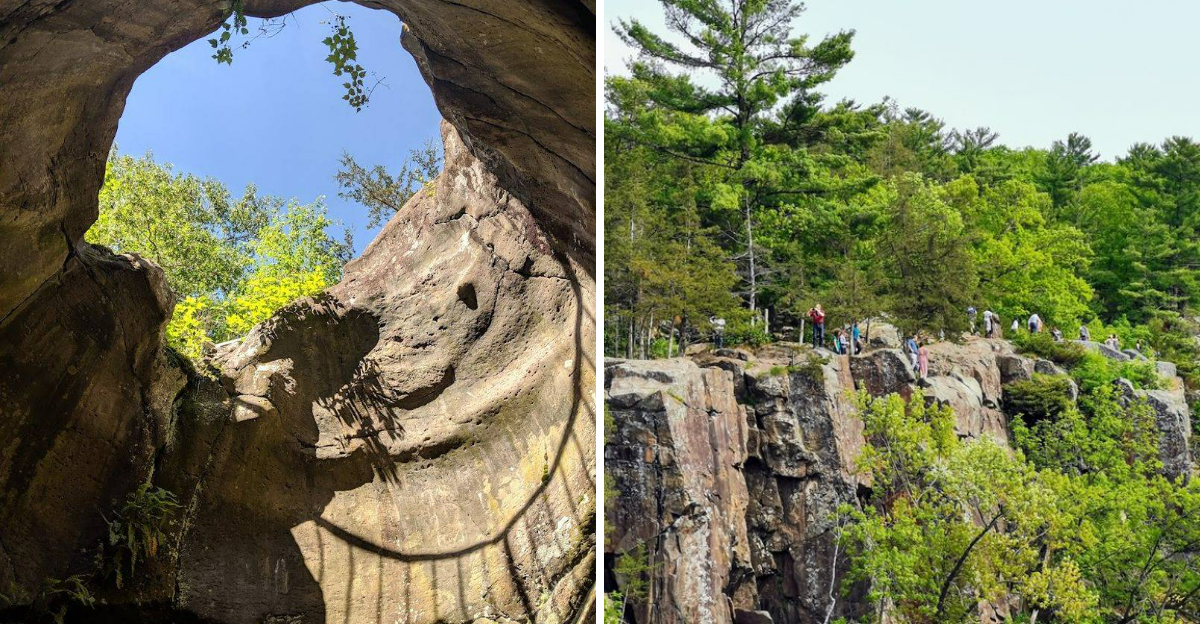
Picture thousands of gallons of icy water spinning rocks in circles for centuries, slowly drilling holes into solid basalt. That is exactly how the glacial potholes at Interstate State Park were formed, roughly 10,000 years ago.
The result is something that looks more like alien architecture than natural geology.
The park holds the world’s deepest explored pothole, known as the Bottomless Pit, measuring a jaw-dropping 60 feet deep. Interstate State Park also claims the largest concentration of glacial potholes on the entire planet.
That is not a small detail, that is a world record sitting right here in this part of the state.
Some potholes are small enough to step over, while others are wide enough to park a car inside. The Bake Oven is one you can actually enter, which feels both thrilling and slightly wild.
Walking among them feels like exploring a secret underground world that somehow ended up above ground. Bring good shoes because the trail is rocky and uneven, but every step is absolutely worth it.
Interstate State Park sits at 307 Milltown Rd, Taylors Falls, MN 55084, and it is open year-round. Plug it into your GPS and clear your afternoon, because once you get there, leaving is going to be harder than you think.
The Towering Basalt Cliffs Along The St. Croix River
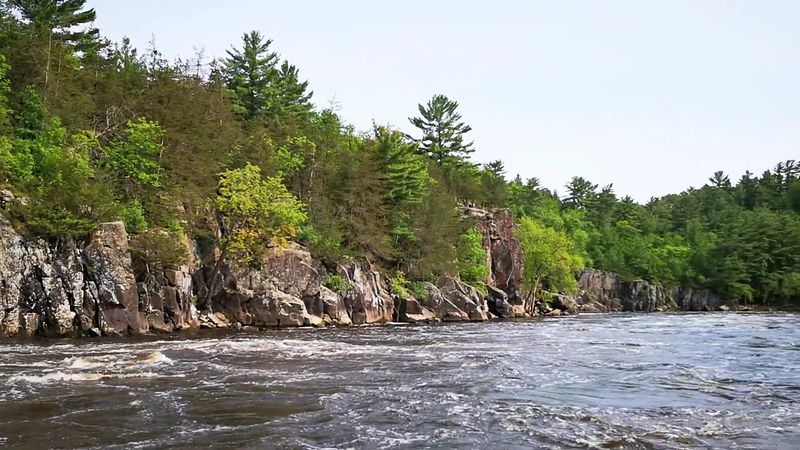
Standing at the base of these cliffs and craning your neck upward is a full-body experience. The basalt walls rise nearly 100 feet straight up from the river, dark and ancient and completely uninterested in being ignored.
French explorers named this stretch of gorge the Dalles, meaning flagstone or slab of rock, and honestly, the name fits perfectly.
These cliffs were created by massive lava flows over 1.1 billion years ago during the Midcontinent Rift. At least 10 separate lava flows are exposed right here in the park, stacked like the pages of an impossibly old book.
The sheer scale of geological time on display here is genuinely hard to wrap your head around.
Rock climbers come here specifically to test themselves on these vertical faces, which says a lot about how serious these walls are. The Walter Mondale River Trail runs alongside the gorge and gives you incredible views without requiring a harness.
Even from the trail, the cliffs feel massive and close, like the earth is showing off a little. It is one of the most visually striking natural scenes in this part of the country.
Angle Rock And The 90-Degree River Turn
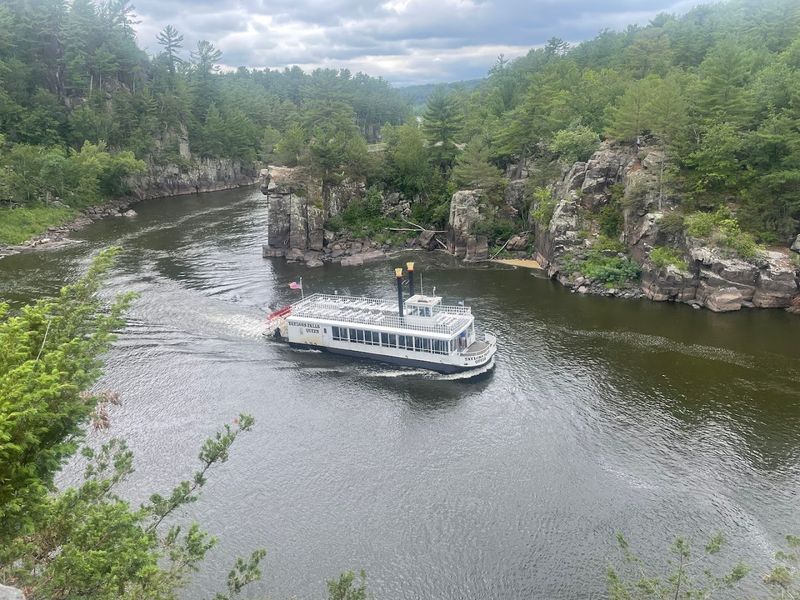
Rivers do not usually make hard right turns, so when the St. Croix suddenly bends nearly 90 degrees, it gets your attention fast. This dramatic curve happens at a spot called Angle Rock, and it is one of the more quietly fascinating features in the park.
The bend exists because of an ancient, inactive fault line running through the basalt bedrock beneath the river.
When the glacial river carved through this landscape thousands of years ago, it naturally followed the path of least resistance. The fault made one direction easier to erode than the other, and the river simply went that way.
The result is a sharp geological corner that looks almost deliberate, like someone drew it with a ruler.
Standing near Angle Rock and watching the river make that dramatic turn is genuinely satisfying. It is one of those moments where geology stops being abstract and becomes something you can actually see and feel.
The surrounding basalt formations frame the bend beautifully, making it a favorite spot for photographers.
The Sandstone Bluffs Trail And Ancient Sea Deposits
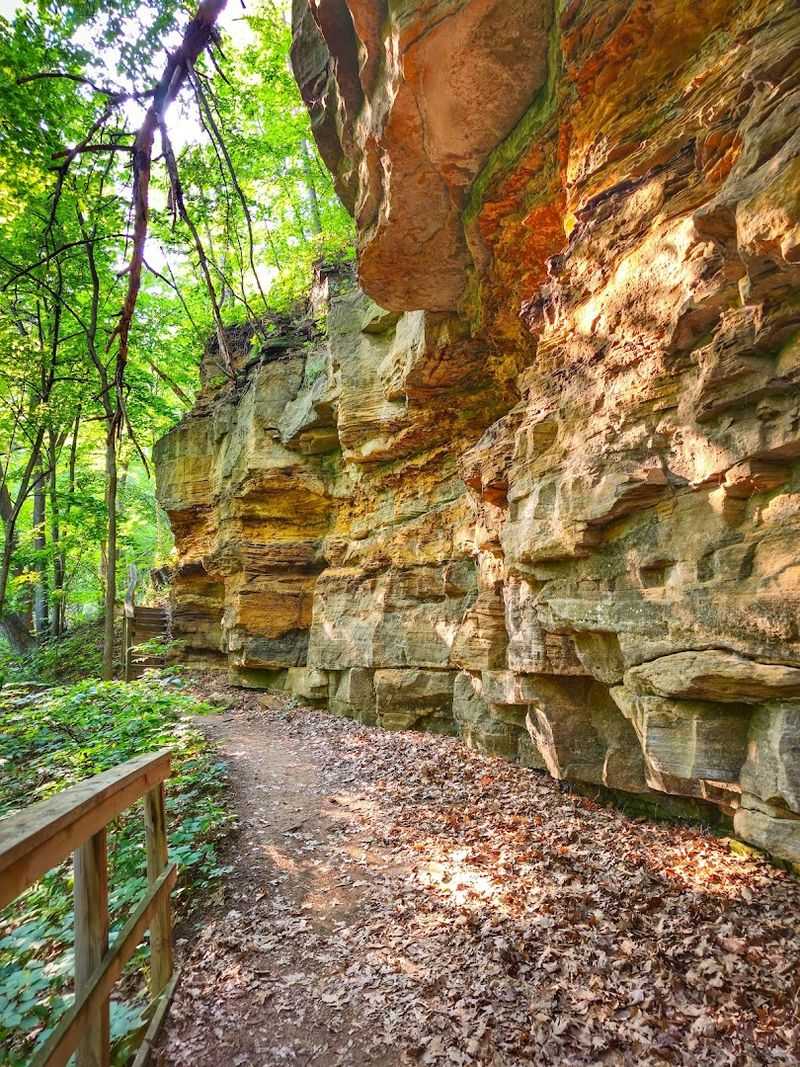
Not every dramatic formation in this park is made of volcanic rock. The Sandstone Bluffs Trail reveals a completely different chapter of geological history, one written by ancient seas that covered this area between 500 and 550 million years ago.
Walking this trail feels like flipping back through an entirely different section of Earth’s journal.
The sandstone here was deposited slowly by those ancient shallow seas, layer by layer, over millions of years. The colors shift from warm tan to deep orange depending on the light, and the texture of the rock face is visibly different from the hard, dark basalt elsewhere in the park.
It is a striking contrast that makes the trail feel like two hikes in one.
The views from the bluffs are wide and open, giving you a sweeping look at the river valley below. Some visitors say this trail is their favorite precisely because it feels less crowded and more contemplative.
The stairs on the bluff trail are a bit worn, so watch your footing on the way up. The payoff at the top, though, is a panoramic view that earns every step of the climb.
The Walter Mondale River Trail Experience
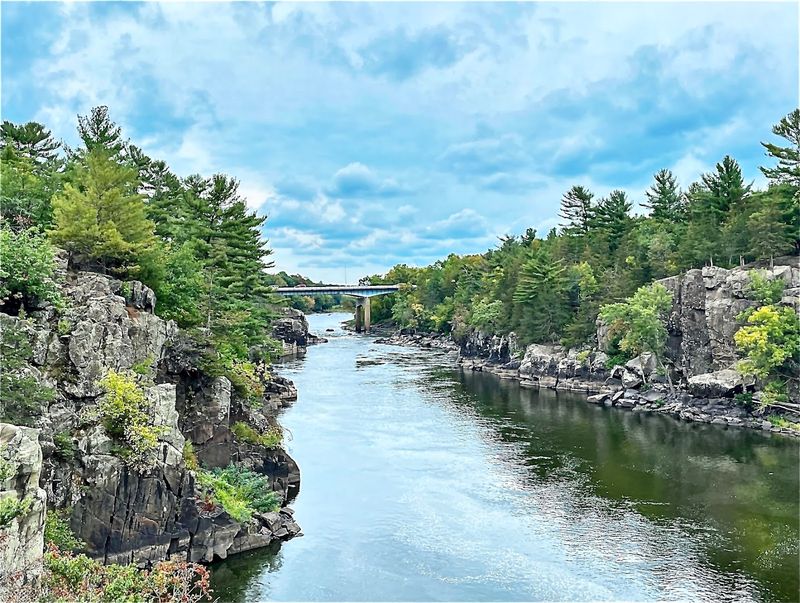
Some trails earn their reputation one view at a time, and the Walter Mondale River Trail does exactly that. This path runs along the St. Croix River on the Minnesota side, with views across the water toward Wisconsin.
The river stretches wide and calm in some spots, then narrows dramatically where the basalt closes in.
The round trip covers about two and a half miles, which is manageable for most fitness levels but still long enough to feel like a real adventure. The trail includes plenty of steps and rocky sections, so it earns the title of a hike rather than just a walk.
Sturdy footwear makes a noticeable difference in comfort and confidence on this route.
Along the way, the forest canopy shifts and opens at key moments, framing perfect views of the cliffs and water. Wildflowers, mushrooms, and river sounds keep the experience engaging from start to finish.
The trail also passes near the boat launch area, where canoes and kayaks put in for paddling adventures. It is the kind of trail that makes a two-hour outing feel like a full and satisfying day out.
The Mill Street Conglomerate And Its Unusual Rock Patterns
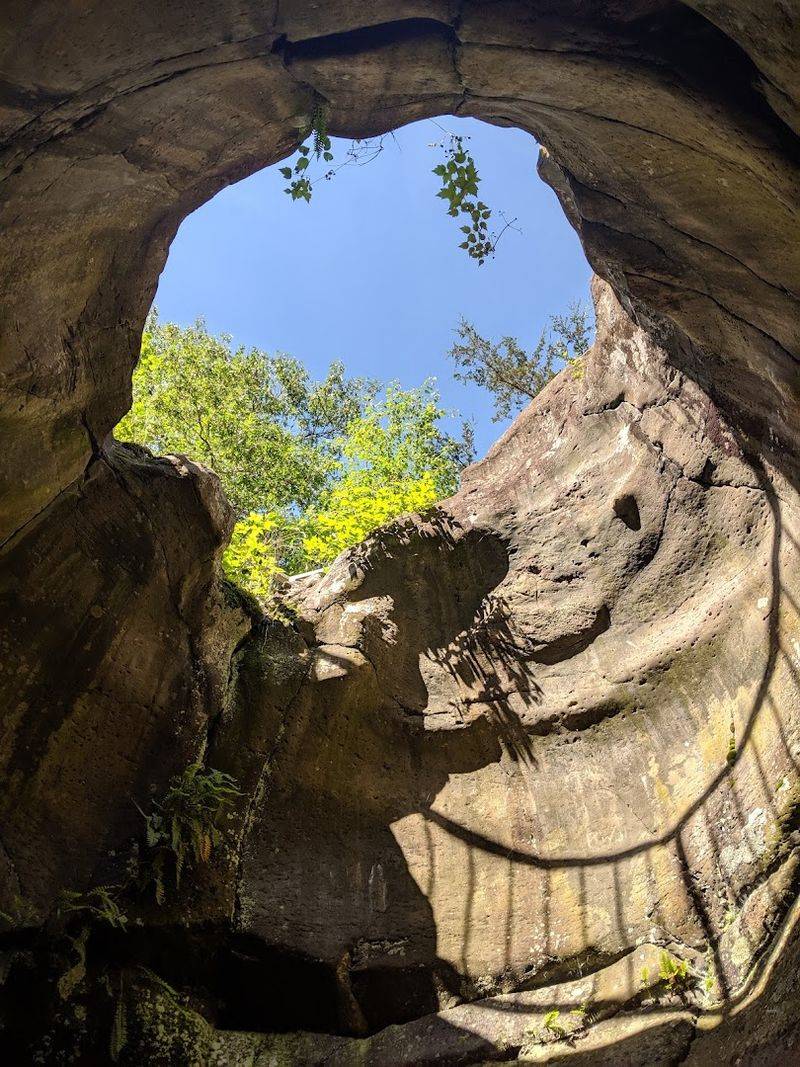
Most people walk right past the Mill Street Conglomerate without realizing they are looking at something genuinely rare. This formation consists of rounded chunks of basalt embedded directly inside sandstone, which sounds simple until you understand how it formed.
Ancient seas once battered basaltic islands here, breaking off chunks of lava rock and cementing them into the sandy seafloor over time.
The result is a rock that looks like a geological mosaic, dark rounded pebbles locked inside a lighter sandy matrix. It is the kind of formation that makes geologists get very excited and speak in enthusiastic run-on sentences.
For everyone else, it is simply a beautiful and unusual texture that rewards a closer look.
Finding it feels a bit like a treasure hunt, which adds to the fun of exploring the park. The conglomerate is a reminder that this landscape has been through multiple completely different worlds, volcanic, oceanic, and glacial, all layered on top of each other.
Interstate State Park packs more geological variety into 295 acres than most parks manage across thousands. That density of discovery is a big part of what makes the place so unexpectedly rewarding to explore.
Rock Climbing On Ancient Lava Walls
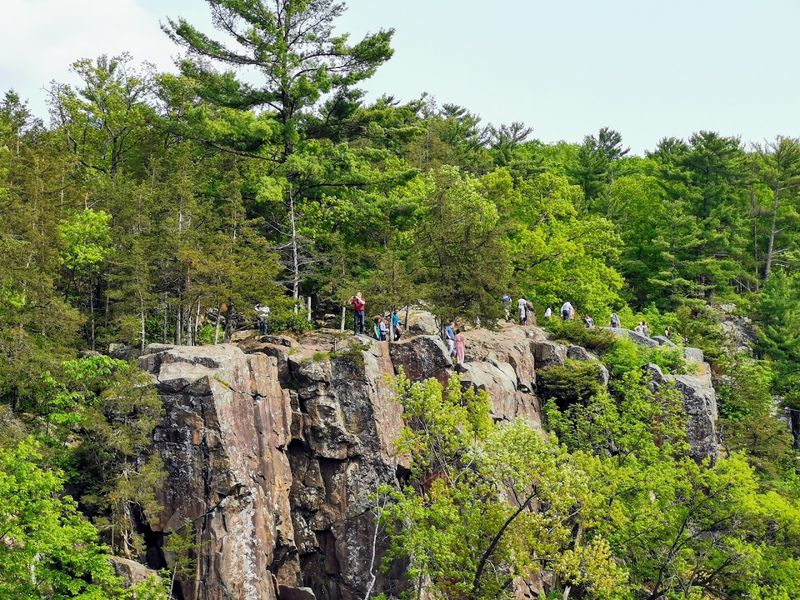
Climbing on rock that is over a billion years old is the kind of thing that puts daily stress in serious perspective. The basalt cliffs at this park have become a legitimate destination for climbers who want both challenge and scenery in the same outing.
The hard volcanic rock provides excellent grip, and the routes range from accessible to genuinely demanding.
The cliffs face the St. Croix River, which means climbers get a spectacular view as a reward for every foot of elevation gained. Even watching from below is entertaining, as climbers work their way up walls that look impossibly smooth from a distance.
The rock surface up close is rough and textured, full of small holds that experienced climbers know how to use.
You do not need to be a climber to appreciate this feature of the park. Simply standing near the base of the climbing walls and looking up gives you a sense of the scale and drama of the basalt formations.
The cliffs feel alive with geological personality, full of cracks, ledges, and dark mineral streaks. It is one of those spots where the boundary between adventure sport and natural wonder completely disappears.
More Than Hiking Inside The Park Experience
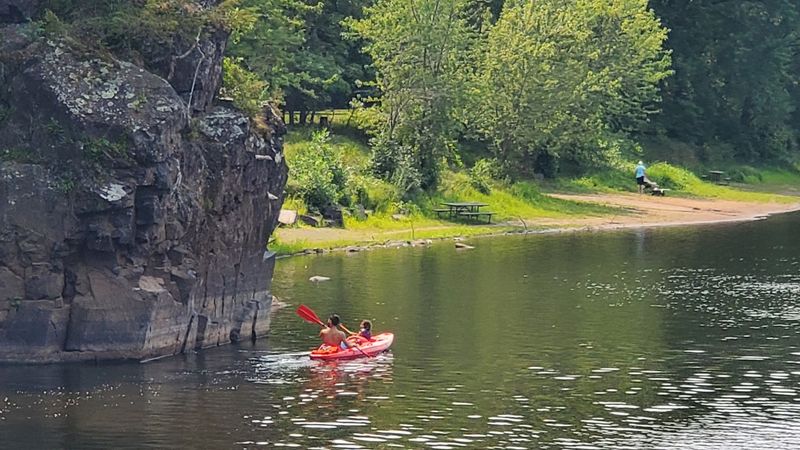
Spending a night here changes your entire relationship with the park. The campground sits less than a mile from town, which is close enough for convenience but far enough to feel genuinely immersed in nature.
Campers report that road noise fades quickly once you settle in, replaced by river sounds and birdsong.
The canoe and kayak rental service adds a completely different dimension to the visit. Paddling along the base of those 100-foot basalt cliffs from the water is an experience that hiking trails simply cannot replicate.
A shuttle bus service brings paddlers back after their trip, which is a thoughtful and practical touch.
Paddle boats are also available for rent, offering a more relaxed way to enjoy the river scenery. The picnic areas are well-maintained and generously spaced, making them ideal for families or groups who want a slower pace.
Day-use areas give non-campers plenty of space to relax and explore without feeling crowded. Visitor reviews often praise the park for its scenery, trails, and easy access to the river.
A Park That Spans Two States And Over A Billion Years
Here is a fact that genuinely surprised me when I first learned it.
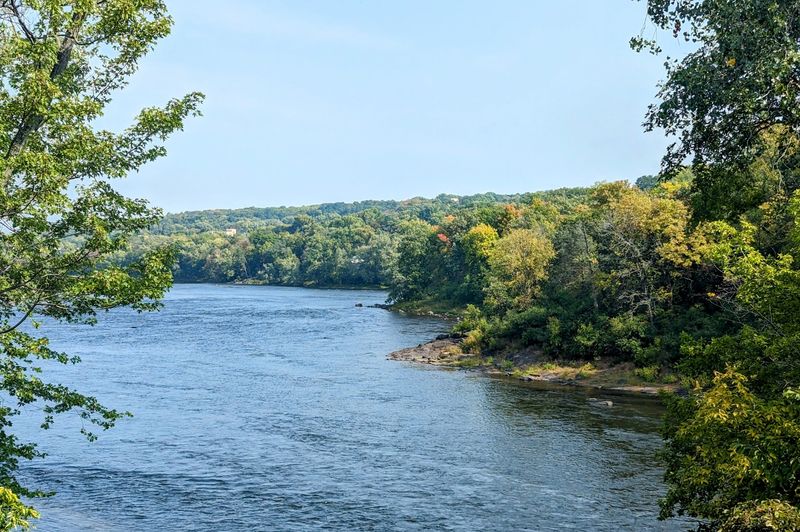
Interstate State Park is often recognized as the nation’s first interstate park, with protected parkland on both the Minnesota and Wisconsin sides of the St. Croix River. It is also the second-oldest state park in Minnesota, which puts it in some seriously distinguished company.
The Wisconsin side offers slightly different perspectives on the same geological features, and many visitors choose to hike both sides in a single trip. The two experiences complement each other well, like reading the same story from two different angles.
The bridge crossing between states adds a fun geographic novelty that kids especially seem to enjoy.
Despite all of this history and geological significance, the park covers only 295 acres on the Minnesota side. That compact size means the best features are never far from each other, and you can cover a surprising amount of ground in just a few hours.
The park is about an hour from the Twin Cities, making it a realistic day trip from a major metro area. For anyone who has lived in the region without visiting yet, the only reasonable response is to fix that as soon as possible.