9 Beautiful Oregon Destinations You’ll Wish You Visited Sooner
These Oregon destinations wait for those who have not yet found them. Every spot offers something that regulars know and newcomers instantly recognize.
Regret after a first visit is almost always about arriving too late. Coastline, forest, and town each look very different across this varied list.
Some of these have been sitting in plain sight the entire time. Beauty at this level makes every mile of any drive worth taking.
I visited some on one weekend and came home genuinely changed entirely. Oregon keeps surprising those who are finally paying real attention here.
Start anywhere and let the rest follow naturally from right there.
1. Astoria

Who would have thought a small coastal town could carry this much history and charm at once?
Astoria is at the northwestern tip of Oregon, right where the Columbia River meets the Pacific Ocean.
The Astoria Column towers above the city at 1 Coxcomb Dr. Climb its 164 steps for a view that stretches across the river, the coast, and the forested hills. It is one of those views you simply do not forget.
Victorian homes line the hillside streets here, giving the whole town a storybook quality. The maritime heritage runs deep.
The Columbia River Maritime Museum at 1792 Marine Dr does a brilliant job of telling that story. Ship models, navigational tools, and real vessels fill the exhibits.
The Astoria Riverwalk stretches along the waterfront for miles. Trolleys run along part of the path, making it easy to explore at a relaxed pace. Sea lions often lounge on the docks below, which is endlessly entertaining.
Local bakeries and coffee shops fill the mornings with warmth and good smells. The food scene here is surprisingly strong for such a small city. Fresh seafood is always front and center on every menu.
2. Wallowa Mountains
Trust me, not many mountain ranges in the entire country hit this hard.
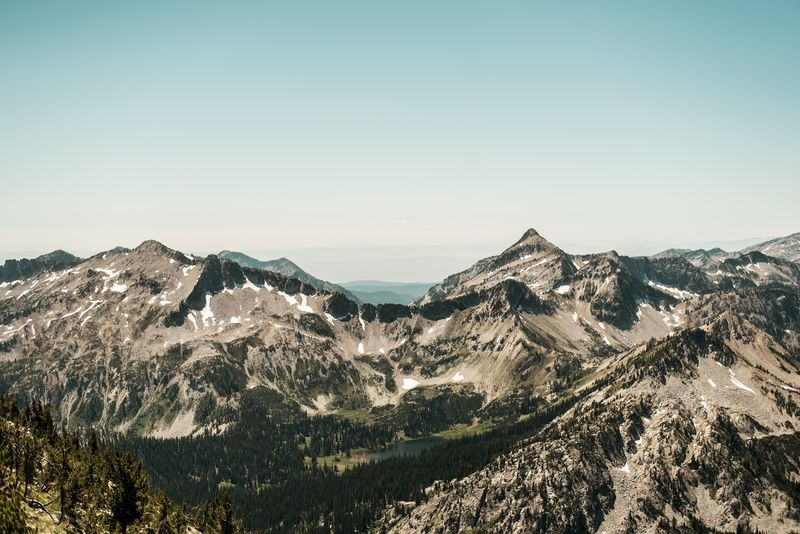
The Wallowa Mountains rise sharply above the surrounding high desert. The contrast is genuinely jaw-dropping.
Often called the Alps of Oregon, these peaks stretch across more than 350,000 acres of wilderness. Eagle Cap Wilderness sits at the heart of it all. Wildflower meadows carpet the valleys in summer.
Wallowa Lake sits at the base of the mountains and is one of the clearest glacial lakes in the Pacific Northwest.
Fall is a spectacular time to go, when golden larch trees blanket the hillsides. Backpacking trails wind deep into the backcountry for those who want a true wilderness experience.
The town of Joseph, just nearby, is a charming arts hub with bronze sculptures lining its streets. Wildlife sightings are common here. Elk, deer, and even black bears roam throughout the area. The dark skies at night make stargazing an unforgettable bonus.
This is the mountain escape that feels far removed from the rest of the world. Pack your hiking boots and come ready to be completely amazed by every single ridge and valley.
3. Columbia River Gorge
Can you believe one river carved something this dramatic and beautiful over millions of years?
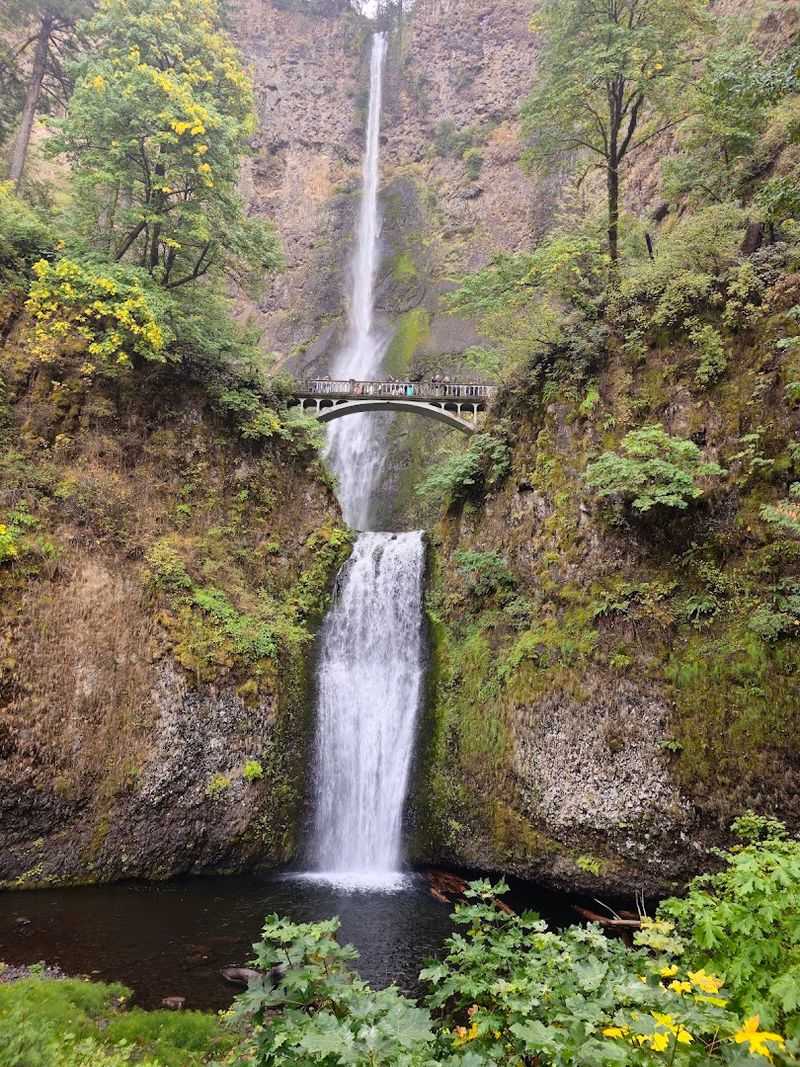
The Columbia River Gorge stretches roughly 80 miles along the border of Oregon and Washington, creating one of the most scenic corridors in North America. Waterfalls pour off basalt cliffs at nearly every turn.
Multnomah Falls is the crown jewel of the gorge. It drops 620 feet in two tiers and is one of the most photographed natural features in Oregon. A short bridge spans the falls midway, giving you a truly incredible vantage point.
The Historic Columbia River Highway winds through the gorge with elegance. Built in the early 1900s, it was designed to showcase the scenery rather than just pass through it. Cyclists and hikers love the path alongside the old road.
Crown Point Vista House perches dramatically above the river on a rocky promontory. The views from up there stretch for miles in every direction. Sunsets from this overlook are genuinely something special.
Windsurfers flock to Hood River, a town within the gorge known for its world-class wind conditions. The combination of steady winds and warm summers makes it a hub for outdoor adventure.
Fruit orchards also surround the area, making farm stands a highlight in summer.
The gorge shifts mood with every season, from lush spring green to fiery autumn color, keeping every single return trip feeling brand new and totally worth it.
4. Oregon Dunes National Recreation Area
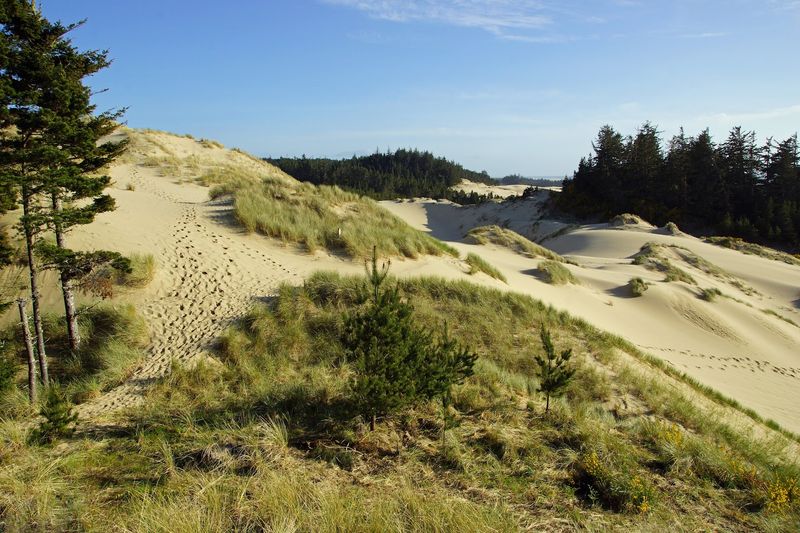
I never would have guessed that the Oregon coast was hiding a massive sand dune system that rivals anything in the American Southwest.
The Oregon Dunes National Recreation Area accessed at 855 Highway Ave spans 40 miles of coastline between Florence and Coos Bay in southwestern Oregon. These are the largest coastal sand dunes in North America.
Some dunes here rise over 500 feet high. The landscape shifts constantly with the wind, creating new shapes and ridgelines every single day.
Off-highway vehicle riding is enormously popular throughout the recreation area. Dune buggies and ATVs tear through designated sections of the dunes with plenty of energy. Rentals are easy to find in the nearby towns of Florence and Reedsport.
For those who prefer quiet exploration, hiking trails wind through forested areas and open dune fields. Freshwater lakes are tucked between the dunes, perfect for swimming and camping in summer.
Birding is also excellent along the wetland edges near the coast.
The town of Florence serves as a great base for exploring the northern section of the dunes. Its Old Town area along the Siuslaw River has a relaxed, welcoming atmosphere.
Seafood chowder from a local shop hits the spot after a long day of sand exploration.
The sheer scale of this place makes you feel wonderfully small, and that feeling alone is worth every sandy step of the journey.
5. Crater Lake National Park
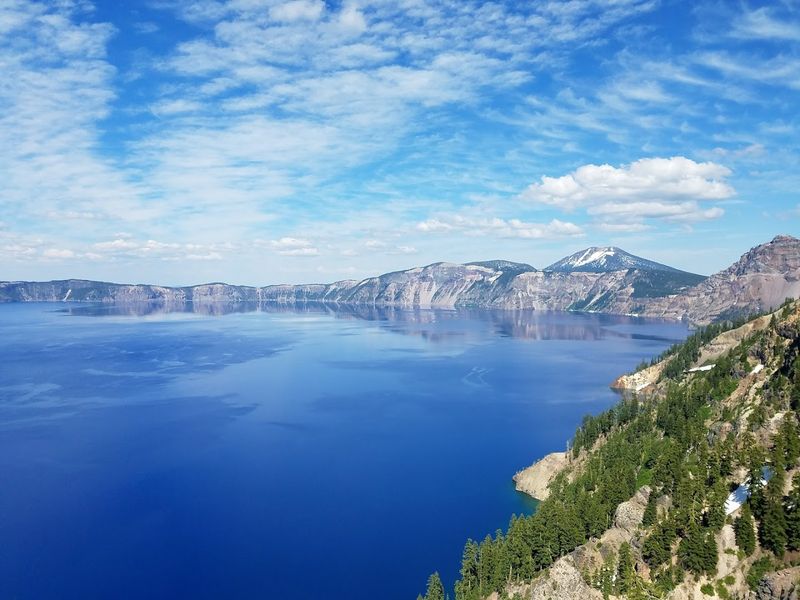
Believe me, no photograph fully prepares you for the first time you see Crater Lake in real life.
Crater Lake National Park protects the deepest lake in the United States. The water sits inside the collapsed caldera of ancient Mount Mazama.
The blue color of the lake is legendary. Because no rivers flow in or out, the water is incredibly pure and absorbs light in a way that produces an almost electric shade of blue.
Standing at the rim and staring down at it is simply overwhelming.
Crater Lake reaches a depth of 1,943 feet, making it the ninth deepest lake in the world. The caldera formed roughly 7,700 years ago after a massive volcanic eruption. Wizard Island, a cinder cone volcano, rises from the water near the western shore.
Rim Drive is a 33-mile scenic road that circles the entire lake. Pullouts along the way offer constantly changing perspectives of the caldera. The road is typically open from late June through October due to heavy snowfall.
Winter transforms the park into a quiet, snow-covered wonderland. Cross-country skiing and snowshoeing are popular activities during the colder months.
The park stays open year-round, which many travelers do not realize.
Crater Lake is one of those rare places that earns every bit of its legendary reputation. Leaving it always feels just a little bit harder than expected.
6. Portland
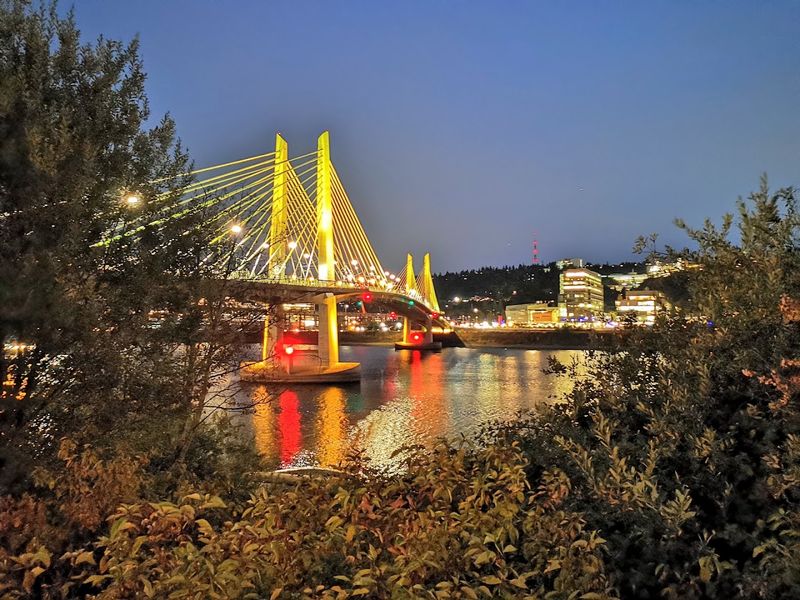
I know, a city on a list of beautiful Oregon destinations might seem unexpected at first.
Portland is in the northern Willamette Valley, straddling the Willamette River about 60 miles from the Pacific Coast. It is one of the most distinct and creatively energetic cities in the entire American West.
Powell’s City of Books alone is worth a trip to Portland. This independent bookstore occupies an entire city block and holds over a million new and used books. Getting happily lost inside it for hours is practically a local tradition.
Forest Park is one of the largest urban forests in the United States. More than 80 miles of trails wind through its towering Douglas firs. Running, hiking, and trail biking are everyday activities for Portlanders.
Portland Japanese Garden at 611 SW Kingston Ave is considered one of the finest outside of Japan. Its peaceful raked gravel gardens and koi ponds offer a meditative contrast to the city’s energy.
Spring cherry blossoms transform the surrounding park into something magical.
Portland’s food cart scene is unlike anything else in the country. Hundreds of carts cluster together in pods throughout the city, covering cuisines from every corner of the globe. Breakfast culture here is also taken very seriously.
Mount Hood looms over the eastern skyline, reminding you that even in the middle of a busy city, Oregon’s wild side is never truly far away from you.
7. Tamolitch Blue Pool
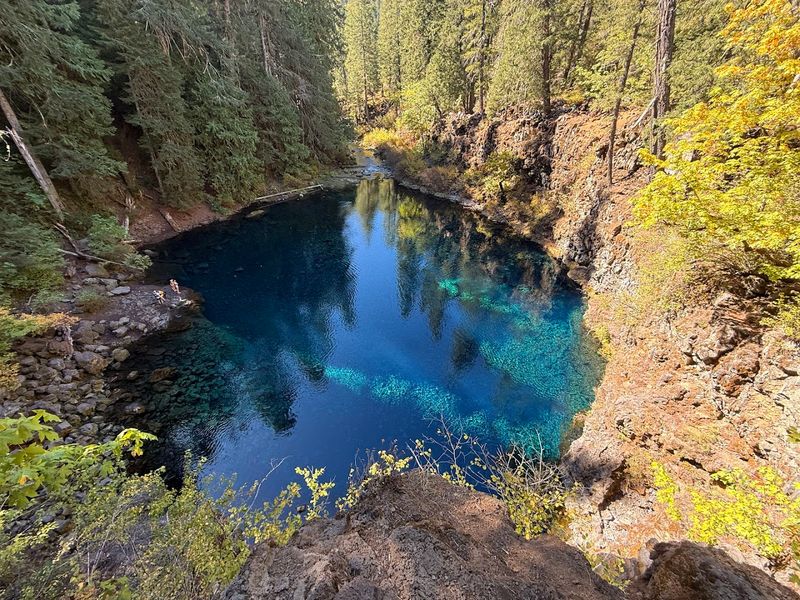
Would you ever think that a hike through an ancient lava field could lead you to one of the most surreal swimming holes in all of Oregon?
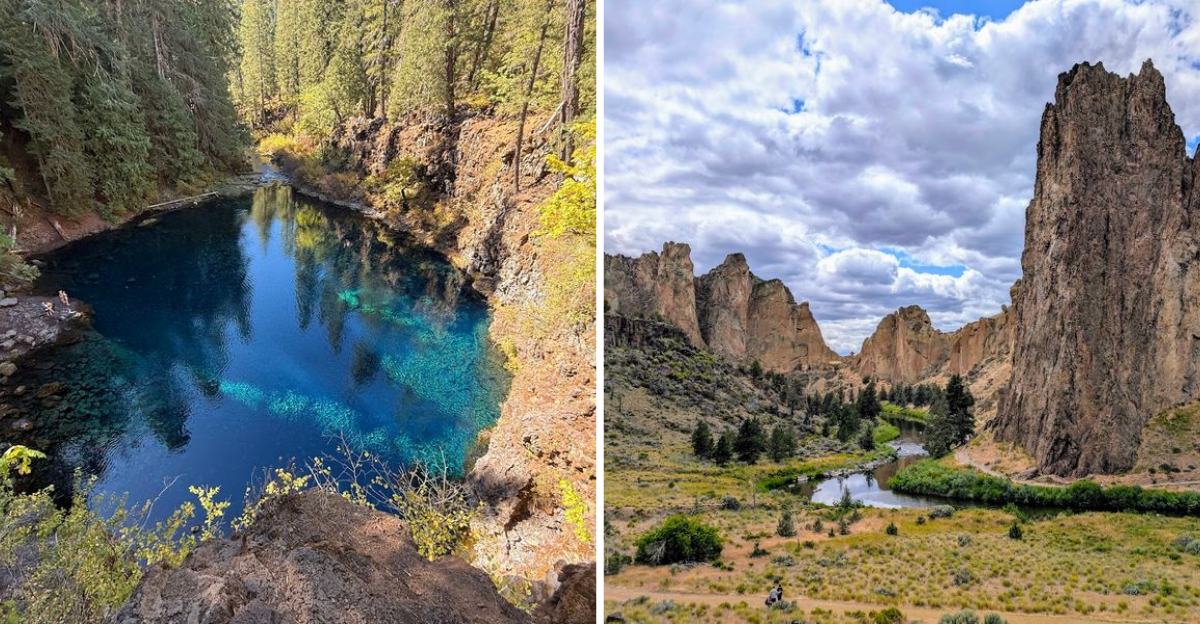
Tamolitch Blue Pool sits along the McKenzie River in the central Oregon Cascades, about 50 miles east of Eugene. The pool is carved into dark volcanic rock and filled with impossibly clear, turquoise-tinted water.
The hike to reach it is about four miles round trip along the McKenzie River Trail. The trail passes through old-growth forest and crosses sections of hardened lava flow. It is a moderate hike that most people can handle comfortably.
What makes this pool so unusual is how the water appears here. The McKenzie River actually disappears underground about a mile upstream, soaking into the porous lava rock.
It then resurfaces dramatically at Tamolitch as a crystal-clear spring-fed pool.
During spring snowmelt, the upper falls pour dramatically into the pool from above. By late summer, the falls dry up and only the spring feeds the basin.
The shifting nature of the falls throughout the year makes every season a different experience.
The water stays extremely cold year-round, even during summer. Swimming is possible for the brave, but many people are content to sit on the rocks and simply admire the color.
The silence of the surrounding forest adds to the almost dreamlike atmosphere of the whole area. Tamolitch Blue Pool is the hidden treasure that makes you feel like a true explorer when you finally arrive.
8. Cannon Beach
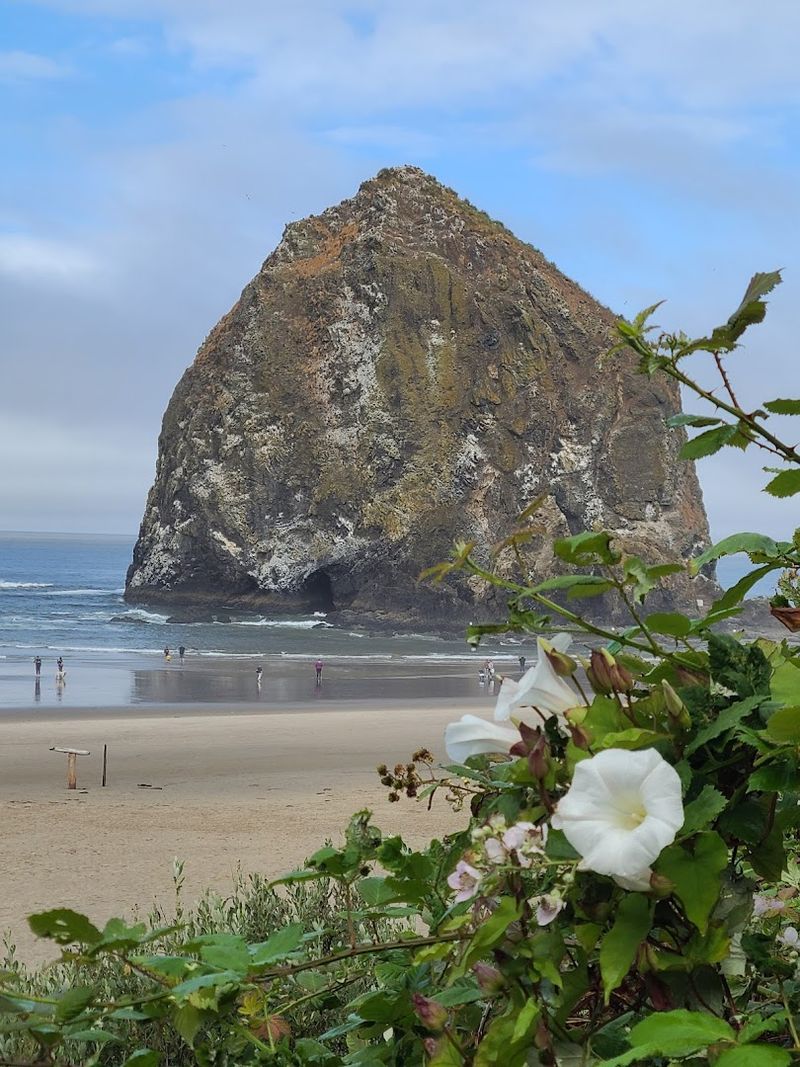
It seems almost unfair that one stretch of Oregon coastline can be this consistently stunning in every season and every kind of weather.
Cannon Beach is a small coastal town in northwestern Oregon, about 80 miles west of Portland. Its defining landmark is Haystack Rock, a 235-foot sea stack rising straight out of the Pacific Ocean.
Haystack Rock is one of the most recognizable natural features in the entire Pacific Northwest. At low tide, the rock base reveals vibrant tide pools filled with sea stars, anemones, and hermit crabs.
Exploring those pools is a genuinely fascinating way to spend a morning.
The main stretch of beach runs for miles in both directions from town. Wide, flat sand makes it perfect for long walks in any weather. Foggy mornings here have a moody, cinematic quality that is hard to describe but easy to love.
Downtown Cannon Beach is walkable and charming, with galleries, bookshops, and cozy cafes tucked along its main street. The arts community here is strong and has been for decades.
Local galleries showcase both established and emerging Pacific Northwest artists.
Trails here wind through old Sitka spruce forest before opening onto sweeping ocean overlooks. The park also offers access to quieter, more secluded stretches of beach.
Cannon Beach is one of those rare coastal towns that actually gets more beautiful the longer you linger around its edges.
9. Smith Rock State Park
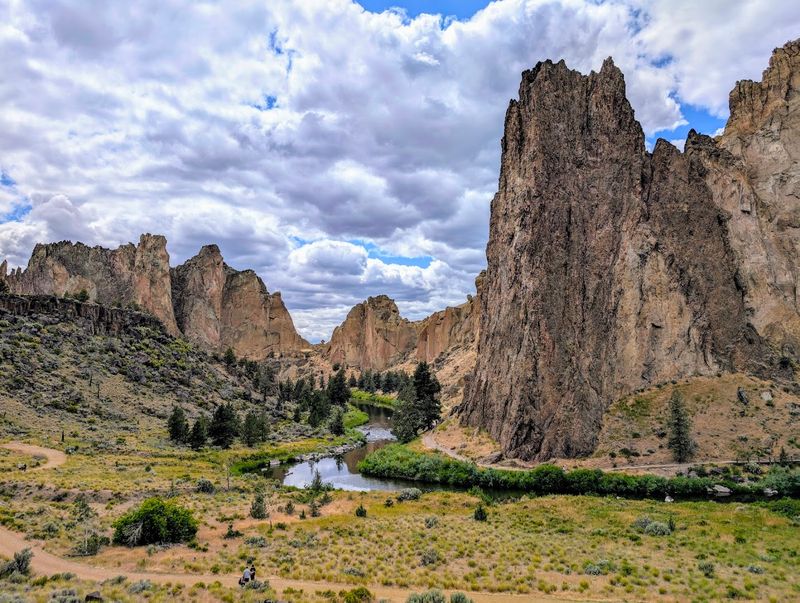
Doesn’t it sound interesting that some of the most jaw-dropping rock climbing in North America is tucked into the dry, sagebrush-covered landscape of central Oregon?
Smith Rock State Park sits near the town of Terrebonne, in the high desert region of Oregon east of the Cascades. The park is widely credited as the birthplace of modern sport climbing in the United States.
Jagged volcanic rock formations called welded tuff rise hundreds of feet above the Crooked River canyon floor. The colors shift throughout the day, moving from burnt orange in the morning to deep crimson at sunset.
Photographers absolutely love the golden hour light here.
The Misery Ridge Trail is the park’s most iconic hike. It climbs steeply through the canyon and delivers sweeping views of the rock formations and the surrounding high desert. The loop takes most hikers about two to three hours to complete.
Rock climbers from around the world travel to Smith Rock specifically for routes like Monkey Face, a pillar of rock with routes ranging from beginner to expert.
Bouldering areas are scattered throughout the canyon as well. The climbing community here has a welcoming and passionate culture.
River otters, mule deer, and golden eagles are regularly spotted along the canyon trails. The Crooked River itself is popular for fly fishing. Camping is available nearby at Skull Hollow Campground.
Smith Rock is the place that looks like a movie set but turns out to be wonderfully, wildly real in every magnificent detail.