These Underrated North Carolina Hiking Trails Are Almost Too Beautiful To Stay Secret
Some of North Carolina’s best trails receive far less attention than they deserve
When you have trails this beautiful sitting just off the radar, you do not exactly rush to post about them.
The famous hikes in this state are famous for a reason, and nobody is arguing with that.
But there is a particular kind of satisfaction that comes from finding the ones that did not make the list.
The paths where you are not dealing with heavy crowds, and not sharing your lunch spot with forty strangers who all read the same article.
These trails exist all over North Carolina, hidden in forests and mountain gaps and coastal edges that most people simply drive past.
They are not hidden exactly, just quietly waiting for the kind of person who looks a little harder. If that sounds like you, then you are already halfway there.
The other half is lacing up your boots and actually going.
1. Birkhead Mountain Trail
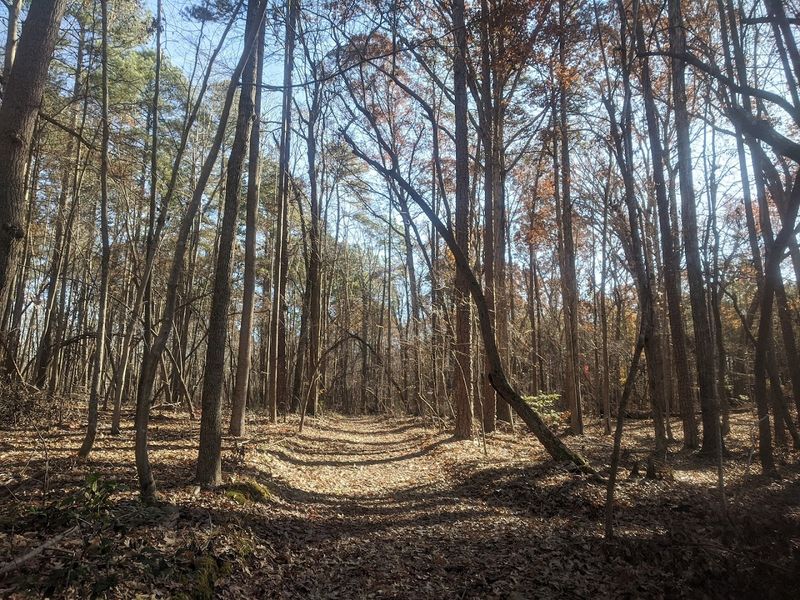
Some trails make you work for it, and Birkhead Mountain Trail makes every step feel earned.
Located in Asheboro, this trail winds through the Uwharrie National Forest, one of the oldest mountain ranges in North America. That alone should get your attention.
The forest here feels ancient. Gnarled oaks and hickories crowd the path, and the ground is littered with quartz and slate that crunch satisfyingly underfoot.
There are no crowds fighting for the best photo spot. Most weekdays, you might not see another soul for miles.
The trail stretches roughly 11 miles round trip, so bring snacks and water. The elevation changes are moderate, making it accessible without being boring.
You get enough climbing to feel accomplished, but not enough to make your knees file a formal complaint.
Birding here is genuinely impressive. Pileated woodpeckers hammer away at dead trees, and in spring, warblers fill every branch with sound.
The forest floor blooms with wildflowers from March through May, painting the understory in soft purples and whites.
If you want a trail that feels like a secret handshake between you and nature, Birkhead is the one to put on your list first.
2. Turkey Pen Gap Trail
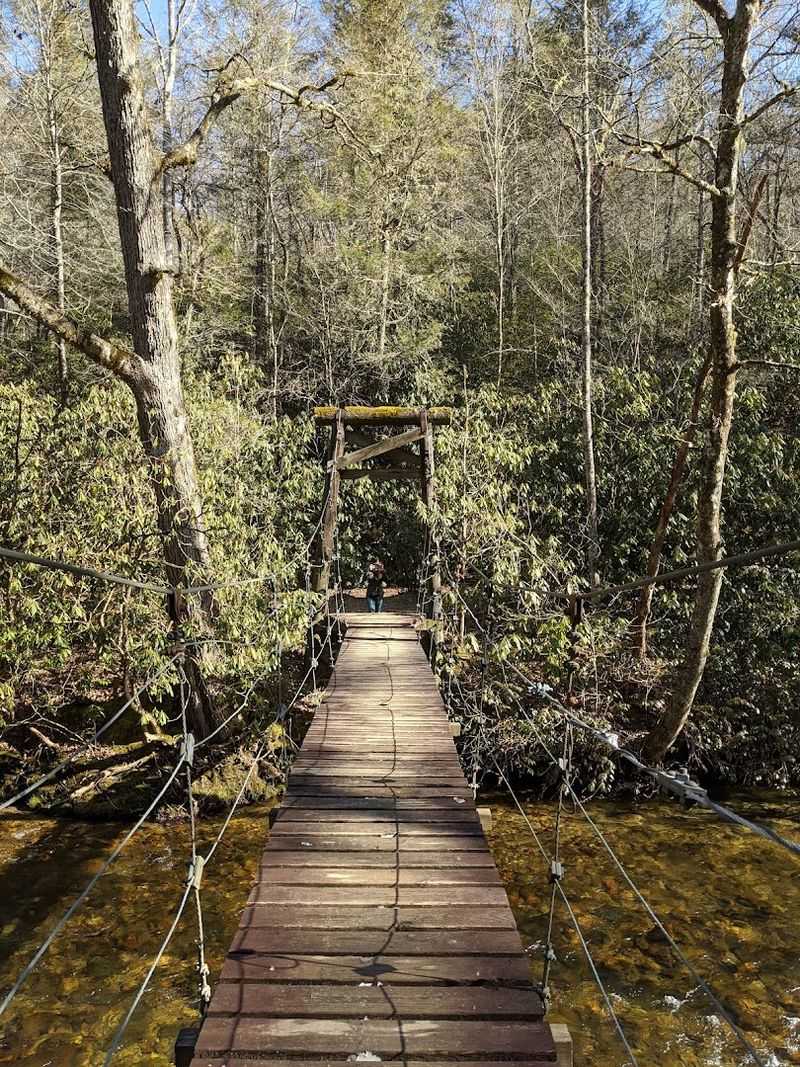
There is something almost theatrical about Turkey Pen Gap Trail.
The moment you step off Turkey Pen Rd in Horse Shoe and into Pisgah National Forest, the temperature drops, the light changes, and you feel like the forest is putting on a show just for you.
This loop trail covers about 11 miles and connects several named trails, which means the scenery keeps shifting. You get creek crossings, open ridgelines, and dense hemlock coves all in the same outing.
It never lets you get bored, which is a rare quality in any trail or any person.
The South Mills River runs through part of the route, and on a warm afternoon, the temptation to sit beside it for thirty minutes longer than planned is basically irresistible.
Bring waterproof shoes or embrace the adventure of wet feet. Both are valid choices.
Wildlife sightings are common here. Black bears occasionally pass through, and white-tailed deer move through the coves at dusk with complete indifference to hikers.
The trail is moderately challenging with some steep sections, but nothing that requires technical gear.
Just solid footwear, a good map, and the willingness to spend a full day doing absolutely nothing except being outside. That is the whole point.
3. Trombatore Trail
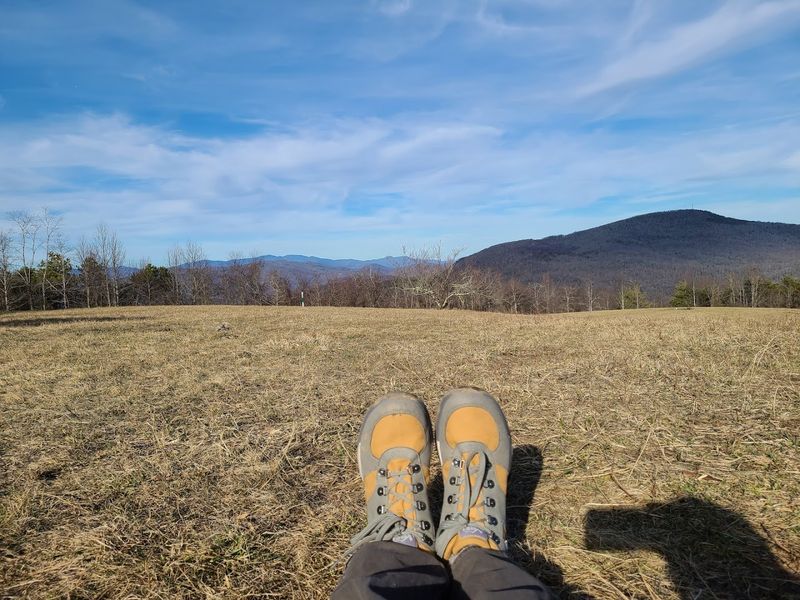
Not many people outside of Buncombe County have heard of the Trombatore Trail, and honestly, that is a gift.
Starting off Bear Wallow Rd in Fairview, this trail climbs through private conservation land managed by the Conserving Carolina organization, offering views of the Black Mountain range that feel almost too dramatic for a weekday hike.
The trail gains elevation quickly, so the first twenty minutes will remind you of every gym session you skipped. But the payoff at the top is a sweeping ridgeline view that makes the burning legs completely worth it.
On a clear day, you can see Mount Mitchell, the highest peak east of the Mississippi.
The forest transitions from mixed hardwoods at the base to open rocky outcroppings near the summit. That shift in landscape keeps the hike visually interesting from start to finish.
Wildflowers cling to the rocky soil in summer, and fall foliage here is genuinely spectacular.
The trail is about 4 miles round trip, which makes it achievable for most fitness levels without requiring a full-day commitment. Dogs are welcome on leash, and the trail is generally well-maintained.
Parking is limited, so arriving early on weekends is a smart move. This one deserves far more attention than it currently gets.
4. Joyce Kilmer Memorial Loop Trail
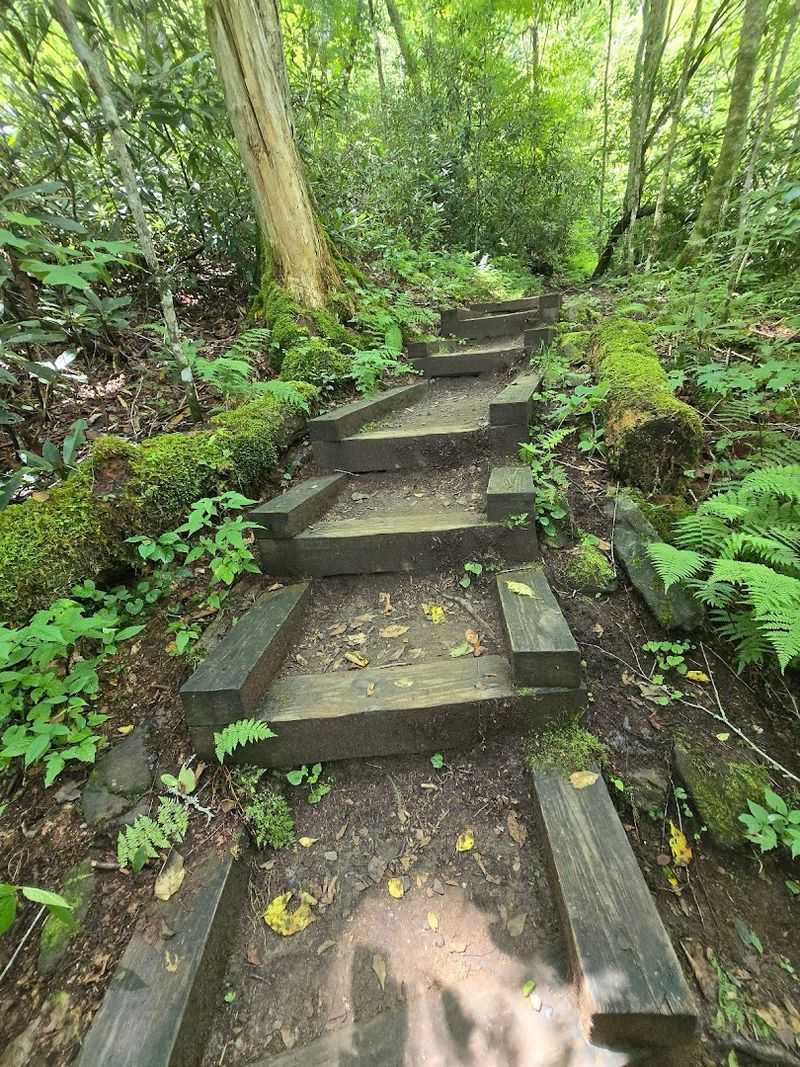
Standing inside the Joyce Kilmer Memorial Forest near Robbinsville feels less like hiking and more like stepping into a cathedral.
The tulip poplars here reach over 100 feet tall and some are more than 400 years old. You will instinctively lower your voice.
The loop trail is only about 2 miles, but do not let that fool you into rushing.
Every few steps reveals something worth stopping for: a massive root system, a moss-covered boulder, a shaft of light cutting through the canopy like something out of a fantasy novel.
Time moves differently in old-growth forest.
This is one of the largest remaining tracts of old-growth forest in the eastern United States, which makes it scientifically significant and personally humbling.
The trees were never logged, which means you are walking through a forest that has been growing undisturbed for centuries.
Spring brings trillium and other wildflowers to the forest floor in abundance. Summer keeps it cool and green even on the hottest days.
The trail itself is relatively easy, with gentle terrain suitable for most ages and fitness levels. Bring a journal or just sit quietly on a log for a while.
The forest does not need your commentary.
It has been here long enough to speak for itself.
5. Elk Knob Summit Trail
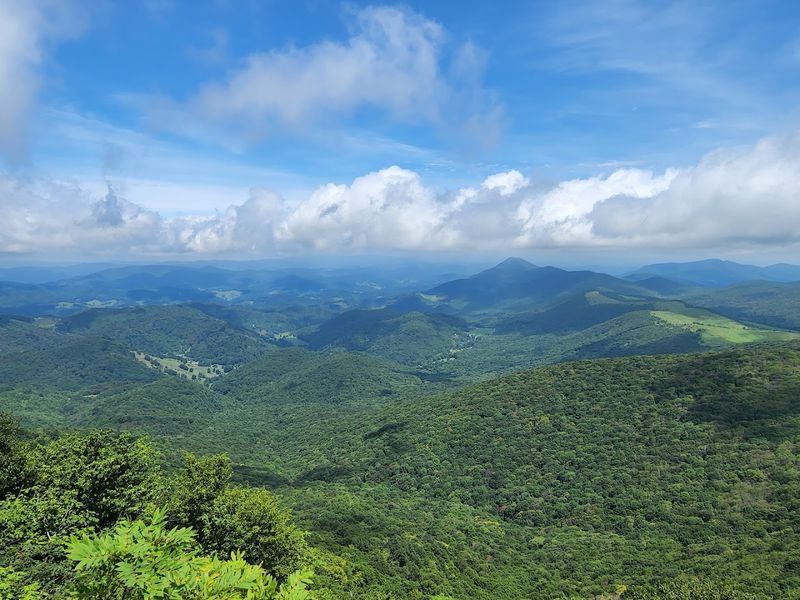
Elk Knob does not get the same tourist traffic as some of its more famous Blue Ridge neighbors, which is genuinely baffling once you reach the summit.
The views from the top stretch across multiple counties and on a clear morning, the ridgelines seem to roll on forever.
The trail starts at 5564 Meat Camp Rd in Todd and climbs about 1,700 feet over roughly 4.4 miles round trip.
That elevation gain is real, and the upper sections of the trail move through a Northern hardwood forest that feels more like Vermont than North Carolina.
Yellow birch and American beech replace the typical Southern Appalachian mix, giving the whole hike an unexpected character.
The summit sits at 5,520 feet, making it one of the higher peaks in the High Country region. Even in summer, it can be noticeably cooler up top, so packing a light layer is smart thinking.
In October, the fall color display from the summit is the kind of thing that makes you cancel plans just to come back.
The trail is well-maintained and clearly marked throughout. Wildlife sightings, including black bears and ruffed grouse, are not uncommon.
Elk Knob State Park manages the area with care, and it shows. This trail rewards effort with scenery that feels genuinely earned.
6. Gorges State Park Rainbow Falls Trail
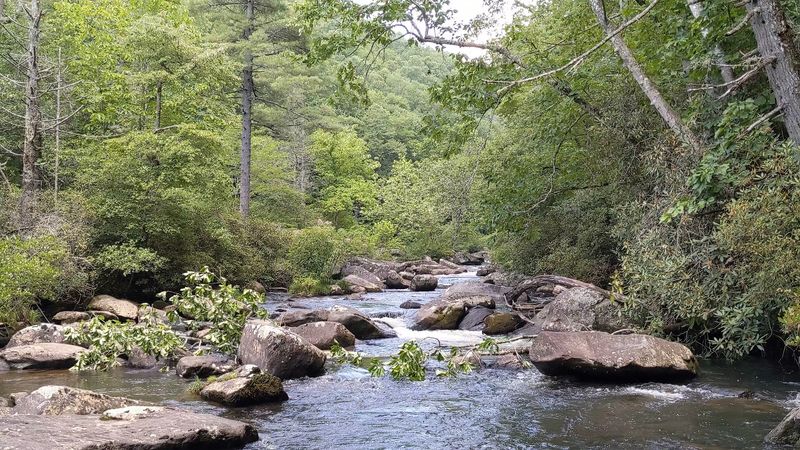
Gorges State Park sits in a corner of North Carolina that receives more rainfall than almost anywhere else in the eastern United States, and the landscape shows it.
Everything is green, dripping, and alive in a way that genuinely catches you off guard the first time you visit.
The Rainbow Falls Trail off Grassy Ridge Rd in Sapphire leads to a 150-foot waterfall that earns its name on sunny days when light hits the mist just right.
The hike in is about 5.5 miles round trip with significant elevation change, so this one demands some preparation and solid footwear.
The trail passes through a temperate rainforest ecosystem that is rare this far inland. Mosses and ferns cover every rock and log.
Rhododendron tunnels arch over sections of the path, creating a green corridor that feels almost surreal. In June, when the rhododendrons bloom, the trail becomes something out of a nature documentary.
The falls themselves are worth every step of the descent. Standing at the base, the sound alone is overwhelming in the best possible way.
The spray keeps things cool even in August.
Gorges State Park is one of North Carolina’s most underappreciated parks overall, and Rainbow Falls is the crown jewel of its trail system. Plan for a full day and bring your camera.
7. Deep Creek Trail
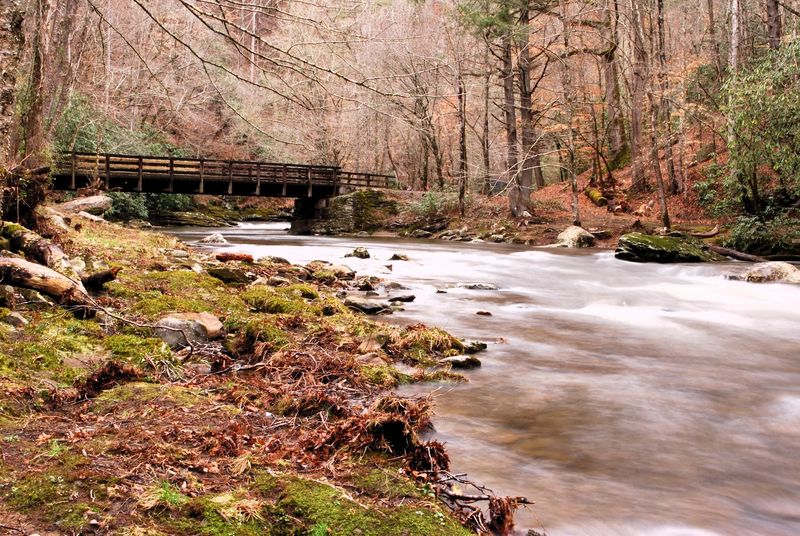
Deep Creek Trail near Bryson City might be the most pleasant surprise in the entire Smoky Mountains.
While everyone else is stuck in traffic heading to the more famous overlooks, you can be walking beside a clear, rushing creek through one of the prettiest valleys in the park.
Starting from W Deep Creek Rd, the trail follows Deep Creek upstream through a wide forested valley.
The path is mostly flat for the first few miles, making it one of the more accessible options inside Great Smoky Mountains National Park. Families with kids handle it easily.
Solo hikers with audiobooks handle it even better.
Three waterfalls appear along the lower section of the trail: Juney Whank Falls, Tom Branch Falls, and Indian Creek Falls. You can hit all three in a short out-and-back without breaking a serious sweat.
For those wanting more mileage, the trail continues deep into the backcountry with primitive camping available.
Tubing on Deep Creek is popular in summer, and watching people float past while you hike adds an entertaining layer to the experience. The swimming holes along the creek are cold and refreshing on hot days.
Trout fishing is also permitted in designated sections. Deep Creek packs a remarkable amount of variety into a single trail corridor, and it rarely feels overcrowded compared to other Smokies destinations.
8. Cane Creek Trail
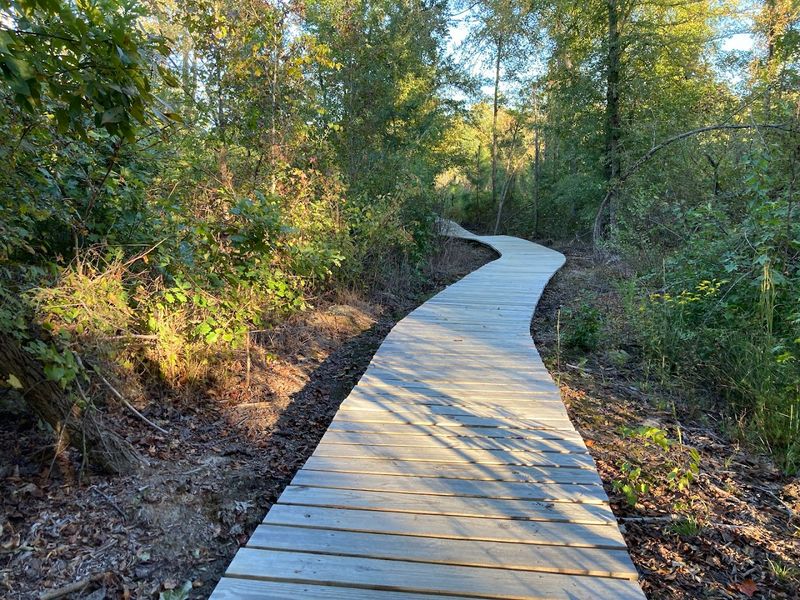
Piedmont hikers often feel left out of the North Carolina trail conversation, which tends to skew heavily toward the mountains.
Cane Creek Trail in Waxhaw is a direct rebuttal to that assumption, and it makes a convincing argument.
This trail winds through Cane Creek Park, a Union County gem that combines forested hiking with lake views and surprisingly varied terrain for the region.
This trail specifically covers about 5 miles of rolling hills, creek crossings, and open meadow sections that shift the scenery regularly enough to keep things interesting.
The lake views that appear periodically along the route are genuinely lovely. Herons patrol the shoreline, and turtles sun themselves on every available log.
In spring, the wildflower display along the creek sections is quietly spectacular, with trout lilies and bloodroot carpeting the forest floor.
Trail markings are clear and well-maintained throughout, which matters more than people admit. Getting lost on a Piedmont trail is less dramatic than getting lost in the mountains, but it is still annoying.
The park also offers mountain biking and equestrian trails, so the parking area can get busy on weekends. Arriving before 9 a.m. on Saturday guarantees you the trail mostly to yourself.
For Piedmont hiking, this one genuinely delivers.
9. Densons Creek Nature Loop
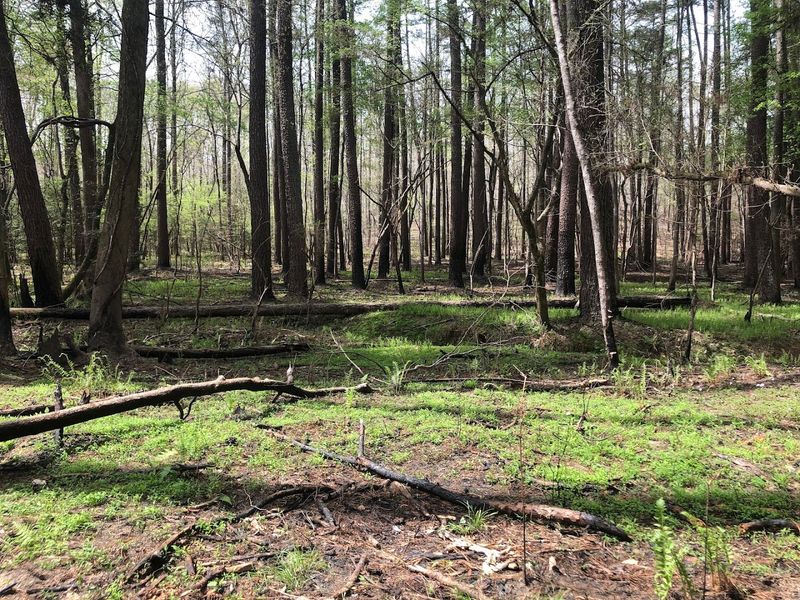
Troy is not a city that shows up on many hiking bucket lists, which makes the Densons Creek Nature Loop something of a pleasant discovery.
The trail sits within the Uwharrie National Forest corridor and offers a surprisingly rich natural experience for such a low-key location.
The loop covers about 4 miles through mixed pine and hardwood forest, following Densons Creek for much of its length. The creek itself is the star of the show here.
Clear, shallow, and lined with smooth stones, it creates a constant soundtrack that makes the whole hike feel meditative without requiring you to do anything remotely spiritual.
Beaver activity is visible along several sections of the creek, with dams and gnawed stumps appearing regularly.
Spotting the beavers themselves requires patience and quiet, but early morning hikers occasionally catch them at work.
The forest around the creek supports a diverse bird community, and the dawn chorus in spring is legitimately impressive.
The terrain is gentle overall, with only minor elevation changes throughout the loop.
This makes it an ideal option for hikers returning from injury, families with younger children, or anyone who wants a quality outdoor experience without committing to a strenuous day.
The Uwharrie region deserves more recognition than it receives, and Densons Creek is a solid starting point for anyone curious enough to explore it.