You’ll Never Guess These Incredible Natural Wonders Are Hiding In Wisconsin
Wisconsin has been letting the cheese and the football do all the talking, and honestly that was a very clever distraction.
While everyone was busy forming opinions about bratwurst and frozen tundra, this state was sitting on some of the most extraordinary natural scenery in the entire Midwest without saying a word about it.
I fell for the misdirection completely.
I drove through Wisconsin for years with a mental image that had almost nothing to do with the reality waiting just off the main roads.
The moment I actually started paying attention, I felt the specific embarrassment of someone who missed an obvious joke.
Glacial formations, hidden waterfalls, sandstone canyons, and coastlines that have no business being as beautiful as they are, all of it in a state that leads with dairy.
It is one of the better long cons in American geography. Pack your hiking boots and prepare to feel equally foolish and delighted.
1. Devil’s Lake State Park
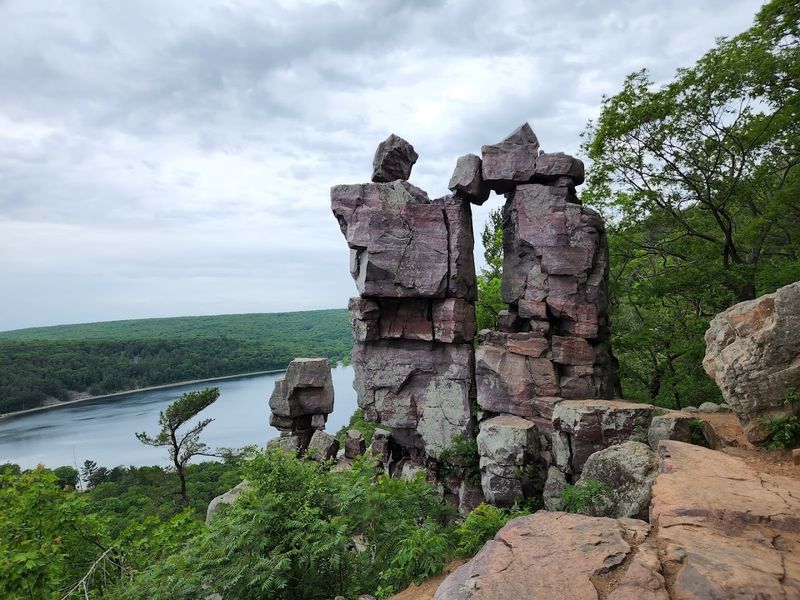
Standing at the top of the bluffs at Devil’s Lake, I genuinely forgot I was still in Wisconsin.
The view hit differently than I expected, with 500-foot quartzite cliffs dropping straight down to a crystal-clear lake that looks borrowed from somewhere far more dramatic.
Devil’s Lake State Park in Baraboo is the most visited state park in Wisconsin, and once you see it, that makes complete sense.
The park sits inside an ancient glacial basin, which means the geology here is truly one of a kind. Those massive boulders scattered along the trails were left behind by glaciers thousands of years ago.
There are over 29 miles of trails ranging from easy lakeside walks to heart-pumping bluff climbs. The East Bluff and West Bluff trails reward you with sweeping views that genuinely earn the effort.
Swimming is allowed in the lake, and the water stays surprisingly clear all summer.
Fall is peak season here, and the colors reflecting off the lake are almost unfair in their beauty. But spring and early summer offer quieter trails and blooming wildflowers along the rocky paths.
The park address is S5975 Park Rd, Baraboo, if you want to plan your route ahead of time. Go early on weekends, because the parking lots fill up faster than you would believe.
2. Apostle Islands National Lakeshore
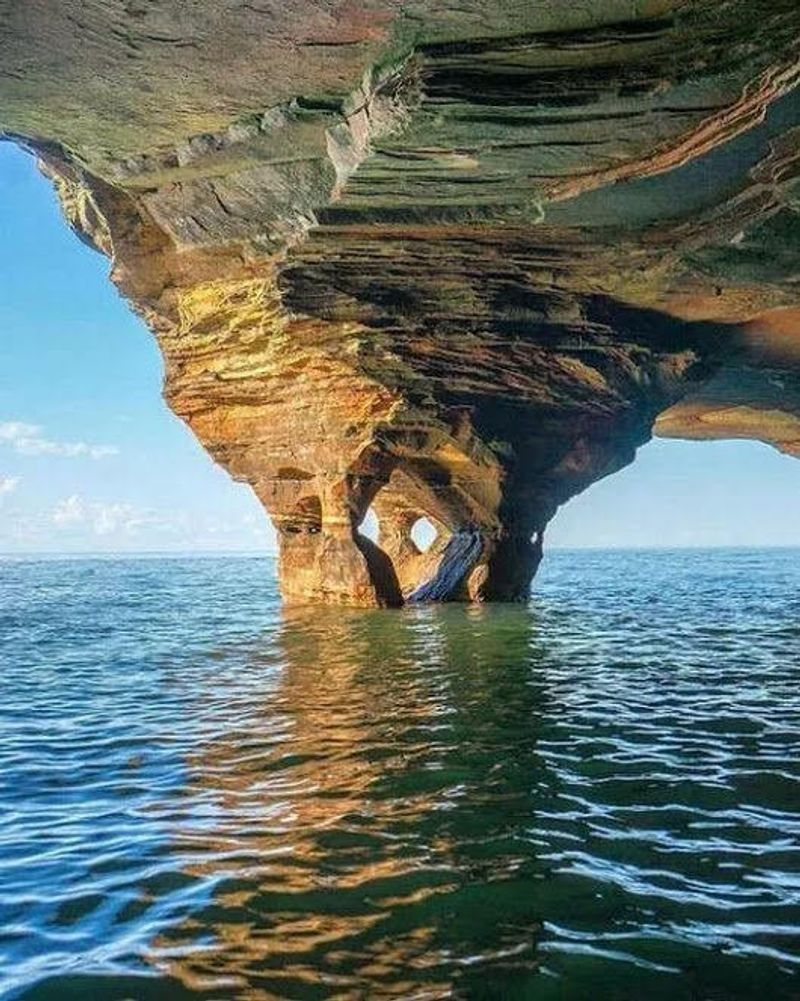
Nobody warned me that Wisconsin had sea caves, and I feel that is a genuine oversight in the state’s marketing.
The Apostle Islands National Lakeshore along Lake Superior is one of those places that makes you stop scrolling and start booking flights.
Located at 415 Washington Ave in Bayfield, this national lakeshore protects 21 islands and 12 miles of mainland shoreline carved out of red sandstone by centuries of wave action.
The sea caves are the showstopper. Kayaking through them on a calm day feels like paddling through a cathedral, with the water glowing blue-green beneath you.
In winter, when Lake Superior freezes enough, the caves transform into glittering ice formations that draw thousands of visitors on foot. It only happens some years, which makes it feel even more special when it does.
The light filtering through the ice is something cameras struggle to fully capture.
The islands themselves are accessible by boat and offer camping, hiking, and some of the best freshwater sailing in the country.
Raspberry Island has a restored lighthouse worth the trip alone. Bayfield is a charming little town that serves as the gateway, with outfitters ready to set you up for kayak tours.
Plan at least two days here, because one is simply not enough to take it all in.
3. Cave Of The Mounds
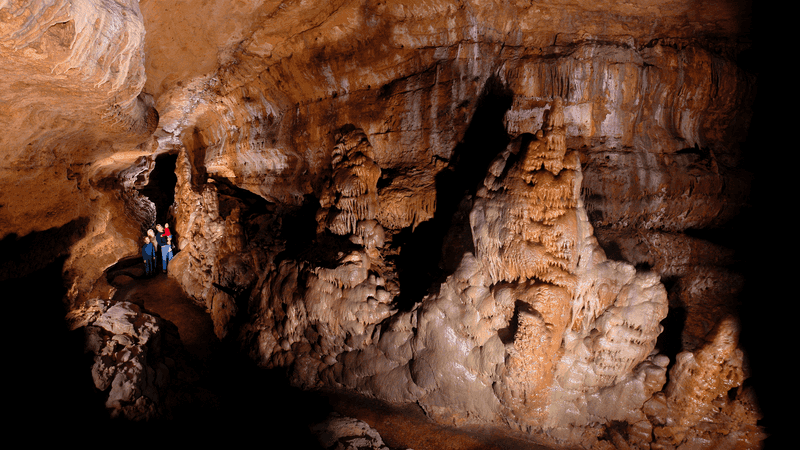
Stumbling upon a National Natural Landmark while driving through farm country feels a little surreal.
That is exactly what Cave of the Mounds is, sitting quietly beneath the rolling hills of Blue Mounds like a secret the cornfields have been keeping for years.
Discovered accidentally in 1939 during a quarry blast, this limestone cave became one of the most well-preserved underground spaces in the entire Midwest.
The formations inside are genuinely stunning, with delicate stalactites, chunky stalagmites, and rare cave coral covering the walls in shapes that look almost too creative to be natural.
The guided tours run year-round and take about an hour to complete. The cave stays at a constant 50 degrees Fahrenheit inside, which makes it a cool retreat in summer and a surprisingly warm one in winter.
Bring a light jacket regardless of the season.
One thing that surprised me was how colorful the formations are. Iron and manganese minerals create deep reds, oranges, and blacks throughout the cave, making it feel more like walking through abstract art than geology.
The cave is located at 2975 Cave of the Mounds Rd in Blue Mounds, and it pairs perfectly with a visit to nearby Blue Mound State Park for a full day of adventure.
Kids absolutely love it here, and honestly, so do adults who thought they were too cool for caves.
4. Pattison State Park
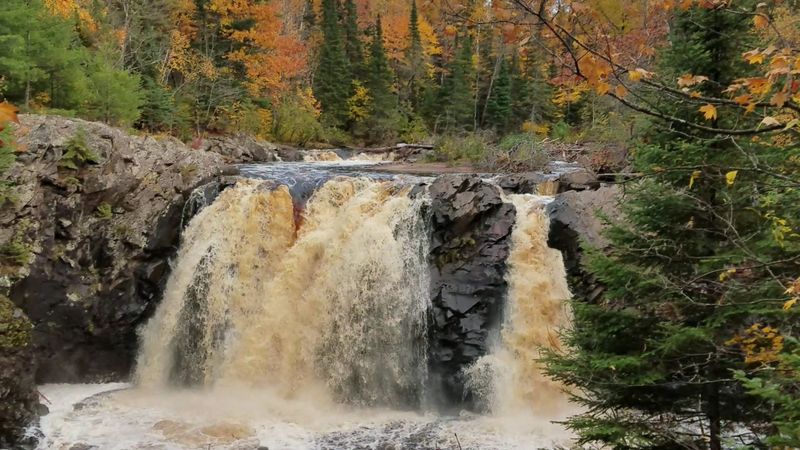
Wisconsin’s tallest waterfall sounds like something that should have its own postcard section in every gift shop in the state.
Big Manitou Falls at Pattison State Park drops 165 feet, making it the fourth-tallest waterfall east of the Rocky Mountains, and somehow it still feels like a discovery when you walk up to it.
The falls thunder over ancient black basalt rock into a misty gorge below, and the sound alone is worth the drive up to Superior.
Standing on the viewing platform, you feel the spray on your face even from a safe distance. It is the kind of waterfall that makes you want to just stand there quietly and absorb it.
The park also has Little Manitou Falls nearby, which is smaller but framed beautifully by forest and easier to access via a short trail.
The Black River runs through both, giving the whole park a wild, untamed feeling that fits perfectly with the northern Wisconsin landscape.
Swimming is allowed at a designated beach on Interfalls Lake, which is a great way to cool off after hiking. The trails here range from easy to moderate and connect the two waterfalls in a satisfying loop.
The park is located at 6294 S State Rd 35 in Superior, right near the Minnesota border. If you are already heading to the Twin Cities, this is absolutely worth a detour south before crossing the state line.
5. Cave Point County Park
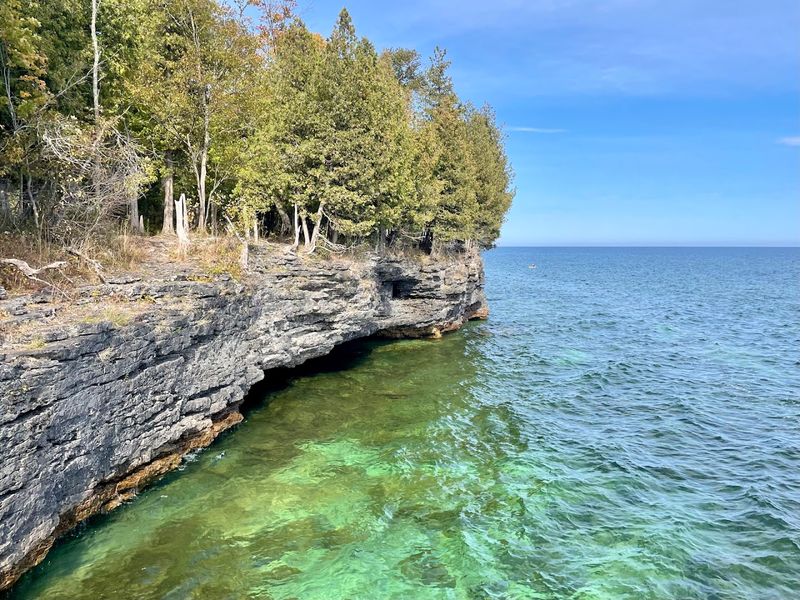
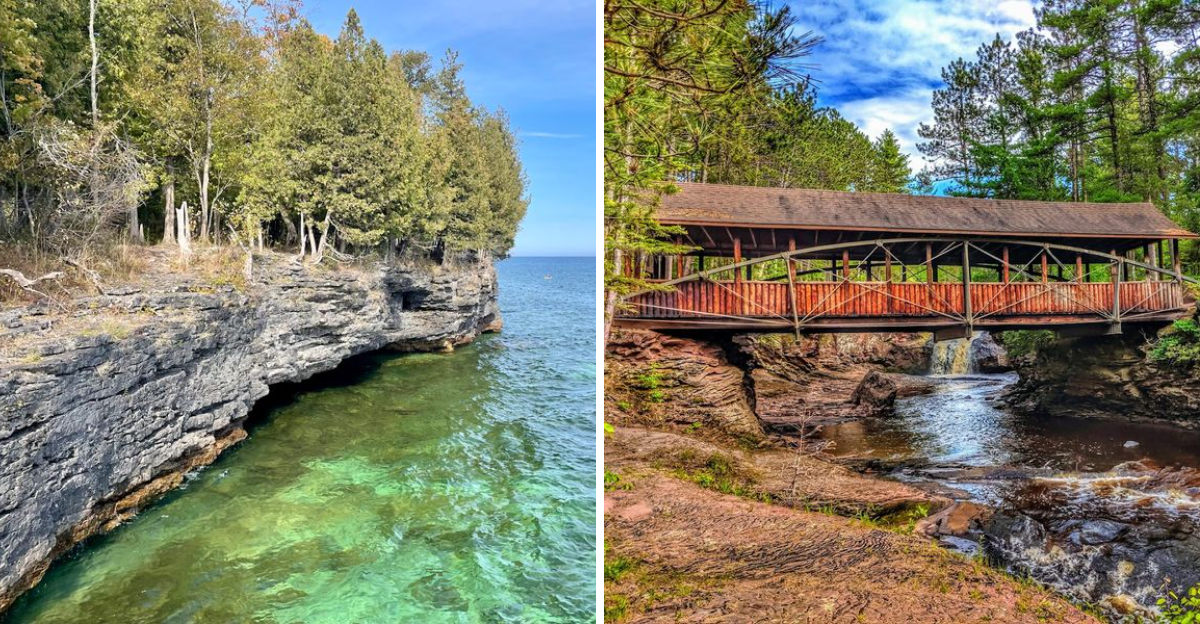
There is a moment at Cave Point County Park when a wave crashes into a limestone cave beneath your feet and the ground actually rumbles.
That is the kind of experience that gets remembered for years, not just filed away in a camera roll.
Located along the Door Peninsula near Sturgeon Bay at 5360 Schauer Rd, Cave Point is a free county park that punches well above its weight in terms of raw natural drama.
The shoreline here is made of ancient limestone carved by Lake Michigan into arches, caves, and jagged ledges that look like something from a fantasy novel.
The best time to visit is during a windy day when the lake is churning. The waves funnel into the caves and shoot upward with a boom that echoes across the bluffs.
It sounds theatrical, but it genuinely happens, and watching it never gets old. Calm days are beautiful too, with crystal-clear water revealing the rocky bottom below.
The park connects to Whitefish Dunes State Park via trail, making for a fantastic half-day adventure that combines dramatic cliffs with sandy beach scenery.
There is no fee to enter, which makes it one of the best free natural experiences in the entire state. Parking is limited, so arriving early on summer weekends is a smart move.
Door County as a whole is worth exploring, and Cave Point is one of its best-kept scenic rewards.
6. Amnicon Falls State Park
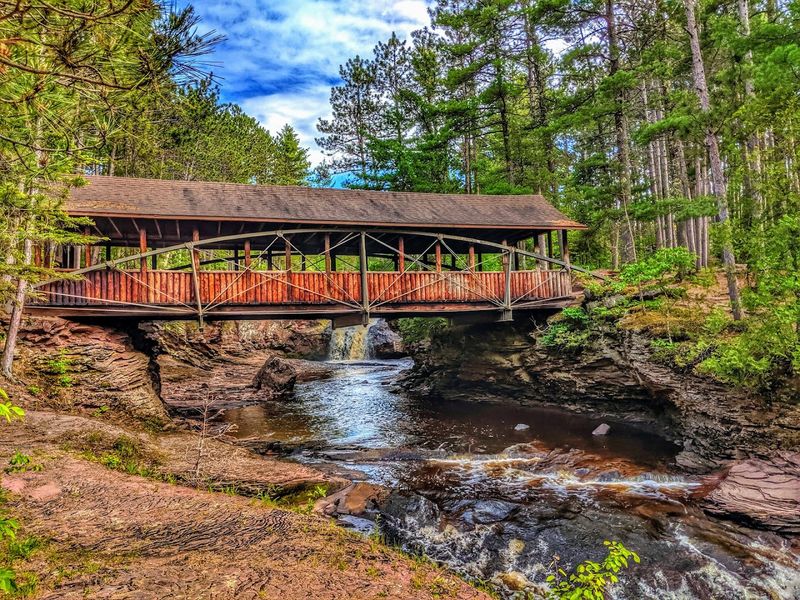
Most waterfall parks give you one good waterfall and call it a day. Amnicon Falls State Park gives you four, a covered bridge, and the kind of peaceful forest setting that makes you want to cancel your afternoon plans and just stay.
The Amnicon River drops through a series of cascades here, each one with its own personality.
Some are wide and rushing, others narrow and forceful, and the red-brown sandstone they pour over gives the whole scene a warm, almost painterly quality.
The water picks up natural tannins from the surrounding forest, turning it a rich amber color that looks wild against the white foam.
The covered bridge crossing the river is one of the most photographed spots in northern Wisconsin, and it earns that attention.
It connects the main park area to an island in the middle of the river where you can stand and watch the falls from multiple angles at once.
Trails here are short and accessible, making this a great stop for families or anyone who wants big scenery without a big hike.
The park sits at 4279 S County Hwy U in South Range, not far from Superior. It is the kind of place that looks like it should be on a postcard but somehow stays under the radar compared to flashier destinations.
Bring a lunch, find a flat rock by the water, and just breathe for a while.
7. Pewit’s Nest State Natural Area
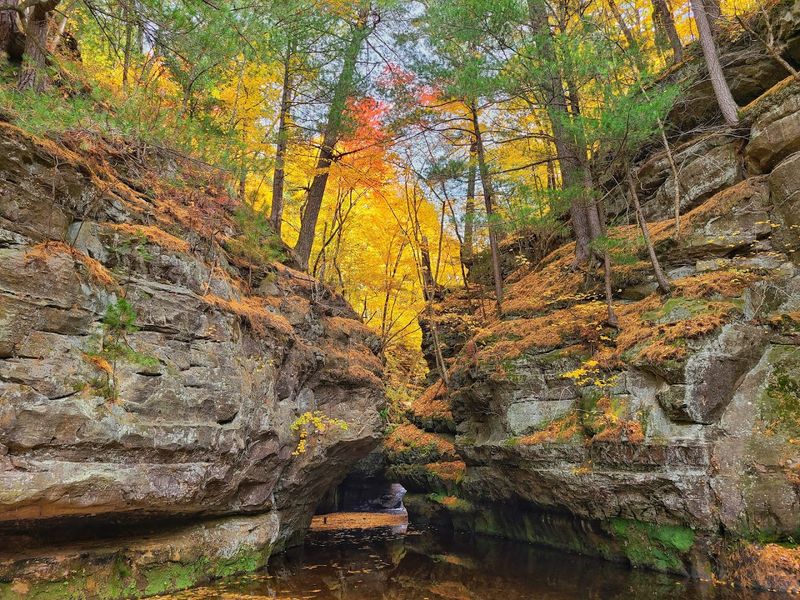
Finding Pewit’s Nest feels like cracking open a geode. From the outside, the surrounding fields and roadside parking give absolutely nothing away.
Then you walk a short trail, peer over the edge, and suddenly there is a dramatic sandstone gorge carved out of the earth like it was kept secret on purpose.
This tiny state natural area near Baraboo on County Rd W packs an extraordinary amount of visual drama into a very small footprint.
Skillet Creek has carved a narrow, winding gorge through the sandstone over thousands of years, creating a series of small waterfalls and plunge pools that feel completely out of scale with the surrounding landscape.
The gorge walls are draped in ferns and mosses year-round, giving it a lush, almost tropical quality that seems impossible in Wisconsin. In spring, the water runs high and fast, filling the gorge with sound.
By midsummer, the pools calm enough that some visitors wade in, though the rocks can be slippery so careful footing matters.
This is not a heavily developed park, which is part of the charm. There are no big visitor centers or gift shops, just a path, a gorge, and that honest feeling of discovering something real.
It is a short stop, maybe 45 minutes round trip, but it is the kind of place that sticks with you long after you leave. Pair it with Devil’s Lake for a full Baraboo-area adventure.
8. Kohler-Andrae State Park
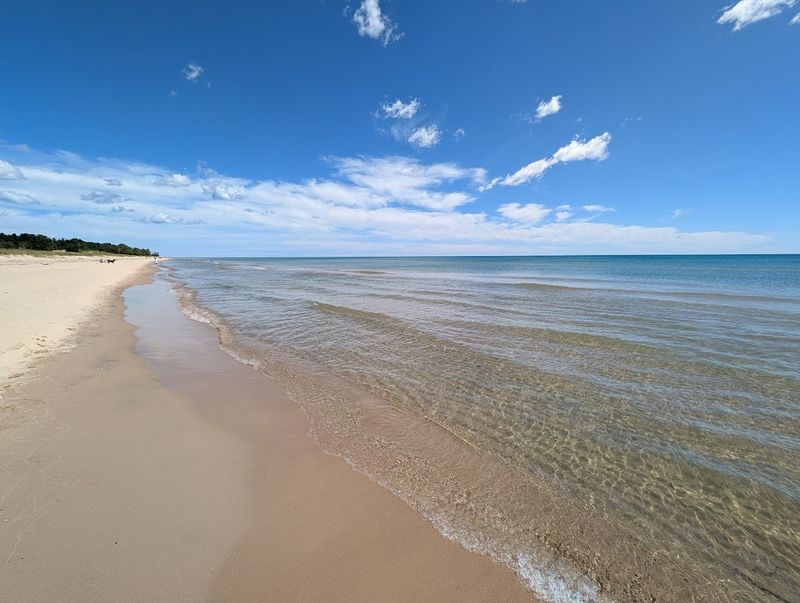
Sand dunes on Lake Michigan in Wisconsin are not something most people put on their radar, but they absolutely should.
Kohler-Andrae State Park in Sheboygan sits right along the lakeshore and offers a stretch of sandy beach that genuinely surprises people who show up expecting just a forest trail.
The dunes here are part of an active dune ecosystem, which means the landscape is constantly shifting and evolving.
Cordgrass and dune plants anchor the sand in places while the wind reshapes everything else, creating an ever-changing shoreline that looks a little different every visit.
A dedicated Dunes Cordwalk winds through the ecosystem and teaches you what is actually happening beneath your feet.
The beach itself stretches for about two miles, and the water is clear and refreshing in summer. Lake Michigan does not warm up quickly, so expect that bracing cold-water shock even in July.
It is part of the experience, and honestly, it wakes you up in the best possible way.
The park also has a nature center with exhibits about the local ecosystem, which is worth a quick stop before heading to the beach.
Camping is available on site, and waking up to Lake Michigan sunrises from a tent is as good as it sounds.
The park address is 1020 Beach Park Ln in Sheboygan. If you assumed Wisconsin beaches were not worth your time, Kohler-Andrae is ready to prove you completely wrong.