11 California Scenic Stops That Look Even Better Once The Light Starts Changing
Golden hour turns California into an attention seeker.
Cliffs start glowing for absolutely no reason. Ocean water suddenly looks expensive. Dust in the air begins contributing artistically.
A scenic stop that felt ordinary at 2 p.m. can look completely transformed once the sun starts sliding lower.
That is why people keep pulling over “for one minute” and somehow staying through sunset.
Changing light keeps rewriting the view. Colors deepen. Roads soften around the edges. Even silence feels different when the sky starts putting on a performance overhead.
Some places were clearly built for this exact moment.
A turnout, beach path, or mountain bend catches the late-day light so perfectly that leaving starts feeling like interrupting something.
The funny part is how quickly it happens.
One minute the drive is moving normally. Next minute everybody is outside the car staring west like the horizon owes them answers.
1. Tunnel View, Yosemite National Park
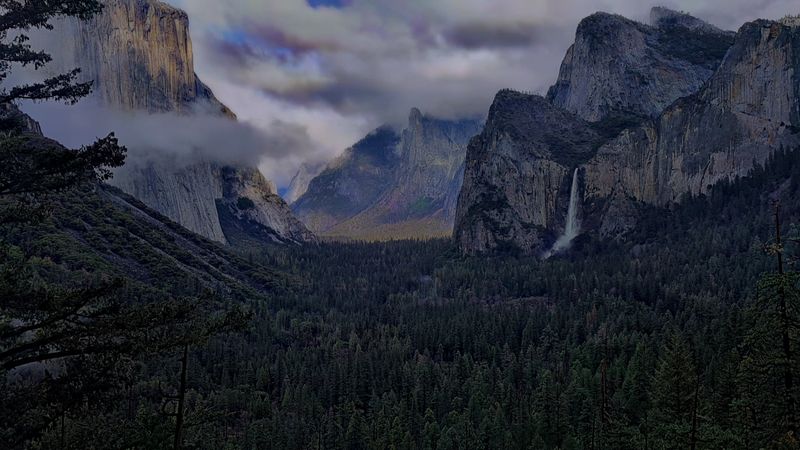
Few overlooks in the country deliver the kind of instant, jaw-dropping reveal that Tunnel View does the moment a visitor steps out of the tunnel on Highway 41.
El Capitan rises on the left, Half Dome anchors the horizon, and Bridalveil Fall threads down the right wall of the valley in one sweeping frame.
The composition feels almost too perfect, like a landscape painting that someone forgot to put a price tag on.
What makes this stop especially worth timing is how quickly the light changes the entire character of the view.
Morning fog sitting in the valley floor burns off slowly, and the cliffs shift from gray to gold to amber as the sun climbs.
Late afternoon reverses that process, and the granite walls start pulling in a warmer, deeper tone that makes everything feel more dimensional.
Parking at Tunnel View can fill up fast on weekends, so arriving early or later in the evening tends to give more room to breathe.
The overlook is paved and accessible, making it a reliable stop for a wide range of visitors. No long hike is needed to get something genuinely memorable from this location.
2. Zabriskie Point, Death Valley National Park
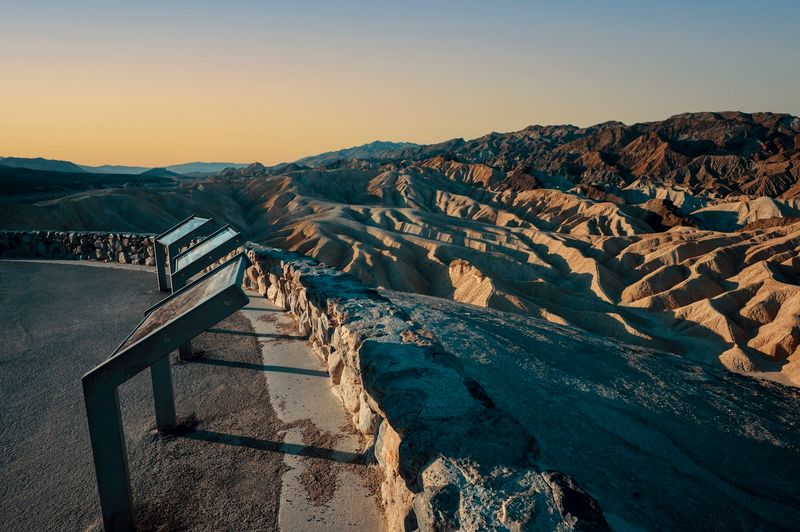
The eroded landscape at Zabriskie Point looks like the earth folded in on itself and then dried out completely, leaving behind ridges, gullies, and color bands that shift dramatically depending on the angle of light.
Sunrise tends to be the most talked-about time to visit, when low rays carve sharp shadows across the badlands and the yellows and oranges of the sediment layers become almost electric.
The effect only lasts for a short window, which is part of what makes it feel special.
Located within Death Valley National Park in California, this overlook sits at a modest elevation with a short paved walk from the parking area to the main viewpoint.
The accessibility makes it popular, but arriving before first light usually means a quieter experience with more room to spread out and watch the transition happen.
Sunset works well too, though the light hits the ridges from a different angle and produces a softer, more muted version of the same scene.
Temperatures in Death Valley can be extreme depending on the season, so checking conditions before visiting is genuinely important rather than optional.
Spring and fall tend to offer the most comfortable window for spending time at the overlook without heat becoming a factor.
3. Dante’s View, Death Valley National Park
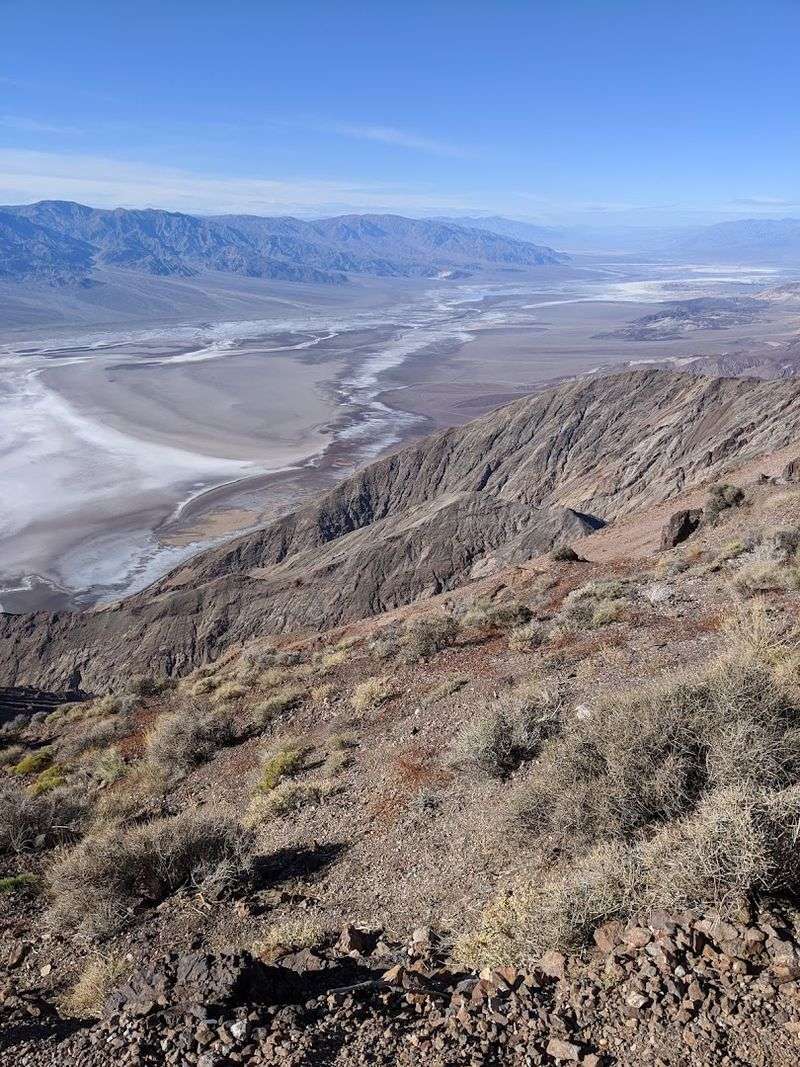
Standing at Dante’s View, the scale of Death Valley becomes genuinely hard to process.
The salt flats of Badwater Basin stretch out nearly 5,000 feet below, and the Panamint Range lines the far horizon in a way that makes the whole scene feel more like a model than a real place.
Late-day light stretches across the valley floor in long, slow waves that shift the color of the salt from white to cream to faint rose as the sun drops.
The road to Dante’s View climbs to about 5,476 feet, which keeps temperatures cooler than the valley floor and makes lingering more comfortable during warmer months.
The parking area sits near the top with a short walk to the main overlook, and there are additional paths along the ridge for those who want to move around and find different angles.
Early morning offers a different kind of drama, with the valley still in shadow while the peaks behind catch the first light.
Clear days tend to produce the most striking views, but partly cloudy skies can add movement and contrast that flat sunshine cannot.
Checking a weather forecast before making the drive up is worth the extra minute, especially if the goal is catching something memorable rather than just arriving and leaving.
4. Golden Gate Overlook, San Francisco
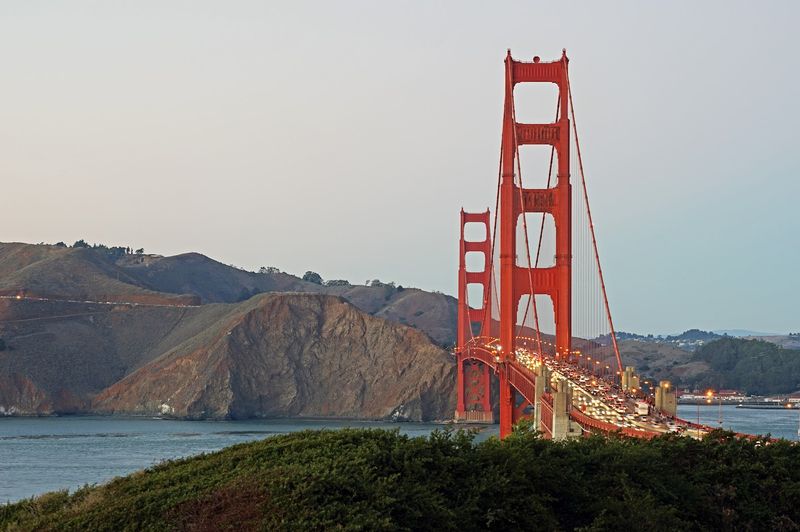
Inside the Presidio in San Francisco, the Golden Gate Overlook sits on coastal bluffs that frame the bridge in a way that feels more intimate than the larger, more crowded viewpoints farther away.
The bridge, the bay, and the hills of Marin County all line up from this spot in a composition that shifts noticeably as the sun drops toward the Pacific.
On clear evenings, the warm light catches the International Orange paint of the towers and turns the whole structure into something that looks almost backlit.
Fog is a regular presence here, and it adds a different kind of visual interest rather than ruining the experience.
Some evenings the fog sits low over the water and the bridge towers rise through it cleanly, which tends to produce a more dramatic silhouette than a fully clear sky.
The overlook is accessible by car with parking nearby, and the bluff walk is relatively flat and easy to navigate.
Weekends draw larger crowds, particularly around golden hour, so arriving a bit early to claim a good spot along the railing tends to pay off.
The combination of coastal wind, changing light, and one of the most recognizable structures in the country makes this a stop that holds up regardless of how many times it has been visited before.
5. Sunset Cliffs Natural Park, San Diego
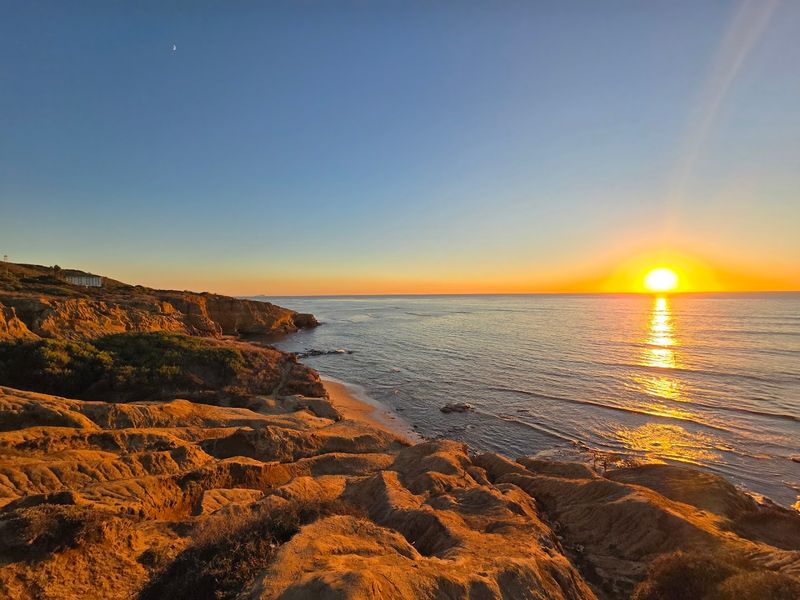
The name does most of the advertising here, and the location genuinely delivers on what it promises.
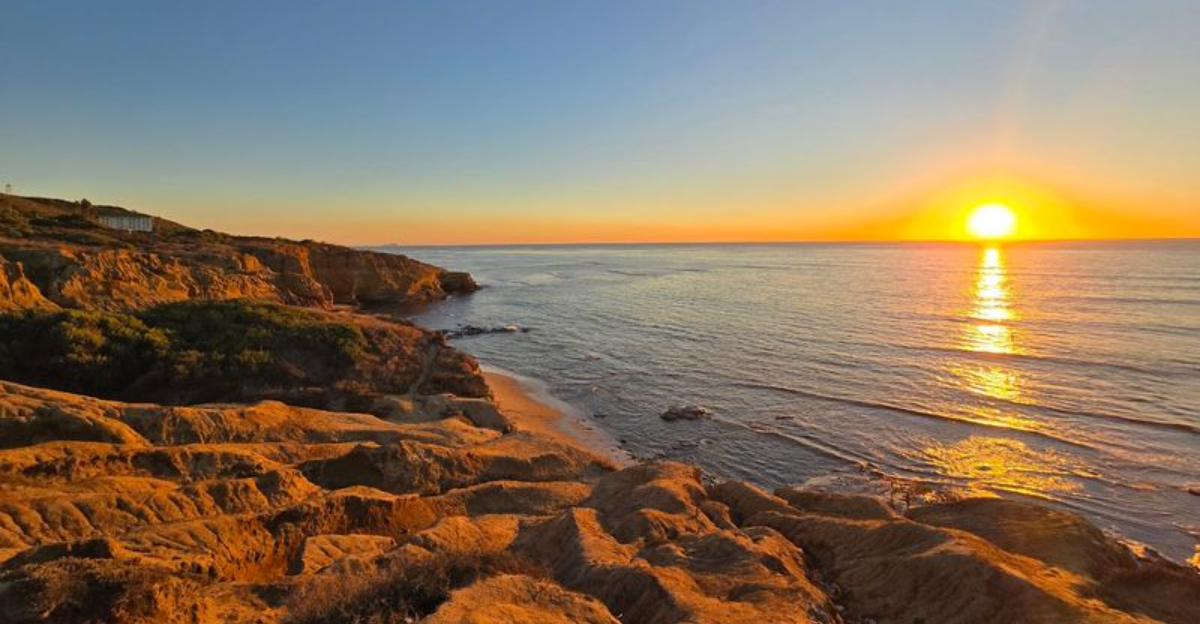
Stretched along the Pacific edge of Point Loma in San Diego, Sunset Cliffs Natural Park runs for about 68 acres of eroded sandstone cliffs and churning surf that catches evening light in a way that feels almost theatrical.
The cliffs glow a deep amber as the sun drops, and the water below shifts between dark teal and bright copper depending on the angle.
Walking the bluff path gives a series of changing perspectives rather than one static viewpoint, which makes the park feel more dynamic than a single overlook would.
Some sections have informal stairways leading down closer to the water, though conditions can be slippery and the surf unpredictable, so caution is worth keeping in mind.
The park is free to access and open to the public, making it an easy stop to build into an afternoon in San Diego.
Weekends tend to bring larger groups, especially during summer, but the length of the bluff path means there is usually room to find a quieter section.
Arriving around an hour before sunset gives enough time to walk the path and settle into a good spot before the light starts doing its most interesting work.
6. Moro Rock, Sequoia National Park
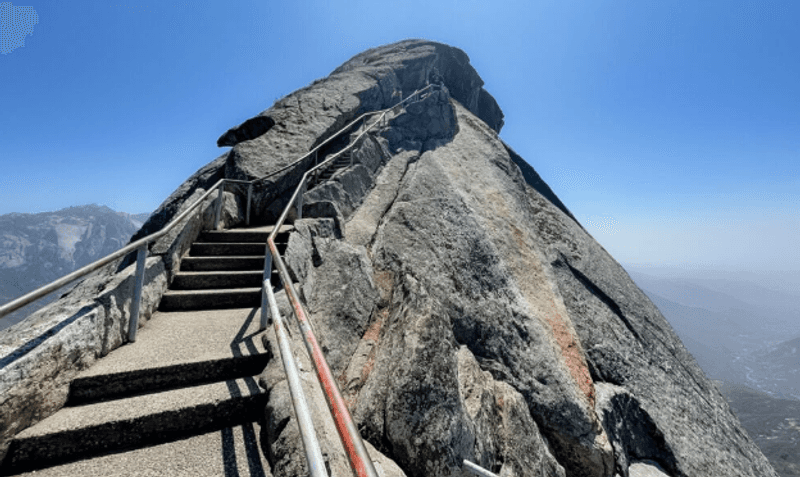
Rising sharply from the surrounding forest, Moro Rock is a granite dome that rewards the short but steep staircase climb with a panoramic Sierra Nevada view that feels genuinely earned.
The summit sits at around 6,725 feet, and on clear days the view stretches across ridgeline after ridgeline until the mountains blur into a soft blue haze at the horizon.
Late afternoon is when the layering effect becomes most visible, with each successive range dropping into a slightly different shade of blue and purple.
The staircase to the top is paved with handrails along most of the route, making it accessible to a wider range of visitors than a typical backcountry hike.
The full climb covers about 300 feet of elevation gain in a quarter mile, which is noticeable but manageable for most people with a reasonable pace.
Sequoia National Park in California draws significant crowds during summer, so weekday visits or early morning timing tend to result in a less congested experience at the top.
Slanting afternoon light hits the granite of the dome itself and the surrounding peaks in a way that adds texture and depth that flat midday sun simply does not produce.
Staying near the summit for thirty minutes or more as the light shifts tends to show the view at its most expressive rather than catching just one static moment.
7. Sunset Rock, Sequoia National Park
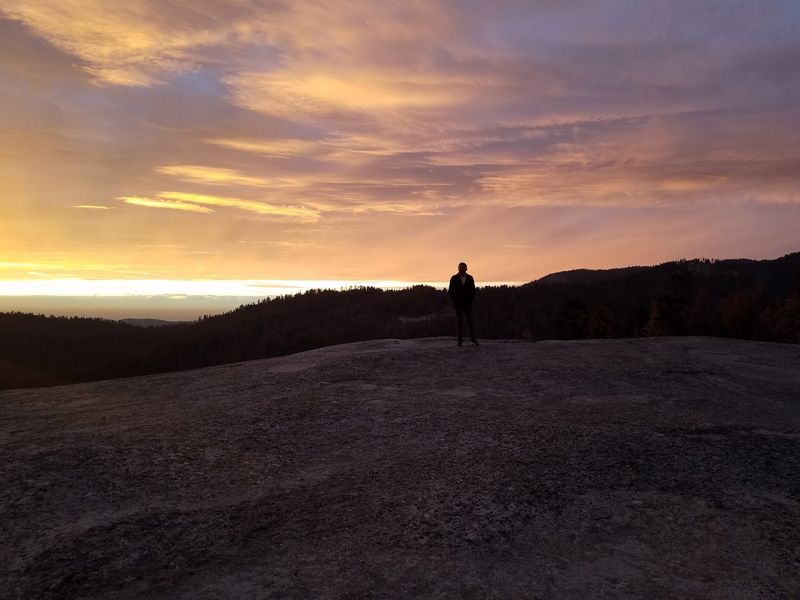
Shorter, quieter, and less crowded than Moro Rock, Sunset Rock sits in the Giant Forest area of Sequoia National Park and has been specifically promoted by the National Park Service as a sunset-viewing destination.
The rock itself is a broad, flat granite surface that opens up to wide Sierra views without requiring the same kind of physical effort as other overlooks in the park.
The low-angle evening light catches the granite surface and the surrounding peaks in a way that feels relaxed rather than dramatic.
Getting to Sunset Rock involves a relatively easy one-mile round-trip walk from the Giant Forest Museum area, which makes it accessible for families, older visitors, and anyone who wants a scenic payoff without a strenuous hike.
The trail passes through the Giant Forest, so the walk itself offers its own kind of atmosphere among towering sequoias before opening onto the rock.
Arriving around forty-five minutes before sunset gives enough time to settle in before the light starts shifting.
Because the spot is less publicized than Moro Rock, the crowd level tends to stay lower even on busy park days.
The combination of easy access, genuine National Park Service recognition as a sunset spot, and the surrounding sequoia forest makes this a stop worth including.
8. Glacier Point, Yosemite National Park
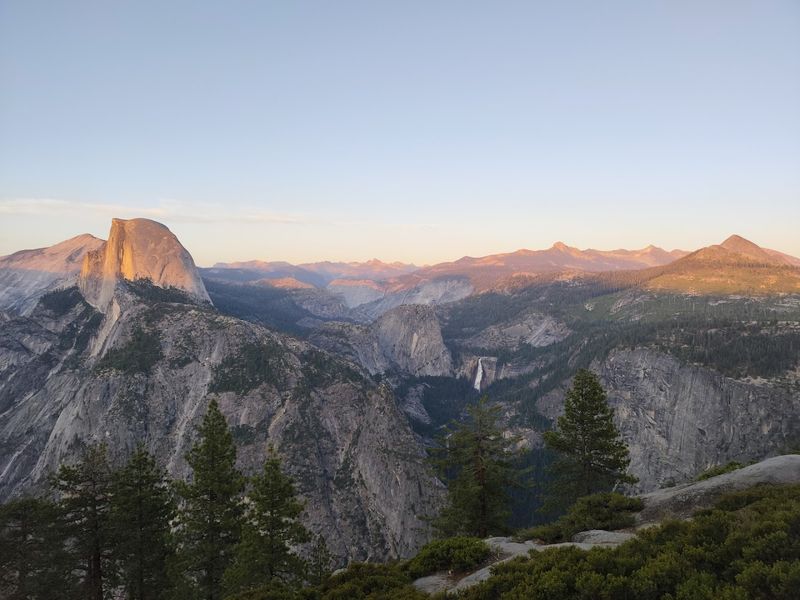
Half Dome looks completely different from Glacier Point than it does from the valley floor, and that shift in perspective is part of what makes the overlook so worthwhile.
From about 7,214 feet up, the view takes in Half Dome straight ahead, Yosemite Valley below, and the High Sierra stretching out to the east in a single panoramic sweep.
Late afternoon light hits the granite faces at an angle that makes the stone appear to warm from within rather than just reflect the sun.
Glacier Point Road is typically open from late spring through early fall, with exact dates depending on snowpack and conditions each year.
The overlook itself has a paved viewing area with railings and is accessible by car when the road is open, though shuttle options from the valley are also available.
Sunset draws the largest crowds, so arriving an hour or more before peak light gives a better chance of finding space at the railing without waiting.
The transition from late afternoon to dusk at Glacier Point tends to move quickly, with the color of the granite shifting through gold, amber, and rose in a span of about thirty minutes.
Staying through that full window rather than leaving at the first sign of good light tends to produce a more complete and satisfying experience of what the overlook can offer.
9. Bixby Creek Bridge, Big Sur
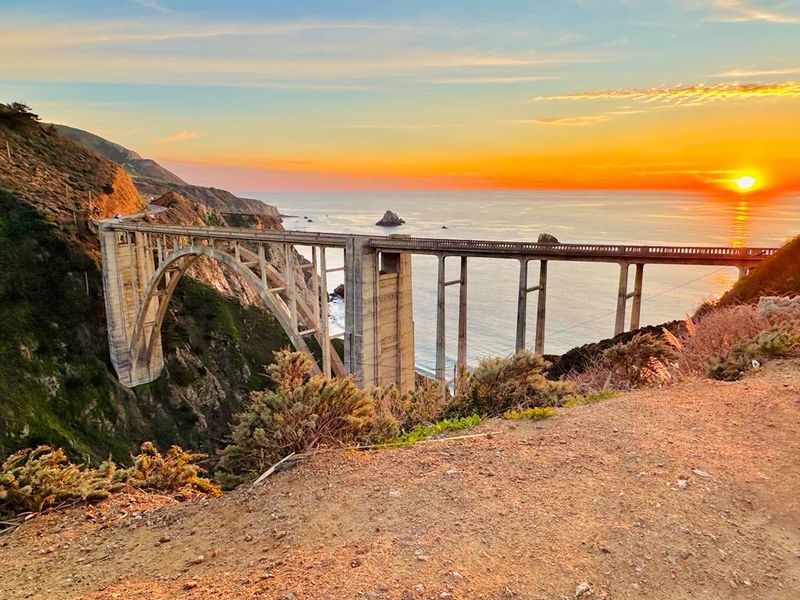
Bixby Creek Bridge sits on Highway 1 in Big Sur and has become one of the most photographed structures on the California coast, and for reasons that hold up under scrutiny.
The arch bridge spans a deep coastal canyon with the Pacific stretching out behind it, and the combination of sea cliffs, ocean, and structure creates a layered composition that responds strongly to shifting light.
Fog can roll in and completely reframe the scene in minutes, turning a bright coastal view into something moodier and more atmospheric.
The most accessible viewpoint is from a pullout on the north side of the bridge along Highway 1, which requires no hiking and offers a clear angle on the full span.
Golden hour from this pullout tends to produce the most dramatic results, especially when coastal haze softens the edges of the cliffs and the bridge casts a long shadow down into the canyon.
Parking at the pullout is limited, so arriving early or during off-peak hours tends to work better than trying to time a stop during peak weekend traffic.
Highway 1 through Big Sur can be subject to closures due to slides or road damage, so checking current road conditions before making the drive is a practical step worth taking.
When the road is open, the bridge stop pairs naturally with other Big Sur viewpoints along the same stretch of coastline.
10. Point Reyes Lighthouse, Point Reyes National Seashore
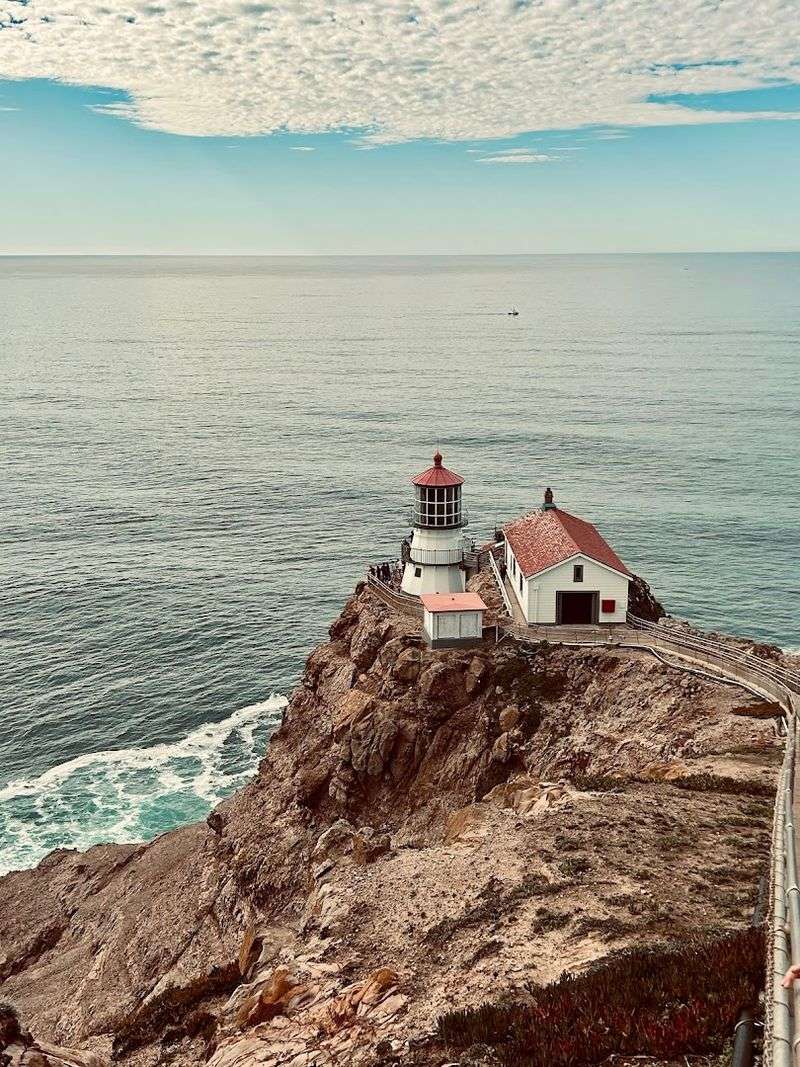
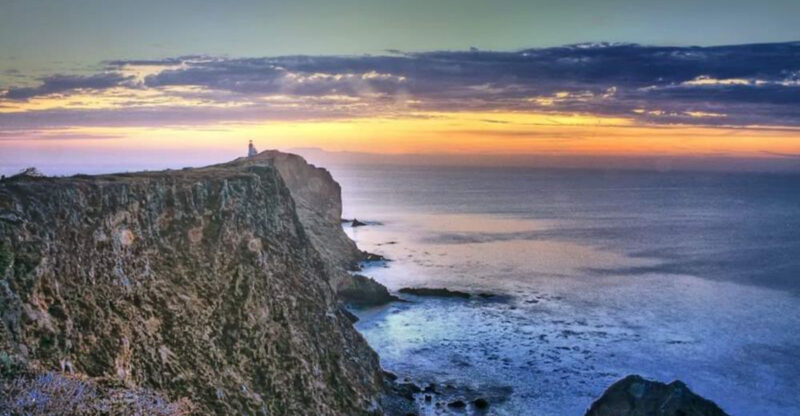
Perched at the tip of the Point Reyes Peninsula about 300 steps below the headland, the Point Reyes Lighthouse sits in one of the windiest and foggiest spots on the entire California coast.
That combination of weather and geography gives the location a raw, elemental quality that clear-sky viewpoints simply do not have.
Late-day light on a clear evening makes the ocean look enormous, while foggy evenings wrap the whole place in a gray softness that feels completely different but equally worth experiencing.
The lighthouse is managed by Point Reyes National Seashore and is open to visitors on specific days and hours that can vary seasonally, so checking the current schedule before visiting is an important step.
The staircase down to the lighthouse is steep and can be slippery in wet or windy conditions, which are common at this location regardless of the season.
Whale migration viewing is also popular from this headland during winter and spring months, adding another layer of interest to the visit.
The drive out to the lighthouse from the Bear Valley Visitor Center covers about 22 miles through open ranchland and coastal scrub.
Arriving with enough time to walk down to the lighthouse and back before the light fully fades tends to make the most of the visit.
11. Mono Lake South Tufa, Lee Vining
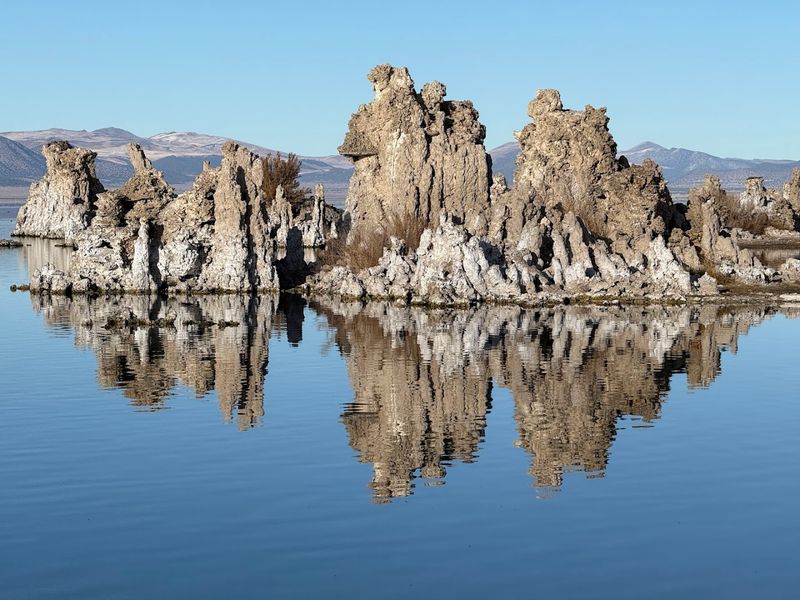
The tufa towers at Mono Lake look strange in full daylight, but changing light turns them into something that feels closer to sculpture than geology.
These calcium carbonate formations rise from the lake surface in irregular columns and clusters, and the way sunrise or sunset hits them differently than it hits the water and the sky behind creates a layered visual effect.
The stillness of the lake on calm mornings means the towers and the sky above them often reflect almost perfectly in the water below.
The South Tufa area near Lee Vining in California is managed by the U.S. Forest Service and charges a small day-use fee for access.
A short, flat trail loops through the tufa formations along the lakeshore, making the walk easy for most visitors and accessible without specialized gear.
Sunrise tends to produce the most dramatic color combinations, particularly when clouds are present to catch the early light and scatter it across the lake.
Mono Lake sits at about 6,380 feet in elevation, which means temperatures can drop quickly after sunset even in summer, so bringing an extra layer is a practical consideration rather than an overcaution.
The area is a significant stopover for migratory birds, and the combination of geology, light, and wildlife activity gives the location a depth that rewards spending more than just a few minutes there.