The Last Train Station Of Its Kind In North Carolina Is More Beautiful Than It Looks
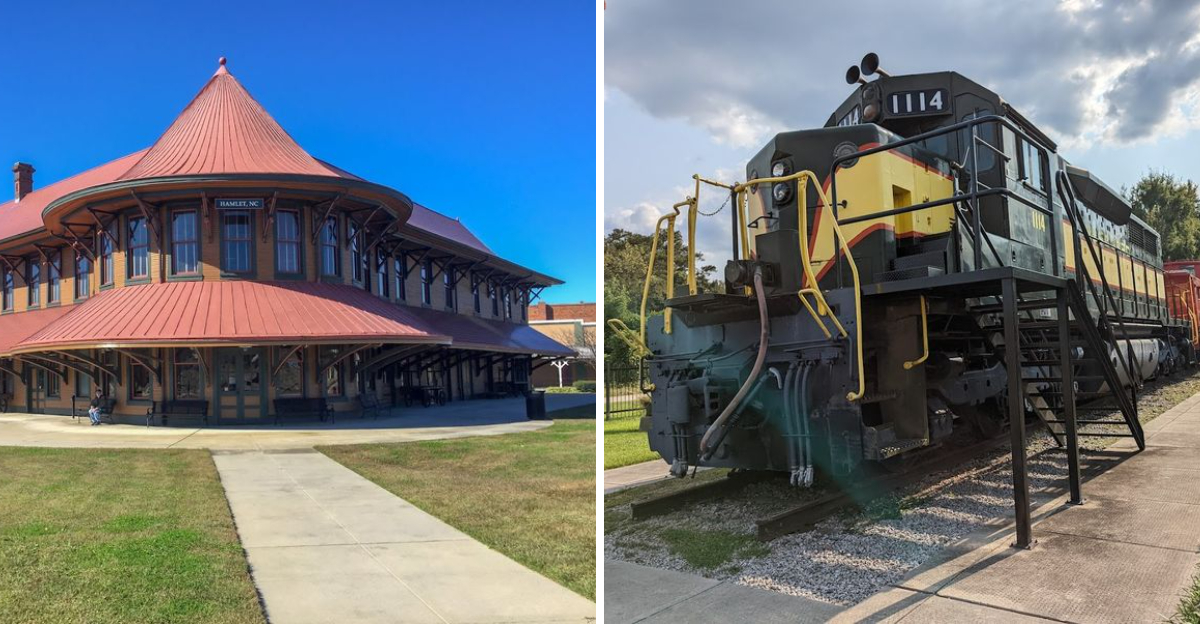
A train station should not be this photogenic unless it is fully prepared for people to stop walking and say, “Wait, this is still real?”
North Carolina has a restored Victorian Queen Anne depot that looks like railroad history put on its best outfit and decided to keep working.
Built in 1900, the landmark carries serious old-rail charm without feeling frozen behind glass.
Trains still come through, which makes the whole place feel alive instead of merely preserved.
Free museum spaces add another reason to linger, especially for anyone who enjoys history with creaky floors and excellent architectural drama.
Hidden gems are fun, but this one arrives with tracks, stories, and a whistle-worthy glow-up.
Hamlet’s Queen Anne Depot Still Knows How To Stop People Mid-Walk
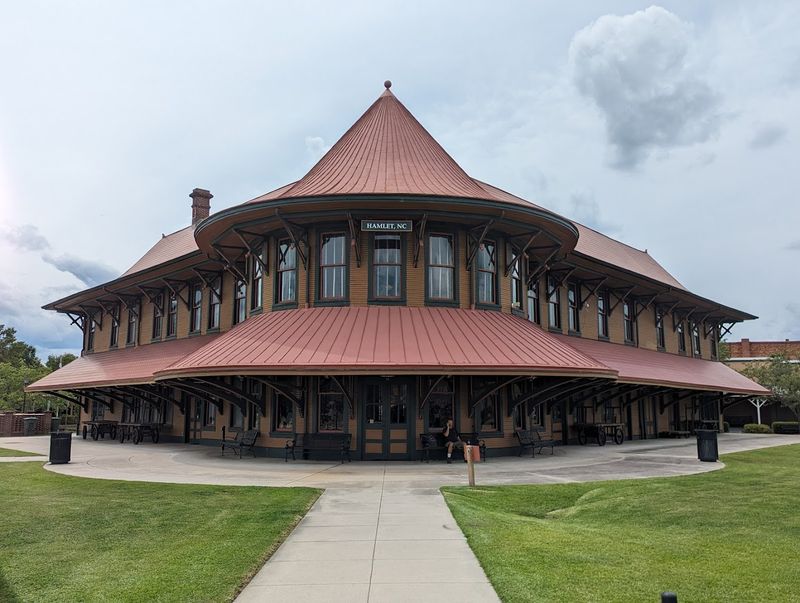
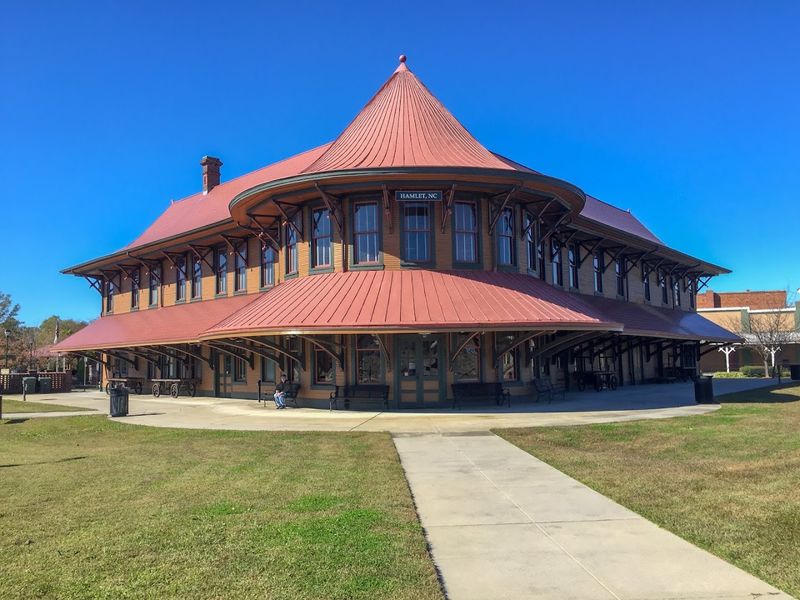
Few railroad buildings in North Carolina make a first impression quite like this restored depot, because its beauty does not arrive politely.
Brick tones, decorative woodwork, roofline movement, porch details, and Queen Anne personality all meet in one building that feels unusually expressive for a transportation stop.
Built in 1900 for the Seaboard Air Line Railroad, the depot once helped anchor Hamlet’s role as the “Hub of the Seaboard Railroad,” when the town saw 28 to 32 passenger trains daily.
Instead of looking like a plain utility structure, the station reflects an era when railroads wanted important depots to project confidence, civic pride, and permanence.
Photographers can circle the grounds and keep finding new angles, since the building’s asymmetry, trim, windows, and roof shapes change the view from every side. Travelers coming through town may expect a simple historic marker and end up slowing down for a full look.
Restoration work has helped the building feel cared for rather than frozen, which gives the place warmth. For anyone planning the visit, Hamlet Depot & Museums stands at 2 Main St., Hamlet, NC 28345.
A 1900 Train Station With More Detail Than The Title Lets On
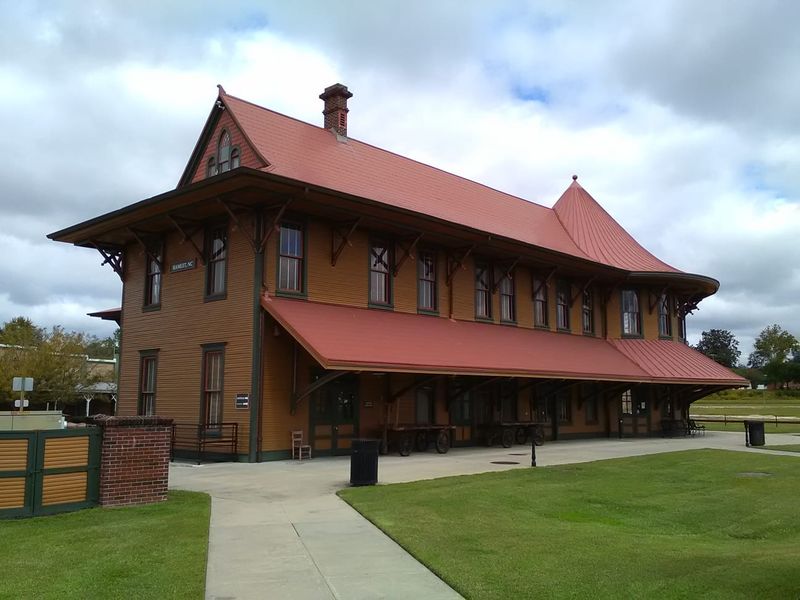
Closer inspection makes the depot even more impressive, because the building rewards anyone willing to pause instead of snapping one quick photo and leaving.
Decorative trim, layered roof forms, varied textures, and a strong corner presence show why the station is repeatedly described as North Carolina’s only Victorian Queen Anne style railroad station.
That claim gives the building more than postcard value. It marks the depot as a rare surviving example of railroad architecture tied to a specific moment in design history and rail expansion.
Seaboard Air Line Railroad built the station as both a passenger depot and division headquarters, which helps explain the level of care invested in its appearance.
Functional buildings can still be beautiful when a town depends on them, and Hamlet’s station proves the point with every bracket, window, and roofline.
Walking around the exterior before going inside is worth the time, because the museum experience begins before the first exhibit case appears. Even visitors with no deep railroad knowledge can read the building’s importance from the outside.
Hamlet’s depot does not need dramatic language to feel special; its craftsmanship makes the case on its own.
North Carolina’s Only Victorian Queen Anne Train Station
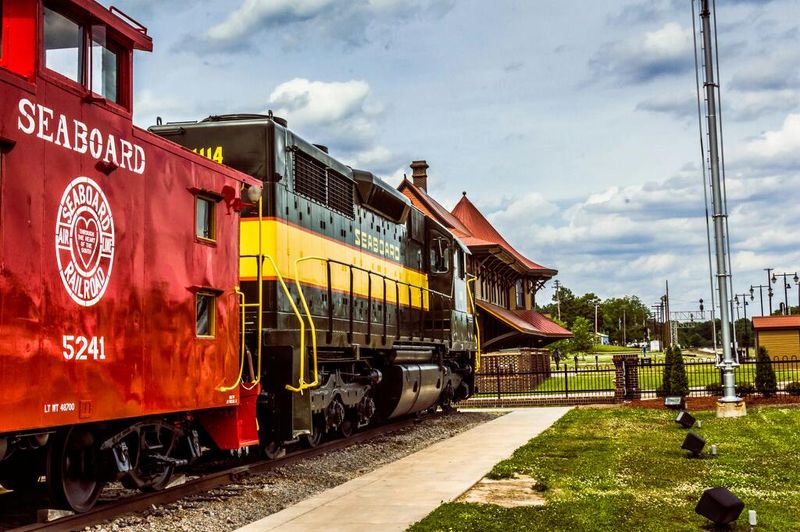
One-of-a-kind claims can sound risky, but the Hamlet Depot’s architectural distinction is supported by Amtrak’s Great American Stations profile, which identifies it as the only Victorian Queen Anne style station in North Carolina. That rarity changes how the visit lands.
Instead of seeing another restored small-town depot, travelers are standing in front of a building type that has almost disappeared from the state’s rail landscape.
Queen Anne design often favors asymmetry, lively rooflines, decorative surfaces, and a sense of motion, all qualities that fit Hamlet’s station especially well.
Rail history adds another layer, since the depot was constructed where important lines met and later became part of the town’s larger historic district. Many old stations have been moved, repurposed, simplified, or lost entirely.
Hamlet’s survived with enough character intact to remain both useful and visually memorable. Architecture students, history buffs, train watchers, and casual weekend explorers can each find a different reason to linger.
Rare does not always mean beautiful, but in this case the two ideas line up neatly. For visitors who want to confirm access before driving in, the museum phone number is listed as 910-582-0603.
The Restored Depot That Turned A Railroad Town Into A Time Capsule
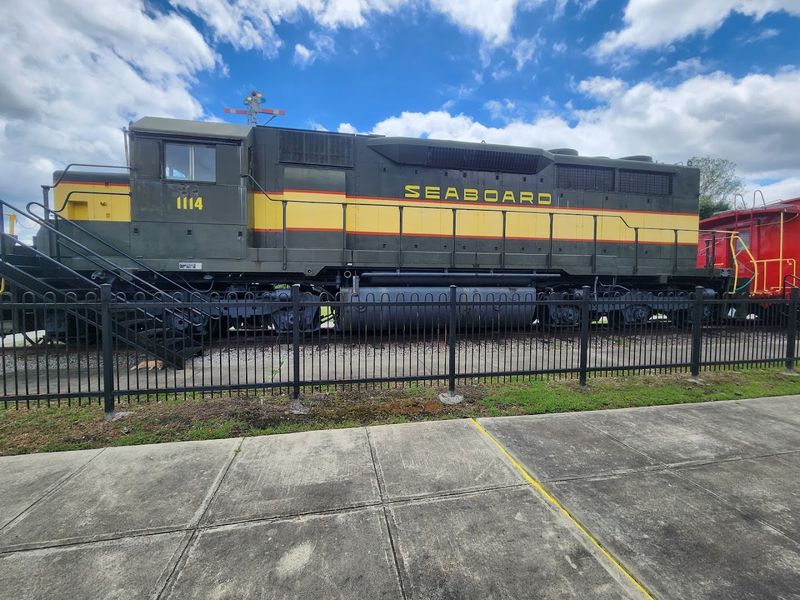
Railroad history feels more vivid in Hamlet because the depot is not sitting alone without context. During its busiest era, the town earned its “Hub of the Seaboard” identity through heavy passenger and freight activity, and the depot served that larger system rather than a minor local route.
Restoration brought the building back into public life while allowing it to function as a museum. The visit feels less like viewing a rescued artifact and more like stepping into a town that remembers why the rails mattered.
Exhibits inside connect visitors with Seaboard Air Line and Seaboard Coast Line railroad history, using artifacts, visual displays, oral histories, and interactive elements to explain Hamlet’s role.
Careful preservation also lets the building itself become part of the storytelling. Ticket areas, waiting spaces, rail memorabilia, and period details help visitors understand how train travel shaped local routines.
Rather than presenting history as distant or dusty, the depot keeps it close to the tracks. A restored station can sometimes feel decorative, but this one still carries the rhythm of a working railroad town.
Museum Rooms Filled With Hamlet’s Seaboard Railroad Past
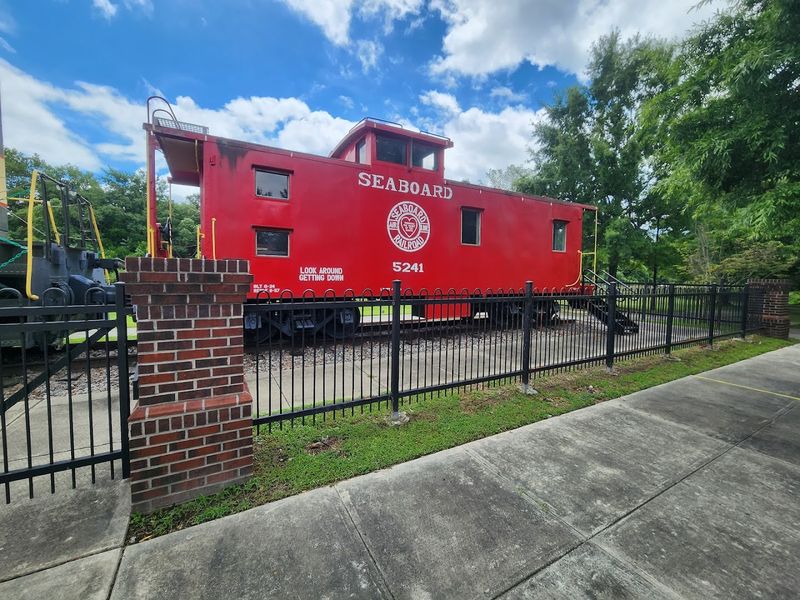
Inside the depot, Hamlet’s railroad story becomes more human. Photographs, artifacts, communications equipment, railway displays, and local materials help explain how the Seaboard lines shaped work, travel, and identity in this part of North Carolina.
Official and tourism sources describe the museum as home to hands-on exhibits, visual displays, interactive consoles, oral histories, a model railroad, and collections tied to the Seaboard Railroad and Hamlet.
That variety matters because rail history can become abstract if it is reduced to route names and dates.
Tools, signs, equipment, photographs, and personal stories make it easier to picture the people who sold tickets, handled baggage, maintained lines, waited for trains, or worked long days around the depot.
Free admission is widely listed for the railroad museum experience, with donations welcomed, which makes the stop especially approachable for families and budget-minded travelers.
Current chamber information lists hours as Monday through Friday from 8 a.m. to 5 p.m. and Saturday and Sunday from 1 to 5 p.m. Anyone planning around a holiday or special event should call ahead, since small museum schedules can shift.
Model Trains Recreate The Town’s 1950s Rail-Yard Era
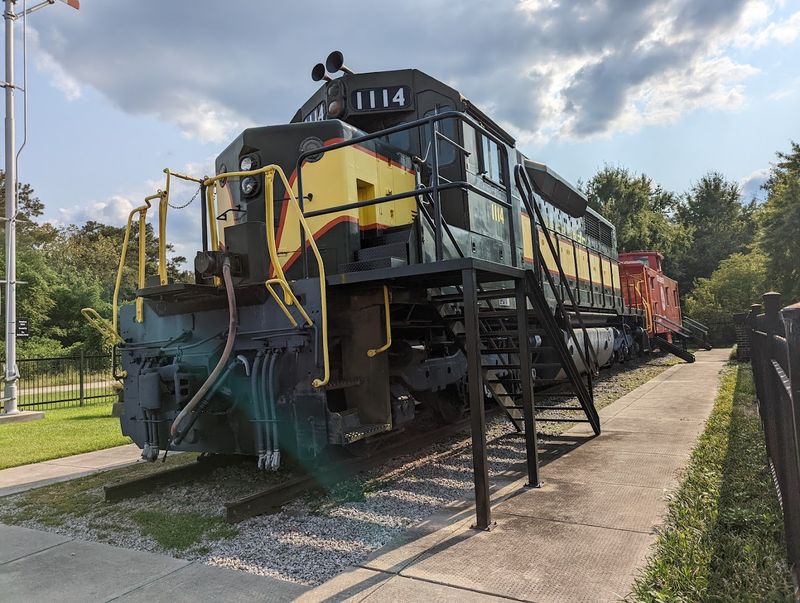
Downstairs and nearby museum spaces help turn the visit into more than a look at old walls.
Model railroad displays are among the features most likely to catch younger visitors first, but adults often linger just as long because miniature rail worlds have a sneaky way of making history feel alive.
Museum descriptions and visitor resources mention model railroad exhibits connected to Hamlet’s depot and transportation museum experience, including displays that help show the town’s railroading past in scaled detail.
Instead of asking visitors to imagine the old rail yard from a paragraph on a panel, these models offer a more visual way to understand how tracks, buildings, locomotives, and movement once organized the town.
Tiny structures and trains can make the scale of Hamlet’s former railroad activity easier to grasp, especially for children who learn best by seeing. Interactive elements also keep the museum from feeling too still.
A historic depot already has atmosphere, but a model railroad adds motion, surprise, and a little bit of wonder. For families, this part of the experience can turn the stop from “educational” into genuinely fun without losing its historical purpose.
An Active Amtrak Stop Inside A Historic Landmark
Many preserved depots have become restaurants, offices, visitor centers, or quiet museum spaces, but Hamlet’s station still keeps a direct connection to passenger rail.
Visit North Carolina describes the depot as both an active Amtrak stop and a museum, while NC By Train lists Hamlet station at 2 Main St. as an unattended station.
That active status gives the building a different energy than a fully retired landmark. Modern rail service beside a 1900 depot creates an appealing contrast, especially when passengers, train sounds, and museum exhibits all occupy the same historic setting.
Amtrak information has changed in recent years, with the former Silver Star service becoming part of the Floridian route in 2024, so current schedules should be checked before planning a train-watching visit.
Even without boarding a train, travelers can appreciate the layered feeling of a place that still participates in the system it explains.
History museums often ask visitors to look backward. Hamlet Depot does that, but it also reminds them that railroading has not fully left the scene.
For a station this handsome, ongoing use feels like the best possible encore.
The Railroad “Diamond” Still Brings Real Train-Watching Moments
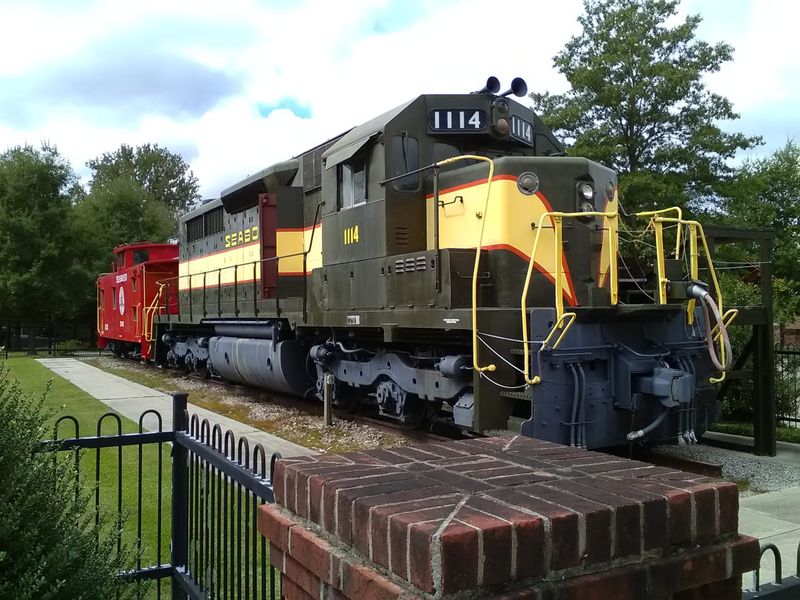
Railroad fans do not have to rely only on museum cases here, because Hamlet’s rail diamond gives the town an active backdrop.
Historic rail summaries explain that the depot was originally built at the crossing of major rail lines, and later renovation work moved the structure to a safer spot near another corner of the rail diamond.
That crossing helped shape Hamlet’s strategic importance and still gives visitors a chance to experience real train movement around the historic district. Freight trains can bring sound, vibration, and scale to the visit in a way no static exhibit can fully duplicate.
Across the area, railroad-themed stops deepen the experience, including the Tornado Locomotive Building and the National Railroad Museum & Hall of Fame. Both are included on Visit North Carolina’s Hamlet railroad itinerary.
Waiting for a train can become part of the fun, especially for travelers who enjoy patient observation more than rushed sightseeing.
One moment, the square feels calm. Next, the rails begin to rumble and the town’s old identity comes rushing back into the present.
Hamlet works best when visitors give themselves time for both the museum and the tracks.