A Colorful North Carolina Mural Trail Turns An Ordinary Walk Into A Free Art Tour
Psst, yes, you on the sidewalk.
Do not pretend you were just walking by, because I saw you slow down the second my colors started showing off. I am not some boring wall minding its business.
I have paint, personality, and enough attitude to make plain brick feel embarrassed.
North Carolina gave me a street to wake up, so naturally I am calling people over like an outdoor art exhibit with excellent gossip.
Come closer, take the photo, and act like you meant to find me.
Keep wandering after that, because my painted neighbors are just as nosy and absolutely waiting for their turn.
Asheville Turns A Regular Sidewalk Into A Free Art Walk
Starting a walk through South Slope can feel ordinary for about three seconds, then the walls begin interrupting your plans.
The South Slope Mural Trail works because it turns public streets into a self-guided gallery. Visitors can move at their own pace, stop when something catches their eye, and keep going without checking a schedule.
Explore Asheville describes the route as a self-guided tour of the South Slope cultural district, built to highlight the creativity of the city’s mural scene. That free, open format matters.
Nobody needs a ticket, a guide, or a timed entry to enjoy the art. A visitor can begin near the 40 Coxe Avenue public parking deck, wander through nearby streets, and let color lead the way from wall to wall.
South Slope’s murals do not feel sealed away from daily life, either. They sit beside sidewalks, local businesses, alleys, and working streets, which makes the experience feel less like a formal exhibition and more like Asheville casually showing off its imagination in public.
Every Turn Adds Another Burst Of Color To The Route
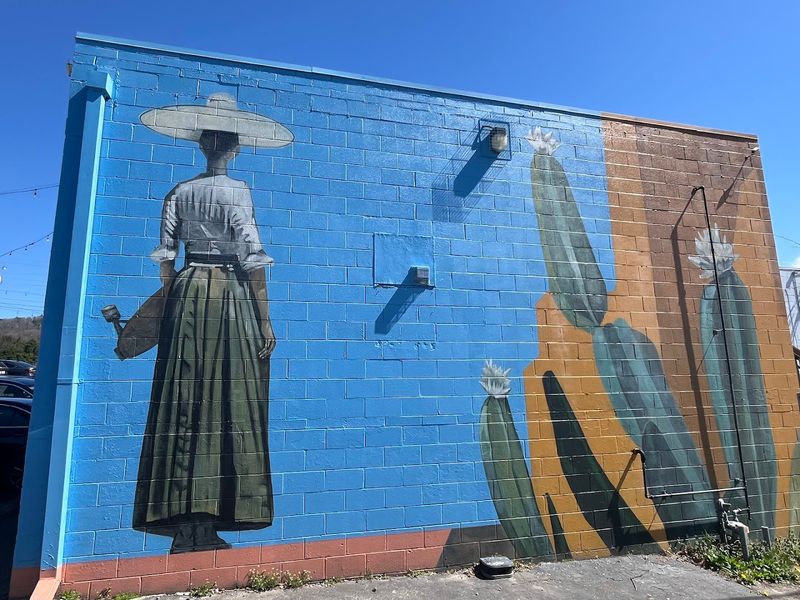
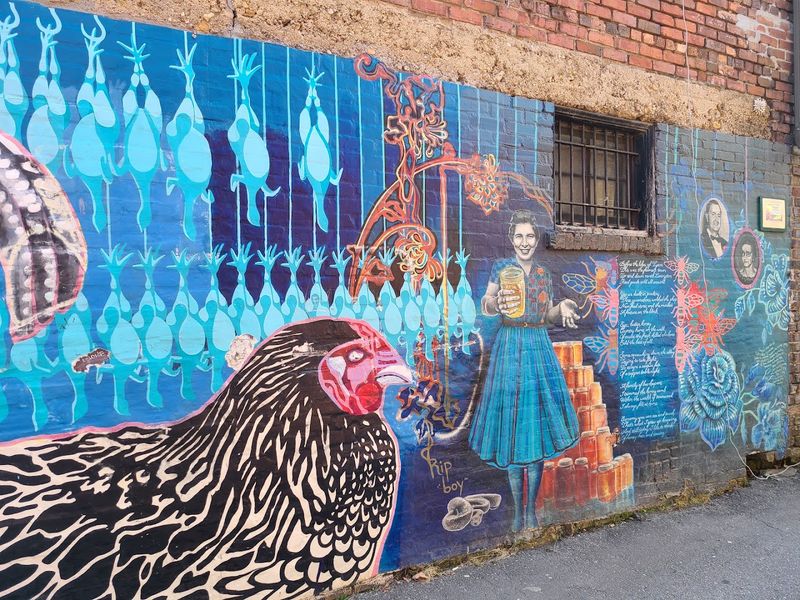
Around each corner, the trail changes mood just enough to keep the walk from becoming predictable. A large building-side mural may set the tone on one block, while a smaller piece placed near a doorway or passageway steals attention on the next.
That variety is one reason Asheville’s public art rewards slow walking. The city’s mural map highlights multiple murals across downtown, and the South Slope route gives visitors a concentrated way to explore that creative spread without turning the day into a complicated scavenger hunt.
Artists draw from many influences, including local history, mountain imagery, neighborhood identity, bold lettering, and contemporary street-art styles, so the walls never feel like copies of one another.
Some pieces work like visual landmarks, while others feel more like discoveries made by paying attention.
Returning later can change the experience, too, because public art districts often evolve as walls are repainted, restored, or joined by new work. A single walk may introduce the trail, but repeated visits can reveal details that went unnoticed the first time.
South Slope’s Walls Make The First Block Feel Like A Gallery
Within a few blocks, South Slope starts making a strong argument that a gallery does not always need a roof. Walls, storefront edges, alley surfaces, and large exterior spaces give artists room to work at a scale that indoor canvases rarely allow.
The district’s industrial character helps the murals feel especially natural because painted brick and concrete fit the neighborhood’s older working texture.
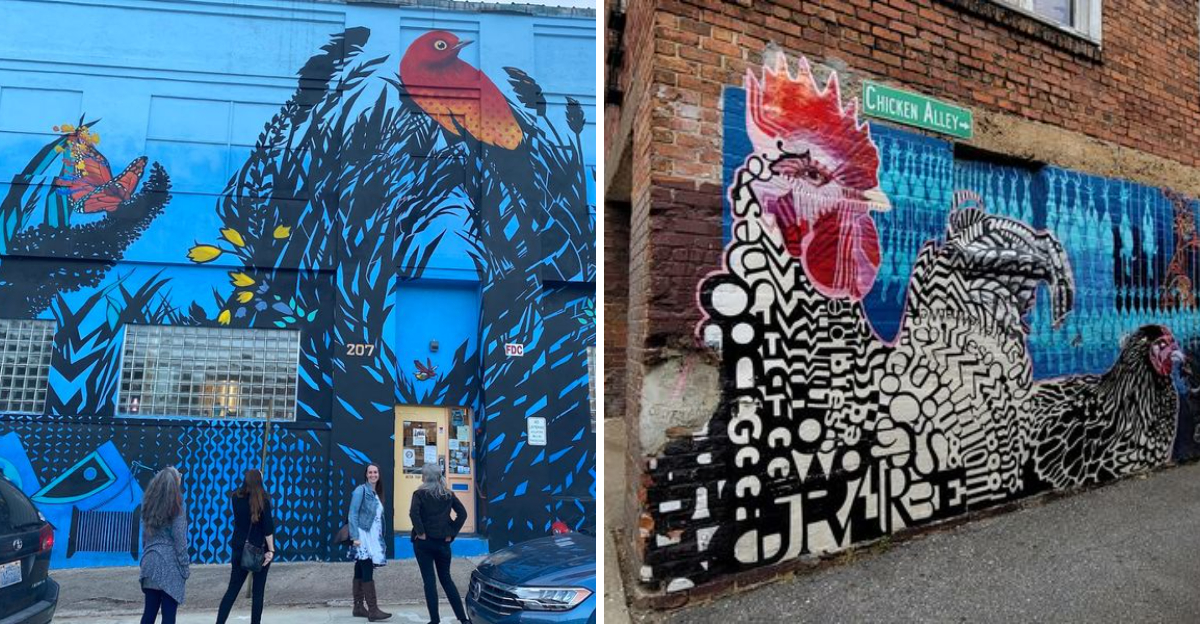
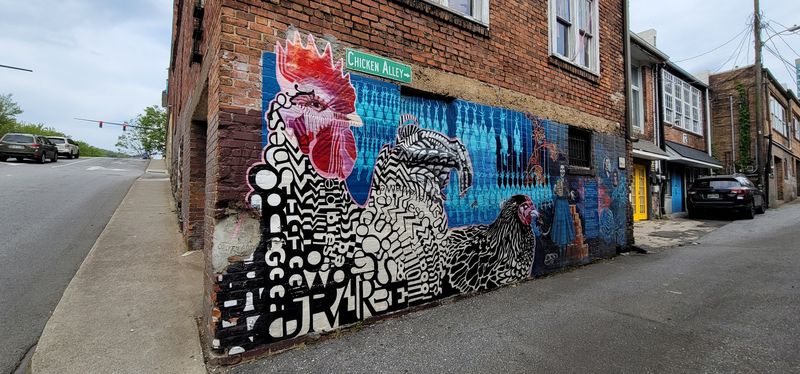
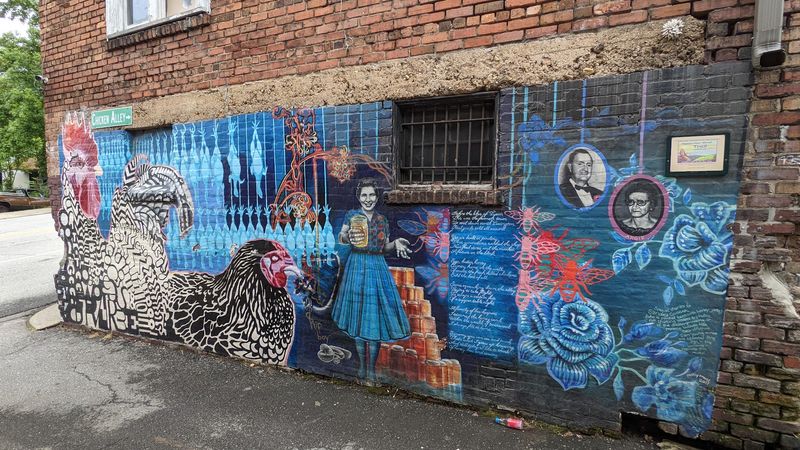
Chicken Alley is one of Asheville’s best-known mural stops nearby, and its landmark mural features a 10-foot rooster painted by Molly Must in 2011.
Mural Trail’s listing describes the Chicken Alley work as a 200-square-foot mural that welcomes visitors into the alley, while Molly Must’s own site confirms the piece and year.
Even when a mural sits just beyond the strict South Slope route, it helps explain Asheville’s broader street-art personality: playful, local, slightly unexpected, and easy to find if someone is willing to wander.
Public art here feels approachable because it meets people at sidewalk level, not behind a quiet museum rope.
Local Artists Give The Neighborhood Its Street-Level Personality
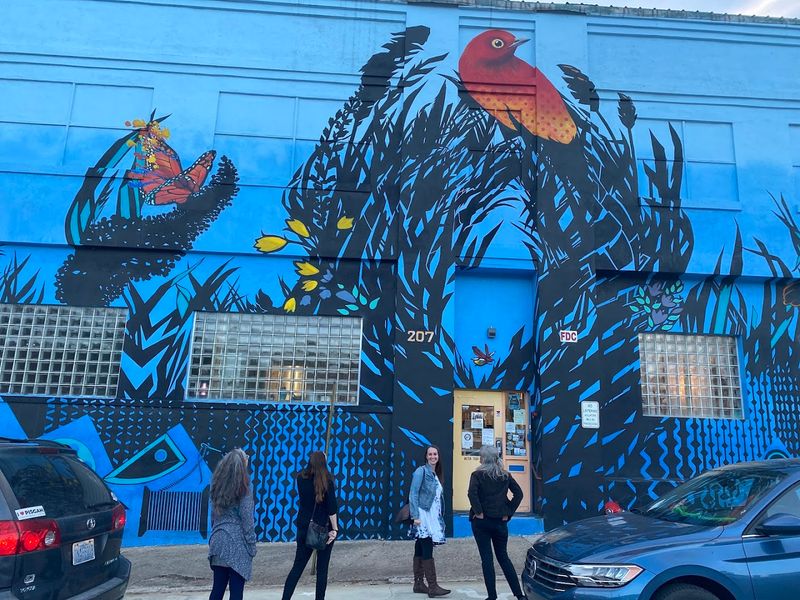
Behind the paint, South Slope’s murals work because real artists have shaped the neighborhood’s visual identity one wall at a time.
Explore Asheville’s South Slope Mural Trail page identifies specific murals and creators along the route, including works connected to local businesses and neighborhood stories.
One example is the “South Slope” mural at Chemist Spirits, designed by James Donaldson and Scott Allred of Brushcan Custom Murals. It was created to celebrate the present-day district while honoring earlier businesses that once shaped the area.
That kind of context keeps the trail from feeling like random decoration.
Murals can preserve memory, mark change, celebrate identity, or simply bring beauty to a surface people used to pass without noticing. Styles vary across the trail, from bold graphic lettering to detailed compositions and colorful storytelling pieces.
That range gives the walk its personality. Instead of one unified museum voice, South Slope feels like a conversation happening across walls, with each artist adding a different tone, subject, and rhythm to the neighborhood.
A Two-Mile Walk Lets The Murals Build The Tour
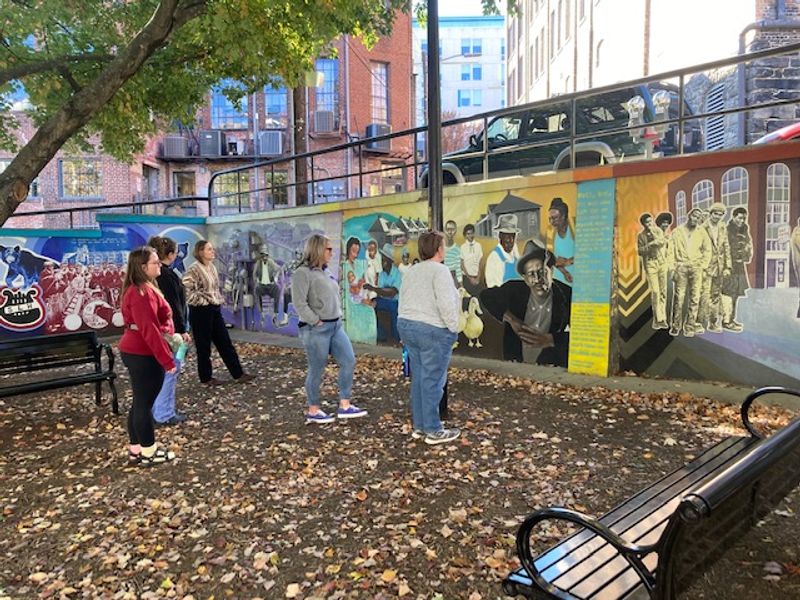
Two miles can sound brief until every block gives you a reason to stop.
Local 2026 coverage described the South Slope Mural Trail as a two-mile urban walk through downtown Asheville. The trail connects local businesses covered in artwork and creates an experience that feels like a hike and gallery visit at the same time.
That length works well because it is manageable for many visitors while still giving the murals enough space to build momentum. Rushing defeats the purpose.
The best parts often come from pausing at a corner, stepping closer to see texture, or turning around because a wall looked different from the other direction.
Since the route is self-guided, walkers can shorten it, stretch it, stop for a snack, or double back toward a favorite piece without feeling like they have broken the tour.
South Slope’s street grid makes the walk feel flexible rather than rigid, which suits public art beautifully. A mural trail should reward curiosity, and this one does exactly that by letting the neighborhood set the pace.
Painted Walls Make South Slope Feel More Creative Than Crowded
Popular Asheville neighborhoods can get busy, but murals help South Slope keep a creative identity instead of feeling like only another crowded district.
Explore Asheville describes the area as a compact district with grit, local charm, food options, and colorful murals. The guide also notes its history connected to Asheville’s Southside, automobile businesses, and today’s arts culture.
That background matters because the murals do not appear in a blank tourist zone. They sit inside a neighborhood with layers, daily routines, and working businesses.
A painted wall might become a photo stop for visitors, but it can also be part of someone’s commute, lunch break, or everyday view from the sidewalk. That overlap gives the trail a lived-in feeling.
The art is visible and welcoming without feeling separated from the place around it. Each mural adds color, but the neighborhood gives the color meaning.
South Slope feels most rewarding when visitors remember they are walking through a real district, not a stage set, and that respect helps the whole experience feel more connected.
Free Public Art Gives The Stroll Its Best Surprise
There is something quietly thrilling about discovering great art without paying for it. The South Slope Mural Trail operates entirely on that principle, offering a full-scale art experience that costs nothing beyond the time and energy of the walk itself.
That generosity shapes the mood of the entire trail from the very first painted wall.
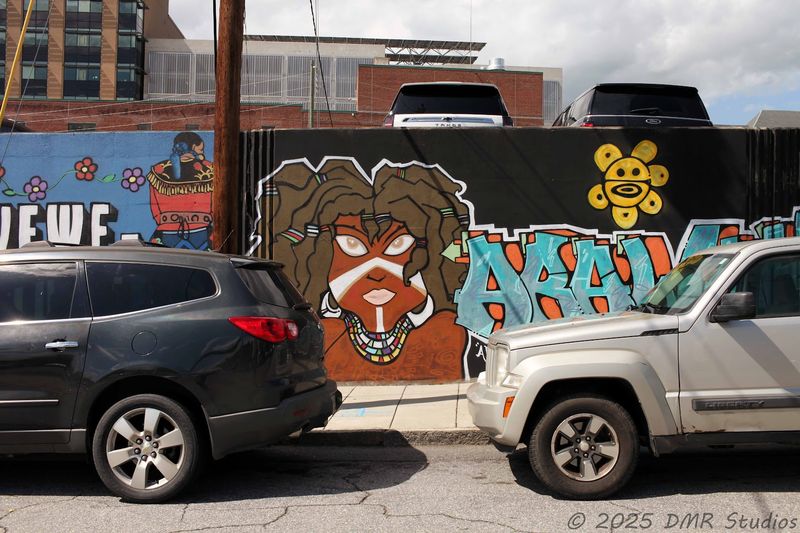
Visitors often describe a particular kind of surprise that comes from rounding a corner and finding a massive, museum-quality mural covering an entire building side. The scale alone is enough to stop you mid-step.
Add the color, the craft, and the context of a living neighborhood around it, and the effect becomes genuinely moving.
Free access also means the trail draws an unusually mixed crowd. Families with young children, solo travelers, local residents, and groups of friends all share the same sidewalks and pause at the same walls.
That democratic quality is part of what makes the South Slope experience feel so different from a traditional gallery visit, and so much more connected to the real life of the city.
Asheville’s Mural Trail Makes Looking Around The Whole Point
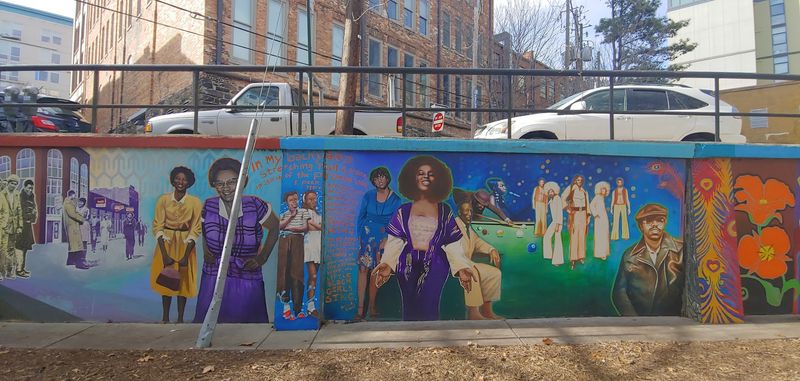
Ordinary city walks usually train people to stare forward, but this route rewards anyone willing to look sideways, upward, behind them, and into the corners most pedestrians ignore.
The South Slope Mural Trail is easiest to enjoy as a slow, self-guided loop through Asheville’s South Slope district. Many visitors start at the 40 Coxe Avenue public parking deck, which works as a practical entry point for the route.
Nearby mural landmarks, including the Chicken Alley mural at 41 Carolina Lane, add to the broader downtown street-art experience. Visitors can also work them into the same outing for more color after the main route.
Molly Must completed the Chicken Alley mural in 2011, and Mural Trail describes it as a 200-square-foot work with a 10-foot rooster, making it one of Asheville’s most recognizable public-art stops.
The whole experience works because it asks for attention rather than effort. No tickets, no formal schedule, and no complicated plan are required.
Just walk slowly, stay curious, respect the neighborhood, and let the walls keep surprising you. This North Carolina spot cannot wait to meet you this summer.