These 10 Short Washington Hikes Are Easy Enough For Kids And Beautiful Enough For Everyone
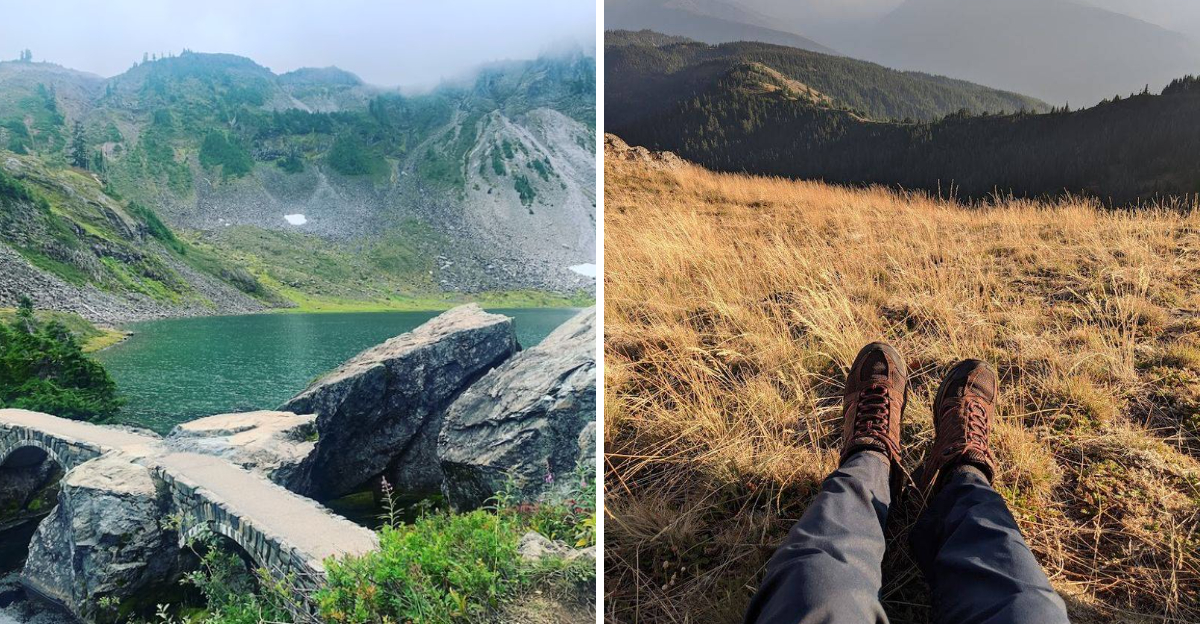
Washington State has a reputation for serious hiking, the kind that involves crampons, elevation maps, and a concerning amount of granola bars.
But here is what the trail guides do not always tell you: some of the most beautiful scenery in the entire state is sitting right at the end of trails that almost anyone can handle.
Waterfalls you can reach in twenty minutes. Viewpoints that feel like they should require far more suffering than they actually do.
Old growth forests so quietly beautiful that even the most restless kid goes a little bit still.
I have done plenty of hard hikes in Washington and loved them.
But there is something genuinely special about standing somewhere breathtaking and knowing the whole family got there together without a single complaint.
These short trails prove that the Pacific Northwest saves some of its best work for the paths everyone can enjoy.
1. Rattlesnake Ledge Trail
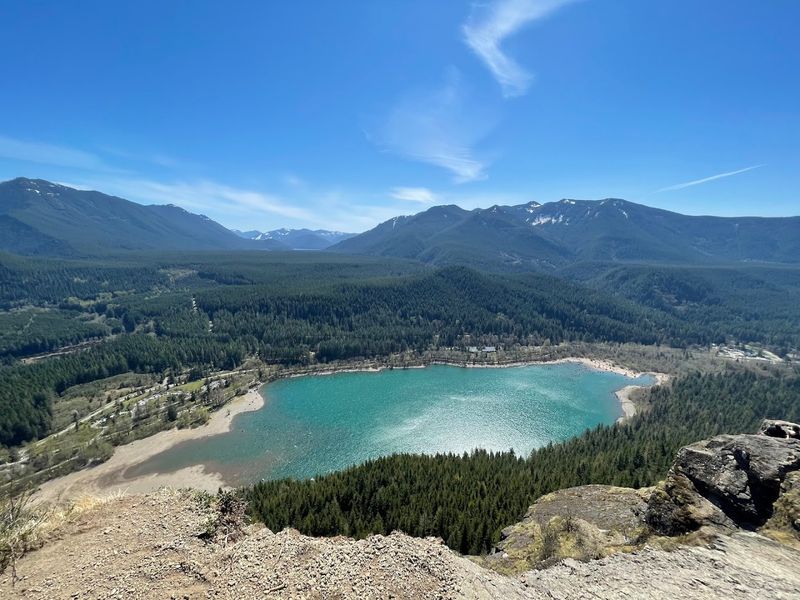
Fair warning: you will feel like a total champion the moment you reach the top. Rattlesnake Ledge is one of those trails that punches way above its weight class.
The hike is only about 4 miles round trip with roughly 1,100 feet of elevation gain, which sounds modest until you pop out onto that rocky ledge and your jaw drops.
The views stretch across Rattlesnake Lake and deep into the Cascade foothills, and on a clear day, the scenery is genuinely hard to believe.
Kids love scrambling on the rocks at the top, and there is plenty of space to spread out a picnic without feeling crowded.
Trail conditions are well-maintained year-round, though it gets busy on weekends. Go early, like before 8 a.m., and you will practically have the ledge to yourself.
The trail starts at the Rattlesnake Lake Recreation Area near North Bend, about 30 minutes east of Seattle.
It is paved for the first stretch, making it manageable even for younger kids who are still building their trail legs.
2. Naches Peak Loop Trail
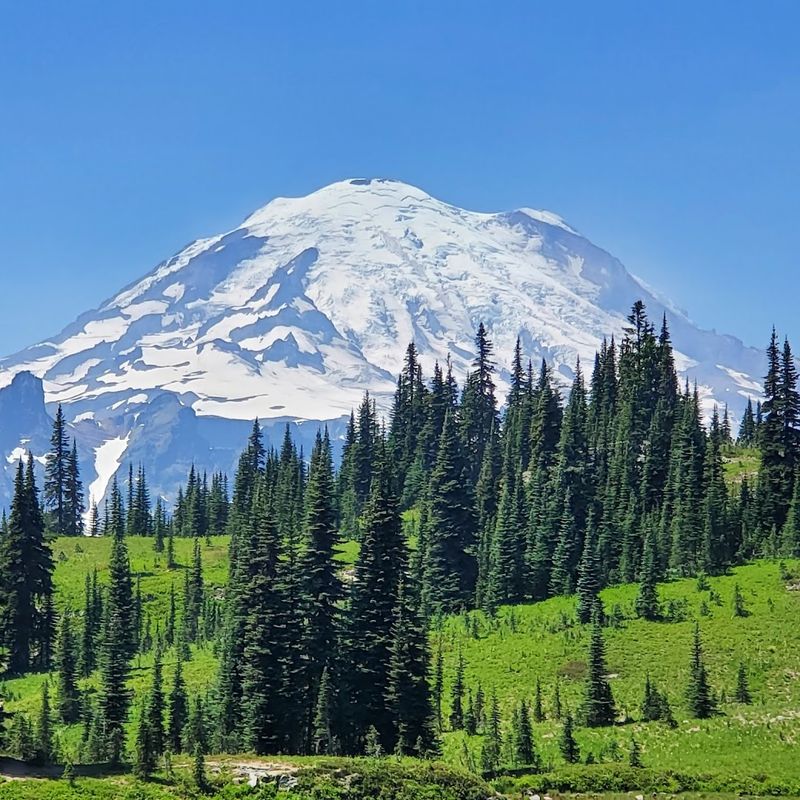
Imagine walking through a painting. That is genuinely what the Naches Peak Loop feels like on a clear summer day, with Mount Rainier looming so large behind the wildflower meadows that it almost looks fake.
This 3.5-mile loop near Chinook Pass is one of the most visually rewarding short hikes in the entire state.
The elevation gain is gentle enough that even younger kids handle it without complaint, which is saying something.
Peak wildflower season runs from mid-July through August, and the colors are absolutely worth planning around.
Part of the trail crosses into the William O. Douglas Wilderness, so you get that genuine backcountry feel without committing to a full overnight adventure.
The loop can be done in either direction, but going clockwise first gives you the Rainier views earlier, which is a solid mood-setter.
Bring layers because the elevation sits around 5,500 feet and afternoon clouds can roll in fast. A Northwest Forest Pass is required for parking at Tipsoo Lake.
Honestly, this one belongs on every Washington bucket list, kid or no kid.
3. Twin Falls Trail
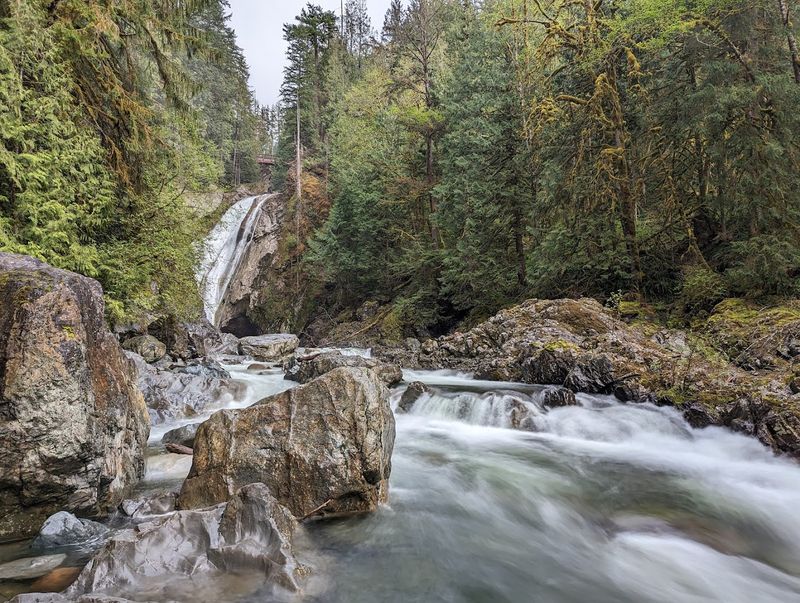
Waterfalls have a way of making even the grumpiest hiker forget they were complaining five minutes ago. Twin Falls does exactly that, and it does it fast.
Located in the Olallie State Park near North Bend, this 2.6-mile out-and-back trail follows the South Fork Snoqualmie River through a lush old-growth forest before revealing not one but two spectacular waterfalls.
The lower falls drop about 70 feet, and a wooden bridge positioned right above the upper falls gives you a front-row seat to the roaring water below. Kids go absolutely wide-eyed at that bridge.
The trail has some uneven sections and a few short steep stretches, but nothing that requires special gear or serious fitness.
Spring is peak season when snowmelt cranks up the waterfall volume, but the trail is beautiful year-round. The forest canopy keeps it cool and green even in summer, making it a great escape on hot days.
Parking is available at the trailhead off SE 159th Street, and a Discover Pass is required. Arrive before 10 a.m. on weekends to snag a spot without circling the lot three times.
4. Franklin Falls Trail
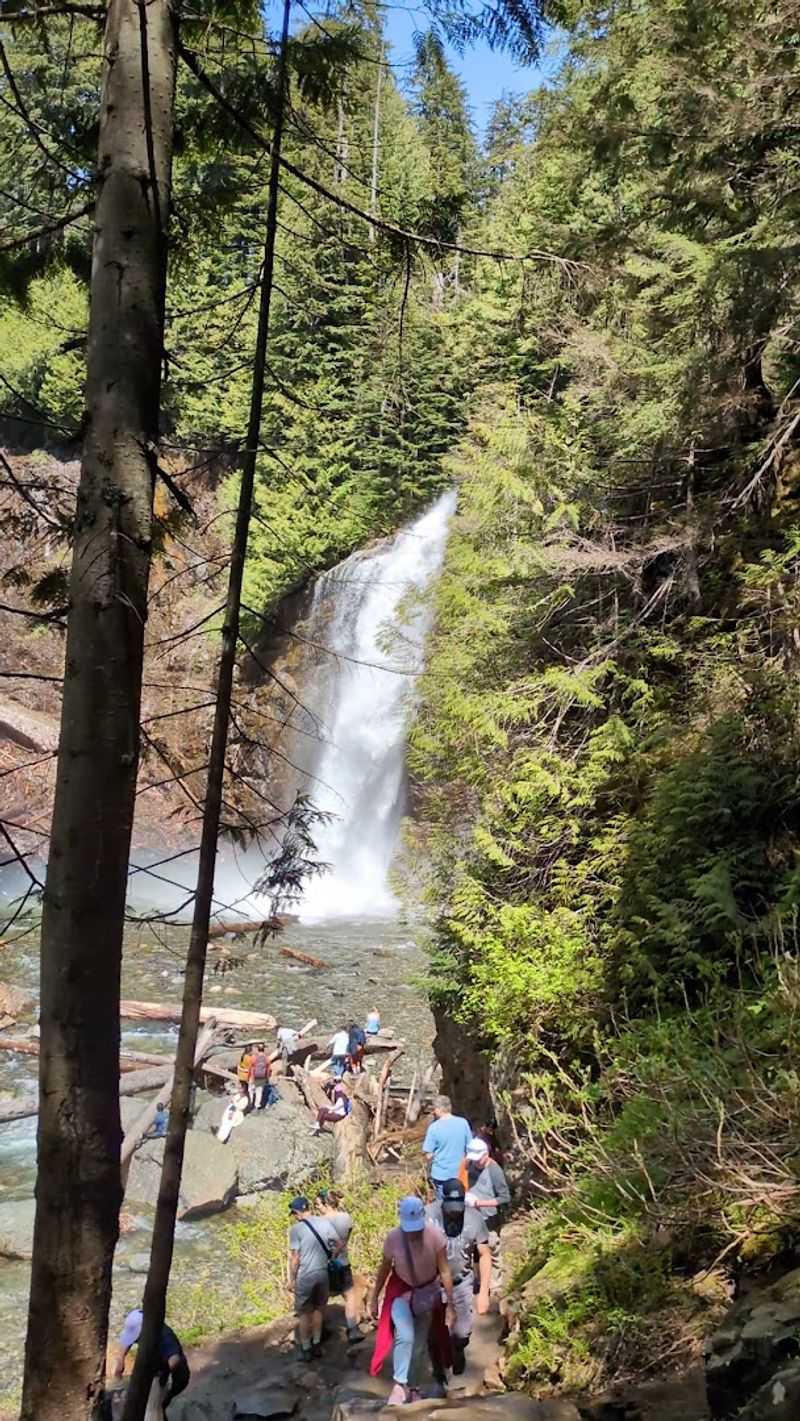
At just 2 miles round trip with almost no elevation gain, Franklin Falls is basically the trail equivalent of a gift.
This is the hike you bring the grandparents on, the one you do in sneakers, the one where even toddlers make it to the destination without a meltdown.
The payoff is a 70-foot waterfall crashing into a shallow pool at the base of a dramatic basalt cliff, and it is spectacular.
The mist from the falls keeps the surrounding rocks and moss a vivid emerald green that looks almost tropical. Standing at the base and looking straight up is one of those experiences that sticks with you.
Franklin Falls is located near Bessemer, Washington, off Interstate 90 at exit 47. The trail follows the South Fork Snoqualmie River the entire way, so the sound of rushing water is your constant companion.
It is one of the most accessible waterfall hikes in the state, which means it gets crowded on summer weekends.
Mornings are quieter and the light hits the falls beautifully before noon. A Northwest Forest Pass is typically required, and winter access can be much longer depending on road conditions.
5. Nisqually Vista Trail
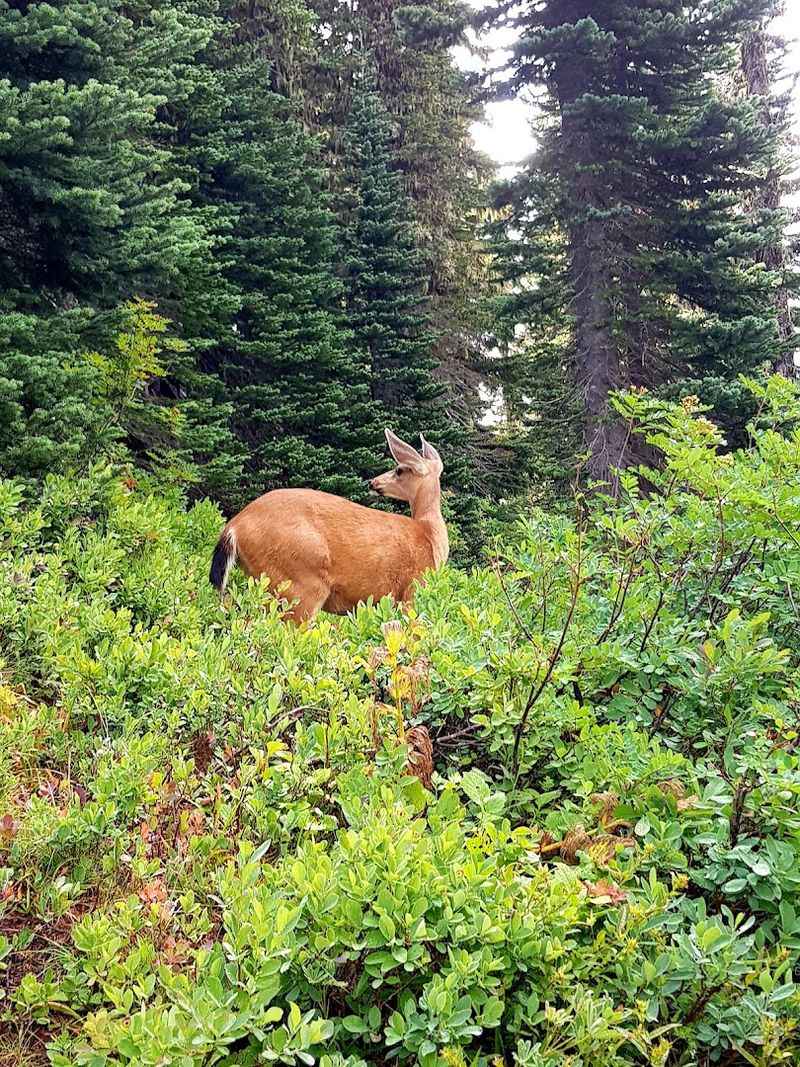
Nisqually Vista Trail is the kind of Mount Rainier hike that proves a trail does not need to be long to feel unforgettable.
Starting near Paradise, this easy 1.2-mile loop gives families a front-row look at some of Washington’s most classic mountain scenery without turning the day into a serious climb.
The path winds through open subalpine meadows where wildflowers can brighten the landscape in mid-summer and fall color takes over later in the season.
On clear days, Mount Rainier rises above the trail so dramatically that it feels almost too close to be real.
The view toward Nisqually Glacier adds another layer of wonder, especially for kids seeing a glacier for the first time.
Because the trail is paved, it feels approachable for many visitors, though the short stair section near the beginning is worth noting.
The route is best taken slowly, with plenty of stops for photos, meadow views, and quiet moments under the mountain.
Bring layers, check conditions before visiting, and remember that pets are not allowed on national park trails. For a short Washington hike with a huge payoff, Nisqually Vista Trail is an easy favorite.
6. Heather Meadows / Bagley Lakes Loop
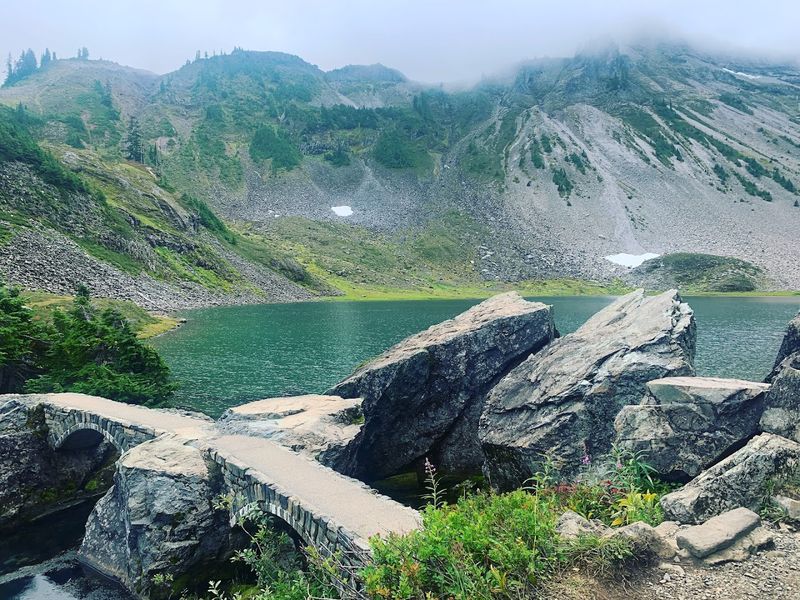
Picture an alpine scene so pretty it looks like a screensaver, and then realize you are actually standing in it.
The Heather Meadows and Bagley Lakes Loop near Mount Baker delivers exactly that kind of moment, and it does so in just under 3 miles of walking.
The trail winds past two gorgeous alpine lakes, through open heather meadows, and along a stone path that crosses a creek on a rustic footbridge.
The surrounding peaks of the North Cascades reflect in the water on calm mornings, creating mirror images that are almost too good to be real.
Elevation gain is around 500 feet, spread out gradually enough that kids move through it without drama.
The area sits at roughly 4,200 feet elevation, so bring a jacket even in summer because the mountain air bites.
August and September offer the best combination of clear skies and fall color in the heather.
The trailhead starts at the Artist Point parking area off Highway 542, and no special pass is required beyond the Mount Baker-Snoqualmie National Forest standard fees.
This loop earns its reputation as one of the most scenic short hikes in the entire North Cascades.
7. Hurricane Hill Trail
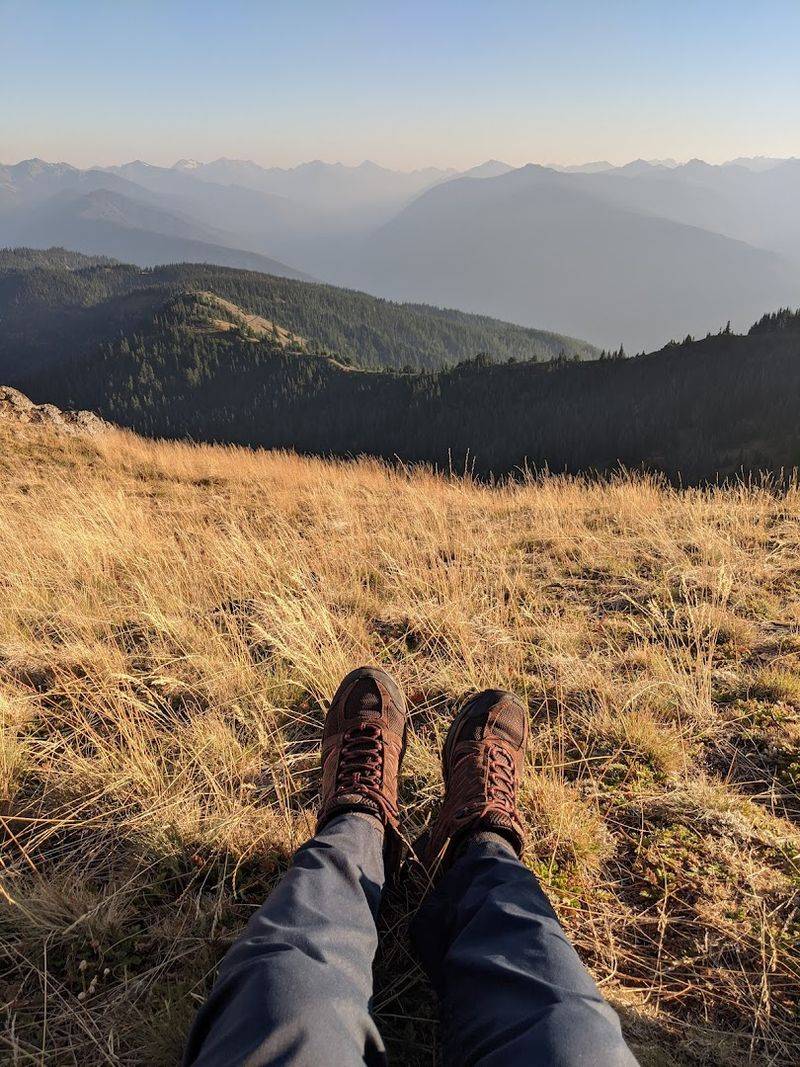
When a trail delivers 360-degree views of the Olympic Mountains AND the Strait of Juan de Fuca, you stop questioning why you drove three hours to get there.
Hurricane Hill is a 3.2-mile out-and-back hike starting from Hurricane Ridge inside Olympic National Park, and the scenery is relentlessly spectacular from start to finish.
The trail climbs gently along an open ridgeline, meaning the views start immediately and never let up.
On clear days you can see Vancouver Island across the water, which feels almost impossibly far away and beautiful.
Wildflowers blanket the meadows in summer, and black-tailed deer are so comfortable around people here that they practically pose for photos.
Snow lingers on the ridge well into June, so check road conditions before heading up. The Hurricane Ridge Road itself is a destination, with pull-offs offering their own stunning panoramas.
Olympic National Park charges an entrance fee, and the visitor center at Hurricane Ridge is worth a stop for maps and ranger talks.
This hike rewards even the youngest legs with big views early, which keeps everyone motivated. Go on a weekday if possible for a calmer, more personal experience on the ridge.
8. Snoqualmie Falls Trail
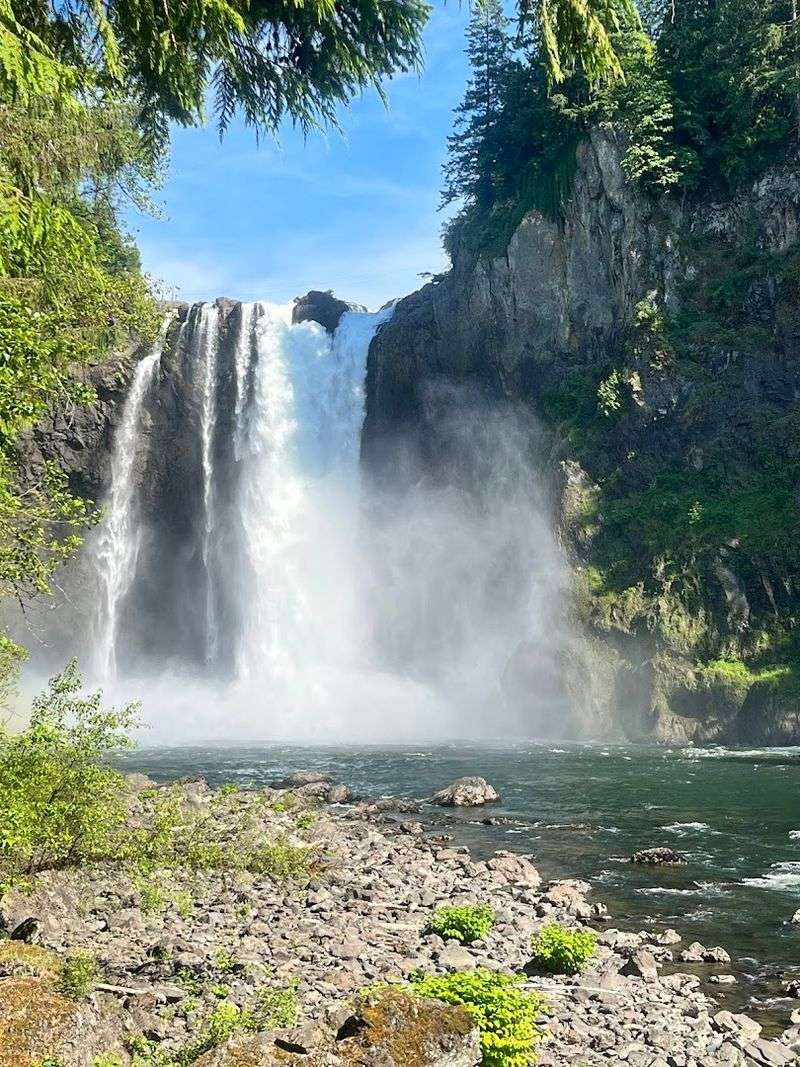
Not every great hike requires suffering. Snoqualmie Falls near the town of Snoqualmie is proof that a short, easy walk can still leave you completely floored.
The falls drop 268 feet, which is actually taller than Niagara Falls, and the roar of the water is something you feel in your chest before you even see it.
There are two ways to experience the falls. The upper observation deck is a flat 0.1-mile walk from the parking area, accessible to nearly everyone.
The lower trail descends about 300 feet down to the river level and the base of the falls, adding a mile round trip and a genuine workout on the return climb.
The lower viewpoint is worth every step because the scale of the waterfall from below is jaw-dropping in a way the upper deck cannot match.
The trail is paved and well-maintained, though it gets slippery when wet. Parking is free and the area is open year-round.
Spring brings the highest water volume and the most dramatic mist.
The surrounding park has picnic areas and the riverbank is a lovely spot to linger after the hike. Weekday mornings are dramatically less crowded than weekend afternoons.
9. Discovery Park Loop
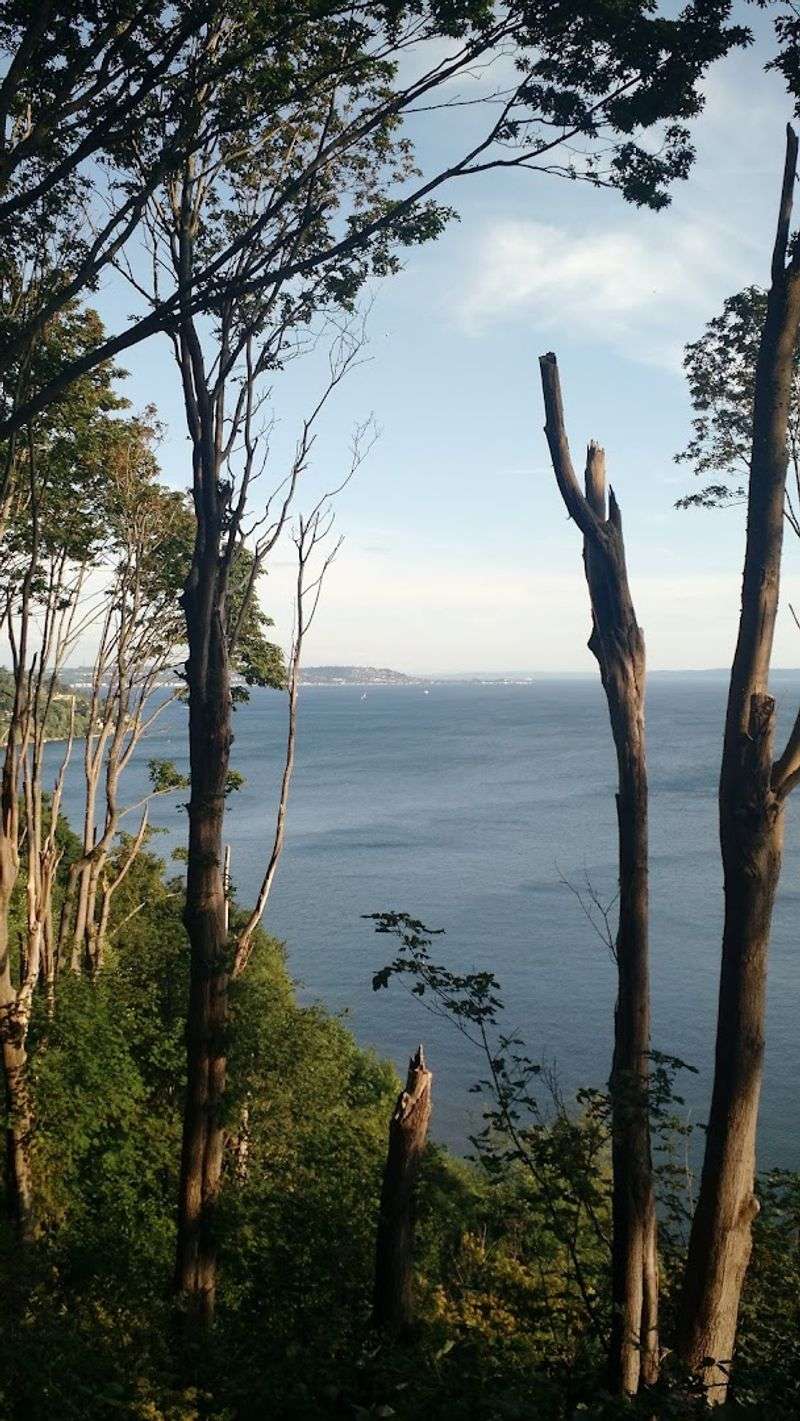
Seattle gets a lot of credit for its coffee and its rain, but Discovery Park deserves its own dedicated fan club.
Located right inside the city limits, this 2.8-mile loop trail passes through meadows, dense forest, coastal bluffs, and sandy beaches with views of Puget Sound and the Olympic Mountains beyond.
The West Point Lighthouse at the end of a short spur trail is a classic photo stop, and the beach below the bluffs is a great place to let kids run and explore tide pools.
The variety of terrain packed into one short loop is genuinely impressive for an urban park.
Discovery Park covers 534 acres, making it the largest park in Seattle, which means the trails feel far removed from the city buzz even though you are technically still in it.
The loop connects to additional trails if you want to extend the adventure. No pass is required and parking is free at the main lot on Government Way.
The park is open year-round and the bluff views are outstanding on clear winter days when the snowcapped Olympics shine across the Sound. Go at low tide to maximize beach access at the base of the bluffs.
10. Barclay Lake Trail
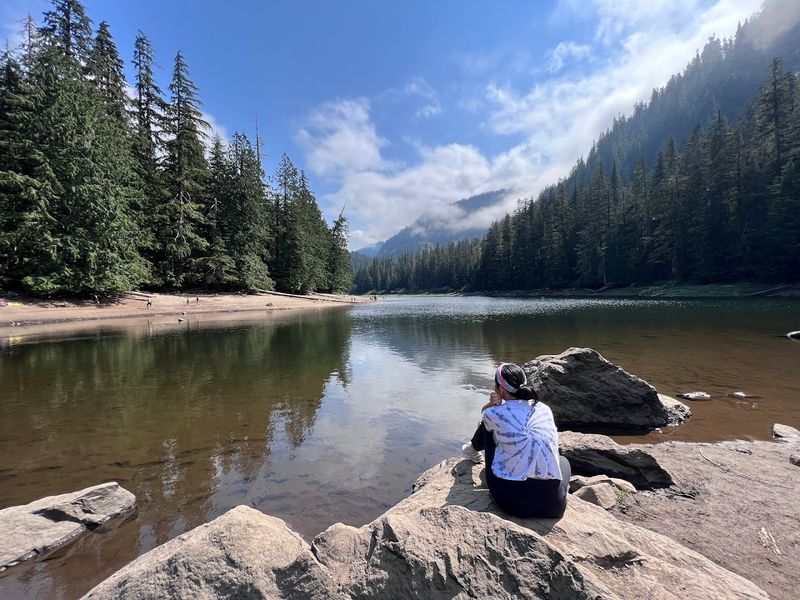
Barclay Lake is the kind of place that makes you wonder why you ever bother with complicated, exhausting hikes.
The trail is 4.4 miles round trip with only about 250 feet of elevation gain, which means almost anyone can reach the lake without much difficulty. And the reward is outstanding.
The lake sits at the base of Baring Mountain, whose sheer north face towers nearly 4,000 feet above the water in a dramatic vertical wall that dominates the view.
The contrast between the still, reflective lake and that massive cliff is one of the most striking scenes in the western Cascades. Early morning visits catch the mountain reflected perfectly in the calm water.
The trail follows Barclay Creek through old-growth forest the entire way, and the creek crossings add a fun element for kids who enjoy hopping rocks.
The forest floor is carpeted in ferns and moss, keeping the atmosphere lush and cool. The trailhead is located off Forest Road 6024 near Baring, Washington, and a Northwest Forest Pass is required for parking.
Fall is particularly beautiful here when the vine maples turn orange and yellow along the creek. Bring waterproof shoes since portions of the trail can be muddy after rain.