This Dreamy California Restaurant Lets You Dine Beneath Grand Sycamore Trees
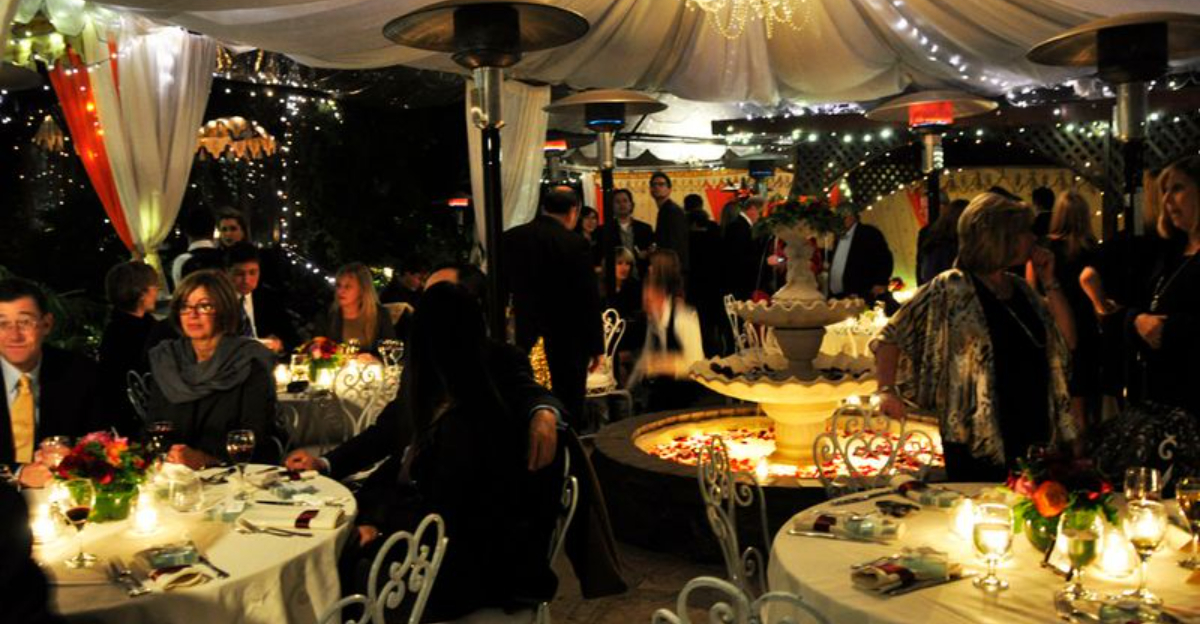
Most restaurants stop at serving dinner.
This one recruited a canopy. Branches stretch overhead. Light filters through the leaves.
The whole setting feels like somebody accidentally built a dining room in the middle of a storybook.
A meal beneath towering sycamores make California seem unusually committed to atmosphere.
That is what people remember.
Not only the food and the table. But the feeling of sitting under trees so large they seem to be participating in the evening.
Dessert lasts longer. Nobody appears especially eager to ask for the check.
Places like this understand something important: a great meal tastes even better when the setting refuses to behave like an ordinary restaurant.
The Marvelous Grand Sycamore Tree Dining
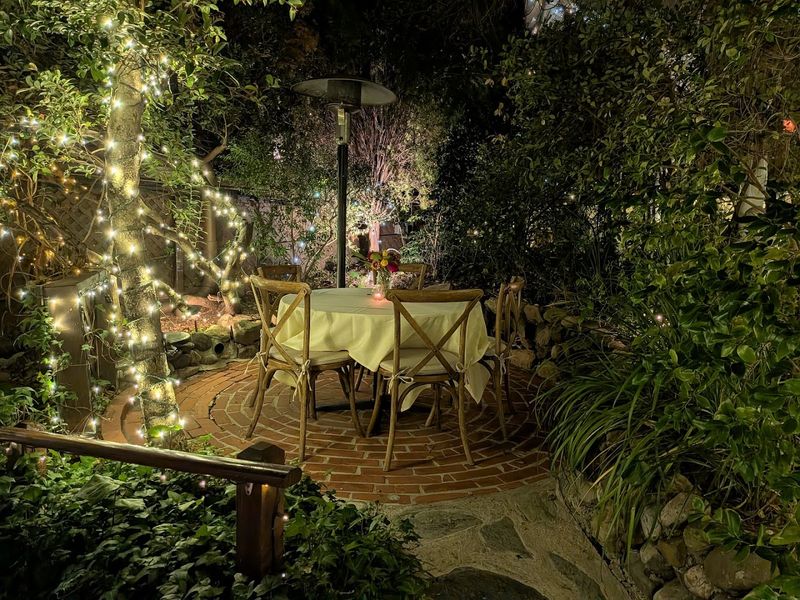
Few dining experiences in Southern California can match the feeling of sitting beneath a canopy of grand old sycamore trees while a meal arrives at the table.
At Inn of the Seventh Ray, the outdoor seating is arranged directly beneath these towering trees, whose wide branches create a natural roof that shifts with the breeze.
The effect is genuinely peaceful, offering shade during the day and a soft, dappled light in the evenings.
Approximately 90 percent of the restaurant’s seating is outdoors, which means the trees are not just a backdrop but the actual setting for the meal.
Twinkle lights are strung through the branches, and candles glow on the tables once the sun begins to drop.
The combination of natural and warm artificial light gives the space a soft, unhurried quality that feels very different from a typical patio setup.
The sycamores themselves are mature and substantial, lending the space a sense of permanence that younger landscaping simply cannot replicate.
Sitting beneath them, it becomes easy to understand why this particular spot has drawn diners back for decades.
Topanga Canyon Setting
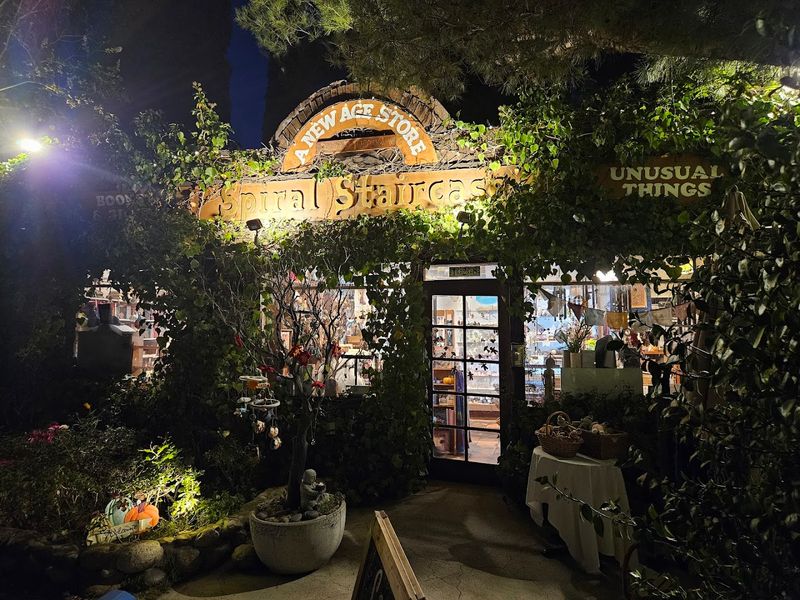
Getting to the restaurant is part of the experience.
The drive along Topanga Canyon Boulevard winds through the Santa Monica Mountains, passing oak-covered hillsides and narrow stretches of road that feel far removed from city life.
By the time the destination comes into view, the shift in atmosphere is already well underway.
Inn of the Seventh Ray sits at 128 Old Topanga Canyon Rd in Topanga, CA 90290, tucked alongside a winding creek that adds a gentle sound layer to the entire property.
The location places it within Los Angeles County but gives it the feeling of a canyon hideaway that requires a bit of intention to reach.
That sense of arrival makes the meal feel more like an occasion than a routine outing.
The restaurant can be reached from the 101 Freeway via Topanga Canyon Boulevard or from Pacific Coast Highway heading inland, making it accessible from both the San Fernando Valley and the coast.
The canyon setting also means the temperature can feel noticeably cooler than surrounding areas, which adds to the comfort of outdoor dining during warmer months.
Planning for the winding roads and limited parking nearby is a practical step worth taking before the visit.
Candlelit Atmosphere Makes For An Intimate Mood
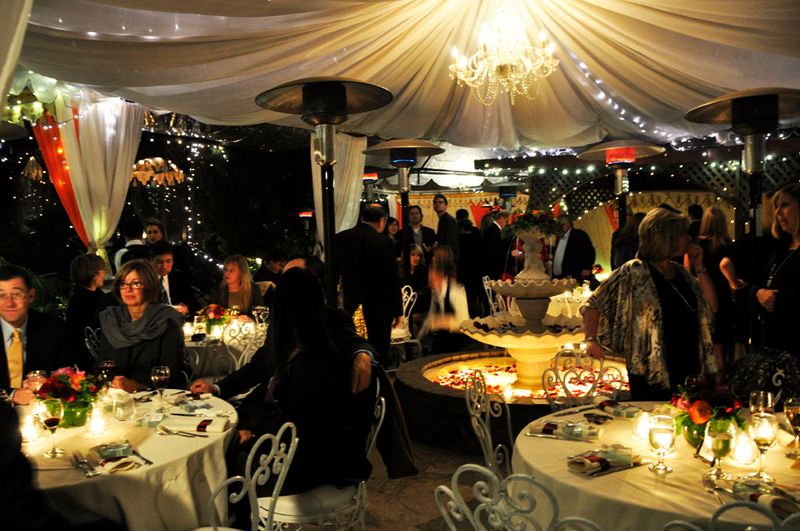
Evening dining at this restaurant has a distinct quality that daytime visits cannot fully replicate.
Once the natural light begins to fade, candles are placed on each table and the string lights threaded through the overhead branches come to life.
They cast the entire outdoor space in a warm, amber glow that feels genuinely intimate without feeling staged.
The candlelight softens the edges of the surrounding landscape, making the trees and garden plantings look richer and more dimensional than they do under direct sunlight.
Guests seated outdoors during the evening hours often describe the atmosphere as feeling almost otherworldly.
The restaurant’s official description refers to candlelit dining under the stars, and that phrasing holds up accurately when experienced in person.
The pace of service during evening hours tends to match the atmosphere, with meals unfolding gradually rather than rushing toward a conclusion.
For a special occasion or a quiet dinner that calls for something more memorable than a standard restaurant night out, the candlelit setting at Inn of the Seventh Ray delivers a genuinely distinctive experience.
Brick Pathways Through The Grounds
Arriving at the restaurant involves more than just walking through a door.
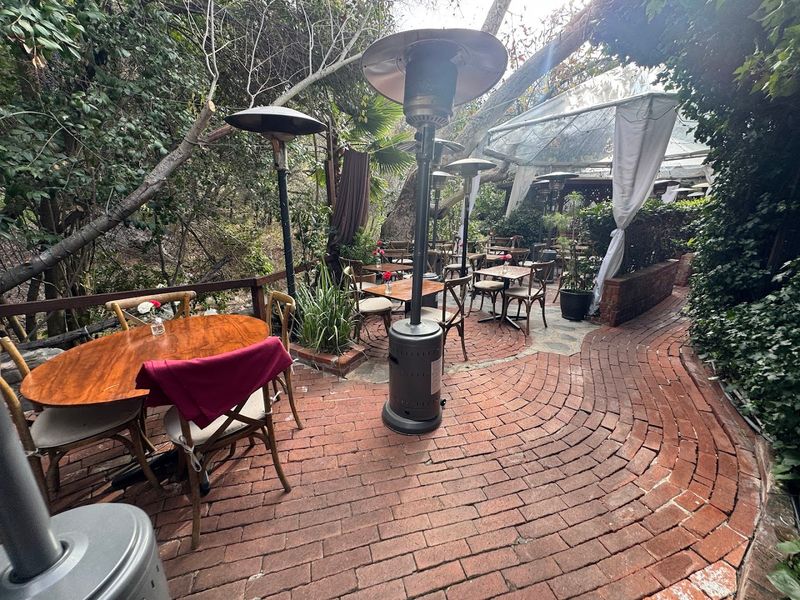
The winding brick pathways that connect the parking area to the various dining sections of the property serve as a kind of transition zone between the outside world and the enclosed garden atmosphere that.
The walk itself sets a slower, more attentive pace before anyone sits down.
The pathways are flanked by planted beds, stone features, and in several spots, the sound of the waterfalls that run alongside them.
The brick underfoot gives the whole route a sense of texture and age that complements the mature trees overhead.
Nothing about the path feels hurried or purely functional; the design clearly intends for guests to notice their surroundings as they move through the space.
For guests visiting during the evening hours, the pathways are lit softly enough to feel atmospheric without being difficult to navigate.
The layout of the grounds means that different sections of the restaurant are accessible from different points along the paths, giving the property a slightly layered quality where new details appear around each bend.
Taking a slow walk through the grounds after a meal, when the candles and string lights are fully active, tends to reveal details that were easy to miss on the way in.
Waterfall Patio Area Adds Glamour
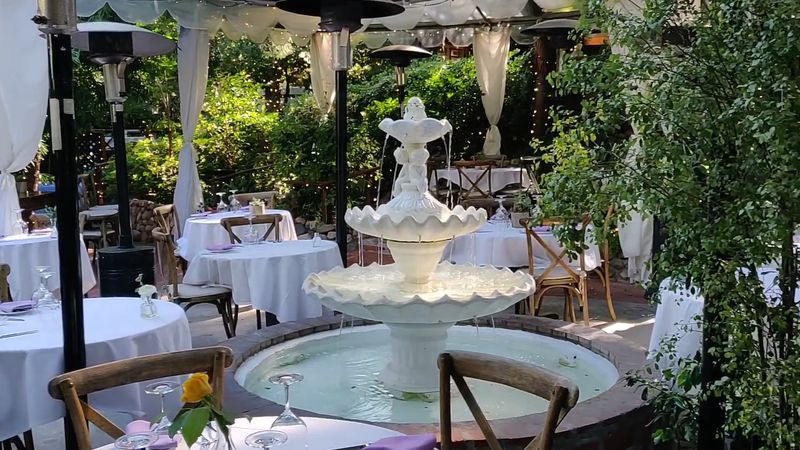
Among the several distinct outdoor spaces on the property, the waterfall patio stands out as one of the most visually memorable.
A waterfall feeds down into this circular brick patio area, which is enclosed by a mix of sycamore, oak, and pine trees alongside a creek.
The result is a setting that feels deliberately composed without losing its natural character.
The circular shape of the patio creates a sense of enclosure that feels different from an open terrace, almost like a room defined by trees and water rather than walls.
Tables positioned within this space benefit from the sound of the nearby waterfall and the shade provided by the surrounding tree canopy.
The combination of the brick underfoot and the organic shapes of the trees overhead gives the patio a grounded, tactile quality.
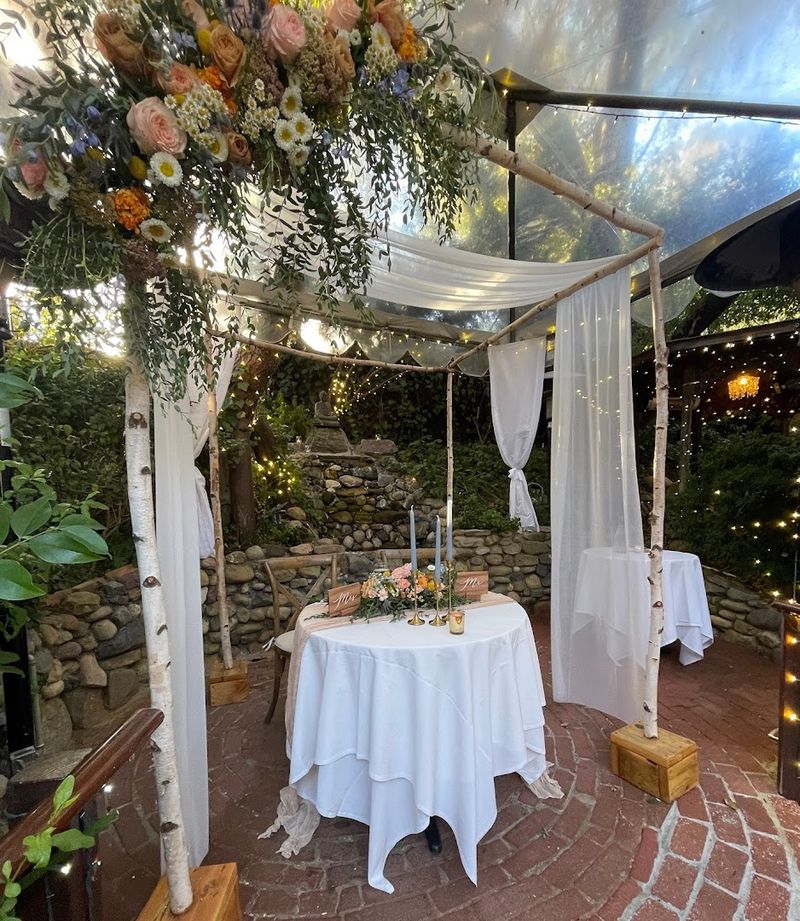
This area is also used for private events and weddings, which speaks to how well the space photographs and how effectively it creates a sense of occasion.
For standard dining visits, securing a table in or near this patio section may require a reservation and possibly a specific seating request.
The waterfall patio represents one of the more concentrated expressions of what makes this property feel genuinely different from a conventional outdoor restaurant setting.
A Longtime Topanga Favorite
Longevity in the restaurant industry is genuinely difficult to achieve, and a place that has held its ground in the same canyon location for roughly 50 years carries a kind of weight that newer establishments simply have not had time to earn.
Inn of the Seventh Ray has been operating at this Topanga site since the early 1970s, founded with a philosophy centered on food prepared without artificial additives or chemical ingredients.
The history of the site itself extends even further back. Before becoming a restaurant, the location reportedly served as a church, a garage, a gas station, and a junkyard at different points in its past.
The land is also said to have held significance for the Chumash community and to have served as a retreat in the 1930s, giving the property a layered backstory that the trees and creek seem to carry quietly.
That kind of accumulated history tends to show up in small ways throughout the experience, from the maturity of the plantings to the worn warmth of the brick pathways.
A place that has been tended and returned to for half a century develops a particular character that is hard to manufacture from scratch.
Locally Sourced And Delicious Menu
The food at this restaurant is built around a clear and consistent philosophy.
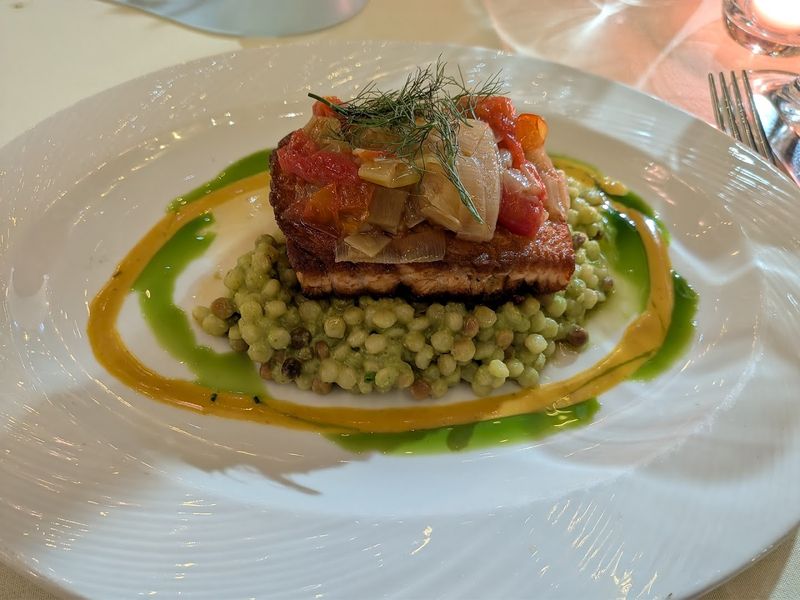
The menu emphasizes organically grown ingredients sourced from local farms, with hormone-free meats, wild-caught fish, and free-range poultry forming the protein options.
The kitchen avoids refined sugars, refined flours, artificial additives, GMO ingredients, and chemical-based preparations, which gives the menu a distinctive character that goes beyond typical farm-to-table phrasing.
Seasonal availability shapes what appears on the menu at any given time, so the selection may shift between visits depending on what is current from the farms the kitchen works with.
Numerous gluten-free and vegan options are available, making the menu accessible across a range of dietary preferences without those options feeling like afterthoughts.
The overall approach is described as elegant and rustic California cuisine, which captures the balance between refined preparation and honest, ingredient-forward cooking.
Specific dishes that appear regularly include pasta preparations, omelettes during brunch service, and protein-centered plates for lunch and dinner.
Truffle fries, potato leek soup, and various seasonal salads have been consistently mentioned by guests as standout items.
The kitchen’s commitment to clean sourcing means that even straightforward dishes tend to taste noticeably fresh, which aligns with what the setting itself seems to promise before a single plate arrives.
Brunch, Lunch, And Dinner Service
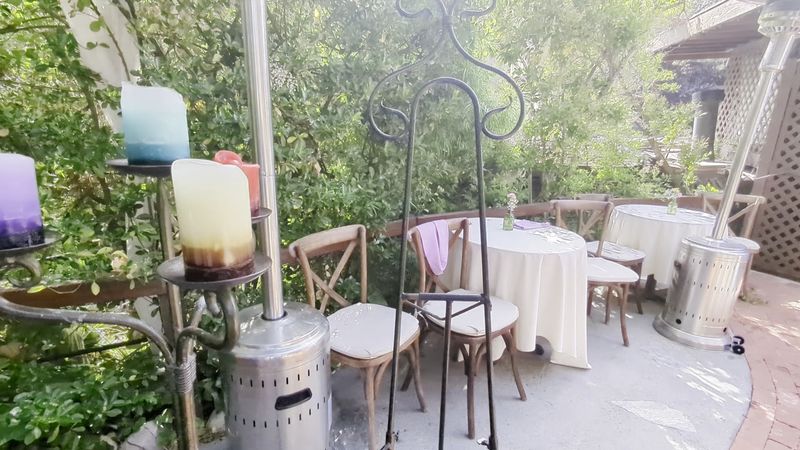
The tree-canopy experience at this restaurant is not limited to a single meal period, which makes it easier to plan a visit around a schedule.
Brunch is served on weekends beginning at 9 AM, while weekday brunch and lunch service starts at 10 AM.
The restaurant currently closes at 2:30 PM on weekdays and 3 PM on weekends, so checking current hours before visiting is a practical step since schedules can change.
Each meal period has its own rhythm.
Weekend brunch draws guests looking for a relaxed mid-morning meal in the garden setting, and arriving close to opening on a weekday can result in a quieter, more private experience with the grounds mostly to oneself.
The shift from morning light filtering through the sycamore branches to the warmer afternoon glow creates noticeably different versions of the same outdoor space depending on when a visit takes place.
The menu varies across meal periods, with brunch-specific items available during morning service and a broader dinner menu offering more elaborate preparations in the evening.
Some items, such as the goat cheese frittata, are available only on weekends, so checking the current menu online before visiting helps set accurate expectations.
Having multiple service windows also means the restaurant works as a destination for different types of occasions rather than being limited to one kind of outing.