13 California Stops That Make People Suddenly Care About Taking Pictures
Nobody admits they care about the photo until the stop starts embarrassing them. Then the phone comes out.
Quietly at first. A mural catches someone. The view does something with the light and suddenly the whole group is posing like this was always the plan.
California has a way of turning random stops into accidental photoshoots with zero warning.
The best ones are not always grand.
Sometimes the pull comes from color, timing, or one tiny detail that looks better in person.
A quick stop becomes five angles. Five angles become twenty photos. Twenty photos become the reason everyone remembers the detour.
That is how these places work.
They make people care before anyone can pretend otherwise.
1. Bixby Creek Bridge, Big Sur
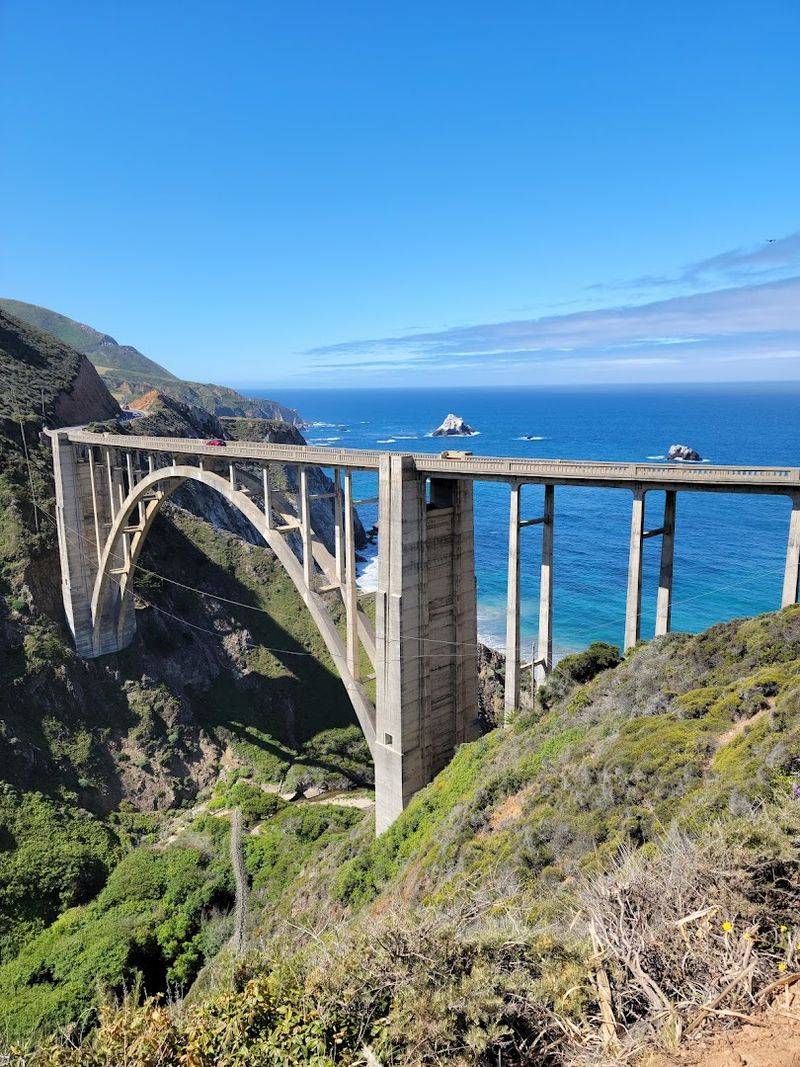
Few structures along the California coast manage to feel both massive and graceful at the same time, but Bixby Creek Bridge pulls it off without effort.
Completed in 1932, it remains one of the most photographed bridges in the entire state, and the view from the highway pullout north of the bridge gives a sense of just how dramatically it spans the canyon below.
The Pacific Ocean stretches out behind it in shades of blue and green that shift depending on the light.
Morning visits tend to offer softer light and fewer vehicles on the road, which makes framing a clean shot considerably easier.
The pullout on the north side of the bridge is the most popular vantage point, though the south side offers a slightly different angle that some photographers prefer.
Highway 1 can get busy on weekends, so arriving early or on a weekday may improve the experience.
Fog rolls in frequently along this stretch of Big Sur, and while it can obscure the view, it also creates a moody, layered look that photographs beautifully in its own right.
There is no fee to stop at the pullout, and the area is accessible year-round, though road conditions along Highway 1 can vary seasonally.
2. Golden Gate Bridge Viewpoints, San Francisco
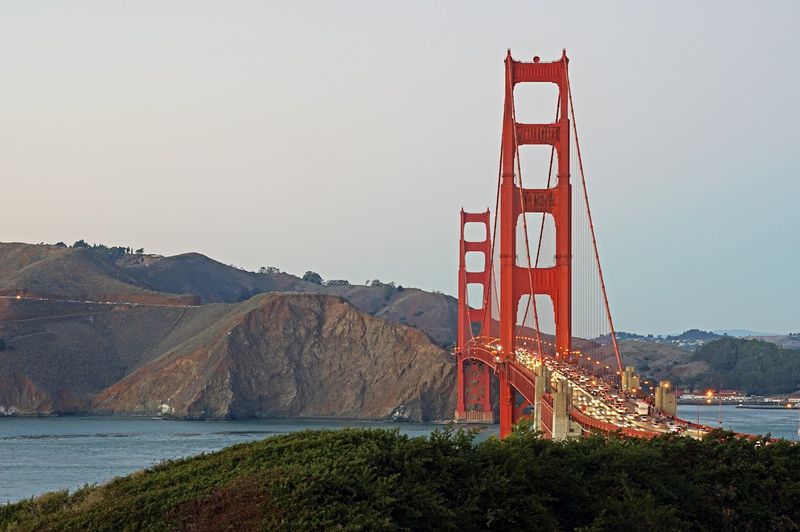
The Golden Gate Bridge is one of those landmarks that somehow looks even more impressive in person than in any photograph, which is exactly why people keep trying to capture it.
The Marin Headlands viewpoint, located just across the bridge in Marin County, offers one of the most complete perspectives available, with the full span of the bridge visible against the San Francisco skyline.
Getting there requires crossing the bridge and following the signs toward the Headlands, but the extra effort is worth it.
Baker Beach on the San Francisco side provides a low, sandy vantage point that places the bridge directly above the shoreline, creating a very different kind of composition.
Lands End, also on the city side, offers elevated coastal views with the bridge framed by cypress trees and rocky cliffs.
Each spot has its own character, and visiting more than one in a single trip is very manageable.
Fog is a regular presence around the bridge, especially in summer mornings, and it tends to drift through the towers in a way that adds atmosphere rather than ruining the shot.
Parking availability varies significantly by location and time of day, so checking ahead before arrival can help avoid frustration.
3. Tunnel View, Yosemite National Park
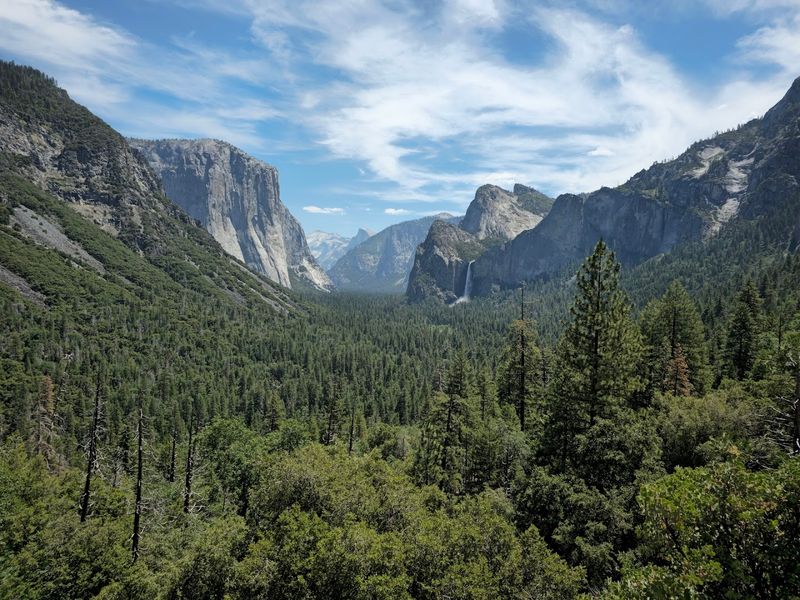
Stepping out of the Wawona Tunnel and into the open air at Tunnel View feels like the valley is presenting itself all at once.
El Capitan rises on the left, Half Dome anchors the far end of the valley, and Bridalveil Fall threads down the granite wall on the right, all framed by a wide, sweeping meadow below.
The composition practically arranges itself, which is why this viewpoint has been one of the most painted and photographed spots in the park for well over a century.
Sunrise here is particularly striking, with the early light catching the upper faces of El Capitan and Half Dome while the valley floor remains in cool shadow.
The parking area at the viewpoint fills quickly on weekends and during peak season, so arriving before 7 a.m. gives a noticeably better chance of finding a spot.
Reservations may be required to enter the park during busy periods, so checking the National Park Service website before visiting is strongly recommended.
The viewpoint is accessible year-round, though winter visits bring snow to the surrounding trees and cliffs, which transforms the scene into something quieter and almost monochromatic.
The pullout is just east of the tunnel exit on Wawona Road, and the paved area accommodates both cars and larger vehicles.
4. Glacier Point, Yosemite National Park
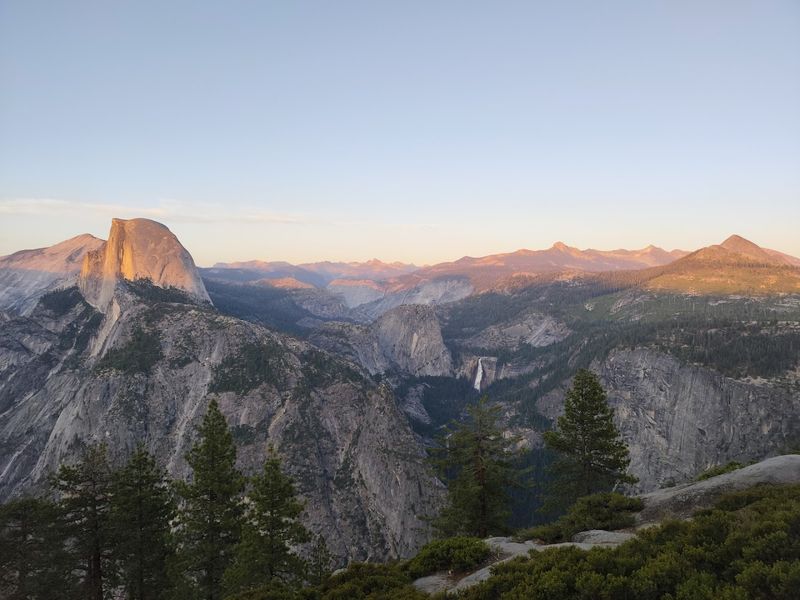
Standing at Glacier Point feels like being on a balcony suspended 3,200 feet above the valley floor, with Half Dome directly across and the entire length of Yosemite Valley laid out below.
The elevation gives photographers a bird’s-eye perspective that ground-level viewpoints simply cannot replicate, and on clear days the view extends well beyond the valley into the high Sierra Nevada.
The railing at the overlook keeps things safe while still allowing an unobstructed line of sight in almost every direction.
Afternoon light tends to work well here because it illuminates the face of Half Dome directly, while the golden hour before sunset can turn the granite walls a warm amber color that looks almost unreal.
The road to Glacier Point is typically open from late spring through fall, with exact dates depending on snowpack each year.
During the open season, the drive up Glacier Point Road takes about an hour from Yosemite Valley, and parking at the top can fill up by mid-morning on busy days.
For those willing to hike, the Four-Mile Trail connects the valley floor to Glacier Point and offers changing perspectives along the way.
Visiting on a weekday significantly reduces competition for parking and space at the overlook itself.
5. Mesquite Flat Sand Dunes, Death Valley National Park
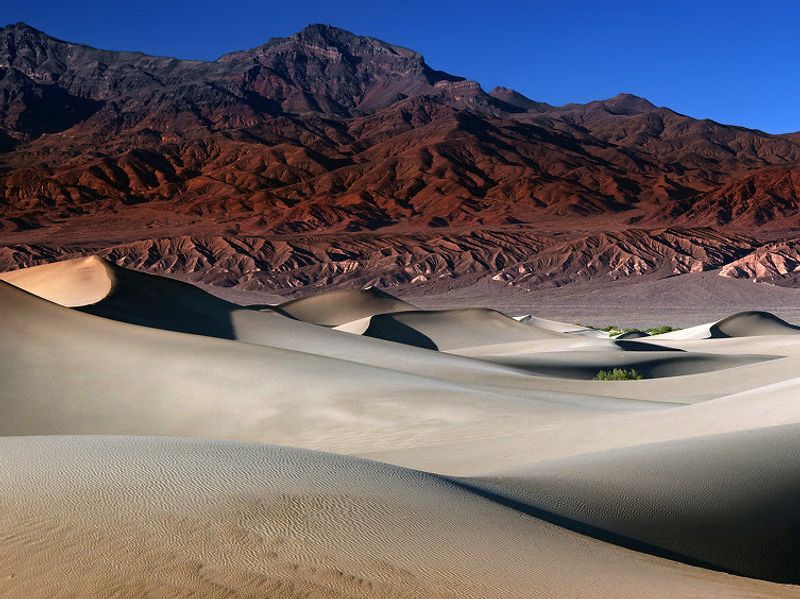
Sand dunes in the middle of a desert valley might sound like a predictable subject, but Mesquite Flat surprises most visitors with how textured and alive the surface actually looks up close.
Wind constantly reshapes the dunes overnight, which means the ripple patterns visible in the sand are often completely fresh by morning.
The dunes rise to about 100 feet at their tallest point and are surrounded by the Cottonwood and Panamint mountain ranges, which provide dramatic backdrops in almost every direction.
Sunrise is widely considered the best time to visit for photography because the low-angle light creates long shadows that emphasize every ridge and ripple in the sand.
The dunes are located just off Highway 190, roughly two miles east of Stovepipe Wells Village, and the short walk from the parking area to the base of the dunes takes only about ten minutes.
Temperatures in Death Valley can be extreme, particularly in summer, so early morning visits are not just better for photos but also considerably safer.
Footprints from other visitors can appear quickly after sunrise, so getting there right as the light begins to shift helps preserve the undisturbed look.
6. Zabriskie Point, Death Valley National Park
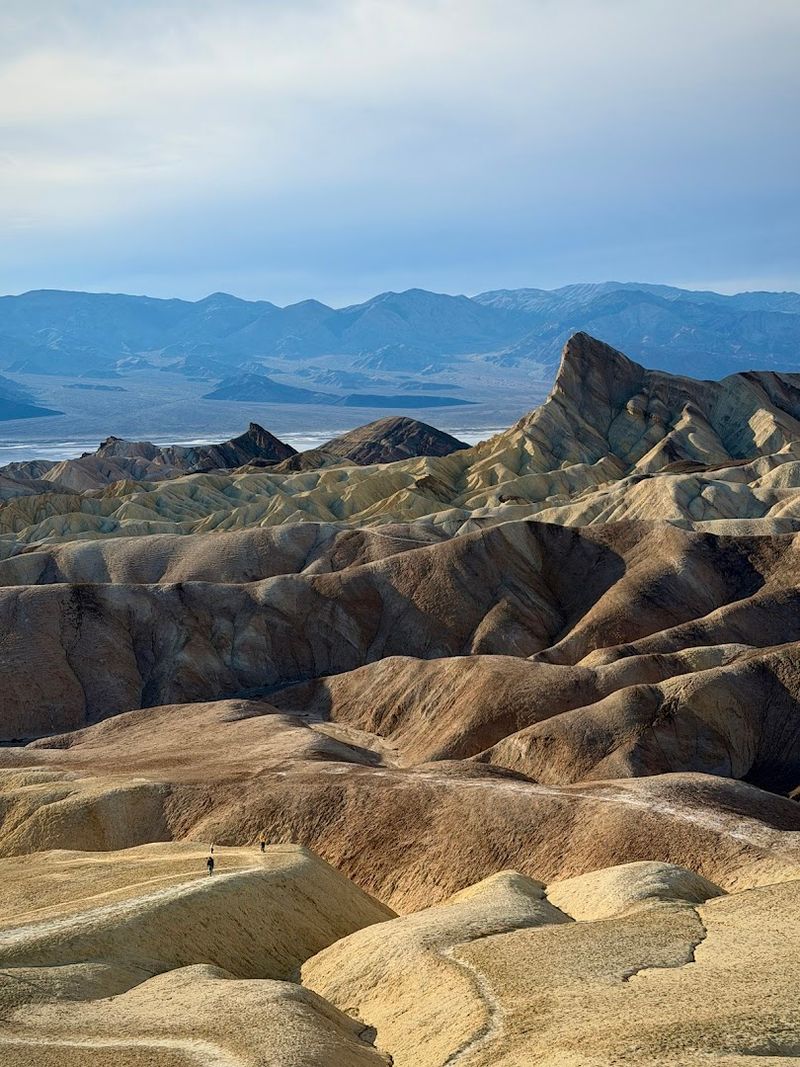
The eroded badland formations at Zabriskie Point look almost sculptural, with layers of golden and brown sediment folded into ridges and valleys that stretch toward the distant salt flats.
The landscape here was formed from ancient lake deposits that dried and compressed over millions of years, and the resulting textures are unlike anything found at most other parks.
Sunrise turns the formations a warm amber and gold that photographs particularly well against a deep blue sky.
The viewpoint sits at the end of a short paved path from the parking area, making it accessible without a strenuous hike.
Located about four miles east of Furnace Creek on Highway 190, the parking area can fill quickly at sunrise during peak season.
Arriving 30 to 45 minutes before sunrise allows time to find a good position along the overlook railing before the light begins to shift.
Midday visits are less rewarding photographically because the harsh overhead light flattens the texture of the formations.
Sunset also produces good color here, and the evening crowd tends to be slightly smaller than the sunrise crowd. Zabriskie Point is included in the standard Death Valley National Park entrance fee.
7. Alabama Hills, Lone Pine
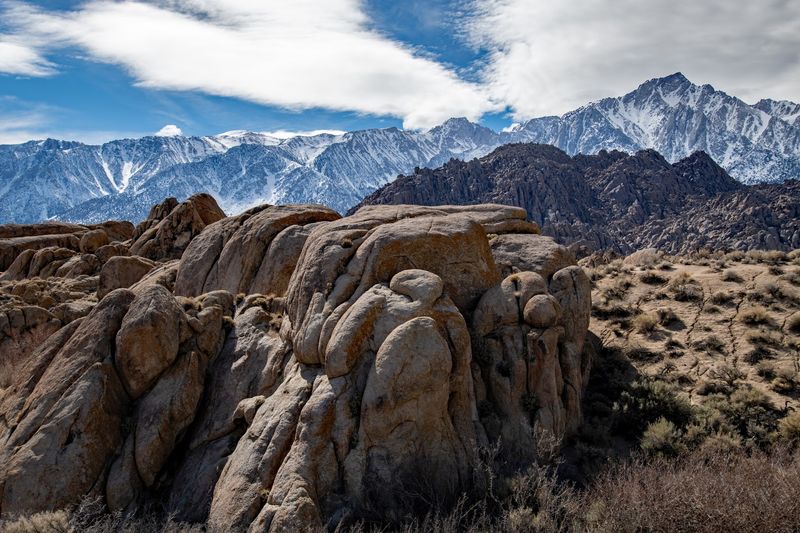
Rounded orange and brown granite boulders scattered across a wide-open valley with snow-capped Sierra Nevada peaks directly behind them create one of the most layered desert landscapes in California.
The Alabama Hills, located just west of the town of Lone Pine, have served as a backdrop for hundreds of Western films and television productions since the 1920s, and the terrain still has that timeless, cinematic quality.
Natural arches and windows in the rock formations allow for creative compositions that frame the mountains in unexpected ways.
Mobius Arch is one of the most popular formations in the area because it frames Mount Whitney, the highest peak in the contiguous United States, almost perfectly.
The arch is a short walk from the parking area off Movie Road and is accessible without any technical hiking ability.
Morning light from the east catches the face of the Sierra Nevada and the tops of the boulders simultaneously, which is why photographers tend to arrive around sunrise.
Dirt roads wind through much of the Hills, and while many are passable in a standard vehicle, some rougher tracks benefit from higher clearance.
8. Mono Lake Tufa State Natural Reserve, Lee Vining
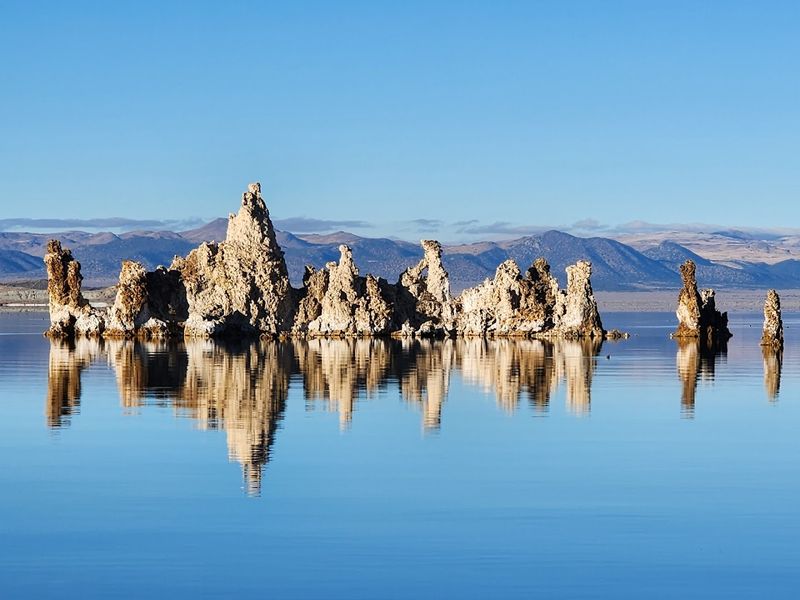
Calcium carbonate towers rising directly out of a still, alkaline lake with a pastel sky reflected on the water surface is the kind of scene that looks almost digitally enhanced even when standing right in front of it.
Mono Lake is one of the oldest lakes in North America and its tufa towers formed underwater over thousands of years before the lake level dropped enough to expose them.
The South Tufa area offers the most concentrated cluster of towers and is the primary photography destination within the reserve.
Sunrise at South Tufa is particularly striking because the low light grazes the rough texture of the towers and the calm morning water acts as a mirror for the sky above.
The South Tufa parking area is located off Highway 395 near Lee Vining, and a small day-use fee applies to enter the reserve.
The flat trail from the parking area to the lake edge is short and easy, making this accessible for visitors of nearly all fitness levels.
Migrating birds stop at Mono Lake in large numbers during certain seasons, which adds another photographic dimension beyond the tufa formations alone.
The reserve is open year-round, though winter visits may involve snow and cold temperatures that require appropriate preparation.
9. Venice Canals, Los Angeles
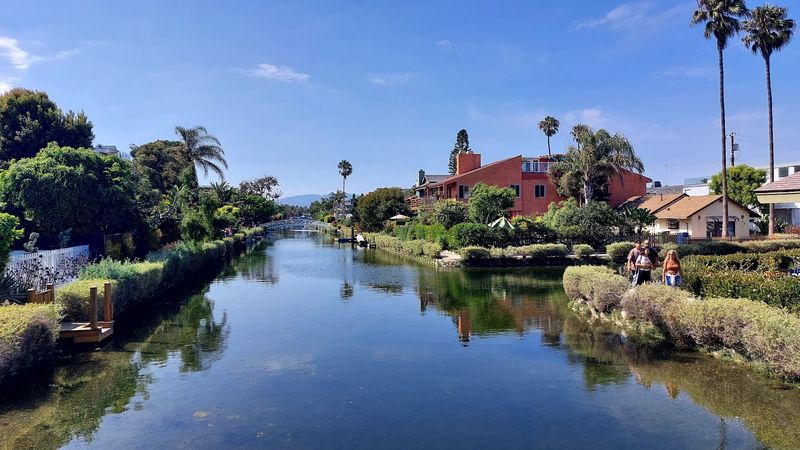
Just a few blocks from the famous Venice Beach boardwalk, the Venice Canals feel like a completely different world.
Narrow waterways lined with flowering plants, wooden footbridges, and eclectic homes create a quiet, almost European atmosphere that surprises most visitors who expect only the boardwalk scene.
The canals were originally built in 1905 as part of a planned resort community modeled after Venice, Italy, and the residential character of the neighborhood has kept the area feeling intimate and unhurried.
Morning light filters through the surrounding trees and reflects off the still water in a way that makes the whole canal system look almost painted.
Ducks and other waterfowl are common residents, and their presence adds life and movement to photographs without requiring any staging.
The canals are located in the Venice neighborhood of Los Angeles, and street parking is available in the surrounding residential blocks, though it can be limited on weekends.
Walking the full loop of the main canals takes about 20 to 30 minutes at a relaxed pace, and the footbridges offer elevated vantage points that allow for longer reflections in the water.
The area is a residential neighborhood, so keeping noise levels respectful of the people who live there is appreciated by the community.
10. Griffith Observatory, Los Angeles
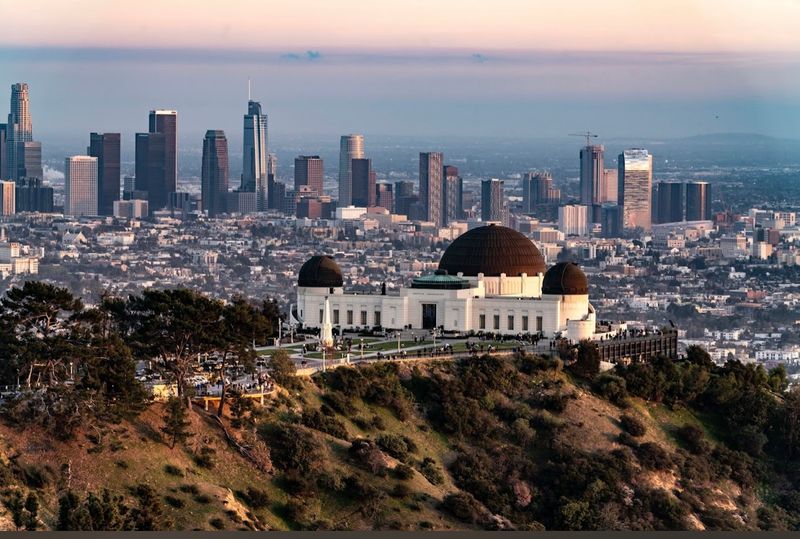
Perched on the south slope of Mount Hollywood in Griffith Park, the Griffith Observatory has one of the most expansive urban views available anywhere in Los Angeles.
The city grid spreads out below in every direction, and on clear days the view extends all the way to the Pacific Ocean.
The Hollywood Sign is visible on the ridge to the east, and the Art Deco architecture of the building itself provides a compelling foreground element for wide shots.
The observatory at 2800 East Observatory Road, Los Angeles, CA 90027, is free to visit and open to the public most days of the week, though hours vary by season and the building is closed on Mondays.
Sunset and the hour just after, when city lights begin to appear, tend to produce the most dramatic photography conditions from the front lawn and surrounding terraces.
The combination of the lit observatory dome, the fading sky, and the emerging city glow creates a layered scene that works well with both wide and telephoto lenses.
Parking on the hill can be limited, and the lot fills quickly on weekends and during special events.
The DASH Observatory shuttle from Los Feliz provides a reliable alternative for those who prefer not to deal with parking logistics on busy evenings.
11. McWay Falls Overlook, Big Sur
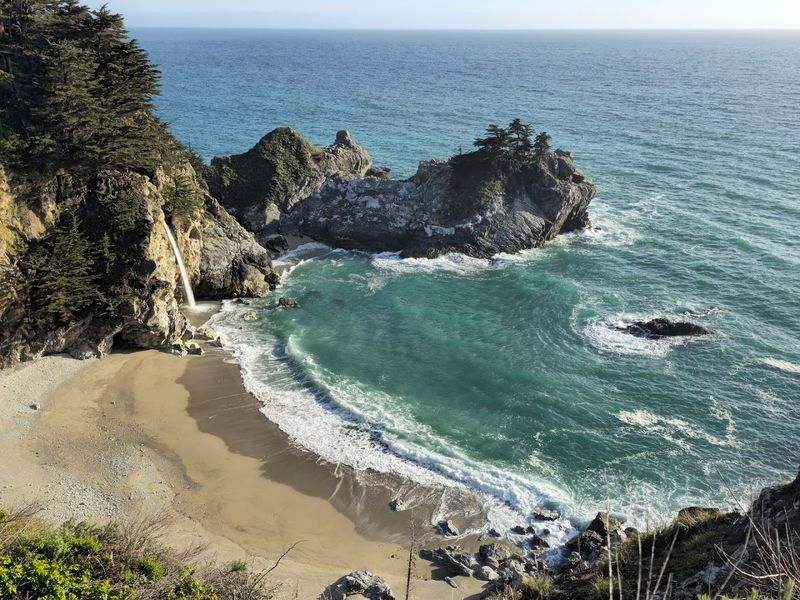
An 80-foot waterfall dropping directly onto a secluded sandy cove with turquoise water on one side and layered sandstone cliffs on the other is the kind of scene that belongs on a postcard.
McWay Falls at Julia Pfeiffer Burns State Park is one of the few tide-falls in California, meaning the water falls directly onto the beach rather than into a stream or river.
The beach itself is inaccessible to visitors, which actually works in favor of photographers because the pristine sand remains undisturbed in every shot.
The overlook trail from the parking area is short, roughly half a mile round trip, and the main viewpoint provides a clear sightline down to the falls and cove.
Afternoon light from the west illuminates the waterfall and the surrounding cliffs most directly, while morning visits offer cooler temperatures and softer light.
Julia Pfeiffer Burns State Park charges a day-use fee, and parking can fill quickly during peak season, particularly on weekends and holidays.
The falls flow year-round, though the volume of water is visibly greater during and after the winter rainy season.
Highway 1 closures or detours in Big Sur can affect access to the park, so checking current road conditions through Caltrans before making the trip is a practical step worth taking.
12. Santa Barbara County Courthouse, Santa Barbara
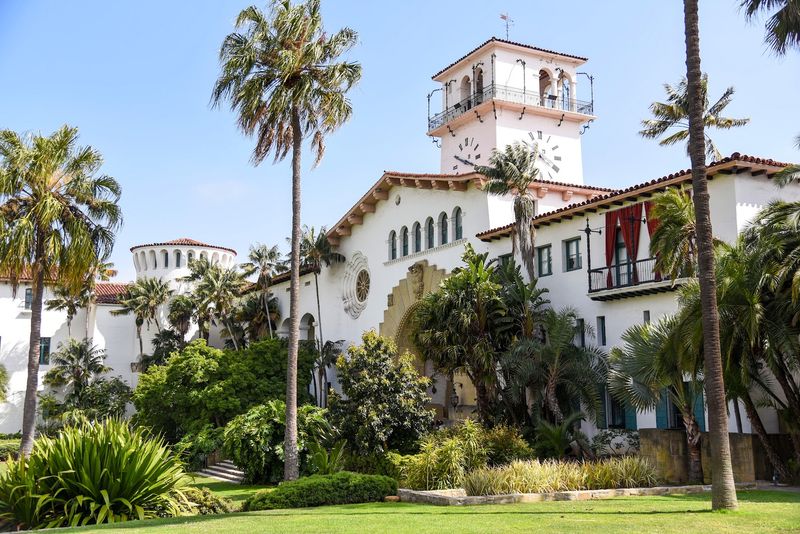
Built in 1929 in a Spanish Colonial Revival style, the Santa Barbara County Courthouse is widely considered one of the most beautiful government buildings in the United States.
White stucco walls, hand-painted tiles, arched doorways, and a sunken garden courtyard give the building a warm, Mediterranean character that photographs beautifully in the bright Southern California light.
The clock tower, known as El Mirador, offers a panoramic view of the city, the mountains, and the Pacific Ocean from its open observation deck.
The courthouse at 1100 Anacapa Street, Santa Barbara, CA 93101, is open to the public on weekdays and offers free self-guided tours during regular business hours.
The mural room inside the building features a hand-painted panoramic mural of early California history that adds an interior photography dimension beyond the exterior architecture.
Morning light falls on the front facade in a flattering way, while the courtyard and garden areas remain pleasant throughout the day.
The surrounding downtown area of Santa Barbara is walkable and compact, making it easy to combine a courthouse visit with other stops along State Street.
13. Joshua Tree National Park, Joshua Tree
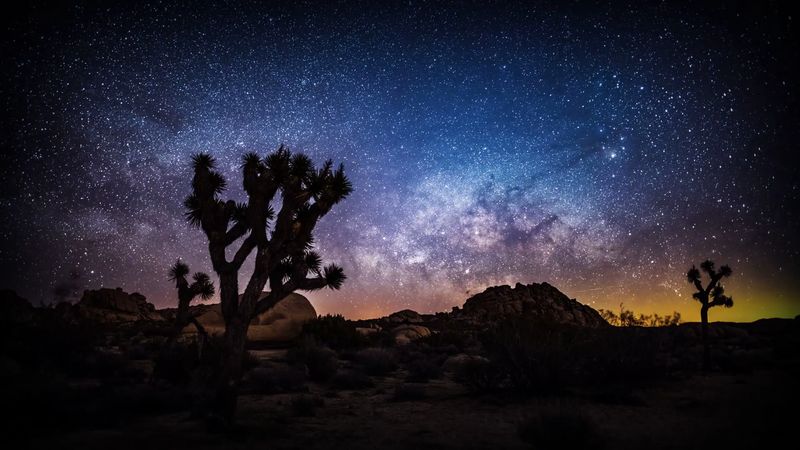
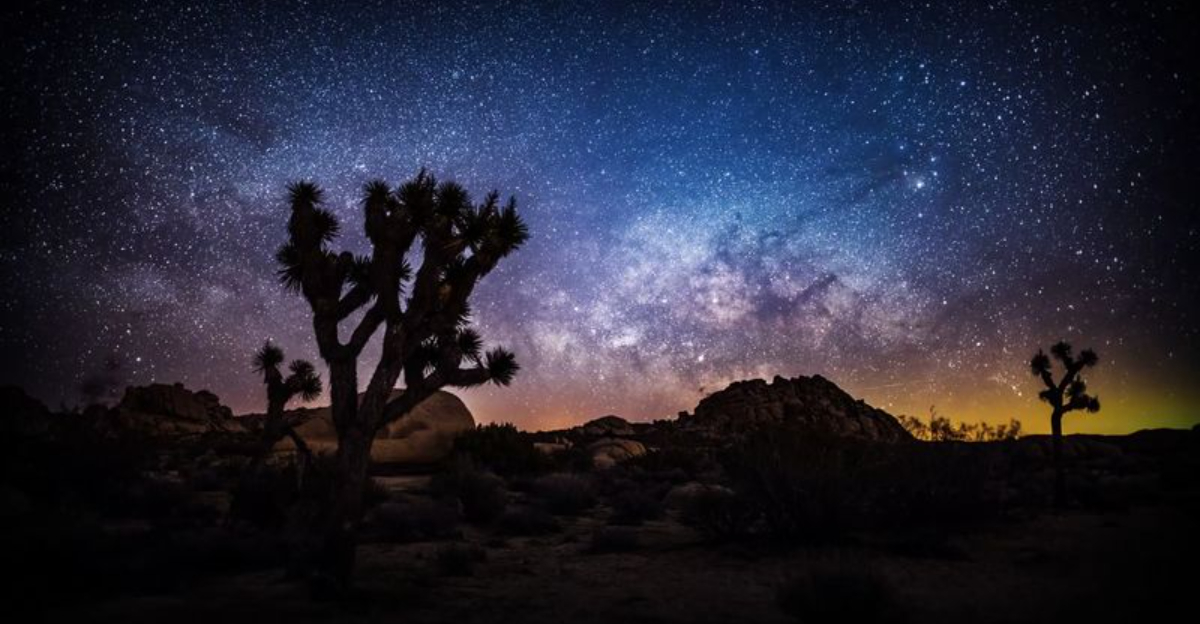
The combination of twisted Joshua trees, enormous rounded granite boulders, and a sky that turns spectacular colors makes this park one of the most visually distinctive landscapes in the American West.
Joshua trees are found naturally only in a specific elevation band of the Mojave Desert, and the park protects one of the largest concentrations of them anywhere.
The boulders, known as monzogranite formations, are equally photogenic and create natural compositions at every turn.
Keys View, located in the western portion of the park, offers a wide panoramic view across the Coachella Valley toward the Salton Sea and the San Jacinto Mountains.
The drive to Keys View is paved and accessible to standard vehicles, and the viewpoint has a paved walkway with interpretive signs.
Skull Rock, located along the Skull Rock Nature Trail near the park’s main road, is a popular formation that resembles a skull when viewed from a specific angle and works particularly well as a foreground element.
Night photography is a major draw at Joshua Tree because the park has relatively low light pollution, and the Milky Way is visible on clear nights during the right seasons.
The park charges an entrance fee, and during peak season between October and May, arriving early on weekends helps avoid crowded trailheads and parking areas.