10 Reasons Glass-Architecture Fans Love Columbus, Indiana
How does a small Midwestern city become an architecture mecca? Columbus answers that question beautifully.
Glass and steel rise where you least expect them. Famous designers left fingerprints all across town.
I get giddy whenever buildings double as living artwork. Multiple destinations explain the devotion fans feel here.
You stroll past masterpieces hiding behind ordinary corners. Light bends through walls in unexpected ways.
This Indiana town treats design as everyday life. Visitors arrive skeptical and leave completely converted.
Each structure tells a story through transparency and form. Architecture lovers treat this town as sacred ground.
Some cities build for function, but this builds for wonder.
1. Cummins Corporate Office Building
Trust me, the headquarters of a Fortune 500 engine maker is not where most people expect to slow down and stare.
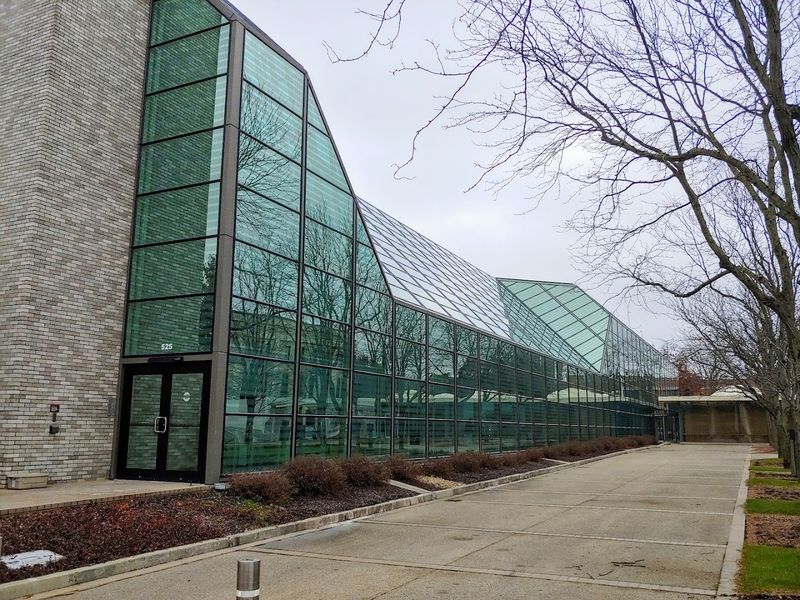
The Cummins Corporate Office Building stretches across three downtown blocks at 500 Jackson St, designed by Pritzker Prize-winning architect Kevin Roche and completed in 1983.
It rises on a former rail yard, and rather than clear the site, Roche wrapped his new structure around the historic 1867 Cerealine Building, Cummins’s first factory, which now serves as the employee cafeteria.
The building is deliberately restrained. Cast-in-place octagonal concrete columns and precast spandrels set the rhythm, with narrow windows tuned to control glare and street noise rather than to show off.
What rewards a closer look is the relationship between building and ground. Jack Curtis’s park-like landscape wraps the complex in lawns and trees, earning a national landscape award and softening the structure into its downtown setting.
Where glass does appear, it does quiet work, opening the garden-facing edges to daylight and connecting the offices to the green space outside. A later renovation traded some concrete panels for clear glazing on those courtyard sides.
The building at 500 Jackson St proves that Columbus’s design ambitions reached even its corporate engine room. It is less a glass spectacle than a study in restraint, materials, and landscape working as one.
2. First Christian Church
Can you believe that one of America’s most architecturally significant churches sits quietly on a street corner in a small Indiana city?
The First Christian Church at 531 5th St was designed by Eliel Saarinen and completed in 1942. It is widely credited as the building that launched Columbus’s extraordinary architectural journey.
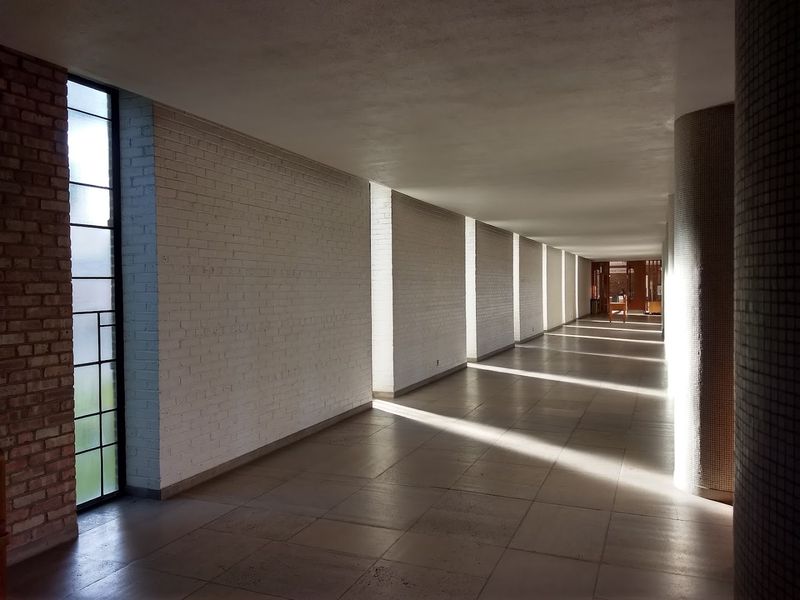
The structure blends brick and glass in a way that was radically modern for its time. A tall, elegant tower anchors the composition, while carefully placed windows allow light to filter into the sanctuary in soft, contemplative streams.
Standing outside, you can sense the building’s quiet authority without a single word being spoken. Inside, the interplay of natural light and restrained ornamentation creates an atmosphere that is both solemn and uplifting.
The glass elements are not showy but purposeful, directing attention inward and upward in equal measure. For anyone seriously interested in American modernism, this church is essentially a required stop.
It set a precedent that shaped an entire city’s identity for decades to come. Few buildings carry that kind of cultural weight so gracefully, and fewer still manage to look this good doing it.
3. AT&T Switching Center
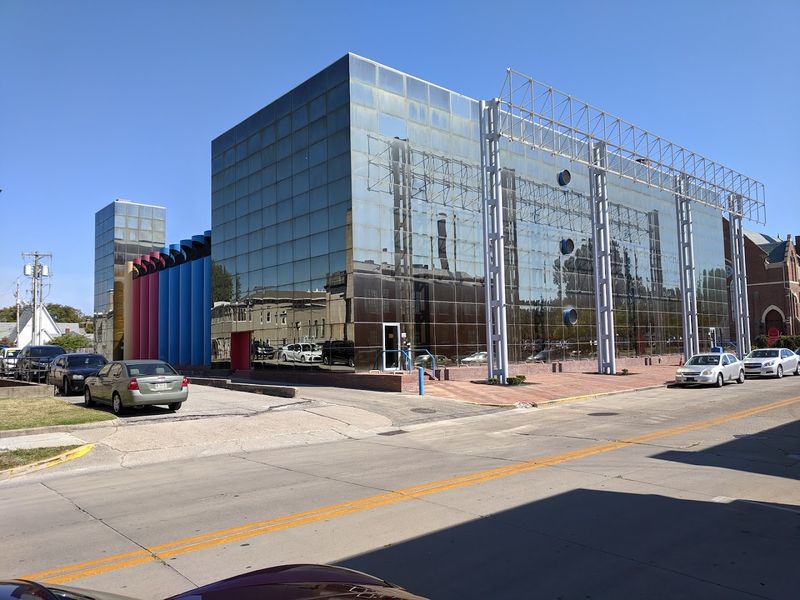
Trust me, a telephone switching center is not something most people put on their travel itinerary.
But the AT&T Switching Center, designed by Paul Kennon of Caudill Rowlett Scott in 1978, is a building that demands a second glance and then a third.
Its bold, almost theatrical exterior makes no apologies for being exactly what it is: a piece of serious architecture wrapped around industrial infrastructure.
Pelli used a combination of reflective glass and geometric precision to create a facade that shifts in appearance depending on the light and your angle of approach. The building at 420 7th St does not try to blend in.
It asserts itself with confidence, reflecting the sky and surrounding streetscape in ways that feel almost cinematic.
For glass-architecture enthusiasts, the AT&T Switching Center is a fascinating case study in how reflective surfaces can animate an otherwise utilitarian structure.
The mirrored quality of the glass panels gives the building a dynamic presence that changes throughout the day.
Early morning light transforms the facade into something almost painterly. This is a building that rewards slow, deliberate observation.
It is proof that even the most functional buildings in Columbus were given the full architectural treatment.
4. The Republic Building
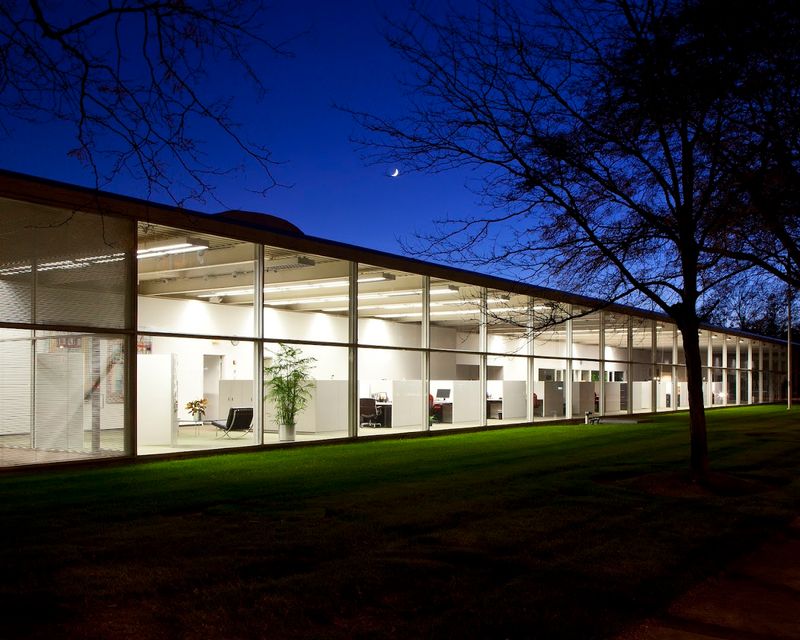
Who would have thought that a newspaper headquarters could become one of the most photographed buildings in the entire state of Indiana?
The Republic Building was designed by Skidmore, Owings and Merrill and completed in 1971. It is a masterclass in the glass curtain wall aesthetic that defined American commercial architecture during that era.
The building’s transparent facade allows passersby to see directly into the working interior, which was a deliberate and bold choice.
Journalism, after all, is meant to be transparent, and the architecture reflects that value in a very literal way. The glass skin wraps the structure cleanly at 333 2nd St, with a precision that rewards close inspection.
Light behaves beautifully on and through this building at different times of day. In the afternoon, the glass takes on a warm golden tone that makes the whole structure glow.
At dusk, the illuminated interior turns the facade into something resembling a luminous lantern planted on a city block. For architecture fans who appreciate the relationship between a building’s purpose and its design language,
The Republic Building is endlessly interesting. It is one of those structures that you keep returning to, finding something new each time you look.
5. Miller House And Garden Ticket Office
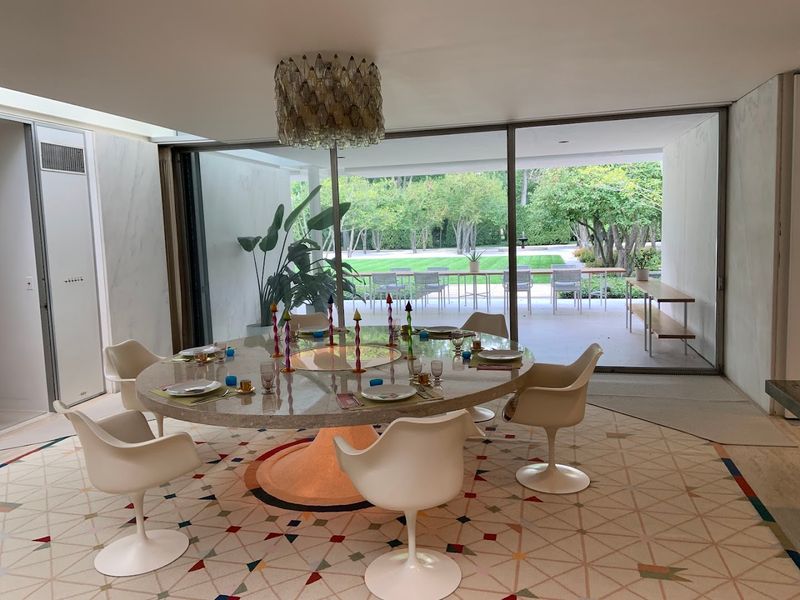
Believe me, the gateway to one of America’s greatest mid-century modern homes is worth a stop all by itself.
The Miller House and Garden Ticket Office serves as the starting point for tours of the celebrated Miller House, designed by Eero Saarinen. Even this modest structure carries the architectural DNA of its surroundings.
The ticket office reflects the clean, glass-forward sensibility that defines the broader Miller House experience. Large windows and an open, transparent design philosophy signal immediately that you are entering a world where modernism is taken seriously.
The garden setting at 506 5th St amplifies the effect, with greenery framing the glass panels in a way that feels both curated and natural.
Booking a tour here leads you to the main Miller House, which is arguably the crown jewel of Columbus’s architectural collection.
The house itself features floor-to-ceiling glass walls that dissolve the boundary between interior and exterior, creating a living space that breathes with the landscape around it.
For anyone passionate about mid-century modernism and the expressive use of glass in residential architecture, this entire experience is deeply satisfying.
Few places in the American Midwest deliver this level of architectural richness in such an intimate, accessible setting.
6. Cummins Inc. Irwin Conference Center
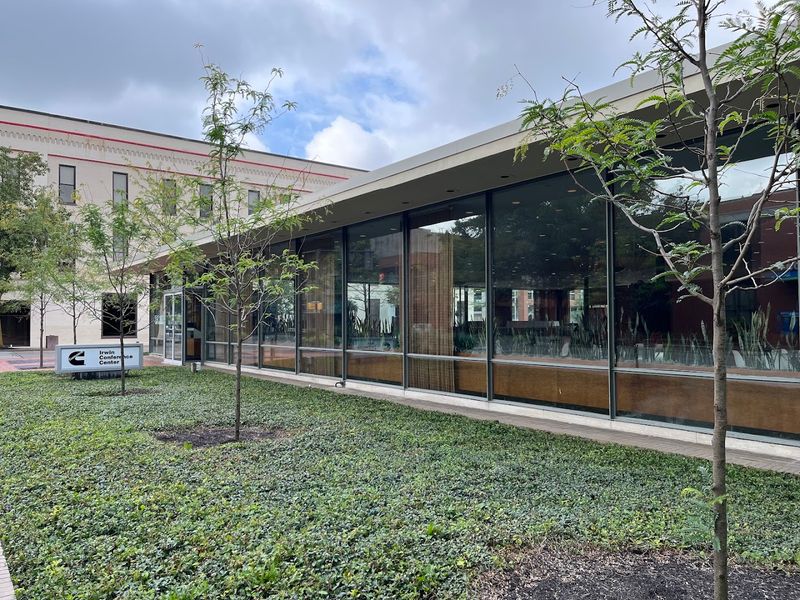
I never would have guessed that a corporate conference center could feel this architecturally generous.
The Cummins Inc. Irwin Conference Center is a building that takes its civic responsibility seriously. Cummins has long been the engine behind Columbus’s architectural ambitions, and this building reflects that commitment with quiet authority.
Expansive glass walls define the exterior, creating a transparency that connects the building’s interior life to the streetscape outside. The steel framing is precise and elegant, giving the glass panels a clean, purposeful setting.
Natural light floods the interior at 500 Washington St throughout the day, making the conference spaces feel open and energizing rather than enclosed and corporate.
The building sits within Columbus’s broader network of architecturally significant structures, contributing to the walkable experience that makes the city so rewarding to explore on foot.
Glass is used here not just for aesthetics but for a sense of civic openness, suggesting that what happens inside this building is connected to the community around it.
The Irwin Conference Center is a reminder that great design in Columbus was never reserved for museums or churches alone. Commercial and institutional buildings received the same thoughtful treatment, and the city is richer for it.
7. Columbus Regional Health
Doesn’t it seem remarkable that even a hospital manages to make a compelling architectural statement?
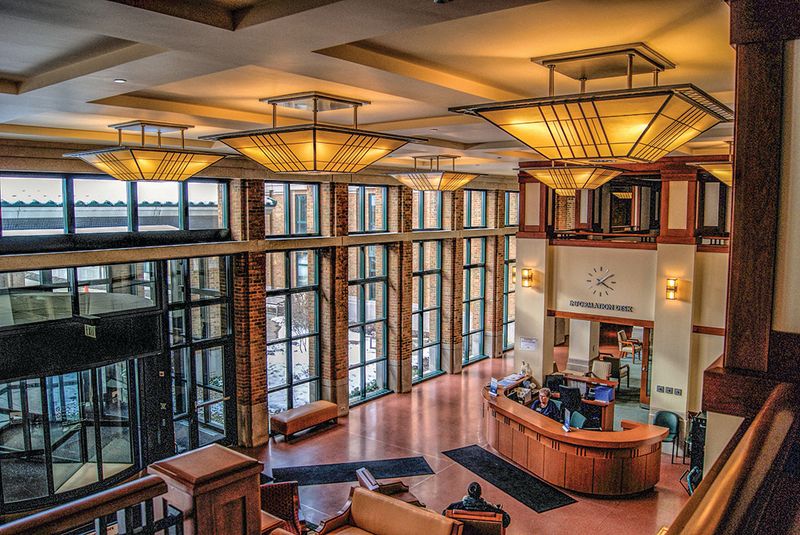
Columbus Regional Health at 2400 17th St is a building that approaches healthcare design with the same seriousness that the city brings to all of its built environment.
The facility was rebuilt after significant flood damage in 2008 and emerged as a genuinely forward-thinking structure.
The rebuilt hospital features generous glass elements throughout its exterior, prioritizing natural light as a core component of the healing environment.
Research consistently supports the idea that daylight improves patient recovery, and the design here takes that seriously. Floor-to-ceiling windows in key areas connect patients and staff to the outdoors in meaningful ways.
The overall composition is clean and contemporary, with glass playing a central role in defining the building’s character. For architecture enthusiasts, it is fascinating to see how modernist design principles translate into a healthcare context.
The building demonstrates that Columbus’s architectural ambitions extend well beyond cultural landmarks and corporate headquarters. Everyday infrastructure here gets the same careful design attention.
That is what makes walking or driving through this city such a consistently rewarding experience. Columbus Regional Health is proof that good architecture truly serves everyone.
8. The Advanced Manufacturing Center Of Excellence
You might not believe me when I say that a manufacturing training facility belongs on an architecture lover’s must-see list, but the Advanced Manufacturing Center of Excellence makes a strong case.
The AMCE is a building designed to inspire the next generation of skilled workers, and its architecture is part of that mission.
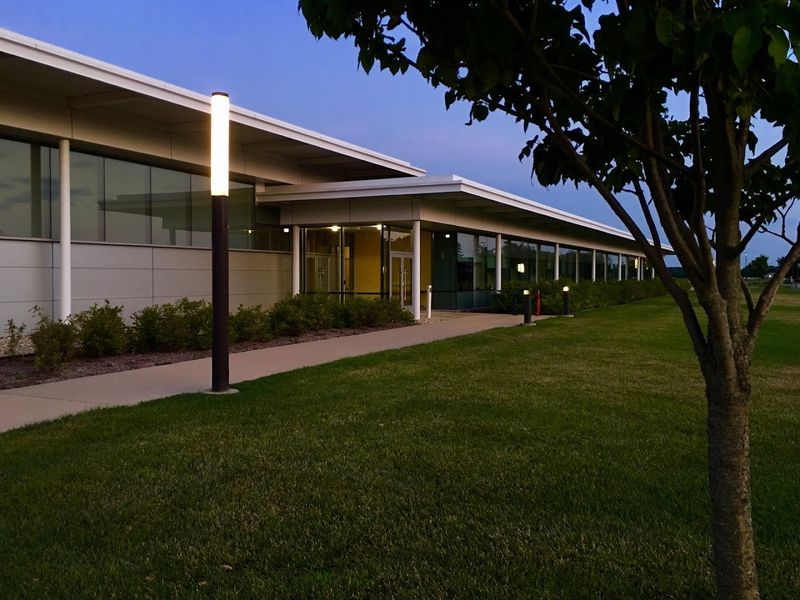
Large glass panels define much of the exterior, allowing natural light to pour into workshop and classroom spaces.
The transparency of the facade communicates something important: that the work happening inside is worth seeing, and that manufacturing can be a proud, visible part of a community’s identity.
The building refuses to hide behind opaque walls or industrial anonymity.
Steel and glass combine at 4444 Kelly St in a way that feels both practical and aspirational. The structure has an honest quality, showing its materials clearly and using them purposefully.
The AMCE offers a different kind of pleasure than the city’s more celebrated cultural buildings. It demonstrates that modernist design principles can be applied to vocational and technical spaces just as effectively as to libraries or churches.
Columbus continues to surprise, and the AMCE is one of its more quietly impressive recent additions to an already remarkable architectural inventory.
9. Columbus Learning Center
I know, a learning center as an architectural landmark sounds like something only a true design nerd would argue for. But the Columbus Learning Center worth the detour.
The building serves as a collaborative educational facility and approaches its design with the same ambition that defines the city’s best architecture.
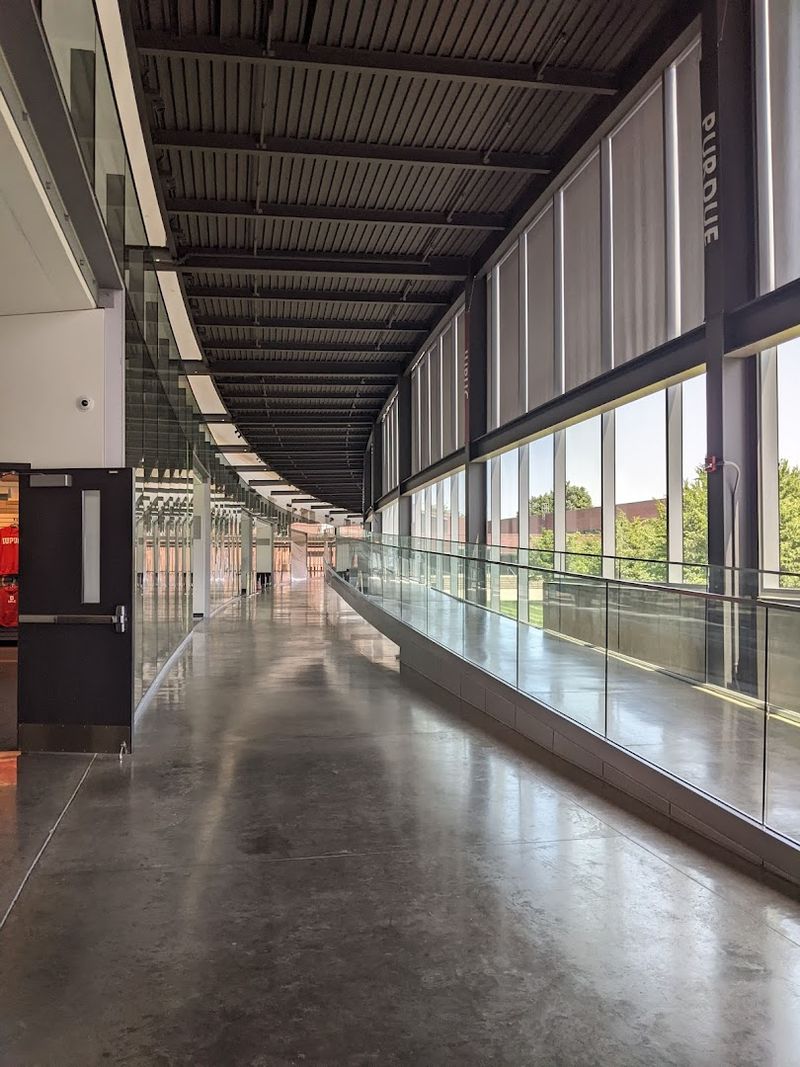
Glass plays a central role in the building’s exterior language, with large transparent surfaces that invite natural light into every corner of the interior.
The effect is one of openness and accessibility, signaling that learning here is a shared, community-centered activity. The building at 4555 Central Ave does not close itself off behind heavy walls or small windows.
From the outside, the interplay of glass and structural framing creates a facade that reads as both dynamic and purposeful.
Light conditions throughout the day shift the building’s appearance, giving it a slightly different character in the morning than in the late afternoon.
For architecture enthusiasts making the rounds in Columbus, the Learning Center adds an important dimension to the city’s story.
It shows that the commitment to thoughtful design here is ongoing and forward-looking, not simply a historical artifact from a golden era.
10. The Commons
I have to admit, I didn’t expect a downtown playground and gathering hall to stop me in my tracks.
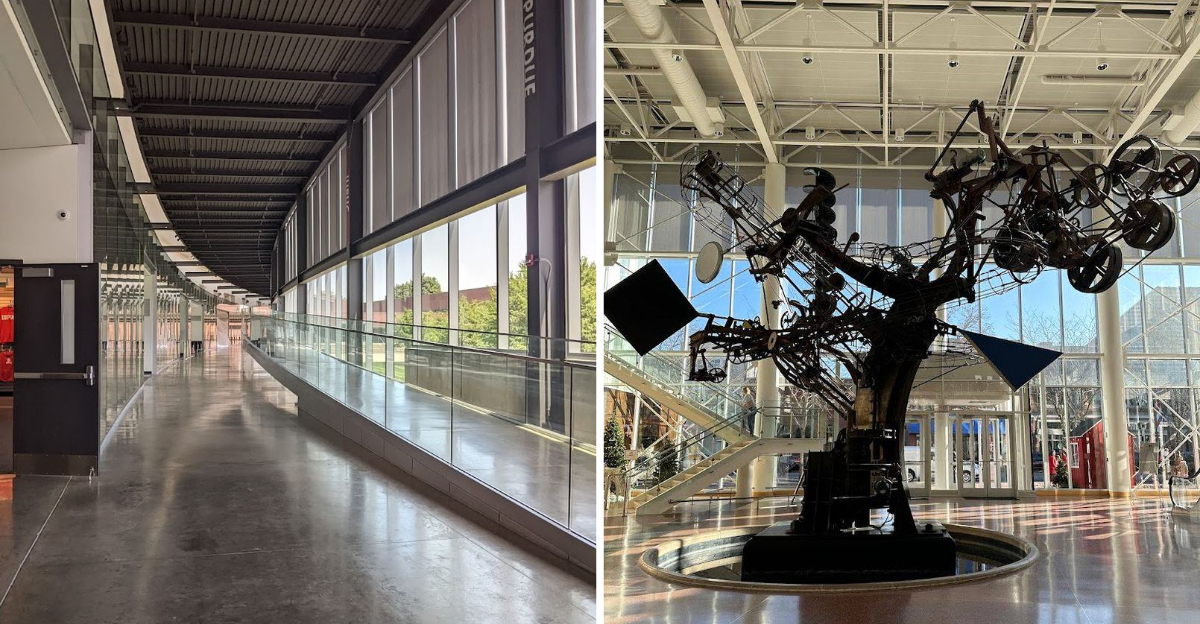
The Commons sits at the heart of Columbus at 300 Washington St, a glass-walled civic living room that the whole city seems to pass through.
Designed by the Boston firm Koetter Kim and completed in 2011, it rose on the steel skeleton of Cesar Pelli’s original 1973 Commons, carrying that legacy forward in a thoroughly contemporary skin.
Expansive walls of clear glass open the interior to the street, so passersby can see straight into the life of the building. That transparency is the entire point, inviting people in rather than walling them off.
Inside, light pours across an open floor that hosts performances, lectures, and community events upstairs and a soaring indoor playground below.
The playground’s centerpiece is a thirty-five-foot Luckey Climber that children scramble up while parents watch from the glass-framed perimeter.
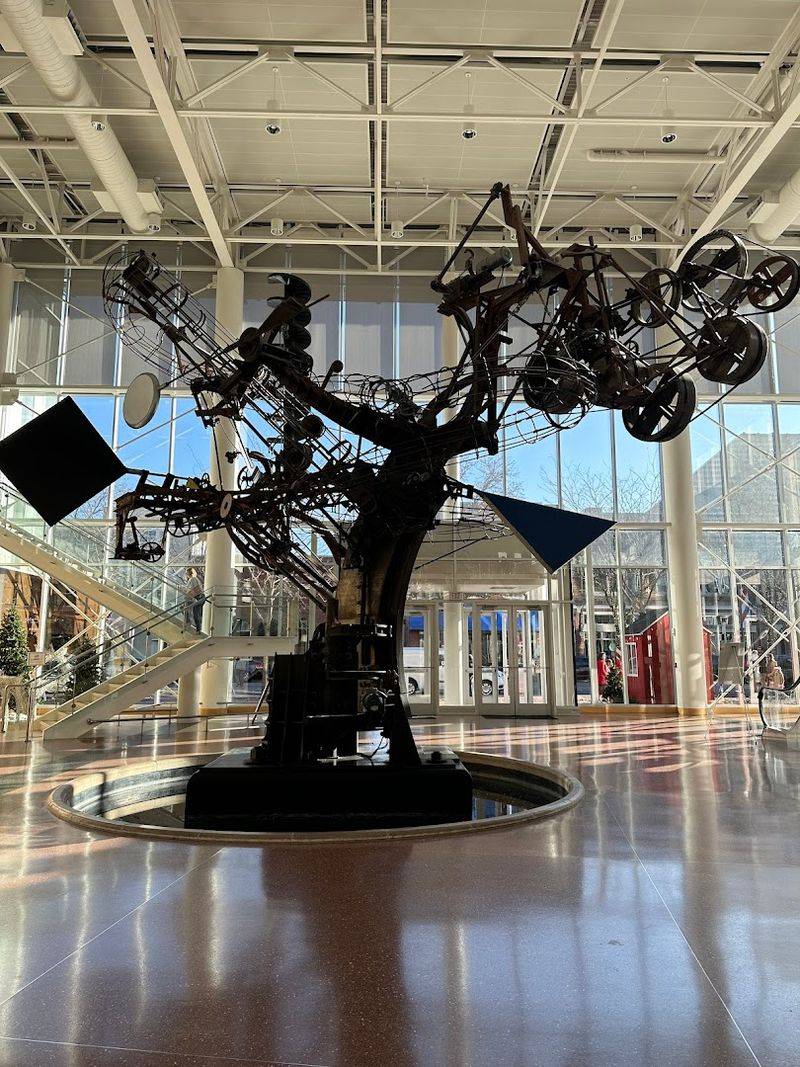
The space also shelters Chaos I, Jean Tinguely’s clattering kinetic sculpture, which has anchored this corner since the Pelli era. Glass lets the sculpture and the activity around it become part of the streetscape itself.
What makes this building special is how completely it belongs to the public. It treats glass not as a luxury but as an act of civic generosity, a way of saying everyone is welcome here.
The Commons proves that a town devoted to architecture can put its boldest transparency to work in the most everyday of places.