This Tiny State Park In California Will Melt All Your Stress Into Calm
Stress has a funny habit of disappearing without announcing its exit.
One minute your brain is juggling tomorrow.
The next, you are listening to waves, watching the horizon, and wondering why you waited so long to come here.
This coastal place in California seems almost determined to lower your blood pressure the moment your shoes touch the trail.
That quiet talent is pretty rare.
Nothing flashy demands attention. Ocean bluffs and sea air seem to work together like they rehearsed it.
You keep walking because the next bend looks promising. Then the one after that does the same.
By the time you turn around, the noisy part of the day feels oddly distant. It is like accidentally wandering into a place where stress simply forgot to follow.
A Small Park With Big Coastal Calm
Not every peaceful place announces itself loudly, and Estero Bluffs State Park is proof of that quiet confidence.
Sitting just north of Cayucos on California’s Central Coast, the park spans roughly 353 to 355 acres of coastal land that feels more like a well-kept secret than a public destination.
The absence of major facilities is intentional, and that restraint is exactly what gives the park its calm, unhurried energy.
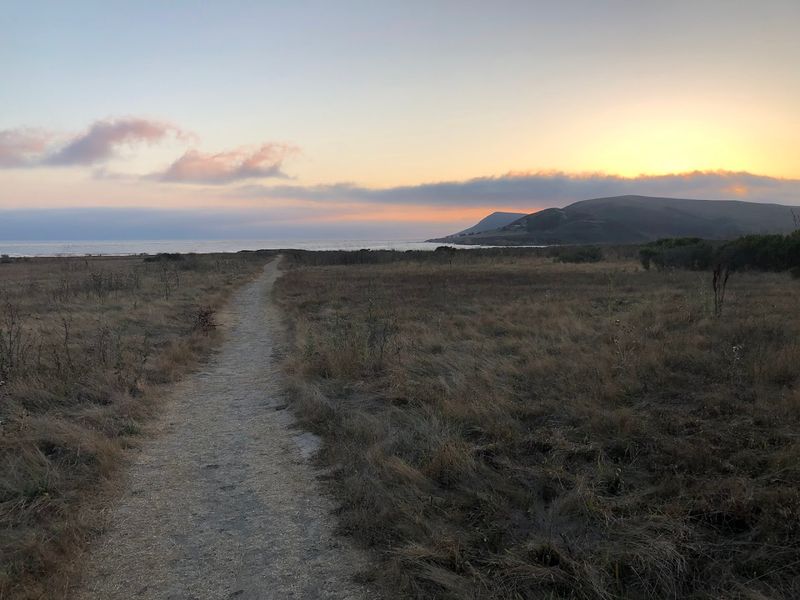
The landscape here is a marine terrace that gently slopes toward the Pacific, covered mostly in native grasslands with low bluffs edging the shoreline.
There are no concession stands, no entrance booths, and no long lines to navigate before reaching the coast. Visitors simply pull off near Highway 1 and start walking.
Over four miles of pristine coastline runs through the park, making it one of the more generous stretches of undeveloped shoreline on the Central Coast.
The park was established in 2000 to protect this area from coastal development, and that protective purpose still shapes every visit today.
Coming here feels less like checking off a tourist stop and more like stepping into a version of the coast that has been left mostly alone on purpose.
Bluff-Top Trails That Feel Easy, Not Exhausting
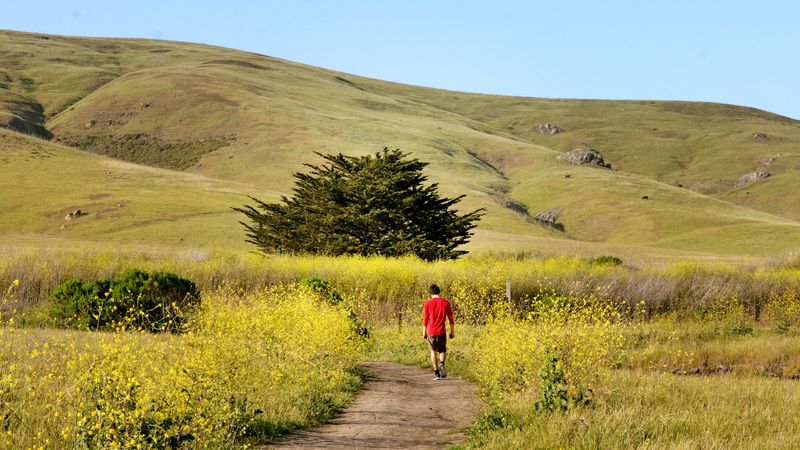
The trail system at Estero Bluffs offers over nine miles of paths in total, with a four-mile coastal bluff trail being the most popular route for casual walkers.
The terrain runs mostly flat along the top of the bluffs, keeping the walk accessible without requiring any serious fitness preparation.
Hiking footwear with decent grip is still a good idea since occasional short steep sections appear depending on which direction a visitor chooses to walk.
Paths run parallel to the rocky shoreline and connect back toward Highway 1, making it easy to adjust the length of a walk based on energy and time.
The trail is wide enough to feel comfortable without being so manicured that it loses its wild coastal character.
Some sections pass through native grassland while others bring walkers close enough to the bluff edge to hear the surf clearly below.
Getting down to the beach from the bluffs is possible at several points along the trail, though the paths leading down can be uneven and require careful footing.
The walk from the parking area to Villa Creek and back covers roughly 6,000 steps, making it a satisfying outing without turning into an all-day commitment.
Early morning visits tend to offer cooler temperatures and a quieter trail experience overall.
Ocean Views That Do Most Of The Work
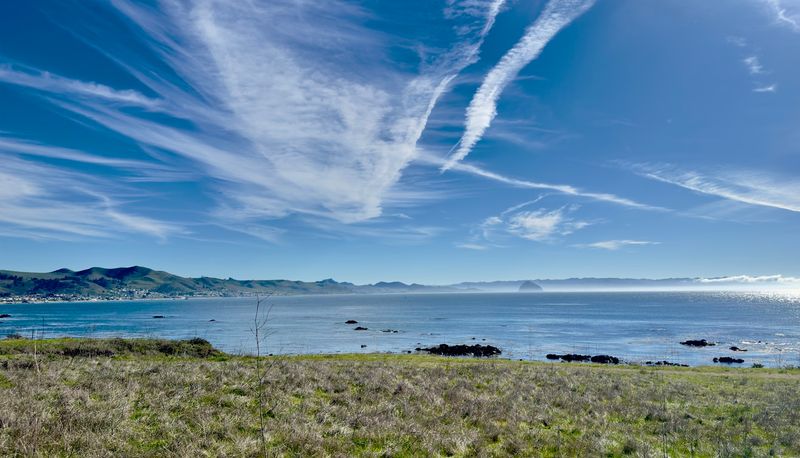
Standing on the bluffs at Estero Bluffs State Park, the view does something that no playlist or meditation app can fully replicate.
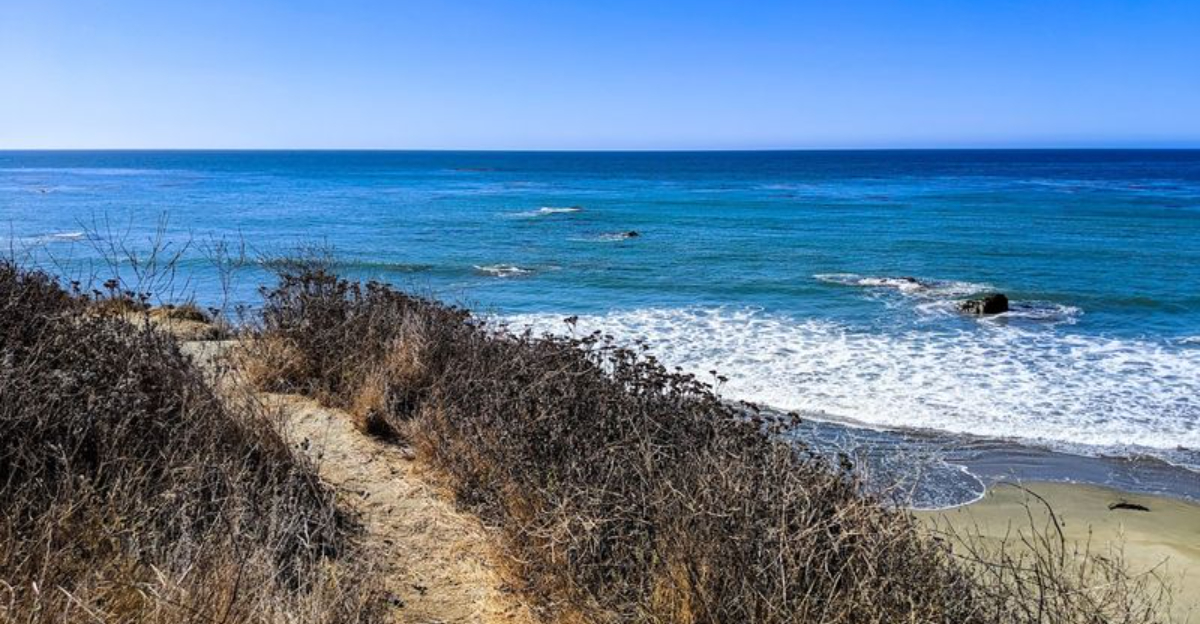
Estero Bay spreads out across the horizon with the Pacific beyond it, and on clear days the distant silhouette of Morro Rock is visible to the south.
Sea stacks rise from the water close to shore, giving the scenery a dramatic edge that feels almost theatrical without trying to be.
The combination of open water, rocky outcroppings, and low coastal bluffs creates a layered visual experience that shifts depending on the time of day.
Morning visits often bring cool fog that softens the light and muffles the sound of traffic from Highway 1, making the ocean feel even closer than it already is.
Afternoon light tends to turn the water a deeper shade of blue and brings out the texture of the surrounding grasslands.
Sunset visits have their own appeal, with the sky over the Pacific shifting through warm tones as the day winds down.
The views here are not filtered through fences or framed by parking structures.
They open up naturally as a visitor walks the trail, arriving gradually rather than all at once, which makes each new vantage point feel like a small reward for continuing forward.
Pocket Coves Make It Feel Secret
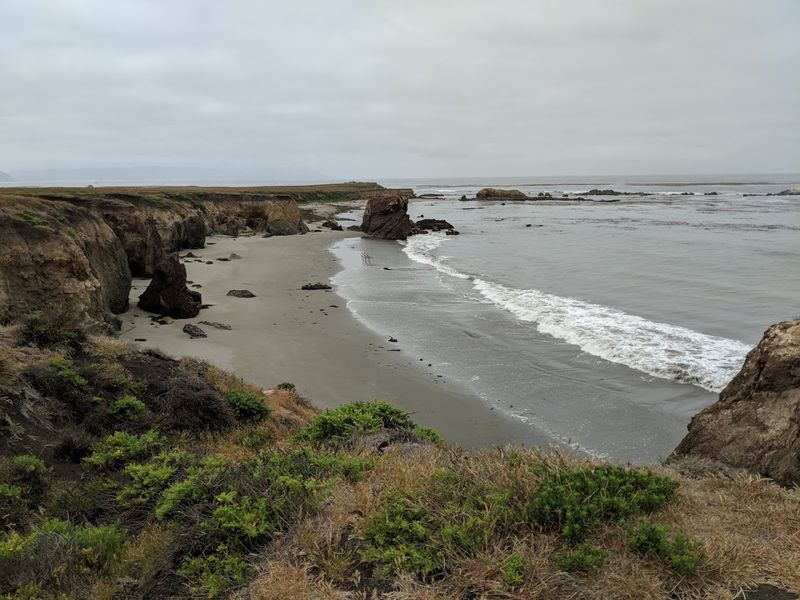
There is something genuinely exciting about finding a beach that feels like it belongs only to the moment.
California State Parks notes that Estero Bluffs includes a pocket cove and beach at Villa Creek, a hidden spot that gives the park a quality most busy beach destinations simply cannot offer.
Reaching it requires a walk rather than a drive-up, which naturally keeps the area quieter than more accessible coastal stops.
The cove sits where Villa Creek meets the ocean, creating a small sheltered area with a different energy than the open bluffs above.
The sound of the creek mixing with the surf adds a layered texture to the experience that makes the spot feel more alive and less like a backdrop.
Visitors who take the time to find it often describe the sense of discovery as one of the highlights of the entire visit.
Conditions at the cove can vary depending on tide levels and seasonal weather, so checking tide charts before a visit adds practical value to the experience.
The cove is not heavily marked or promoted, which contributes to its appeal as a place that rewards curiosity and a willingness to keep walking.
Finding a quiet stretch of California coastline that feels genuinely off the beaten path is rarer than it used to be, and Villa Creek delivers that feeling reliably.
Tidepools Add A Little Treasure-Hunt Energy
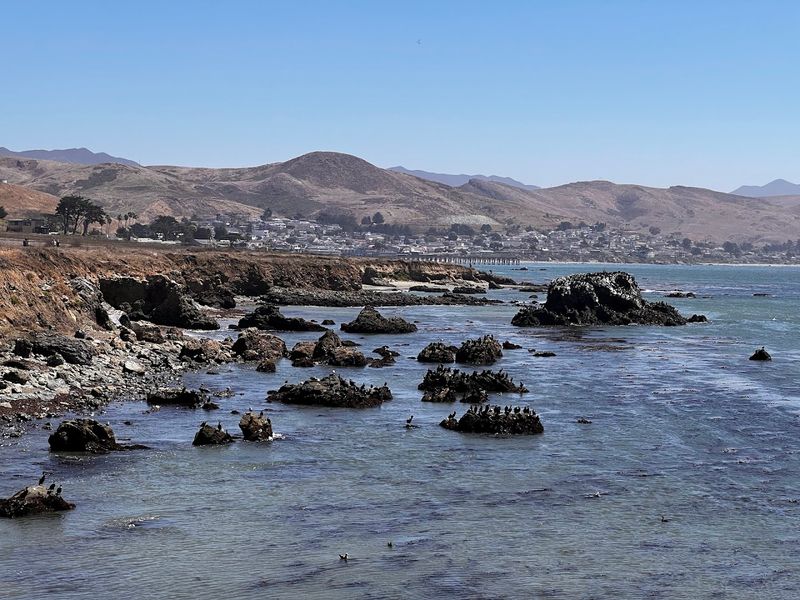
Low tide at Estero Bluffs turns the shoreline into something that feels genuinely interactive.
The rocky intertidal areas along the park’s coastline hold limpets, mussels, barnacles, sea anemones, snails, and hermit crabs, all visible in shallow pools when the tide pulls back far enough.
Timing a visit around low tide makes the tidepool experience significantly richer and more rewarding for visitors of all ages.
Children tend to find the tidepool zones especially engaging because the creatures are small, varied, and easy to observe without any special equipment.
Baby octopuses have reportedly been spotted in the pools during low tide conditions, adding an element of surprise to what might otherwise feel like a straightforward nature walk.
The key is patience and a willingness to look closely at the rocks rather than just scanning the surface.
Respecting the tidepool environment matters here since these ecosystems are delicate and slow to recover from disturbance.
Stepping carefully around the pools rather than through them and avoiding touching or removing any creatures keeps the habitat intact for future visitors.
Checking a reliable tide chart before heading out helps ensure the pools are exposed enough to explore fully.
The park does not charge an entrance fee, making the tidepool experience an accessible outing for families looking for something hands-on and memorable along the Central Coast.
Wildlife Watching Keeps The Walk Interesting
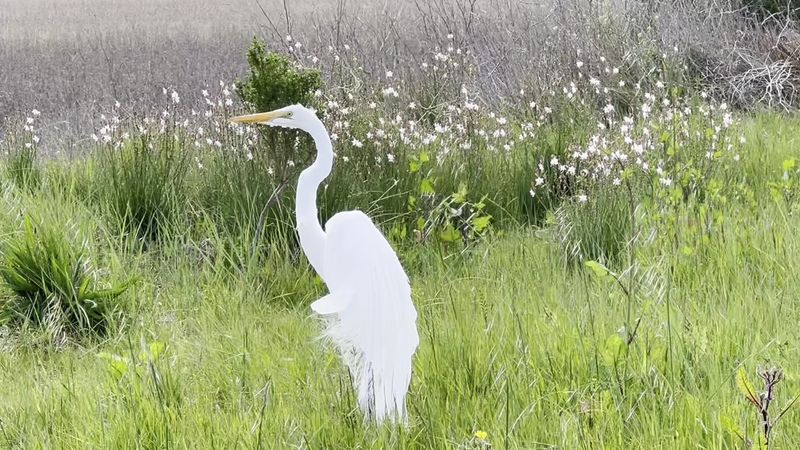
The wildlife at Estero Bluffs shows up without any fanfare, which makes spotting an animal feel like a genuine encounter rather than a staged attraction.
Harbor seals and sea otters are among the marine mammals that can be seen along the shoreline, often resting on rocks or floating just offshore in the kelp.
Seabirds are a near-constant presence along the bluffs, with Red-Tailed Hawks and various shorebird species adding movement and sound to the walk.
From December through March, migrating gray whales pass through the waters visible from the bluffs, making winter one of the most rewarding times to visit for wildlife enthusiasts.
Scanning the water from a high point along the trail during this season can produce sightings of spouts and flukes, particularly on calm mornings when the surface is less choppy.
On land, the park supports California Red-Legged Frogs near its stream corridors, coyotes, and mule deer moving through the grasslands.
The endangered Western Snowy Plover also inhabits the park, making Estero Bluffs a site of genuine conservation importance beyond its recreational appeal.
Visitors who move quietly along the trail and avoid disturbing vegetation tend to encounter more wildlife than those who move quickly through the park without pausing to observe their surroundings carefully.
Best Visits Reward A Slower Pace
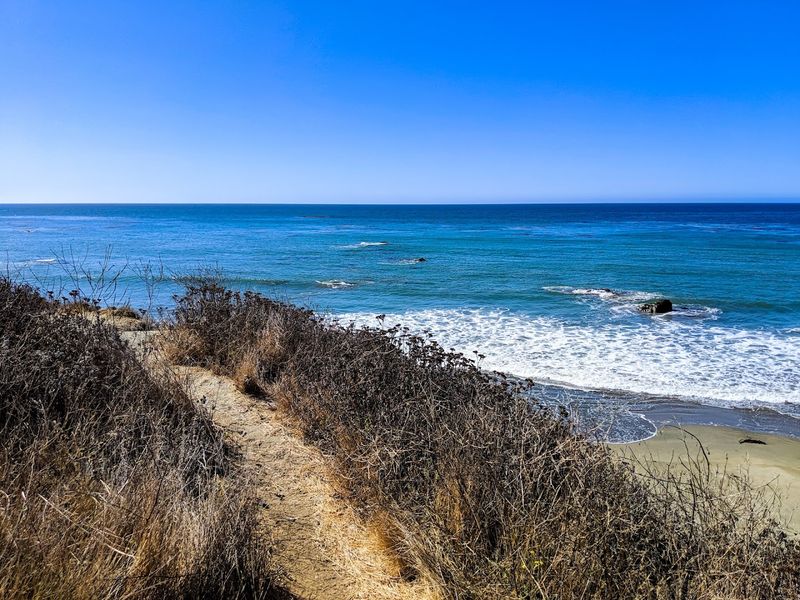
A visit to Estero Bluffs works best when nobody tries to turn it into a rushed sightseeing stop.
Coastal wind can shift quickly here, so a light layer, sturdy shoes, and extra time make the walk feel smoother without adding much planning.
Instead of chasing one famous overlook, the better approach is to let the park reveal itself in pieces.
A patch of wildflowers may catch the eye near the trail. A quiet bend in the path may open to a new angle of the water.
A simple pause on the bluff may become the best part of the whole outing. That slower rhythm is exactly why the park fits a stress-melting title so naturally.
Nothing here demands attention with bright signs or polished attractions. Space and sea air do most of the work.
Visitors who arrive expecting a major tourist production may miss the point, while anyone willing to wander without a strict agenda will understand the appeal quickly.
Estero Bluffs gives the day room to breathe, and sometimes that is the rarest luxury on the coast.
Cayucos Is Right Nearby For A Softer Finish
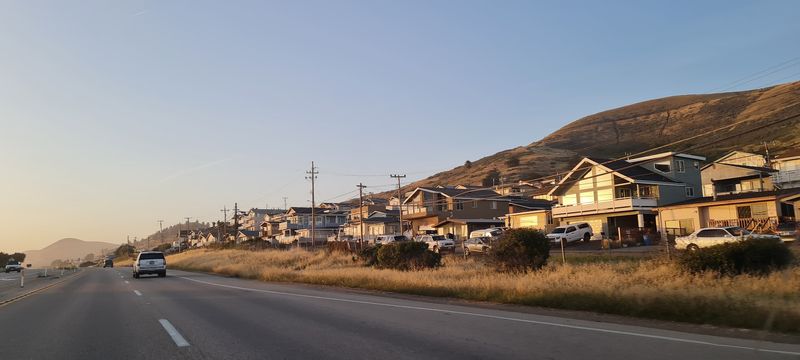
After a walk through Estero Bluffs, the small town of Cayucos sits just south of the park and offers a natural place to ease into the rest of the day.
The town has a genuinely unhurried pace that matches the energy of the park itself, with a historic pier, a compact main street, and a public beach that invites lingering rather than rushing.
The overall atmosphere leans casual and comfortable, which makes it an easy transition from a morning on the bluffs.
Food options in Cayucos tend toward the relaxed and straightforward, with small eateries and casual spots that suit the post-hike appetite without requiring a reservation or a long wait.
The town is small enough to walk most of it without effort, and the beach near the pier is flat and open, making it a low-key option for those who want more ocean time after the park.
Parking in town is generally manageable compared to larger coastal destinations nearby.
The combination of Estero Bluffs and Cayucos creates a natural full-day itinerary that never feels rushed or overprogrammed.
Starting with the bluff trail in the morning and finishing with a slow walk through town gives the day a satisfying arc.
The Central Coast has plenty of well-known stops, but few half-day combinations deliver this level of quiet coastal satisfaction without requiring much planning at all.