12 California Towns With An Unexpectedly Dramatic Backstory
A town does not need crowds to have a wild story. Sometimes the empty ones are the loudest.
California has plenty of places that look quiet now, but their pasts were anything but calm.
Old camps. Deserted streets. Faded settlements. Names still hanging on after the people left.
Many of these are not regular towns with cute shops and a historic marker near the sidewalk. Several are abandoned, nearly forgotten, or barely standing at all.
That makes the drama even better.
Gold fever built some of them almost overnight. Bad luck emptied others just as fast.
Fortunes, scandals, strange legends, and boomtown dreams all left marks behind.
In California, even a crumbling wall can feel like it is keeping secrets. A dusty road can lead to a story that sounds too dramatic for real life.
Yet here they are. Twelve places where the population may be gone, but the backstory is still very much alive.
1. Bodie
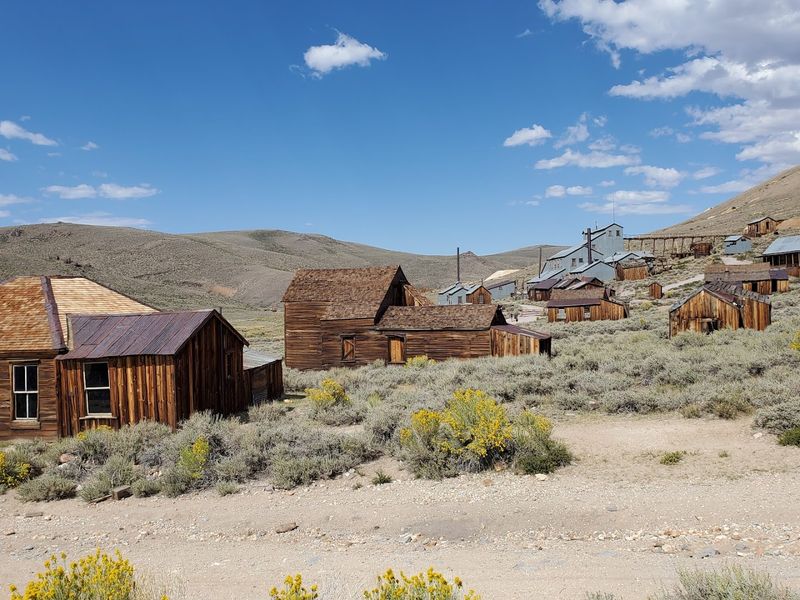
Few places in California carry as much haunted energy as Bodie, a gold-mining boomtown that grew explosively after a profitable gold vein was struck in 1876.
At its peak around 1879, the population swelled to roughly 8,000 people living among nearly 2,000 structures, making it one of the largest and most chaotic towns in the American West.
It earned a fierce reputation for lawlessness, with crimes happening regularly and the phrase “Bad Man from Bodie” spreading fear across the region.
Activities slowed steadily over the following decades, and by 1915 the town was widely considered a ghost town. Operations officially ceased in 1942, leaving behind a remarkable frozen snapshot of a vanished era.
California eventually designated Bodie as a State Historic Park, and today it is preserved in a state of “arrested decay,” meaning nothing is restored but everything is stabilized to prevent further deterioration.
Walking through Bodie today feels genuinely eerie in the best possible way. Furniture, tools, and personal belongings still sit exactly where residents left them, untouched for decades.
The park sits at a high elevation near the Nevada border, so checking road conditions before visiting is a smart move, especially in winter.
2. Calico
Silver changed everything for a small stretch of the Mojave Desert when it was discovered near Calico in 1881.
The town exploded almost overnight, drawing merchants and fortune-seekers into one of the most unforgiving landscapes in California.
For more than a decade, Calico thrived on the strength of its silver deposits, producing millions of dollars in ore and supporting a lively community in the middle of the desert.
When silver prices collapsed in the mid-1890s, the town emptied just as quickly as it had filled. By 1907, Calico was fully abandoned, left to the desert winds and relentless heat.
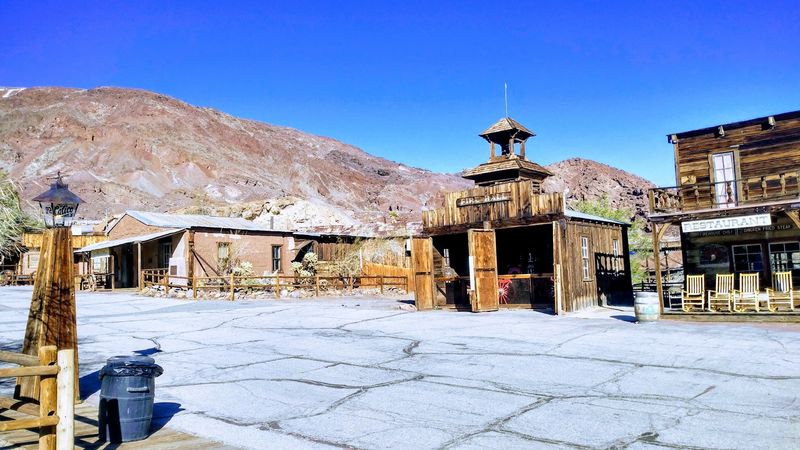
Decades later, Walter Knott, the founder of Knott’s Berry Farm, purchased the site and led a restoration effort that brought the old structures back to a walkable, visitable state.
San Bernardino County eventually took ownership and turned it into a county regional park.
Today Calico operates as a restored ghost town open to visitors, with original tunnels, old buildings, and a small museum offering context about the silver rush era.
The site is located in San Bernardino County and tends to draw steady weekend crowds, so arriving earlier in the day can make the experience feel more relaxed and immersive.
3. Coloma
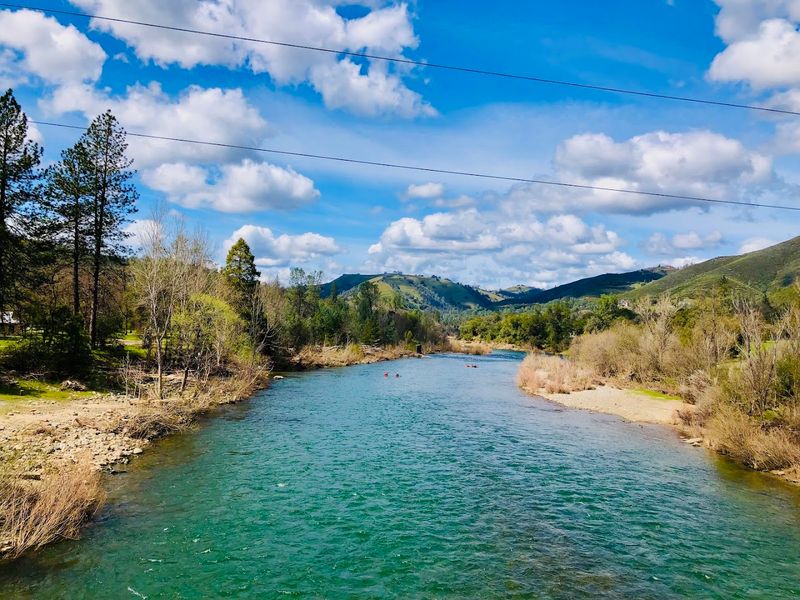
On January 24, 1848, a single glint of metal in the water at Sutter’s Mill set off one of the most transformative events in American history.
The discovery of gold in Coloma triggered the California Gold Rush of 1849, drawing roughly 300,000 people to California from across the country and around the world.
That tidal wave of migration reshaped California’s population, economy, and eventual path to statehood faster than almost any other event in the nation’s story.
Before that discovery, Coloma was a quiet spot along the South Fork of the American River. Within months, it became a chaotic, bustling hub of activity with a population that swelled into the thousands.
The frenzy eventually moved on to richer strikes elsewhere, and Coloma settled back into a much smaller, quieter existence.
Much of the original townsite is now preserved as Marshall Gold Discovery State Historic Park, which includes a replica of the original mill, original and restored historic buildings, and a museum dedicated to the Gold Rush era.
The park sits along a beautiful stretch of river and makes for a genuinely meaningful stop for anyone curious about how one small moment of discovery permanently altered the course of an entire state’s future.
4. Allensworth
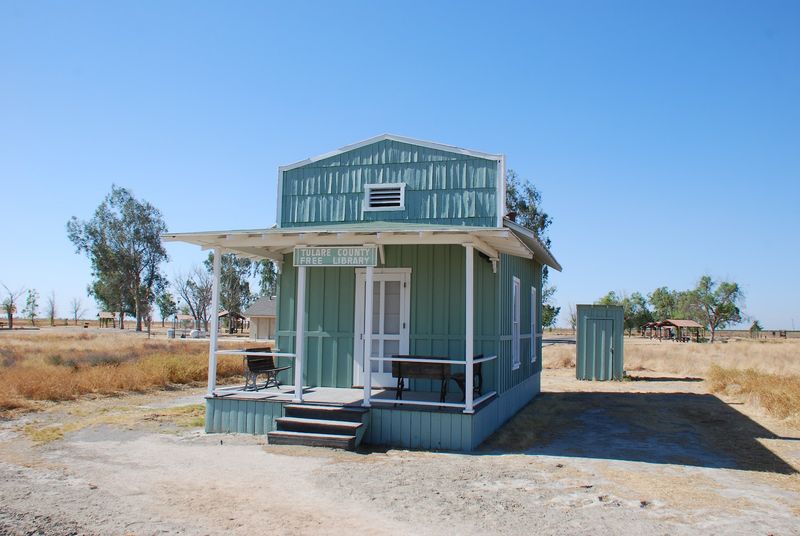
Built entirely by Black Americans and for Black Americans, Allensworth stands as one of the most powerful and underappreciated stories in California history.
Founded in 1908 in the Central Valley, the town was established with the goal of creating a community entirely free from racial discrimination, where Black families could own land and build lasting economic stability.
At its peak, Allensworth had a school, a library, a church, and its own local government, functioning as a genuinely self-sufficient town.
But a series of painful setbacks gradually eroded its foundation.
A contaminated water supply, a railroad line that was rerouted away from the town, and mounting economic pressures combined to drain the population over the following decades.
The story did not end there, though. Community advocates pushed for preservation, and Allensworth eventually became a California State Historic Park with original structures partially restored to reflect the town’s remarkable origins.
Visiting today offers a quiet but deeply moving experience, with interpretive exhibits helping visitors understand both the ambition that built this place and the systemic forces that worked against it.
For anyone interested in the full, complicated picture of California history, Allensworth is an essential stop.
5. Locke
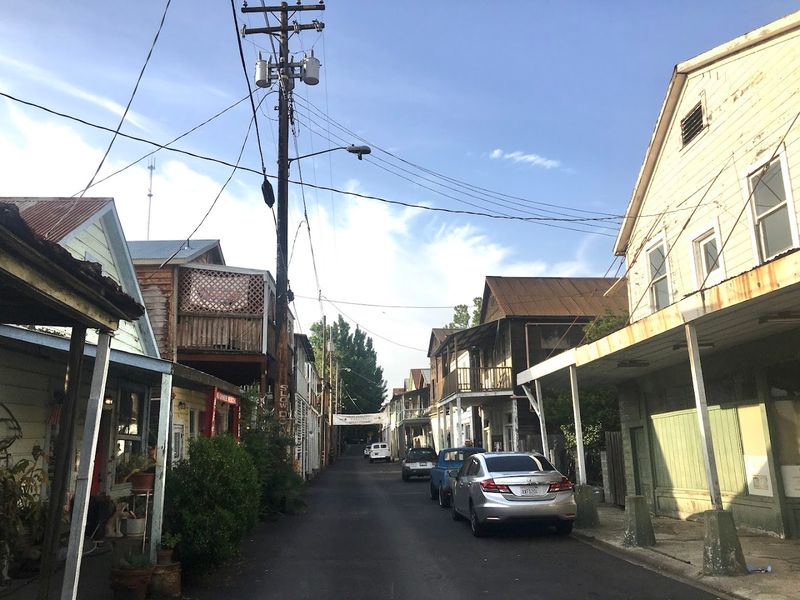
In the Sacramento-San Joaquin Delta, Locke holds a distinction found nowhere else in the United States.
Built in 1915 by Chinese immigrants who had been excluded from living in nearby Walnut Grove after a fire destroyed their neighborhood there, Locke became a fully self-contained rural Chinese American community.
It is widely recognized as the largest and most complete example of such a community still standing in rural America.
The town developed its own shops, restaurants, a school, and social organizations, all built and operated by Chinese immigrants who faced severe legal discrimination throughout this period of American history.
Despite those obstacles, Locke thrived for several decades, becoming a vibrant hub of culture and commerce in the Delta region.
Today the town still stands along the levee road, with its narrow wooden storefronts and faded signs giving the main street an atmosphere that feels genuinely unlike anywhere else in California.
Some original buildings have been preserved or adaptively reused, and a small museum helps explain the community’s history.
The population is now very small, and the town has a quiet, almost suspended quality to it.
Visiting on a weekday tends to offer a more peaceful experience, with fewer distractions and more space to take everything in slowly.
6. Chinese Camp
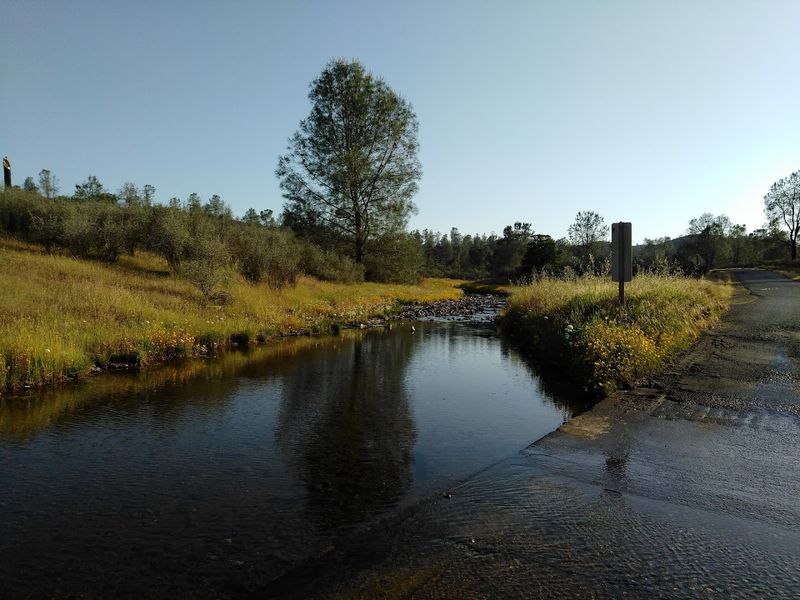
Gold Rush history and Chinese immigrant heritage intersect at Chinese Camp, a small Tuolumne County town founded around 1849.
Chinese miners played a critical and often underacknowledged role in California’s Gold Rush economy, and Chinese Camp became one of the most notable settlements tied to that chapter.
At its height, the town had a significant Chinese population working the surrounding placer mines and supporting a network of merchants and laborers.
The town’s dramatic backstory took another sharp turn in recent years when a 2025 wildfire caused damage to parts of the historic area, adding a new and painful layer to a place that had already survived so much.
Several original stone structures from the Gold Rush era were among the most vulnerable, and the full extent of what was lost or damaged is still being assessed by preservation groups and local historians.
What remains of Chinese Camp still reflects its layered past in visible ways. Stone walls, old foundations, and a handful of surviving historic buildings line the quiet roadway through town.
The surrounding foothill landscape of dry grass and scattered oaks adds to the feeling that time has moved differently here.
7. Old Shasta
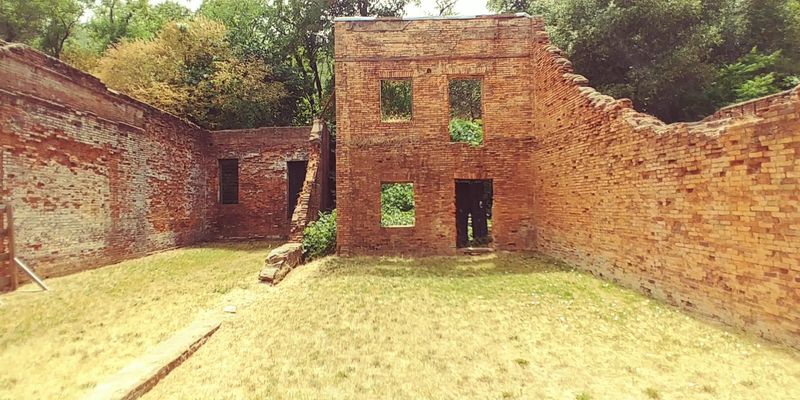
Before Redding existed, Old Shasta was the undisputed commercial and social center of Northern California’s mining district.
Known in its heyday as the “Queen City” of the region, it served as a major supply hub for the surrounding Gold Rush camps, with pack mule trains passing through constantly and merchants doing brisk business.
The town had a courthouse, hotels, and a main street that hummed with Gold Rush energy. Its decline came in stages.
Gold Rush activity slowed, and then the railroad made the decisive blow by routing its line through a different corridor, favoring what would eventually become the city of Redding just a few miles away.
Without railroad access, Old Shasta lost its economic reason for existing and faded steadily through the late 1800s.
Today the site is preserved as Shasta State Historic Park, where the haunting ruins of the old brick courthouse still stand open to the sky along the highway.
The park includes a museum housed in the old courthouse building, and original jail cells carved into the hillside remain visible.
The ruins have a raw, unpolished quality that feels more honest than a fully restored site, making Old Shasta one of the more atmospheric Gold Rush stops in Northern California.
8. Panamint City
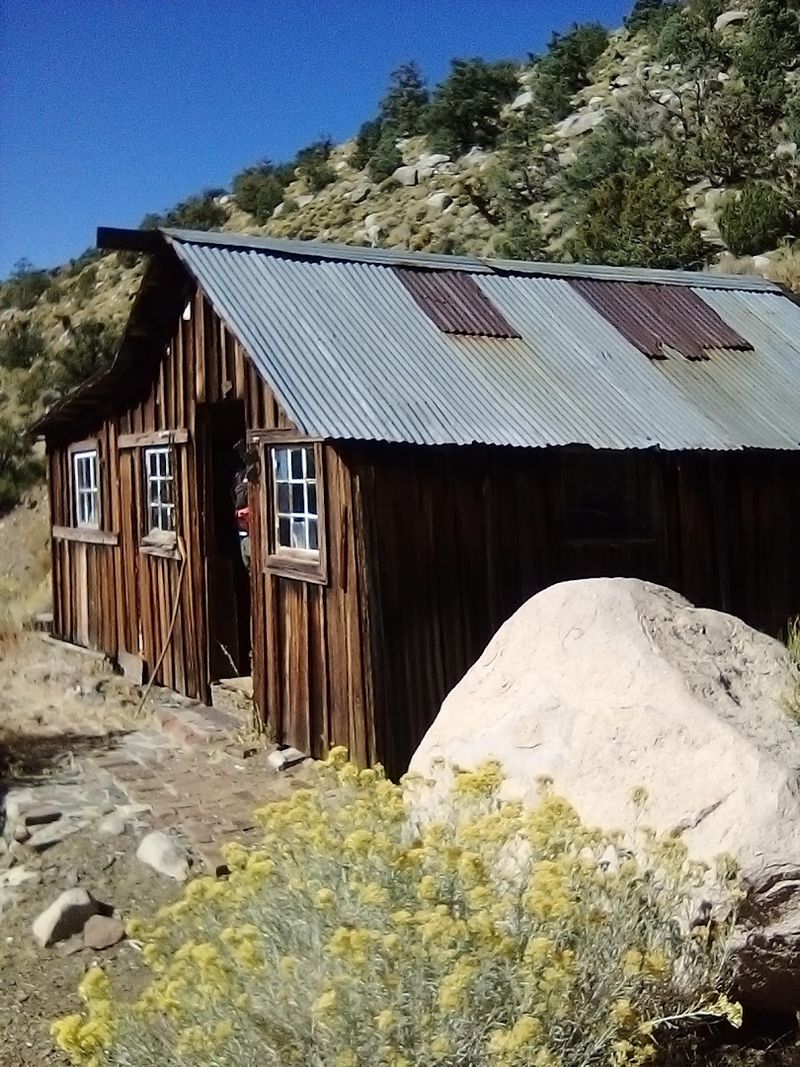
Panamint City may have the single most outrageous origin story of any town in California.
According to the National Park Service, the settlement was founded by outlaws who stumbled upon silver deposits while hiding in the Panamint Mountains to evade law enforcement.
That alone would be enough to earn it a place on this list, but the story keeps going from there.
The silver discovery attracted enough people to push the population to around 2,000 at the town’s peak, which is remarkable given how remote and rugged the canyon location truly is.
The Panamint Mountains sit on the western edge of Death Valley, and getting supplies in and ore out required serious effort across brutal terrain.
Despite that, a full town took shape, complete with businesses and the chaotic social life that typically accompanied silver boom settlements.
In 1876, a catastrophic flash flood roared through Surprise Canyon and destroyed most of the town in a single event, effectively ending Panamint City’s short and spectacular run.
The ruins that remain today are only accessible by a demanding hike through the canyon, making this one of the more adventurous California history destinations.
The physical challenge of reaching it only adds to the sense that this place existed in a world apart from ordinary life.
9. Drawbridge
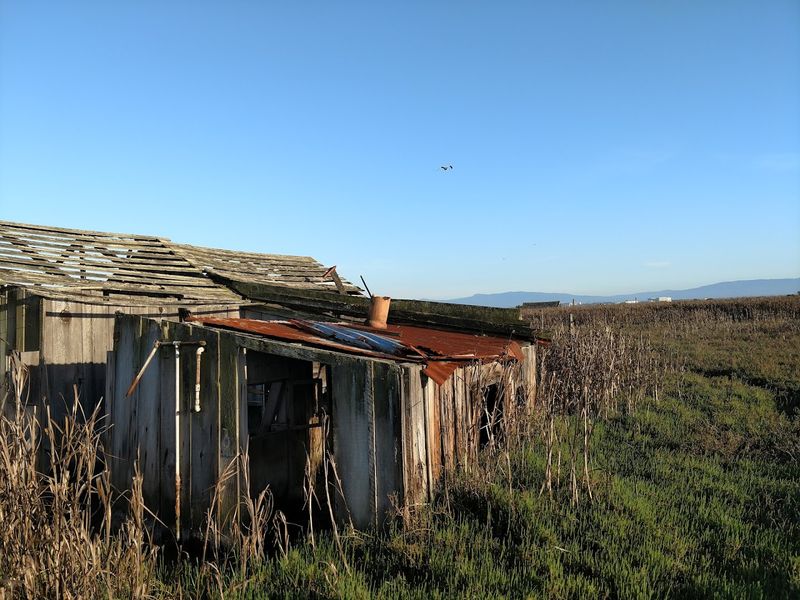
There is something genuinely surreal about a town that is literally disappearing into the earth beneath it.
Drawbridge, located on an island in the southern end of San Francisco Bay, started as a railway stop for hunters and fishermen in the 1870s.
At its most active point in the 1920s, the settlement had roughly 90 cabins and two hotels, functioning as a modest but lively weekend retreat for people looking to escape the city.
Environmental changes and shifting land use priorities gradually made Drawbridge less and less livable. The bay marshes around it became a protected wildlife refuge, limiting access and development.
The last full-time resident departed in the early 1980s, and since then the town has been left entirely to the elements.
With no maintenance, the structures have been sinking and collapsing into the soft marsh ground ever since.
Access to Drawbridge today is extremely limited and generally not open to casual visitors, as the surrounding area is part of the Don Edwards San Francisco Bay National Wildlife Refuge.
The site can sometimes be seen from a distance during guided tours organized through the refuge, but independent access is not typically permitted.
Even from afar, the image of those slumping, half-submerged structures slowly returning to the marsh carries a quiet and unsettling kind of beauty.
10. Bombay Beach
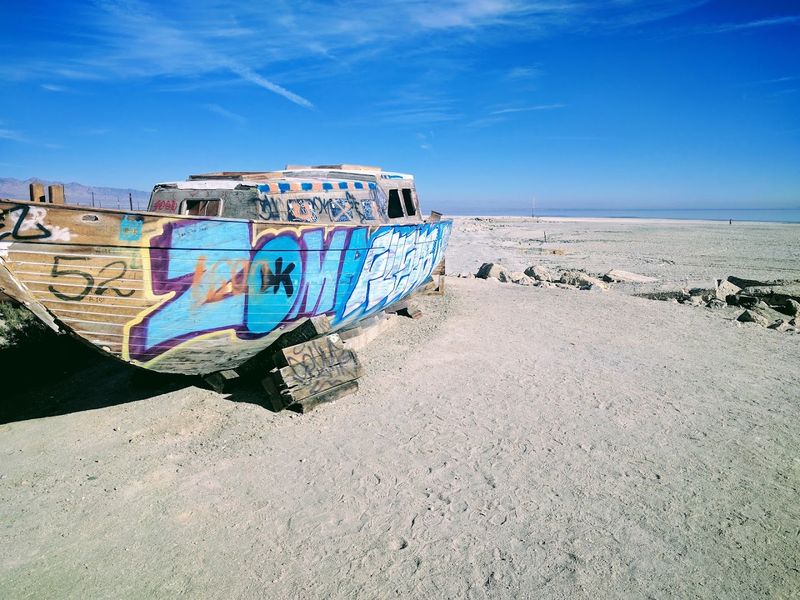
Sitting on the eastern shore of the Salton Sea, Bombay Beach has lived several completely different lives within a single century.
It began as a resort community during the mid-20th century when the Salton Sea was promoted as a recreational destination, attracting boaters and vacationers to what seemed like an unlikely inland paradise.
As the Salton Sea’s water quality deteriorated due to agricultural runoff and rising salinity levels, the resort dream collapsed.
Fish passed by the millions, the shoreline became increasingly unpleasant, and property values dropped dramatically.
Much of the community was abandoned, leaving behind a landscape of crumbling homes, rusted vehicles, and weathered structures half-buried in the salty soil.
Then something unexpected happened. Artists began arriving, drawn by the strange beauty of the decay and the vast, open desert setting.
Sculptural installations started appearing throughout the town, and an annual arts festival called the Bombay Beach Biennale brought creative energy to a place that most people had written off entirely.
Today Bombay Beach occupies a strange middle ground between ruin and reinvention, with a small permanent population living alongside an ever-growing collection of outdoor art.
11. Pioneertown
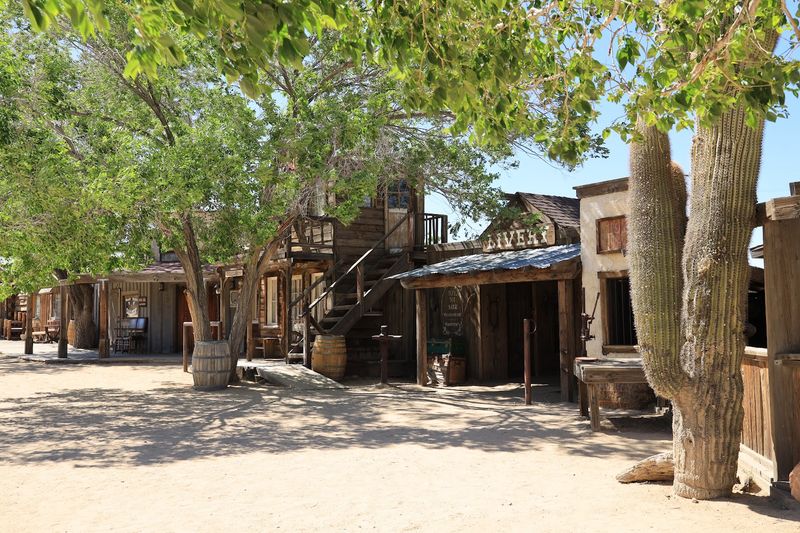
Not many towns can claim they were designed from scratch to look like the American frontier, but Pioneertown was built with exactly that purpose in mind.
Constructed in 1946 in the high desert near Joshua Tree, the town was conceived as both a functional film set and an actual living community, a combination that sounds strange but somehow worked for decades.
Investors with connections to classic Hollywood Westerns backed the project, and productions quickly began using the streets and storefronts as a backdrop.
Actors and crew members who worked on those productions sometimes stayed in the area, and a small permanent community took root alongside the film activity.
The main street, called Mane Street, was lined with period-appropriate storefronts that served double duty as real businesses and camera-ready facades.
Over the years, the filming activity slowed but the community remained.
Today Pioneertown still has that unmistakable frontier-set quality, with weathered wooden buildings lining the dusty main road against a backdrop of boulders and Joshua trees.
Pappy and Harriet’s Pioneertown Palace, a popular music venue and restaurant at 53688 Pioneertown Rd, Pioneertown, CA 92268, has become a destination in its own right, drawing visitors from across Southern California.
The whole town has a laid-back, slightly theatrical atmosphere that feels entirely unique in the California desert.
12. Cerro Gordo
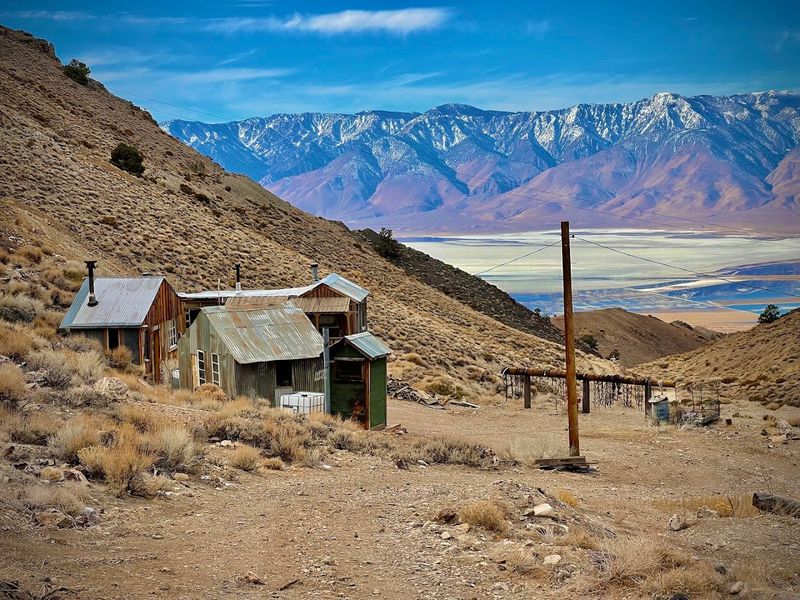
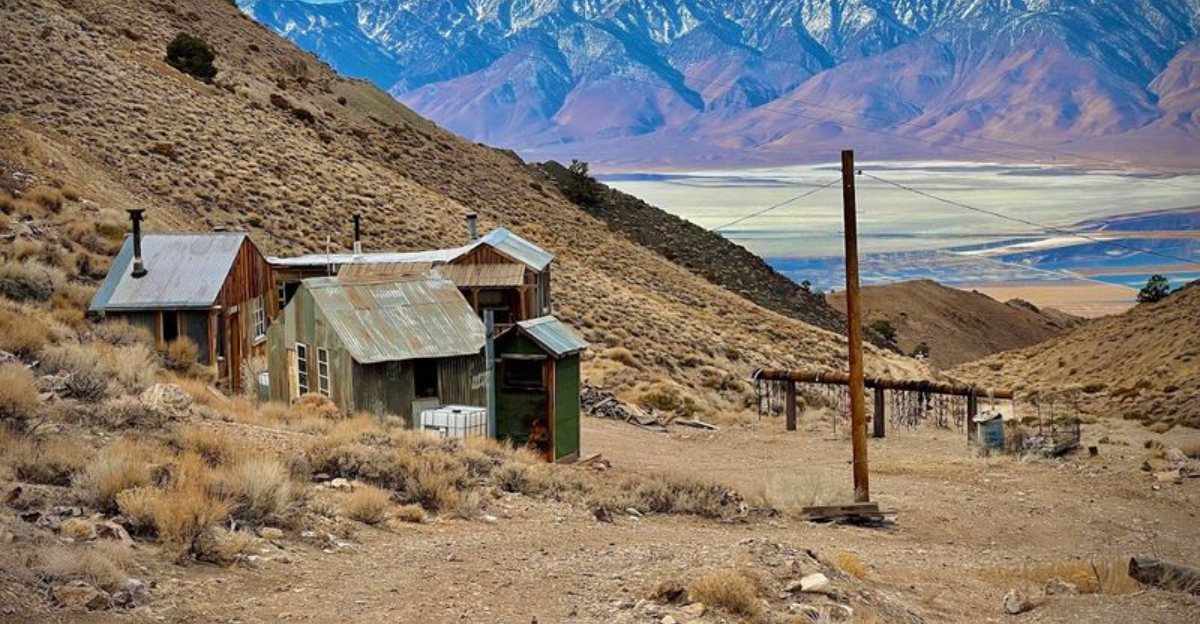
Perched high in the Inyo Mountains above the Owens Valley, Cerro Gordo earned its Spanish name, which translates to “fat hill,” honestly.
The silver and lead deposits discovered there in the 1860s turned out to be extraordinarily rich, and the mine produced an estimated $17 million in silver between 1866 and 1878.
That wealth helped fund the growth of Los Angeles during a period when the city desperately needed capital investment to survive and expand.
The human cost of that wealth was severe.
The town eventually declined as the richest ore played out, and by the 1940s it had been largely abandoned.
In recent years, new ownership has taken on the ambitious project of restoring Cerro Gordo as a historic destination.
Progress has been gradual, and the site is not yet a fully open public attraction in the traditional sense, but it has attracted significant attention for its preservation efforts and the sheer drama of its setting.
The views from the mine’s elevation down into the Owens Valley are among the most striking in all of California.