This Swampy North Carolina Wilderness Looks Like A Secret World Near The Coast
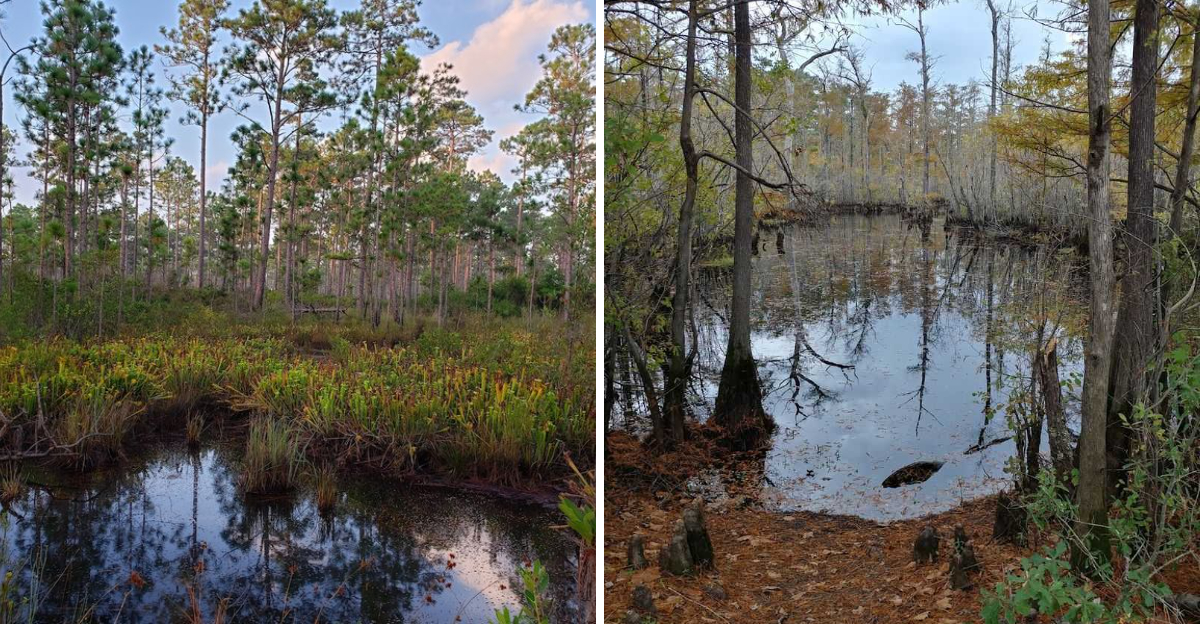
Now this is the kind of North Carolina wilderness a swamp-loving family could look at and say, “Aye, finally, some proper real estate.”
Out in Pender County, this huge wetland world has enough leafy privacy to make any ogre start mentally measuring for curtains.
Forget shiny castles with nosy neighbors.
A place like this offers room to breathe without someone peeking over the fence asking why the lawn looks “so marshy.”
Carnivorous plants grow here like nature decided to add a little attitude, and the trails have that “leave your fancy shoes at home” kind of charm.
Crowds feel far away, which is exactly how a proper swamp fan would want it.
By the end, even a grumpy ogre might admit this North Carolina escape looks like a fine place to raise the family and scare off door-to-door salesmen.
A Swampy Coastal Wilderness That Feels Like Another Planet
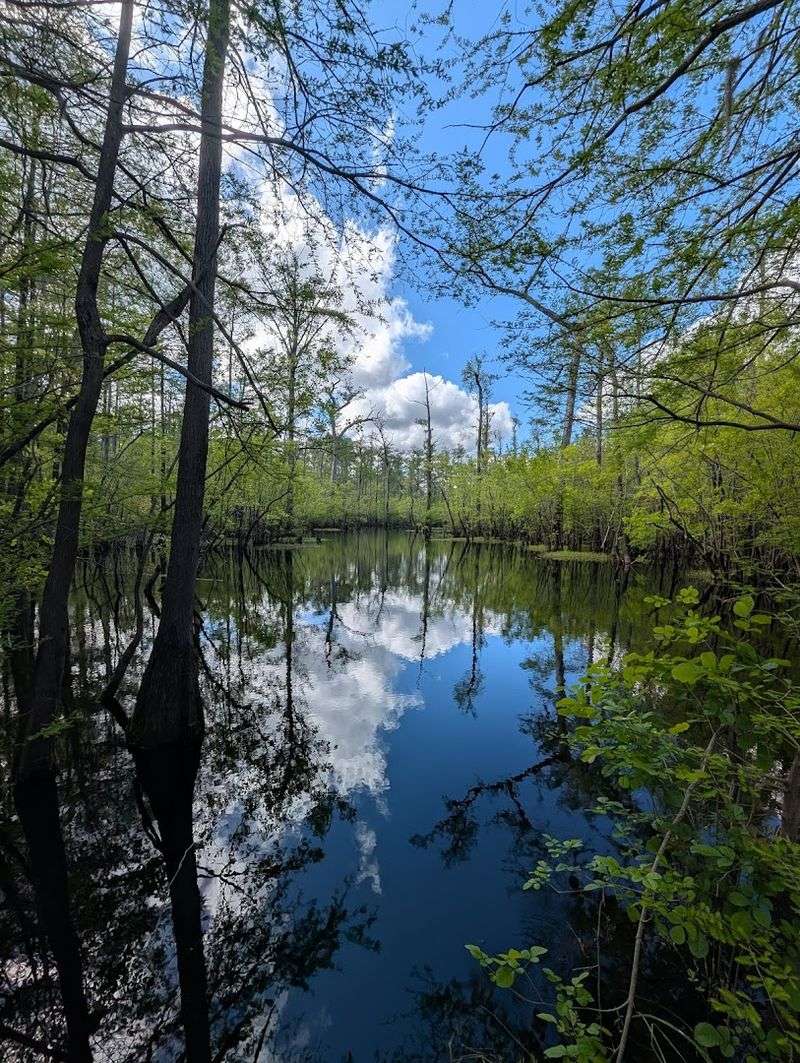
Few places this close to the Atlantic feel so far removed from the usual coastal routine.
Holly Shelter Game Land spreads across roughly 65,000 acres in Pender County, creating a vast landscape of swamp, pine forest, pocosin wetlands, sandy roads, and quiet water.
The main access area is near Hampstead, NC 28443, which makes the whole place surprisingly reachable from nearby beach towns while still feeling remote once you leave the pavement behind.
Sandy tracks stretch into walls of green, and flat pools of water catch the light between shrubs and pines.
Nothing about the terrain feels polished or tourist-ready, which is exactly why it works. The experience is raw, hushed, and slightly mysterious in a way that makes every turn feel like it might lead somewhere forgotten.
Early mornings bring the best mood, with soft light, cooler air, and fewer people on the roads. Visitors should check current access conditions before heading in, since weather and seasonal gates can affect certain sections.
This is not a casual boardwalk stroll. It is a real coastal wilderness with a secret-world feeling.
Holly Shelter Swamp Gives The Landscape Its Secret-World Mood
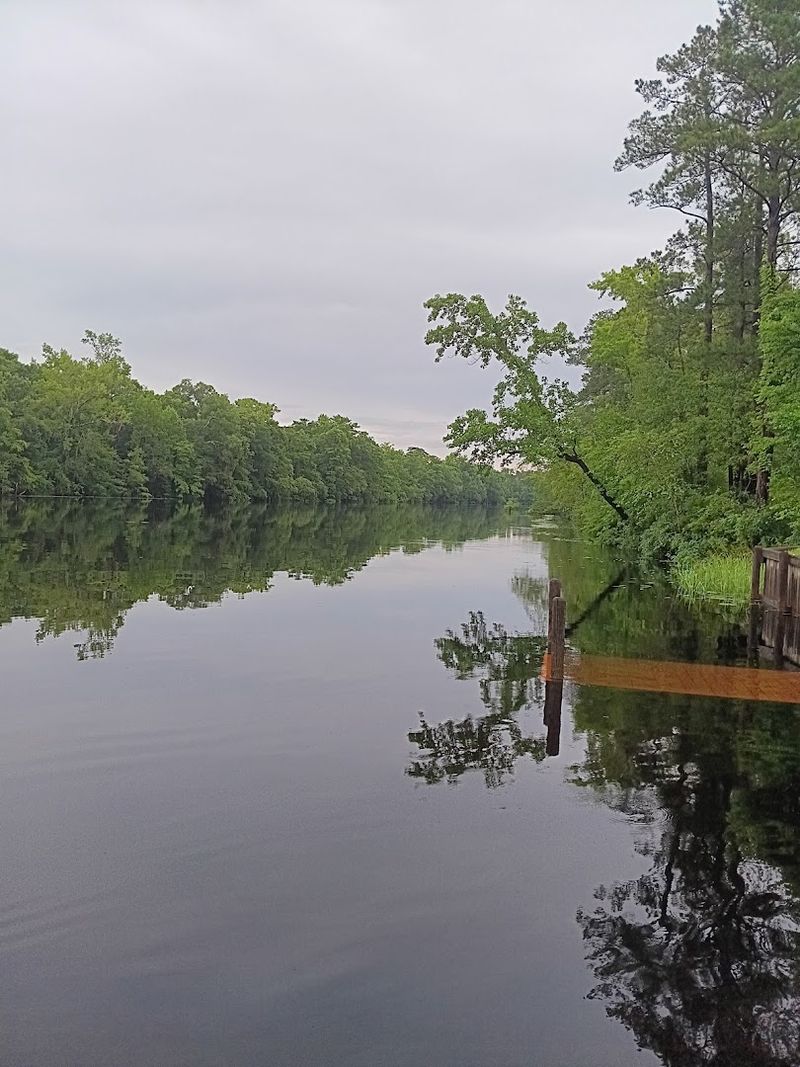
Still water gives this place its strange, unforgettable atmosphere.
In the wetter sections, Holly Shelter Swamp settles into a kind of hush, where dark pools, dense shrubs, longleaf pines, and hidden wildlife shape a landscape that feels far older than nearby beach towns.
That quiet atmosphere carries through the swamp, giving it an almost timeless character.
The water does not rush dramatically or announce itself loudly. It waits beneath vegetation, reflecting sky and branches in ways that make the whole area feel almost dreamlike.
Much of this terrain belongs to a pocosin ecosystem, a shrubby wetland type tied closely to the southeastern coastal plain.
These habitats can be difficult to understand at first glance because they are not open marshes or traditional forests.
Their beauty comes from texture, patience, and quiet details. Carnivorous plants grow in the broader area, and the presence of Venus flytraps adds an extra layer of wonder because wild flytraps exist naturally only in a small region of the Carolinas.
Walking the swamp edges at dawn can feel genuinely cinematic, with mist hanging low and birds calling from the brush. The swamp is not just scenery here.
It is the reason the whole place feels hidden.
Pocosin Wetlands Make This More Than A Regular Forest
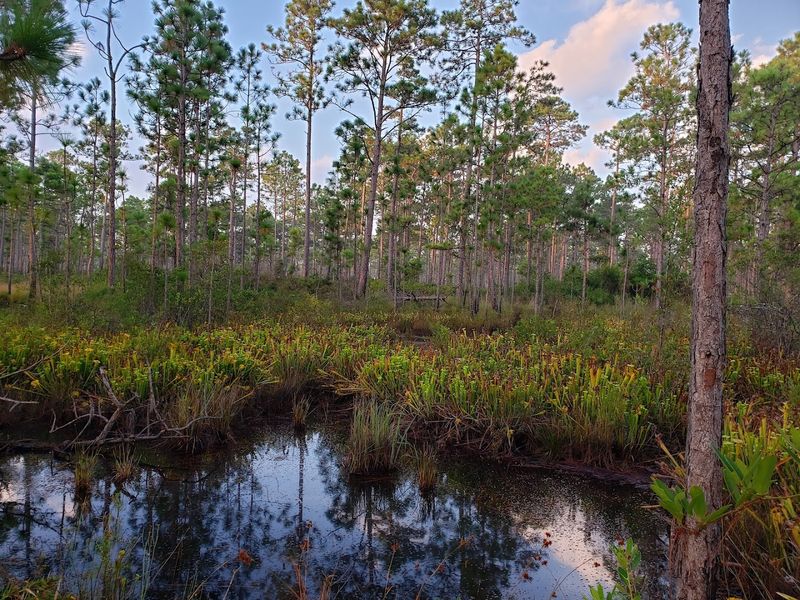
Rare ecosystems give this wilderness its strongest natural identity. Pocosin wetlands are not ordinary woods with a little standing water.
They form on acidic, nutrient-poor soils and deep organic peat, creating conditions that support highly specialized plants and wildlife. At Holly Shelter, that unusual foundation helps explain why the area feels so different from a standard coastal forest.
Dense evergreen shrubs, open savanna pockets, longleaf pine, wiregrass, orchids, pitcher plants, sundews, and Venus flytraps all help create a landscape that feels both delicate and tough.
The plants here have adapted to conditions that would challenge many other species, and that gives the whole place a fascinating ecological edge.
For anyone who loves natural history, this is the kind of destination that rewards slow looking.
A casual glance might reveal only wet ground and scrubby growth. A careful visitor instead starts noticing patterns, blooms, insects, bird movement, and the way sunlight opens certain sections while others stay shadowed and damp.
Spring and early summer can be especially rewarding for plant life, while fall brings more comfortable walking conditions. This wilderness feels special because it is not just pretty.
It is scientifically remarkable.
Long Sandy Roads Cut Through The Wild Terrain
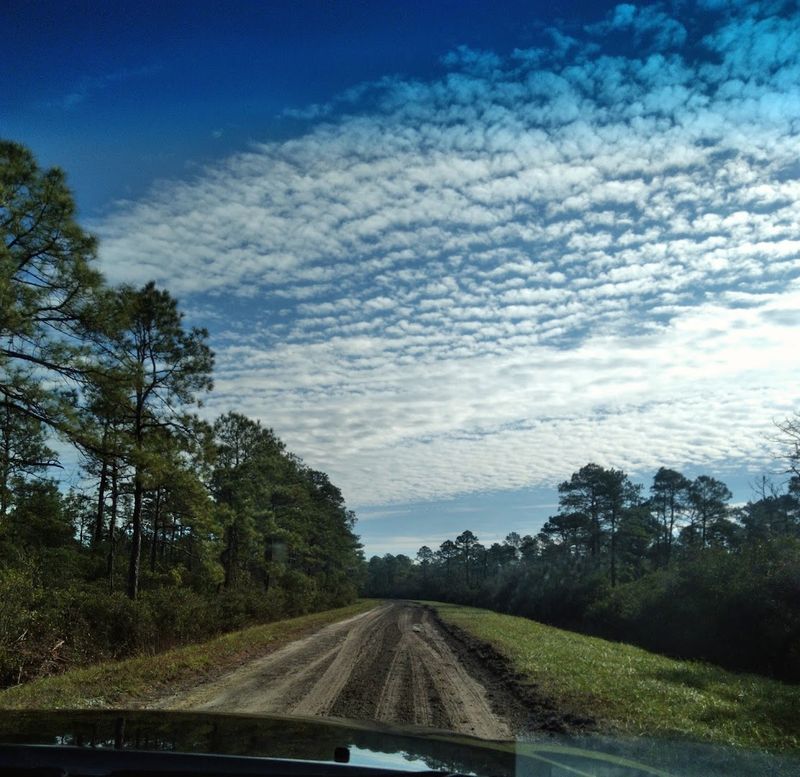
Getting around this landscape feels like part of the adventure rather than just a practical detail.
Long, sandy, unpaved roads cut through Holly Shelter’s wetlands, pine stands, and savanna edges. Hikers, cyclists, wildlife watchers, and careful drivers use them to reach a terrain that can feel enormous once you are out there.
These roads do not offer the polished feel of a state park path, and visitors should not expect constant signs, railings, or easy loops. Instead, the experience feels open-ended.
A road may lead through dense pocosin shrubs, then break into a brighter pine area, then dip toward wetter ground where standing water changes the whole mood.
After heavy rain, some sections can become muddy or flooded, so planning matters.
Sturdy shoes, water, bug protection, and a reliable map are smart choices, especially for first-time visitors. Cell service can be inconsistent in remote areas, and the size of the property can be disorienting.
That rougher quality is part of the draw, however. The sandy roads make the place feel wild, quiet, and unfiltered, giving every visit a sense of discovery.
Pine Savannas Add A Rare Coastal Plain Look
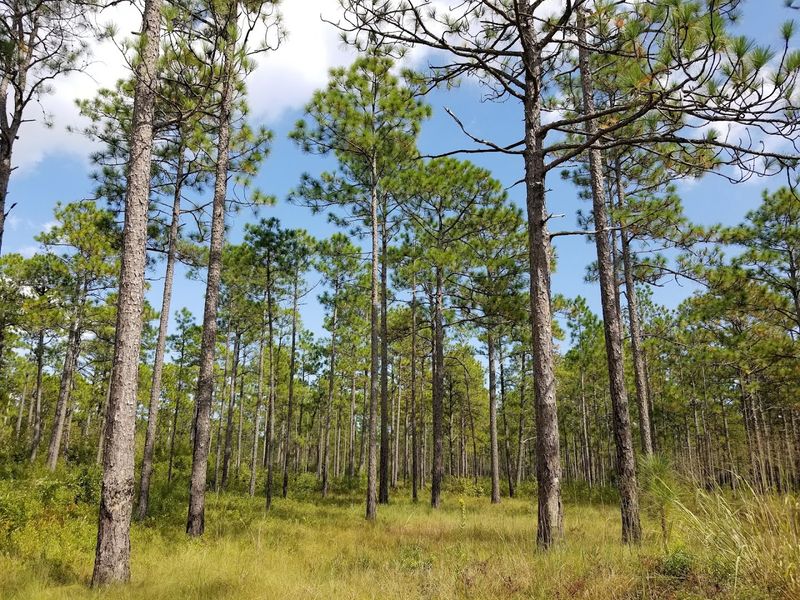
Open stretches of longleaf pine bring a brighter, airier contrast to the swampier sections. Instead of dense walls of vegetation, pine savannas create spaces where sunlight reaches the ground and grasses, sedges, wildflowers, and carnivorous plants can thrive.
These habitats once covered huge portions of the southeastern coastal plain, but development, fire suppression, and land-use changes have made healthy examples much less common.
That rarity makes the savanna sections at Holly Shelter especially meaningful.
Longleaf pines rise above the understory with an elegant, spacious look, and the ground below can burst with seasonal color after the right weather and management conditions.
Controlled burns play an important role here because fire helps keep the savannas open and prevents thicker growth from crowding out the plants that need sun.
Visitors who arrive after a burn may see fresh green growth pushing through darkened soil, a striking reminder that this ecosystem depends on renewal. Birders may also find these areas rewarding, since open pine habitat attracts species tied to the longleaf landscape.
The savannas give this coastal wilderness a rare, almost luminous look that feels completely different from the nearby beaches.
Wildlife Watching Gives The Visit Its Quiet Reward
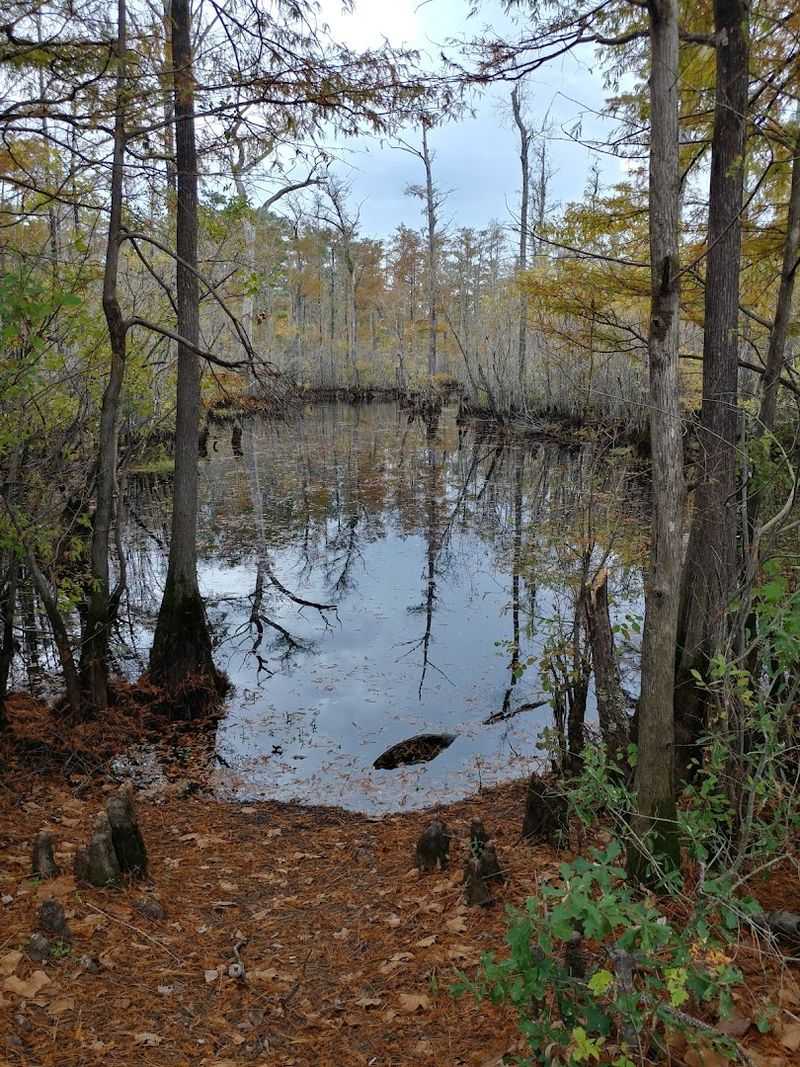
Patience changes everything in this wilderness.
Holly Shelter does not always deliver wildlife in obvious, quick flashes. Visitors who slow down may find deer crossing sandy roads, wild turkeys slipping through the brush, woodpeckers moving among pines, raptors circling overhead, and wading birds working wet edges.
Black bears and alligators have also been associated with the broader habitat, which is a strong reminder that this is a genuinely wild landscape rather than a landscaped nature stop.
Birdwatchers can find plenty to appreciate because the mix of wetlands, pine savannas, shrub cover, and open water supports different species throughout the year.
Early morning and late afternoon usually bring the best chances for activity, especially when temperatures are lower and light is softer. Binoculars make a major difference, even for casual visitors, since many birds and animals appear at a distance or disappear quickly into vegetation.
Moving quietly helps too. The most memorable moments here often happen without warning: a splash in dark water, a bird call from the reeds, or movement along a road just ahead.
Wildlife watching at Holly Shelter rewards attention more than speed.
The Mountains-To-Sea Trail Crosses Through The Area
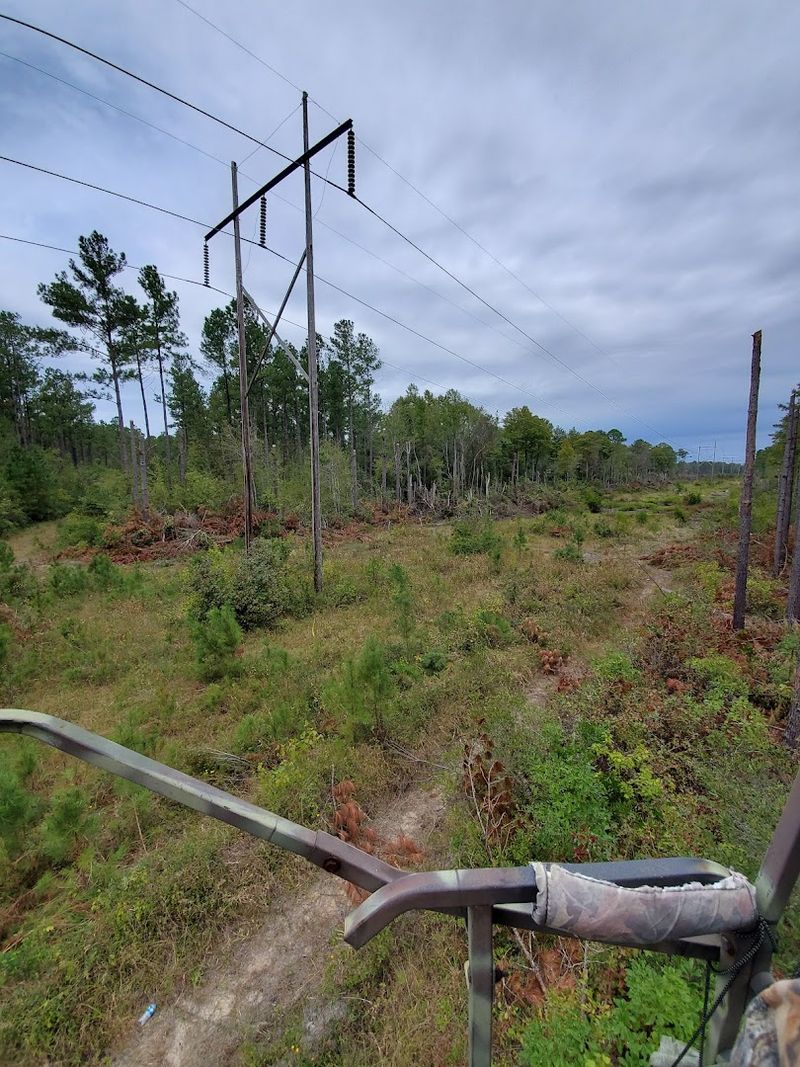
One of North Carolina’s most ambitious trails gives this coastal wilderness an even deeper sense of connection.
The Mountains-to-Sea Trail crosses through Holly Shelter, linking this flat, swampy, pine-filled terrain to a much larger route that stretches from the state’s western mountains toward the coast.
That contrast is part of what makes this section so interesting. Hikers who know the trail from ridge climbs and mountain forests find something completely different here, with sandy footing, wetland edges, long straight roads, and a quiet coastal plain atmosphere.
The route through this area can feel remote, so preparation matters more than distance alone. A map, water, sun protection, insect repellent, and awareness of hunting seasons are all important.
During active hunting periods, wearing blaze orange is a smart safety choice. This section is especially appealing for hikers who enjoy solitude and unusual ecosystems more than dramatic elevation changes.
The beauty is flatter, slower, and more atmospheric. Instead of summit views, the reward comes from open sky, pine shadows, rare plants, and the feeling of moving through a landscape that still resists becoming ordinary.
The trail makes Holly Shelter feel part of a statewide story.
Seasonal Gates Make Planning Ahead Important
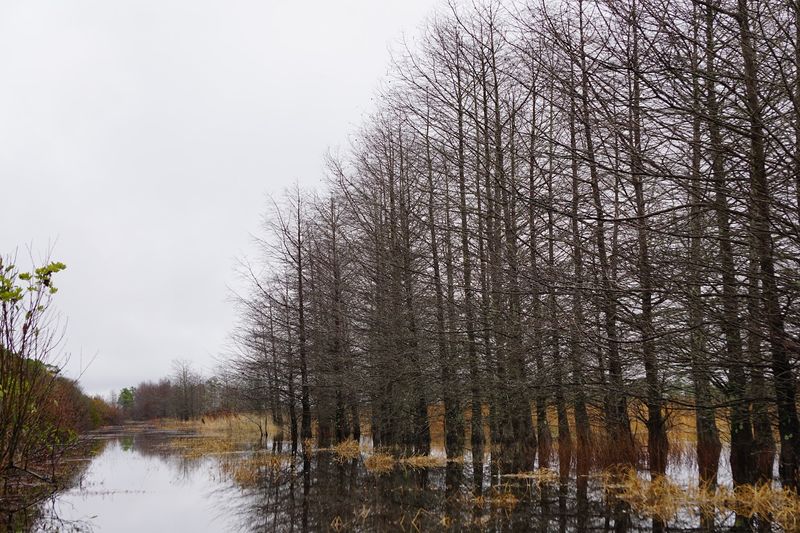
A little preparation makes a visit here much smoother. Holly Shelter’s seasonal gates, weather-sensitive roads, hunting schedules, and wetland conditions can all affect how much of the area visitors can access on a given day.
Gates are generally tied to management schedules, and heavy rain can make some sandy or low-lying roads difficult to use.
Checking current information through the North Carolina Wildlife Resources Commission before heading out is the safest approach, especially for anyone planning to explore beyond the easiest access points.
The general area near Hampstead, NC 28443, gives visitors a practical starting reference, but this is a huge property rather than a single compact attraction. Summer brings heat, humidity, and biting insects, so early morning outings are usually more comfortable.
Spring can be excellent for plants and birds, while fall often offers better temperatures for longer exploring. Non-hunters should pay attention to hunting seasons and wear blaze orange when needed.
This wilderness is rewarding precisely because it still feels untamed, but that also means visitors need to respect its conditions.
With the right planning, Holly Shelter becomes one of the most memorable wild escapes near the North Carolina coast.