Inside A Real Connecticut Submarine Museum That Makes A Day Trip Feel Unforgettable
Dive into history aboard a real submarine here. This museum makes a day trip unforgettable.
You climb through tight, fascinating metal corridors. Periscopes and dials surround you on all sides. I geek out over incredible machines like these.
Connecticut preserves naval history with obvious pride. Each exhibit brings undersea life vividly closer. Kids press buttons while parents read along.
You imagine long voyages beneath dark, cold waters. Stories of brave crews echo through the halls.
The whole visit feels part adventure, part lesson.
Narrow bunks and dials crowd the cramped deck. Respect for the brave sailors grows fast, because this museum makes the past feel thrillingly real.
The USS Nautilus Up Close
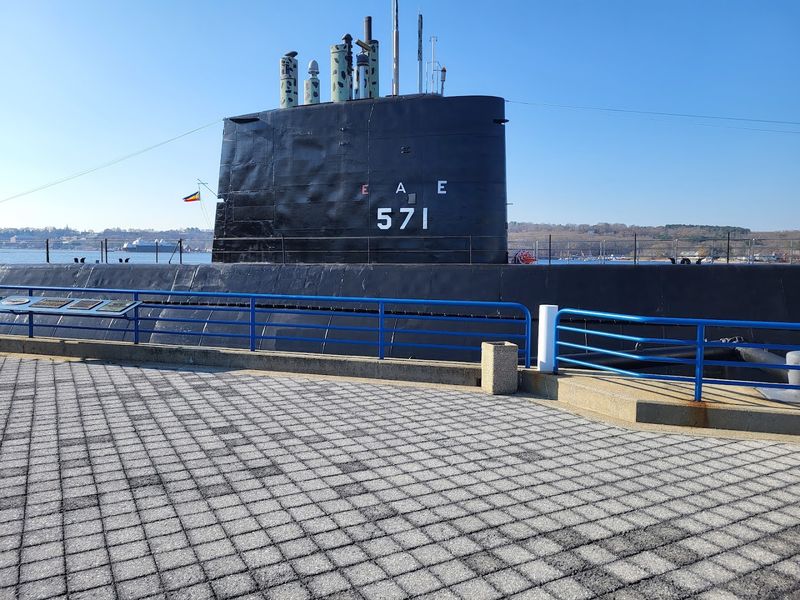
Nothing quite prepares you for the moment you first lay eyes on the USS Nautilus.
It is enormous, quietly resting along the waterfront like it has been waiting for you specifically. The hull is long, dark, and unmistakably powerful.
The Nautilus made history as the world’s first nuclear-powered submarine. It was launched in 1954 and served until 1980, logging over 500,000 miles during its career. That is a lot of ocean for one vessel to conquer.
Boarding it is a full sensory experience. The narrow passageways, the low ceilings, the smell of metal and history all hit you at once.
You move through compartments that once housed real sailors living real lives far beneath the surface. The captain’s quarters are surprisingly compact. The crew bunks are even more so.
You get a fast and humbling appreciation for what submarine duty actually demanded of the people who served aboard it.
The Theater And Documentary Films
The documentary films shown there provide context and depth that makes everything else in the museum at 1 Crystal Lake Rd in Groton land with greater impact. Do not skip this room.
The films cover naval history, famous submarine missions, and the development of nuclear propulsion with a level of detail that feels genuinely cinematic.
The production quality is solid, and the storytelling moves at a pace that holds your attention without dragging. It is educational without ever feeling like homework.
People settle in, the screen lights up, and for twenty or thirty minutes the outside world completely disappears. That is a rare and valuable thing.
The theater also serves as a useful orientation point if you visit early in your tour. Understanding the broader historical context before exploring the exhibits makes individual displays far more meaningful.
Starting here is a strategy worth considering on your next visit.
Connecticut has a long relationship with naval service, and the films in this theater celebrate that relationship with honesty and pride. The storytelling never slides into empty boasting.
It simply presents remarkable history and trusts the audience to appreciate it.
Working Periscopes You Can Actually Use
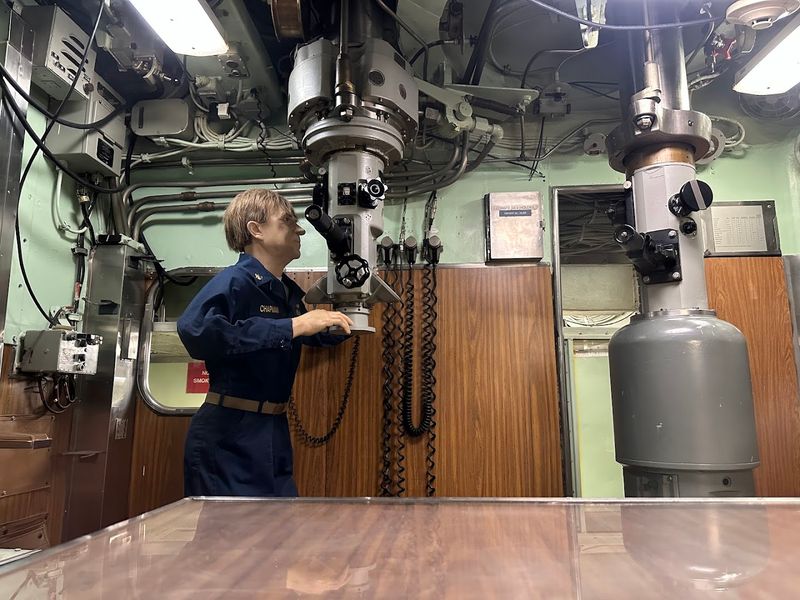
Most museum exhibits ask you to look but not touch.
The Submarine Force Library and Museum flips that rule in the best possible way. The working periscopes are absolutely one of the standout moments of the entire visit.
You grip the handles, press your eye to the lens, and suddenly you are scanning the horizon like a real submarine commander. The view is clear, the mechanics are smooth, and the whole thing feels surprisingly real.
My hands were on those handles longer than I care to admit. Kids absolutely lose their minds at this station. Adults do too, honestly.
There is something about the physical act of using a periscope that makes the history click in a way no documentary ever could.
The museum has done a brilliant job of making these interactive elements feel purposeful rather than gimmicky. Each one teaches you something specific about submarine operations while keeping you fully engaged.
Do not rush past the periscope station. Linger there. Swivel it around. Take your time and enjoy every second of that surprisingly fun experience.
The Historic Turtle Submarine
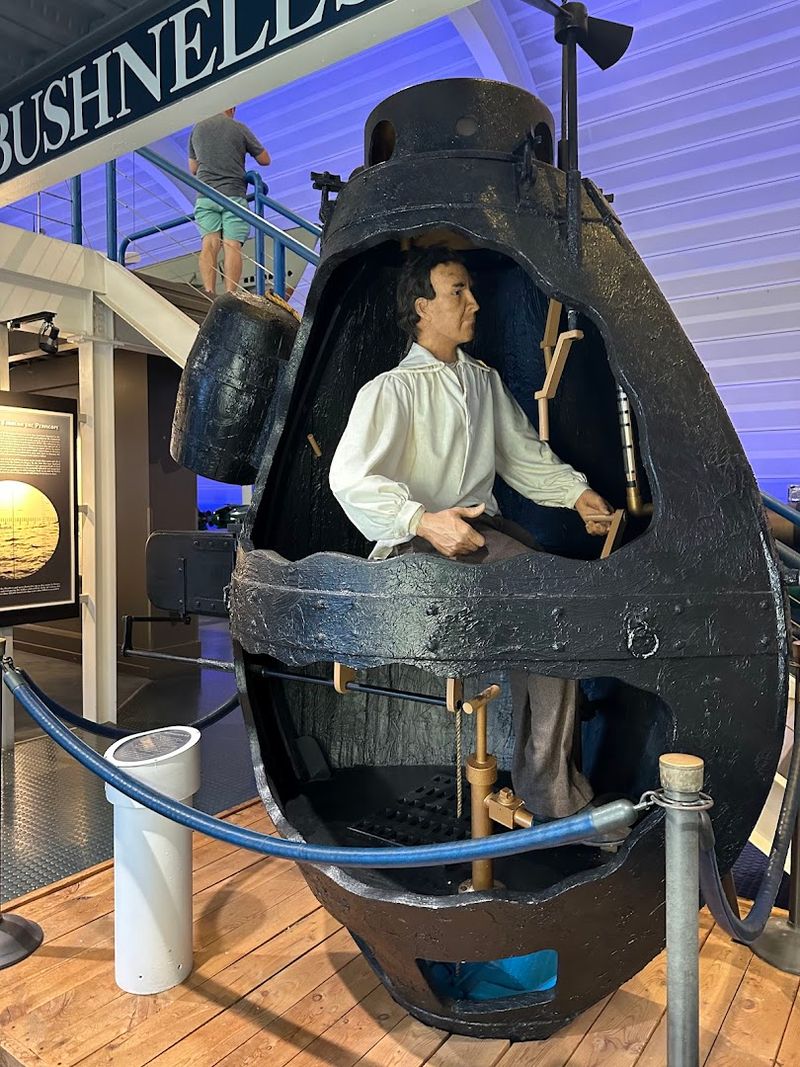
Here is a fact that stopped me in my tracks. The history of American submarines does not start in the twentieth century.
It starts in 1775 with a tiny wooden vessel called the Turtle, and the Submarine Force Library and Museum has a replica that will make your jaw drop.
The Turtle was designed by David Bushnell during the Revolutionary War. It was a one-person, hand-powered craft intended to attach explosives to British ships. The engineering ambition behind it is remarkable for its era.
Standing next to the replica, you realize just how audacious the whole concept was. One person, sealed inside a wooden egg, hand-cranking their way toward an enemy vessel in the dark.
The exhibit surrounding the Turtle puts the entire story into context beautifully. Informational panels walk you through the design, the mission attempts, and the legacy of this earliest chapter in submarine warfare.
This section of the museum tends to draw people in quietly and hold them there longer than expected.
The Museum’s Torpedo Collection
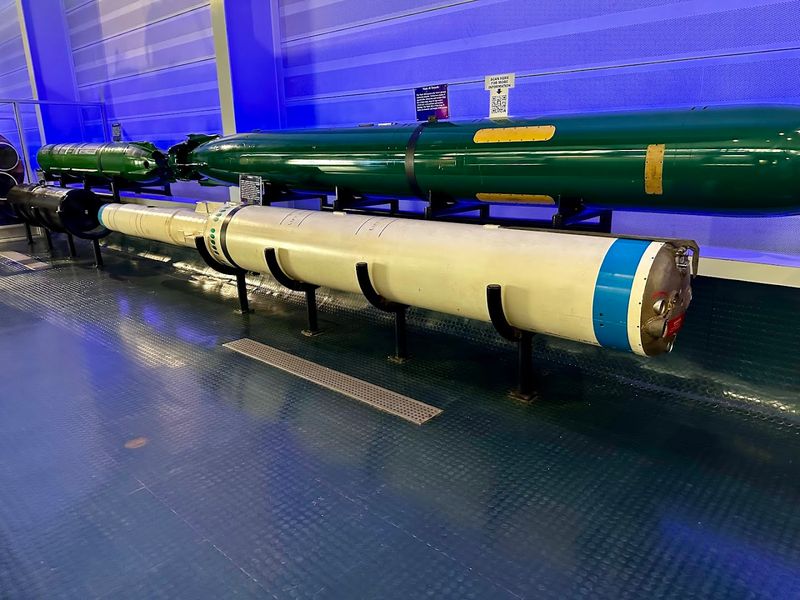
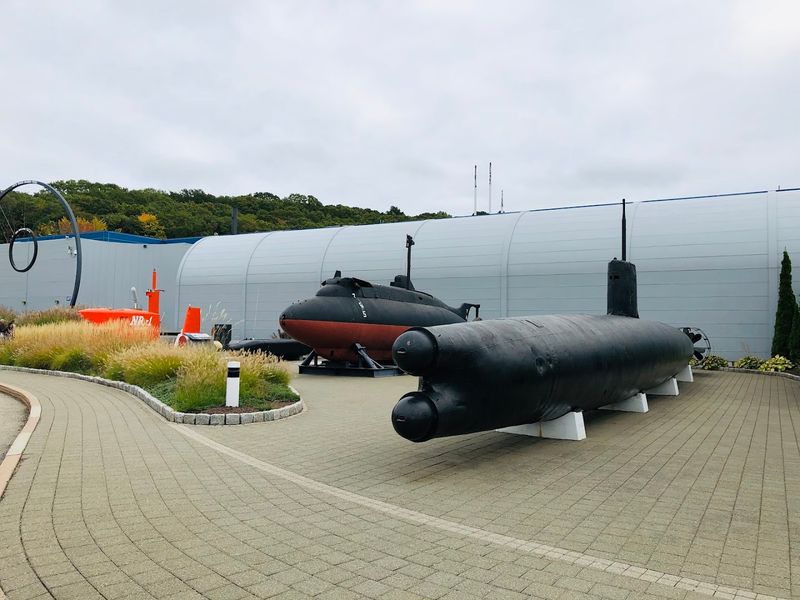
Torpedoes are bigger in person. That sounds obvious, but until you are standing next to a full-size example, the scale simply does not register.
The Submarine Force Library and Museum has an impressive torpedo collection that covers multiple decades of naval development.
The variety across the collection is genuinely fascinating. Early designs look almost crude compared to later models, and tracing that evolution from one torpedo to the next tells a quiet story of relentless engineering progress.
The museum does an excellent job of framing each piece within its historical context. One thing I noticed while moving through this section was how the lighting plays off the polished metal surfaces.
There is an almost sculptural quality to some of these weapons when you see them up close. History and industrial design collide in a surprisingly striking way.
The informational plaques alongside each torpedo are detailed without being dry. You learn about range, depth capability, and deployment methods in language that never talks down to you.
Control Consoles And Real Equipment
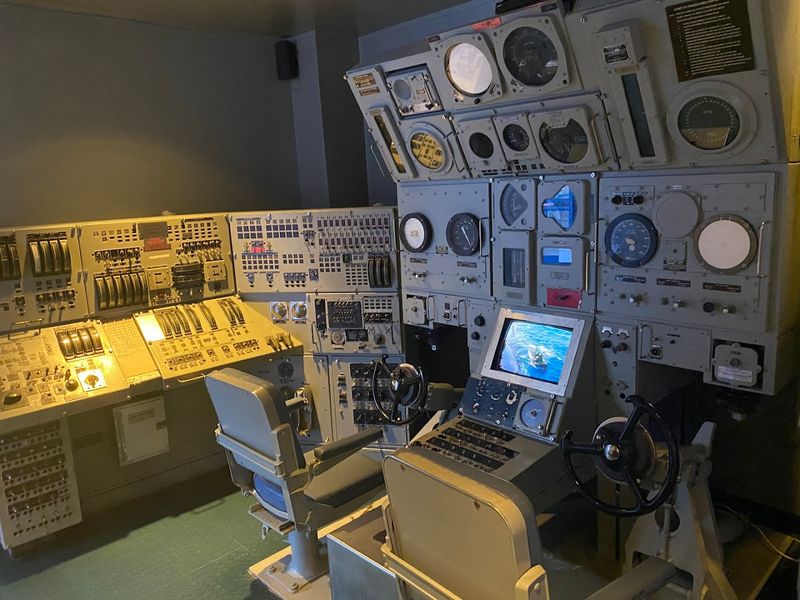
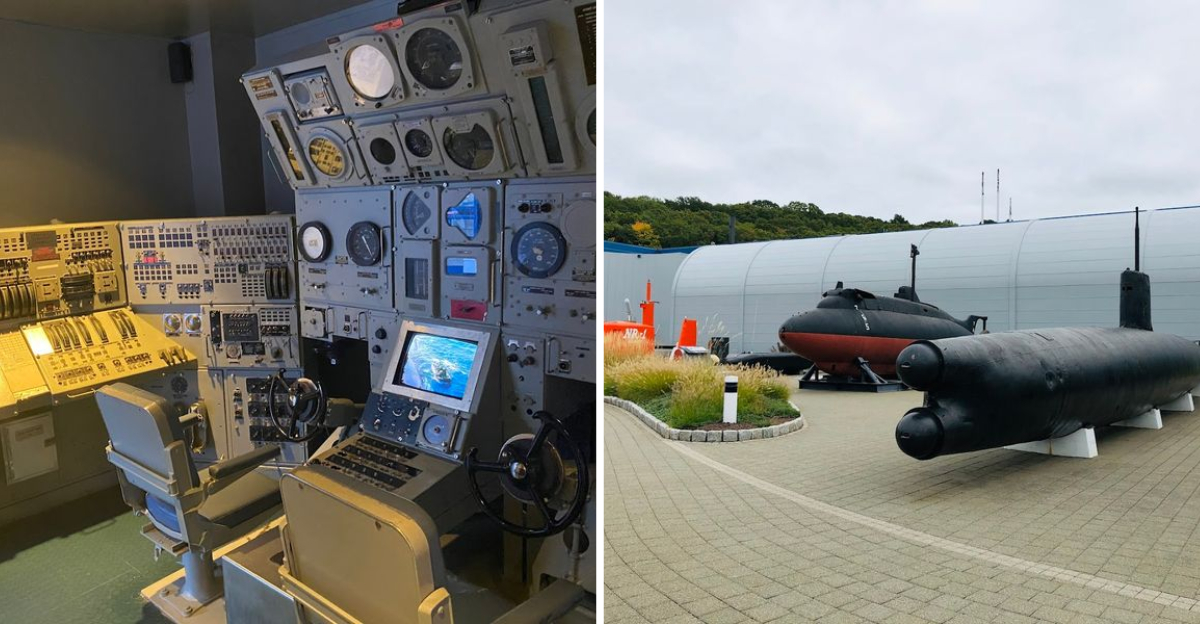
There is a particular kind of thrill that comes from standing in front of actual submarine control equipment.
Not a recreation, not a model, but the real deal. The Submarine Force Library and Museum has several original control consoles pulled from decommissioned submarines, and they are spectacular.
The switches, dials, and gauges are all there in extraordinary detail. Some of the panels still have operational components, which makes the whole display feel alive in a way that photographs simply cannot capture.
You can almost hear the hum of a running boat behind them.
What struck me most was the sheer density of information packed onto each console. Every button had a purpose, every gauge told a story.
Operating a submarine was clearly not a casual undertaking, and these panels make that immediately obvious.
The museum arranges these exhibits thoughtfully, with explanatory text placed at just the right level. You never feel lost or left behind, even if your submarine knowledge starts at zero.
Connecticut takes its naval heritage seriously, and this collection of authentic equipment is a big part of why.
Photos, Documents, And Naval Stories
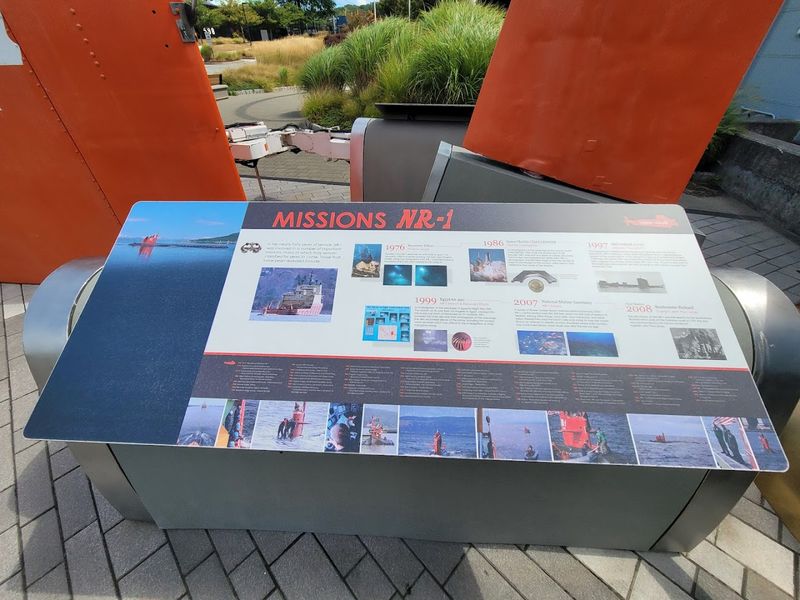
Some of the most powerful moments in a museum happen quietly, in front of a photograph.
The Submarine Force Library and Museum has an extensive collection of historical photos and documents that trace the full arc of American submarine development. It is rich, detailed, and deeply personal.
The photographs range from early experimental vessels to Cold War operations and beyond. Black and white images of crews standing proudly on their boats carry an emotional weight that color photography somehow never quite matches.
These were real people doing extraordinary work.
Documents on display include orders, technical reports, and personal correspondence that bring the human side of submarine service into sharp focus.
The layout of this section encourages slow movement. People tend to drift from panel to panel, leaning in close to read captions, pausing longer than they planned.
The Submarine Force Library and Museum earns its name fully in this section. The library component is not just a title.
It is a genuine commitment to preserving and sharing the written and visual record of an entire branch of American naval service.
The Gift Shop And Free Admission
Here is something that surprised me on my first encounter with this place.
Admission is completely free. For a museum of this scale, quality, and historical significance, that is not just generous.
It is extraordinary. Donations are warmly accepted and absolutely worth leaving.
The gift shop is a satisfying final stop that manages to avoid the trap of generic tourist merchandise. You will find navy memorabilia, submarine models, books, and items that actually feel connected to what you just experienced.
Picking up a submarine model or a book about the USS Nautilus feels like a natural extension of the visit rather than a commercial afterthought.
The museum is closed on Tuesdays, otherwise it is open 9–5 in summer, 9–4 in winter. That is a useful information for a day-trip planner so no one ends up disappointed.
The Nautilus occasionally closes for maintenance, so it’s worth advising checking ahead before counting on boarding it.
This Connecticut museum rounds out the experience beautifully at every level, from the moment you arrive to the moment you browse that final shelf in the gift shop.