13 Amazing Connecticut Places Many Locals Spend Their Whole Lives Without Ever Seeing
Connecticut still has places that can make longtime residents wonder how they somehow missed them for years.
That is part of what makes exploring your own state so entertaining.
You think you know the map, then one overlooked spot shows up and completely ruins that confidence.
These are not necessarily the places everybody talks about first.
Some stay quietly outside the usual weekend rotation, which only makes finally discovering them more satisfying.
A familiar state can feel surprisingly new when you stop following the same routes.
That is the fun of this list.
It is a reminder that living somewhere for decades does not mean you have seen all of it.
There is always another road, view, building, or little corner waiting to surprise you.
So how many of these places have been sitting practically under your nose this whole time?
1. The Glass House, New Canaan
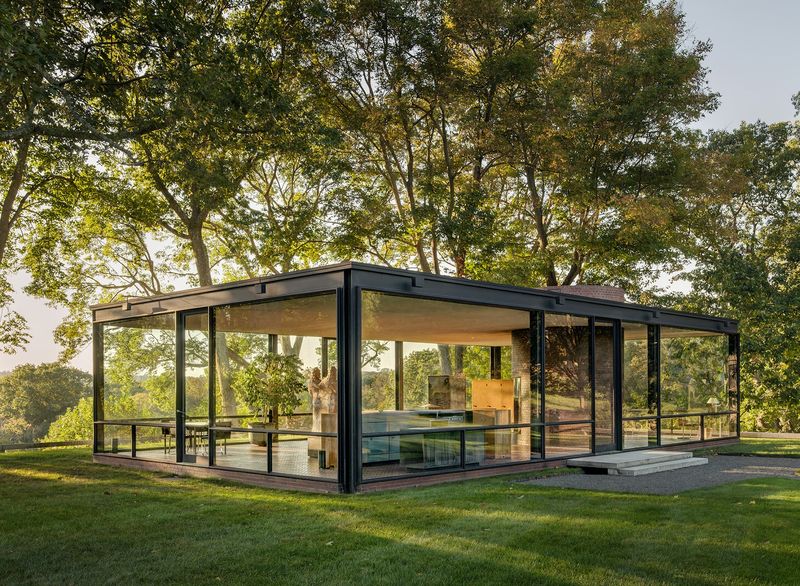
This one really does look unreal. Built in 1949, Philip Johnson’s Glass House turns a home into a nearly transparent pavilion, with floor-to-ceiling glass opening the interior to the landscape.
Inside, the largely open plan uses furniture and walnut storage cabinets to define spaces, while the circular brick bathroom enclosure provides the strongest sense of privacy.
The bigger surprise comes outside. The Glass House is only the centerpiece of a 49-acre property containing 14 structures, including the restored Brick House and several galleries, with architecture added across decades of Johnson’s experimentation.
Art is woven through the site as well, with works by Frank Stella, Robert Rauschenberg, Cindy Sherman and Donald Judd appearing in the permanent collection.
Visits begin at the Visitor Center at 199 Elm Street in New Canaan, where guests board a shuttle to the property. The 2026 tour season runs from April 16 through December 14, and advance tickets are strongly recommended because tours often sell out.
Now operated by the National Trust for Historic Preservation, the site remains one of the state’s most unusual architectural experiences.
2. Weir Farm National Historical Park, Wilton
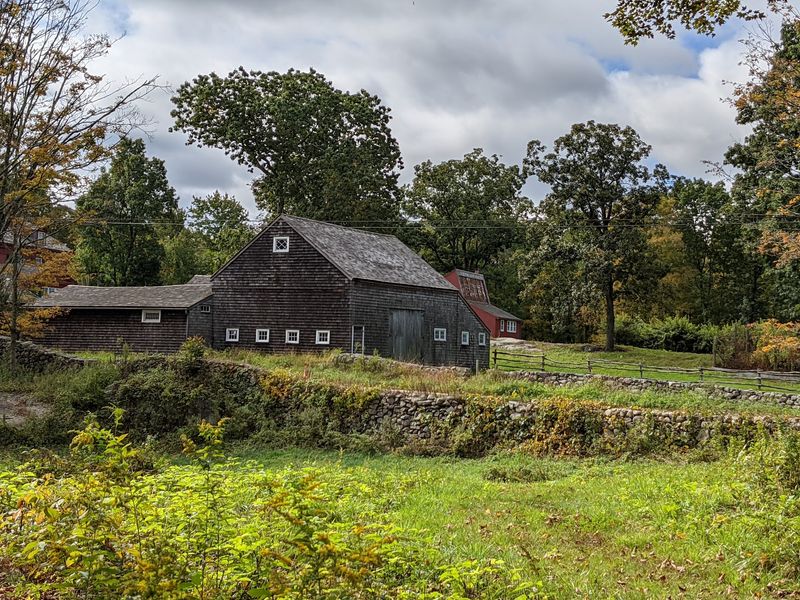
The state has a national park unit devoted to art, and Weir Farm can still feel surprisingly under-the-radar.
Weir Farm protects the home and studios of American Impressionist painter Julian Alden Weir, who traded a painting for the property in 1882 and then spent decades capturing its stone walls, fields, and woodlands on canvas.
His friends and fellow painters visited often, turning the farm into a gathering point for the movement.
Trails wind past the pond, the sunken garden, and the barns, and the whole layout is compact enough for a relaxed morning. Rangers hand out art supplies through a program that lets visitors sketch or paint the same views the artists worked from, no experience required.
Studio tours are seasonal, so checking hours before driving out to 735 Nod Hill Rd in Wilton saves disappointment.
Parking is free, admission costs nothing, and the walking paths stay gentle. Families with young kids and grandparents in tow manage the grounds without much trouble.
3. Boothe Memorial Park, Stratford
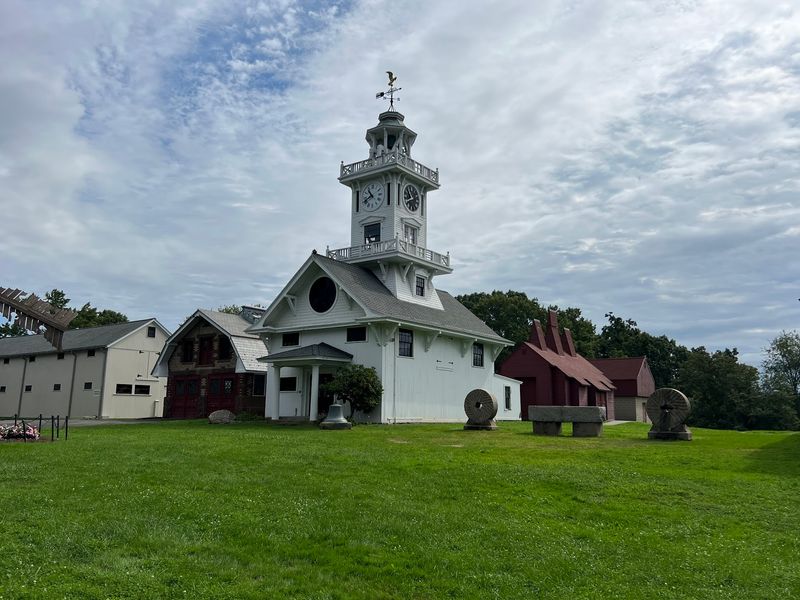
This place gets wonderfully strange fast. What began as a family homestead eventually became a collection of unusual buildings created by brothers David and Stephen Boothe, who spent decades reshaping the property with their own architectural ideas.
Across 32 acres above the Housatonic River, Boothe Memorial Park & Museum gives visitors plenty to explore. The distinctive Technocratic Cathedral shares the grounds with a clock tower museum, while other structures reflect the property’s long history as a family farm.
A rose garden creates a quieter corner, and the local astronomical society also maintains facilities here.
The park works just as well for a casual wander as it does for exploring the museum buildings. Open lawns and picnic areas leave plenty of room to slow down between the more curious sights.
The official park address is 5774 Main Street Putney in Stratford. The grounds are open year-round and free to enter, while tours of the historic buildings generally run seasonally from May through October.
It is the kind of place that can make a simple afternoon feel unexpectedly different.
4. PEZ Visitor Center, Orange
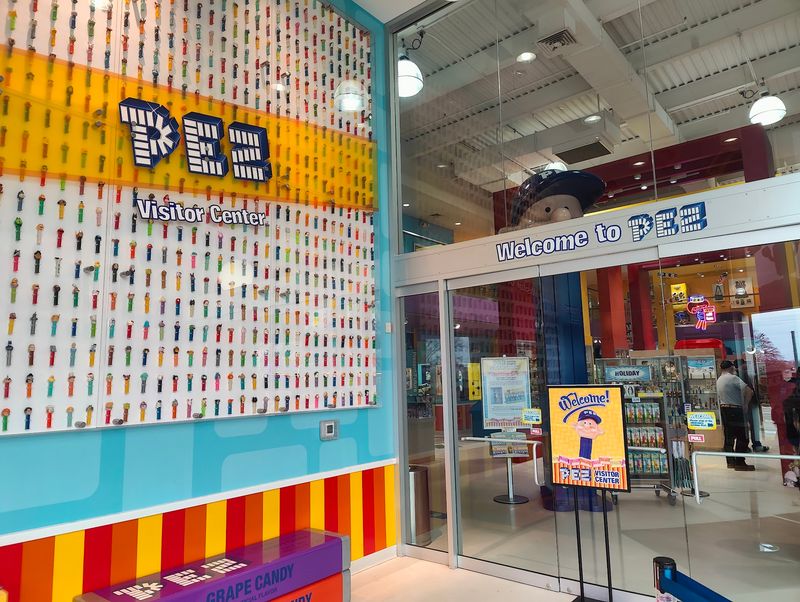
PEZ Candy’s Orange facility serves the United States and Canada, and visitors can watch part of the packaging operation through a glass viewing area.
The visitor center attached to that factory holds what is billed as the largest public display of PEZ memorabilia anywhere. Cases run wall to wall with dispensers from the 1950s forward, character heads that never made it to shelves, and oddities that collectors chase for years.
Interactive touches keep kids busy: a PEZ-themed trivia game, a motorcycle and a truck decorated in candy branding, and a window looking onto part of the production area.
Admission is modest, and each ticket includes a $2 store credit that can be used toward merchandise in the shop.
Plan on roughly an hour, longer if someone in your group starts reading every label. The building at 35 Prindle Hill Rd sits in an industrial park, so watch for the sign rather than expecting a storefront.
5. Hill-Stead Museum, Farmington
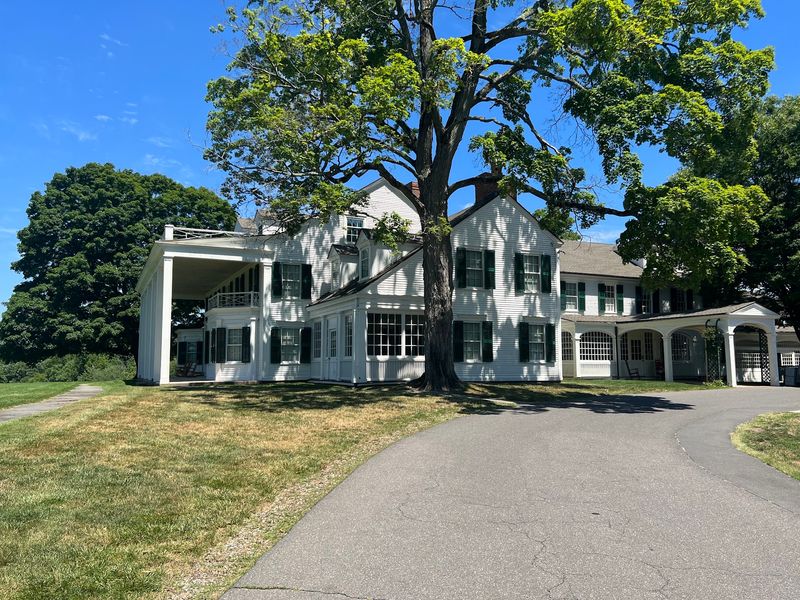
French Impressionist paintings hang in a Connecticut country house, in the same rooms where the family who bought them actually lived.
Theodate Pope Riddle, one of America’s first licensed female architects, designed the Colonial Revival mansion with help from McKim, Mead and White.
Her father filled it with work by Monet, Degas, Manet, Cassatt, and Whistler, and those canvases remain in their original spots rather than in gallery-style hangings.
Guided house tours are the only way inside, which means small groups and time to actually look at things.
Outside, 152 acres include walking trails, meadows, and a sunken garden originally laid out by landscape designer Beatrix Farrand, replanted with period-appropriate flowers.
The address, 35 Mountain Rd in Farmington, puts the property minutes from I-84 yet the setting feels rural once you turn in.
Trail access and garden strolling are often available without a house ticket, so a quick outdoor visit works when time is short. Poetry readings and outdoor concerts fill parts of the summer calendar.
6. Old New-Gate Prison & Copper Mine, East Granby
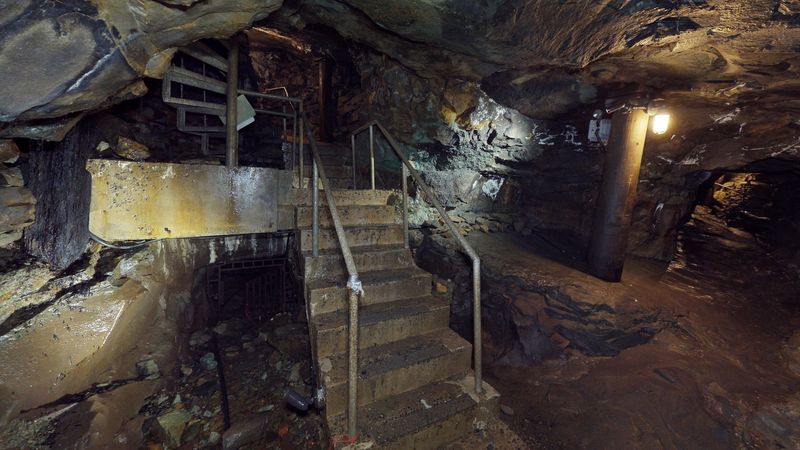
Underground tunnels dug in the 1700s, later used to hold prisoners, sit beneath a hillside in East Granby, and the state lets you walk through them.
Copper mining started here in 1707. By 1773 the shafts had been repurposed as state’s first prison, holding Loyalists during the Revolution and later becoming the state prison until 1827.
Visitors descend a staircase into cool, damp caverns where inmates once slept, then explore the stone ruins of the prison buildings above ground. The temperature difference between the surface and the mine is startling, so a jacket helps even in July.
Sturdy shoes matter more than anything else. Footing underground is uneven and wet in places, and the stairs are steep.
The site at 115 Newgate Rd opens seasonally, generally spring through fall on limited days, and checking current hours before the drive is worth the two minutes.
Views from the ridge across the Farmington Valley come as a bonus once you climb back into daylight.
7. American Clock & Watch Museum, Bristol
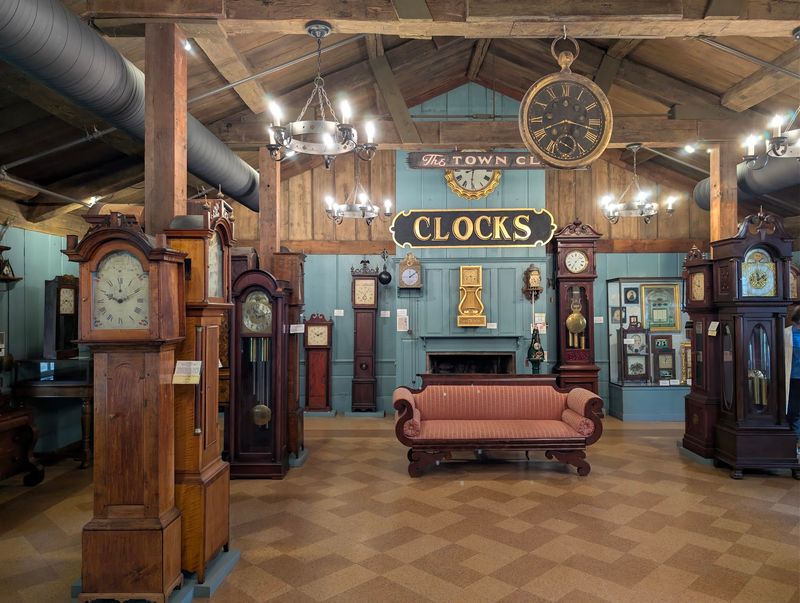
Arrive close to the top of the hour and the building starts chiming from every direction at once.
Bristol was once the center of American clockmaking, and the museum honors that history inside an 1801 house with a period addition.
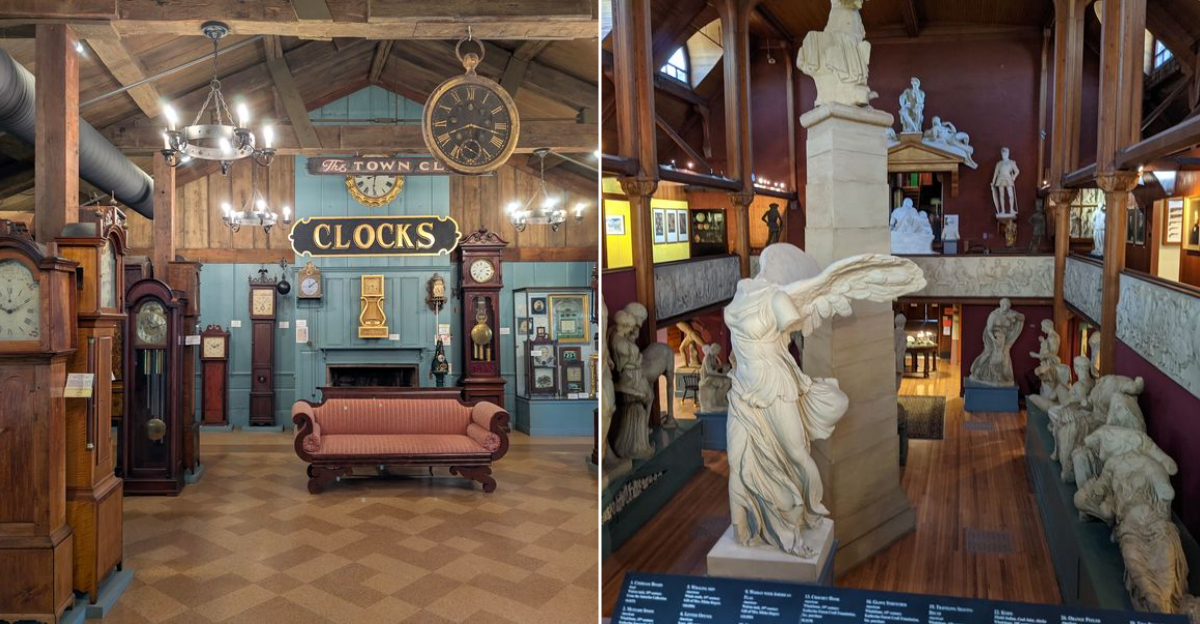
More than 1,500 timepieces fill the rooms, from towering tall case clocks to pocket watches and novelty designs, with a strong focus on state manufacturers who once shipped clocks around the world.
Staff and volunteers wind and maintain the collection, which is why the soundtrack is live rather than recorded.
Displays trace how clock production shifted from handmade wooden movements to mass-produced brass, a change that made accurate time affordable for ordinary households for the first time.
A sundial garden sits outside, and the sales shop carries clock-related items and books.
Find it at 100 Maple St in Bristol, where the museum is open Wednesday through Sunday from 10 a.m. to 5 p.m. and charges admission. Ninety minutes covers the exhibits comfortably, and the staircases mean checking accessibility ahead is sensible.
8. Bellamy-Ferriday House & Garden, Bethlehem
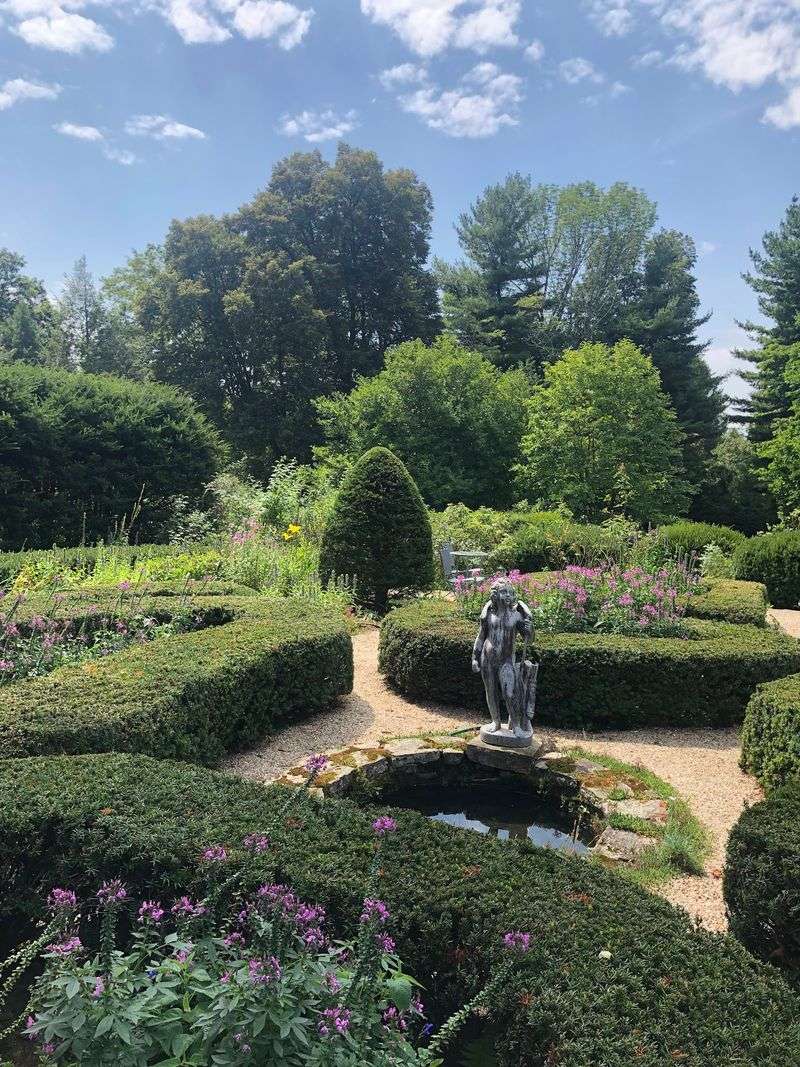
Spring color steals the show before the history even has a chance. At Bellamy-Ferriday House & Garden, sweeping lawns and carefully tended flower beds surround an 18th-century home with a surprisingly layered story.
Reverend Joseph Bellamy began building the house in 1754, and later generations filled it with furnishings connected to the property’s long past.
Much later, Caroline Ferriday made the estate her summer home and became known for humanitarian work that helped women from Europe receive medical care in the United States.
The gardens are a major reason to visit, especially when the lilacs bloom and the formal parterre fills with seasonal color. Quiet paths make it easy to linger outside before exploring the house, and the property spans ten peaceful acres.
Connecticut Landmarks operates the property at 9 Main Street North in Bethlehem. Tours are offered seasonally from May through October, with garden access available during operating days.
Beyond the gates, the surrounding Litchfield Hills add an easy scenic drive to the outing.
9. The Institute For American Indian Studies, Washington
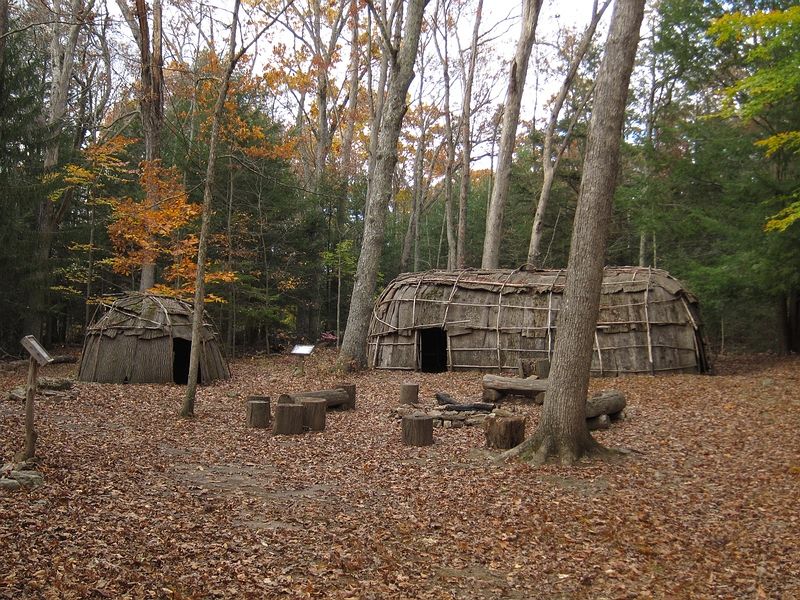
Behind a research museum in the Litchfield Hills, a replicated Algonkian village sits among the trees, complete with wigwams and a longhouse.
The Institute focuses on the Indigenous peoples of the Northeast, past and present, through exhibits of artifacts, dioramas, and rotating shows created with Native communities.
Archaeological work has long been part of its mission, and displays explain how objects found in state soil reveal thousands of years of life here.
Outdoors, a short nature trail identifies plants used for food, medicine, and building, giving the woods a different meaning as you walk.
Programs run through the year, including craft workshops, storytelling, and archaeology days that appeal to curious kids.
The grounds at 38 Curtis Rd in Washington are quiet and wooded, reached by a narrow road that feels far from anywhere.
Admission stays affordable, and an hour or two is plenty. Trails are natural surface, so shoes that handle roots and leaves make the outdoor portion easier.
10. Ballard Institute And Museum Of Puppetry, Storrs
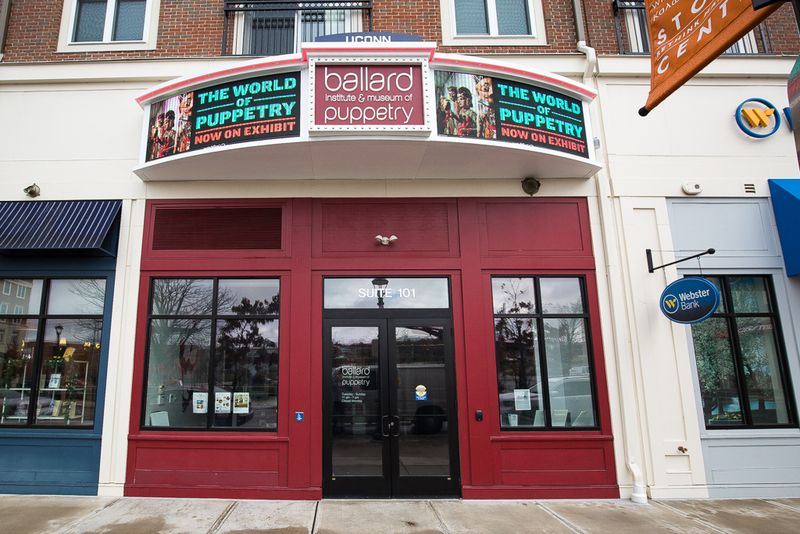
Puppetry gets a surprisingly grown-up spotlight here. What began with the work of longtime UConn professor Frank Ballard has grown into a museum devoted to the art form.
Inside, visitors see pieces drawn from a collection of more than 3,000 puppets. Rotating exhibitions keep the galleries changing throughout the year.
Live performances bring another side of the craft to life, while occasional workshops offer a closer look at how puppets are created and used. At 1 Royce Circle, Suite 101B, in Storrs Center, the museum sits within easy reach of nearby shops and places to eat.
Admission is pay-what-you-wish, with a suggested donation of $5 per person.
The galleries are open Wednesday through Sunday and are easy to explore without setting aside an entire afternoon. Visitors can also check the schedule for performances before planning their trip.
What makes the Ballard Institute and Museum of Puppetry memorable is how seriously it treats a creative tradition that can be playful, clever, and unexpectedly detailed.
11. Slater Memorial Museum, Norwich
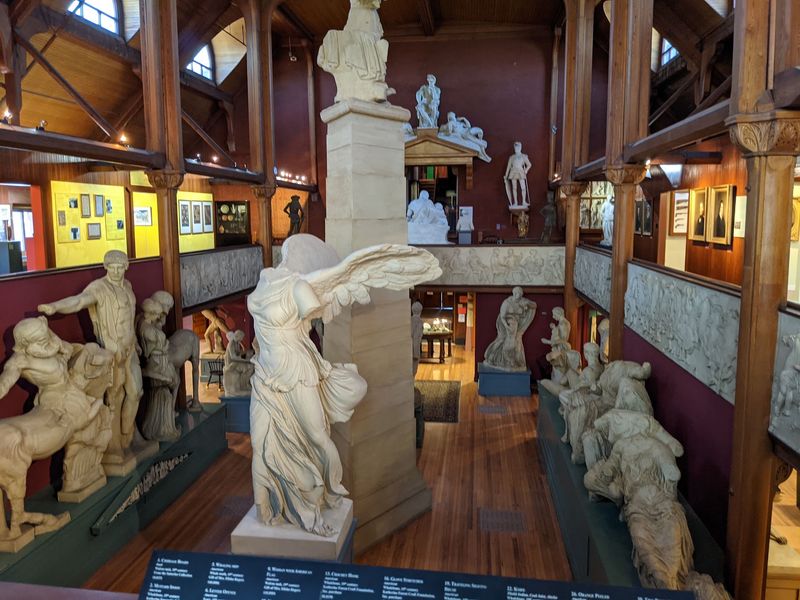
Full-size plaster casts of classical sculpture, including the Venus de Milo and figures from the Parthenon, stand in a Romanesque building on a high school campus.
Those casts arrived in the 1890s, when American museums acquired them so students could study great works without traveling to Europe. Norwich kept its collection intact, and the three-story sculpture hall remains the centerpiece.
Beyond the casts, holdings include American paintings and furniture, Asian and African art, Native American objects, and portraits by regional artists.
The 1886 building, designed by architect Stephen Earle, is worth attention on its own for its heavy arches and warm woodwork.
Because the museum shares grounds with Norwich Free Academy at 108 Crescent St, hours follow a schedule shaped partly by the school year, so confirming before visiting is wise.
Admission is inexpensive and crowds are light, which means unhurried looking. Downtown Norwich and the Thames River waterfront are close by if you want to stretch the outing into a full afternoon.
12. Submarine Force Library & Museum, Groton
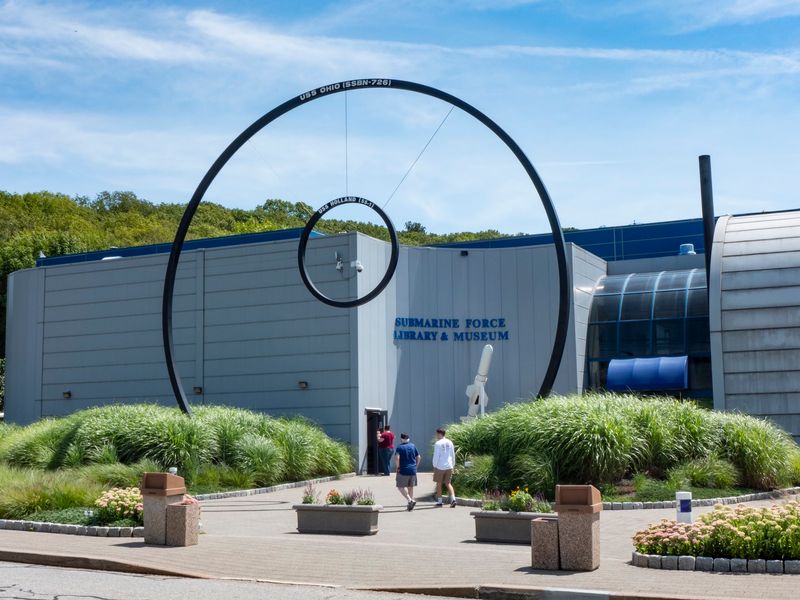
Walking through the world’s first nuclear-powered submarine costs nothing, which still surprises people who assume such things require tickets.
USS Nautilus, launched in 1954 and the first vessel to reach the North Pole beneath the ice, is moored along the Thames River as a National Historic Landmark.
A self-guided route takes you past bunks, the control room, and the dining space, and the tight passageways make the crew’s daily life immediately understandable.
Inside the museum building, exhibits trace submarine history from hand-cranked early designs through modern fleets, with working periscopes, a control room mock-up, and models filling the galleries.
The official submarine museum of the U.S. Navy, the site at 1 Crystal Lake Rd in Groton charges no admission and includes free parking.
Anyone with mobility concerns should know the boat requires ladders and narrow hatches, though the main museum is fully accessible.
Nautilus occasionally closes for maintenance, so a quick check on status before driving down saves a wasted trip. Two hours suits most visits.
13. Prudence Crandall Museum, Canterbury
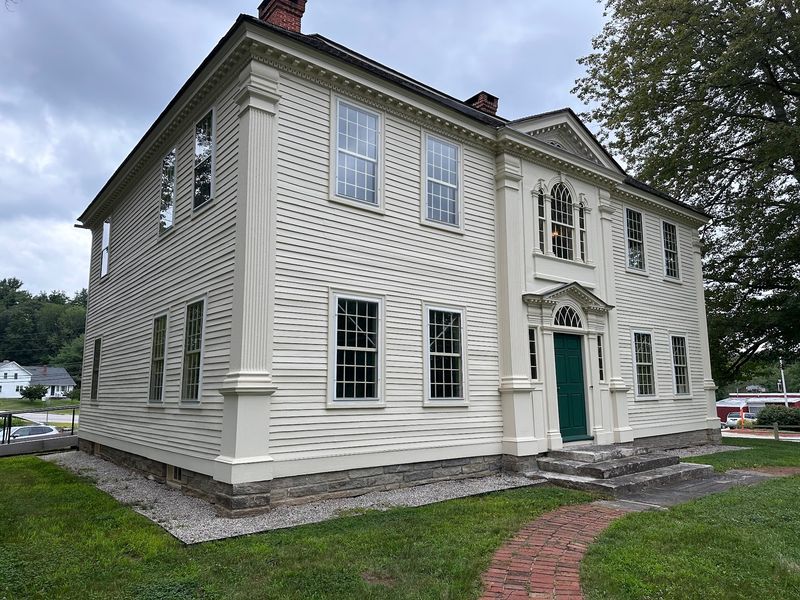
This small museum carries a remarkably big story. Its rooms once held a school that challenged the rules of its time.
In 1832, teacher Prudence Crandall admitted Sarah Harris, a young Black woman, to her academy. That decision changed the school’s direction completely.
After opposition grew, Crandall reopened the academy in 1833 for Black and Brown young women from several states. A new state law targeted the school, and the legal battle became part of a much larger conversation about education and equal rights.
Today, the Prudence Crandall Museum explores those events through an exhibition covering the school and its students. Guided visits last about an hour and connect their experiences with later milestones in American civil rights history.
The museum stands at 1 South Canterbury Road in Canterbury. Seasonal guided tours run from May into October, and advance tickets are strongly encouraged.
Prudence Crandall became the state’s official State Heroine in 1995, giving this quiet historic site an especially meaningful place in local history.