12 California Day Trips That Feel Like Mini Vacations Without Passing $50
Mini vacations sound expensive until you stop letting hotels get involved.
A good day trip can still do the job. Pack a snack. Pick a destination.
That is the beauty of an under-$50 escape. You get the change of scenery without turning your bank account into a warning sign.
A California day can feel surprisingly vacation-like with the right low-cost plan.
Maybe it is a beach walk, a small-town wander, a scenic overlook, or a food stop that makes the drive feel justified.
The trick is choosing places that feel different enough to reset your mood.
No overnight bag required. No complicated itinerary.
These 12 day trips prove a little planning can stretch far when the destination delivers.
1. Crystal Cove State Park, Laguna Beach
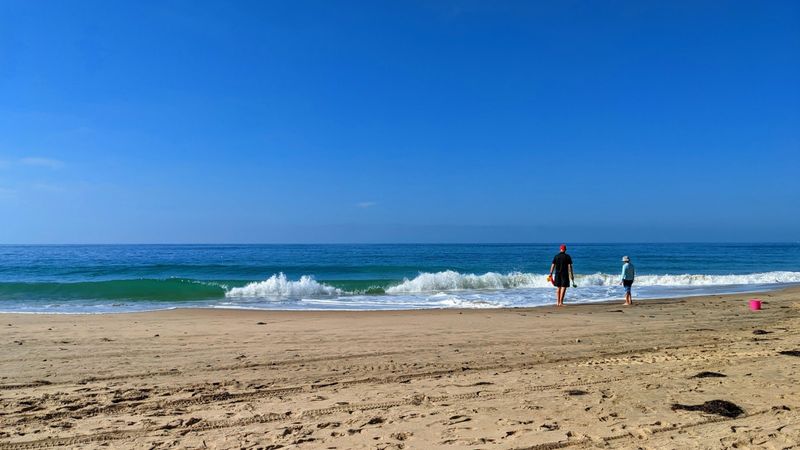
Few places along the Southern California coast pack as much variety into a single visit as this stretch of protected shoreline in Laguna Beach.
The park covers over 2,400 acres of backcountry and three miles of beach, giving visitors the rare chance to move between tide pools, bluff trails, and open ocean views without ever feeling rushed.
Entry runs about $15 to $20 per vehicle, which splits easily between a group.
The tide pools here are genuinely impressive, especially during a low-tide window when sea stars, urchins, and small fish become visible in shallow rocky basins.
Arriving early on a weekday helps avoid the parking crunch that tends to build up by late morning on weekends.
The bluff trail offers a different kind of reward, with sweeping views of the Pacific and a sense of elevation that makes the drive down feel well worth it.
Historic beach cottages dot the lower cove area and add a charming, old-California atmosphere that feels rare along this stretch of coast.
The whole experience moves at a comfortable pace, and most visitors end up spending four to six hours without feeling like anything was rushed or skipped.
2. Point Lobos State Natural Reserve, Carmel
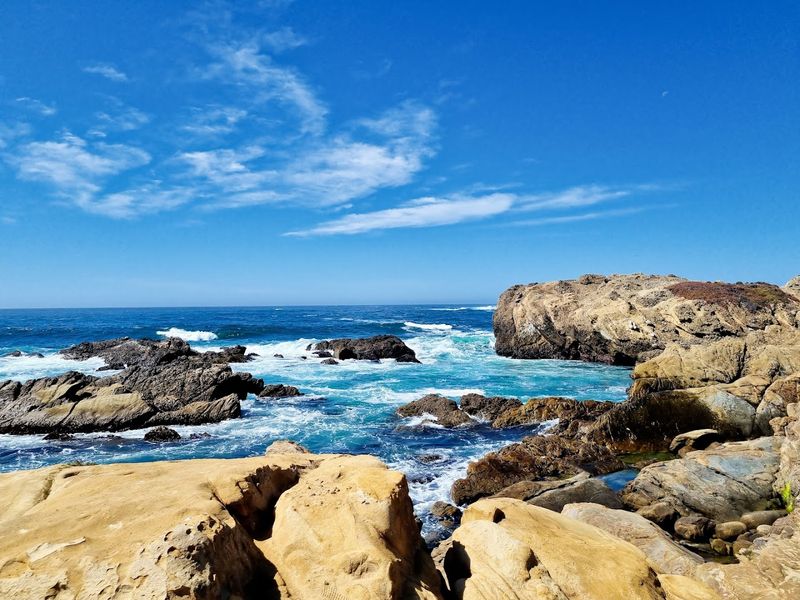
There is a reason locals around the Monterey Peninsula treat Point Lobos like a well-kept secret worth protecting.
The reserve sits just south of Carmel-by-the-Sea and delivers a coastal experience that genuinely rivals anything found in more famous national parks.
Entry costs $10 per vehicle, and that fee covers access to some of the most photogenic coves and wildlife-watching spots anywhere in the state.
Harbor seals haul out on rocky outcroppings throughout the year, and sea otters are frequently spotted floating in the kelp beds just offshore.
The Sea Lion Point Trail is short but dramatic, looping through windswept cypress groves and along cliff edges where the water turns an almost unreal shade of blue-green.
Timed entry reservations are required, so checking the reserve website before heading out is a smart move.
Whaler’s Cove and Bluefish Cove attract scuba divers who consider this underwater reserve among the best dive spots on the West Coast.
Even without going in the water, standing above those coves and watching the light shift across the surface gives the whole visit a cinematic quality. Budget a full half-day here and plan to move slowly.
3. Muir Woods National Monument, Mill Valley
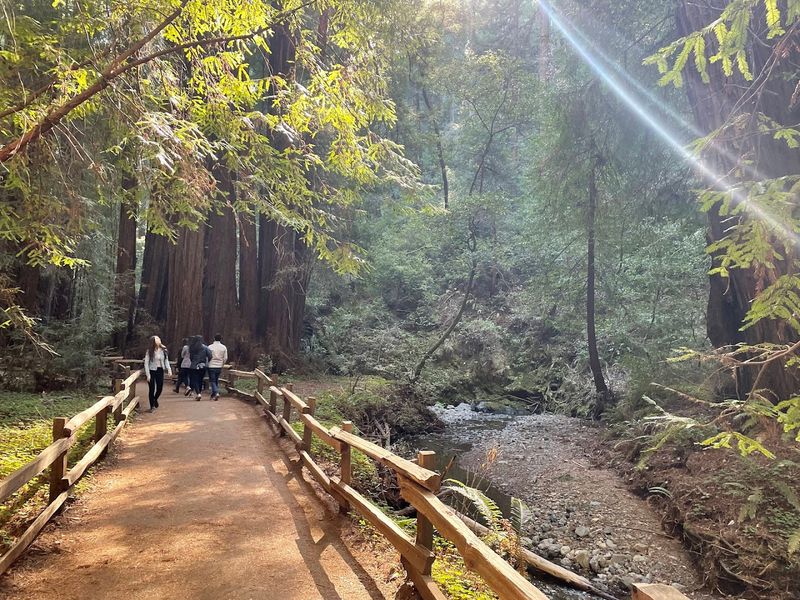
Standing inside a grove of old-growth coastal redwoods has a way of making everyday stress feel genuinely small.
Muir Woods sits in Marin County just north of San Francisco and protects some of the last remaining stands of these ancient trees, with the tallest reaching over 250 feet.
Adult admission is $15, and the experience punches well above that price point in terms of sheer atmosphere and natural drama.
Because parking at the monument is extremely limited, visitors are required to book a timed entry reservation and either use the Muir Woods Shuttle from Sausalito or reserve a parking spot in advance.
Planning ahead makes the difference between a smooth visit and a frustrating one. The shuttle itself is a low-cost add-on that takes a lot of the stress out of arrival logistics.
The main loop trail runs about a mile and stays mostly flat, making it accessible for a wide range of fitness levels.
Cathedral Grove, near the halfway point of the main trail, tends to draw quiet from even the most talkative groups.
Something about the scale of those trees and the filtered light through the canopy creates a stillness that feels genuinely restorative. Allow at least two to three hours to soak it in properly.
4. The Getty Center, Los Angeles
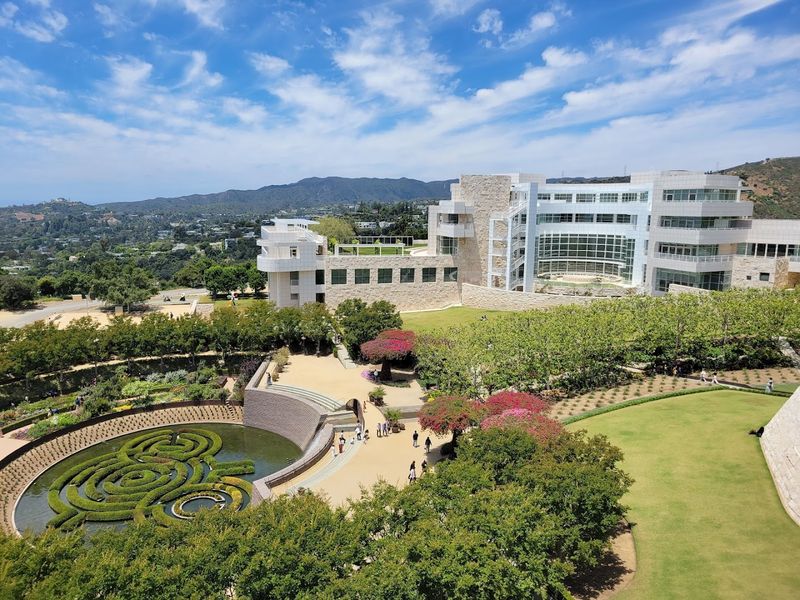
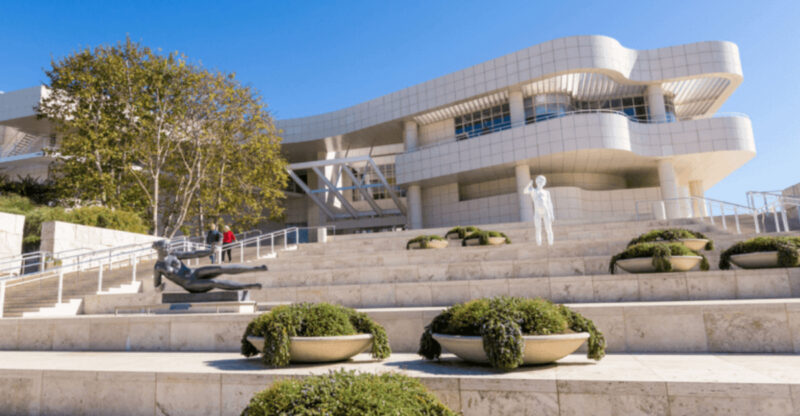
Perched on a ridgeline above Brentwood, the Getty Center manages to deliver a genuinely world-class cultural experience with zero admission cost.
The permanent collection spans European paintings, sculptures, decorative arts, manuscripts, and photographs, and the quality of what is on display puts it firmly in the company of major international museums.
A timed parking reservation costs $25, though arriving via public transit or rideshare brings the total to nothing at all.
Beyond the galleries, the architecture and gardens alone justify the trip.
Richard Meier designed the travertine-clad buildings, and Robert Irwin designed the Central Garden, which changes with the seasons and rewards a slow, unhurried walk.
On a clear day, the views from the outdoor terraces stretch from downtown Los Angeles all the way to Santa Monica Bay and the Pacific.
Timed entry reservations are required, so booking ahead on the Getty website prevents arriving to a full lot or a turned-away situation.
Weekday mornings tend to be noticeably quieter than weekend afternoons.
The on-site cafe is a step above typical museum food, though packing a snack keeps costs lower. The whole visit can realistically fill four to five hours without ever feeling padded or repetitive.
5. The Huntington Library, San Marino
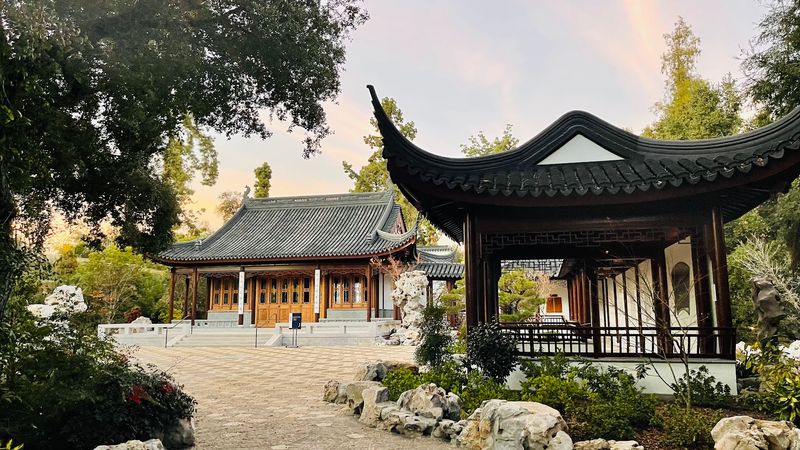
The Huntington in San Marino is the kind of place that surprises people who expect a stuffy library and instead find 120 acres of themed botanical gardens, art galleries, and a rare books collection that includes a Gutenberg Bible.
Adult admission runs about $29 to $34 depending on the day, which lands comfortably under the $50 mark and covers an enormous amount of ground.
Planning the visit around a quieter weekday makes the gardens feel especially spacious and calm.
The Japanese Garden is consistently one of the most visited sections, featuring a moon bridge, koi pond, and bonsai collection that could hold attention for a full hour on its own.
The Desert Garden is another standout, with one of the largest outdoor cactus and succulent collections in the world laid out across several acres.
Moving between these distinct garden environments gives the visit a natural rhythm that never feels forced.
Inside the Huntington Art Museum, a familiar face often stops visitors in their tracks: Thomas Gainsborough’s Blue Boy, one of the most recognized portraits in Western art history, hangs in a dedicated gallery.
Timed entry is recommended during peak seasons. The grounds close in the early evening, so arriving by late morning allows enough time to explore without feeling rushed at the end.
6. Calico Ghost Town, Yermo
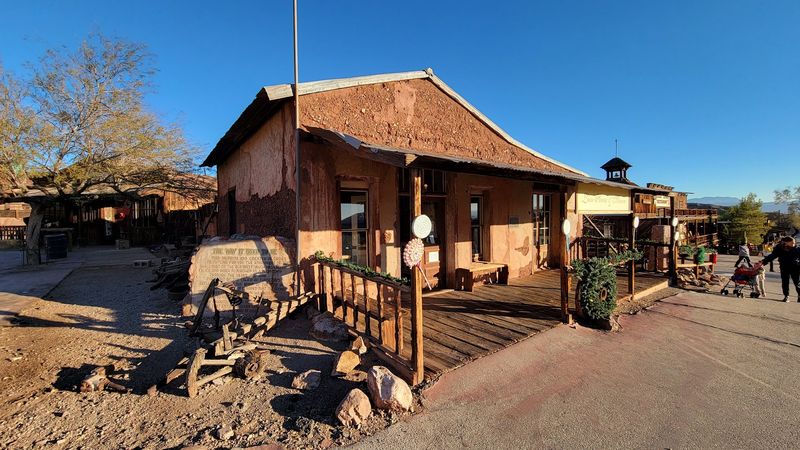
Out in the Mojave Desert near Barstow, a former silver mining town has been preserved as one of the more entertainingly quirky stops in all of Southern California.
Calico boomed in the 1880s when silver was discovered in the surrounding hills, and the town once supported a population of over 1,200 people.
General adult admission runs around $8, making it one of the more affordable full-experience destinations on this list.
Walking the main street feels like a set from an old Western film, with wooden storefronts, a working narrow-gauge railway, and mine tours that take visitors underground into the original silver tunnels.
The Maggie Mine tour is a highlight, offering a cool and genuinely atmospheric walk through the historic excavation.
Special events like Calico Days in October tend to draw larger crowds and may carry higher admission costs.
The surrounding desert scenery adds to the atmosphere in a way that is hard to replicate elsewhere.
San Bernardino County operates the site, and the combination of history, desert landscape, and accessible pricing makes it a solid choice for a spontaneous road trip detour off the I-15 corridor.
Located at 36600 Ghost Town Rd, Yermo, CA 92398, the site is well-signed from the freeway and easy to reach without navigation stress.
7. Solvang
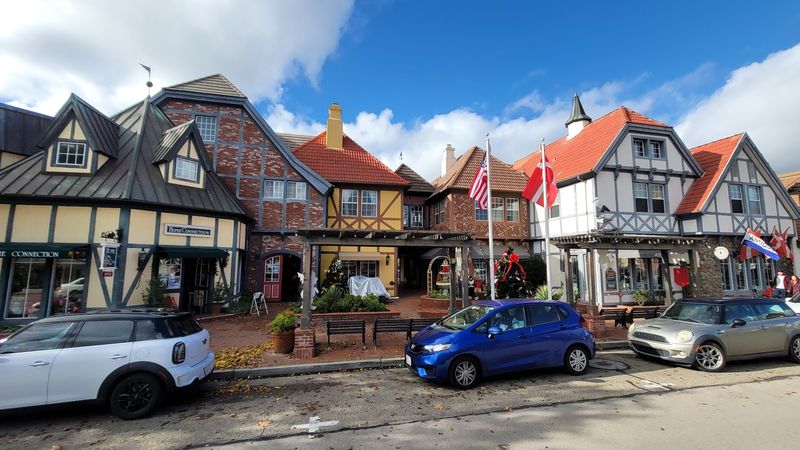
Driving into Solvang for the first time tends to produce a genuine double-take.
The town sits in the Santa Ynez Valley about 35 miles north of Santa Barbara, and the Danish architecture is not a superficial theme park treatment but a deeply rooted identity that the community has maintained since Danish settlers founded the town in 1911.
Wandering the streets costs nothing, and the photo opportunities around every corner are hard to resist.
Bakeries here sell aebleskivers, which are round Danish pancake puffs typically served with jam and powdered sugar, and they are worth at least one stop even on a tight budget.
The Elverhoj Museum of History and Art, located at 1624 Elverhoy Way, Solvang, CA 93463, offers free admission and covers the town’s Danish heritage with a warmth that feels genuinely community-driven.
Horse-drawn carriage rides and specialty shops selling clogs, Viking trinkets, and Scandinavian goods line the main streets.
Keeping the day under $50 is very doable here as long as restaurant splurges stay in check. Pastries, a casual lunch at a deli-style spot, and a museum visit can all fit comfortably within budget.
The whole town is compact and walkable, which makes it easy to cover a lot of ground without a plan.
8. Griffith Observatory and Griffith Park, Los Angeles
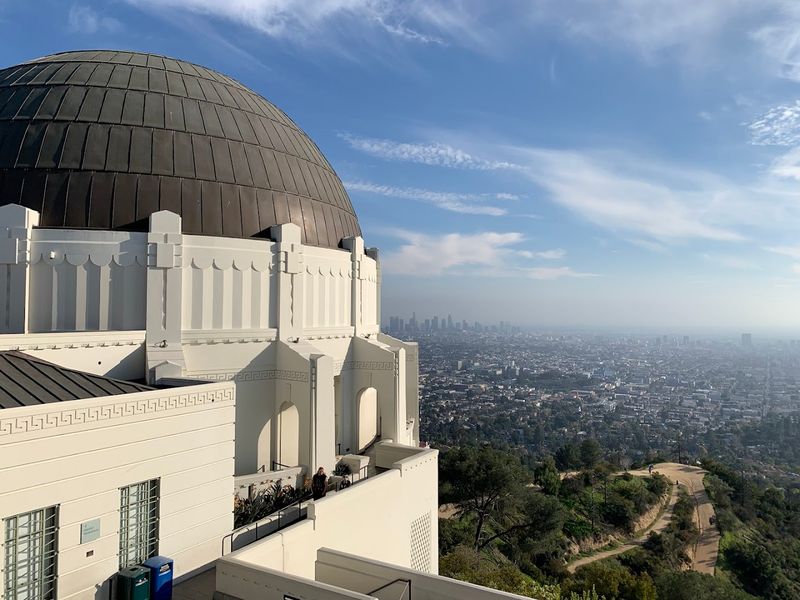
The view from the south lawn of Griffith Observatory at dusk is one of those classic Southern California moments that never gets old, no matter how many times someone has seen it.
The observatory sits in the Santa Monica Mountains above Los Feliz and offers free admission to its interior exhibits, which cover astronomy, space exploration, and the cosmos in a way that manages to be genuinely engaging.
The building itself is a 1935 Art Deco landmark worth visiting on architectural merit alone.
Griffith Park surrounding the observatory is the largest municipal park with urban wilderness area in the United States, covering over 4,310 acres.
Trails like the Brush Canyon Trail and the route up to Mount Hollywood give hikers a real workout with sweeping views of the Los Angeles Basin, the Hollywood Sign, and on clear days, the Pacific Ocean.
Parking near the observatory on weekends fills up fast, but free parking is available near the Greek Theatre with a shuttle running up for a nominal fee.
The observatory is located at 2800 E Observatory Rd, Los Angeles, CA 90027.
Arriving on a weekday morning means shorter lines and a more relaxed experience inside the Samuel Oschin Planetarium, where shows carry a small ticket fee.
9. Columbia State Historic Park, Columbia
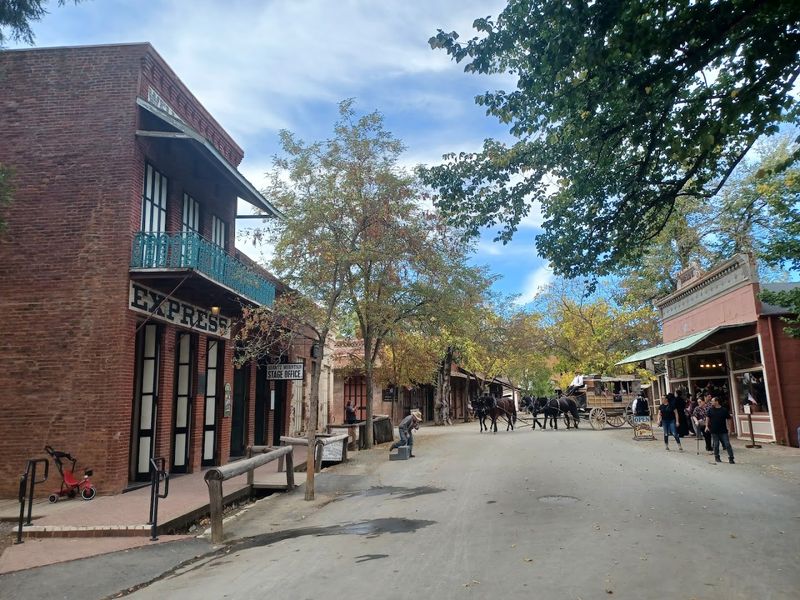
Gold Rush history comes alive in a way that feels surprisingly unscripted at Columbia State Historic Park in the Sierra Nevada foothills.
Unlike many historic parks that feel more like museums with velvet ropes, Columbia keeps its streets open and working, with functioning businesses operating out of authentically preserved 19th-century buildings.
Admission to walk the town is free, and individual experiences like gold panning or stagecoach rides carry small separate fees.
The main street runs through several blocks of brick storefronts, a working blacksmith shop, a functioning Wells Fargo office, and a saloon-style soda fountain that serves old-fashioned treats.
During peak season, costumed interpreters move through the streets and add genuine texture to the experience without making it feel overly staged.
The whole atmosphere rewards slow wandering and spontaneous stops.
Columbia sits in Tuolumne County, about an hour north of Modesto on Highway 49, which is itself known as the Gold Rush Highway and connects many of the most historically rich towns in the Mother Lode region.
A full visit here pairs well with a stop in nearby Sonora for lunch.
The combination of free entry, living history, and Sierra foothills scenery makes Columbia one of the most underrated day trip destinations in Central California.
10. Santa Cruz Beach Boardwalk Area
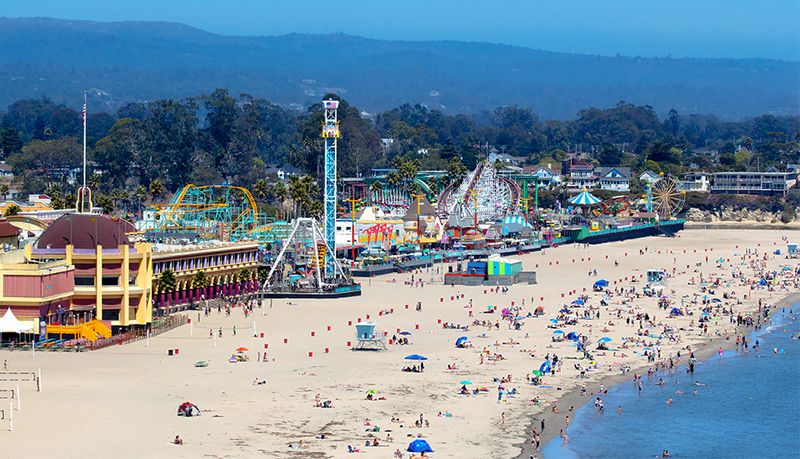
Walking onto the Santa Cruz Beach Boardwalk for the first time feels like stepping into a California summer postcard that has been running since 1907.
The boardwalk is the oldest surviving amusement park on the West Coast and carries a nostalgic energy that hits differently than newer, more polished theme parks.
Entry to the boardwalk itself is free, and rides operate on a pay-as-you-go model, which means the experience scales easily to any budget.
The Giant Dipper wooden roller coaster and the Looff Carousel are both National Historic Landmarks and worth riding even for those who are not typically ride enthusiasts.
Beyond the rides, the beach itself is the main attraction, stretching wide and sandy in both directions with bodyboarders, volleyball games, and families staking out spots on warmer days.
Natural Bridges State Beach sits just a short drive away and offers a quieter coastal alternative with a notable rock arch formation.
Henry Cowell Redwoods State Park is only about 20 minutes inland and adds a completely different texture to the day with towering trees and easy loop trails through old-growth groves.
Keeping the boardwalk spending to a few ride tickets and a corn dog or churro from the snack stands makes it easy to stay under $50 for the whole outing.
11. Anza-Borrego Desert State Park, Borrego Springs
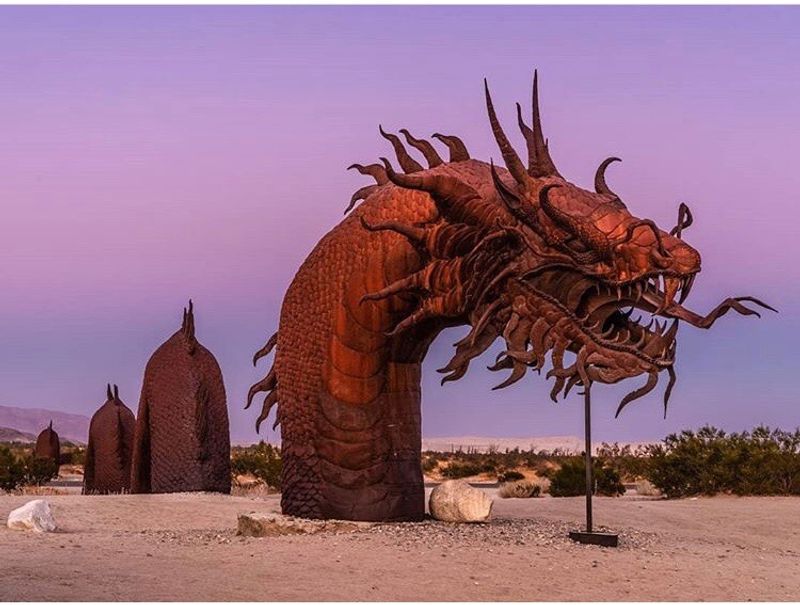
California’s largest state park covers over 600,000 acres of desert landscape and delivers a scale of open space that genuinely resets the nervous system after too much time in traffic or indoors.
Anza-Borrego sits east of San Diego in the Colorado Desert and stays mostly accessible year-round, though spring wildflower season between February and April brings the park to life in a way that draws visitors from across the state.
Scattered throughout the desert near Borrego Springs are over 130 life-size metal sculptures created by artist Ricardo Breceda, depicting prehistoric animals, mythological creatures, and scenes from California history.
These sculptures appear without warning along roadsides and in open fields, making a slow drive through the area feel like a genuinely surreal and memorable experience. No admission is required to view them.
The Font’s Point overlook requires a short drive on a sandy road and rewards the effort with a panoramic view over the Borrego Badlands that feels genuinely vast and cinematic.
Borrego Springs itself has a small downtown with a few casual dining options and a grocery store for restocking.
Bringing water and sun protection is non-negotiable here, especially outside of winter months when desert heat can build quickly.
12. Ojai
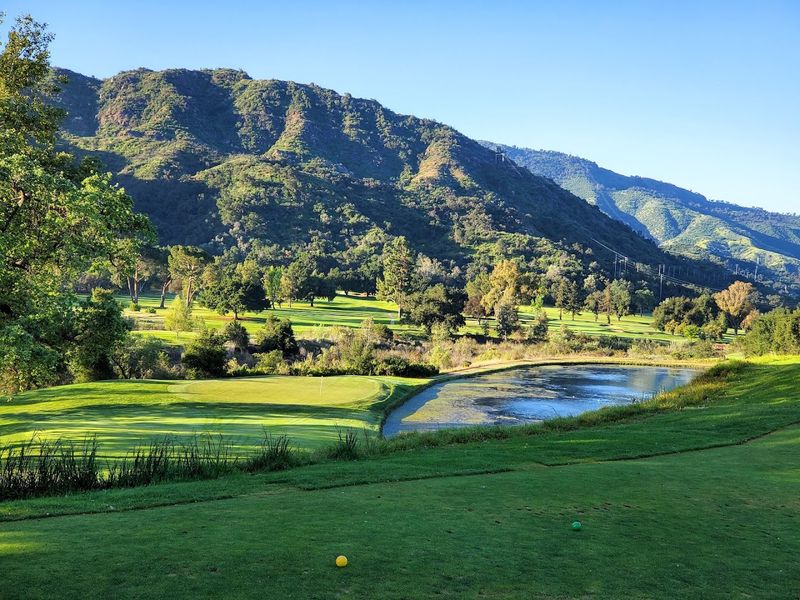
In a narrow valley between the Topa Topa Mountains and the Los Feliz Hills about 85 miles northwest of Los Angeles, Ojai has a particular quality of light in the late afternoon that locals have called the Pink Moment for generations.
The mountains glow in shades of rose and amber after sunset, and it is the kind of sight that people drive specifically to witness.
Wandering the downtown area costs nothing and offers a full afternoon of low-key browsing and scenery.
The Ojai Valley Trail runs 9.5 miles along a former railroad corridor and is open to walkers, cyclists, and equestrians at no cost.
Downtown shops lean toward art galleries, vintage finds, used bookstores, and small boutiques that reward slow browsing without pressure to buy.
The Arcade, a Spanish Colonial Revival structure running through the center of town, provides shade and a pleasant architectural backdrop for the main commercial stretch.
Orange groves surround much of the valley and give the whole area a fragrant, agricultural texture that feels genuinely different from coastal or mountain day trips.
Staying under $50 here is entirely realistic if restaurant stops are kept casual and shopping is kept to window-browsing.
The Ojai Farmers Market runs on Sundays and offers a chance to pick up local produce, snacks, and prepared foods at reasonable prices without a formal restaurant stop.