This Boise Stadium Is One Of Idaho’s Biggest And Loudest Game-Day Landmarks
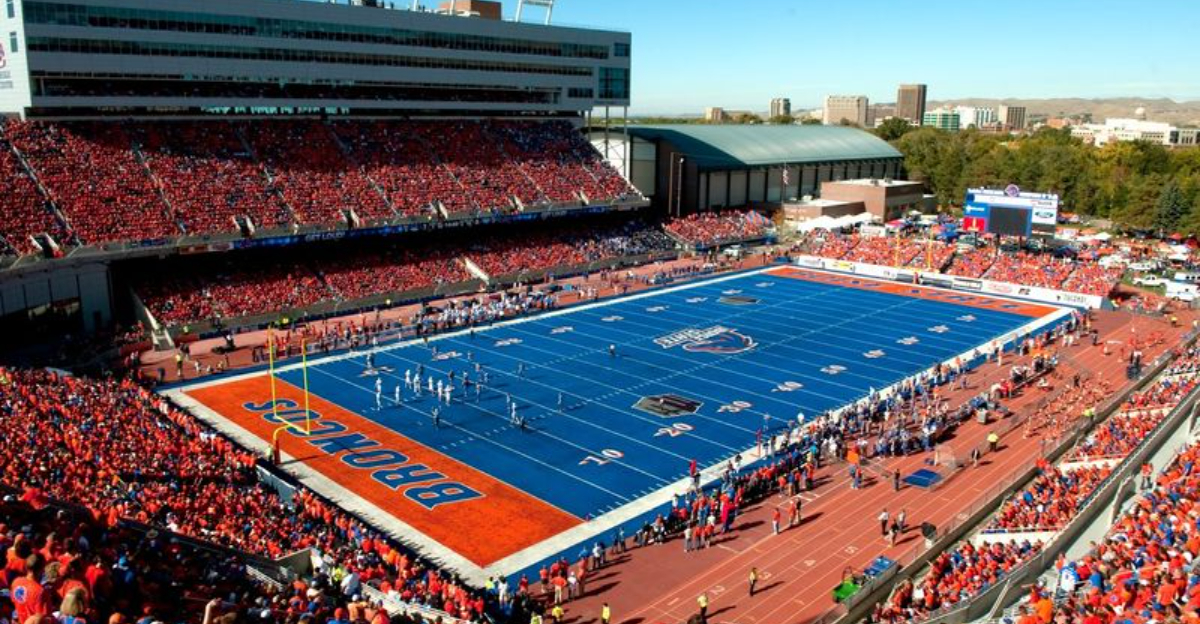
Nothing prepares a first-timer for that blue turf, because the field does not simply appear.
It hits the eyes like game day found the volume knob and snapped it off.
By the first glance, regular grass fields start looking like they showed up underdressed.
This Idaho stadium has become a college football landmark people recognize before anyone even mentions the team.
The color is the hook, but the crowd is what turns the whole place electric.
Noise builds fast, the stands start buzzing, and suddenly every kickoff feels bigger than the one before.
Bronco fans do not just arrive. They bring the kind of energy that makes the air feel charged before the ball even moves.
Some stadiums host games. This one turns game day into a blue-and-orange jolt people remember long after they leave.
Boise’s Blue Turf Makes Game Day Impossible To Miss
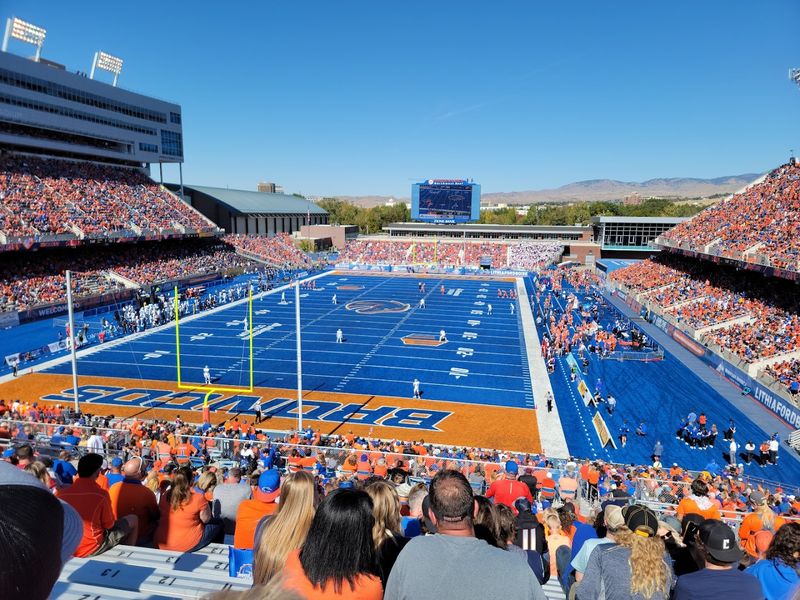
Blue grass should not make sense, and yet Albertsons Stadium turned it into one of college football’s most recognizable sights.
Boise State installed its first blue turf in 1986, creating the first non-green artificial football field in the country, and the choice eventually became far more than a visual gimmick.
The stadium sits at 1400 Bronco Lane in Boise, which puts the blue field right in the middle of campus life, game-day noise, and the kind of local pride that does not need much encouragement.
Seeing the field in photos is one thing, but catching it in person is different because the color takes over the whole view.
It feels bold, strange, and completely confident, like Boise State decided ordinary green was someone else’s problem. The blue surface also gives every home game an instant identity.
No one confuses this stadium with another college venue. Fans know it, opponents know it, and first-time visitors usually react the same way: staring for a second longer than they expected.
The turf makes the stadium famous before the first whistle even blows.
Bronco Nation Gives This Stadium Its Loudest Reputation
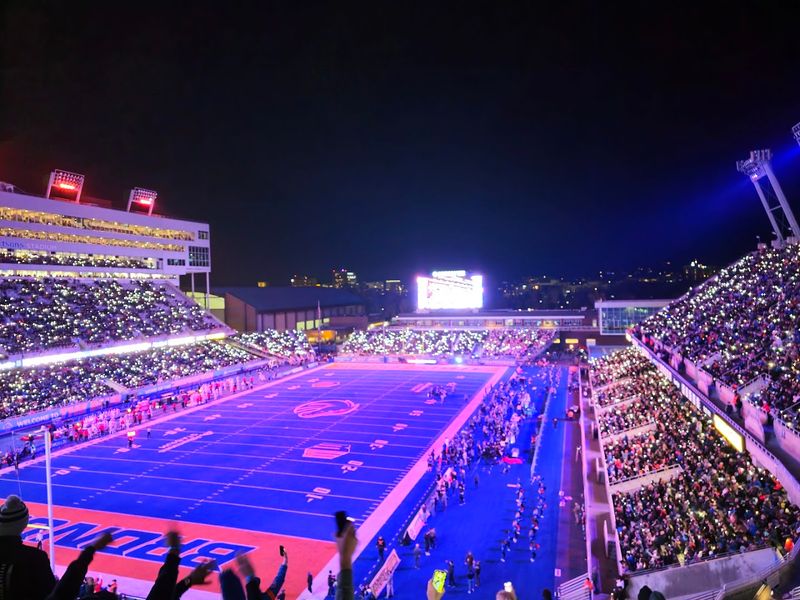
Crowd noise does not need a massive stadium to become a problem for visiting teams. Albertsons Stadium holds just over 36,000 fans, but the compact setting can make the energy feel much bigger when Bronco Nation gets rolling.
Boise State fans treat home games like a weekly civic event with football attached, arriving in orange and blue, filling the area around campus, and turning the stadium into a loud, focused bowl of noise. The passion works because it feels personal.
Generations of fans have watched the Broncos grow from regional underdog into one of college football’s most recognizable programs, and that history sits in the stands every Saturday.
Visiting offenses may be dealing with the blue turf visually, but the crowd adds the part they can hear in their helmets.
Cheers build quickly, especially on third down, and the whole place seems to lean toward the field when a big play is coming. That shared anticipation is what makes a stadium feel alive.
Albertsons Stadium is not just loud because people shout. It is loud because the people shouting believe the place belongs to them.
The Smurf Turf Turns Every Home Game Into A Boise Landmark
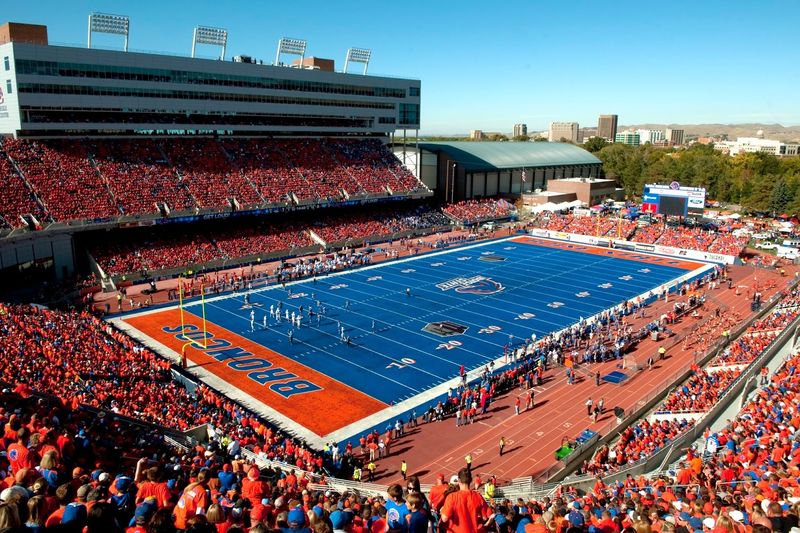
Nicknames do not stick for decades unless people actually enjoy saying them, and “Smurf Turf” has done plenty of work for Boise State.
The blue playing surface became a national symbol after its 1986 debut, and Boise State later obtained federal trademark protection connected to the color blue as applied to artificial turf.
That kind of branding is rare in college football, where many stadiums start to blur together after a while. Albertsons Stadium does not have that problem.
The field itself is the landmark. Every broadcast angle, highlight clip, and overhead shot announces Boise before the scoreboard ever appears.
For fans, that creates a special kind of ownership. The field is weird in the best possible way, and Boise State never backed away from it.
Instead, the university leaned into the identity until the turf became part of the program’s mythology. Opponents may joke about it, broadcasters always mention it, and visitors inevitably take photos of it.
The nickname helps because it sounds playful, but the home-field advantage behind it is very real. Boise’s blue turf is not just a quirky surface anymore.
It is the visual signature of the entire football program.
More Than 36,000 Seats Pack In Serious Saturday Energy
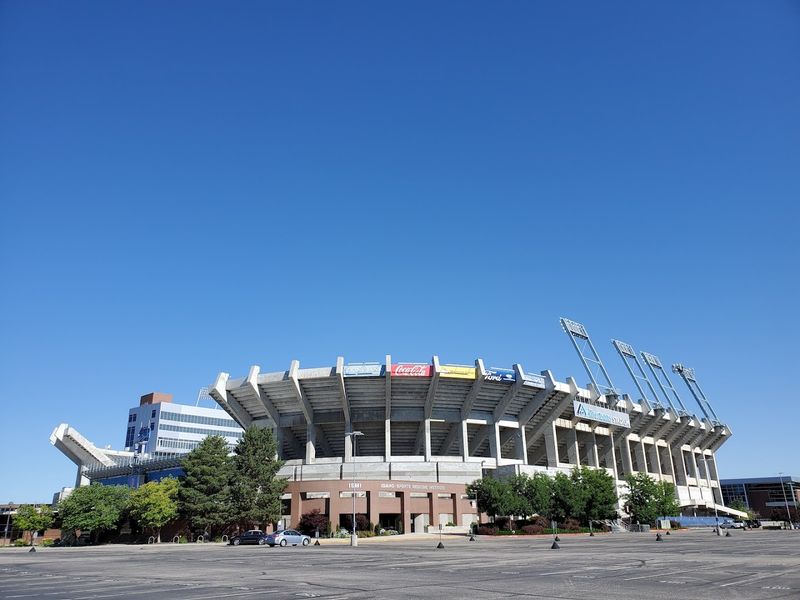
Capacity can be misleading when a crowd knows exactly how to use the space. Albertsons Stadium’s listed capacity is 36,387, making it large enough to feel major but tight enough to keep the sound from drifting away into empty corners.
That balance gives Boise State game days their punch. Fans sit close enough to stay connected to the action, and the blue field below keeps every sightline feeling unmistakably local.
The stadium’s growth mirrors the program’s rise from a smaller venue into a recognizable college football destination. Expanded seating, premium spaces, and the Stueckle Sky Center have added a major facility presence.
Venue Coalition notes that the Stueckle Sky Center opened in 2008 and includes loge boxes, club seating, sky suites, and game and media operations spaces.
That mix of traditional bowl seating and premium viewing gives the stadium multiple personalities, but the crowd energy stays the real attraction. A packed autumn game here feels communal, not corporate.
People are not simply watching Boise State football. They are participating in one of Idaho’s loudest shared rituals, and the stadium’s size keeps that ritual close, concentrated, and hard to ignore.
Campus Game Days Make The Whole Area Feel Alive
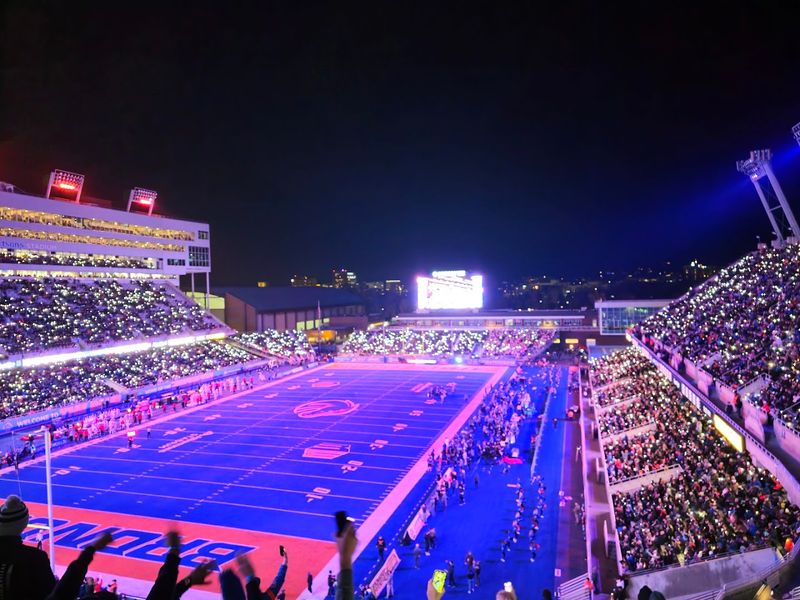
Pregame energy around Boise State has its own rhythm before anyone reaches a seat. The stadium sits on campus near the Boise River, giving game day a setting that blends college energy with the city’s outdoor personality.
Fans move through campus in waves, tailgate conversations start early, and the closer kickoff gets, the more the area seems to shift into Bronco mode. That buildup matters because Albertsons Stadium is not isolated from the rest of Boise.
It belongs to the city’s larger identity, close enough to downtown and campus life to feel woven into the weekend. Students, alumni, families, and visiting fans all funnel toward the same unmistakable blue target.
The field may be the headline, but the walk-in experience helps build the memory. Food, music, jerseys, traffic, laughter, and last-minute ticket checks all become part of the pregame scene.
Boise State football has a way of making the whole neighborhood feel awake, especially for big matchups. By the time fans step inside and see the turf, the game already feels like it has been happening for hours.
Idaho’s Most Famous Football Field Still Feels One-Of-A-Kind
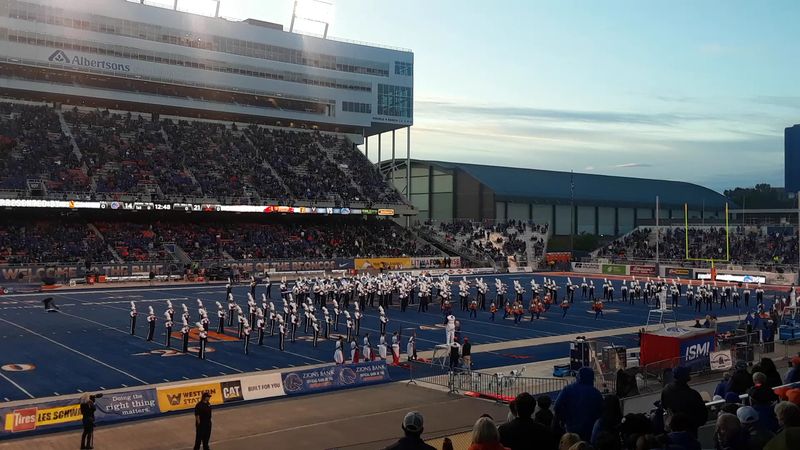
Decades after the first blue turf appeared, Albertsons Stadium still manages to feel different from almost every other college football venue.
Boise State’s licensing office notes that the first blue field was installed in 1986, 16 years after the stadium was built, and that Boise State was the first school with a non-green football field.
That originality gives the place a staying power most stadium features never achieve. Scoreboards change.
Seating changes. Uniforms change.
The blue field remains the thing people remember. Even fans who have watched dozens of games there still get that little visual jolt when the field comes into view, especially under bright sun or stadium lights.
The setting helps too, with Boise’s campus, river corridor, and mountain backdrop giving the venue a sense of place that feels distinctly Idaho. The stadium is not famous only because the turf is unusual.
It is famous because the turf, the program, the fans, and the city all grew into the same identity. Albertsons Stadium represents Boise State’s willingness to be bold, a little stubborn, and impossible to mistake for anyone else.
Visiting Teams Get The Full Blue-Turf Welcome Fast
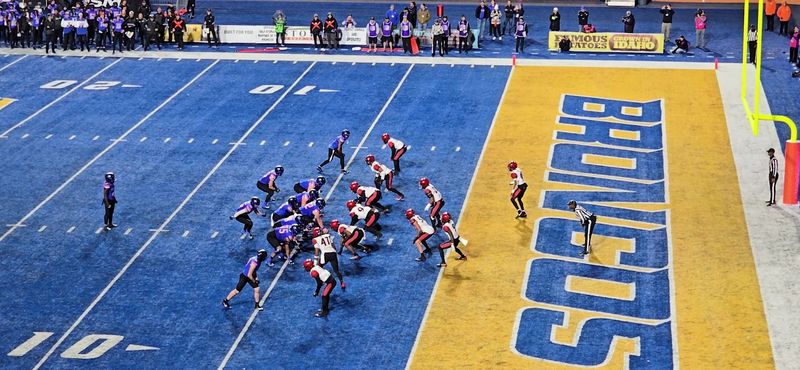
Opponents do not need long to realize Boise is a different kind of road trip. The blue surface is the first adjustment, because it changes the visual environment before the game even starts.
Boise State’s first blue turf was dismissed by some outsiders as a gimmick or fad. The university now describes it as a symbol of blue-collar work ethic and one of college football’s most recognizable fields.
Then the crowd arrives, and the setting becomes even harder to settle into.
Albertsons Stadium has been described by Boise State’s event listing as one of the toughest places to play for opponents, with a 120-9 home record since 2000 noted on that page. That record is not just about turf color, of course.
It reflects coaching, players, culture, travel, crowd noise, and years of Boise State building confidence at home. Still, the field is part of the welcome package.
Visiting teams step into a place that looks unlike anywhere else, sounds hostile at the right moments, and carries decades of home-field confidence. For Bronco fans, that is not a problem.
That is the point.
Albertsons Stadium Makes Boise State Football Feel Bigger Than The Score
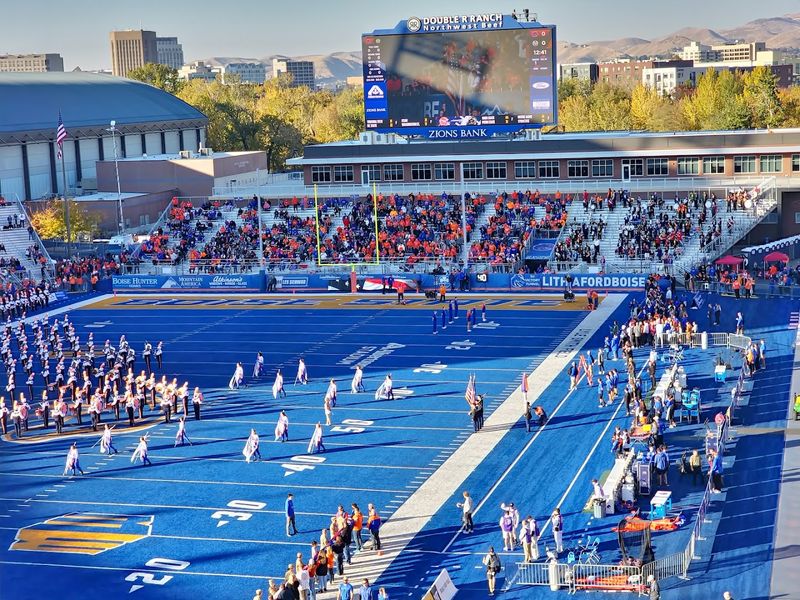
Wins and losses matter, but Albertsons Stadium carries meaning even before the final whistle. The venue opened in 1970 and became the home of one of the most visually distinct programs in college football, with “The Blue” turning Boise State into a brand casual fans could recognize instantly.
That kind of identity is difficult to manufacture because it has to survive jokes, trends, coaching changes, conference shifts, and national attention. Boise State did more than survive it.
The program turned the blue turf into a symbol of ambition, independence, and local pride. Fans do not gather here only to watch plays unfold.
They gather to take part in something that feels uniquely Boise. The stadium’s premium spaces, student energy, longtime season ticket holders, and big-game traditions all add layers to that feeling.
For first-time visitors, the field is the obvious surprise. For locals, the deeper pull is what the stadium represents: a university, a city, and a fan base that built a national football identity from a place many outsiders once overlooked.
Albertsons Stadium is loud because of the crowd, but it lasts because of the meaning behind it.