One Tank Of Gas Can Lead To These 10 Amazing Florida Adventures
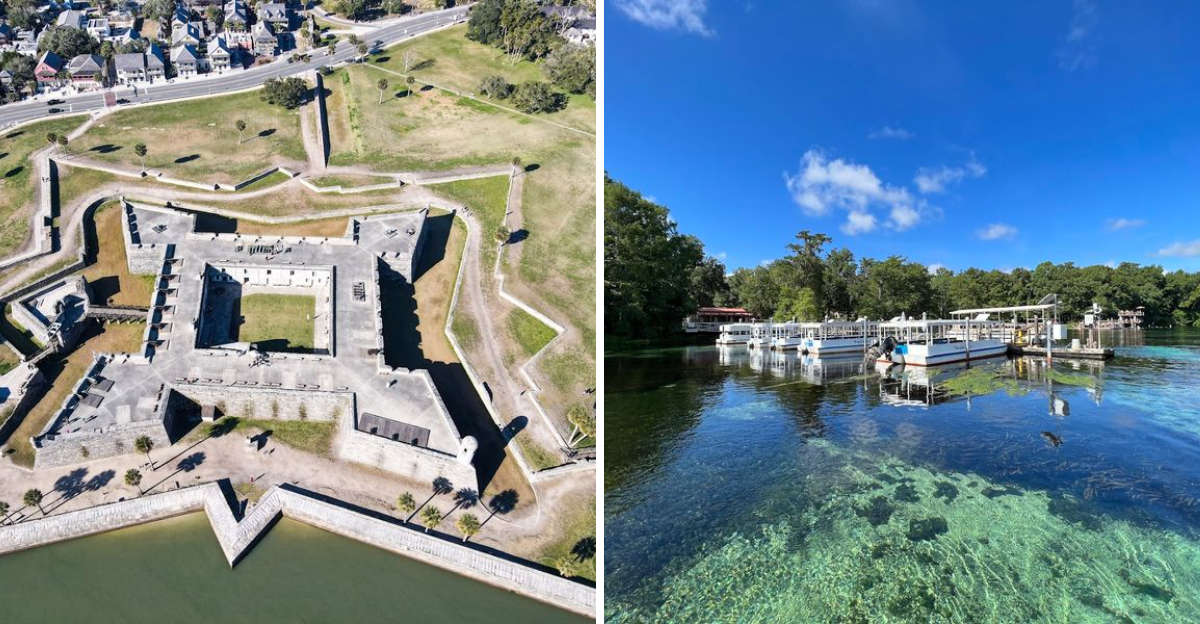
Florida rewards the people who leave the highway, and the gap between what most visitors see and what is out there is wider than anyone who has only done the theme parks would ever suspect.
One tank of gas in this state can take you through a national park teeming with alligators.
You can go onto an island you can only reach by ferry, into a spring so clear it barely looks real, and past a Civil War fortress that most people have never heard of despite driving within twenty miles of it regularly.
The variety is the thing that gets people, because nothing about the drive from one stop to the next prepares you for how different each place feels from the last.
Florida is quietly one of the most geographically interesting states in the country, and the best parts of it tend to sit just far enough off the obvious route that most people never find them.
One tank is all it takes to change that entirely.
1. Everglades National Park
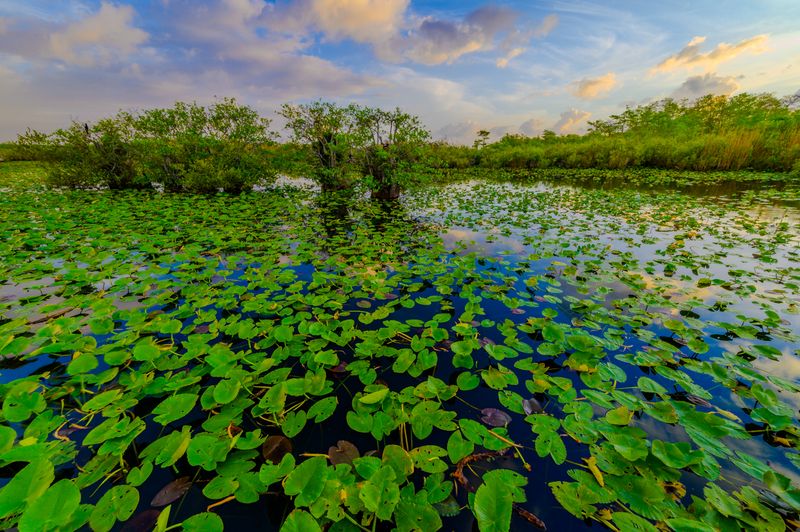
Nothing quite prepares you for the scale of the Everglades. Standing at the edge of Anhinga Trail, surrounded by nothing but sawgrass and sky, you realize this place operates on its own timeline.
Alligators bask on the path like they own it, because honestly, they do.
Everglades National Park covers 1.5 million acres and is the largest tropical wilderness in the United States. It is also a UNESCO World Heritage Site, which means the rest of the world already knows what some
Floridians overlook. Bring bug spray, and bring it seriously.
The park entrance sits at 40001 State Road 9336 in Homestead, about an hour southwest of Miami. Rent a kayak at Flamingo Marina and paddle through the mangroves at sunrise.
The silence out there is the loudest thing you will ever hear. Spot roseate spoonbills, manatees, and if you are lucky, a Florida panther track in the mud.
This is not a zoo. It is the real, breathing wild.
2. Dry Tortugas National Park
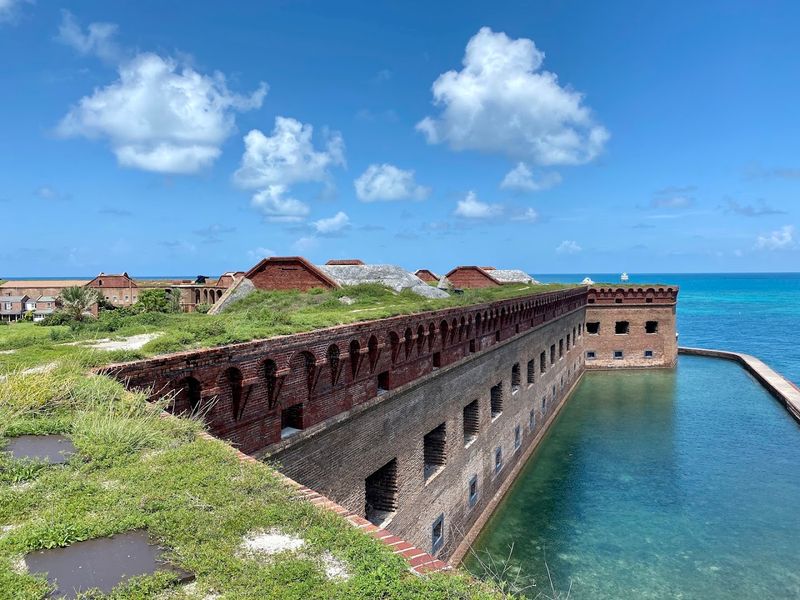
Seventy miles west of Key West, there is a massive 19th-century brick fort sitting in the middle of the Gulf of Mexico like it got lost and decided to stay.
Fort Jefferson at Dry Tortugas National Park is one of the most remote and dramatic places in the entire country. Getting there is half the adventure.
You can reach the park by ferry or seaplane from Key West. The Yankee Freedom III ferry departs daily and takes about two hours each way.
Once you arrive, the water is so clear you can see the seafloor from 20 feet up. Snorkeling here feels like floating over a living painting.
The fort itself was built starting in 1847 and used over 16 million bricks. It was never fully completed, which somehow makes it more fascinating.
History, wildlife, and ridiculous natural beauty all share the same tiny island. Bring your own food and water since there are no concessions on the island.
Camping overnight under a sky full of stars, with the sound of waves hitting old brick walls, is something you simply cannot replicate anywhere else in Florida.
3. Silver Springs State Park
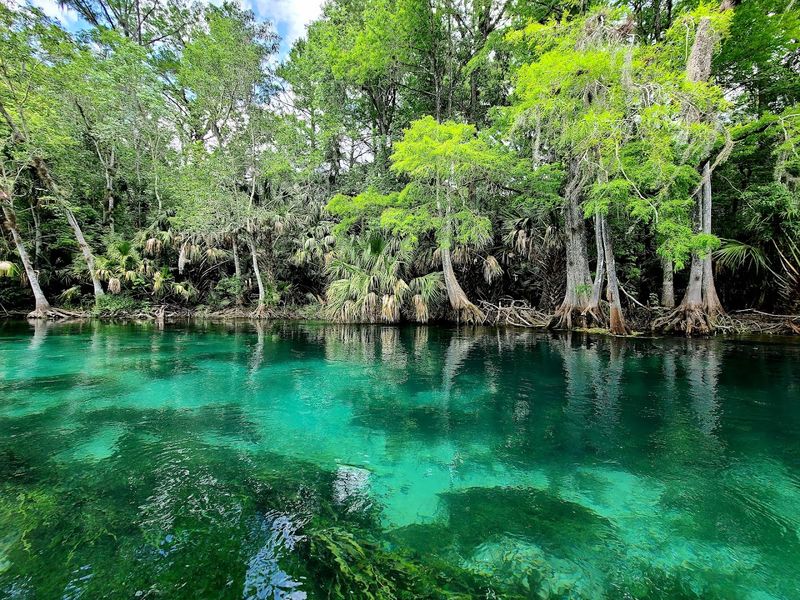
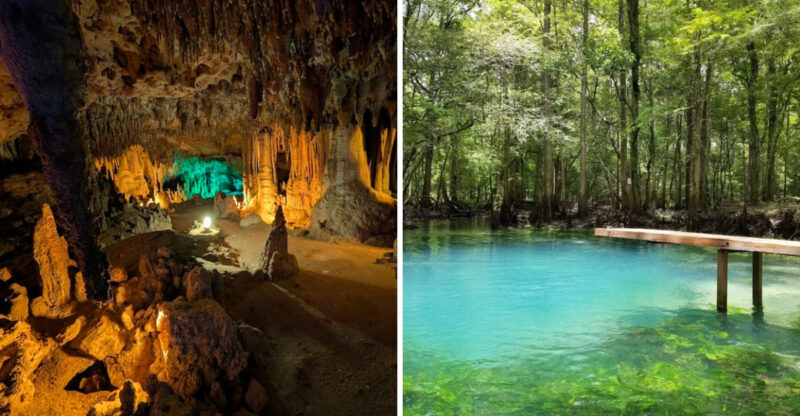
The water at Silver Springs is so clear it almost looks fake. Glass-bottom boat tours have been running here since the 1870s, making this one of the oldest tourist attractions in the entire country.
You look down through the glass and see fish, turtles, and the spring vents themselves like windows into another world.
Silver Springs pumps out around 550 million gallons of fresh spring water every single day. The water stays at a constant 72 degrees year-round, which makes it ideal for kayaking, paddleboarding, and swimming.
Wild rhesus monkeys also live along the river, descendants of animals brought here for a Tarzan movie shoot in the 1930s.
Located at 5656 E Silver Springs Blvd in Silver Springs, the park is easy to reach from Ocala and makes a perfect half-day stop.
Kayak rentals are available on-site, and the paddling trail winds through cathedral-like corridors of cypress and oak.
Manatees visit during cooler months, often resting near the warm spring head. Bring a waterproof camera because every single corner of this river begs to be photographed.
4. Weeki Wachee Springs State Park
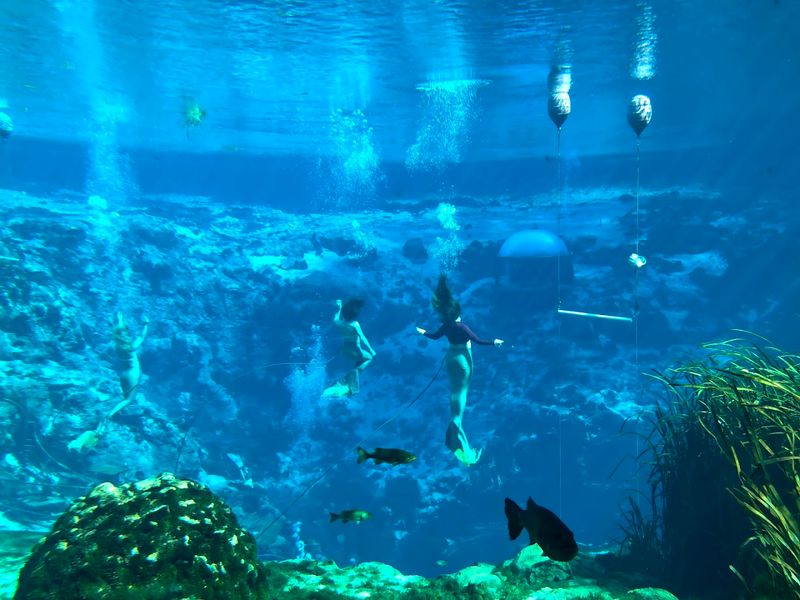
Mermaids are real, and they live in Weeki Wachee Springs. That is not a fairy tale.
Since 1947, real performers have been putting on underwater mermaid shows at this spring, breathing through air hoses and choreographing routines in 72-degree crystal water.
It is completely bizarre and completely wonderful.
Weeki Wachee is one of Florida’s most beloved roadside attractions, and it earned official state park status in 2008.
The spring itself pumps out 117 million gallons of water per day, feeding a river that flows all the way to the Gulf of Mexico.
Buccaneer Bay, the park’s waterpark section, uses that same spring water for its slides and swimming area.
You can find the park at 6131 Commercial Way in Spring Hill, about an hour north of Tampa. Kayak rentals let you paddle the Weeki Wachee River through peaceful, jungle-like scenery.
River otters and manatees show up regularly, especially near the spring head.
The mermaid shows run multiple times daily, and the audience theater is built right into the spring wall so you watch the performance through massive underwater windows.
Kids go absolutely wild for it, and honestly, so do adults.
5. Ellie Schiller Homosassa Springs Wildlife State Park
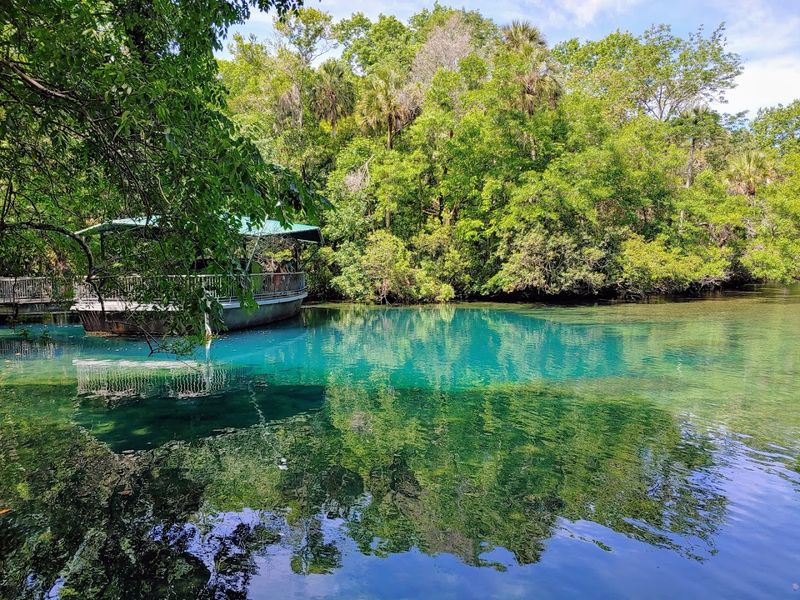
There is a floating underwater observatory at Homosassa Springs called the Fish Bowl, and it sits right inside a natural spring.
You stand below the waterline and watch manatees glide past the windows like gentle, slow-moving submarines. It is one of the most peaceful experiences Florida offers.
Ellie Schiller Homosassa Springs Wildlife State Park rehabilitates injured manatees and serves as a permanent home for animals that cannot survive in the wild.
That includes Lu, a beloved hippopotamus who has been an honorary Florida citizen since 1994. Lu was born in 1960, making him one of the oldest hippos in the United States.
The park sits at 4150 S Suncoast Blvd in Homosassa, about 75 miles north of Tampa. A boat carries visitors from the main entrance down a winding river channel to reach the spring area.
Along the way, you pass herons, otters, and native Florida wildlife in natural settings. Guided tours explain the conservation work happening on-site.
The park opens daily and admission is very reasonable, making it one of the best wildlife experiences in the state for families traveling on a real-world budget.
6. Crystal River National Wildlife Refuge
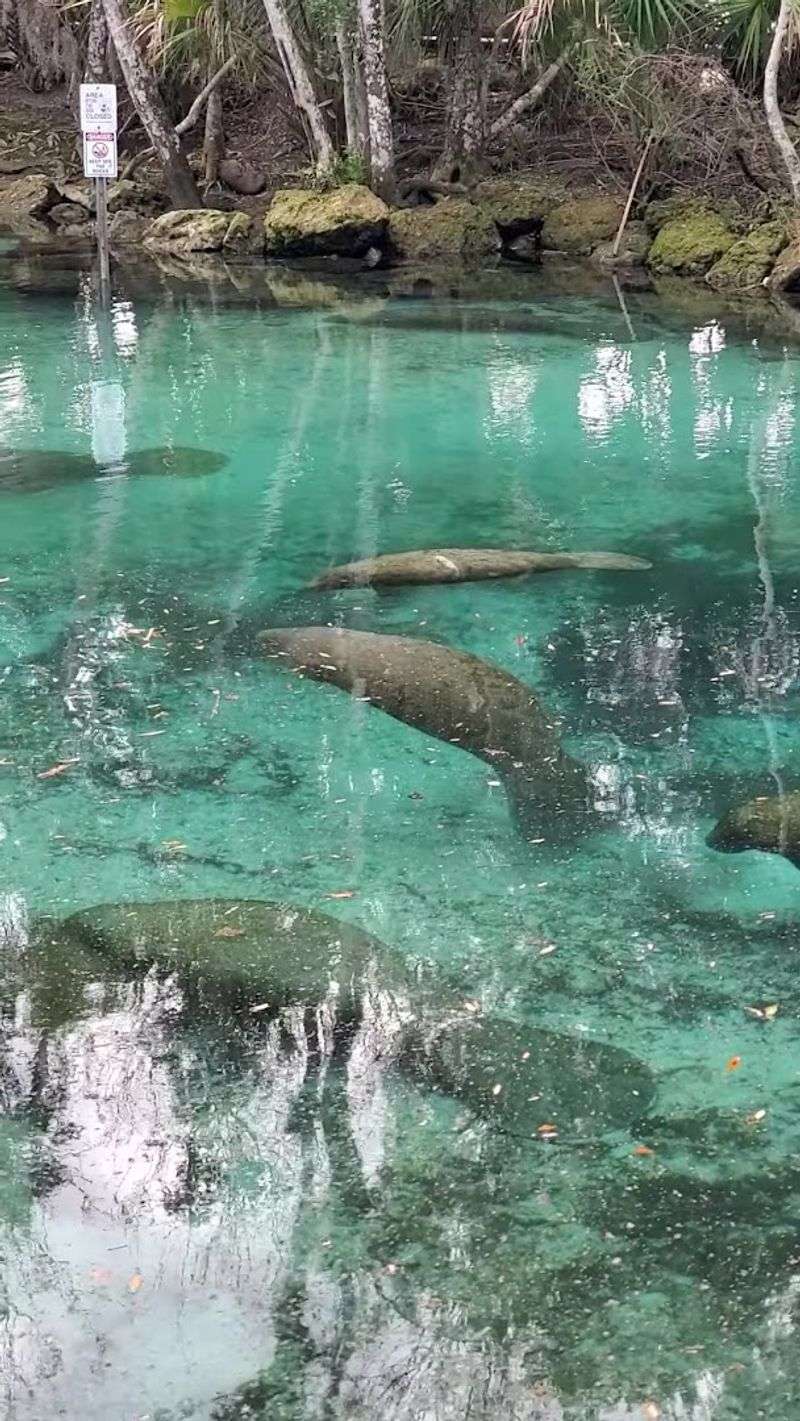
Swimming with manatees is legal in exactly one place in the United States, and that place is Crystal River.
The Crystal River National Wildlife Refuge protects the warm spring waters where West Indian manatees gather every winter to escape cooler Gulf temperatures.
Between November and March, hundreds of manatees fill Kings Bay.
Tours depart from multiple outfitters near the refuge at 1502 SE Kings Bay Dr in Crystal River. Guides take small groups by boat to find manatee pods, then you slip into the water and float quietly nearby.
The rules are strict and important. You observe passively and let the manatees approach you if they choose.
Many do, because manatees are famously curious.
The water temperature stays around 72 degrees year-round, fed by more than 30 natural springs. Even outside manatee season, the refuge is worth visiting.
Kayaking through the spring-fed channels is extraordinary, with visibility stretching 20 to 30 feet in every direction.
Bald eagles nest in the trees along the shore, and the birdwatching is consistently excellent. Crystal River feels like a secret that the whole state somehow forgot to share loudly enough with the rest of the country.
7. Caladesi Island State Park
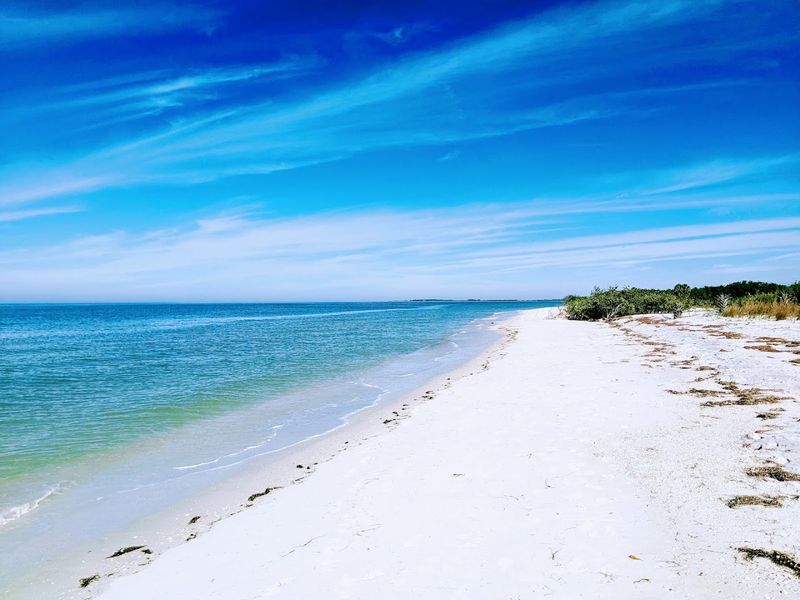
Caladesi Island has been ranked one of the best beaches in the entire United States multiple times, and it earns that title every single time. The sand is white and powdery.
The Gulf water is warm and clear. And because the island is only accessible by ferry or private boat, the crowds stay manageable even on busy weekends.
The ferry departs from Honeymoon Island State Park in Dunedin, located at 1 Causeway Blvd. The ride takes about 15 minutes and drops you on a beach that feels genuinely untouched.
There are no hotels, no restaurants, and no souvenir shops. Just three miles of shoreline, a kayak trail through mangroves, and the Gulf stretching out to the horizon.
Dolphins cruise the shallows regularly, and shelling is excellent along the southern end of the beach. The kayak trail winds through a maze of mangrove tunnels for about three miles, and it is absolutely worth the paddle.
Rentals are available on the island. The ferry runs daily and seats fill up fast on weekends, so arrive early or book ahead.
Caladesi reminds you that some of Florida’s best experiences require just a little extra effort to reach.
8. Edward Ball Wakulla Springs State Park
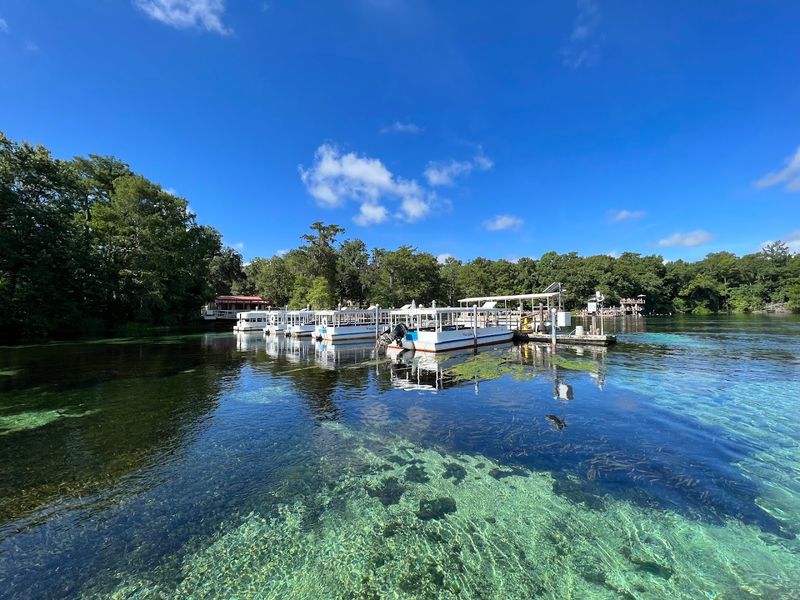
Wakulla Springs is one of the deepest freshwater springs in the world, and the water is so dark and clear at the same time that it looks like liquid glass stained with tea.
Mastodon bones were discovered at the bottom during early exploration. That detail alone should be enough to get you in the car.
The park at 465 Wakulla Park Dr in Wakulla Springs offers glass-bottom boat tours that glide over the spring basin while a guide points out fish, turtles, and the sheer vertical drop of the main vent
The spring pumps out up to 1.2 billion gallons of water per day during peak flow, making it one of the most powerful springs in Florida.
The old Wakulla Springs Lodge on the property was built in 1937 and still operates as a state-run hotel. The lobby floor is original Tennessee marble.
Several classic films were shot here, including early Tarzan movies and a 1954 creature feature. Swimming is allowed in a roped section near the spring head when conditions permit.
The surrounding forest is spectacular for birding, with anhinga, osprey, and wood stork spotted regularly along the river. Go early and stay for the boat tour.
9. Castillo De San Marcos National Monument
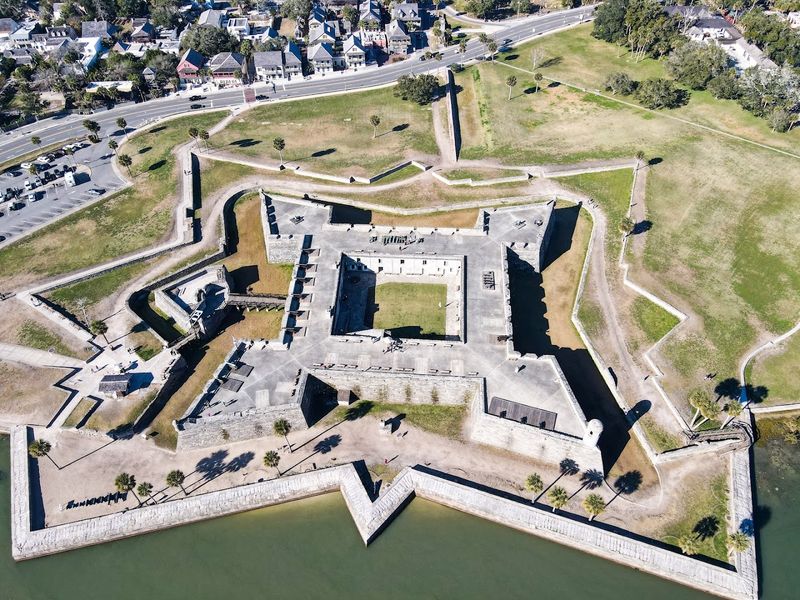
The oldest masonry fort in the continental United States is sitting right in downtown St. Augustine, and it looks like it was built last century.
That is because coquina, the shell-rock used to construct it, absorbs cannonball impacts instead of shattering. The Spanish figured this out after the fort took hits in 1702 and still stood.
Construction on Castillo de San Marcos began in 1672 and took 23 years to complete.
The fort was built to protect St. Augustine, the oldest continuously occupied European-established settlement in the United States, founded in 1565.
Walking its ramparts, you get a 360-degree view of the Matanzas Bay and the city below.
You can find it at 11 S Castillo Dr in St. Augustine, right on the waterfront.
Admission is affordable, and the National Park Service rangers do an outstanding job bringing the history to life through daily demonstrations and talks.
The cannons are real, the walls are original, and the rooms inside tell stories of Spanish, British, and American occupation.
Pair the fort visit with a walk down St. George Street for the full historic St. Augustine experience. This one is worth every mile of the drive.
10. Cedar Key Museum State Park
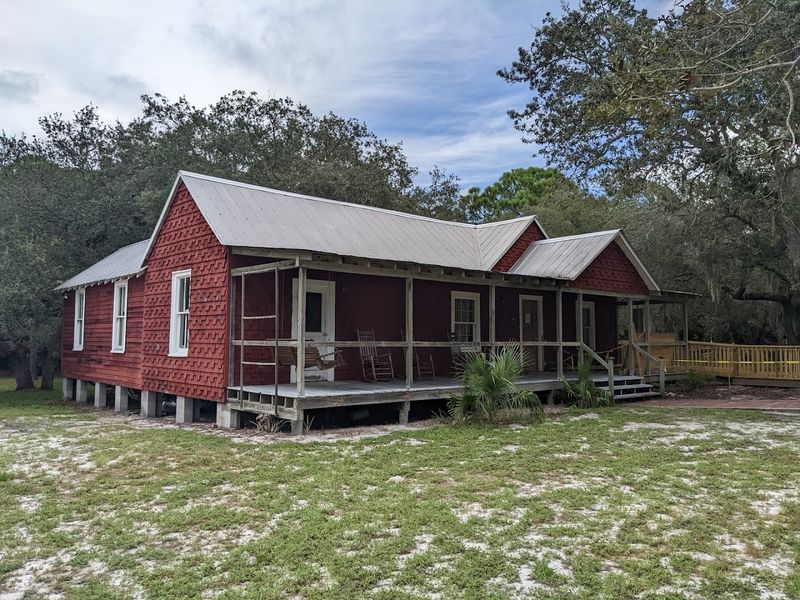
Cedar Key feels like Florida before Florida became Florida.
The little fishing village sits at the end of a long causeway on the Gulf Coast, and the museum hidden at 12231 SW 166th Ct is the kind of place you spend 45 minutes in and leave knowing things you never expected to learn.
That is a good feeling.
Cedar Key Museum State Park houses an impressive collection of shells, fossils, and Native American artifacts found in the area.
The exhibits cover the island’s history as a pencil-manufacturing hub in the 1800s, when local cedar trees supplied factories up and down the East Coast.
The industry eventually collapsed when the trees ran out, which is a cautionary tale told with surprisingly good signage.
The town itself is worth exploring after the museum. Cedar Key has a small commercial fishing industry, a handful of seafood restaurants along the water, and a laid-back pace that feels genuinely rare in modern Florida.
The Cedar Key National Wildlife Refuge surrounds the area with protected islands and excellent birding. Sunset from the city pier is one of those quietly perfect moments that sneaks up on you.
Come for the museum, stay for everything else the island quietly offers.