13 California Places Where June Gloom Makes The Scenery Feel Cinematic
June Gloom gets a bad reputation from people who only want blue skies. Their loss.
A gray morning can make the coast look moodier and far more interesting than yet another perfect postcard day.
Fog slips over cliffs. Piers fade at the edges.
Beach towns start feeling like the opening scene of a film where something wonderful or mildly dramatic is about to happen.
Cloud cover does not ruin the view. It changes the whole personality of it.
In California, early summer can turn familiar scenery into something cinematic before the sun even bothers showing up.
The colors get quieter. The ocean looks deeper. Even a simple walk near the water can feel like it has a soundtrack.
These 13 places prove June Gloom is not just a weather pattern to wait out. Sometimes it is the reason the whole scene works.
1. Pacifica Pier, Pacifica
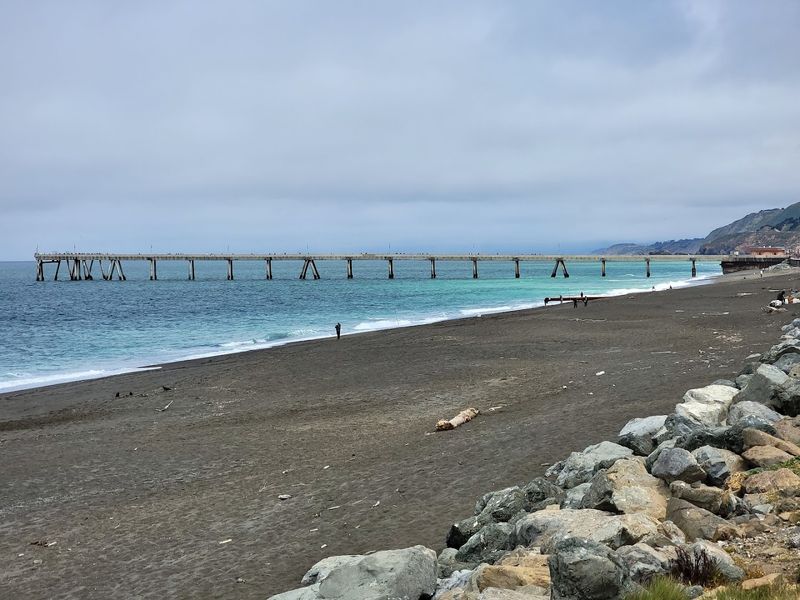
On a June Gloom morning, the pier at Pacifica stretches out into a wall of gray so thick that the far end disappears before the eye can follow it.
The hills behind town vanish into the marine layer, and the surf below churns with a kind of restless energy that sunny days tend to flatten out.
Standing at the railing feels less like a casual beach outing and more like something cinematic.
Pacifica Pier is one of the longest public fishing piers on the California coast, and its open-water exposure means the fog tends to hit harder here than at more sheltered spots.
The concrete structure is free to access, and there are no entry fees or permits needed for a walk or a fishing session. Weekday mornings are noticeably quieter than weekends.
The surrounding area offers a few parking lots near the pier entrance, and the beach below is walkable at low tide.
Fog tends to linger here well into the late morning, which makes early arrivals especially worthwhile for anyone hoping to catch that muted silver light.
The combination of dark water, gray sky, and disappearing hills gives this stretch a genuinely moody coastal character that few spots can match.
2. Lands End and Sutro Baths, San Francisco
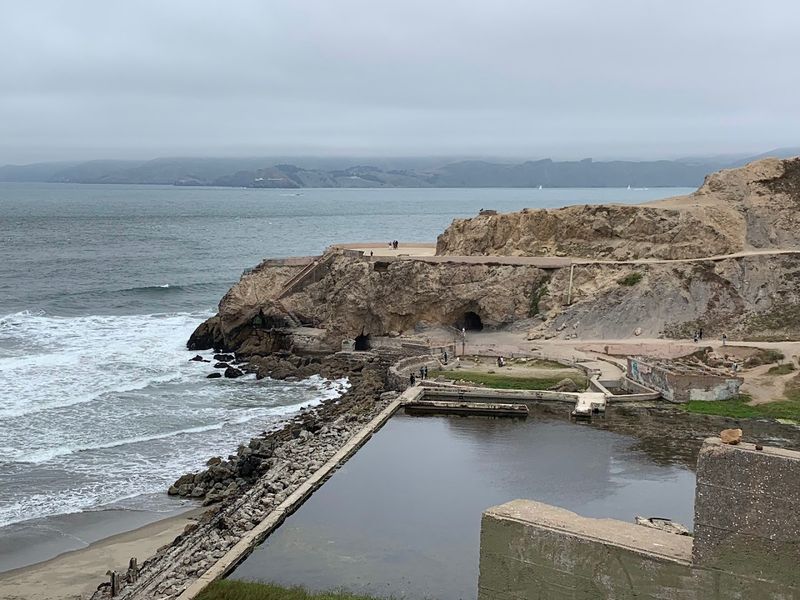
Few places in California carry the kind of atmospheric weight that Lands End and the Sutro Baths ruins do on a foggy morning.
The crumbling concrete pools sit at the edge of the Pacific, half-swallowed by the landscape, and when a marine layer rolls through the cypress trees overhead, the whole scene takes on a quality that feels genuinely otherworldly.
Ruins plus fog plus ocean cliffs is a combination that rarely disappoints.
The Sutro Baths site is managed by the Golden Gate National Recreation Area and is free to visit. The trailhead near the Lands End Lookout visitor center provides access to both the ruins and the coastal trail.
Parking is available at Merrie Way, just off Point Lobos Avenue in San Francisco, though spots fill quickly on weekends.
The trail itself winds through wind-shaped cypress groves and along rocky bluffs with partial views toward the Golden Gate on clear days, though the fog version has its own distinct appeal.
Footing can be uneven near the ruins, so sturdy shoes make a real difference.
Morning visits during June tend to offer the fullest marine layer effect, with the ruins partly wrapped in mist and the sound of waves echoing through the open concrete structures in a way that stays with you.
3. Mori Point, Pacifica
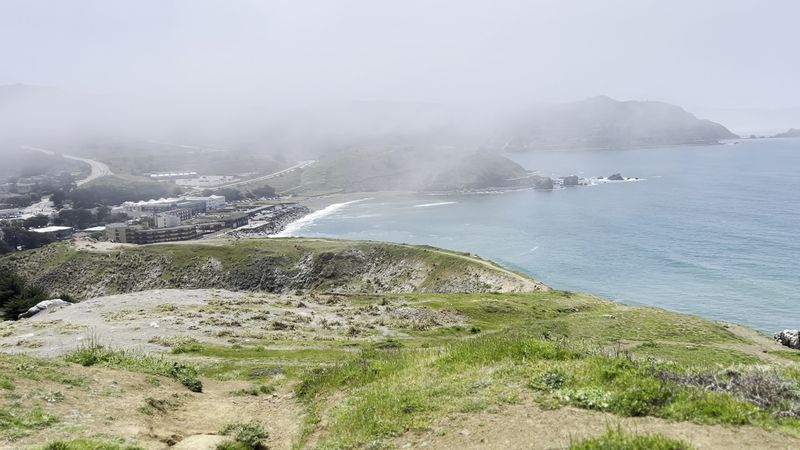
Mori Point sits just south of Pacifica’s main beach area and offers a trail experience that feels more rugged and less crowded than many coastal walks in the Bay Area.
The path climbs along a bluff edge with the ocean dropping away on one side and fog-softened hills rising on the other, and on a June Gloom morning, the whole scene has a muted, almost monochromatic quality that makes it feel far removed from a typical beach day.
Part of the Golden Gate National Recreation Area, Mori Point is open daily and free to access.
The upper trail loop covers roughly two miles and involves some elevation gain, with the highest point offering sweeping views of the coastline when visibility allows.
On foggy mornings, those views shift from panoramic to intimate, with the marine layer cutting visibility and giving the cliffs a dramatic, isolated character.
The trailhead is accessible from the end of Bradford Way in Pacifica, and street parking is available nearby. Dogs are allowed on leash on some portions of the trail.
The combination of coastal grassland, cliff edges, and heavy gray skies makes Mori Point one of the more underrated spots in the Bay Area for experiencing June Gloom at its most visually striking.
Bring layers because the wind off the ocean can cut through even on mild days.
4. Point Reyes National Seashore, Marin County
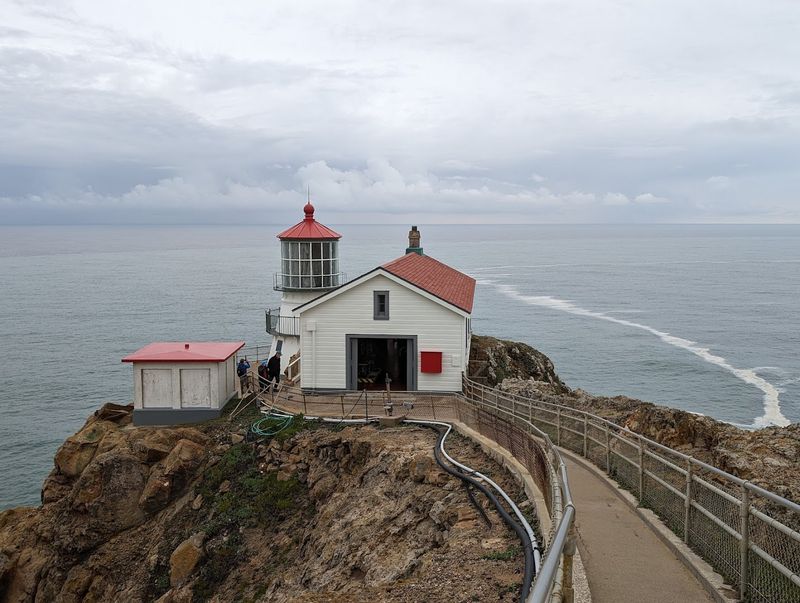
Point Reyes is the kind of place that seems built for fog.
The peninsula juts out into the Pacific far enough to intercept the marine layer before it even reaches the mainland.
The National Park Service actually maintains a webcam at the point that toggles between foggy and sunny views, which tells you something about how central this weather pattern is to the experience here.
The seashore covers tens of thousands of acres and includes diverse terrain ranging from open grasslands and forested ridges to dramatic coastal bluffs.
The Point Reyes Lighthouse, perched at the far tip of the peninsula, is one of the foggiest spots in the entire country and historically one of the most fog-signal-active stations on the West Coast.
On a June morning, the lighthouse can be completely engulfed in mist, with the ocean below barely visible through the gray.
Bear Valley Visitor Center serves as the main hub and is located at 1 Bear Valley Road in Point Reyes Station.
Parking fills early on weekends, and some popular trailheads require timed-entry reservations during peak season.
The diversity of the landscape means that even a single visit can feel like several different trips depending on which trail gets chosen.
The fog here does not just add atmosphere, it genuinely shapes how the land reads from moment to moment.
5. Bodega Head, Bodega Bay
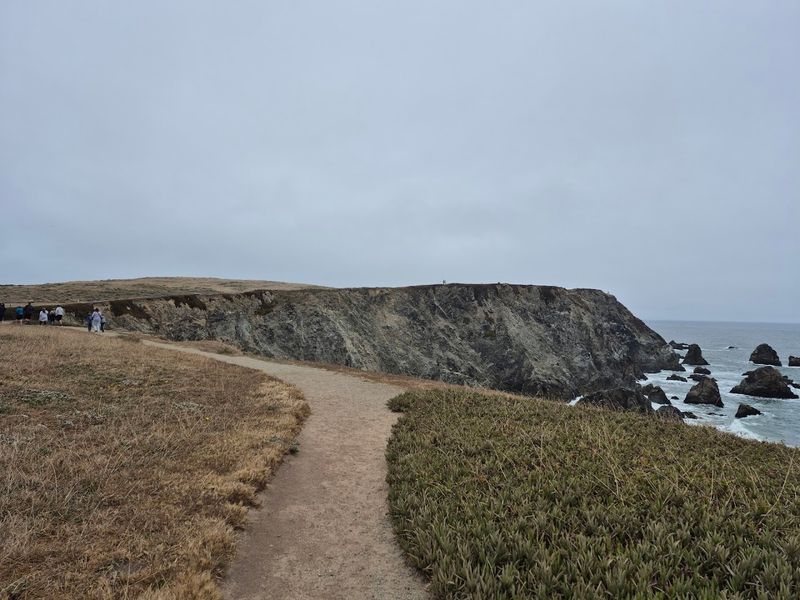
There is a particular kind of drama to Bodega Head that comes not from any single feature but from the combination of everything at once.
The headland rises sharply from the water, with rough surf crashing against the base of the cliffs and fog softening the far edges of the coastline until the horizon disappears entirely.
On a June Gloom morning, the whole scene could pass for a film set without a single alteration.
Bodega Head is part of the Sonoma Coast State Park system and sits at the mouth of Bodega Bay, roughly 65 miles north of San Francisco.
The short loop trail around the headland runs about one and a half miles and stays close to the cliff edge for most of its length, offering unobstructed views of the open ocean and the rocky shoreline below.
Harbor seals and sea lions are sometimes visible from the trail.
Parking is available at the Bodega Head lot off West Side Road, and the area is generally less crowded on weekday mornings.
The fog at Bodega Head tends to roll in thick and stay longer than at spots farther south, which makes it especially well-suited for the kind of moody coastal photography that June Gloom encourages.
The raw, wind-scoured quality of the landscape feels genuinely cinematic without any effort at all.
6. Pigeon Point Lighthouse, Pescadero
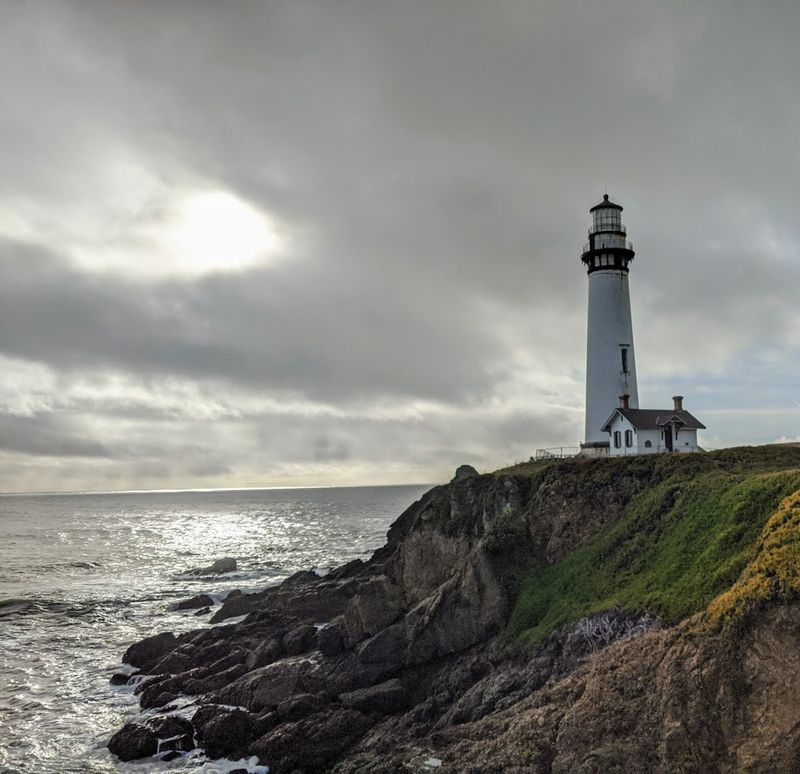
Standing 115 feet tall on a rocky stretch of San Mateo County coastline, Pigeon Point Lighthouse is one of the tallest lighthouses in the United States, and it looks like it belongs in a film even on a clear day.
Add a June Gloom marine layer and the scene shifts into something that feels genuinely cinematic, with the white tower cutting through gray sky and the surrounding rocks catching the diffused light in a way that no direct sun could replicate.
The lighthouse is managed by California State Parks and sits along Highway 1 about 27 miles south of Half Moon Bay.
The grounds are open to visitors during daylight hours, and the surrounding area includes tide pools, a whale-watching platform, and a coastal bluff trail that runs north toward Año Nuevo State Park.
Hostel International operates a hostel at the site for those who want to stay overnight.
Pigeon Point Lighthouse is located at 210 Pigeon Point Road in Pescadero, and roadside parking is available along Highway 1.
The lighthouse tower itself has experienced structural issues in recent years, so interior access may be limited, and checking current status before visiting is worthwhile.
The exterior and grounds remain a strong draw regardless, and the combination of fog, white tower, and rough coastal rocks gives the location a look that is genuinely hard to find elsewhere in California.
7. Bixby Creek Bridge, Big Sur
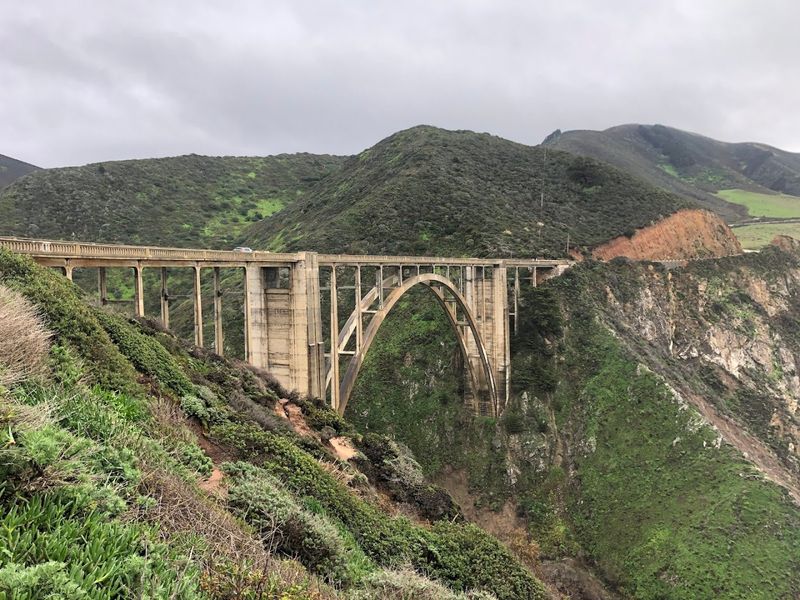
Bixby Creek Bridge is one of the most photographed structures on the California coast, and the reason becomes obvious the moment the fog rolls in and the arch disappears into the marine layer from one side while the cliffs drop away into gray on the other.
The bridge itself is a concrete open-spandrel arch completed in 1932, and at roughly 260 feet above the creek, it has a scale that the fog makes feel even more dramatic by hiding exactly where it ends.
Highway 1 through Big Sur is currently listed as open by Caltrans, but road conditions in this corridor can change due to slides and storm damage, so checking the Caltrans QuickMap before traveling is a genuinely useful habit.
The viewpoint pullout north of the bridge is the most popular stopping spot and fills quickly during peak summer weekends.
A less-visited viewpoint exists on the south side of the bridge as well, and both offer distinct angles on the structure and the canyon below.
June Gloom mornings tend to thin out the crowds slightly compared to clear-day weekends, which makes the experience feel more spacious.
The combination of fog-wrapped cliffs, dark ocean water far below, and the long arc of the bridge gives Bixby Creek a visual quality that few coastal spots anywhere can genuinely compete with.
8. McWay Falls, Julia Pfeiffer Burns State Park
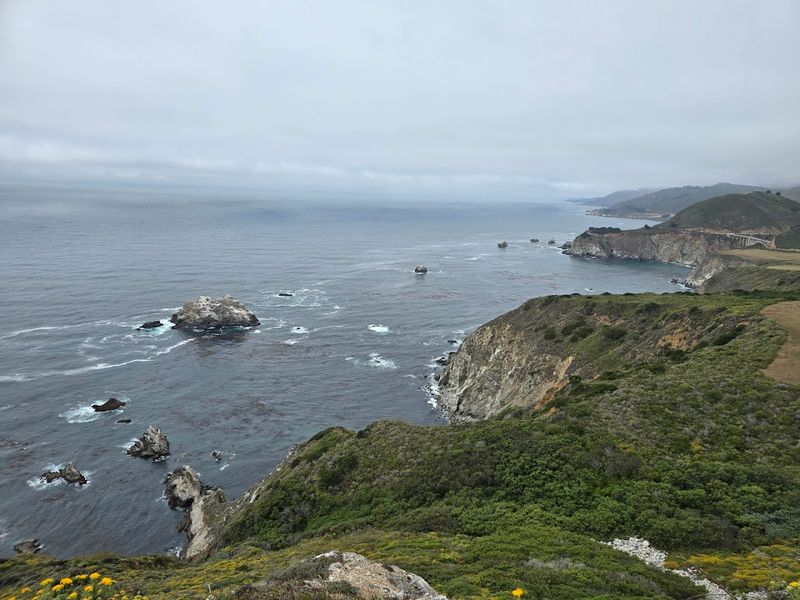
An 80-foot waterfall dropping directly onto a small coved beach that cannot be accessed by foot is already an unusual thing to witness.
Wrap that scene in a June Gloom marine layer and the whole composition shifts into something that looks less like a real place and more like a matte painting from a classic adventure film.
McWay Falls is one of the few tideline waterfalls in California, and the fog version of it earns its own category entirely.
The falls are viewable from the Overlook Trail in Julia Pfeiffer Burns State Park, a short half-mile round trip from the parking area near the park entrance on Highway 1.
The park is located roughly 37 miles south of Carmel and is subject to the same Caltrans road-condition considerations that apply to all of Big Sur.
Day-use fees apply, and the parking area is small, so arriving early is practical advice rather than optional guidance.
The cove below the falls is off-limits to visitors to protect the ecosystem, which means the view from the overlook is the experience.
On foggy mornings, the mist from the falls blends with the marine layer above, softening the entire scene into something almost dreamlike.
The dark sandstone cliffs, the teal cove, and the white water column together create a visual that the gray sky somehow makes more striking rather than less.
9. Morro Rock, Morro Bay
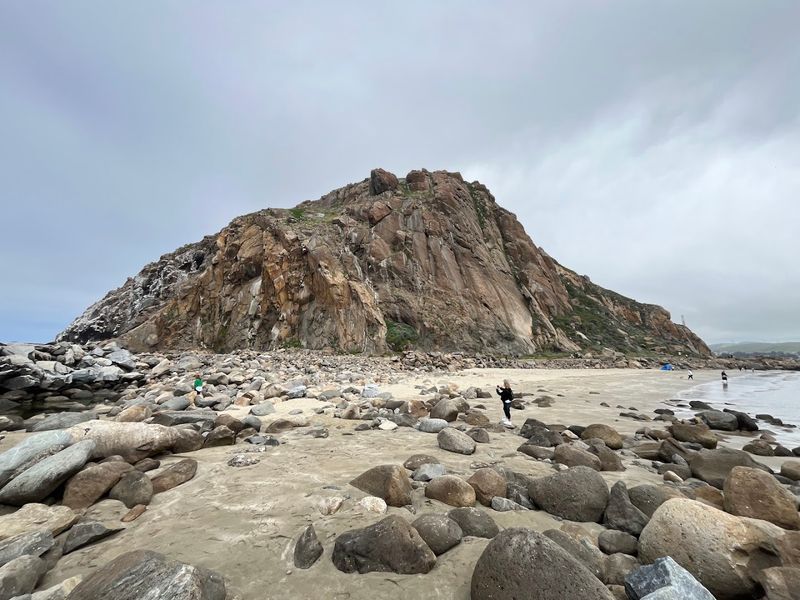
Rising 576 feet from the edge of the Pacific, Morro Rock is a volcanic plug that has been a navigational landmark for centuries.
On a June Gloom morning, the marine layer transforms it from a geological curiosity into something that looks genuinely mythic.
The gray sky eliminates the usual hard shadows and saturated blues, leaving the rock as a dark silhouette against a softer, more layered background that makes the whole harbor feel like a different place.
Morro Bay is located along Highway 1 on the Central Coast, roughly midway between San Francisco and Los Angeles.
The rock itself is a protected wildlife preserve and cannot be climbed, but the surrounding embarcadero and waterfront area offer multiple vantage points for viewing it.
The harbor is active with fishing boats, kayakers, and wildlife, and the combination of working-harbor activity and dramatic geology gives the area a texture that goes beyond a standard scenic stop.
Parking is available along the Embarcadero and at various lots nearby.
The surrounding town has a laid-back, unpretentious quality that suits the foggy-morning experience well.
Sea otters are frequently spotted in the bay, and the muted light of June Gloom makes watching them feel oddly cinematic too.
The rock, the water, the boats, and the gray sky together create a composition that rewards time spent simply standing and observing rather than rushing through.
10. Moonstone Beach, Cambria
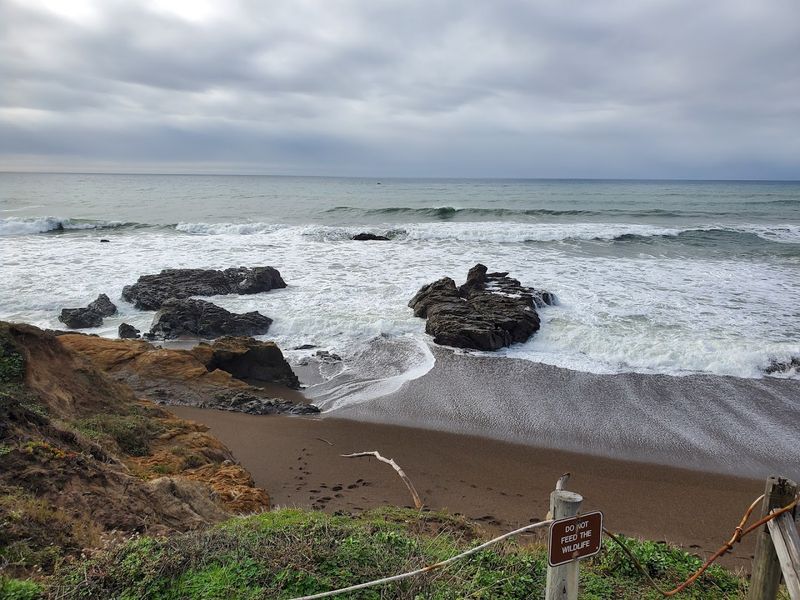
Cambria sits at a quieter stretch of the Central Coast where the tourist pace slows down noticeably, and Moonstone Beach reflects that character in the best possible way.
The boardwalk runs along a bluff above a rocky shoreline scattered with driftwood and tide pools, and on a June Gloom morning, the gray sky and soft light give the whole scene a contemplative, unhurried quality.
The beach gets its name from the moonstones and agates that wash up along the shoreline, and low-tide mornings after a swell are the best time to find them.
The boardwalk itself is flat, accessible, and roughly 1.5 miles long, making it an easy walk for most visitors regardless of pace or fitness level.
The sound of waves and the smell of salt air are constants throughout, and the fog tends to amplify both by pulling in closer to the bluff edge.
Parking is free and available at multiple pull-offs along Moonstone Beach Drive. The stretch is generally less crowded than beaches farther south, and weekday mornings in June can feel almost private.
A few small inns and cottages sit directly across the road, and the overall atmosphere is unhurried in a way that complements the gray-sky aesthetic.
The driftwood arrangements left by previous visitors add an unexpected artistic layer to the already moody coastal scene.
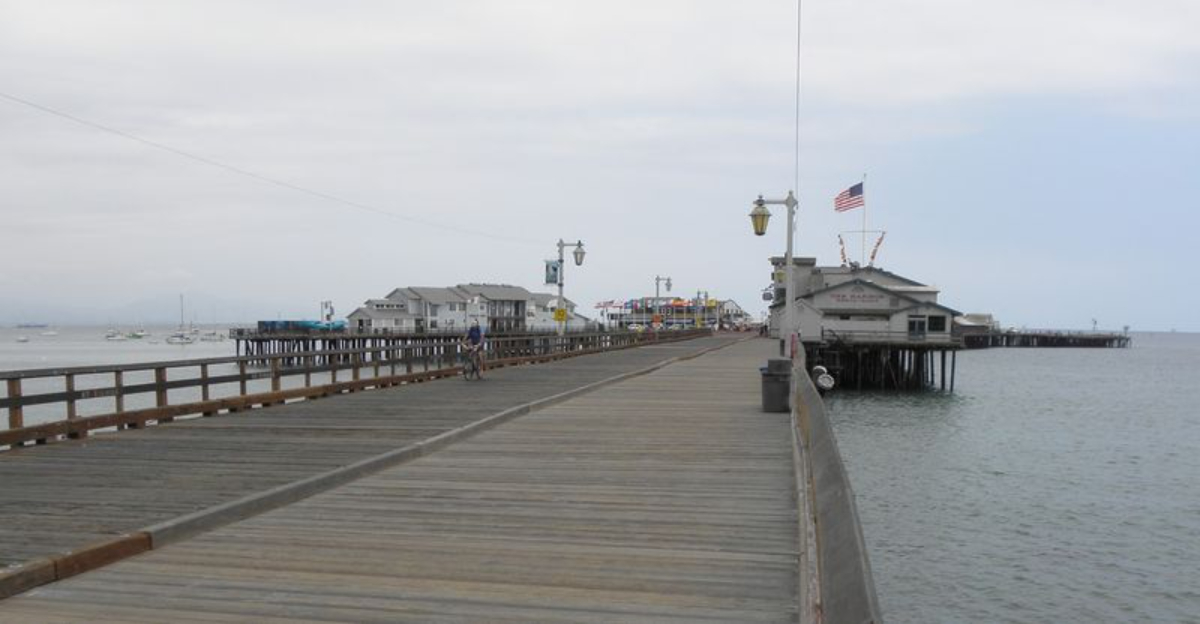
11. Stearns Wharf, Santa Barbara
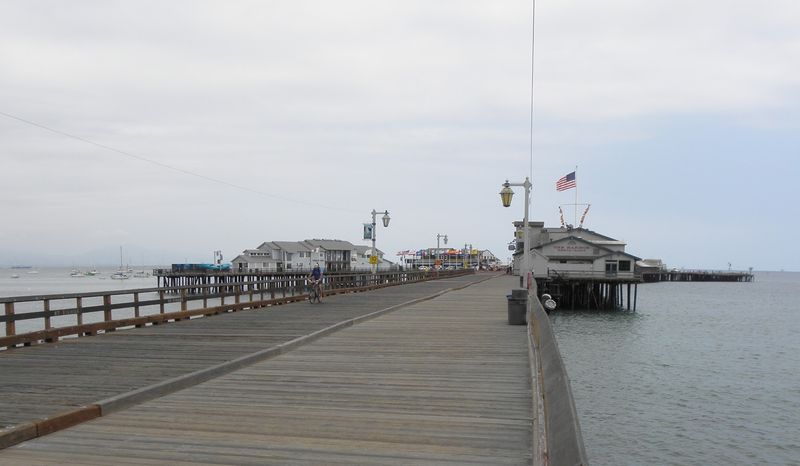
Santa Barbara tends to get associated with sunshine and Spanish architecture, which makes the June Gloom version of it feel like a pleasant surprise.
The marine layer softens the light over the harbor in a way that makes the mountains behind the city look like a watercolor backdrop, and the wharf itself takes on a quieter, more nostalgic quality when the usual postcard brightness gives way to gray.
Stearns Wharf is the oldest working wooden wharf on the West Coast and extends roughly a third of a mile into the Santa Barbara Channel.
The structure is open to vehicles and pedestrians, and a variety of small shops and seafood spots operate along its length.
The views from the end of the wharf on a foggy morning include the Santa Ynez Mountains disappearing into cloud cover and the harbor boats sitting still in diffused light.
The wharf is located at the foot of State Street in Santa Barbara, and parking is available on the structure itself for a modest fee.
June Gloom in Santa Barbara tends to burn off earlier than it does farther north, so morning visits capture the effect most reliably.
The combination of old wood, calm water, mountain silhouettes, and gray sky gives the wharf an old-Hollywood quality that the sunny version simply cannot replicate.
12. Point Dume, Malibu
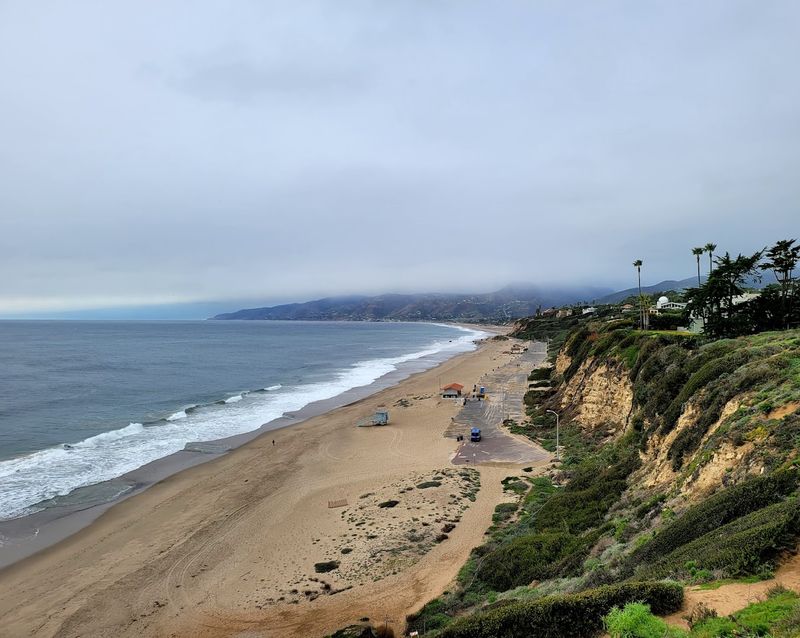
This is the kind of place that shows up in films without most people realizing it, and the June Gloom version of it makes that connection feel even more obvious.
The cliffs rise sharply from the beach and the morning marine layer turns everything silver and muted, flattening the usual color contrast and giving the whole scene a quality that sits somewhere between dramatic and serene.
The point is a California State Beach and sits at the western end of Malibu, accessible via Westward Beach Road.
The trail to the top of the bluff is short but involves some steps and uneven terrain, and the view from the top encompasses a long stretch of coastline in both directions.
On foggy mornings, the Santa Monica Bay fades into gray in the distance and the water below shifts between dark green and steel blue depending on the angle of the light.
Parking at Zuma Beach nearby is available for a fee, and the walk to the Point Dume trailhead takes about ten minutes from the main lot.
The area is popular on weekends, but June Gloom mornings tend to thin the crowd compared to clear-sky days.
The cliffs, the gray water, and the wide open sky above all contribute to an atmosphere that feels cinematic in a restrained, unhurried way that suits the location well.
13. La Jolla Cove, La Jolla
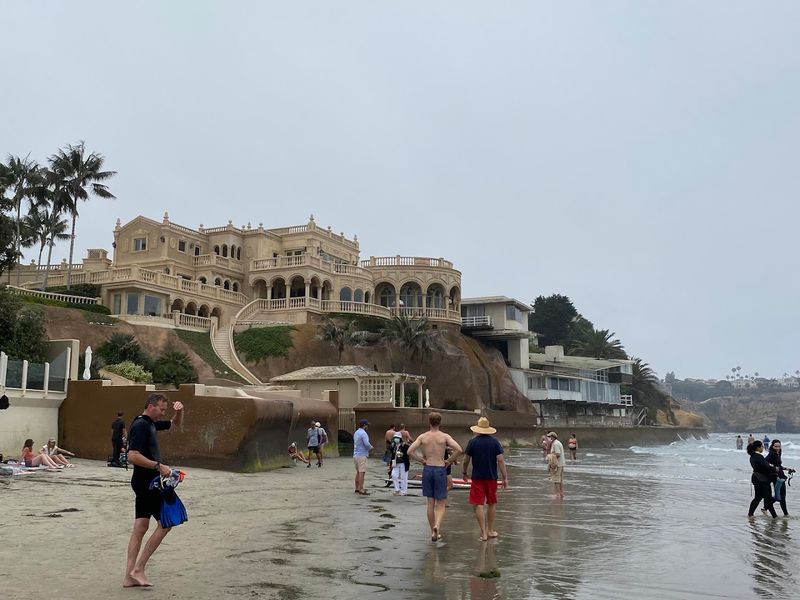
La Jolla Cove sits within a curve of sandstone cliffs that have been carved by centuries of wave action, and the shapes and textures of those cliffs read completely differently under a marine layer than they do in direct sun.
The June Gloom light flattens the usual warm tones of the sandstone into something cooler and more sculptural, and the water below shifts from its famous turquoise toward a deeper, more serious shade of blue-gray that suits the mood of the scene.
The cove is a protected ecological reserve, and the surrounding area includes the Children’s Pool, the Cave Store, and access to several sea caves carved into the cliffs.
Sea lions and harbor seals use the nearby cove and beach areas regularly, and foggy mornings tend to find them resting on the rocks in numbers that the busy midday crowds usually disrupt.
The combination of marine wildlife, dramatic geology, and diffused gray light gives the area a genuinely unusual quality for Southern California.
Parking is available along Coast Boulevard and in surrounding streets, though availability varies significantly by time of day and season.
The cove is located along Coast Boulevard in La Jolla, and the surrounding neighborhood is walkable with cafes and shops nearby.
June Gloom in San Diego tends to burn off by late morning, which makes early arrival the most reliable strategy for catching the atmospheric light before the sky clears.