These 14 Hidden Georgia Gems Are So Charming It’s Shocking Nobody Talks About Them
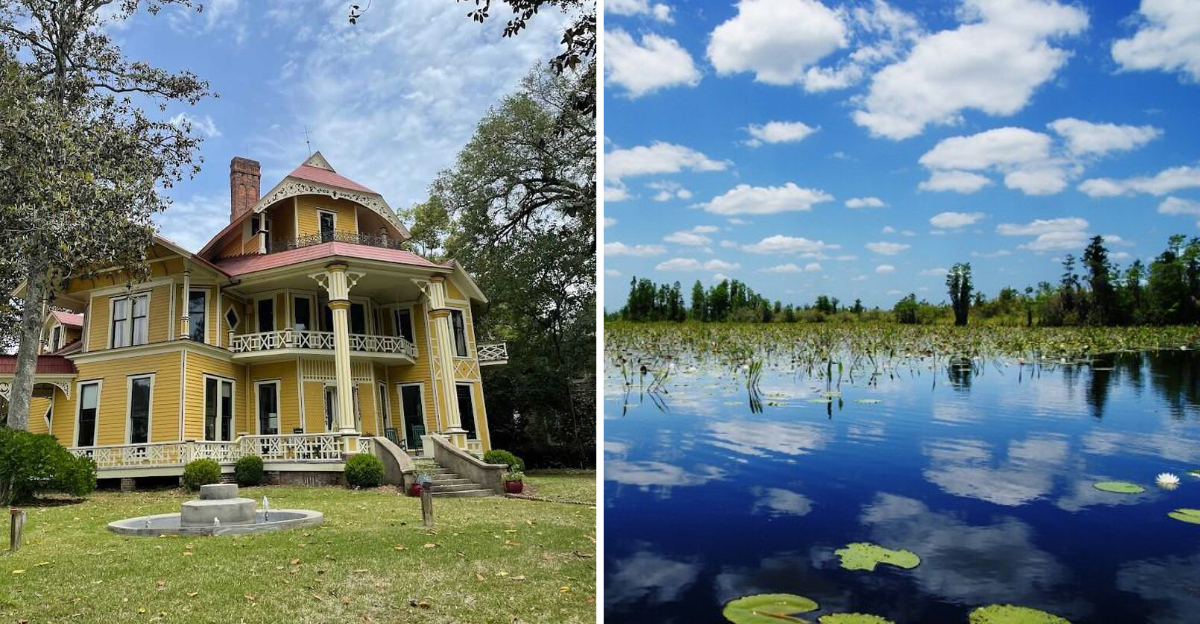
Fame has a way of hogging the attention. The big cities and famous landmarks pull every visitor like a magnet, while the truly memorable stuff waits quietly a few exits down a road nobody bothers to take.
That is where the real magic lives in Georgia. Slip past the obvious stops and the state opens up into something stranger and more wonderful.
Canyon walls streaked in colors that look almost painted on. Folk art wonderlands built by people who simply could not stop creating.
Places so far off the radar that most lifelong residents have never heard the names. You do not need to be an expert to fall for them, just a weekend wanderer or a sucker for a good story.
These hidden spots are worth every mile of the drive. Get ready to be genuinely surprised by the Peach State.
1. Rock Garden, Calhoun
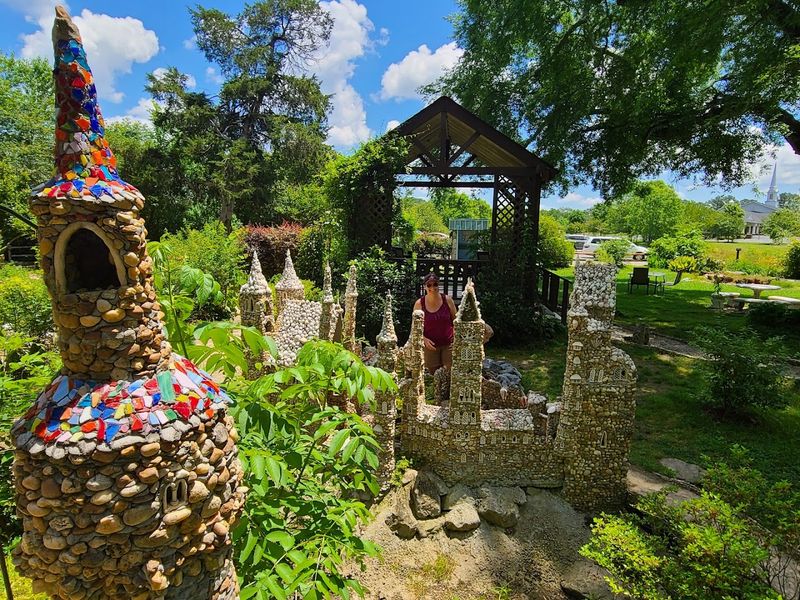
Some places stop you in your tracks before you even realize what you are looking at, and the Rock Garden in Calhoun is exactly that kind of place.
Located at 1411 Rome Rd SW, Calhoun, GA 30701, this roadside folk art display is a labor of love built from painted rocks, found objects, and hand-crafted sculptures that line the property in a colorful, eye-catching way.
Visiting feels less like a tourist stop and more like stumbling onto someone’s personal creative universe. The best time to swing by is during daylight hours when all the colors and textures are easy to appreciate.
There is no big admission fee or gift shop, just genuine folk art doing what it does best. Bring a camera, walk slowly, and enjoy the quirky details that reveal themselves the longer you look.
It is one of those Georgia roadside surprises that makes a road trip truly memorable.
2. Little White House Historic Site
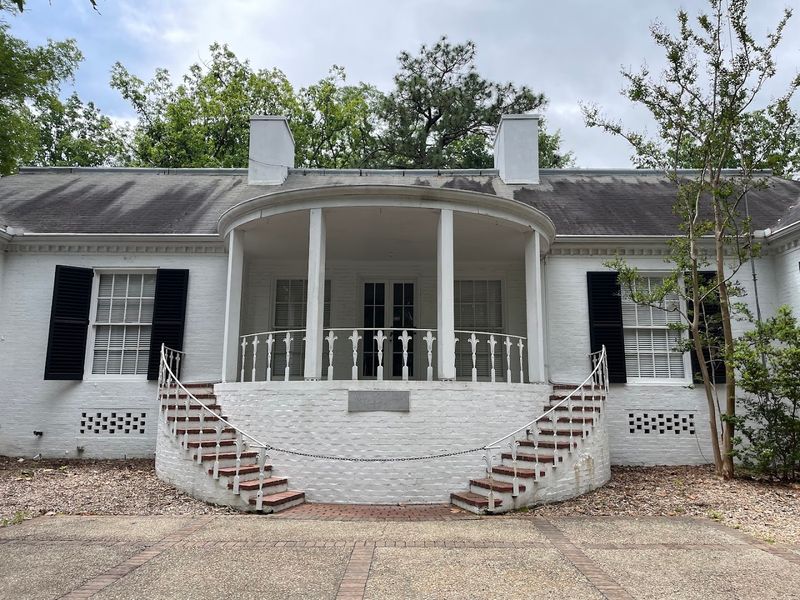
Few places in Georgia carry as much quiet historical weight as the Little White House in Warm Springs. Sitting at 401 Little White House Rd, Warm Springs, GA 31830, this modest retreat was the personal getaway of President Franklin D.
Roosevelt, who visited regularly to find relief from polio in the area’s natural warm springs.
Walking through the preserved rooms feels genuinely moving, especially knowing that Roosevelt passed away here in April 1945. The site includes a museum, walking trails, and the original guesthouse, all maintained with careful attention to historical accuracy.
Spring and fall are particularly pleasant times to visit because the surrounding pine forest is beautiful and the weather stays comfortable. Plan for at least two hours to take in everything at a relaxed pace.
Weekdays tend to be quieter, which makes for a more personal and reflective experience at this remarkable piece of Georgia history.
3. Rolater Park
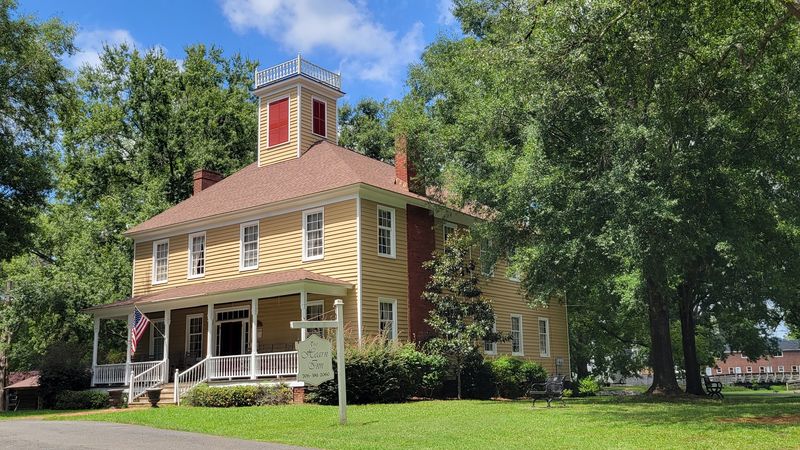
Rolater Park in Cave Spring might just be the most underrated picnic spot in all of Georgia.
The park is located at 13 Old Cedartown Rd, Cave Spring, GA 30124, and it centers around a stunning natural limestone spring that feeds a clear swimming pool open during warmer months, making it a genuinely refreshing summer destination.
The surrounding grounds are shaded by tall trees, and the whole area has a peaceful, old-fashioned feel that is increasingly rare.
Cave Spring itself is a charming small town worth exploring before or after a visit to the park, with antique shops and historic buildings just a short walk away.
Parking is easy, the entry fees are low, and families with children tend to have a wonderful time here. Weekends in summer can get busy around the pool, so arriving early helps secure a good spot along the grassy banks.
4. Massee Lane Gardens
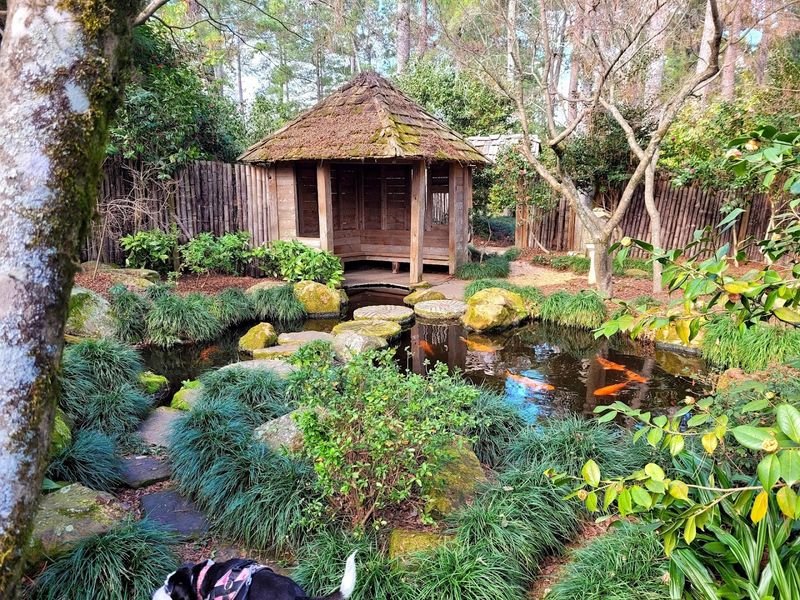
Camellia lovers and garden enthusiasts who have not yet visited Massee Lane Gardens are missing something truly special in central Georgia.
The gardens are located at 100 Massee Ln, Fort Valley, GA 31030, and they serve as the headquarters of the American Camellia Society, which means the collection here is genuinely world-class.
Peak bloom season runs roughly from November through March, when thousands of camellia varieties burst into color across the beautifully landscaped grounds.
Beyond the camellias, the property also features a greenhouse, a gallery of Boehm porcelain art, and peaceful walking paths that wind through the garden.
Admission is affordable, and the staff tends to be welcoming and knowledgeable. Visiting on a weekday in January or February, when blooms are at their fullest, is highly recommended for the best experience.
Georgia may be famous for peaches, but these gardens prove it has serious floral credentials worth celebrating too.
5. Fernbank Forest
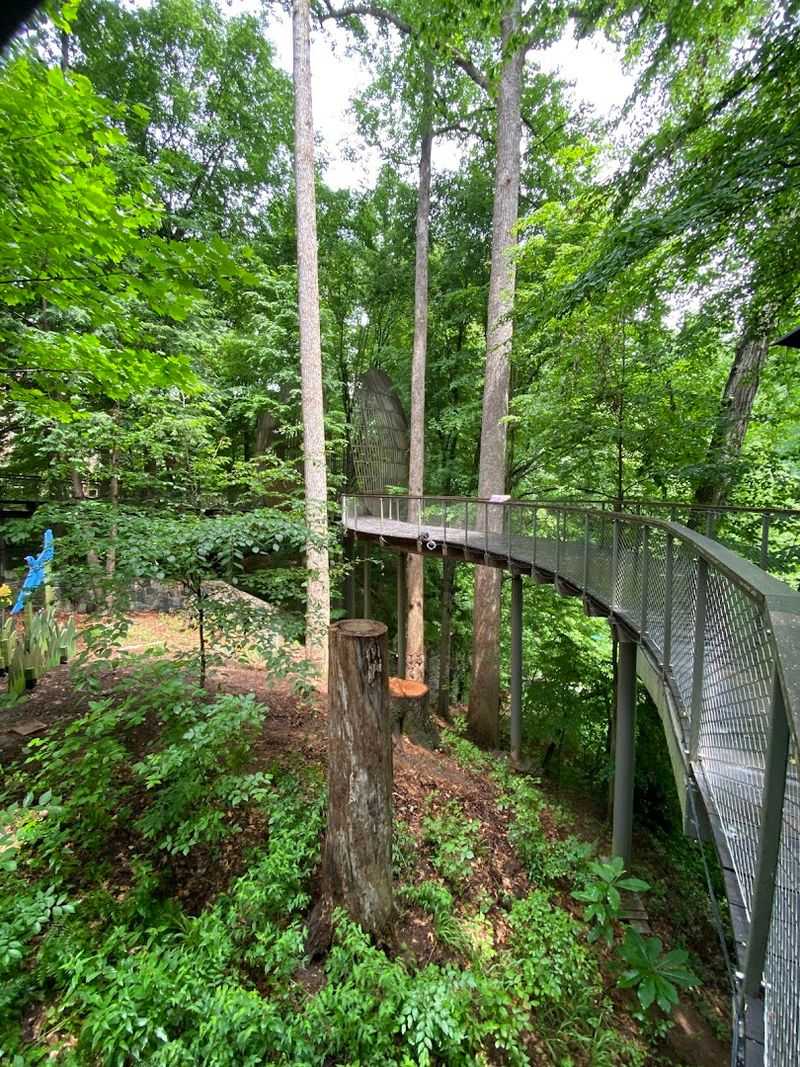
Right in the middle of Atlanta, there is an old-growth forest so serene it feels like a different world entirely.
Fernbank Forest is located at 767 Clifton Rd NE, Atlanta, GA 30307, and at 65 acres it stands as one of the largest old-growth Piedmont forests remaining in the southeastern United States, which is a genuinely remarkable fact for a major city.
The paved trail inside is about two miles long and winds beneath towering hardwoods, making it accessible for most visitors including those with strollers or mobility considerations. Light filters through the canopy in a way that feels almost cinematic on clear mornings.
Entry is free during public forest hours, though the adjacent Fernbank Museum of Natural History charges admission separately. Weekday mornings are the quietest times to walk here, and fall foliage season turns the whole forest into a golden display.
Georgia’s urban green spaces rarely get more impressive than this one.
6. Providence Canyon State Park
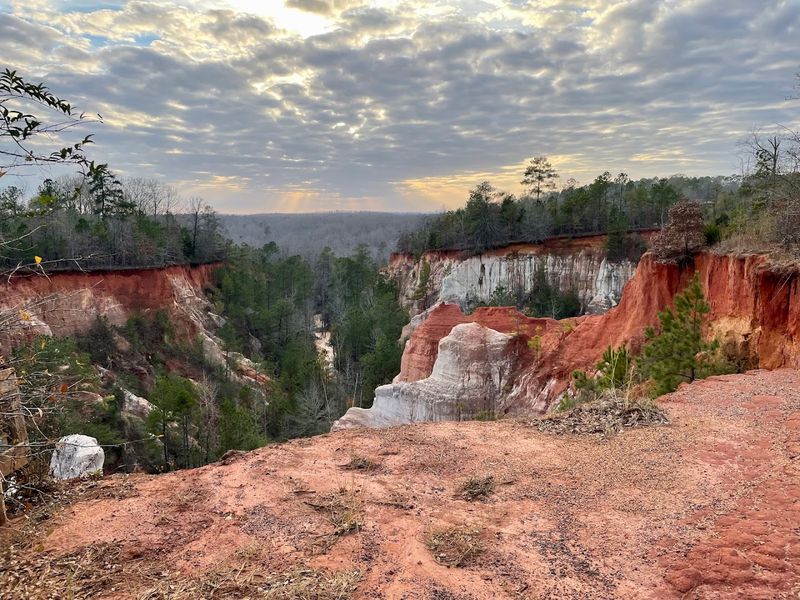
Sometimes called Georgia’s Little Grand Canyon, Providence Canyon earns that nickname every single time a visitor peers over the edge for the first time.
The park is located at 8930 Canyon Rd, Lumpkin, GA 31815, and the canyon system here was actually formed by poor farming practices in the 1800s, making it one of the state’s most accidental natural wonders.
The canyon walls glow in shades of red, orange, pink, and lavender, and the colors shift beautifully depending on the time of day and season. A rim trail offers easy viewing, while backcountry trails drop down into the canyon floor for a more adventurous experience.
Spring brings wildflowers including the rare plumleaf azalea, which blooms only in this region of Georgia. Parking and basic facilities are available at the trailhead.
Visiting in the morning helps avoid afternoon heat in summer, and golden hour light in late afternoon makes the canyon walls absolutely spectacular.
7. Cloudland Canyon State Park
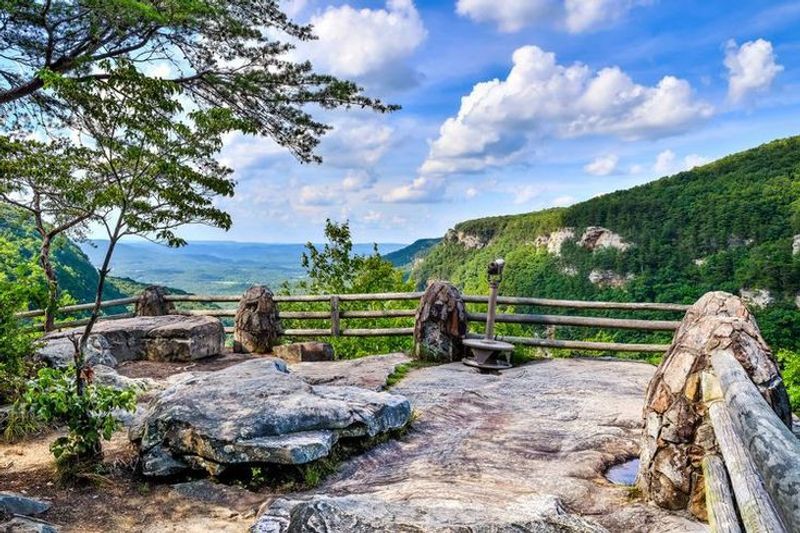
Cloudland Canyon sits on the western edge of Lookout Mountain and delivers some of the most dramatic scenery anywhere in Georgia.
Found at 122 Cloudland Canyon Park Rd, Rising Fawn, GA 30738, the park features a deep gorge carved by Sitton Gulch Creek, with two beautiful waterfalls accessible via a staircase trail that descends into the canyon.
The upper rim trail offers sweeping views without requiring a strenuous hike, making it a good option for visitors who prefer a more relaxed outing.
Camping is available at multiple sites including tent, RV, and cabin options, and the park tends to fill up quickly on fall weekends when the foliage peaks.
Arriving early on busy days is strongly advised for parking and trail access. The waterfall hike involves several hundred stairs, so comfortable footwear matters.
Cloudland Canyon consistently ranks among Georgia’s most beloved state parks, and seeing it in person makes that reputation very easy to understand.
8. George L. Smith State Park
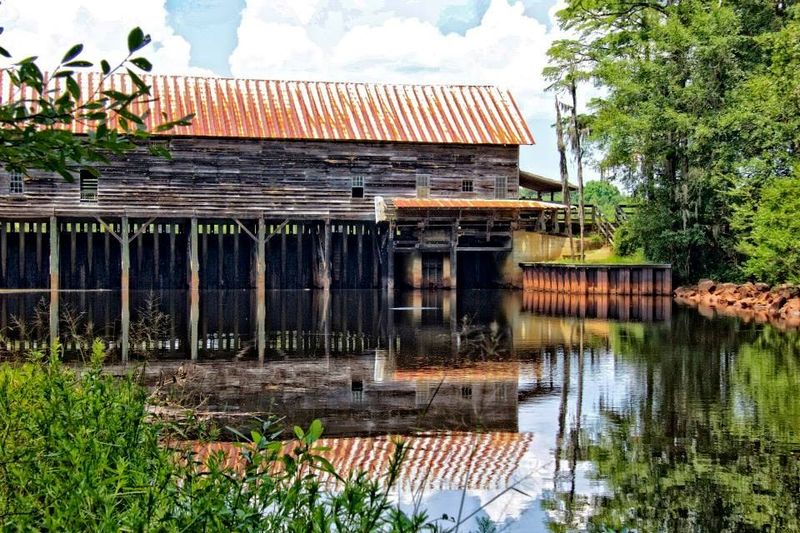
A covered bridge, a working grist mill, and a cypress swamp all in one park sounds almost too good to be true, but George L. Smith State Park delivers exactly that.
Located at 371 George L Smith State Park Rd, Twin City, GA 30471, the park is centered around a 412-acre mill pond where Spanish moss-draped cypress trees rise from the dark, still water in a scene that feels genuinely timeless.
Kayaking and canoeing on the pond is one of the most peaceful ways to spend a morning in Georgia, and rental equipment is sometimes available at the park. The historic Parrish Mill, which dates back to the 1880s, still stands beside the pond and adds wonderful character to the landscape.
Fishing is also popular here, and the park tends to stay quieter than many of Georgia’s more famous destinations. Visiting on a calm, misty morning turns the whole place into something that looks like a painting.
9. Jarrell Plantation State Historic Site
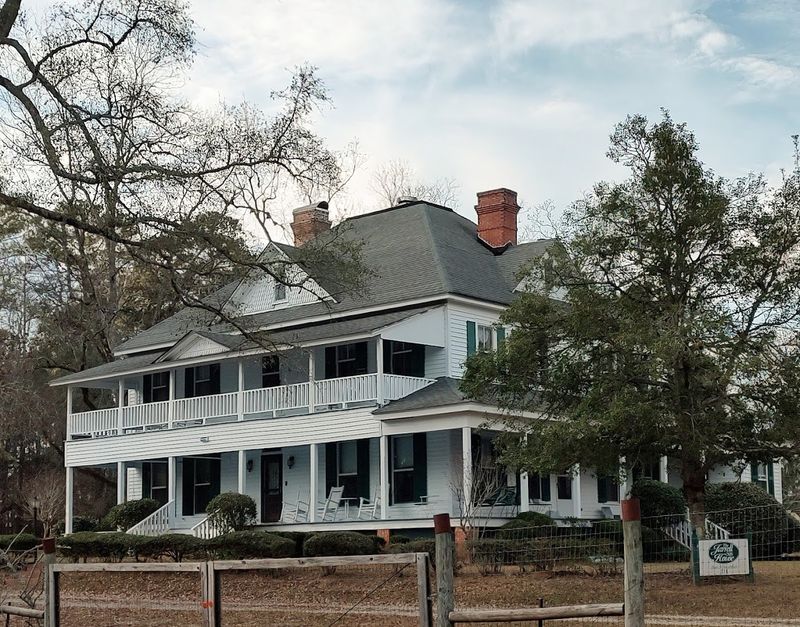
History fans who want a deeply personal window into 19th-century Georgia farm life will find Jarrell Plantation unlike almost anywhere else in the state.
Situated at 711 Jarrell Plantation Rd, Juliette, GA 31046, this site preserves over 20 original structures from a single family’s plantation spanning three generations, from the Civil War era through the early 20th century.
Walking through the collection of buildings, which includes a cotton gin, a grist mill, a sawmill, and various outbuildings, gives a clear and honest picture of rural Georgia life across a remarkable stretch of history.
Guided tours are offered regularly and add important context to what visitors are seeing.
The site tends to be refreshingly uncrowded, which allows for a relaxed and genuinely educational visit. Fall is a particularly pleasant time to come when temperatures cool down.
The honesty and completeness of the preservation here makes Jarrell Plantation one of Georgia’s most underappreciated historic sites by a wide margin.
10. Pasaquan Folk Art Site
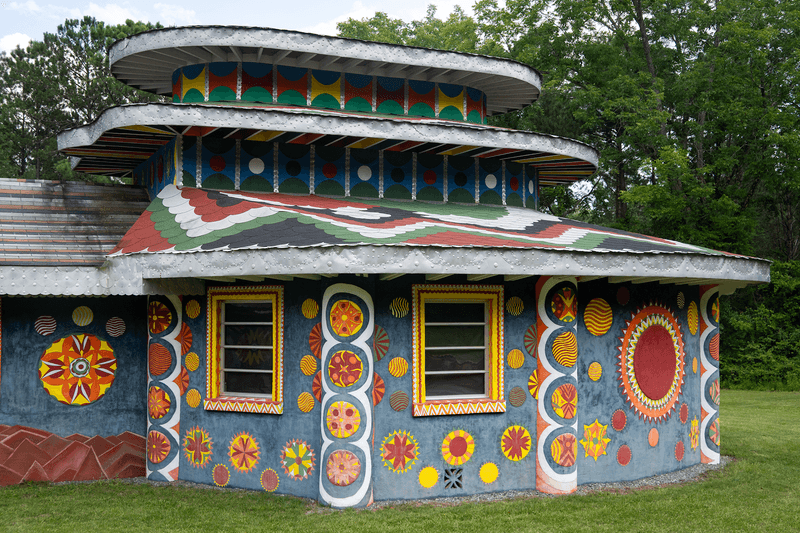
Pasaquan is the kind of place that makes you stop and wonder how it is not famous worldwide, because nothing quite prepares you for what you see when you arrive. Located at 238 Eddie Martin Rd, Buena Vista, GA 31803, this seven-acre compound was created almost entirely by self-taught folk artist Eddie Owens Martin, also known as St. EOM, who spent decades covering the property in vivid murals, painted sculptures, and elaborate geometric patterns.
The colors are extraordinary, and the sheer scale of the work is humbling when you realize one person built all of it. Columbus State University now maintains and preserves the site with genuine care and dedication.
Tours are available and highly recommended because guides bring the story of St. EOM’s remarkable life to vivid detail. Visiting on a sunny day makes the colors pop in a way that photographs can barely capture.
Pasaquan stands as one of Georgia’s most singular and inspiring artistic achievements.
11. Lapham-Patterson House
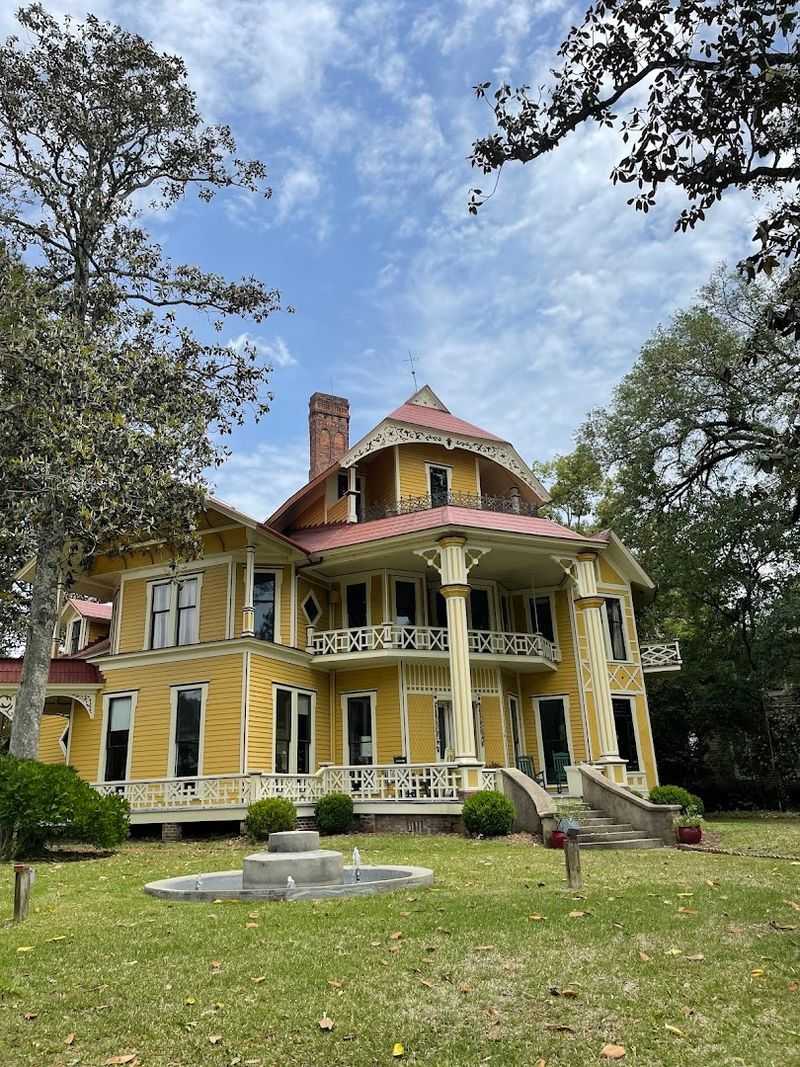
Victorian architecture enthusiasts will find the Lapham-Patterson House in Thomasville to be one of the most fascinating structures in all of Georgia. The house stands at 626 N Dawson St, Thomasville, GA 31792, and was built between 1884 and 1885 as a winter cottage for Chicago businessman Charles W.
Lapham, who reportedly had a deep fear of fire that influenced many of the home’s unusual design features.
The result is a building with no right angles, 19 rooms with 45 doors, a cantilevered balcony, and a double-flued chimney that is architecturally unique for its era. Guided tours are offered by the Georgia Department of Natural Resources and are genuinely engaging, revealing the clever and sometimes eccentric reasoning behind each design choice.
The surrounding neighborhood in Thomasville is lovely and worth a short stroll after the tour. Thomasville itself is a charming small Georgia city with good dining options and a welcoming small-town feel.
12. Thronateeska Heritage Center
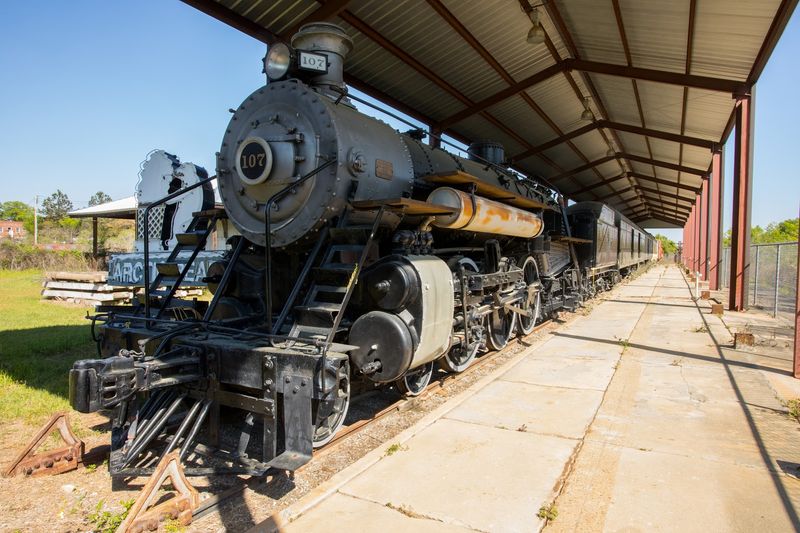
Albany, Georgia has a cultural gem that most people outside of southwest Georgia have never heard of, and that is the Thronateeska Heritage Center. Housed at 100 Roosevelt Ave, Albany, GA 31701, the center occupies a beautifully restored historic railroad depot and surrounding buildings that together create a surprisingly rich museum campus in the heart of the city.
The complex includes exhibits on regional history, a science and discovery center, a planetarium, and a collection of historic railcars that kids and adults tend to find equally fascinating. The planetarium shows are a particular highlight and offer a great indoor activity on hot Georgia afternoons.
Admission is reasonably priced, and the staff is known for being enthusiastic and knowledgeable about the collections. Weekdays are typically less crowded, making it easier to spend time with individual exhibits.
For anyone passing through southwest Georgia, Thronateeska is well worth a deliberate detour and several comfortable hours of exploration.
13. Hofwyl-Broadfield Plantation
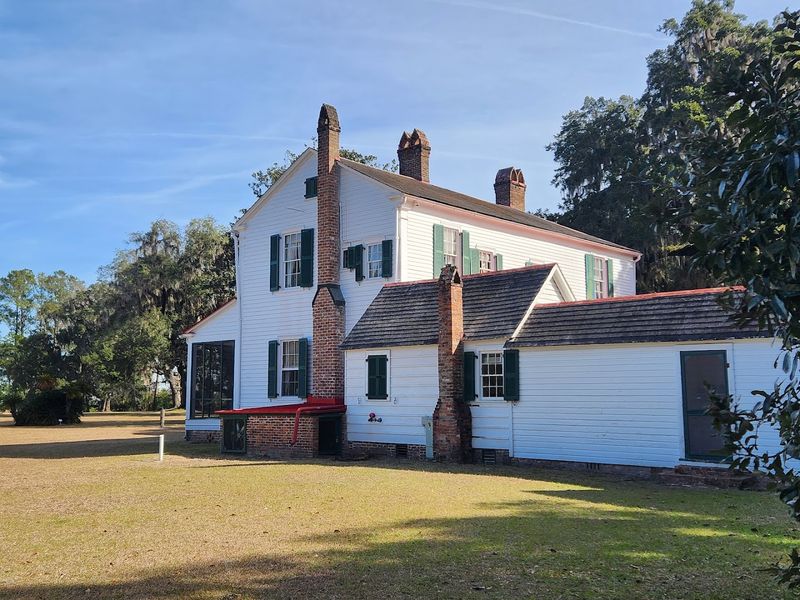
Along the Georgia coast, Hofwyl-Broadfield Plantation offers a layered and honest look at the history of rice cultivation and coastal plantation life in the antebellum South. The site is located at 5556 U.S.
Hwy 17 N, Brunswick, GA 31525, and the property remained in the same family from the early 1800s until it was donated to the state of Georgia in 1973, which helped preserve an unusual level of authenticity across the grounds.
The main house is filled with original furnishings and personal family items that make the experience feel genuinely intimate rather than staged. A short nature trail winds through the property toward the marsh, where views of the coastal wetlands are peaceful and beautiful.
The site museum provides important historical context about the enslaved people who worked the rice fields here. Visiting in the morning is recommended for cooler temperatures and better light along the marsh trail.
This is a meaningful and thoughtfully presented piece of Georgia coastal history.
14. Okefenokee Swamp Park
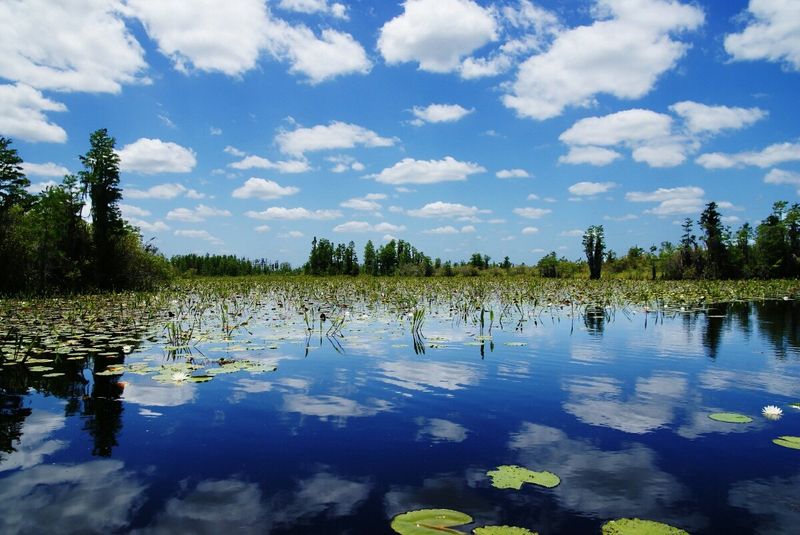
There is nothing else in Georgia quite like the Okefenokee, and the swamp park in Waycross is one of the most accessible entry points into this ancient and extraordinary ecosystem. The park is found at 5700 Okefenokee Swamp Park Rd, Waycross, GA 31503, and it sits on the northern edge of one of the largest blackwater swamp systems in North America, covering nearly 700 square miles of Georgia wilderness.
Boat tours wind through cypress-lined waterways where alligators, herons, turtles, and rare plant species appear with remarkable regularity. The dark amber water, stained by tannins from decaying vegetation, gives the swamp an otherworldly atmosphere that feels prehistoric in the best possible way.
Guided tours are available and strongly recommended for first-time visitors who want to understand what they are seeing. Spring and fall tend to offer the most comfortable temperatures and active wildlife.
Spending a morning here feels like stepping into a Georgia that existed long before anyone thought to put it on a map.