This Massive Arizona Cave Along The Colorado River Has Its Own Sandy Beach
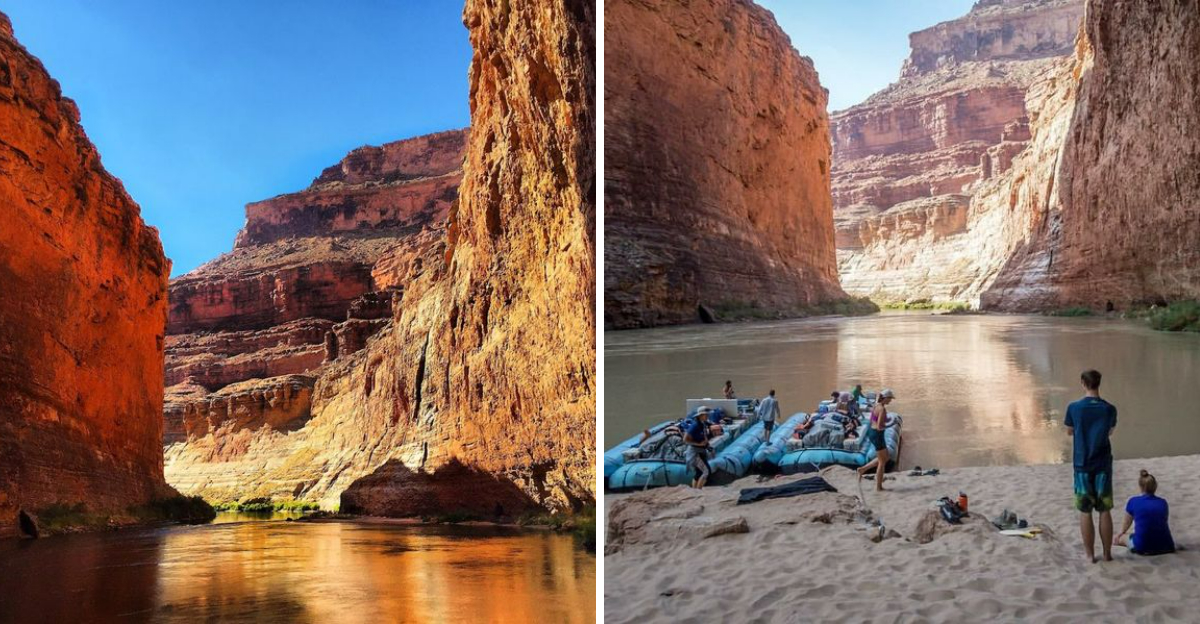
A crack in a canyon wall does not look like much from the outside. But some caves in Arizona do not play by the rules.
This one opens up into something so enormous it barely feels real. We are talking cathedral ceilings, echoing silence, and a sandy beach that has no business being this far underground.
You will not find this place on a billboard. You will not stumble across it on a casual hike.
You have to earn it, and that is exactly what makes it unforgettable. Arizona has carved out a reputation for jaw-dropping natural wonders, but this cave sits in a category entirely its own.
Nobody who has seen it walks away without a story to tell. If you think you have seen everything this state has to offer, you have not seen this.
A Cave That Defies All Expectations
From the river, it looks almost laughably small. You squint at what seems like a shallow slit in the canyon wall, maybe ten feet deep at best.
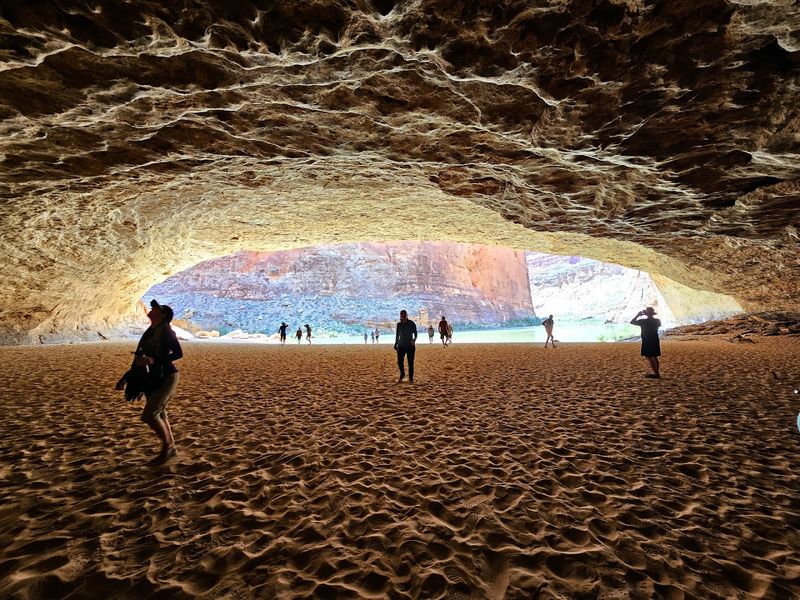
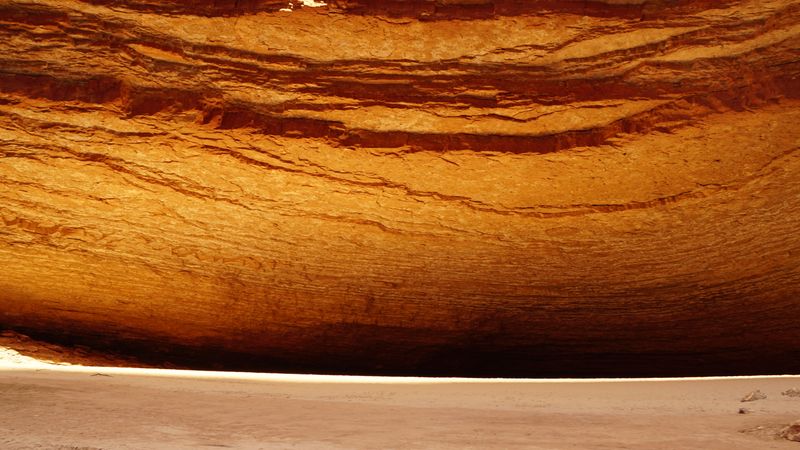
Then your raft touches the sandy shore and you walk inside. The ceiling rockets upward nearly 100 feet above your head.
The cavern stretches roughly 300 feet wide and 150 feet from front to back. That scale illusion is one of the Grand Canyon’s best tricks.
The towering canyon walls outside are so massive they shrink everything near them. Even a giant cave looks modest by comparison from a distance.
Explorer John Wesley Powell passed through here in 1869 and was floored. He estimated the cavern could seat 50,000 people, which sounds wild but captures the feeling perfectly.
Modern estimates are more conservative, yet nobody who stands inside argues about the size. Redwall Cavern, located at North Rim, AZ 86052, earns every bit of its legendary reputation.
The moment you realize what you are actually standing inside is genuinely unforgettable. No photograph fully prepares you for it.
Only Reachable By Water
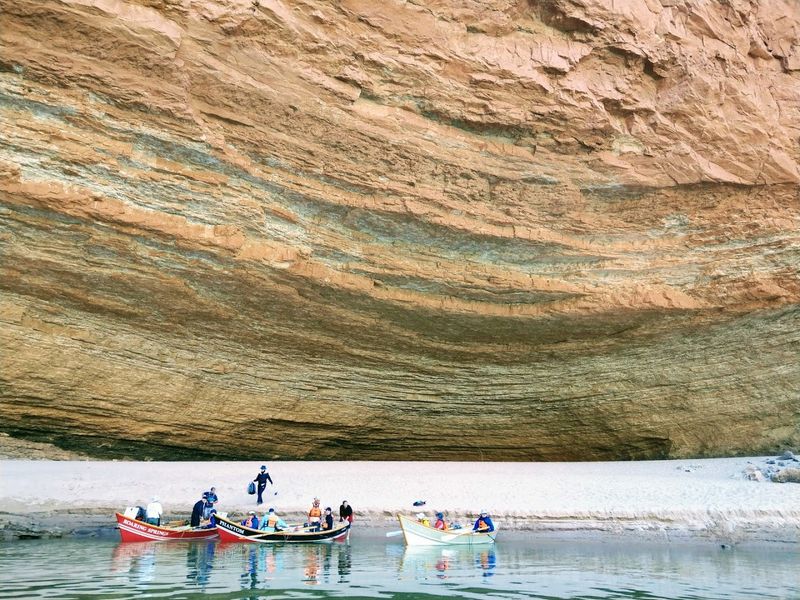
Getting here requires a raft, a kayak, or a very good relationship with a river guide. There are no trails, no roads, and no shortcuts to this spot.
It sits at approximately river mile 33.1 along the Colorado River deep inside the Grand Canyon. That distance alone tells you this is not a casual day trip.
The river is surprisingly calm near the cavern entrance, which makes landing your raft relatively easy. You pull up to a gentle sandy bank and step right out.
Multi-day rafting trips through the Grand Canyon typically include a stop here. It is one of the most anticipated moments of the entire journey.
Planning ahead is essential because access requires a permit from the National Park Service. Grand Canyon river trips book up months, sometimes years, in advance.
If you are serious about visiting, start researching outfitters and permit lotteries early. The wait is absolutely worth every bit of patience it demands.
There is something deeply satisfying about earning your way to a place like this. Arriving by river makes the whole experience feel earned and special.
Ancient Limestone With A Story To Tell
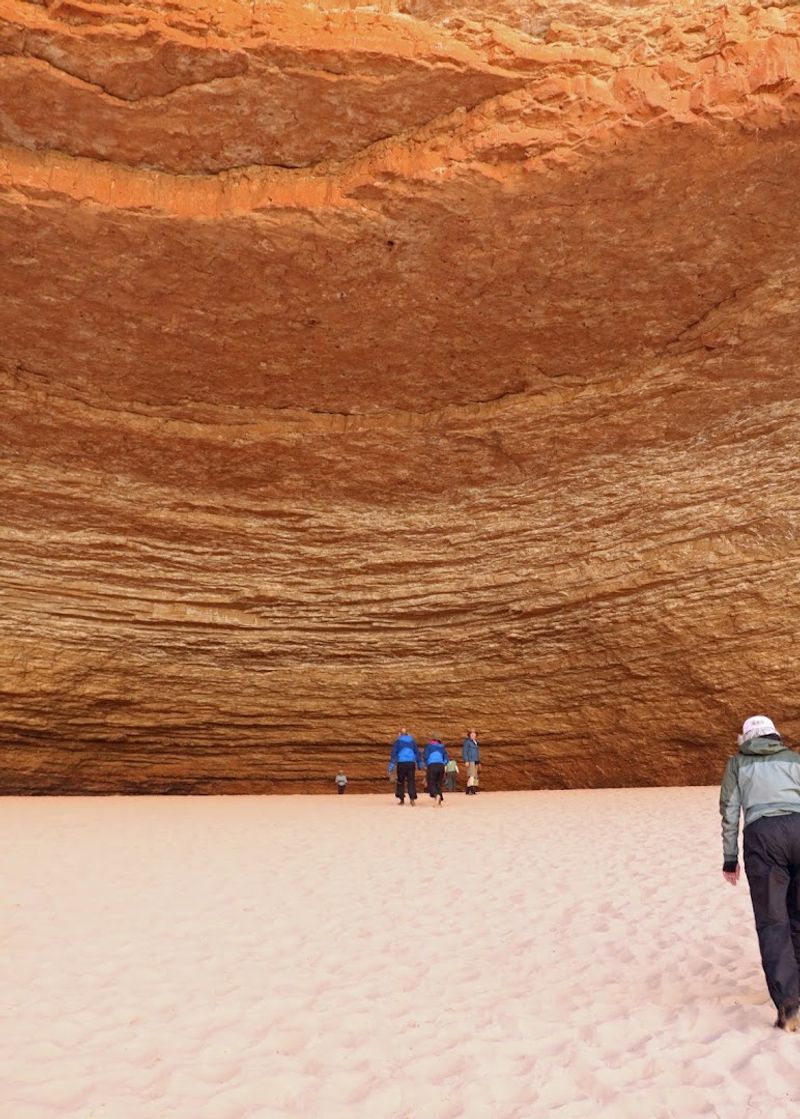
The walls surrounding you are roughly 320 million years old. That number is almost impossible to wrap your brain around, but the rock makes you feel every bit of it.
This is the Redwall Limestone layer, a Mississippian-aged formation deposited at the bottom of a warm tropical sea. Arizona was once underwater, and this cave is proof.
Despite the name, the limestone is mostly gray in color. The reddish hue you sometimes see comes from sunlight filtering in and bouncing off iron-stained surfaces above.
Marine fossils are embedded in rocks that have tumbled near the cave floor. Brachiopods, crinoids, and other ancient sea creatures left their marks here long before dinosaurs existed.
Geologists love this place for the clarity of the rock layers. The Redwall Limestone is one of the most distinct and recognizable formations in the entire Grand Canyon.
Running your hand along the cave wall connects you to something genuinely ancient. You are touching the floor of a prehistoric ocean with your fingertips.
That feeling alone makes the whole rafting trip worthwhile. Geology has never felt more personal or more jaw-dropping than it does inside this cave.
The Scale Illusion That Fools Everyone
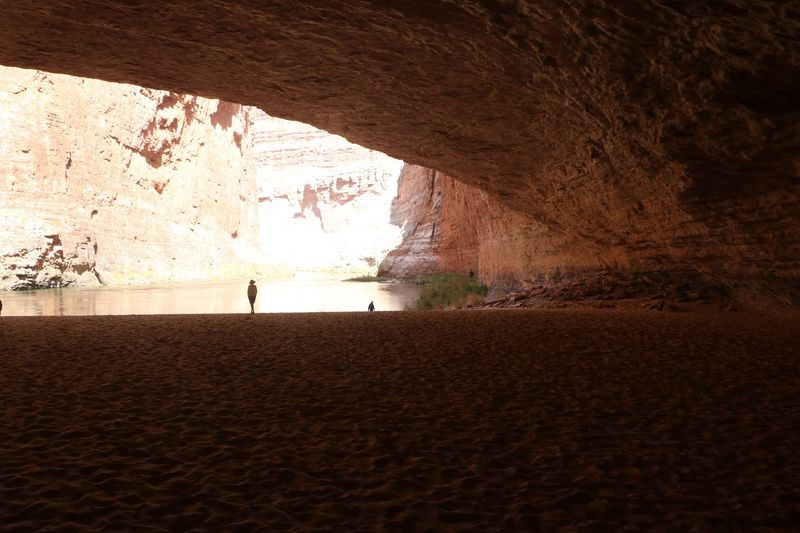
Nobody believes it looks big from the water. That is the first thing every river guide will tell you before you arrive.
The Grand Canyon is so overwhelmingly massive that everything inside it looks smaller than it actually is. A 100-foot ceiling can appear to be 20 feet when the canyon walls behind it soar a mile high.
This optical trick catches first-time visitors completely off guard. You approach the entrance thinking it is a modest little alcove worth a quick peek.
Then you step inside and the space just keeps expanding around you. Your brain genuinely struggles to recalibrate the scale in real time.
Scientists and psychologists call this a scale illusion, where surrounding context distorts your perception of size. The Grand Canyon is essentially the world’s most dramatic example of that effect.
Experienced guides say they never get tired of watching people’s faces when they first walk in. That moment of surprise is one of the most consistent reactions on any Grand Canyon river trip.
Bring your camera but accept that photos rarely capture it accurately. Your eyes and your memory will do a far better job.
Activities On The Cave’s Natural Floor
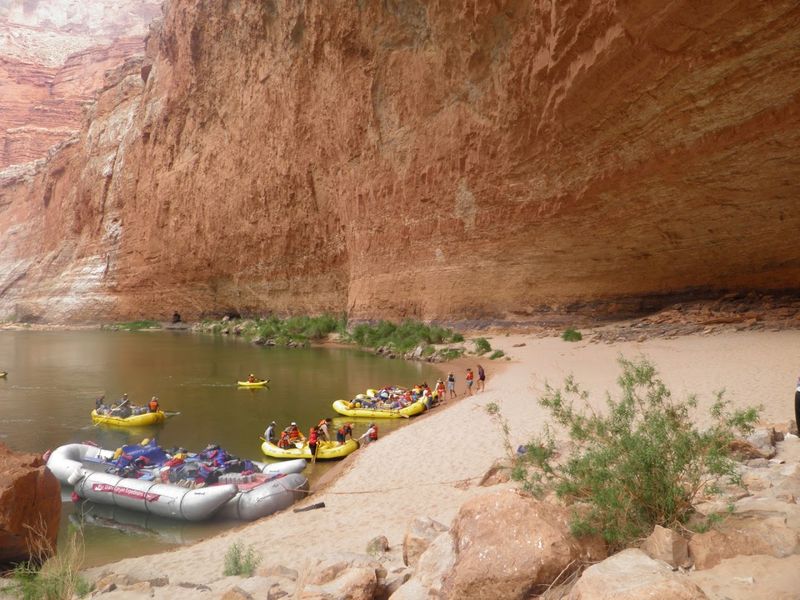
Not many places let you toss a frisbee inside a cave. This one does, and there is plenty of room to actually run after it.
The sandy floor is so wide and open that groups naturally spread out and start playing. Frisbee and beach volleyball are the two most popular activities rafters enjoy here.
Lunch breaks inside the cavern are a beloved tradition on multi-day river trips. The cool shade and soft sand make it one of the most comfortable rest stops in the canyon.
The natural acoustics also make this a favorite spot for group music and storytelling. Sound travels beautifully in the space, giving even a quiet voice an impressive presence.
Some groups use the time for quiet exploration, examining the fallen rocks and fossils near the edges. Others simply sit, breathe, and absorb the scale of what surrounds them.
Camping overnight and building fires are both prohibited inside the cavern. The National Park Service enforces these rules to protect the sand, the fossils, and the overall experience.
Even a short one-hour stop here leaves a lasting impression. The combination of space, silence, and ancient surroundings is genuinely hard to match anywhere else.
The Sandy Beach Inside The Cave
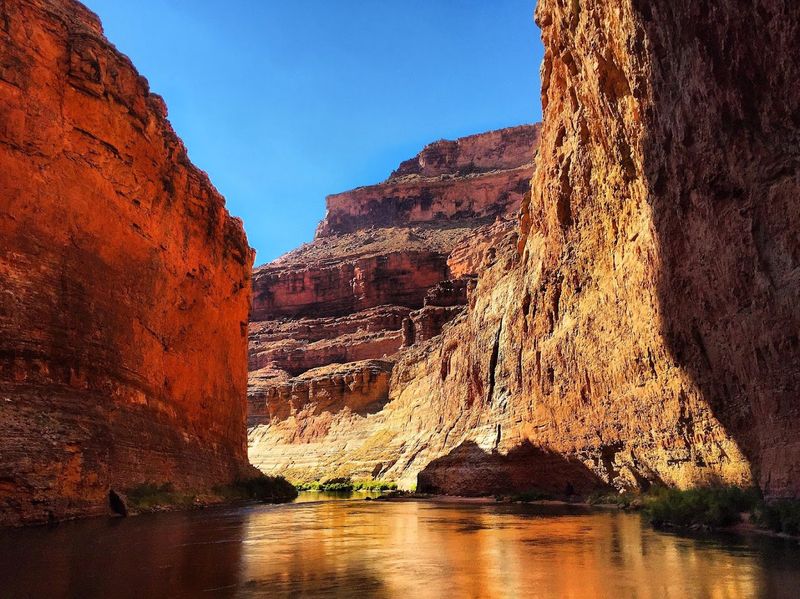
Imagine finding a beach inside a cave carved into a 320-million-year-old limestone wall. That is exactly what waits for you here.
The sandy floor stretches across the entire cavern, soft and fine underfoot. It feels almost surreal to wiggle your toes in cave sand this far from any ocean.
The Colorado River deposited that sand over thousands of years through erosion and sediment flow. The river essentially built its own indoor beach without any human help.
Rafting groups often stop here for lunch, spreading out across the sand in the cool shade. After hours on the water under the Arizona sun, that shade feels like a gift.
The acoustics inside the cavern are surprisingly rich and full. Groups have been known to break into song just to hear the sound bounce off those ancient walls.
Frisbee games and impromptu beach volleyball matches happen regularly on the sandy floor. The space is genuinely large enough to run around without bumping into anyone.
Camping and fires are not permitted inside the cavern, so enjoy it as a daytime stop. The rules help preserve the sand and the space for everyone.
What To Know Before You Go
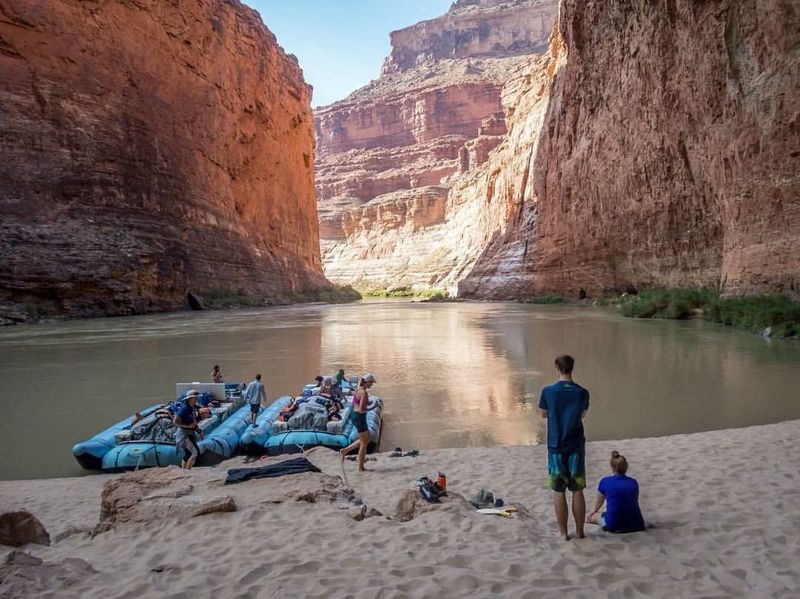
Planning a visit to this spot takes more preparation than most trips. You cannot simply show up with a day pack and a good attitude.
River access through the Grand Canyon requires a permit issued by the National Park Service. These permits are allocated through a weighted lottery system that opens each year in February.
Many visitors choose to book through a licensed commercial outfitter instead of running the river independently. Outfitters handle permits, gear, safety, and logistics, which makes the whole experience much more manageable.
A typical motorized raft trip through the canyon takes about six days. Oar-powered and paddle trips can take two to three weeks depending on the route.
Redwall Cavern does not function like a regular walk-up attraction; most visitors see it as a daylight stop on a permitted or guided river trip. Night visits would require camping nearby, which is managed separately under NPS regulations.
Bring sunscreen, a hat, and water shoes for the landing. The sand is soft but the sun at the canyon floor is intense even in cooler months.
Check the official NPS Grand Canyon website and gorafting.com for current trip planning details. Good preparation turns a great trip into an unforgettable one.
Why This Cave Stays With You Long After
Some places are impressive in the moment and forgotten by Tuesday. This cave is not one of those places.
The combination of ancient geology, physical scale, and complete remoteness creates something that sticks in your memory. You cannot buy a ticket at an airport and fly here; you have to earn it by water.
That effort changes how you experience the space. Every detail feels sharper and more meaningful when you have paddled miles of river to reach it.
The silence inside the cavern is also remarkable. Outside, the river rushes and the canyon wind moves through the walls, but inside, the sound softens into something almost meditative.
Standing under a 100-foot ceiling carved from rock that formed before dinosaurs walked the Earth puts daily life in sharp perspective. Problems feel smaller; the world feels bigger.
Rafters who visit the Grand Canyon consistently name this spot as one of the most memorable stops on the entire journey. That reputation has held for generations of river travelers.
If you ever get the chance to float the Colorado River, do not skip this stop. You will spend years telling people about the day you found a beach inside a cave.