14 Arizona Destinations Perfect For An Unforgettable Adventure
I still think about that first drive through the state. Red rock walls rising out of nowhere, a sky so wide it felt personal, and the gut feeling that something around every bend was worth stopping for.
Arizona does that to you. It grabs your attention before you even know what you are looking at.
The state holds landscapes so different from each other that you will swear you crossed a border somewhere along the way. Desert heat, pine shade, ancient stone, rushing water.
All of it within a few hours of each other. These destinations are not just pretty stops on a map.
They are the kind of places that make you rethink what adventure actually means.
1. Havasupai Falls (Havasupai Tribal Lands)
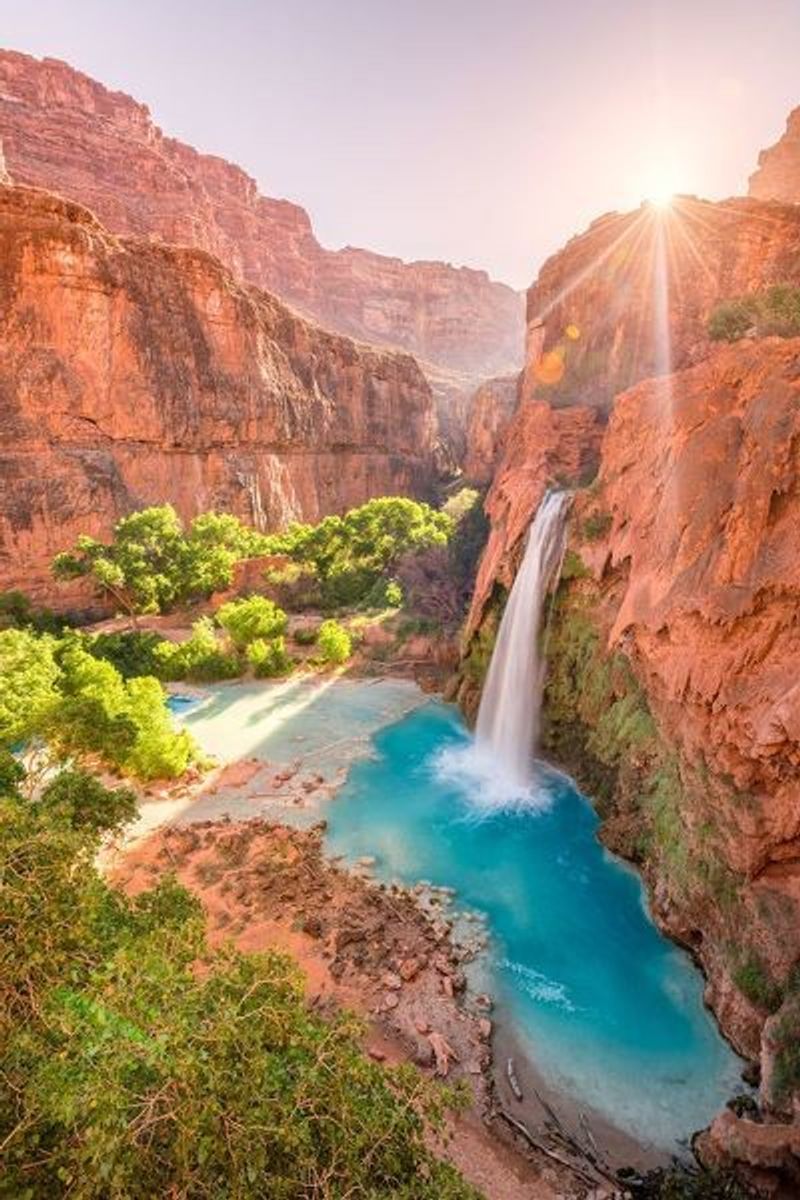
Few waterfalls on earth look this unreal in person. The water at Havasupai Falls runs a vivid turquoise-blue that honestly looks photoshopped until you are standing right next to it.
Getting here takes effort. The trailhead sits at Hualapai Hilltop, about 42 miles north of Route 66, leading to Supai, Arizona.
You hike roughly 8 miles in, and the trail is not exactly a Sunday stroll.
Permits are required and they sell out fast, sometimes within minutes of opening. Book as early as possible, ideally months ahead, or you will be watching other people’s photos online feeling very sorry for yourself.
The Havasupai Tribe manages this land with deep care and respect. Visitors are expected to follow all rules, pack out their trash, and treat the area gently.
Camping near the falls means waking up to canyon walls glowing orange in the morning light. That alone is worth every blister from the hike in.
The swimming holes are cool, refreshing, and genuinely spectacular. This is one of those places that earns every bit of hype it gets.
2. Grand Canyon North Rim
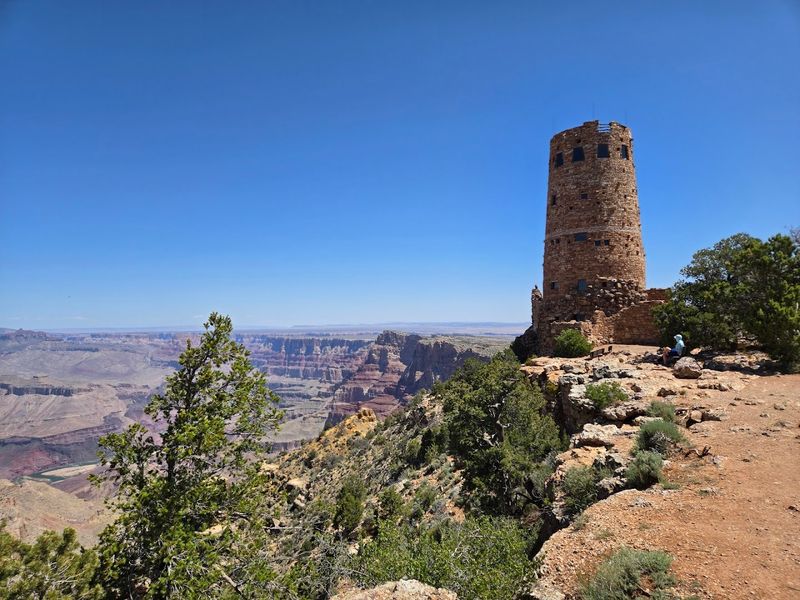
Most people head straight for the South Rim and miss one of the best-kept secrets in the entire park. The North Rim, accessible via AZ-67, North Rim, AZ 86023, sits about 1,000 feet higher and offers dramatically different views.
The extra elevation means cooler temperatures, denser forest, and far fewer crowds. That combination alone makes the drive worth it, especially during peak summer months when the South Rim feels like a theme park.
Trails here include the North Kaibab Trail, which descends all the way to the canyon floor. Even a short walk down rewards hikers with perspectives that simply cannot be seen from the rim lookouts.
The North Rim is only open from mid-May through mid-October due to heavy snowfall. Plan accordingly, because showing up in January means a locked gate and a very long drive back.
Point Imperial is the highest point on the canyon rim and offers a view that genuinely stops conversation. The Bright Angel Point Trail is short, paved, and still jaw-dropping.
This side of the canyon rewards patience and planning with an experience that feels far more personal than the busier south side.
3. Monument Valley
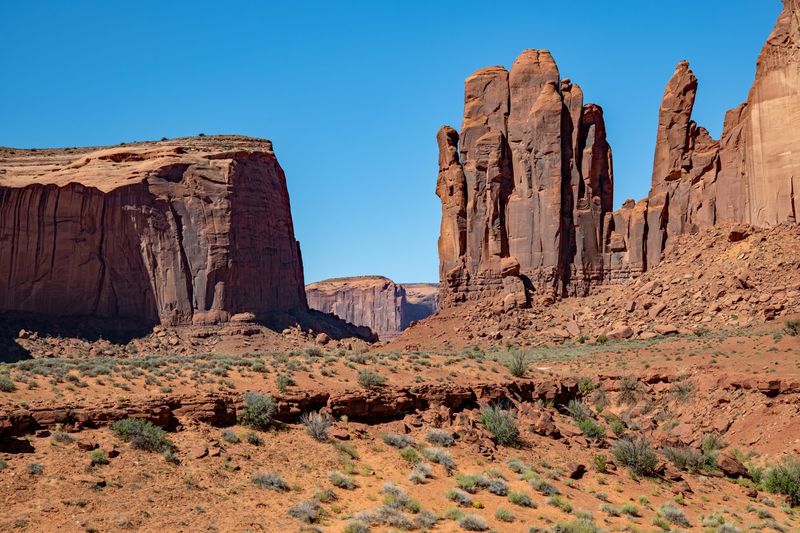
There is a reason this landscape has appeared in more movies than most actors. Monument Valley is visually unlike anything else on the planet, and seeing it in person confirms every bit of that reputation.
Located on Indian Rte 42, Oljato-Monument Valley, AZ 84536, the park sits on Navajo Nation land. Entrance fees apply and guided tours are available, which is the best way to access areas beyond the standard scenic drive.
The famous 17-mile Valley Drive loops past the iconic Mittens and Merrick Butte formations. The road is unpaved and bumpy, but most standard vehicles can handle it at a careful pace.
Sunrise and sunset here are genuinely otherworldly. The sandstone turns every shade of red, orange, and gold as the light shifts, creating scenes that no filter can improve.
Navajo-guided horseback tours take visitors deeper into the valley floor. These tours offer cultural context that transforms the experience from sightseeing into something more meaningful.
The night sky above Monument Valley is extraordinary, with almost zero light pollution making it a prime stargazing destination. Come prepared for both heat and cold depending on the season.
4. Upper Antelope Canyon
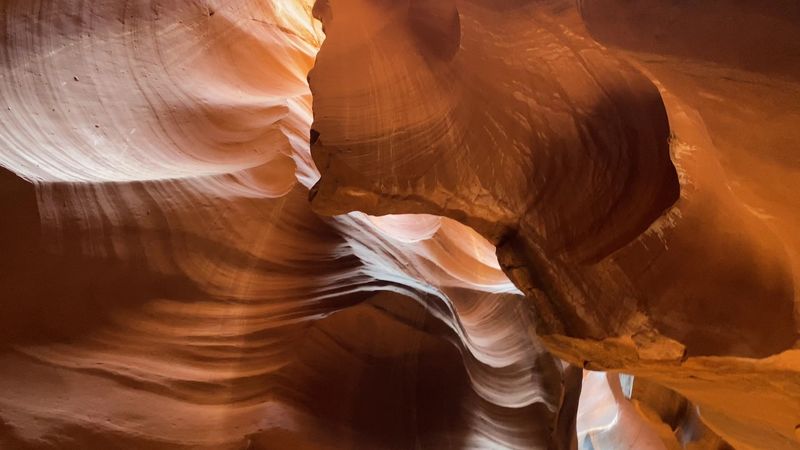
Light does something almost supernatural inside Antelope Canyon. Beams pour through narrow openings in the sandstone ceiling, landing on the curved walls in ways that look completely impossible.
Upper Antelope Canyon is located off Hwy 98, Page, AZ 86040, and access is strictly by guided tour only. No independent entry is permitted, which actually works in visitors’ favor since guides know exactly when and where the best light appears.
Tours typically last about an hour and cover around half a mile of walking through the slot canyon. The passages are narrow in places, so anyone with claustrophobia should know what they are signing up for.
Photography tours are available for those who want more time to capture the perfect shot. Standard tours move at a steady pace, but the photo-focused options allow longer stops at prime spots.
The canyon walls have been shaped by flash flooding over thousands of years. That erosion created the smooth, wave-like forms that make every corner look like a sculpture.
Booking in advance is absolutely necessary, especially during peak spring and summer months when tours sell out weeks ahead. Wear closed-toe shoes and expect sand everywhere.
5. Chiricahua National Monument
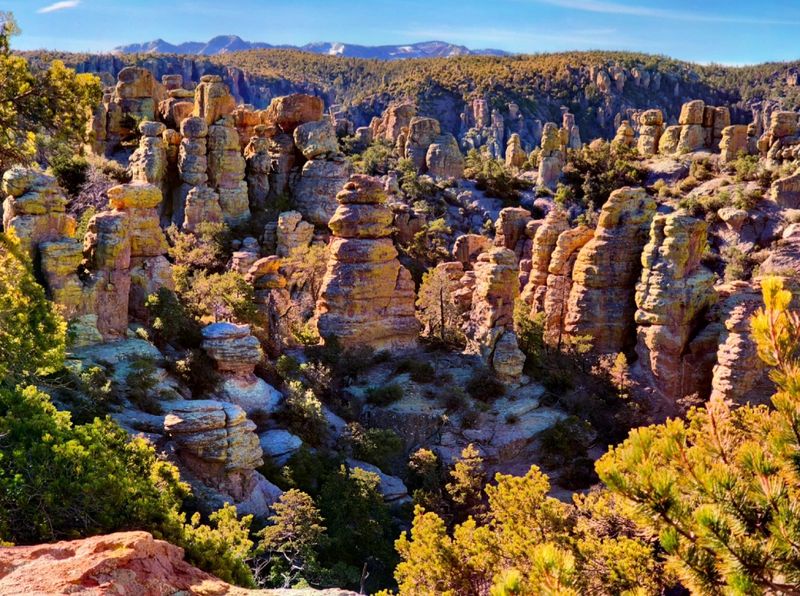
Imagine a forest filled with thousands of stone pillars, balanced rocks, and towering columns that look like they were stacked by a very ambitious giant. That is Chiricahua National Monument, and it earns every bit of your curiosity.
The monument sits at 12856 E Rhyolite Creek Rd, Willcox, AZ 85643, tucked into the far southeastern corner of the state. It is a longer drive from major cities, which is exactly why the crowds stay thin.
The rock formations here are rhyolite, created by a massive volcanic eruption roughly 27 million years ago. Erosion did the rest, carving shapes that range from delicate spires to massive columns standing over 100 feet tall.
The Heart of Rocks Loop trail is around 7 miles and passes some of the most dramatic formations in the park. Shorter trails are available for those who prefer a lighter day.
Wildlife sightings here are surprisingly frequent. White-tailed deer, coatimundis, and a remarkable variety of bird species call this area home.
Birdwatchers consider Chiricahua one of the top spots in the entire country. The combination of geology and wildlife makes this monument genuinely hard to categorize, which is part of its charm.
6. Salt River Tubing
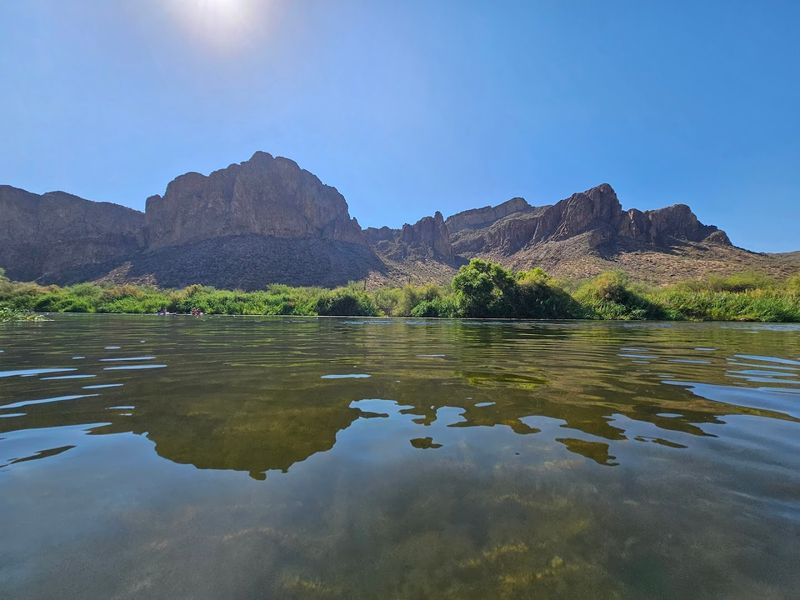
Floating down a river in the middle of the desert while wild horses graze on the banks nearby is a sentence that sounds made up. At the Salt River Recreation Area, it is just a regular Tuesday.
The put-in is at 9200 N Bush Hwy, Mesa, AZ 85215, and the season typically runs from May through September. Tube rentals are available on site, and shuttle service brings floaters back to the starting point.
The float takes anywhere from two to five hours depending on water levels and how many times you stop to stare at the scenery. The river moves gently for most of the route, making it accessible for almost all ages and fitness levels.
Wild horses from the Salt River herd frequently appear along the banks. These are free-roaming horses protected under a local management plan, and spotting them mid-float is genuinely exciting.
The canyon walls rise sharply on both sides of the river, creating a surprisingly dramatic backdrop for what is essentially a very relaxed activity. Bring waterproof sunscreen and a dry bag for your phone.
The sun out here is relentless, and soggy snacks are nobody’s idea of a good time. This is pure desert fun done right.
7. Superstition Wilderness (Peralta Trail)
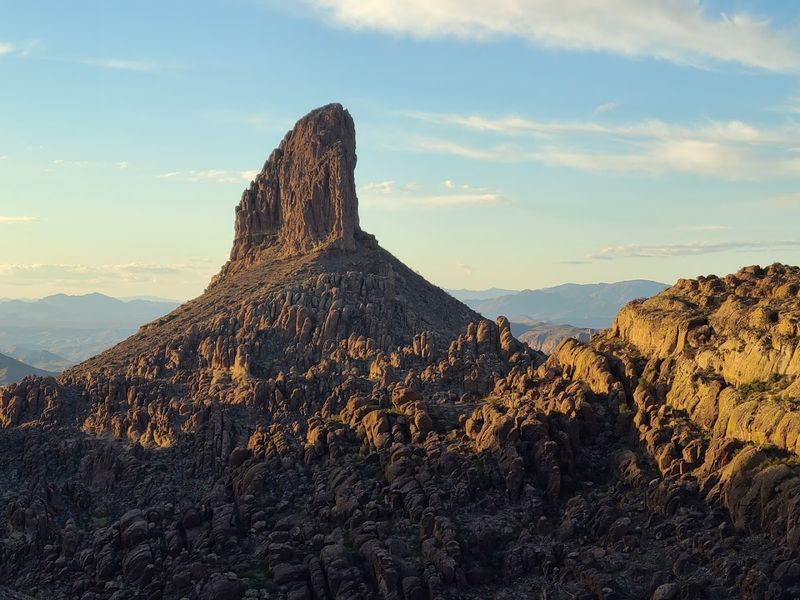
The Superstition Mountains have been fueling treasure hunters, hikers, and storytellers for well over a century. The legend of the Lost Dutchman’s Gold Mine alone gives this wilderness a personality most trails can only dream about.
Peralta Trailhead sits at Peralta Rd, Gold Canyon, Arizona, about an hour east of Phoenix. The road to the trailhead is unpaved but generally passable for standard vehicles with reasonable clearance.
The Peralta Trail covers about 4.5 miles round trip to Fremont Saddle, where the views of Weaver’s Needle are genuinely dramatic. That distinctive volcanic spire has starred in countless legends and looks every bit as imposing in real life.
Spring wildflower season transforms the trail completely. Poppies, lupine, and brittlebush cover the hillsides in colors that make the rocky landscape feel almost tropical by comparison.
The terrain here is volcanic, rugged, and unforgiving in summer heat. Hiking between October and April gives the best experience without risking heat-related issues.
Bring more water than you think you need because the desert has a way of reminding you who is in charge. Wildlife including Gila woodpeckers, mule deer, and javelinas are commonly spotted along the route.
This trail earns its reputation every single time.
8. Devil’s Bridge Trail, Sedona
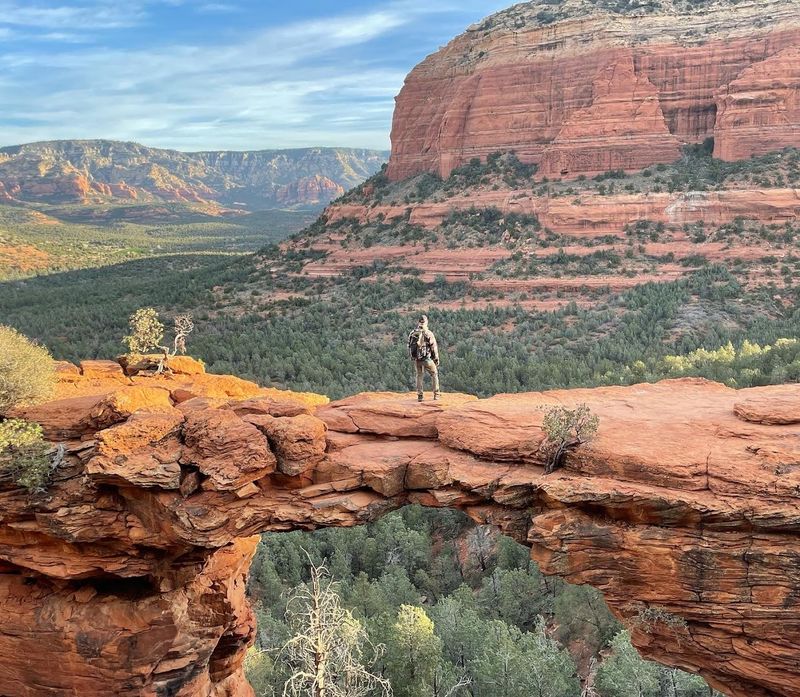
Standing on a narrow sandstone arch with nothing but canyon air beneath your feet is a very specific kind of thrilling. Devil’s Bridge in Sedona delivers exactly that feeling, and then some.
The trailhead is located on 4WD Rd in Sedona, AZ 86336. A standard passenger car can reach the main parking lot, but a high-clearance vehicle gets you closer to the action.
The hike itself runs about 4 miles round trip with around 400 feet of elevation gain. It is manageable for most hikers with decent fitness, though the final scramble to the arch requires careful footing.
The arch is the largest natural sandstone arch in the Sedona area. That fact alone draws photographers, hikers, and adventure seekers from all over the country every single season.
Sunrise visits are genuinely magical here. The red rocks catch the early light in ways that make every photo look like a painting.
Parking fills up fast on weekends, so arriving early is a smart move. Bring enough water because the desert sun does not take days off, even in cooler months.
9. Organ Pipe Cactus National Monument
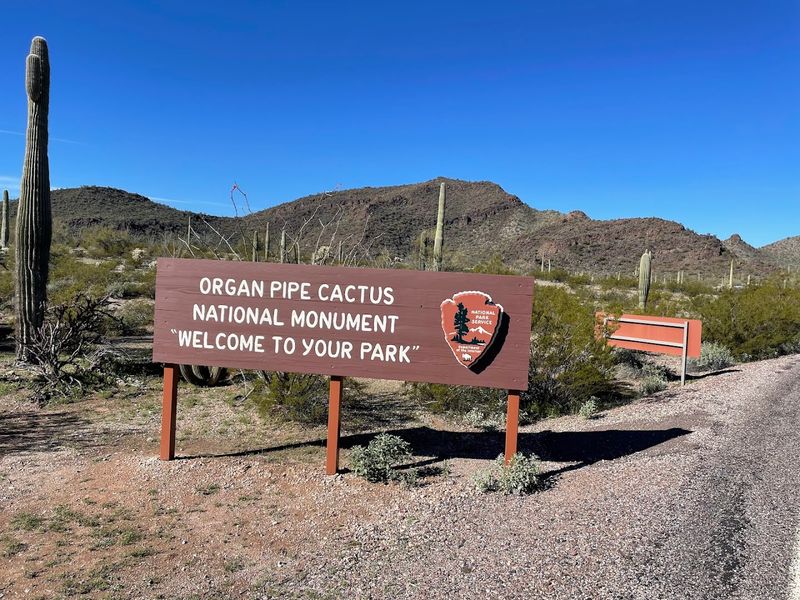
Organ pipe cacti grow in only one place in the entire United States, and that place is remarkable in ways that go well beyond the plants themselves. This monument protects a stretch of Sonoran Desert that feels almost untouched.
The park entrance is at 10 Organ Pipe Dr, Ajo, AZ 85321, in the far southwest corner of the state. It is a remote destination, which is exactly what makes it feel so special once you arrive.
The Ajo Mountain Drive is a 21-mile scenic loop that winds through dramatic desert terrain. Along the route, organ pipe cacti grow in dense clusters on rocky hillsides alongside saguaros, ocotillos, and dozens of other desert species.
The monument is also an International Biosphere Reserve, recognized for its exceptional biodiversity. Over 26 species of cactus grow within the park boundaries, along with hundreds of bird and mammal species.
Night skies here are among the darkest in the entire National Park System. The monument is now certified as an International Dark Sky Park, making it a strong choice for stargazing.
Spring blooms, particularly in March and April, cover the desert floor in color. Visiting at that time feels like catching the desert showing off its best side.
10. Sunset Crater Volcano National Monument
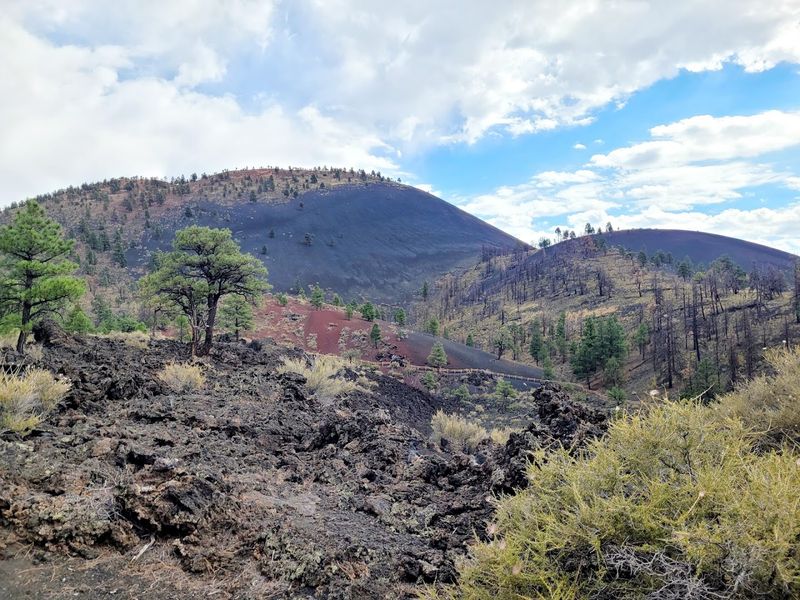
Walking across a field of black volcanic cinders with a 1,000-foot cinder cone rising in front of you is an experience that feels like a different planet. Sunset Crater Volcano last erupted around 1085 AD, and the landscape still looks fresh.
The monument is located at 6082 Sunset Crater Rd, Flagstaff, AZ 86004, just a short drive northeast of the city. The entrance fee is modest, and the scenery starts delivering almost immediately after the gate.
The Lava Flow Trail is a one-mile loop that winds through the volcanic field at the base of the crater. Interpretive signs explain the geology in plain language, which makes the walk educational without feeling like a classroom.
Climbing the crater itself is not permitted, which protects the fragile cinder surface from erosion. The surrounding landscape of lava flows, squeeze-ups, and spatter cones is more than enough to explore.
Sunset Crater sits within the San Francisco Volcanic Field, one of the most geologically active areas in the continental United States. Nearby Wupatki National Monument can be visited on the same day since they share a connecting road.
The combination of volcanic geology and ancient human history in this corridor makes for an exceptionally full day of discovery.
11. Dead Horse Ranch State Park
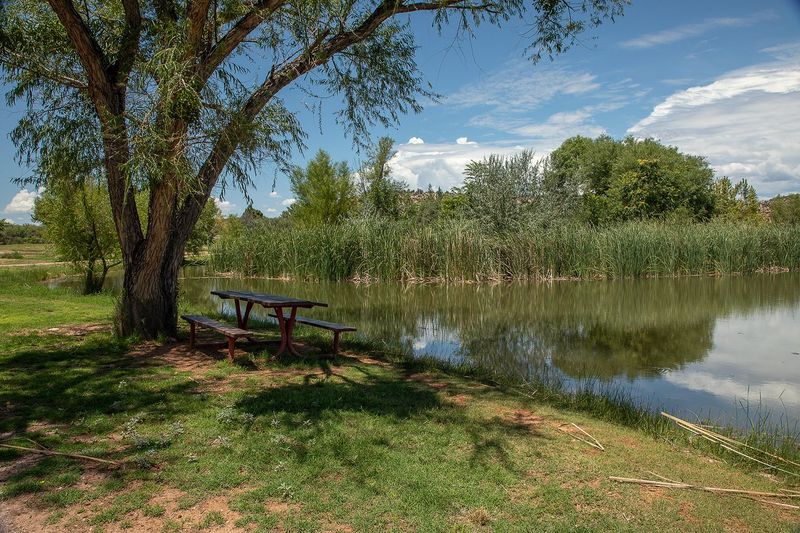
The name raises eyebrows every single time, but Dead Horse Ranch State Park is one of the most pleasant surprises in the entire Verde Valley.
The park is at 675 Dead Horse Ranch Rd, Cottonwood, Arizona, sitting along the Verde River. Cottonwood trees line the riverbanks and create a shaded, cool atmosphere that feels completely different from the surrounding desert.
Fishing is a major draw here, with the lagoons stocked regularly with rainbow trout, largemouth bass, and catfish. The Verde River section of the park also offers excellent wildlife viewing, especially birds.
Over 100 bird species have been recorded in the park. During spring migration, the cottonwood corridor becomes one of the best birding spots in the entire state, drawing serious birders from across the country.
Camping facilities are well-maintained, with sites suitable for tents and RVs. Trails connect to the Verde River Greenway State Natural Area, extending the exploration options significantly.
Mountain biking is popular on the park’s dirt roads and surrounding trails. This park consistently overdelivers on the experience it promises, regardless of its unusual name.
12. Tonto Natural Bridge State Park
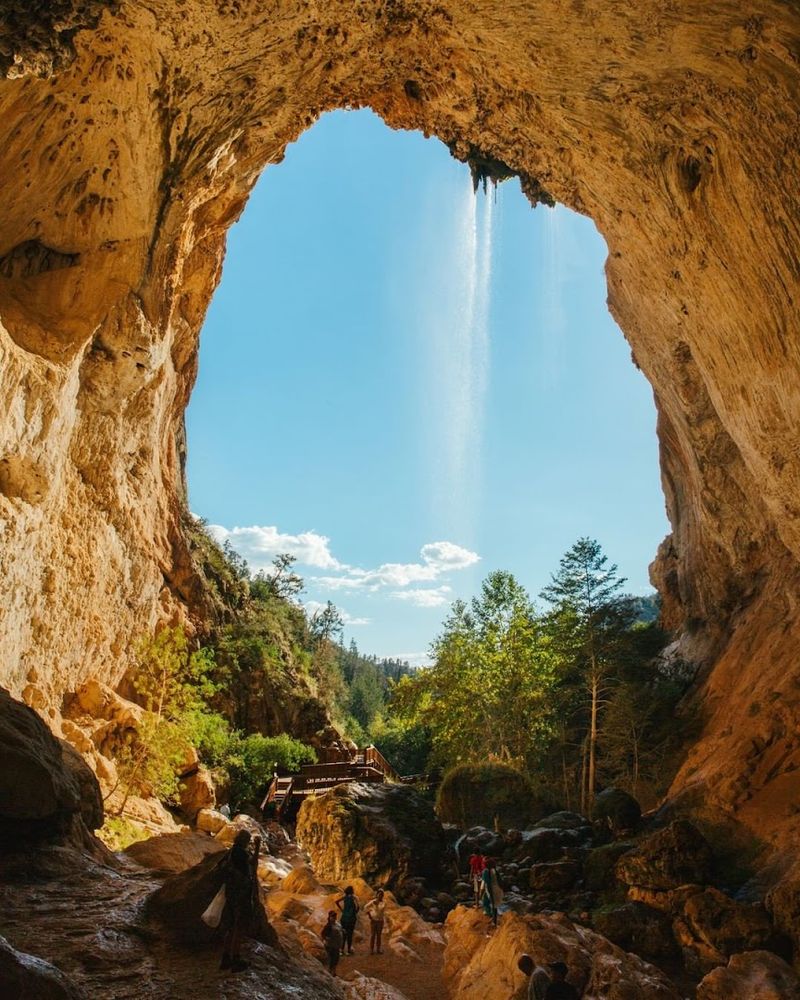
Tonto Natural Bridge is believed to be the largest natural travertine bridge in the world, towering above the creek in a lush canyon setting. The park entrance is at 11 N Tonto Natural Bridge Rd, Payson, AZ 85541, about 10 miles north of Payson.
The access road is steep and narrow, requiring vehicles under 22 feet in length for safe navigation.
Three trails lead down to different viewpoints and access points around the bridge. The Pine Creek Trail is the most adventurous, requiring some scrambling over wet rocks to reach the water beneath the arch.
The creek that flows through and under the bridge is crystal clear and surprisingly cold even in summer. Swimming is permitted in designated areas, making this one of the more refreshing stops in the region during warm months.
Travertine formations here were created by calcium carbonate deposits from mineral-rich spring water over thousands of years. The result is a smooth, cream-colored rock surface that contrasts beautifully with the green creek and surrounding forest.
The park is small but genuinely impressive, offering a rare combination of geology, water, and lush canyon scenery in a compact and accessible setting.
13. Lake Pleasant Regional Park
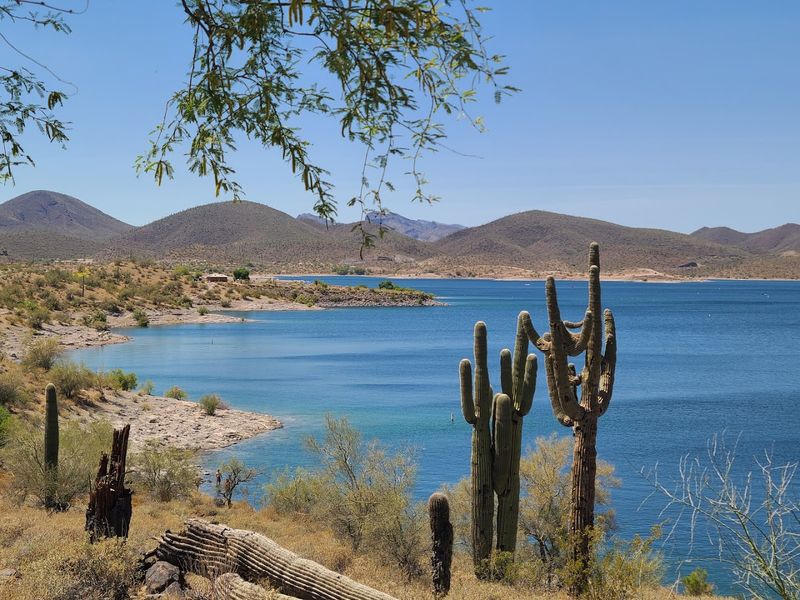
A reservoir surrounded by saguaro-studded hills with enough open water for kayaking, sailing, and powerboating sounds almost too good to be a real place. Lake Pleasant makes that combination work effortlessly.
The park entrance is at 41835 N Castle Hot Springs Rd, Morristown, AZ 85342, roughly 30 miles north of central Phoenix. The proximity to the metro area makes it an easy same-day escape without requiring an overnight trip.
Lake Pleasant covers over 10,000 surface acres when full, providing plenty of room for all types of watercraft. Kayak and paddleboard rentals are available at the marina, making it accessible even without your own gear.
Fishing is excellent here, with striped bass, largemouth bass, and crappie all present in good numbers. Anglers regularly report strong catches, particularly during cooler morning hours in spring and fall.
The surrounding desert landscape creates a visual contrast with the water that is genuinely striking. Saguaro cacti line the rocky coves, and the reflections on calm mornings are worth photographing.
Camping is available both on land and on the water via boat-in sites, which offer a genuinely unique overnight experience. Bald eagles and osprey are frequently spotted hunting over the lake during winter months, adding a wildlife dimension to every visit.
14. Wupatki National Monument
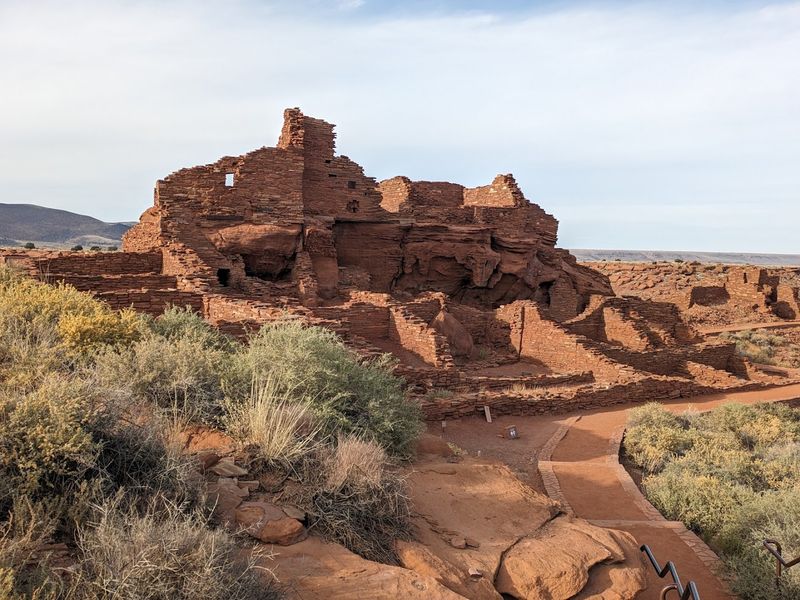
Ancient people built a thriving community here over 900 years ago, and the ruins they left behind are remarkably well-preserved. Wupatki National Monument tells a human story that stretches back centuries and still resonates today.
The monument is located at 25137 N Wupatki Loop Rd, Flagstaff, AZ 86004, sharing a scenic road with Sunset Crater Volcano. Visiting both in a single day is genuinely rewarding and makes the most of the drive out.
The Wupatki Pueblo, the largest structure in the monument, once held over 100 rooms and may have housed up to 100 people at its peak. A short paved loop trail circles the pueblo with interpretive signs explaining the history.
A natural blowhole near the main pueblo pulls air in or pushes it out depending on atmospheric pressure. Visitors can feel the air movement and learn how ancient residents may have used this geological feature.
The landscape surrounding the ruins is open, expansive, and almost meditative in its quiet. The Painted Desert stretches toward the horizon, and the red sandstone ruins glow warmly in afternoon light.
Several smaller pueblo sites are scattered along the monument road, each worth a short stop. This is history presented without barriers, which makes it feel immediate and real in a way that few historical sites manage.