This North Carolina Veterans Park Turns A Quiet Walk Into A Powerful Statewide Tribute
Gratitude feels different when it has a place to stand.
This Fayetteville memorial park gives that feeling room to settle, turning an ordinary walk into something quieter and far more powerful.
Opened on July 4, 2011, it honors North Carolina veterans with a tenderness that does not need grand speeches to be understood.
The meaning builds slowly as visitors move through the grounds, because every detail points back to real people, real service, and lives connected to every corner of the state.
Nothing here feels performative.
The beauty stays steady, the silence feels intentional, and the whole visit asks for attention in the gentlest way.
People may arrive expecting a landmark.
They leave carrying a deeper kind of respect.
A Quiet Walk Starts Feeling Bigger Than Expected
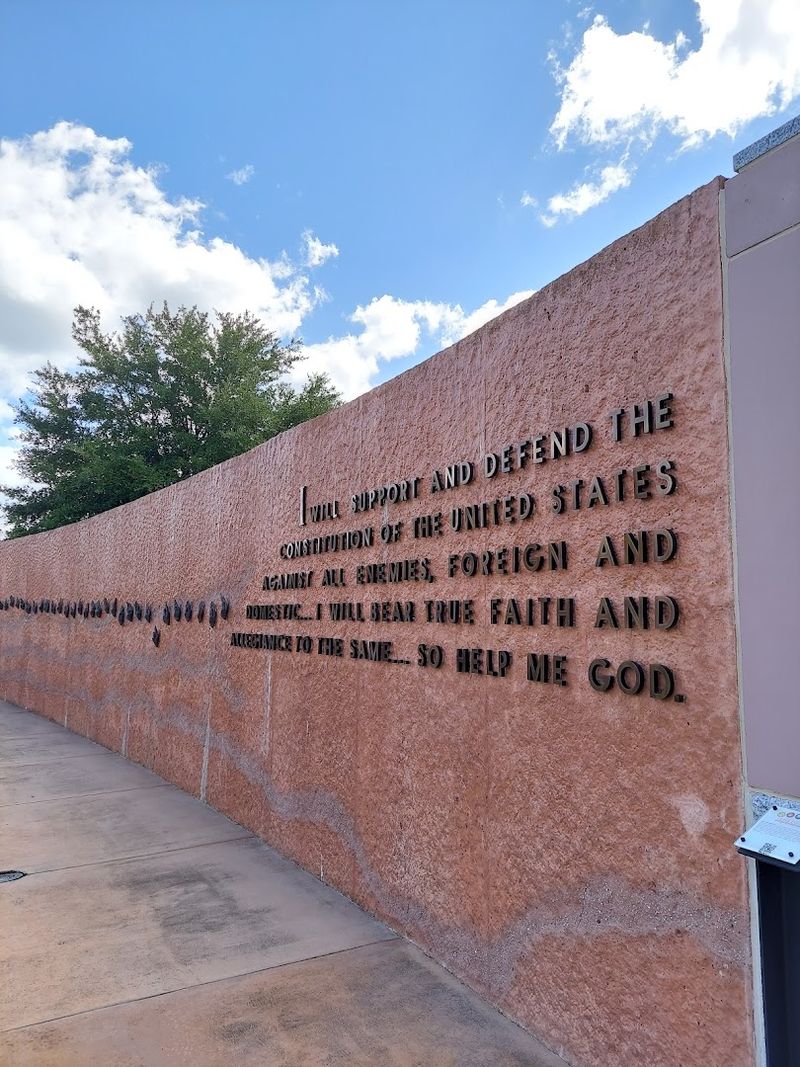
Quiet hits first at North Carolina Veterans Park, but it does not stay simple for long. The pathways guide visitors through a carefully designed landscape where water, stone, sculpture, open lawn, and symbolic details all work together.
Nothing feels random. Every turn adds another layer to the experience, from public art to spaces meant for reflection.
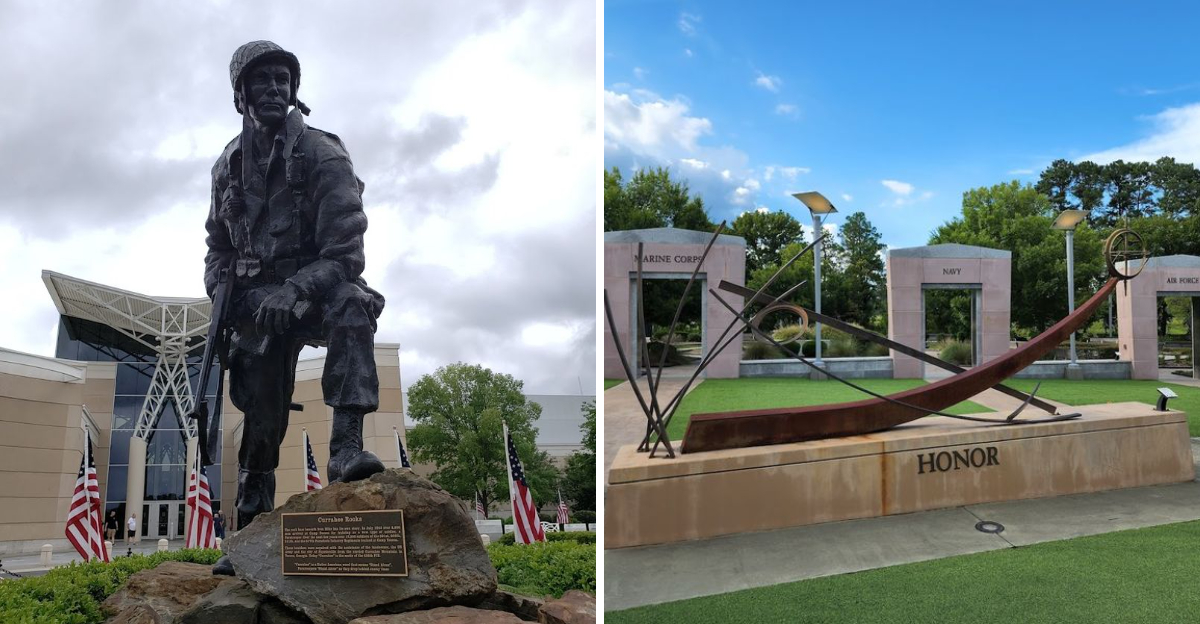
The park’s address is 300 Bragg Boulevard, Fayetteville, North Carolina 28301, placing it close to downtown and beside the Airborne and Special Operations Museum. That location gives the visit even more weight, especially in a city with such deep military connections.
Smooth walkways make the grounds approachable for many ages and mobility levels, while the open layout gives people room to move slowly without feeling crowded. A person can come for a short stop and still leave feeling affected by the place.
The park does not overwhelm visitors with noise or spectacle. It invites attention through pacing and design.
Each feature seems to ask for one more moment. By the time the walk ends, the visit feels less like passing through a park and more like moving through a statewide thank-you.
This Fayetteville Park Honors Veterans Across The State
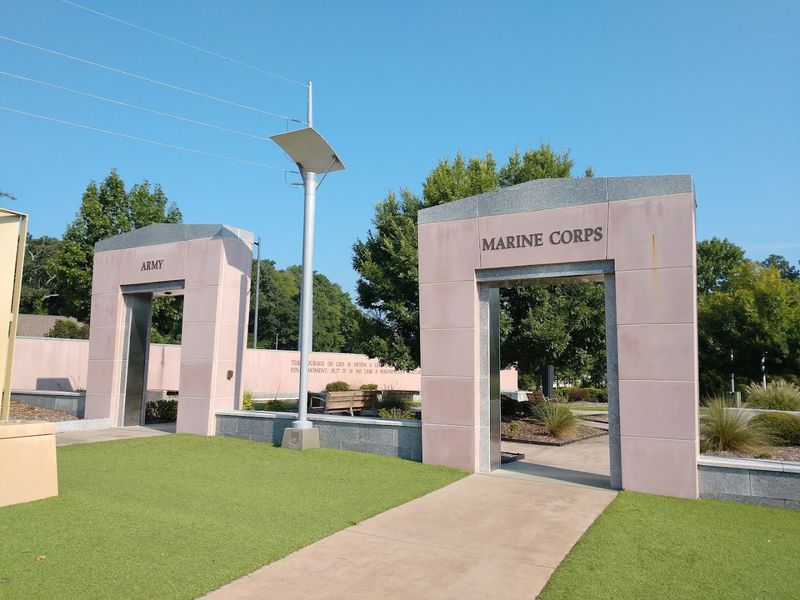
Fayetteville gives this tribute a fitting home. The city’s military identity is closely tied to nearby Fort Bragg, and that connection helps explain why North Carolina Veterans Park feels so natural here.
The memorial honors veterans from all branches of the armed services: Army, Navy, Marine Corps, Air Force, and Coast Guard. That all-branches focus matters because the park is not built around one conflict, one unit, or one narrow story.
It recognizes the broad sweep of service by North Carolinians across generations. Free admission keeps the space accessible to families, students, travelers, veterans, and anyone who wants to pay respects without a barrier at the gate.
The official park hours are 8 a.m. to dusk, which gives visitors flexibility for a quiet morning walk or a late-day moment of reflection. Fayetteville’s downtown location also makes it easy to pair the park with nearby museums, restaurants, or other historic stops.
Still, the memorial itself deserves unhurried attention. Its purpose is larger than sightseeing.
Each sculpture, wall, pathway, and gathering space helps build a tribute that belongs not only to Fayetteville, but to communities across North Carolina.
The Visitor Center Adds Stories Behind The Stillness
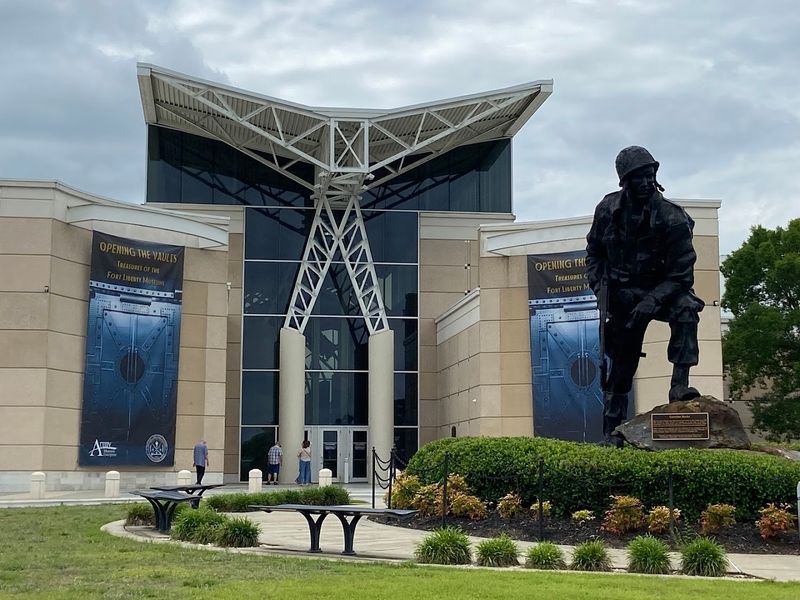
Indoor exhibits give the outdoor quiet more context. The Visitor Center at North Carolina Veterans Park helps visitors understand the symbolism spread across the grounds and gives military history a more personal shape.
Displays highlight service, sacrifice, and the experiences of veterans, offering useful background before or after a walk through the memorial spaces.
The building’s design continues the park’s larger theme of reflection, but it also adds education, which makes the stop especially helpful for families and school groups.
A visitor who begins outside may feel the emotional weight first. Stepping inside helps explain why the details matter.
The center has hosted exhibits connected to military heritage and offers information that deepens the meaning of the sculptures, soil features, and county-focused tributes outdoors.
Volunteers and staff can also help answer questions when available, making the experience feel more connected than a self-guided walk alone.
For younger visitors, the Visitor Center can turn abstract ideas like service, duty, and sacrifice into something easier to understand. For adults, it adds names, context, and structure to what the park expresses visually.
The stillness outside may move you, but the Visitor Center helps you understand what that stillness is holding.
Every County Has A Place In The Tribute
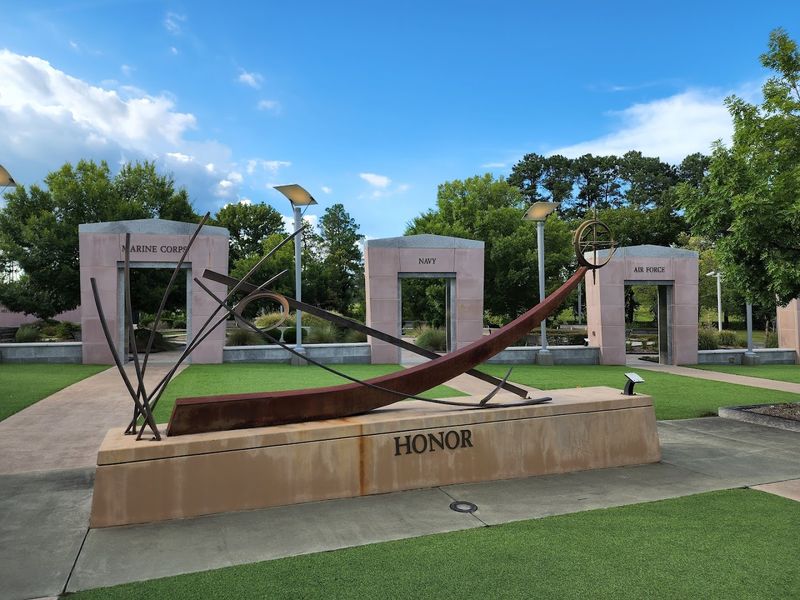
Statewide remembrance becomes physical at the Soils Wall. Soil from all 100 counties was included in the park’s design, giving every part of the state a place in the tribute.
That detail is easy to miss if you rush, but it may be one of the park’s most powerful ideas. Veterans do not come from one city, one base, or one kind of community.
They come from mountain towns, coastal counties, farms, suburbs, cities, and crossroads that rarely make headlines. Bringing soil from every county turns the memorial into a shared state offering.
It says the whole state is present here, not just in name but in material form.
Other features also recognize veterans and communities from across the state, including cast hands tied to county representation and symbolic installations that connect individual service to collective memory.
Standing near these elements makes the scale of the tribute clearer. A single county can hold hundreds of stories.
One state can hold thousands. The Soils Wall gives visitors a way to feel that reach without needing a long explanation.
The state’s geography becomes part of the memorial, and the ground itself helps carry the thank-you.
Art And Architecture Give The Park Its Meaning
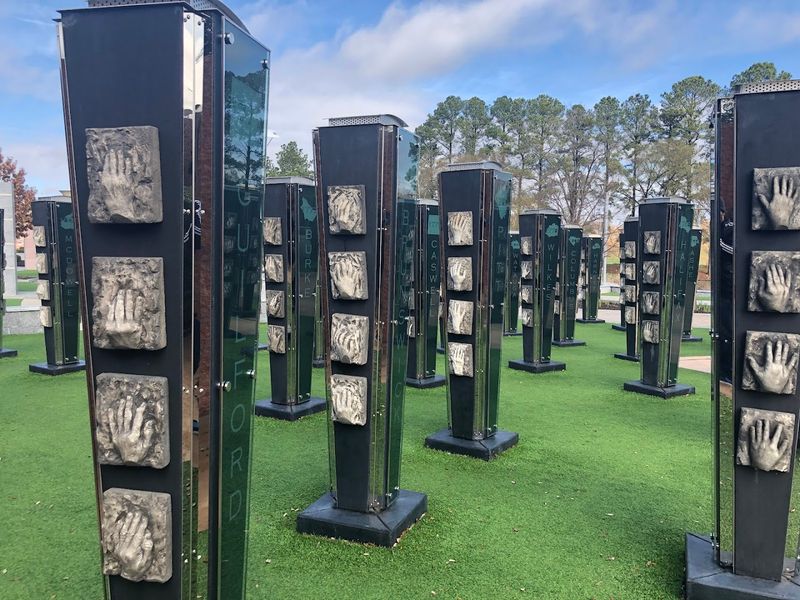
Art does much of the emotional work here. North Carolina Veterans Park uses sculpture, water, granite, glass, metal, and open space to express ideas that would sound too heavy if written only on plaques.
The Pride and Purpose Tower rises about 35 feet and stands as one of the park’s most visible features, built from stainless steel and granite with a clean, upward pull. Around the grounds, public art represents courage, service, sacrifice, commitment, strength, and healing.
Recycled military materials and cast hands add human texture to the design, making the tribute feel both symbolic and personal. These pieces do not ask visitors to decode every detail instantly.
They reward slow looking. A hand gesture, a line of stone, a fountain, or a wall can mean more after several minutes than it did at first glance.
The architecture also helps manage the mood of the visit. Open areas prevent the park from feeling closed in, while reflective features create natural pauses.
Every element seems designed to keep the experience dignified without becoming distant. The result is a memorial that speaks through form as much as language, giving visitors space to feel before they try to explain.
You Notice New Details With Each Turn
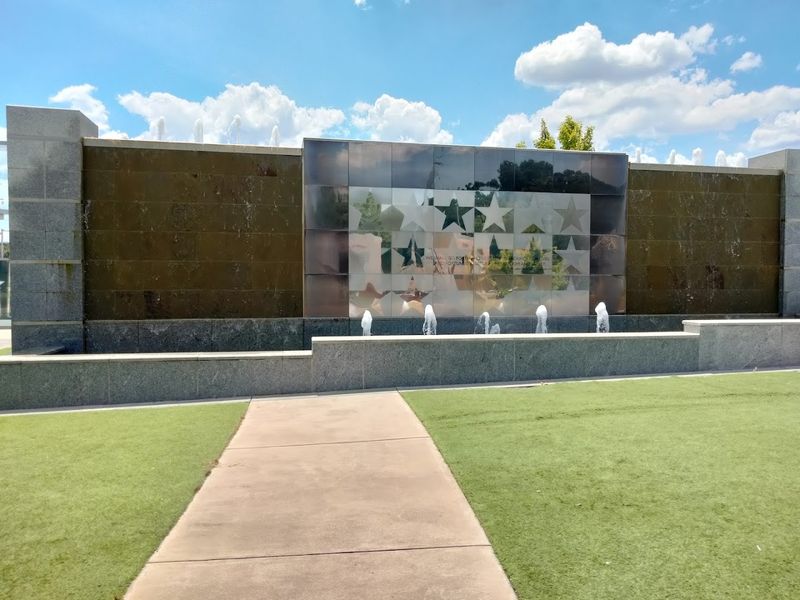
Layered design keeps the park from revealing itself all at once. A first walk may focus on the largest features, but smaller details begin appearing once the pace slows.
Inscriptions, textures, hand casts, county references, water features, and carefully placed views all create moments that are easy to miss during a quick pass. That is why repeat visits can feel different.
One day, the Soils Wall may stand out. Another day, a sculpture or reflection pool may hold attention longer.
The Story Garden and Community Lawn add another dimension by blending public space with personal memory. The park is meant for quiet reflection, but it also functions as a gathering place for ceremonies, education, and community remembrance.
That balance gives the site a living quality. It is not a frozen monument that only points backward.
It continues to serve people in the present. Visitors who bring a camera should still take time to look without one.
Some of the park’s strongest moments happen in the small spaces between major features. A sound of water, a name, a gesture, or a shadow across stone can make the tribute feel suddenly personal.
Details here are not decoration. They are part of the message.
The Setting Makes Reflection Feel Natural
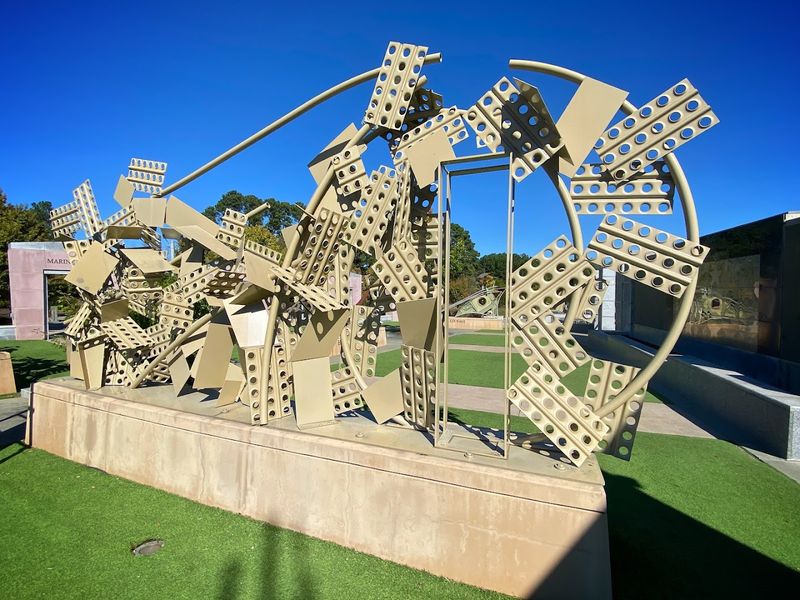
Design can either force emotion or make room for it. North Carolina Veterans Park chooses the second path.
Water features, lawns, benches, paved walkways, and open gathering areas create a setting where reflection feels natural instead of staged. Visitors can sit quietly, walk alone, bring family members, attend a ceremony, or simply pass through with attention.
The space adapts to different reasons for visiting, which is important for a memorial connected to such personal stories. Someone may arrive to honor a relative.
Another person may come with a class. A veteran may visit for reasons they never explain.
The park gives each visitor enough room to respond privately. Its location near downtown Fayetteville keeps it accessible, yet the grounds feel separated from ordinary noise once the walk begins.
Water softens the atmosphere. Open sky gives the memorial breathing room.
Carefully maintained paths make movement easy, allowing the emotional weight to build gradually rather than all at once. That restraint is one of the park’s strengths.
It does not tell visitors exactly what to feel. It offers a respectful place where memory, gratitude, grief, pride, and learning can meet without competing.
This Statewide Tribute Leaves A Lasting Pause
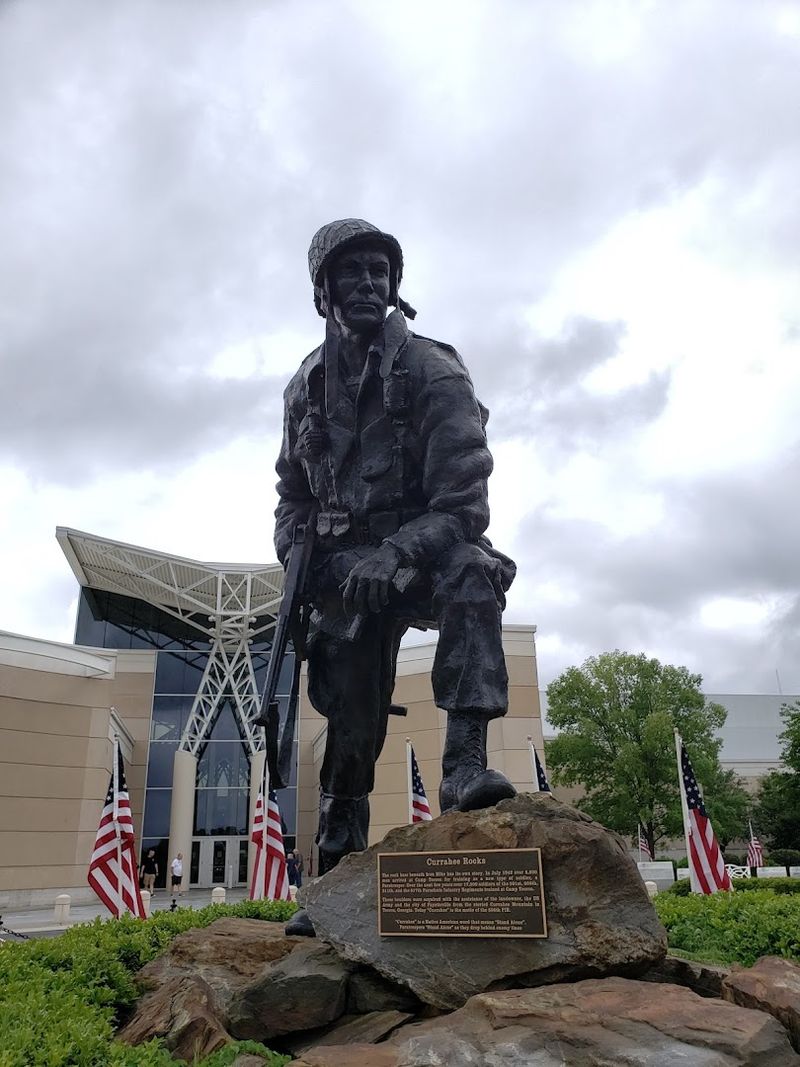
Leaving North Carolina Veterans Park rarely feels like walking away from an ordinary attraction. The visit tends to linger because the memorial combines personal stories with statewide symbolism.
Soil from every county, tribute features representing veterans across North Carolina, public art, water, architecture, and educational exhibits all point toward the same message: service deserves memory.
The park was designed around a veteran’s journey before, during, and after service, along with ideas of healing and renewal.
Those themes give the space an emotional arc instead of a scattered collection of monuments. A visitor may not notice that structure immediately, but it shapes the experience.
The walk begins quietly, gathers meaning, then leaves behind a pause that can follow you into the rest of the day. Free admission also means returning is easy, and many people may find the park worth visiting more than once.
Different seasons, different light, and different personal circumstances can change how the space feels. Fayetteville has many military-related landmarks, but this one stands apart because it turns gratitude into a place people can physically move through.
A visit here does not just remind you that veterans served. It asks you to carry that knowledge with more care.