These 11 California Landmarks Were Built From Eccentric Personal Obsessions
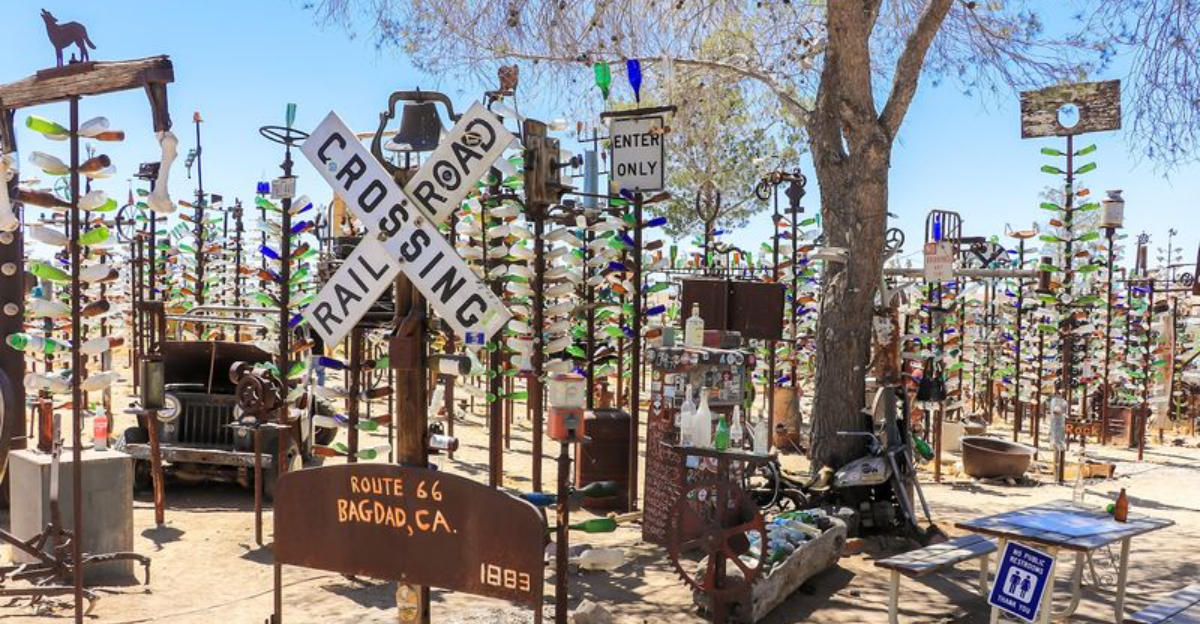
Eccentric landmarks usually start with one person taking an idea way too far. That is what makes them great.
A normal plan becomes a tower. A private dream becomes a castle.
California has always had room for people who looked at empty land or a wild personal vision and thought, “Yes, this should exist.”
Sometimes the results are beautiful. Other times they are bizarre. Often, they are both.
These places were not built by committee thinking.
They came from obsession, imagination, ambition, faith, or the very human need to leave something unusual behind.
That gives each landmark a different kind of pull.
You are not just looking at stone, wood, glass, or metal. You are looking at someone’s fixation made public.
Eleven landmarks prove the strangest ideas can become the stops people remember most.
1. Watts Towers
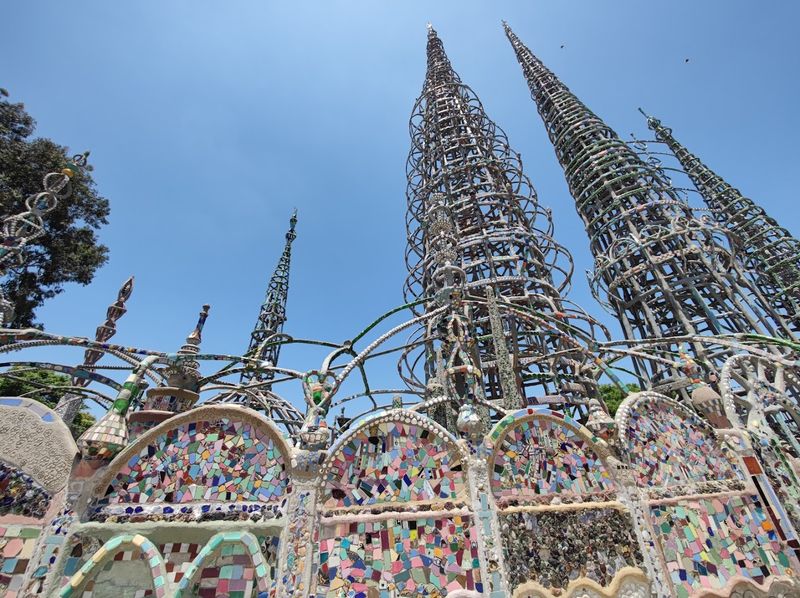
Patience feels visible here because every surface shows the slow rhythm of work done by hand over many years.
The Watts Towers Arts Center campus stands at 1765 E 107th St, Los Angeles, CA 90002.
Slender spires rise above the neighborhood with a mix of steel, cement, tile, glass, and shells that catches changing light in a way that feels both fragile and determined.
Walking the site tends to be calm rather than rushed because the details reward slow looking more than fast photos.
Curves, embedded objects, and repeating patterns keep pulling attention closer, and the scale becomes more surprising from ground level than it appears in pictures.
Guided access rules and hours can vary, so checking the current visiting information before heading out is practical. What lingers most is the sense of persistence built into the structure itself.
Nothing about the towers feels polished in a conventional way, yet the handworked surfaces create warmth that many formal monuments lack.
For travelers interested in outsider art, neighborhood history, or unusual architecture, this stop offers a grounded and deeply human kind of wonder.
2. Salvation Mountain
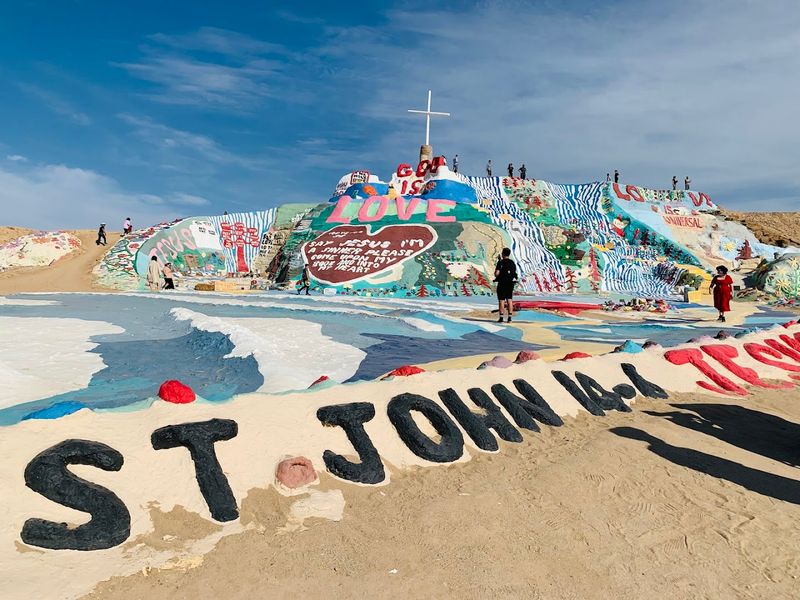
Color arrives long before the parking area, and the desert setting makes the painted hill look even more improbable.
Layers of adobe, hay, and paint cover the mound in bright stripes, flowers, hearts, and messages that feel handmade rather than polished.
Heat and sun shape the visit as much as the artwork does, so water, shade planning, and sensible timing matter here.
Morning light usually makes the colors feel softer, while midday can be intense and unforgiving across the open ground.
Paths are simple and the atmosphere often feels informal, though conditions and access guidance should always be checked before arrival.
What stands out most is not size alone but commitment made visible through maintenance and repetition.
The surface has a textured look that reminds visitors the landmark was built from modest materials, not from permanent stone.
Anyone drawn to roadside Americana, desert art, or places that openly reveal the labor behind them will likely find this stop memorable for all the right reasons.
3. Forestiere Underground Gardens
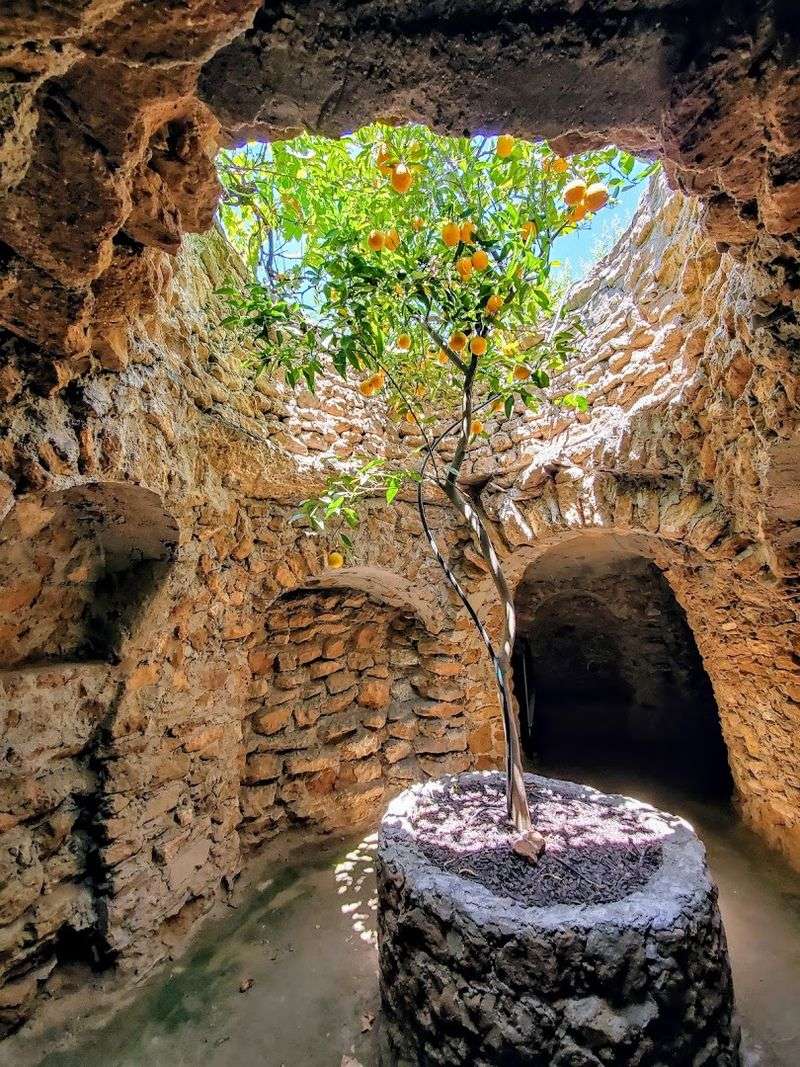
Relief from valley heat becomes part of the story the moment the tour moves below ground.
Hand-built rooms, passageways, courtyards, and planted spaces create an underground environment that feels unexpectedly airy because shafts of light and open skylights break up the enclosed spaces.
The experience is usually structured through guided tours, which helps visitors understand the layout and the practical thinking behind it.
Temperatures below ground often feel cooler than the surrounding air, and that contrast shapes the pace in a very welcome way.
Tight passages and stair conditions are worth considering ahead of time because accessibility may vary across the historic site.
What makes the gardens memorable is their balance of utility and imagination.
Stone surfaces, filtered daylight, and carefully arranged fruit trees give the place a lived-in quality rather than a staged museum atmosphere.
Travelers who enjoy unusual engineering, vernacular design, or attractions that reveal how one determined vision can reshape a harsh environment will probably leave with a stronger appreciation for quiet persistence.
4. Winchester Mystery House
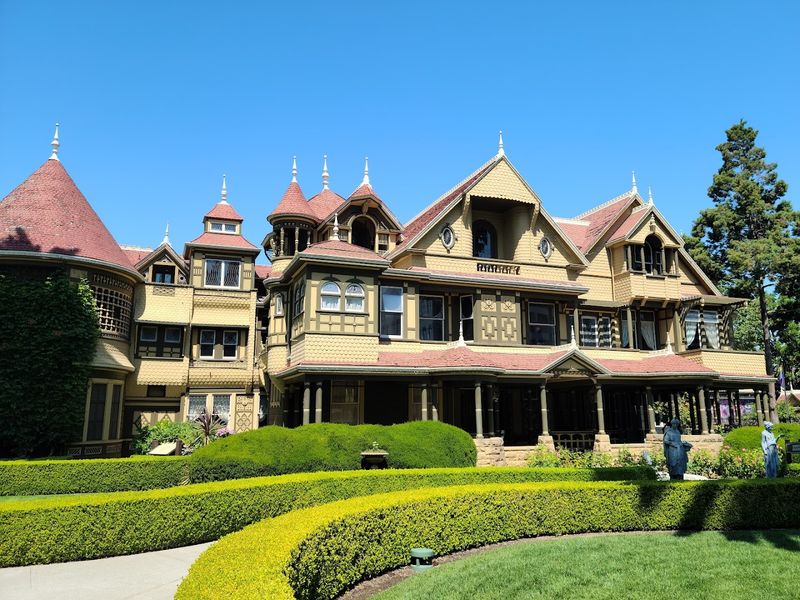
Few houses create such an immediate sense of curiosity before anyone even steps inside. The Winchester Mystery House stands at 525 S Winchester Blvd, San Jose, CA 95128.
Its sprawling layout, Victorian details, and famously unusual design choices make the mansion feel less like a single home and more like a maze shaped by decades of additions and remodeling.
Tours usually set the pace here, and that structure helps visitors notice the odd transitions between rooms, stairs, and doors.
Interior spaces can feel dim, narrow, or unexpectedly grand from one moment to the next, which adds to the house’s strange rhythm without needing exaggeration.
Weekends often feel busier than weekdays, so quieter visits may be easier to plan earlier in the day or on less crowded dates.
The most interesting part is how the house combines craftsmanship with restlessness.
Decorative woodwork, patterned windows, and shifting floor plans keep the eye busy, while the constant changes in scale make the visit feel surprisingly physical.
For travelers interested in architectural quirks, historical storytelling, and landmarks shaped by obsession rather than symmetry, this remains one of California’s most distinctive public tours.
5. Cabot’s Pueblo Museum
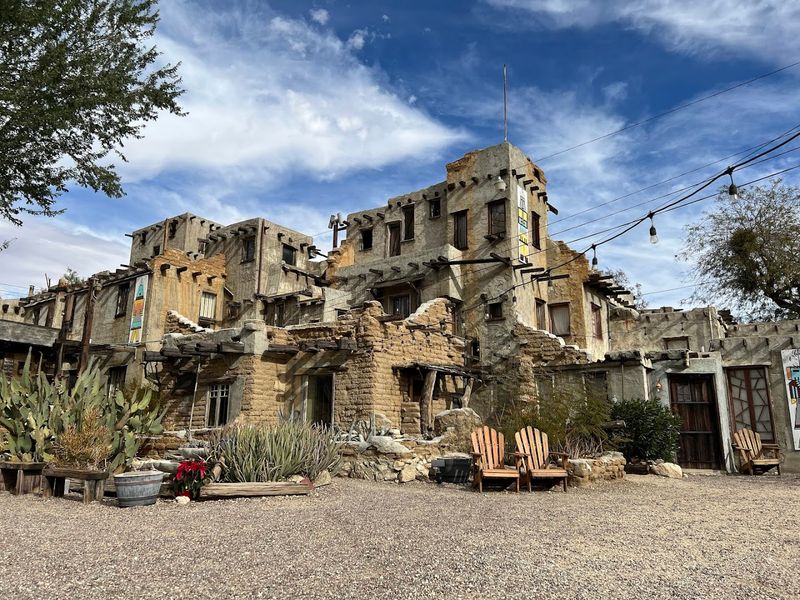
Desert light brings out the rough texture of this multiroom pueblo, located at 67616 Desert View Ave, Desert Hot Springs, CA 92240, in a way that immediately feels intimate and handmade.
Built from reclaimed materials in a Hopi-inspired style, the structure has a patchwork character that shows up in wood, stone, windows, and irregular edges.
Guided access is often the best way to experience the interior because the spaces connect through a maze of rooms and small transitions.
The scale feels personal rather than monumental, and that makes the handmade ambition easier to appreciate up close.
Current hours, tour availability, and seasonal changes should be checked before visiting because operations can shift.
What stays with visitors is the sense that nearly every corner was solved through improvisation.
Narrow passages, varied ceiling heights, and changing light levels give the museum a lived texture that polished attractions rarely have.
Those interested in folk building traditions or desert landmarks that reveal a single vision through thousands of practical choices will likely find this stop both approachable and quietly absorbing.
6. The Integratron
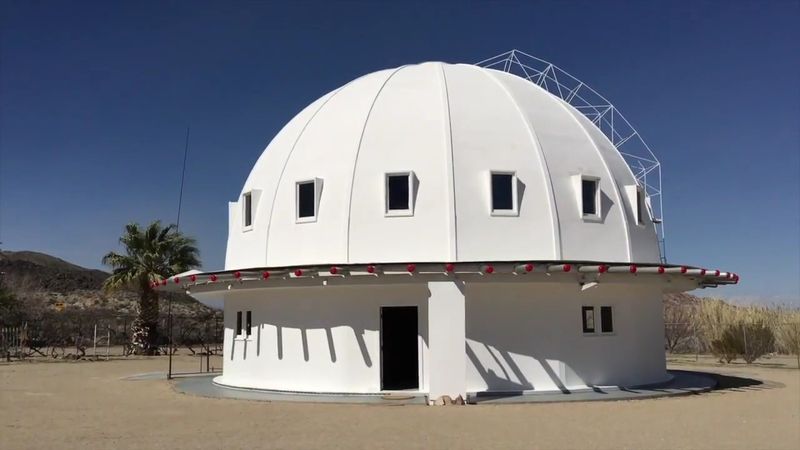
A smooth white dome rising from the desert can feel almost unreal until the details come into view.
Built entirely of wood and shaped by a mix of unconventional ideas about energy, sound, and sacred geometry, the structure looks simple from outside but carries a very specific identity.
Visits are often centered on scheduled sound baths or guided experiences, so advance planning matters more here than at a casual roadside stop.
The interior tends to feel hushed, rounded, and acoustically distinct, with a calm atmosphere that encourages slower movement and lower voices.
Temperatures, availability, and booking requirements can vary, especially on weekends and during busy desert travel seasons.
What makes the dome memorable is how clearly it reflects one focused worldview without trying to explain everything away.
The clean shape, wood construction, and isolated setting create a mood that is both practical and unusual. Travelers drawn to California oddities or destinations where belief and design overlap in visible ways will probably find the Integratron one of the state’s most singular experiences.
7. Elmer’s Bottle Tree Ranch
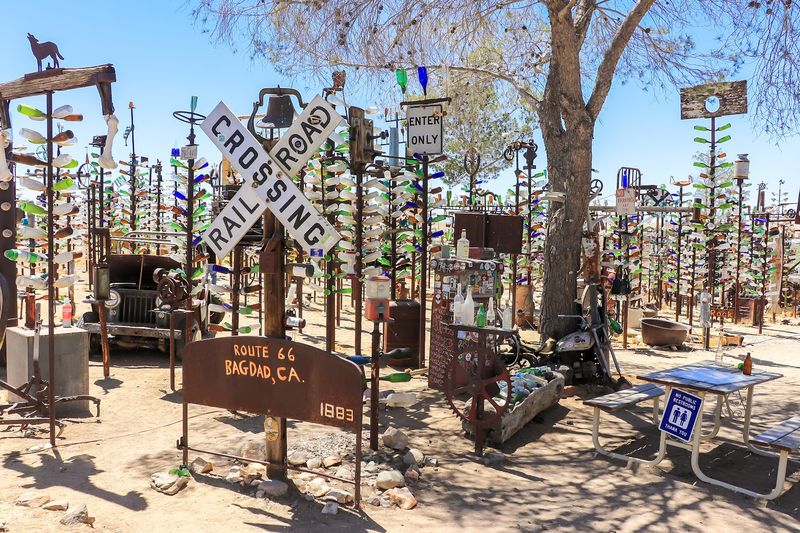
Wind, light, and glass do a surprising amount of the work at this playful roadside art site.
Metal trunks and branches hold bottles, signs, tools, and salvaged objects that sparkle and clink softly when conditions are right.
The setting along old Route 66 gives the visit an easygoing feel, and many people stop for a short wander rather than a long stay.
Late afternoon often brings warmer light that makes the colored glass stand out more vividly, though brightness changes with weather and season.
Ground conditions are simple and open, so sun exposure and basic comfort planning matter more than formal logistics. What makes the ranch work so well is its balance of humor and craft.
From a distance the grove looks whimsical, but closer inspection reveals careful arrangement and a strong eye for repetition, contrast, and movement.
Travelers who enjoy roadside Americana, found-object creativity, and places that turn discarded materials into something unexpectedly cheerful will probably leave with a lighter mood and a camera full of glinting detail.
8. Grandma Prisbrey’s Bottle Village
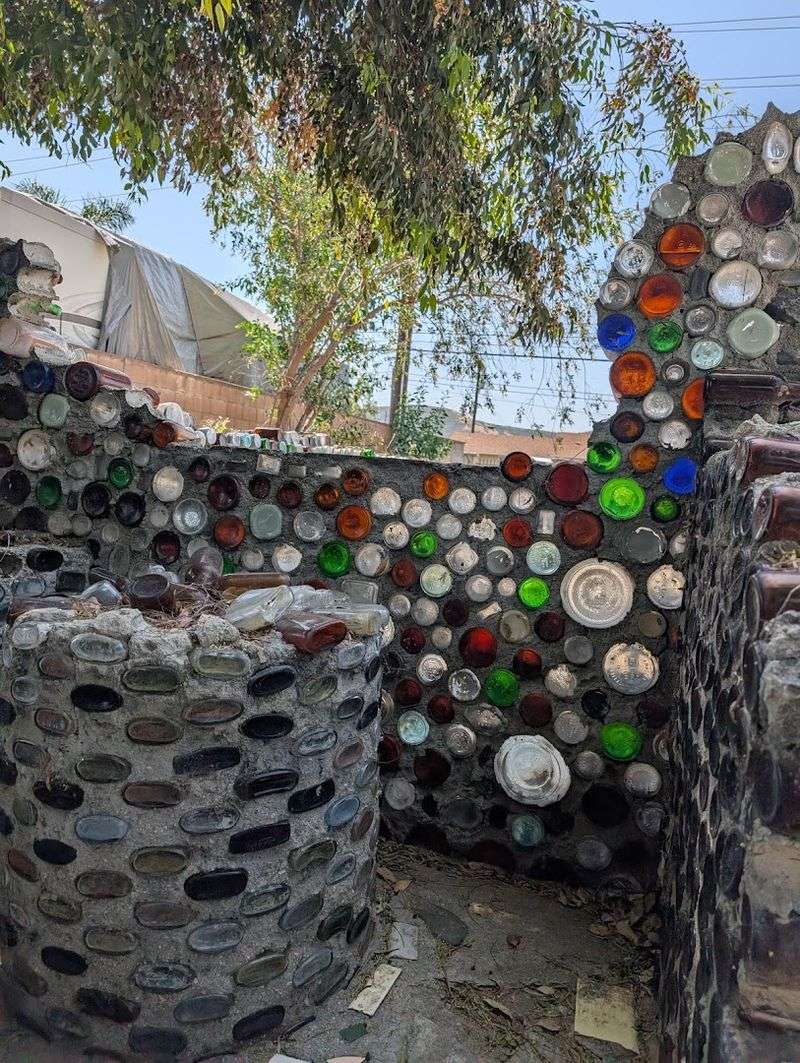
Found objects take on a gentle sense of order here, and that shift is what makes the place so absorbing.
Bottle walls, shrines, walkways, and small structures create a village-like environment where familiar discarded materials suddenly look decorative, playful, and unexpectedly careful.
Visits are best planned with current access information because preservation needs and operating schedules can change over time.
The site rewards close attention, since tiny details often matter as much as the larger structures.
Texture is a big part of the experience, with glass, cement, shells, and reused objects catching light differently from one corner to the next.
What makes this landmark resonate is its clear sense of personal scale. Nothing feels detached from the handwork behind it, and that directness gives the village warmth even when the materials are rough.
Anyone interested in vernacular art will likely find Bottle Village memorable in a quiet, persistent, and genuinely human way.
9. Rubel Castle
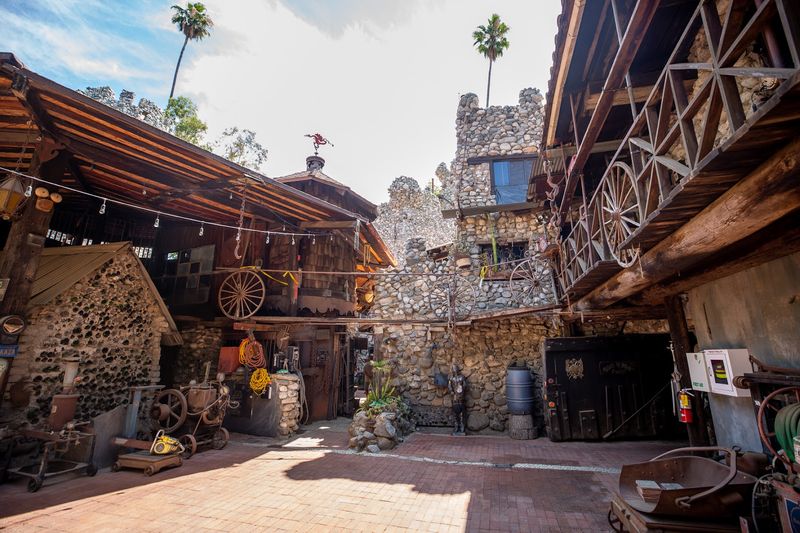
Backyard ambition is the best lens for understanding this eccentric compound of stone, machinery, and salvaged material.
The site looks part fortress and part outdoor assemblage, with walls, towers, pathways, and reused pieces arranged into something surprisingly cohesive.
Visits are generally tour-based, which helps because the property contains many stories and details that are easy to miss alone.
Rough textures, mechanical odds and ends, and layered construction give the castle a workshop feel rather than a polished estate atmosphere.
Comfortable shoes help because the ground and circulation areas can be uneven in places.
What stands out most is the sheer amount of inventive problem solving visible in the build.
Stonework sits beside repurposed objects in ways that feel practical first and decorative second, and that honesty gives the landmark character.
Rubel Castle is open for tours at 844 N Live Oak Ave, Glendora, CA 91741.
Travelers who enjoy folk architecture or places that reveal creativity through persistence will appreciate how the castle turns ordinary materials and stubborn energy into a destination that feels personal.
10. Noah Purifoy Outdoor Desert Art Museum
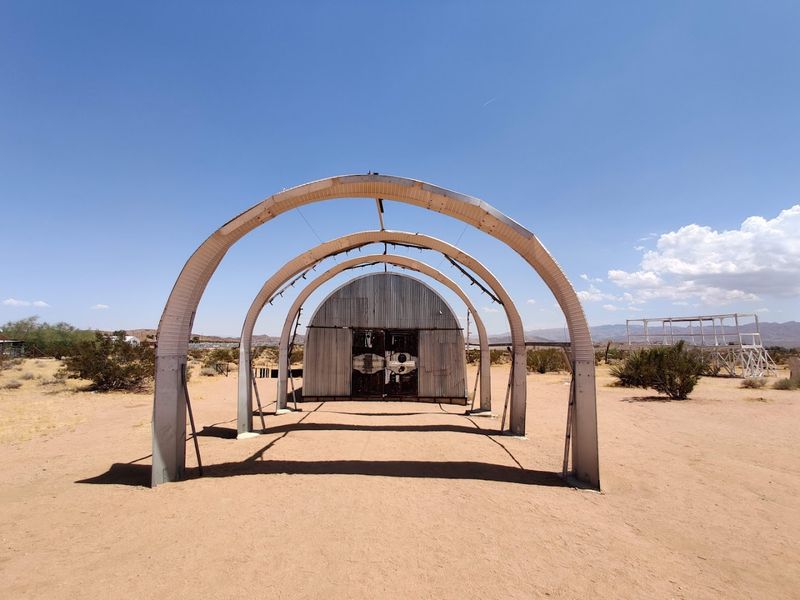
Open desert gives these large found-object works room to breathe, and that scale shapes the whole visit.
Across roughly ten acres, weathered wood, metal, and salvaged materials form installations that feel part sculpture garden and part improvised settlement.
Walking the grounds usually means full sun, open air, and very little separation from the elements, so pacing matters.
The site tends to reward unhurried wandering because pieces reveal themselves gradually as angles shift and shadows move.
Water, sturdy shoes, and attention to current access information are practical basics before heading out.
What makes the museum especially powerful is how directly the artwork meets the landscape.
Wind, dust, silence, and distance become part of the experience, while the reused materials hold onto a sense of former purpose.
Those interested in contemporary art outside conventional galleries or environments where scale and setting matter as much as individual objects will probably find this stop thoughtful and unlike anything else.
11. Desert Christ Park
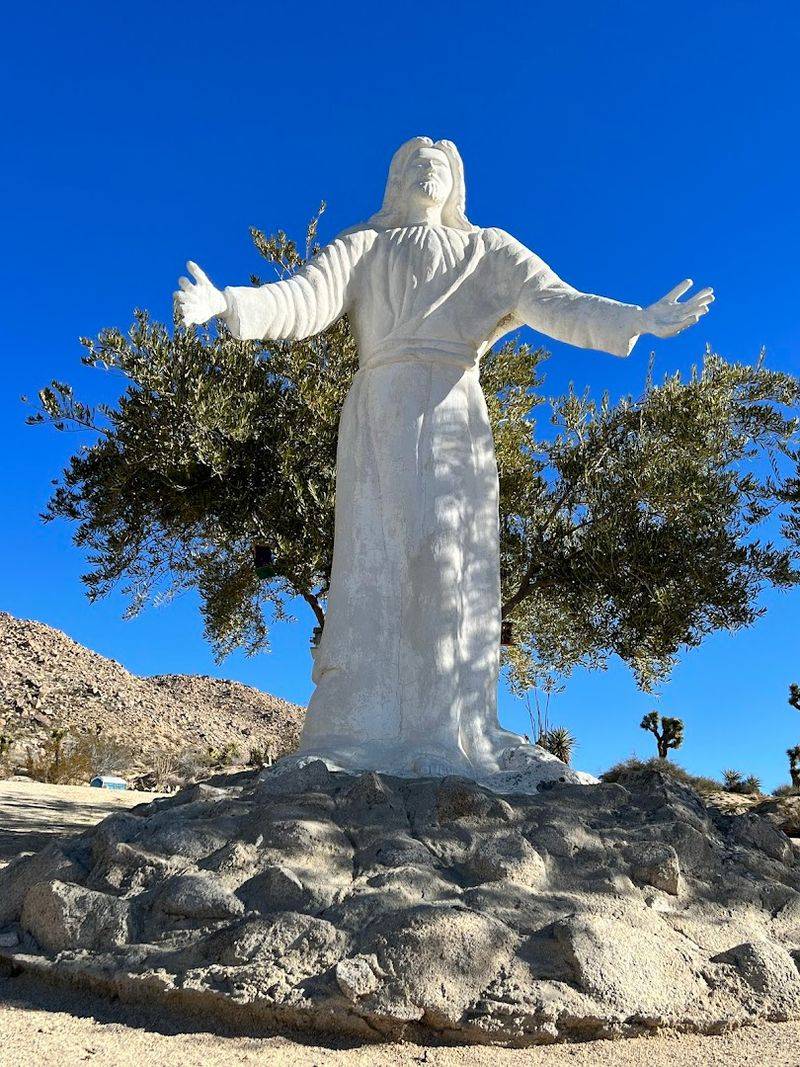
Quiet space is part of the effect here, since the pale sculptures stand apart from the surrounding desert in a striking way.
Steel-reinforced concrete figures spread across the hillside, and their simple white surfaces look especially stark against earth tones, scrub, and broad sky.
The visit tends to be self-paced, which makes it easy to pause between sculptures and take in the spacing of the grounds.
Sun exposure can be intense, and the terrain is open enough that comfortable footwear and water are sensible to bring.
The atmosphere often feels more contemplative than crowded, though exact conditions depend on timing and season.
What makes the park unusual is its combination of devotional subject matter and outdoor folk-art character.
The figures are large but not slick, and the handmade quality gives them a certain earnestness that polished monuments often lack.
Travelers interested in roadside spirituality or California landmarks shaped by singular conviction will likely appreciate how the site feels.