Virginia Had A McDonald’s So Vintage It Looked More Like A Diner Than A Fast-Food Stop
Not every McDonald’s is created equal. Most of them blur together after a while, same layout, same lighting, same feeling of eating in a hurry and moving on.
But Virginia has one that genuinely stops people in their tracks. This location looks like it belongs in a different decade entirely.
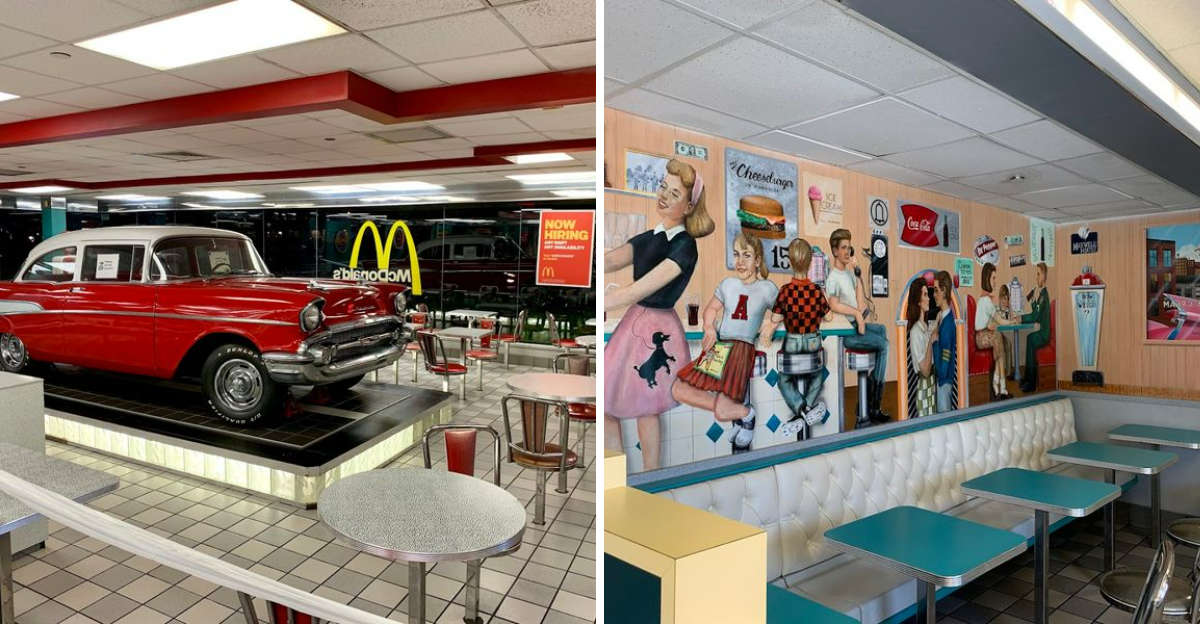
Chrome finishes, neon lights, a jukebox, a vintage car parked inside. It feels less like a fast food stop and more like a set piece from an era when diners were the center of American life.
People drive out of their way just to eat here. Some come for the novelty.
Some come back because the atmosphere is that good. Virginia is full of surprises, and this one sits right off the highway waiting to be discovered.
You will never look at the golden arches the same way again.
A 1957 Chevrolet Parked Right Inside The Dining Room
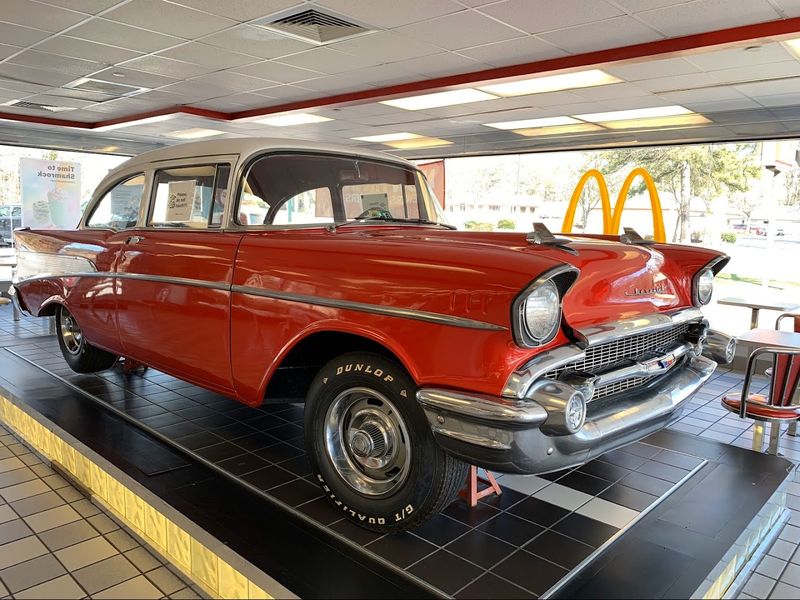
Picture biting into a burger and glancing up to see a full-sized classic car just a few feet away. That was the reality at this one-of-a-kind location.
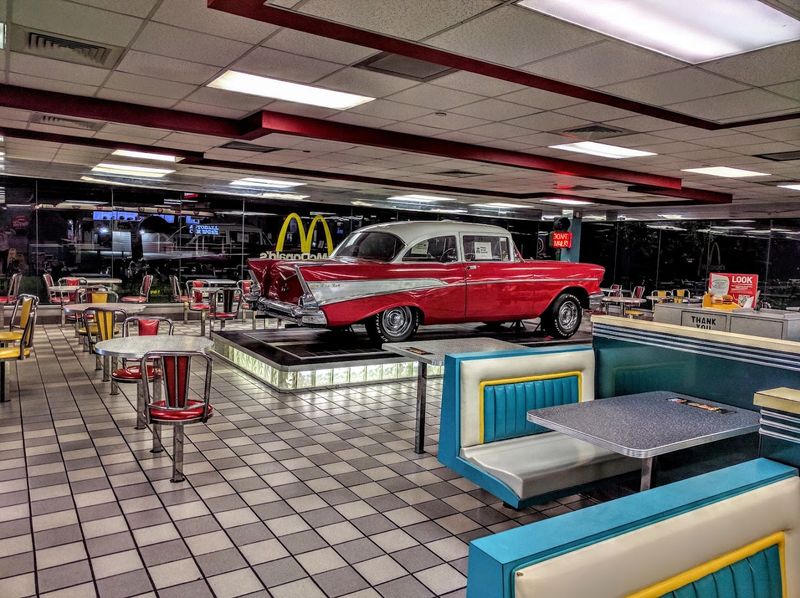
A shining red 1957 Chevrolet sat proudly in the dining room, turning every meal into something far more memorable.
The car was not a prop you could easily ignore. Chrome bumpers caught the light.
The paint gleamed like it had just rolled off the factory floor. Families would stop mid-sentence just to stare at it.
It was the kind of centerpiece that made you pull out your camera before you even ordered. Kids pressed their faces close to the windows.
Adults stood back and smiled like they had just found something they did not know they were looking for.
This spot, located at 329 2nd St, Williamsburg, Virginia, became famous largely because of that car. Nothing else quite matched the experience of eating fast food next to a piece of American automotive history.
It was bold, unexpected, and completely unforgettable.
Checkerboard Floors That Set The Whole Mood
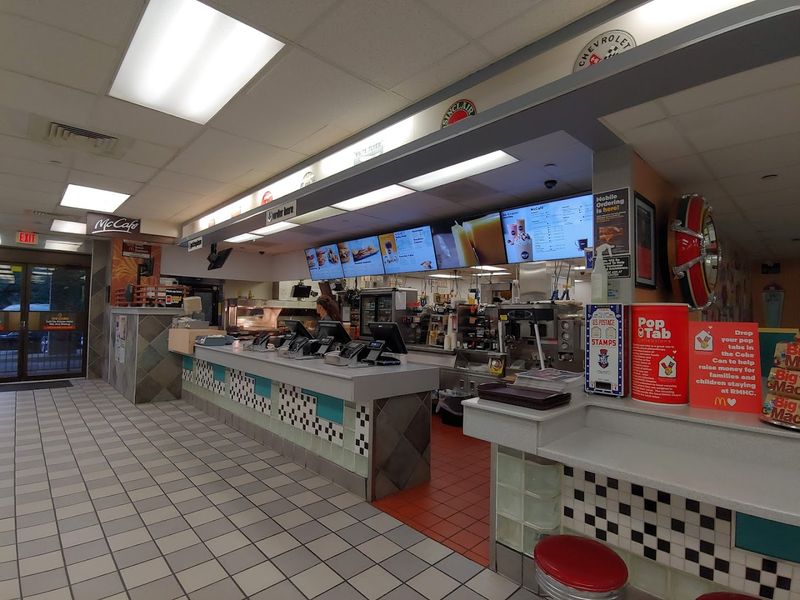
The moment your eyes landed on those floors, the whole vibe of the place shifted. Black and white tiles stretched across the dining room in a bold checkerboard pattern.
It was the kind of floor you expected to see in a sock hop, not a fast-food chain.
Every detail worked together to create a feeling that was hard to shake. The tiles reflected the neon glow overhead.
The contrast was sharp, clean, and visually striking in the best possible way.
Floors rarely get the credit they deserve, but these ones told a story. They anchored the entire retro theme.
Without them, the chrome and neon would have felt disconnected, but with them, everything clicked perfectly into place.
Stepping onto those tiles felt like crossing a threshold into a different era. The restaurant understood that atmosphere starts from the ground up.
Most fast-food locations never think that far ahead, which is exactly what made this place so different from anything else on the block.
Neon Signs That Buzzed With Old-School Energy
Neon has a personality that no LED screen can replicate. It hums softly and fills a room with warm, buzzing color that feels alive.
At this location, the neon signs were everywhere, and they made the entire dining room feel electric in the most nostalgic way possible.
Pink, blue, and red light bounced off chrome surfaces and shiny tile. The glow softened the space without making it dim.
Every corner had something worth looking at, and the signs were a huge part of that visual rhythm.
There is something about neon that slows you down. You stop rushing and start noticing.
That was the effect this restaurant had on people who came in expecting a quick meal and left with a memory instead.
The signs were not just decoration. They were a commitment to a specific feeling.
This place wanted you to feel like you had traveled back in time, and the neon was the clearest signal that the journey had begun the second you walked through the door.
Chrome Accents And Diner-Style Seating
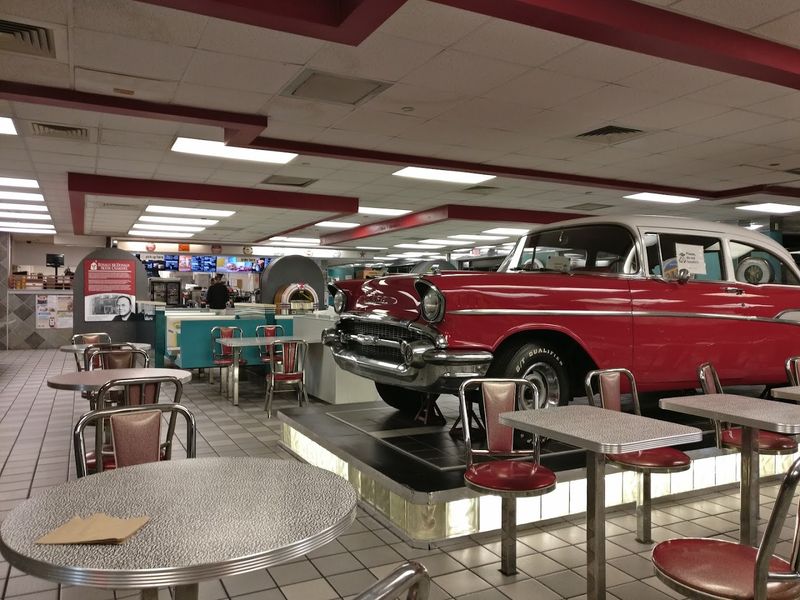
Chrome has a way of making everything look more intentional. At this restaurant, it showed up on stools, table edges, and booth frames throughout the dining area.
The effect was polished, playful, and genuinely reminiscent of a classic American roadside diner.
The booths were cushioned and designed for comfort. Sitting in them felt different from the hard plastic seats at most fast-food spots.
There was a warmth to the seating that matched the overall mood of the room perfectly.
Some reviewers noted the cool yellow chairs that still gave off an old-school McDonald’s vibe even after the remodel began. That detail says a lot about how deeply the retro design had been woven into the experience.
Even partial traces of it left an impression.
Diner-style seating invites you to linger, and that was the point. This was not a grab-and-go setup.
The restaurant was designed to make you sit down, look around, and enjoy being somewhere that felt genuinely different from every other fast-food stop you had ever visited.
A Jukebox And Old-Fashioned Telephone Booth
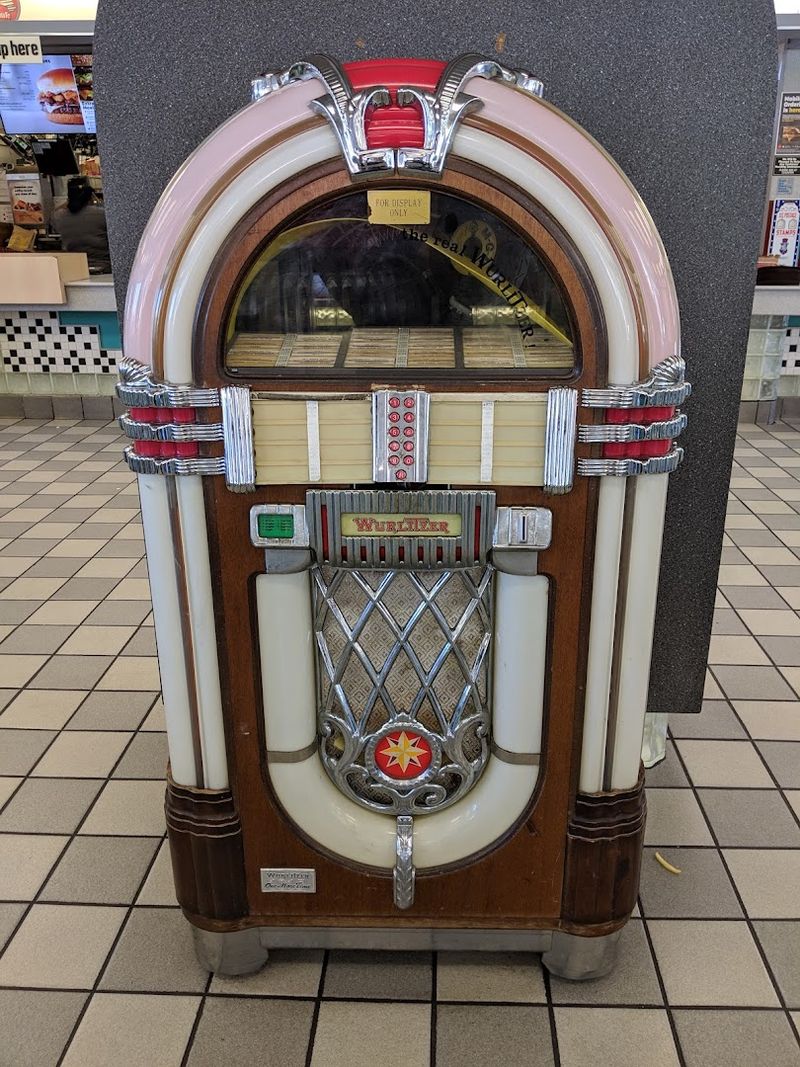
A jukebox in a McDonald’s sounds like the setup to a joke, but this place made it work completely. The machine stood as a genuine piece of the era, not a cheap replica.
It fit the room the way a good song fits a road trip, naturally and without effort.
Right alongside it sat an old-fashioned telephone booth. Compact, nostalgic, and completely out of place in the best way imaginable.
Together, these two pieces turned a corner of the dining room into a small museum exhibit you could eat next to.
Details like these are what separated this restaurant from every other location in the chain. Most fast-food spots invest in menu boards and drive-thru lanes.
This one invested in storytelling through objects, and that made all the difference for the people who discovered it.
The jukebox and phone booth were conversation starters before anyone even placed an order. They gave people something to point at, photograph, and talk about on the drive home.
That kind of experience is rare, and once it is gone, it is genuinely hard to replace with anything equivalent.
1950s Artwork, Memorabilia, And Antiques On Display
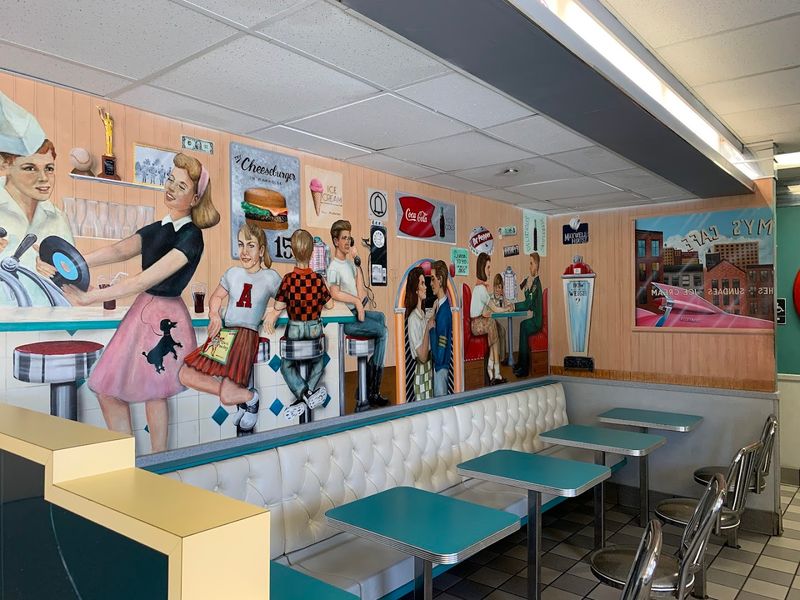
Walking through this restaurant felt a little like flipping through a scrapbook of American pop culture. The walls were covered in 1950s artwork, vintage posters, and carefully chosen antiques.
Every piece had been placed with purpose, and the cumulative effect was genuinely impressive.
Memorabilia from the era filled shelves and display areas throughout the space. Old advertisements, retro signage, and collectibles that looked like they had been sourced from estate sales and antique shops added layers of authenticity.
Nothing felt mass-produced or thrown together carelessly.
The artwork pulled the whole theme together in a way that felt cohesive rather than cluttered. Each piece reinforced the idea that this was a place with personality.
You could spend twenty minutes just reading the walls before your number was ever called at the counter.
Antiques have a texture that reproductions simply cannot match. The scratches, fading, and imperfections in the real pieces made the atmosphere feel lived-in and genuine.
This restaurant understood that a truly immersive experience requires more than just a coat of paint and a themed menu board.
A Time-Machine Atmosphere Unlike Any Other McDonald’s
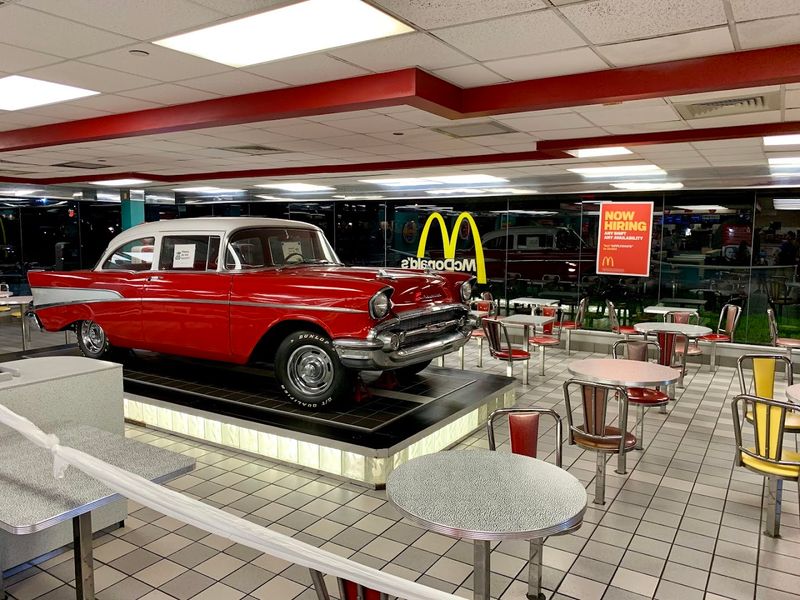
Most McDonald’s locations are interchangeable. Same layout, same lighting, same everything.
This one broke that pattern so completely that people made special trips just to experience what it felt like inside. That is not something that happens by accident.
The combination of every element created an atmosphere that reviewers described as stepping into a time machine. The phrase kept coming up because nothing else quite captured it.
Every design choice reinforced the feeling that you had landed somewhere between 1955 and 1960.
Even the sound of the place felt different. The buzz of neon, the echoes off hard floors, and the visual noise of chrome and color all worked together to create something genuinely sensory.
You were not just eating fast food. You were absorbing a whole environment.
Atmospheres like this one are incredibly hard to build and even harder to maintain. The restaurant managed it for years before the remodel changed everything.
People who experienced it still talk about it with the kind of enthusiasm usually reserved for places far more expensive and exclusive than a fast-food stop.
How The Vintage Decor Eventually Disappeared
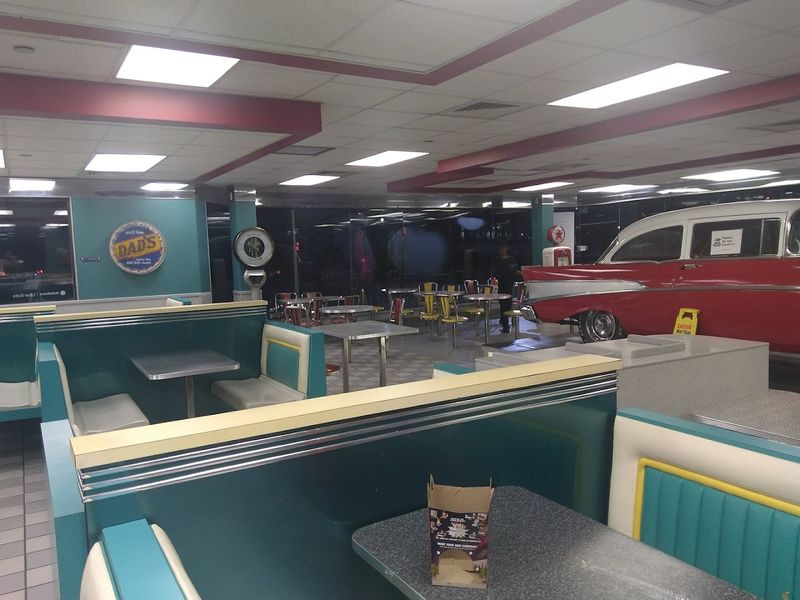
Change is rarely welcome when something genuinely special is involved. By early 2020, the vintage memorabilia at this location began disappearing piece by piece.
The remodel that followed replaced the retro character with the same modern look found at thousands of other locations across the country.
The checkerboard floors gave way to contemporary finishes. The neon signs came down.
The 1957 Chevrolet, the jukebox, and the telephone booth all vanished. What remained was a functional, clean, modern restaurant that gave no hint of what it used to be.
Remodels happen for practical reasons, and this one was no exception. Updating a location brings it in line with current brand standards and operational needs.
But for the people who had visited specifically because of the vintage theme, the transformation felt like a genuine loss.
The restaurant now operates as a standard modern location, open every day from 5:30 AM to 11:00 PM, with drive-thru service, mobile ordering, and contactless delivery options available.
It functions well as a fast-food stop, but the magic that once made it remarkable has been replaced by something far more familiar.
What The Restaurant Is Like To Visit Today
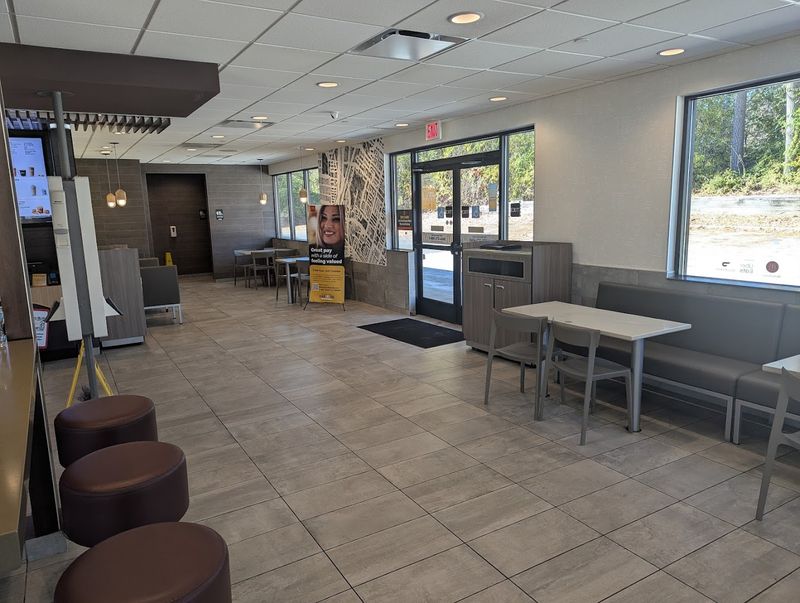
Expectations matter when you visit a place with a legendary reputation. The restaurant today operates as a standard McDonald’s, and knowing that ahead of time will save you from disappointment.
The vintage charm is gone, but the location itself is still very much open and serving customers daily.
The menu is exactly what you would expect from any modern location in the chain. Classic burgers, fries, breakfast items, and the full lineup are all available.
Mobile ordering has made the experience more convenient for people who prefer to skip the counter entirely.
Some visits go smoothly and quickly. Others have been less consistent.
Like many busy fast-food locations, the experience can vary depending on the time of day and how the shift is running.
For anyone curious about the history of this place, the story of what it used to be is worth knowing. The vintage version of this restaurant was something genuinely rare in the fast-food world.
Even without the decor, that legacy gives the location a character that most ordinary McDonald’s stops will never have.