This Small Texas Town Holds One Of The State’s Most Striking Painted Churches
Small towns hide the wildest surprises sometimes. You could drive right past this one and never know.
But along a quiet farm road stands a church that stops people cold. Texas keeps this stunner out in the rolling countryside.
Inside, painted ceilings and stained glass fill every corner with color. The craftsmanship looks lifted straight from a European postcard.
Locals crowned it a queen among painted churches, and you will see why. I stood in the doorway just staring for a while. Immigrant history shaped every careful brushstroke here.
This is the kind of beauty you find by pure luck. Make the little detour soon.
A Church That Rewrites Expectations
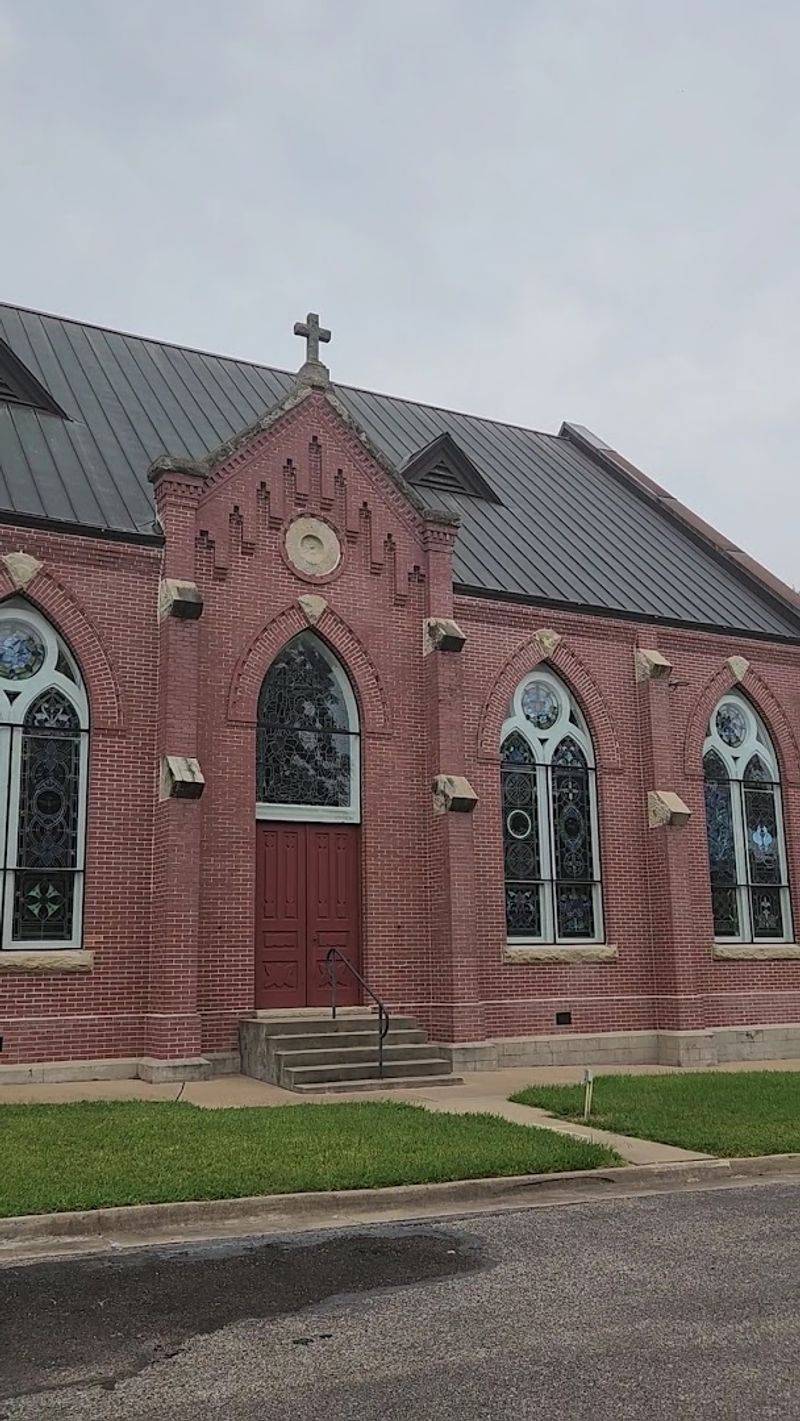
First impressions can be misleading, and that is part of what makes this place so memorable.
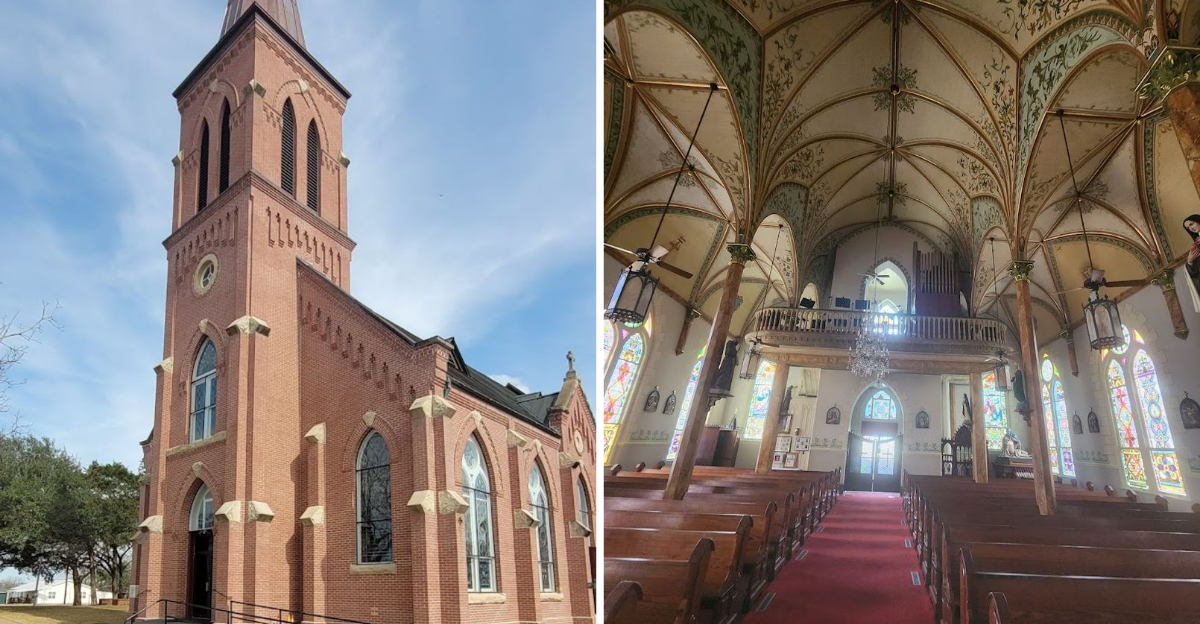
From the outside, Nativity of the Blessed Virgin Mary Catholic Church looks like a solid, dignified country church. The white facade sits calmly against the open Texas sky.
But the moment you step through the front doors, everything changes.
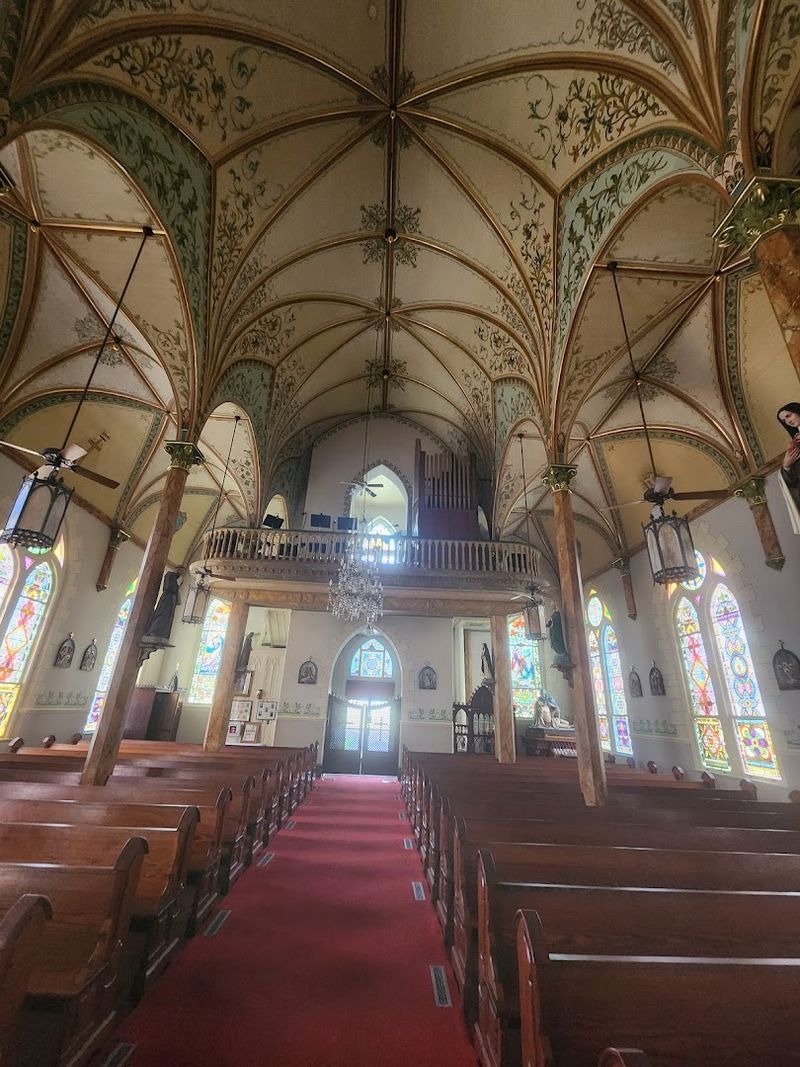
The interior erupts into a world of painted walls, arched ceilings, and vivid color that feels more like a European cathedral than a rural Texas building. You find yourself standing still, just looking up, trying to take it all in.
The church sits about five miles outside of town. The drive through rolling green farmland is part of the experience.
You arrive already relaxed, and then the interior hits you like a wall of color and craftsmanship.
Nothing about the quiet road prepares you for what waits inside. That contrast is part of what makes this destination at 2833 FM 2672 in Schulenburg so unforgettable for first-time visitors.
Roots In German Immigration
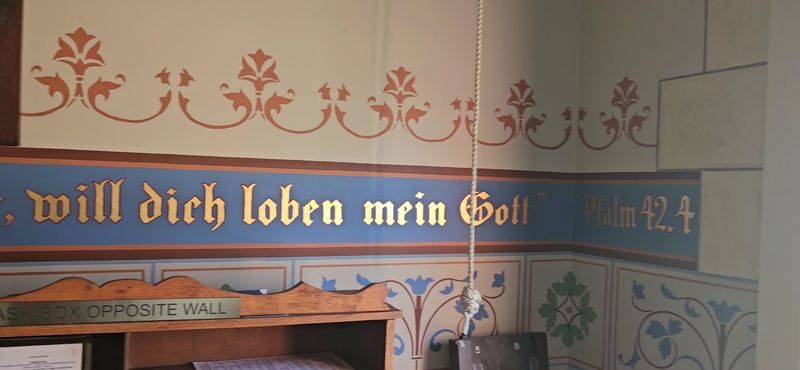
Texas has a deep and fascinating immigrant history, and this church is one of its finest expressions.
German Catholic settlers arrived in Fayette County during the mid-to-late 1800s, bringing their faith and their artistic traditions with them. They were determined to build places of worship that reflected the grandeur of the churches they had left behind in Europe.
The congregation at High Hill, as the community is known, established their parish in the 1870s. The current church building was completed in 1906.
Skilled craftsmen, many of them from the local German community, worked to create an interior that honored both their heritage and their beliefs.
The painted decoration was not done all at once. It evolved over decades, with different artists and parishioners contributing to the layers of detail you see today.
Every brushstroke represents a family, a generation, and a commitment to keeping something beautiful alive.
Painted Ceilings Worth Every Glance
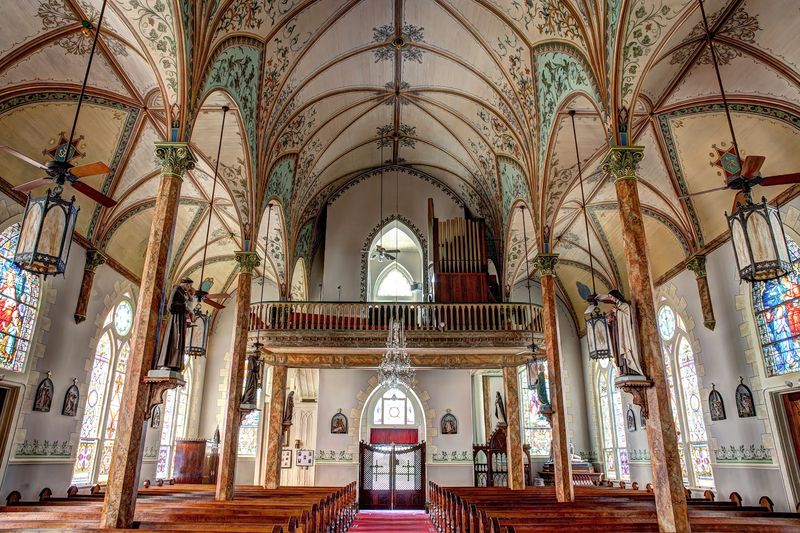
Look up the moment you walk in, because the ceiling is the star of the show.
The painted vault overhead features a stunning trompe-l’oeil design, which is a French technique that tricks the eye into seeing three-dimensional depth on a flat surface.
Arches, columns, and decorative moldings are all painted rather than built, yet they look completely real.
A dome painted with soft clouds and open sky floats above the nave. It creates a feeling of looking straight up into heaven.
The effect is quiet and powerful at the same time, and it is the kind of thing that makes you forget you had anywhere else to be.
Intricate stencil patterns border every arch and frame every panel. The colors are rich but not garish, using deep blues, warm golds, and soft creams that have aged beautifully over more than a century.
The whole ceiling feels like a single tapestry stretched across the interior. Spending time here with your neck craned upward is not a chore but a genuine pleasure.
Stained Glass That Commands Attention
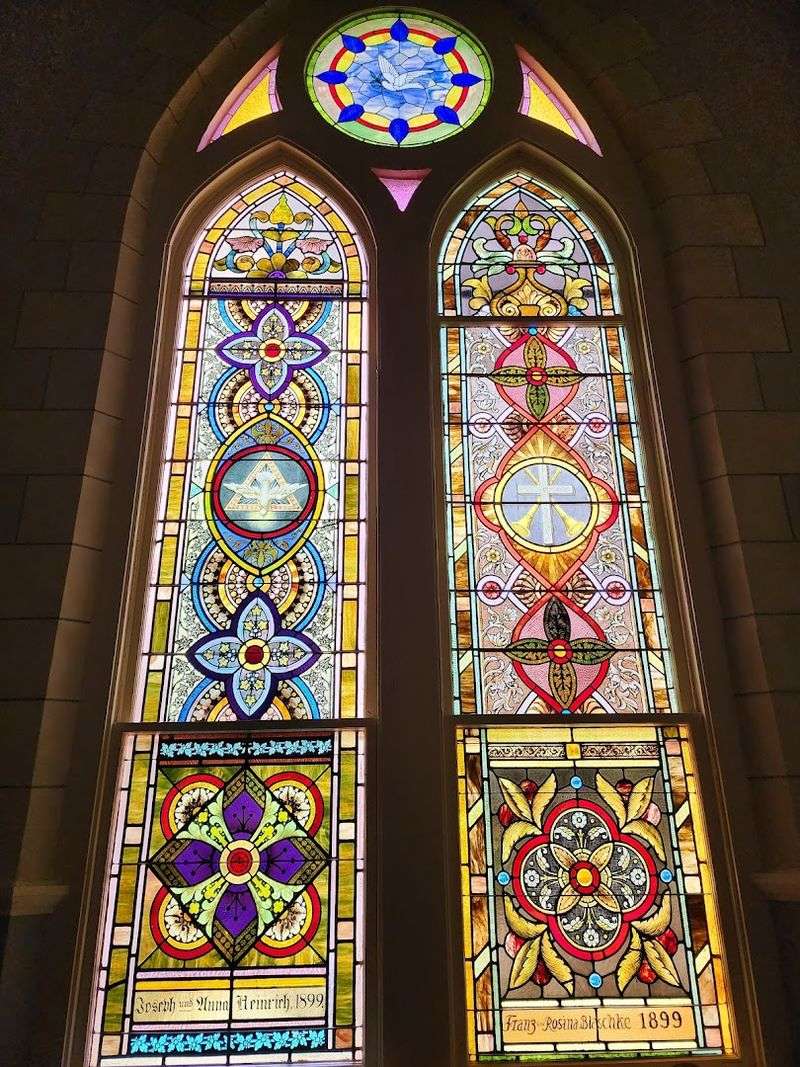
Sunlight behaves differently inside this church. It filters through stained glass windows and throws pools of colored light across the wooden pews and painted walls.
The effect shifts throughout the day as the sun moves, so the church looks slightly different depending on what time you arrive.
The windows depict scenes from scripture and the lives of saints. Each one is carefully crafted with rich jewel tones that hold their intensity even on cloudy days.
The reds are deep and warm, the blues are cool and clear, and the greens have a freshness that feels almost botanical.
What makes the windows especially interesting is how they interact with the painted interior. Color from the glass lands on the painted walls and ceiling, layering one art form over another.
The result is an interior that feels alive and constantly changing. Many visitors return at different times of day just to see how the light transforms the space.
The Altar And Sacred Sculptures
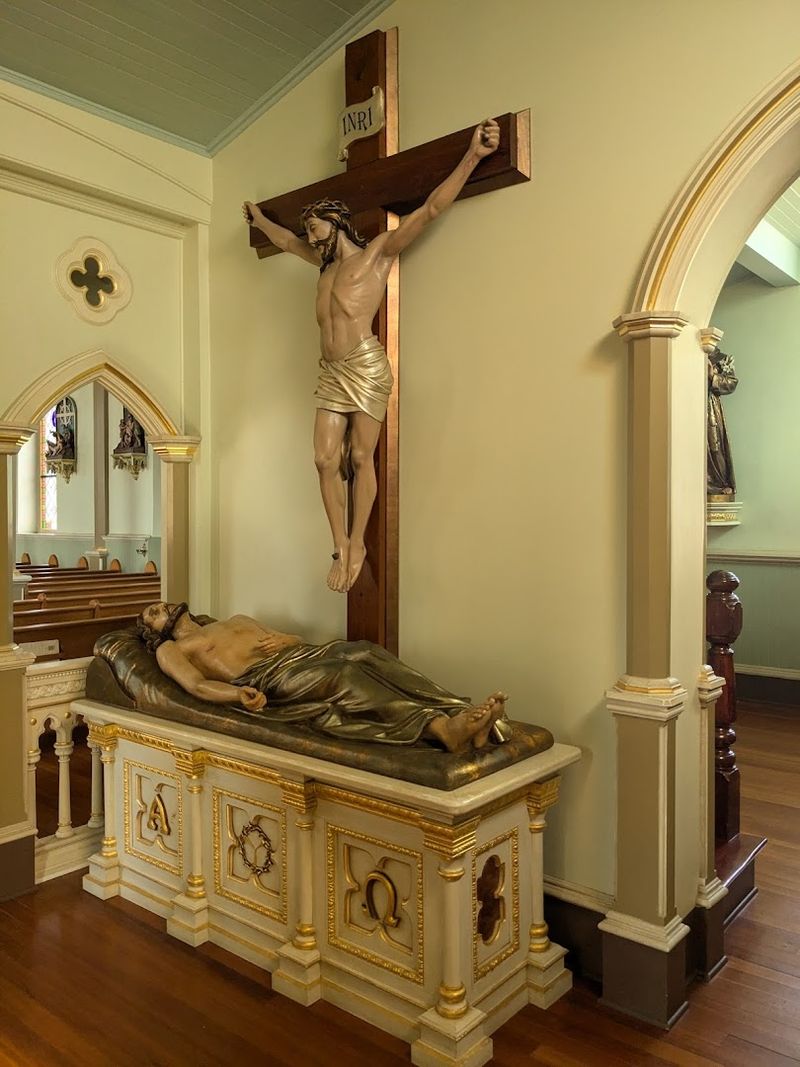
The altar draws your eyes forward the moment you enter the nave. It rises dramatically against the far wall, framed by painted architectural details and flanked by carved statues.
The craftsmanship is detailed and confident, showing the skill of the artisans who built and decorated it over a century ago.
Sculptures of saints stand at various points throughout the interior. They are not merely decorative. Each figure holds meaning for the congregation that has worshipped here for generations.
The expressions on the carved faces are surprisingly expressive, ranging from serene calm to intense devotion.
The gilded elements of the altar catch the light from the stained glass windows and the painted ceiling above. Gold and color interact in a way that feels intentional and carefully considered.
Every element was placed with purpose, and that sense of intention gives the whole interior a coherent, unified feeling. Standing before the altar, you get a clear sense of how deeply the community valued beauty as a form of worship.
It is a space that communicates reverence without needing a single word, and that kind of silent eloquence is rare anywhere in Texas.
Queen Of The Painted Churches Trail
Texas has a remarkable collection of painted churches scattered across Fayette and Lavaca counties.
The trail connects a group of historic Catholic churches, each one built by immigrant communities in the late 1800s and early 1900s. Together, they form one of the most unusual cultural routes in the entire state.
Nativity of the Blessed Virgin Mary Catholic Church holds a special place on this trail. It is widely considered the most elaborate and detailed of all the painted churches, which is why it earned the nickname Queen of the Painted Churches.
Visiting it alongside the others on the trail gives you a richer understanding of the immigrant communities that shaped this part of Texas.
The Schulenburg Chamber of Commerce offers guided tours that take visitors from church to church. Self-guided options are also available for those who prefer to move at their own pace.
Either way, the drive between churches passes through some of the most peaceful countryside in central Texas, with open fields, old farmhouses, and tree-lined roads.
Visiting Tips For A Great Trip
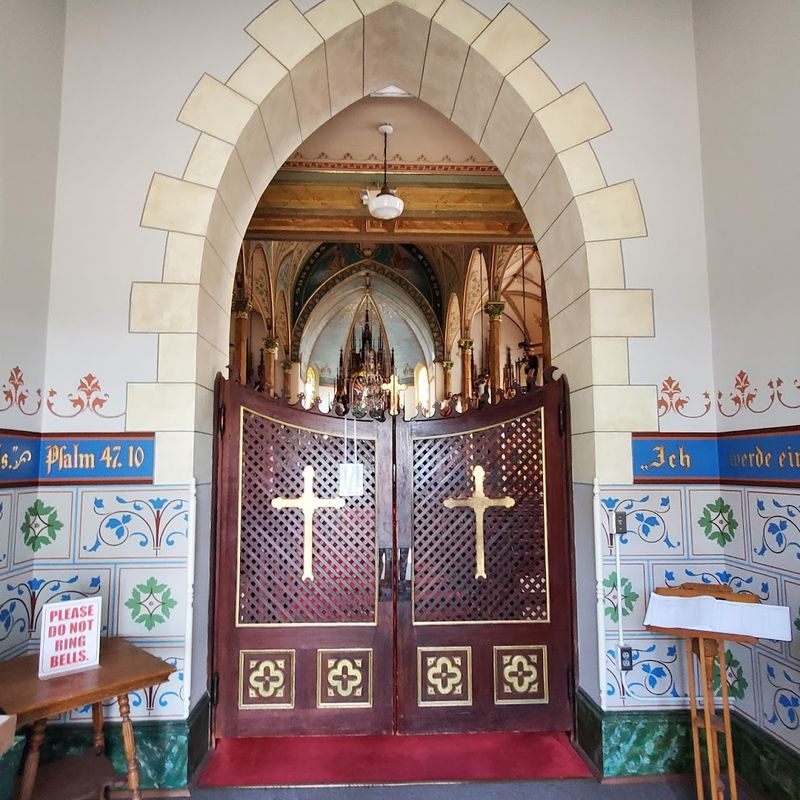
Planning ahead makes a big difference when visiting this church.
The building is open to the public most days from early morning until 5 PM, but it is an active parish, not just a historic site. Checking the schedule before you go helps you avoid arriving during a mass or private service.
Dress respectfully, as you would for any place of worship. The atmosphere inside is quiet and contemplative, so speaking softly and moving slowly shows consideration for both the space and any other visitors present.
Photography is generally welcomed, and the interior is so photogenic that you will likely use up your camera storage quickly.
A donation box is available near the entrance. The church relies on community support to maintain its extraordinary interior, so leaving a contribution is a meaningful way to help preserve it for future visitors.
There is also a gift shop in the old rectory building on the property, where you can pick up a small memento. A picnic pavilion at the back of the grounds offers a lovely spot to rest after your visit.
The Surrounding Countryside Adds Magic
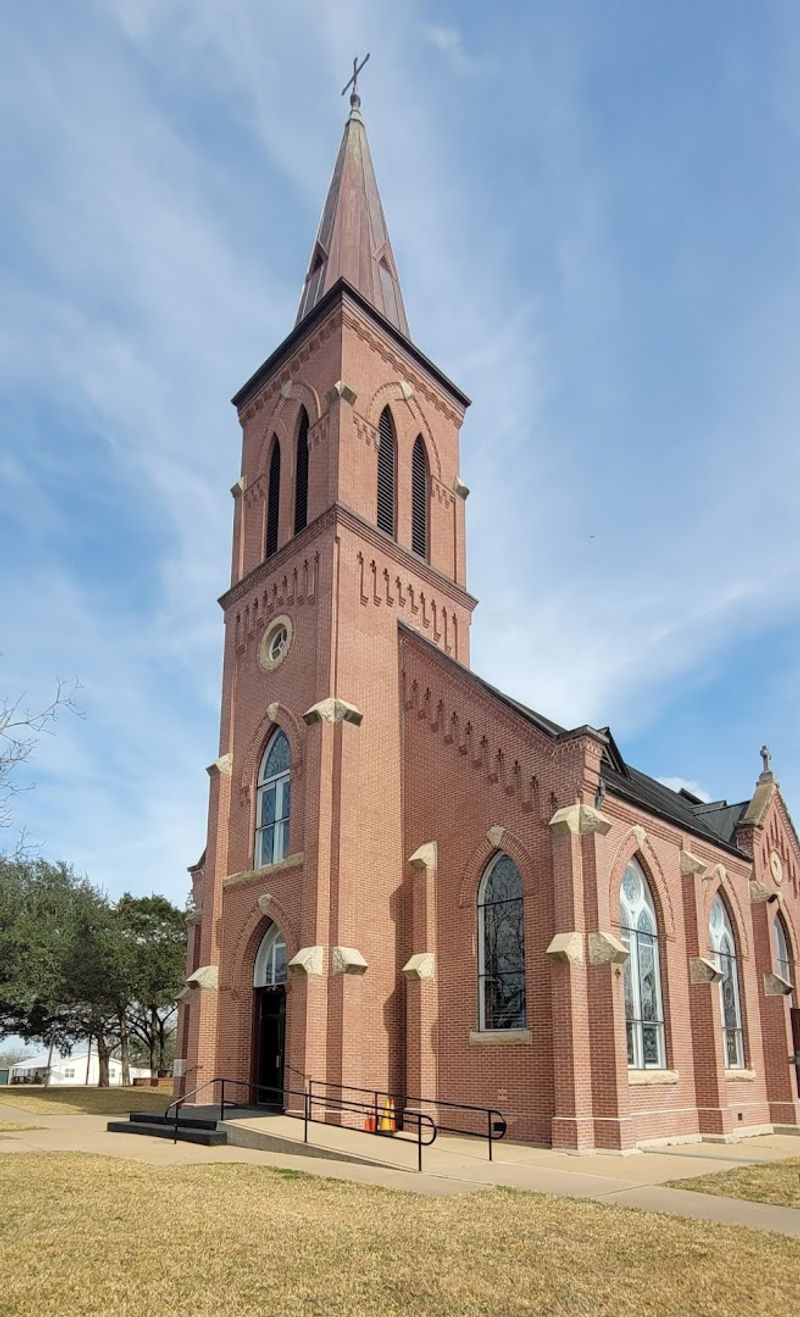
Getting to this church is half the fun. The roads leading out from Schulenburg pass through some of the most quietly beautiful countryside in central Texas.
Green hills roll gently in every direction, dotted with old farmsteads and stands of oak trees. The landscape has a slow, unhurried quality that sets the right mood for what you are about to see.
FM 2672 is a narrow farm road that winds through open fields before the church comes into view. That first glimpse of the white building against the wide Texas sky is a moment worth savoring.
Pulling over briefly just to take it in from a distance is something many visitors find themselves doing instinctively.
The area around Schulenburg also sits within easy driving distance of several other small Texas towns worth exploring. The region has a character shaped by its German and Czech immigrant roots, visible in local architecture, food traditions, and community events.
The land, the roads, and the church itself all tell the same story of a community that built something lasting and continues to care for it with real devotion.