The Best July Views In North Carolina Might Be Waiting At The Top Of This Mountain Lookout Tower
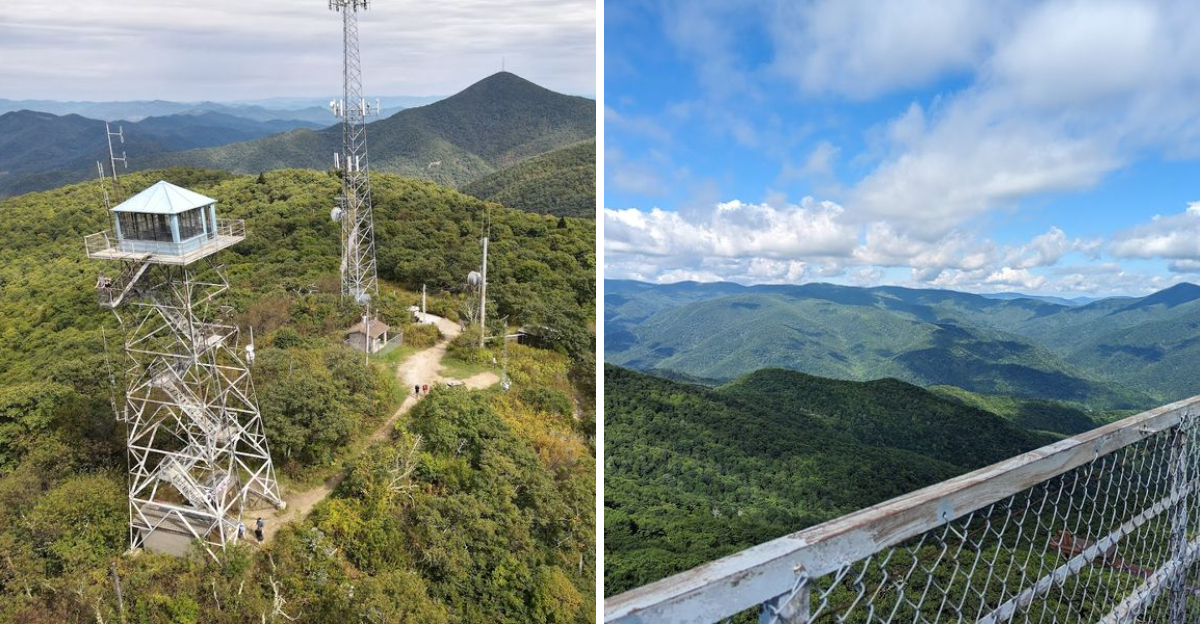
Legs may file a formal complaint on the way up, but the view at the top makes a strong counterargument.
High in the North Carolina mountains, this steel lookout tower turns a short adventure into a full “okay, that was worth it” moment.
The climb asks for effort, sure. Your calves might get dramatic.
Then the Blue Ridge opens around you, and suddenly nobody remembers all that heavy breathing from five minutes ago.
July makes the scene even better, with green ridges stretching in every direction and summer growth filling the forest below.
It feels big, bright, and just wild enough to make the stairs seem less rude.
For anyone willing to trade a little leg exhaustion for a massive mountain payoff, this North Carolina lookout delivers the kind of view that wins the argument.
July Views Feel Bigger From Seventy Feet Up
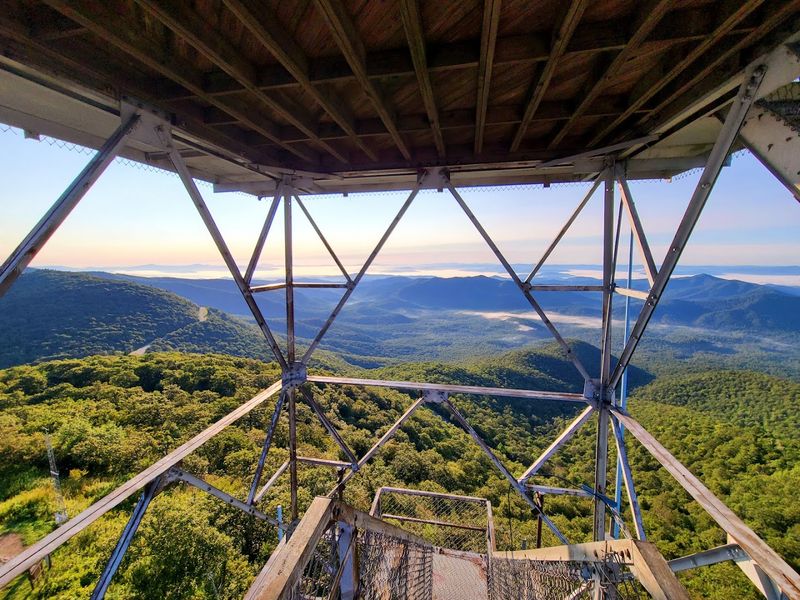
A little extra height changes everything fast.
Sitting at 5,340 feet above sea level, Fryingpan Mountain gains an extra 70 feet of perspective from its historic fire tower. That added height turns a short hike into a far-reaching mountain overlook.
The cab at the very top is closed, but hikers can climb the stairs to the landing just below it, where the surrounding ridges spread out in nearly every direction.
July makes the scene feel especially full because Pisgah National Forest is deep green, the light lasts longer, and summer haze gives the distant mountains that soft blue layering the region is famous for.
On clearer days, visitors may pick out landmarks such as Mount Pisgah, Looking Glass Rock, Cold Mountain, and distant ridgelines stretching toward the Smokies. Wind is part of the experience, so the tower can feel more dramatic than the trail that leads to it.
North Carolina has plenty of overlooks you can reach without leaving the car, but this one feels different. You earn it with a climb, a railing grip, and that first moment when the trees drop away and the mountains suddenly look endless.
The Short Hike Makes The Payoff Feel Almost Unfair
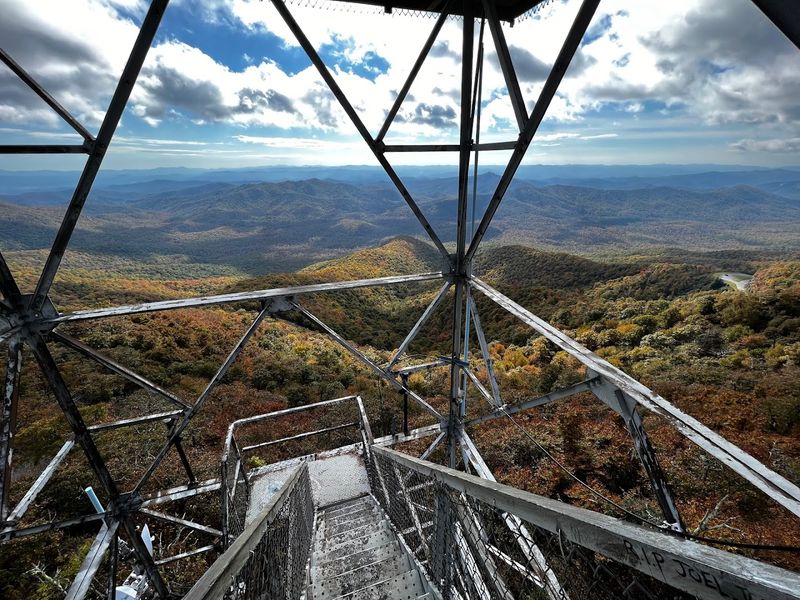
Plenty of mountain views demand a long climb and several life choices. This one is much kinder.
The hike to Fryingpan Mountain Lookout Tower begins near Blue Ridge Parkway Milepost 409.6 at Forest Service Road 450, where hikers walk around the closed gate and follow the gravel road toward the summit.
The National Park Service describes it as a popular 1.5-mile hike, while Conserving Carolina lists the primary route at about 1.4 miles round-trip with roughly 400 feet of elevation gain.
Either way, the outing is short enough for many casual hikers, families, and Parkway travelers who want a big view without giving up an entire day. The grade is steady, so the climb still makes your legs pay attention, especially on warm July afternoons.
Starting early helps with cooler temperatures, easier parking, and softer morning light. The return trip is downhill, which feels like a small prize after the tower climb.
Dogs on leash are commonly seen on the route, though some may not love the metal stairs. Bring water, wear decent shoes, and avoid blocking the gate when parking.
The reward-to-effort ratio here is almost suspiciously good.
You Spot The Tower Before The Nerves Fully Arrive
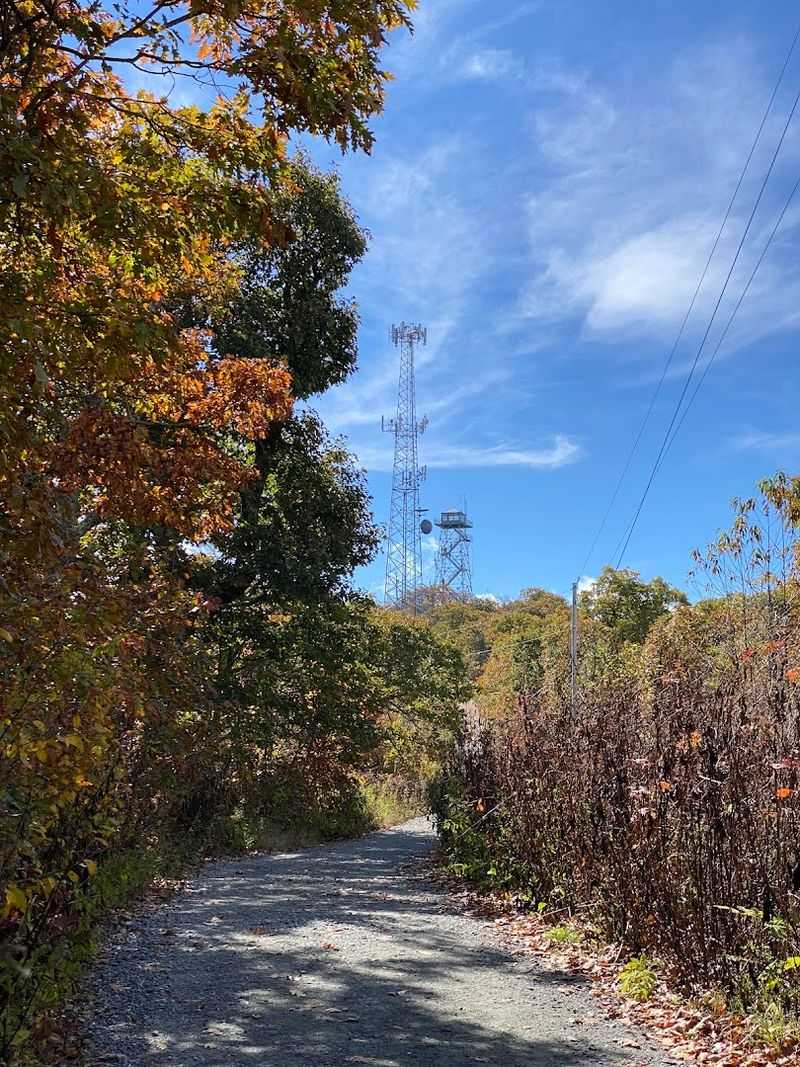
That first glimpse of the tower changes the mood of the hike immediately. The gravel road climbs through forest, bends, and summer greenery, then the steel frame appears ahead like a dare sitting on the summit.
From a distance, it looks sturdy, historic, and maybe a little taller than your confidence was prepared for. That is normal.
Many visitors reach the base feeling excited and slightly betrayed by their own knees. The tower was built as a fire lookout, and its open metal stairs are part of the thrill, not a design flaw.
Anyone nervous about heights can take it slowly, use the railings, pause at landings, and decide how high feels comfortable. There is no rule that says every visitor has to climb to the upper landing to appreciate the place.
Even the summit area gives a sense of the tower’s scale and history. For those who do climb, looking outward instead of straight down can make the experience easier.
Each step shifts the view wider, and the nerves often give way to excitement once the treetops start dropping below eye level. North Carolina’s mountain history feels especially vivid when you are climbing a structure that once helped watch over the forest.
Mount Pisgah Country Opens Up Around Every Stair
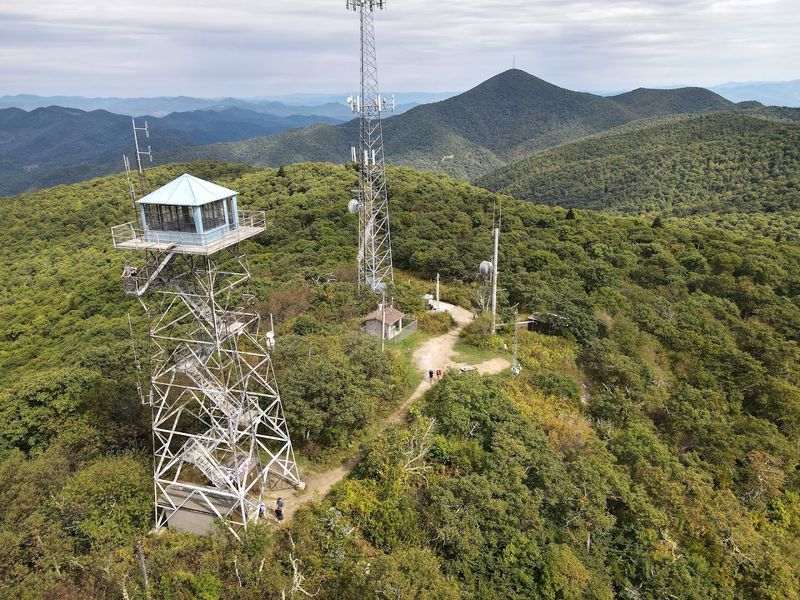
Each landing earns its own little pause. The tower rises above the summit in stages, and every flight opens a slightly broader look at Mount Pisgah country.
At first, trees still frame the view. A few steps higher, the ridges begin to stretch out.
Higher still, the Blue Ridge Parkway corridor, surrounding forest, and distant peaks start arranging themselves into that layered mountain pattern people drive hours to see.
Mount Pisgah is the familiar anchor nearby, while Looking Glass Rock and Cold Mountain may appear when conditions cooperate.
Photographers love the climb because the metal frame, open sky, and rolling ridges create different compositions at each level. Nervous climbers love the landings for a more practical reason: they offer places to breathe, reset, and pretend the pause is mainly for scenery.
July adds extra drama with thick green slopes, shifting clouds, and wildflower color along the approach. The higher you climb, the more the landscape stops feeling like separate overlooks and starts feeling connected.
Roads, forests, summits, gaps, and ridgelines all become part of one enormous view. The stairs turn the reveal into a slow-motion reward, and that is what makes the tower more exciting than a standard roadside overlook.
The Parkway Pull-Off Hides A Serious Summer View
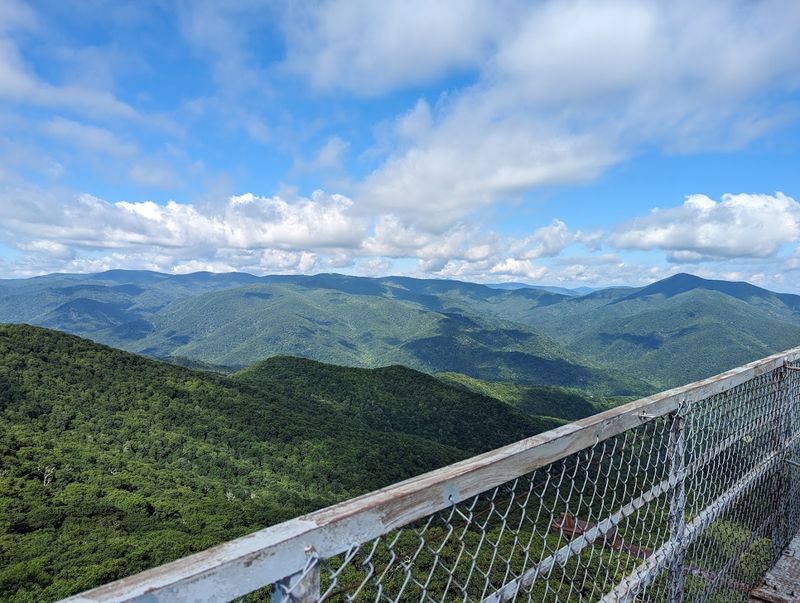
Nothing about the trailhead tries very hard to impress you. Near Blue Ridge Parkway Milepost 409.6, Forest Service Road 450 meets the Parkway at a simple gravel pull-off with a closed gate, and it would be very easy to drive past if you did not know what was waiting above.
That understatement is part of the fun. One minute, you are on the Parkway with overlooks, curves, and summer traffic competing for attention.
The next, you are walking around a gate onto a quiet gravel road that climbs through forest toward one of the best short-hike views in the area. Parking is free, but space is limited, and visitors should never block the gate because service access needs to stay open.
There are no restrooms at the pull-off, so plan ahead before starting. The route is simple to follow, which makes it less stressful than trails with confusing junctions, but weather still matters.
July storms can build quickly in the mountains, and an exposed steel tower is the last place to be when thunder starts making announcements. On a clear morning, though, this small roadside access point feels like a secret door.
The Parkway hides the effort. The tower delivers the reveal.
Wildflowers Make The Gravel Climb Feel Less Like Work

A steady uphill gravel road sounds practical, not romantic. July helps fix that.
The route up Forest Service Road 450 passes through summer greenery, wildflowers, grasses, ferns, and forest edges that make the climb feel more alive than a simple service-road walk.
The National Park Service notes abundant wildflowers along the hike, and other regional trail guides describe warm-season blooms and even wild blueberries in the area.
That does not mean every July visit looks the same. Mountain bloom timing shifts with weather, elevation, rainfall, and recent maintenance, so the flowers may be subtle one week and much more noticeable another.
Still, the road gives walkers plenty of small distractions from the incline. A patch of color near the shoulder becomes a photo excuse.
A butterfly buys you thirty seconds of “observation.” A view opening through the trees suddenly counts as a scenic break rather than a rest stop. The climb is short, but it is steady enough that those natural pauses feel welcome.
North Carolina’s high-elevation summer has a way of making effort feel softer, especially when the forest is full and bright. By the time the tower comes into view, the walk already feels like part of the reward.
That Final Staircase Turns The Breeze Into Drama
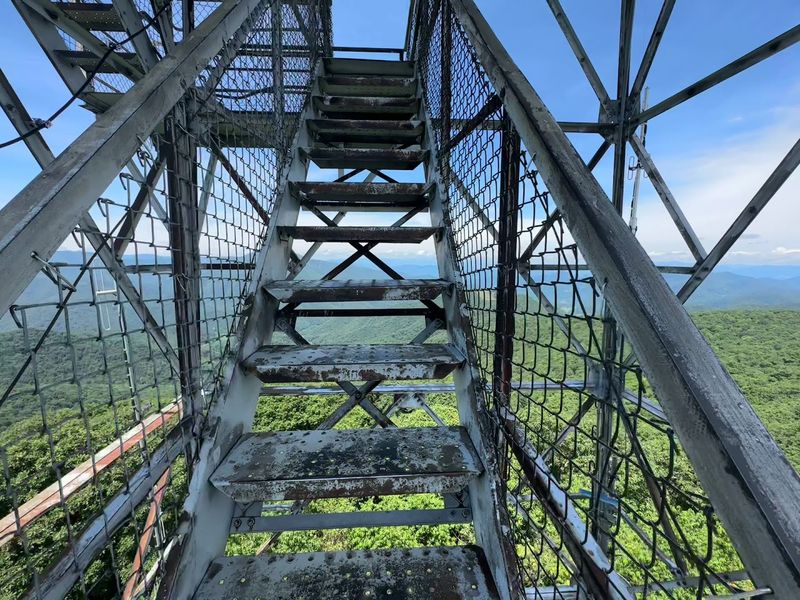
The last part is where the tower reminds you it is not just an overlook. Open steel stairs, mountain wind, and height combine into a very specific kind of excitement, especially for visitors who were feeling brave at the bottom and suddenly more philosophical halfway up.
The cab is locked, but the public-access landing below it still gives a huge view and enough exposure to make the climb feel thrilling.
A little movement or vibration can be noticeable on towers like this, particularly when the breeze picks up, so first-timers should not panic if the structure feels alive underfoot.
That does not make it a place to be careless. Hold the railings, avoid crowding others on the stairs, and skip the climb in high winds, storms, or any hint of lightning.
Mountain weather can change fast in July, and an exposed metal fire tower is not where anyone should be testing optimism. Layers can help too, because the breeze at 5,340 feet plus 70 more feet of tower can feel cooler than the road below.
On a calm, clear morning, though, the final staircase is the part you remember. Wind, height, open sky, and green ridges turn a short hike into a real adventure.
Fryingpan Mountain Makes North Carolina Look Endless
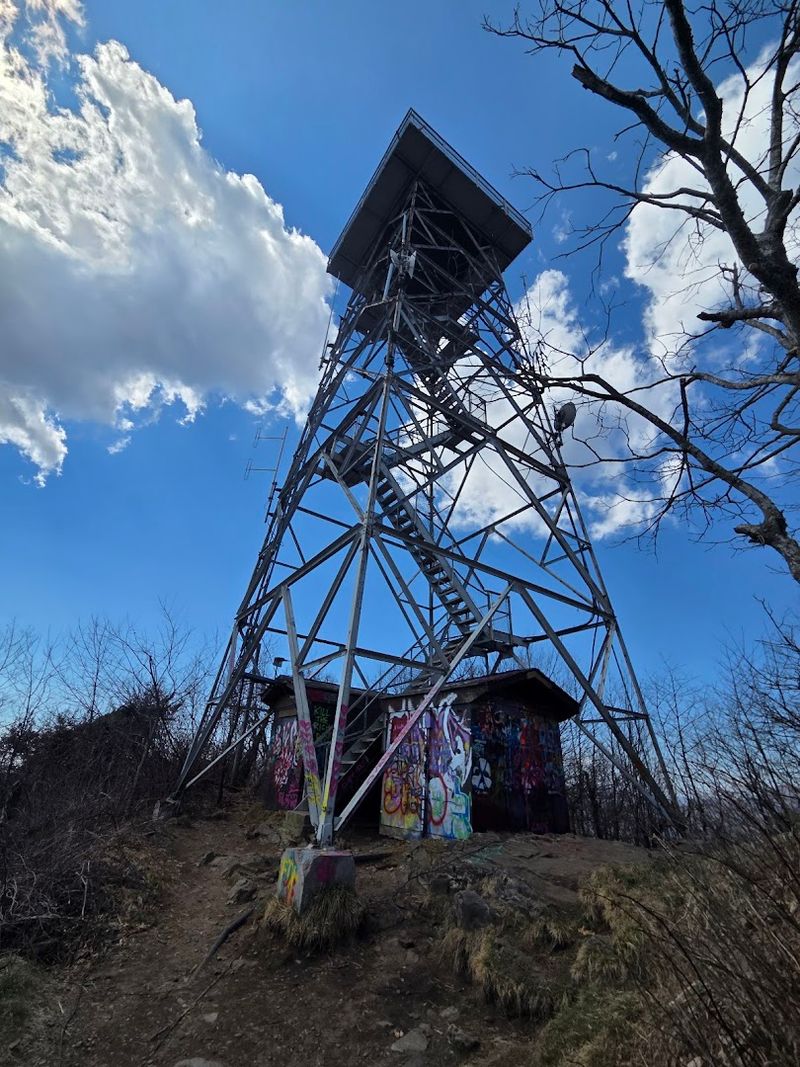
Reaching the upper landing gives the whole outing its answer. Fryingpan Mountain Lookout Tower makes North Carolina look wider, wilder, and greener than it does from the road, with ridges rolling away in overlapping layers and Pisgah National Forest filling the view below.
The tower’s 70 extra feet above a 5,340-foot summit make the panorama feel huge, especially in July when the mountains are fully leafed out and the landscape has that thick summer richness.
Clearer mornings are usually best for long views, while late afternoon can bring warmer light and more dramatic clouds.
Visitors should balance that with thunderstorm risk, since summer weather can turn quickly. The hike is short enough to fit into a Blue Ridge Parkway day, especially near Mount Pisgah, Graveyard Fields, Looking Glass Rock overlooks, or other stops in the area.
What makes this view special is not just distance. It is the feeling of standing above the trees on a piece of forest-history infrastructure, looking across a landscape that seems to keep unfolding.
Phones come out immediately, but photos rarely capture the scale. The better move is to take the picture, then put the camera down for a moment and let the mountains do the rest.