These 9 Oregon Swimming Holes Are So Beautiful Locals Will Lie About Where They Are
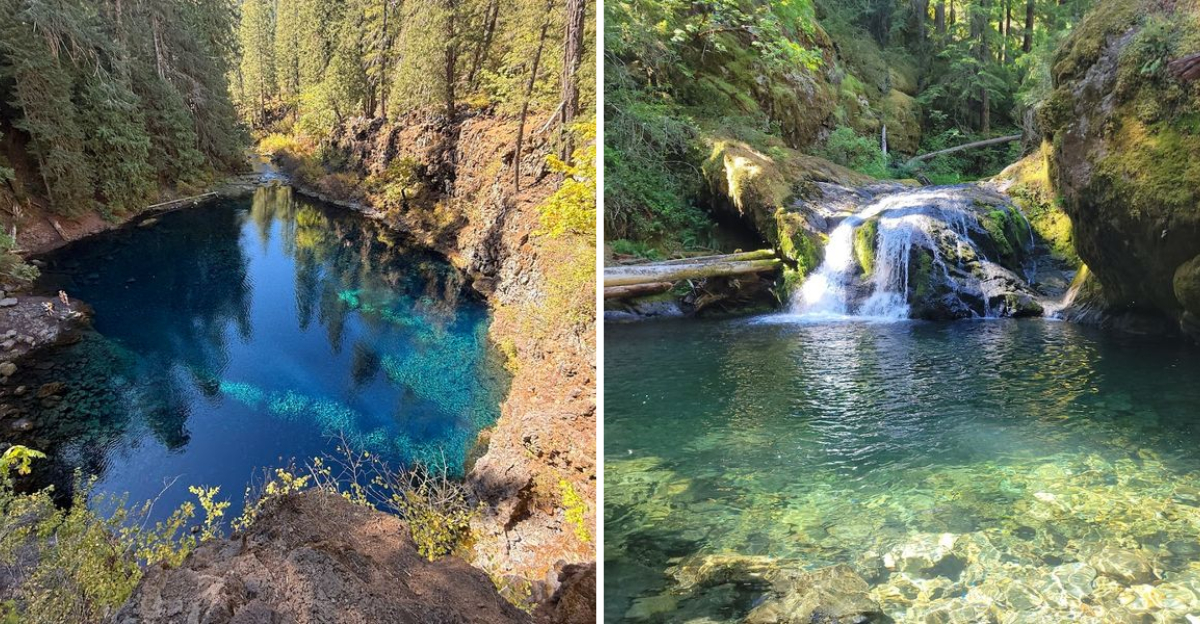
Locals will lie to protect these swimming holes. Can you really blame them? Oregon hides a wild side most maps miss entirely.
Snowmelt from the mountains keeps the water cold and clear. The spots sit behind unmarked trails and dense forest.
I spent years getting lost to find them. A few took my breath the second they appeared. You earn each one with a little effort. That effort keeps the crowds far away.
Bring water shoes and a sense of adventure. Some secrets are worth chasing. The water stays icy even in August.
You float and forget your phone. Just do not post the locations.
Opal Creek, Three Pools, Willamette National Forest
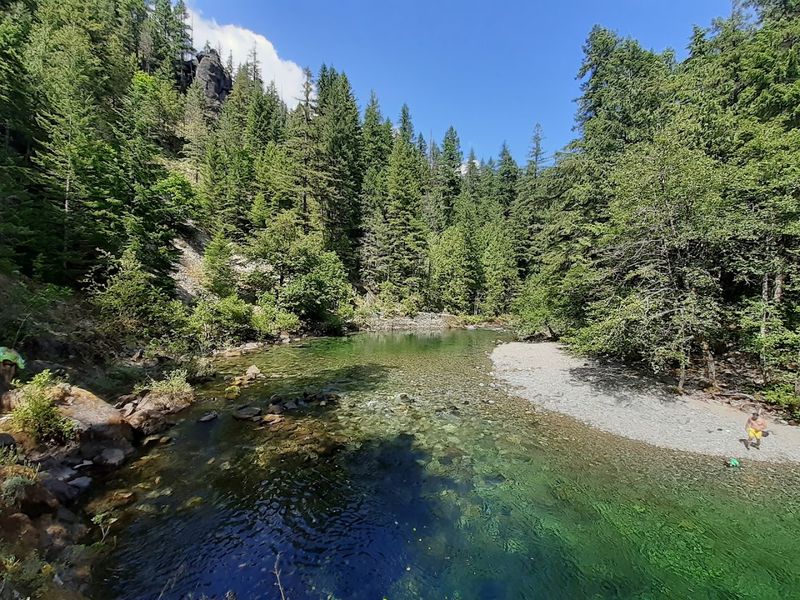
You might not believe me, but some of the clearest water in Oregon sits quietly in the Willamette National Forest.
Opal Creek and its Three Pools area has earned a fierce loyalty from those lucky enough to find it. The water runs a vivid teal-green that looks almost unreal on a sunny afternoon.
Ancient old-growth trees tower above the pools, casting cool shadows over the rocks. The forest here is some of the oldest in the Pacific Northwest, with cedar and Douglas fir that have stood for centuries.
Getting here requires a hike, which is honestly part of the appeal. The trail winds through Opal Creek Wilderness for about three miles before rewarding you with those glassy pools.
Bring water shoes because the riverbed is slippery and rocky in spots.
The Three Pools area has multiple swimming options at different depths, so families and solo swimmers both feel at home. Morning visits are quieter and cooler, which is my personal preference.
Pack a lunch, stay a few hours, and let the old-growth silence do its thing.
North Umpqua River Narrows, Near Glide
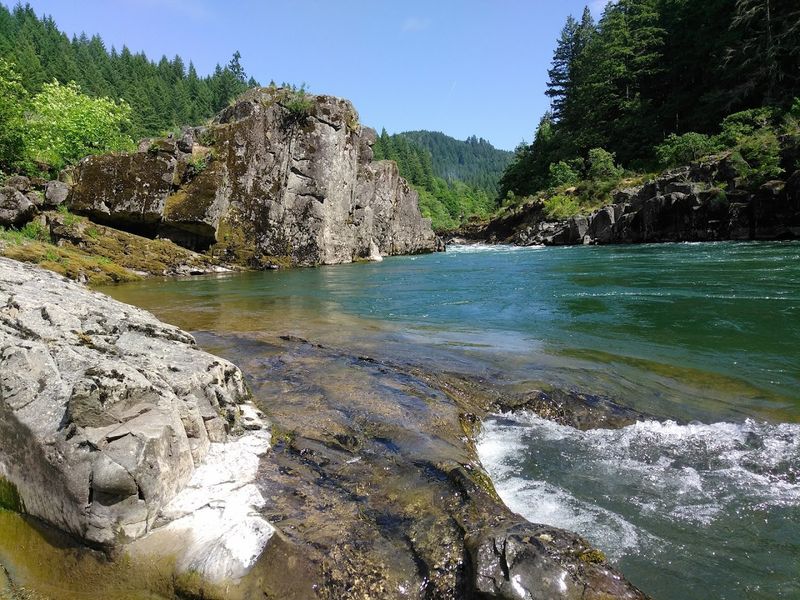
I must admit, the North Umpqua River keeps secrets better than almost any waterway in Southern Oregon.
The Narrows section, found along North Umpqua Highway near the town of Glide, is where the river squeezes between towering rock walls and carves out some of the most dramatic natural pools in the state. The geology here is raw and powerful.
The water runs a deep jade green through the canyon, and the walls rise steeply on both sides. Swimming in the Narrows means floating in a natural corridor that feels completely cut off from the outside world.
Sound echoes off the rock in a way that makes everything feel amplified and alive.
Access requires a bit of scrambling down rocky slopes, so sturdy footwear is a must. The trail is not officially maintained, which keeps the crowd numbers low.
That informal access also means you need to use solid judgment about water levels before jumping in.
Late summer is the safest time to swim here, when flows have calmed from spring runoff. The surrounding forest is home to osprey and great blue herons, so keep your eyes on the sky as well as the water.
This is the kind of swimming experience that makes you feel genuinely small in the best possible way.
Smith River Falls, Siuslaw National Forest
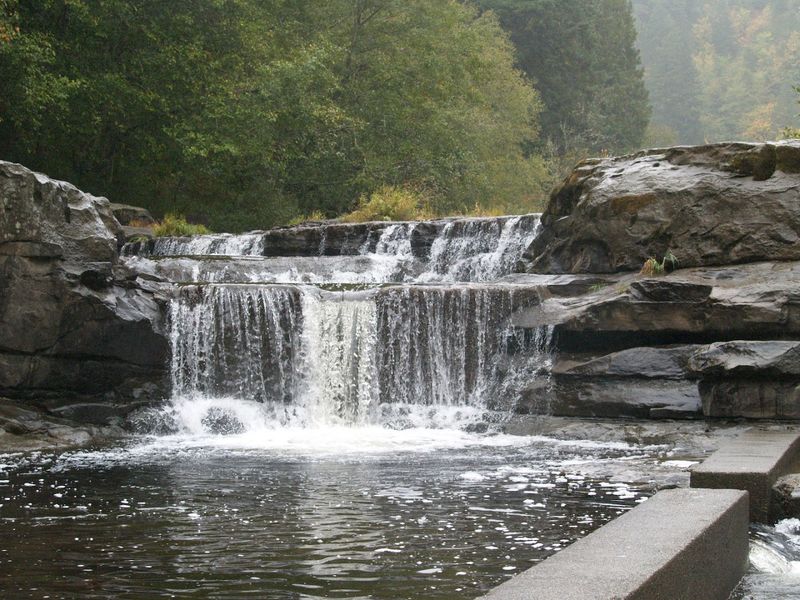
Who would have thought the Coast Range could hide something this spectacular just a short drive from Reedsport?
Smith River Falls inside Siuslaw National Forest is one of those rare swimming holes that combines a genuine waterfall with a swimmable pool at its base. The mist from the falls keeps the air cool and fresh all afternoon.
The Smith River runs through a heavily forested canyon that never gets the same attention as Cascade destinations.
That coastal forest has its own distinct feel, with big-leaf maple and red alder crowding the banks. The water is slightly tannic but clear enough to see the riverbed below your feet.
Getting to the falls involves a short but sometimes steep trail from the parking area. The path is well worth the effort once you hear the roar of the falls growing louder around each bend.
The pool beneath the falls is wide enough for a small group to spread out comfortably.
This area is popular with steelhead anglers in the fall, so swimming season is ideally summer through early September.
The forest here feels distinctly coastal, with heavy moss and fern cover that makes everything look ancient. Smith River Falls Road off Highway 38 leads you into the national forest and toward the trailhead.
Wilson River Footbridge, Tillamook State Forest
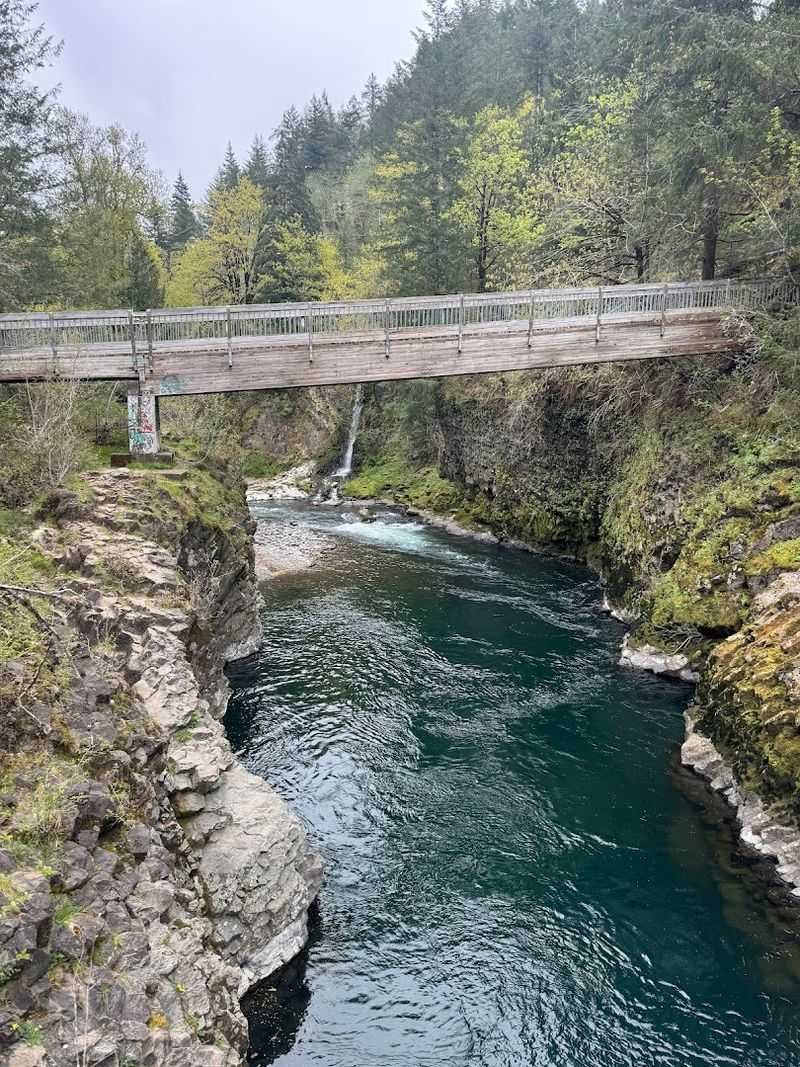
Believe me, the Wilson River in Tillamook State Forest along the north Coast Range is the kind of place that makes you want to cancel your afternoon plans immediately.
The Footbridge area is a beloved local gathering spot, though you would never know it from the understated roadside pullout. The river here is wide, clear, and shallow enough for kids but deep enough in spots for a proper swim.
Gravel bars line both sides of the river, making it easy to set up a towel and spend hours in and out of the water.
The surrounding hills are covered in second-growth Douglas fir, which gives the canyon a lush, enclosed feeling. Summer weekends bring families from Portland and the coast, but weekday mornings are surprisingly quiet.
The Footbridge itself is a sturdy wooden structure that spans the river and gives you a perfect view of the pools below. Jumping from the bridge is a tradition among younger swimmers, though it pays to check depth before any leap.
Water shoes are helpful here too, as the riverbed is a mix of smooth and sharp rock. Wilson River Highway 6 runs directly through Tillamook State Forest and makes finding the Footbridge area straightforward.
The drive through the forest is scenic enough to count as part of the trip. Pack a dry bag for your gear and enjoy one of the north coast’s most underrated summer rituals.
Steelhead Falls, Deschutes River Near Terrebonne
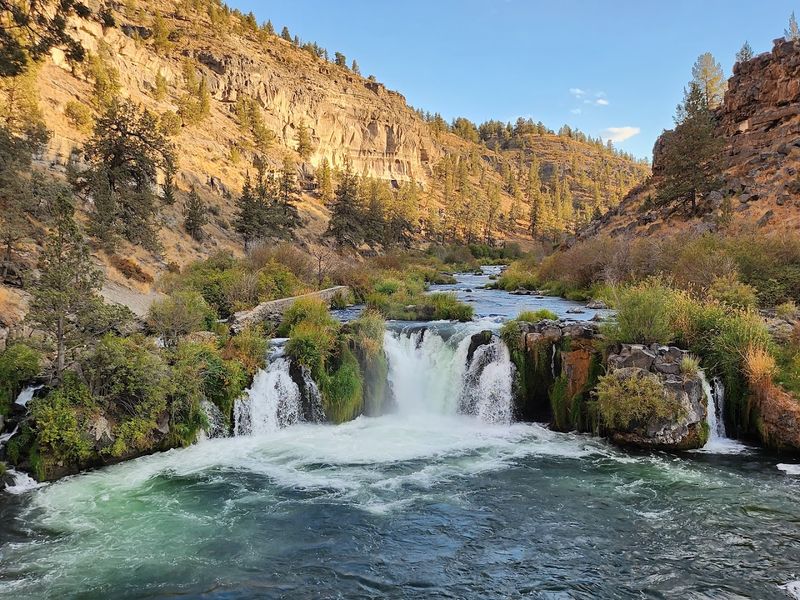
I never would have guessed that Central Oregon’s high desert could produce a swimming hole this dramatic.
Steelhead Falls on the Deschutes River near Terrebonne drops about 20 feet into a wide, clear pool that sits inside a rugged basalt canyon. The contrast between the dry sagebrush landscape above and the lush riparian zone below is genuinely startling.
The hike down to the falls is about 1.5 miles round trip from the Bureau of Land Management trailhead. The trail descends sharply in the final stretch, so the return climb gets your heart rate up.
Most people agree the views along the way make every step worthwhile.
The pool beneath the falls is popular with cliff jumpers, as the canyon walls offer multiple launch points at varying heights.
Always check the depth carefully before attempting any jump, as water levels shift throughout the season. The water is cold and fast near the falls, but calmer pools downstream offer a gentler swim.
Summer is the prime season here, with warm desert air making the cold water feel like a reward. Early morning light hits the canyon walls in a way that turns the basalt a deep copper-orange color.
The Steelhead Falls Trailhead is located off NW Wilcox Avenue near Terrebonne in Jefferson County. This is Central Oregon swimming at its most dramatic.
Alder Flats, Clackamas River, Mount Hood National Forest
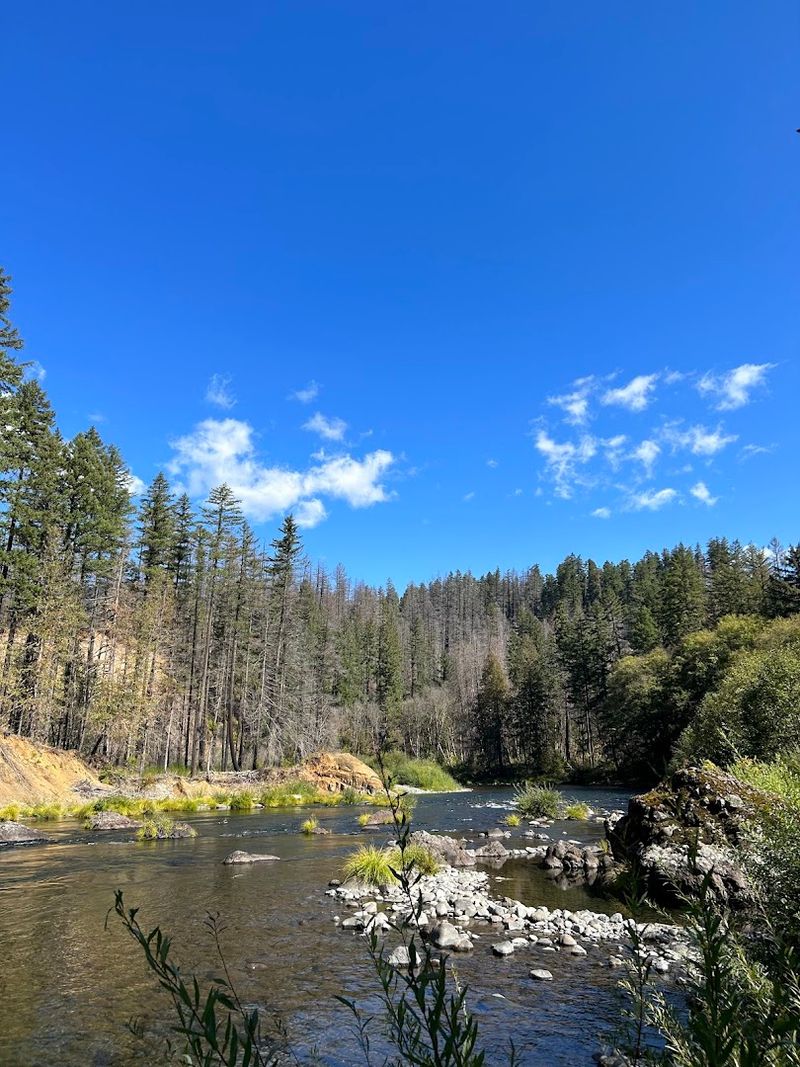
Doesn’t it seem almost too good to be true that a stretch of river this peaceful exists just an hour from Portland?
Alder Flats along the Clackamas River in Mount Hood National Forest is one of those swimming areas that rewards the patient explorer.
The wide gravel bars and calm pools here make it one of the most relaxed swimming experiences in the entire Mount Hood corridor.
Tall alder trees line the banks and create a leafy green canopy that keeps the area shaded through the hottest part of the day.
The Clackamas River runs clear over a sandy and rocky bottom, making it easy to see fish working the current below. This is also prime steelhead and salmon habitat, so the river feels alive in a very literal sense.
Access to Alder Flats is via the Riverside Trail, which winds through old-growth forest before reaching the flats. The trail itself is worth doing even without a swim at the end.
Camping is available nearby at several established campgrounds along the Clackamas River Road.
Water levels are safest for swimming from late July through September, after spring runoff has calmed. The forest around the flats is home to black-tailed deer and a wide variety of songbirds.
Few swimming holes in Oregon balance natural beauty and easy access quite as well as this quiet stretch of the Clackamas River.
Salmon Falls, Near Estacada
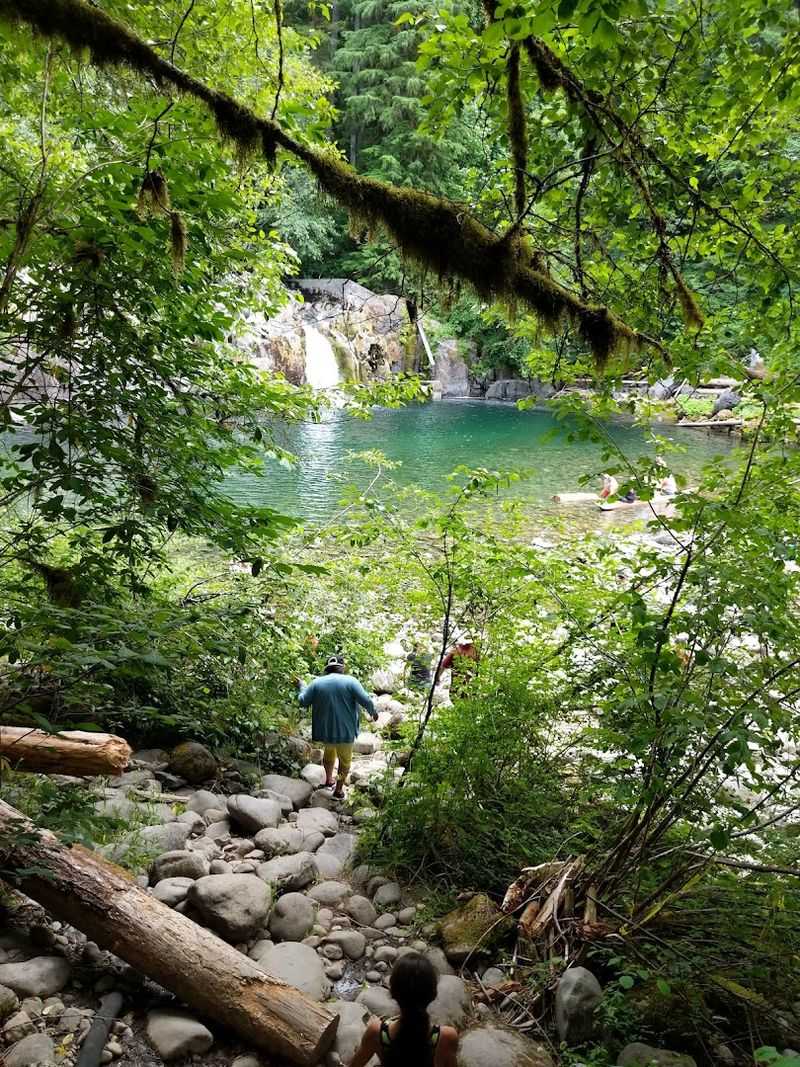
I know, the name alone makes this one sound legendary.
Salmon Falls near Estacada sits in the Clackamas and Mount Hood corridor, where the river drops over a series of rocky ledges and creates a natural swimming pool that looks almost too perfect.
The falls are not massive, but their shape funnels water into a consistent, swimmable basin that locals have been quietly enjoying for years.
The surrounding forest is thick with Douglas fir and western red cedar, giving the whole area a dark, mossy atmosphere.
On overcast days, the green of the forest reflects off the water and creates a moody, almost cinematic scene. Sunny days bring out the sparkle in the water and make the rocks warm enough to lie on for hours.
Getting here involves a short walk from a roadside pullout, which keeps it accessible without being overrun.
The trail is informal and not always clearly marked, so paying attention to your surroundings is important. A good topographic map or offline GPS app helps when the path gets ambiguous.
Late summer is ideal, when water levels are low enough to reveal the full width of the swimming area. The falls attract spawning salmon in autumn, which is a remarkable thing to witness from the bank.
Estacada is the nearest town for supplies before heading into the corridor.
Brice Creek Falls Blue Hole, Umpqua National Forest
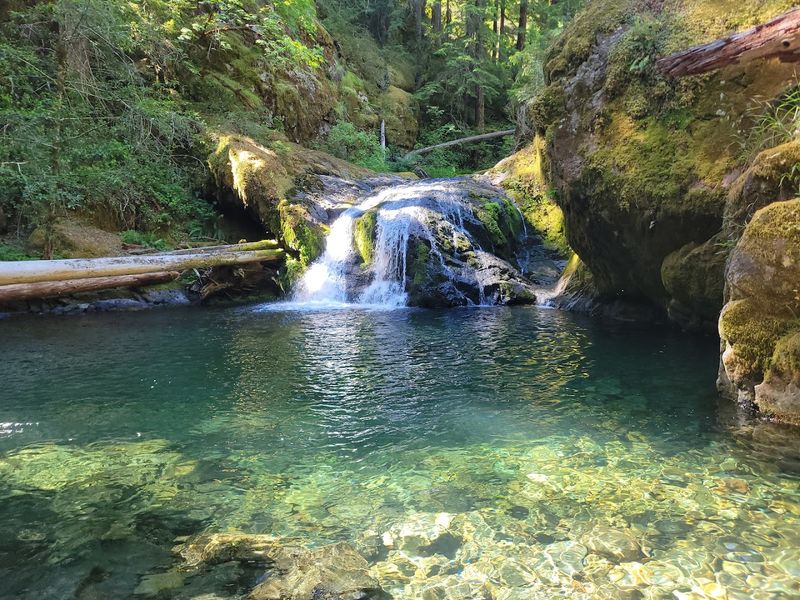
Can you believe a place this beautiful sits tucked inside Umpqua National Forest, just a short drive from Cottage Grove in the Cascade foothills?
Brice Creek and its famous Blue Hole have been quietly drawing swimmers for generations. The water carves through smooth, water-worn rock and drops into a pool that looks almost painted.
The Blue Hole is deep enough for jumping from the surrounding rocks, which is a rite of passage for local kids. The creek itself runs cold and clear all summer long, fed by snowmelt higher in the forest.
Trees hang low over the water, creating a natural canopy that keeps the air cool even on hot days.
There is a campground nearby along Brice Creek Road, which makes this an ideal overnight trip. Waking up next to that sound of rushing water in the morning is one of those simple pleasures that sticks with you.
The campground also gives you early access before day hikers arrive.
The trail along Brice Creek is easy and relatively flat, making it accessible for most fitness levels. Multiple pools dot the creek beyond the main Blue Hole, so exploring upstream always turns up something new.
I never leave this one without finding at least one new favorite rock to sit on.
Tamolitch Blue Pool, McKenzie River
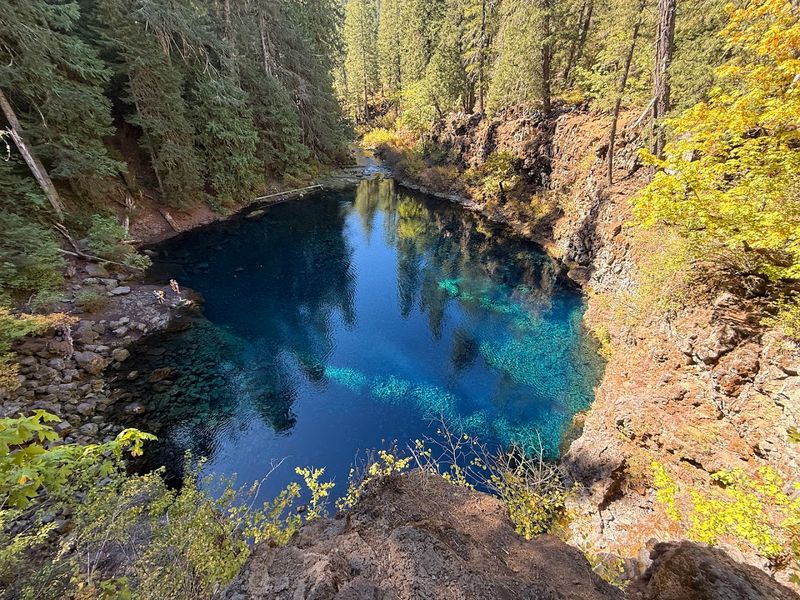
Trust me, nothing prepares you for the moment you round the final bend on the trail and see Tamolitch Blue Pool for the first time.
Along the McKenzie River near McKenzie Bridge in the central Cascades, this pool sits inside a collapsed lava tube. The water bubbles up from underground springs rather than flowing from above.
In late summer, the falls above the pool run completely dry, leaving just that eerie, glowing blue basin below. The contrast of black basalt rock against the turquoise water is genuinely striking.
Photographers make the four-mile round-trip hike just for that one shot.
Swimming here is cold, even in August, because the water comes straight from underground sources. Temperatures hover around 34 to 38 degrees Fahrenheit, which is bracingly frigid.
Most swimmers take a quick dip and then scramble back out onto the warm volcanic rocks to dry off.
The trail follows the McKenzie River Trail, which is well-maintained and relatively flat. Start at the Trailbridge (lower) trailhead for the most direct route to the pool.
Arrive early on weekends to beat the crowds, because word has gotten out despite what locals claim. This one is worth every cold, gasping second.