This North Carolina Garden Hides A Nearly 500-Year-Old Oak Wrapped In Spanish Moss And Southern Mystery
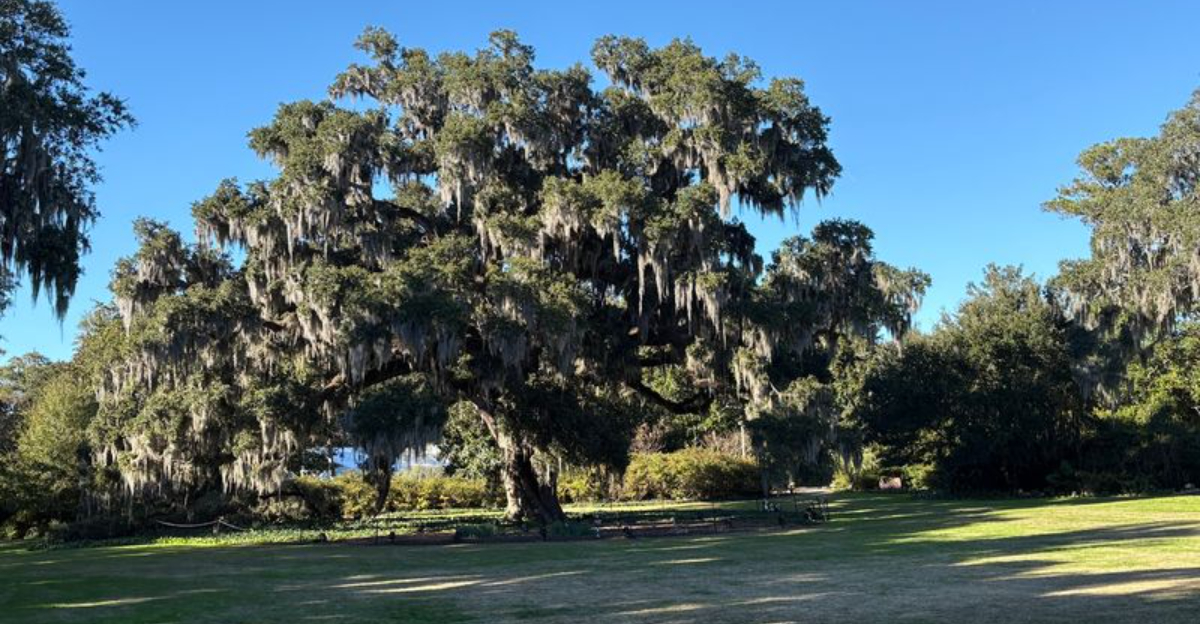
Old trees do not hurry, because time has already taught them what matters.
One ancient Southern live oak has stood since around 1545, carrying centuries in its roots and silence in its shade.
Long before crowded calendars, rushing cars, or modern noise, this tree was already growing toward the sky with quiet patience.
Stand beneath its wide limbs, and the world seems to soften a little.
Spanish moss hangs like memory from the branches, moving gently when the air shifts.
The trunk feels strong enough to humble anyone who thinks age is only a number.
Nothing here needs to shout for attention, because real wonder rarely does.
This living giant reminds every visitor to slow down, look up, and respect one of the quietest wonders in North Carolina.
Spanish Moss Gives The Airlie Oak Its Storybook Mood
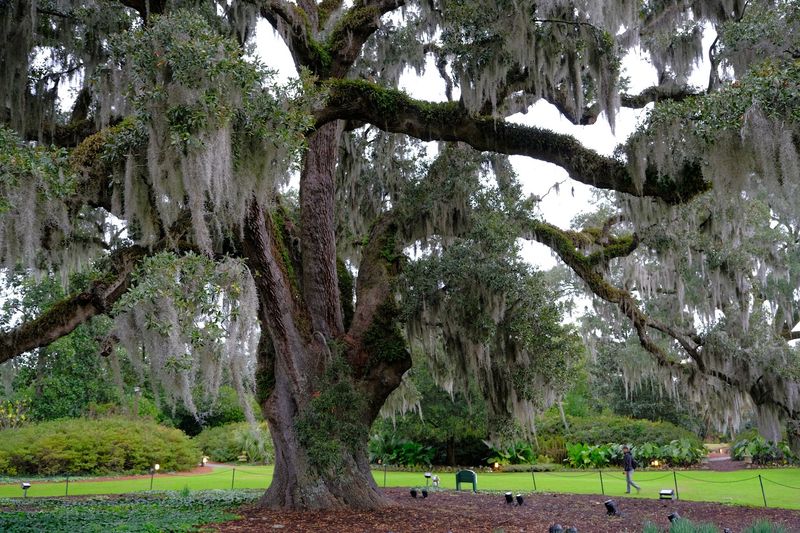
Silvery strands of Spanish moss give the Airlie Oak its most dramatic first impression, especially when a breeze moves through Airlie Gardens at 300 Airlie Road in Wilmington.
Draped over the live oak’s long limbs, the moss softens the tree’s massive shape and makes the whole scene feel older than the paths around it.
Spanish moss is not true moss, though. It is an epiphyte, meaning it grows on other plants for support while taking moisture and nutrients from the air and rainfall rather than feeding from the tree itself.
That detail keeps the mystery from turning into a false warning. Moss adds atmosphere, texture, and wildlife value without acting like a villain on the branches.
Coastal North Carolina’s warm, humid air helps it thrive, which explains why the oak looks so perfectly suited to its setting. Birds, insects, and small creatures can also use the hanging strands as shelter.
Instead of decoration placed by human hands, every gray-green curtain belongs to a living coastal relationship that makes the oak feel even more alive.
Almost 500 Years Of Shade Waits On The Oak Lawn
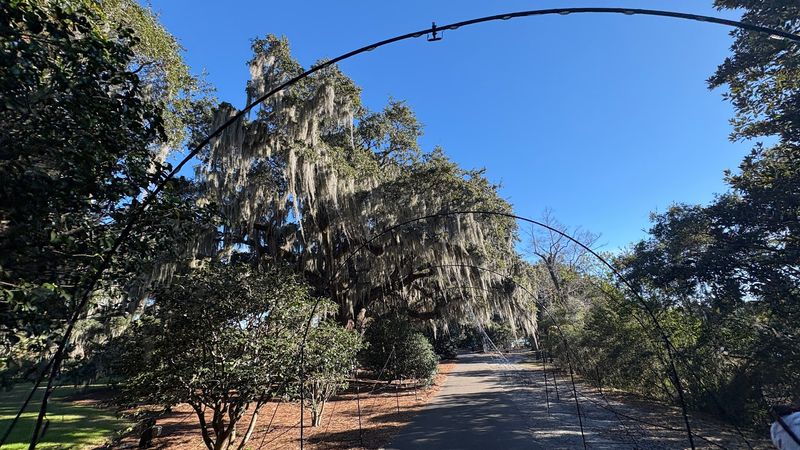
Long before Wilmington became the city visitors know today, the Airlie Oak was already growing on the grounds that now form Airlie Gardens.
Local tourism information estimates the Southern live oak took root around 1545, making it nearly 500 years old and much older than the public garden that surrounds it today.
In 2007, measurements recorded the tree at 128 feet tall, with a trunk circumference of more than 21 feet and a crown spread of 104 feet, placing it among North Carolina’s most remarkable live oaks.
Numbers help, but they do not fully prepare anyone for standing beneath it.
Branches stretch outward with the weight and confidence of something that has survived centuries of coastal weather. Shade under the oak feels different because it comes with scale, age, and stillness all at once.
Visitors crossing the lawn can pause beneath the canopy and look up through Spanish moss, leaves, and twisting limbs. Nothing about the moment needs to be rushed.
Time seems to slow because the tree has never been in a hurry.
Wilmington’s Coastal Garden Adds The Perfect Backdrop
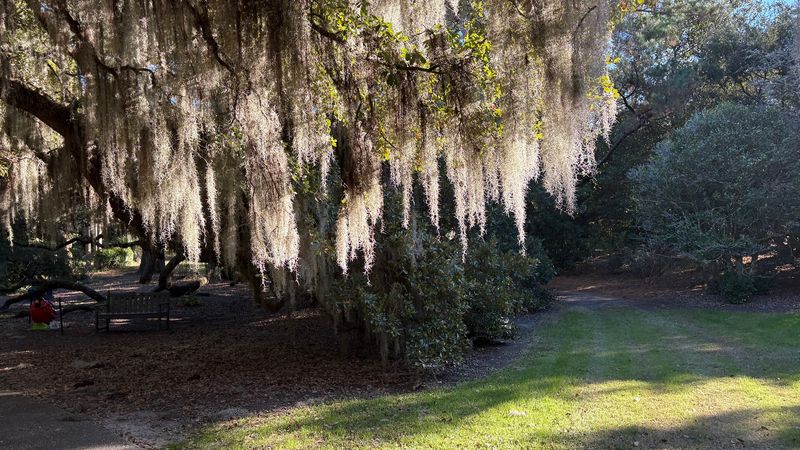
Garden scenery around the Airlie Oak matters because the tree does not stand in an empty field. Airlie Gardens covers 67 acres in Wilmington, with 10 acres of freshwater lakes, formal plantings, wildlife habitat, walking trails, sculptures, historic structures, and views tied to Bradley Creek.
Sarah Green Jones began shaping the private garden in 1886 for the Pembroke Jones family, and New Hanover County later purchased the property in 1999 so the grounds could remain open to the public.
Azaleas, camellias, magnolias, palms, and wisteria bring seasonal color, while old trees and water features keep the landscape feeling layered even outside peak bloom.
Minnie Evans Bottle Chapel adds another unforgettable stop, honoring the visionary artist and longtime Airlie gatekeeper with colorful glass, mosaics, and sculptural detail.
Birders get another reason to linger, since Airlie is recognized on the North Carolina Birding Trail and has recorded more than 200 bird species.
All of that makes the Airlie Oak feel like the ancient center of a lively coastal world.
You Feel Small Before The Branches Even Spread Out
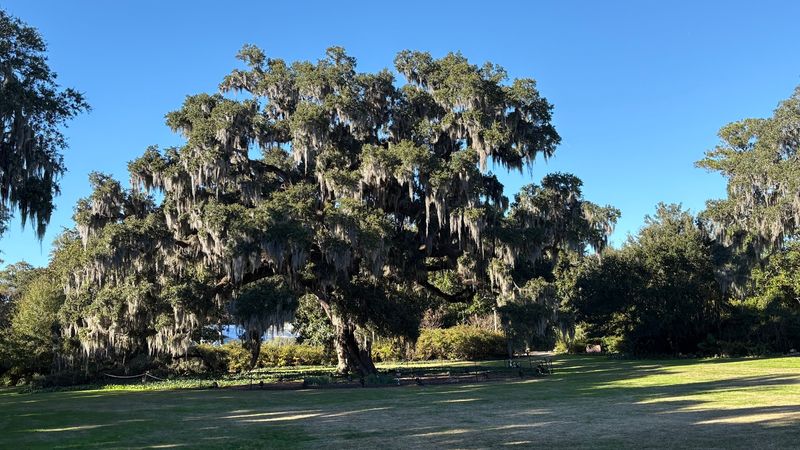
Walking toward the Airlie Oak across the lawn creates a quiet size trick that photographs rarely capture well. From a distance, one branch may look impressive enough.
Up close, the same limb starts looking wider than many full-grown trees, and the trunk suddenly feels less like part of a garden and more like a landmark with bark.
Wilmington’s famous live oak has been measured with a circumference exceeding 21 feet, which explains why standing beside it can make visitors pause before saying anything useful.
Children tend to look upward first. Adults usually do the same, although they pretend to be more casual about it.
Deep furrows in the bark, heavy lateral limbs, hanging moss, and the broad crown combine into a scale that feels humbling without being dramatic.
North Carolina has waterfalls, mountains, beaches, and historic towns, but this tree offers a different kind of wonder.
Nothing moves quickly here. One slow look upward can make errands, phones, and schedules feel very temporary beside something that has been growing for centuries.
The Tree’s Age Makes Every Photo Feel Different
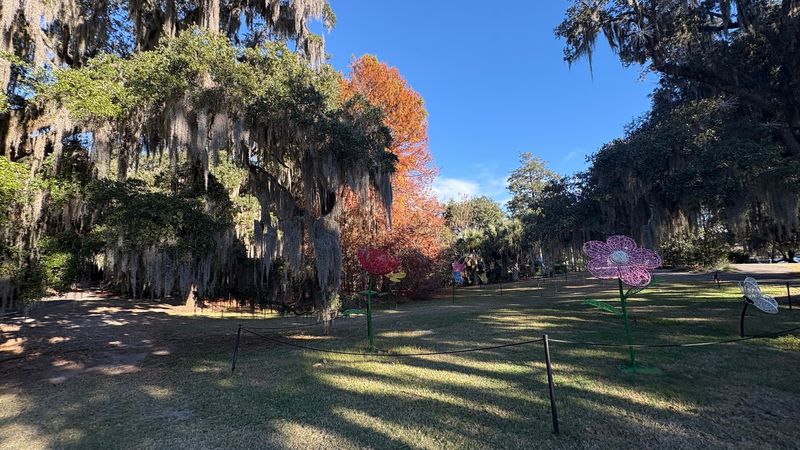
Morning light gives the Airlie Oak a different personality than late afternoon, which is why the same tree can surprise repeat visitors.
Soft early light slips through the canopy and catches Spanish moss in pale silver-green streaks, while stronger midday sun makes the shade beneath the limbs feel cool and dense.
Later in the day, the branches can turn sculptural against the lower coastal light. Nearly five centuries of growth give photographers plenty to work with: cracked bark, twisting limbs, moss, resurrection fern, leaf shadows, and a canopy wide enough to change with every angle.
Airlie Gardens’ 67-acre setting adds even more variation, since seasonal blooms, lake reflections, and nearby paths frame the oak differently throughout the year.
Simple phone photos can still come out beautifully because the subject carries so much texture.
Wide shots show the tree’s reach, while close details make the bark look almost abstract. Families often take the expected group photo, then end up saving the quieter image of moss moving in the breeze.
Age gives every picture a little more weight.
Old Live Oaks Bring Southern Mystery Without Trying
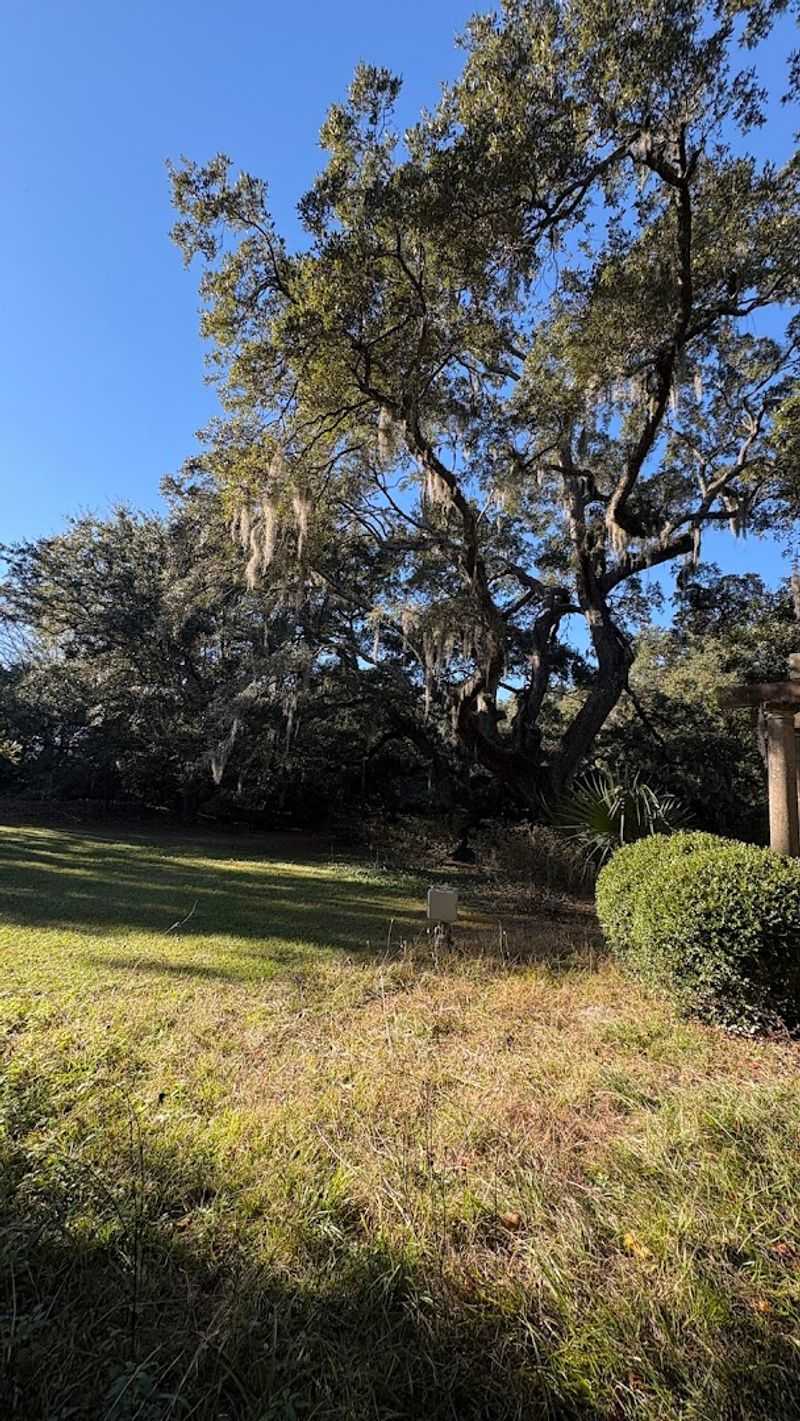
Southern live oaks already carry a sense of age, but the Airlie Oak takes that feeling much further. Broad evergreen leaves, low sweeping limbs, Spanish moss, and resurrection fern create a look strongly associated with coastal Southern landscapes.
At Airlie Gardens, that atmosphere comes naturally rather than through staging.
The tree’s estimated 1545 origin means it predates the garden’s 1886 beginnings by more than three centuries, so its presence feels less like an attraction and more like a survivor the garden grew around.
Mystery here does not need ghost stories or exaggerated legends. Wind through moss, shadows under branches, and the sheer age of the trunk do enough.
Even on an ordinary weekday, the oak can feel cinematic because it carries evidence of time without saying a word. Wilmington’s humid air, nearby water, and old garden paths deepen that mood.
Some places work hardest in peak season, when flowers bloom or crowds gather. This tree does not depend on timing.
Winter green, summer shade, spring color, or fall light all leave the same impression of patience.
Nearby Garden Paths Keep The Visit Moving Slowly
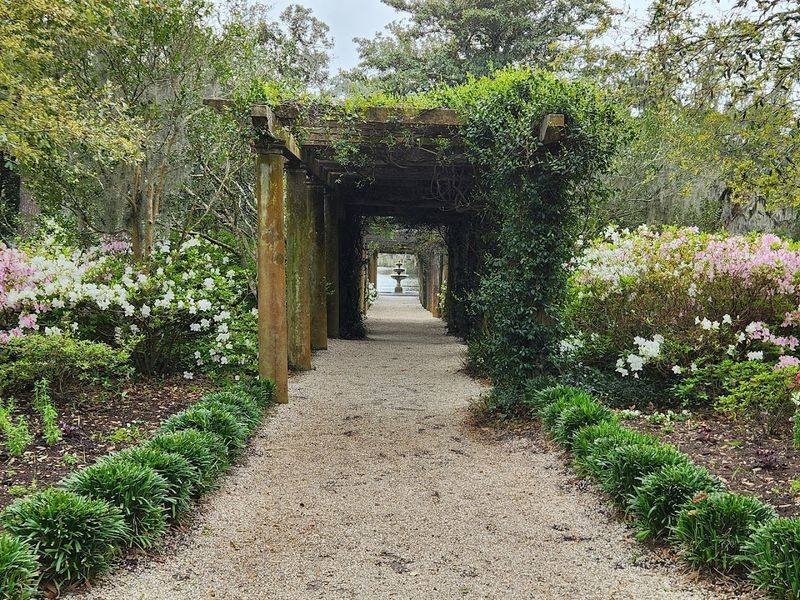
Winding paths around Airlie Gardens make it easy to turn a visit to the oak into a fuller Wilmington outing.
Instead of rushing straight to one tree and leaving, guests can move through formal garden areas, lakeside views, sculptures, seasonal plantings, and quiet benches spread across the 67-acre property.
Freshwater lakes cover about 10 acres, adding reflections and wildlife activity that slow the walk even more.
Minnie Evans Bottle Chapel brings bright color and artful detail, while birding areas reward visitors who notice movement along water edges and tree lines.
Airlie’s own garden information notes more than 200 bird species observed on the property, which gives even a casual stroll the chance to feel unexpectedly alive.
Seasonal features and events can shift the rhythm, so checking the garden’s current schedule before visiting is smart.
Still, the best approach stays simple. Wear comfortable shoes, leave room for wandering, and let each turn reveal something at its own pace.
The oak may be the headline, but the paths make the visit feel complete.
This Oak Turns A Quiet Walk Into A Wilmington Memory
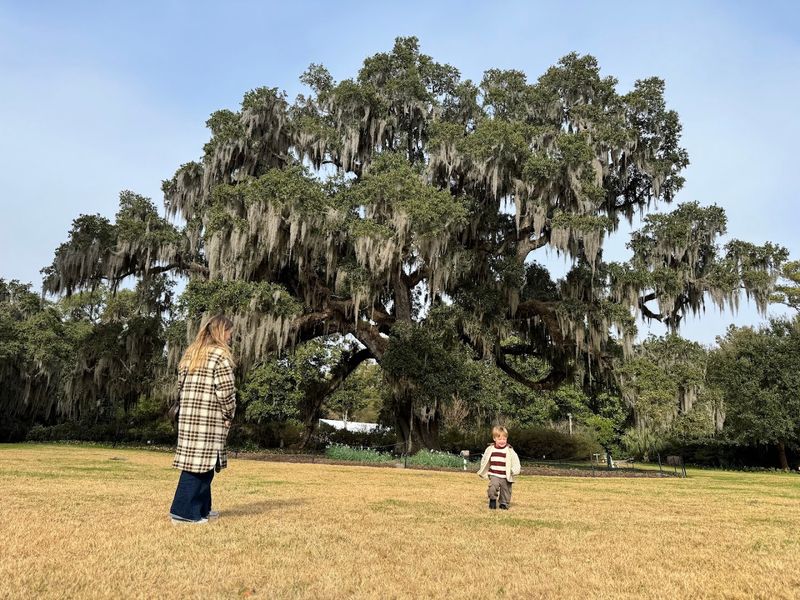
Leaving Airlie Gardens often feels different from leaving a typical pretty stop, mostly because the Airlie Oak gives the visit a lasting center.
The garden is open daily from 9 a.m. to 5 p.m., with last admission at 4:30 p.m., though official guidance notes Monday closures in January and February.
General admission is listed at $10, with reduced pricing for New Hanover County residents, military visitors, and children ages 4 to 12. Morning visits usually make the most sense for softer light, cooler paths, and a calmer view beneath the tree.
Families can wander the gardens, pause at the oak, circle toward the lakes, and still feel like the day stayed unhurried. Couples, photographers, birders, and solo travelers all find different reasons to linger.
Nearly 500 years of growth gives the tree a weight that is hard to manufacture anywhere else. Wilmington has beaches, restaurants, and riverfront energy waiting nearby, but this moss-draped oak offers a quieter memory.
It asks visitors to slow down, look up, and take one long breath before moving on.