This Storybook California Garden Trail Comes With Peacocks Strutting Around Every Corner
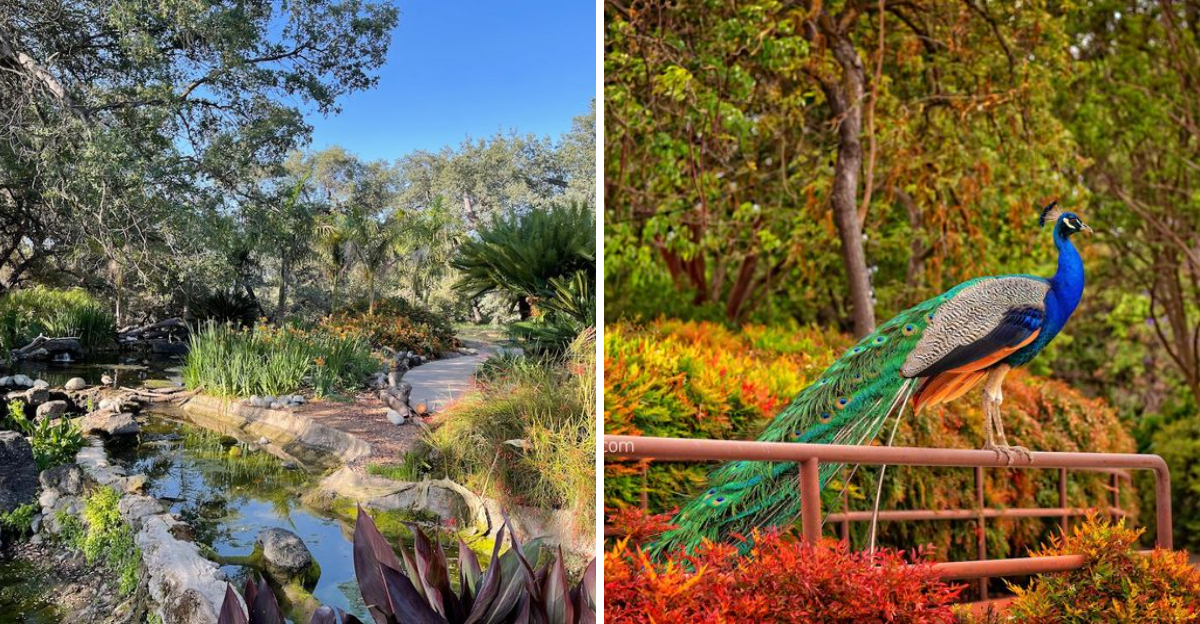
Peacocks have a funny way of making a garden feel like it hired dramatic little tour guides.
They stroll past lawns, paths, ponds, and blooming corners with the confidence of creatures who absolutely believe the place belongs to them. Honestly, they make a strong case.
A quiet walk becomes more entertaining when a flash of blue appears near the trees or a feathered supervisor crosses the path like it has somewhere important to be.
Some California gardens come with flowers. This one adds full peacock attitude.
The setting already feels made for wandering. Shady trails, old trees, water features, and storybook scenery give the day plenty to work with before the birds even show up.
Then the peacocks add color and a little harmless chaos. Kids watch them like celebrities. Adults pretend they are not doing the same thing.
Nothing about the visit needs to feel rushed.
Follow the paths, pause where the garden gets especially pretty, and let the peacocks interrupt the plan whenever they feel like it.
Let The Peacocks Steal The First Few Minutes
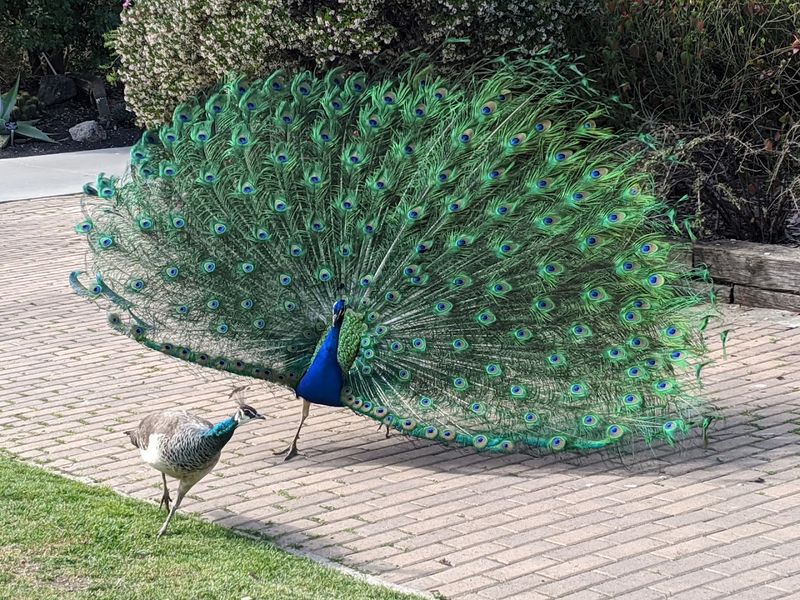
Right from the entrance, the peafowl at the arboretum have a way of commanding full attention before a single plant label gets read.
Their descendants trace back to birds imported from India during the 1880s, and the flock has roamed freely across the property ever since, giving the garden one of its most distinctive personalities.
Males display iridescent blues, greens, and gold, while females wear mottled brown for natural camouflage.
Early mornings tend to offer the best viewing windows, when the peacocks are most active near the entrance and open lawns.
Their calls, often described as a loud meowing sound, carry across the grounds and serve as a constant reminder that the wildlife here is genuinely wild rather than staged.
Watching a male fan his full train against a backdrop of green trees is the kind of moment that makes a phone camera feel completely necessary.
The arboretum sits at 301 N Baldwin Ave, Arcadia, CA 91007, and the peafowl are typically visible from the moment guests pass through the gate.
Giving the birds a few unhurried minutes at the start sets a relaxed tone for everything that follows on the trail.
Follow The Peacock Walking Trail Like A Garden Treasure Map
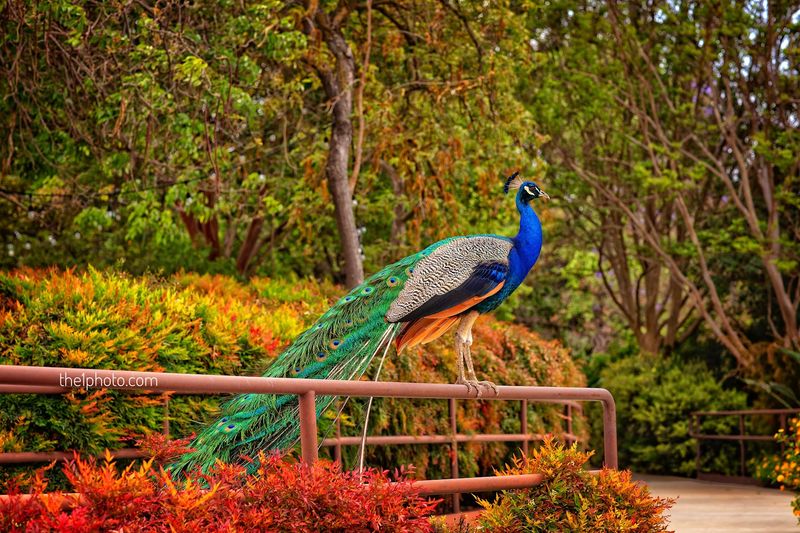
An official Peacock Walking Trail winds through the arboretum, turning the search for peafowl into something closer to a guided adventure than a casual stroll.
The designated route leads through areas where the birds are frequently spotted, helping visitors navigate the expansive property without missing the spots where peacocks tend to gather or pass through during the day.
Following the trail introduces a playful rhythm to the visit, encouraging a slower pace that allows for more careful observation of both the birds and the surrounding plant collections.
Each section of the path feels a little different, moving from open lawns to shaded corridors and back again, so the sense of discovery stays fresh throughout.
A sudden rustling in the bushes or a flash of iridescent color ahead keeps the walk genuinely engaging rather than predictable.
The trail reinforces how deeply the peafowl are woven into the fabric of this garden, not as a novelty add-on but as a living, moving part of the landscape.
Using the Peacock Walking Trail as a structural guide helps first-time visitors cover meaningful ground without feeling overwhelmed by the sheer size of the 127-acre property.
Keep Ten Feet Back Before The Birds Get Too Comfortable
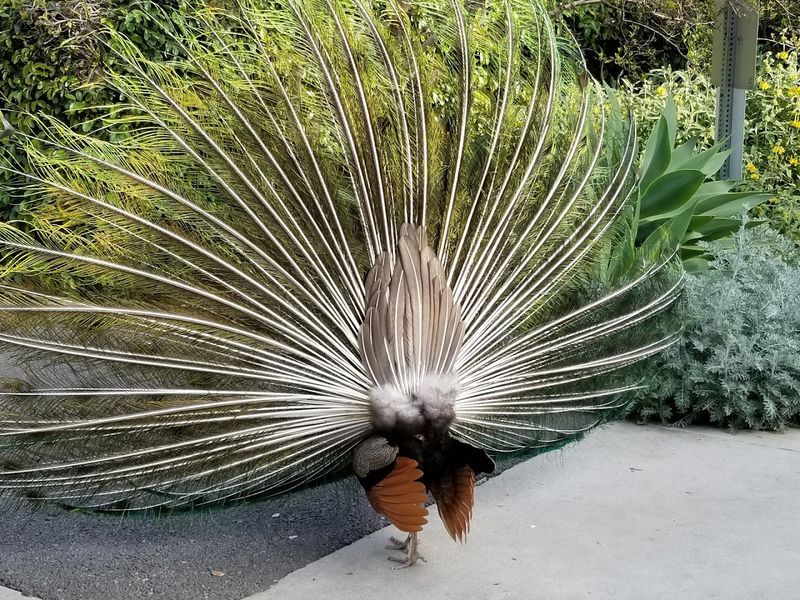
Spending time near the peafowl is one of the highlights of the arboretum visit, but keeping a safe distance is genuinely important rather than just a polite suggestion.
The arboretum asks visitors to stay at least 10 feet away from the birds, and that guideline exists because peafowl are wild animals with sharp talons and unpredictable moods, particularly during mating season.
Feeding the peafowl is strictly prohibited across the entire property.
Their natural diet includes seeds, plants, insects, and small creatures, and human food disrupts that balance while also encouraging the birds to approach people too closely.
Children should always be supervised near the peafowl, since the birds can react quickly when they feel crowded or startled.
Backing away slowly rather than shooing or stomping is the recommended response when a bird approaches too closely.
Moving quietly and keeping noise levels low around the peafowl tends to result in calmer, more natural behavior from the birds, which also makes for far better photographs.
Respecting the wildlife guidelines ultimately benefits everyone on the property, including the peafowl themselves, and keeps the experience enjoyable for all visitors throughout the day.
Save The Queen Anne Cottage For The Fairytale Reveal
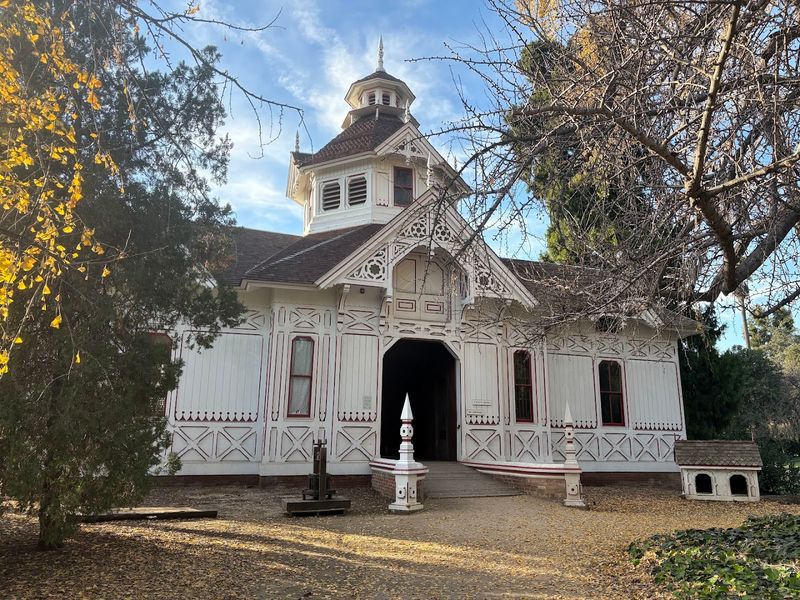
In the historic core of the garden, the Queen Anne Cottage stops visitors in their tracks the moment it comes into view.
Built between 1885 and 1886 by Elias Jackson Baldwin, the structure was designed as a guesthouse for entertaining rather than as a primary residence.
Its elaborate Victorian detailing has survived remarkably well into the present day.
The red and white facade, ornate gingerbread trim, and intricate woodwork give it an appearance that feels pulled directly from a period film set.
Interior details include black walnut wood trim, marble mantelpieces, and stained glass windows, one of which features a portrait reinstated during a 1952 restoration.
The cottage holds a place on the National Register of Historic Places and carries designation as a California Historical Landmark, reflecting its cultural and architectural significance to the region.
Its picturesque setting near Baldwin Lake has made it a popular backdrop for film and television productions over the decades.
Visiting the cottage during a quieter midweek morning allows for a more unhurried look at the architectural details without larger crowds competing for the same angles.
The combination of Victorian craftsmanship and natural surroundings makes this stop one of the most visually compelling moments in the entire garden experience.
Wander Past Baldwin Lake For The Prettiest Old-California Mood

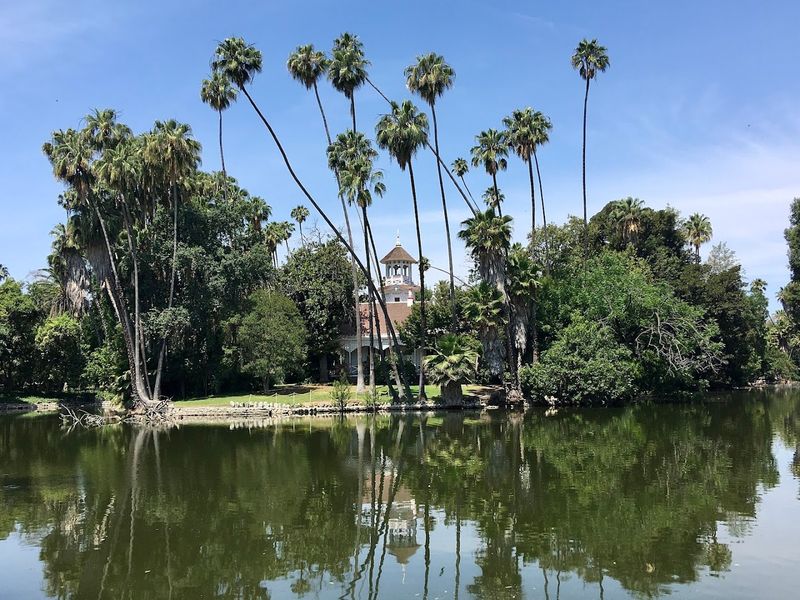
Baldwin Lake sits at the geographic and atmospheric heart of the arboretum, offering some of the most serene views on the entire property.
The sag pond was deepened by Elias Jackson Baldwin during the 1880s, and it has functioned as a scenic centerpiece ever since, with historic California fan palms and Mexican fan palms lining the northern shore.
The still water reflects the surrounding vegetation and the Queen Anne Cottage in a way that makes the scene feel almost suspended in time.
Wildlife congregates around the lake in noticeable numbers, including Canada geese, ducks, turtles, and occasional egrets and great blue herons.
The combination of water, birds, and Victorian architecture creates an atmosphere that feels distinctly old California without requiring any imagination to appreciate.
Walking the shoreline at a leisurely pace reveals shifting perspectives of the cottage and the surrounding gardens that cannot be seen from a single fixed point.
The lake area tends to feel quieter than the main entrance zones, making it a good destination for visitors looking for a slower, more reflective portion of the visit.
Sitting near the water for a few minutes and simply watching the wildlife move through the scene is one of the more underrated pleasures the arboretum has to offer on any given day.
Look For Garden Corners That Feel Different Every Few Steps
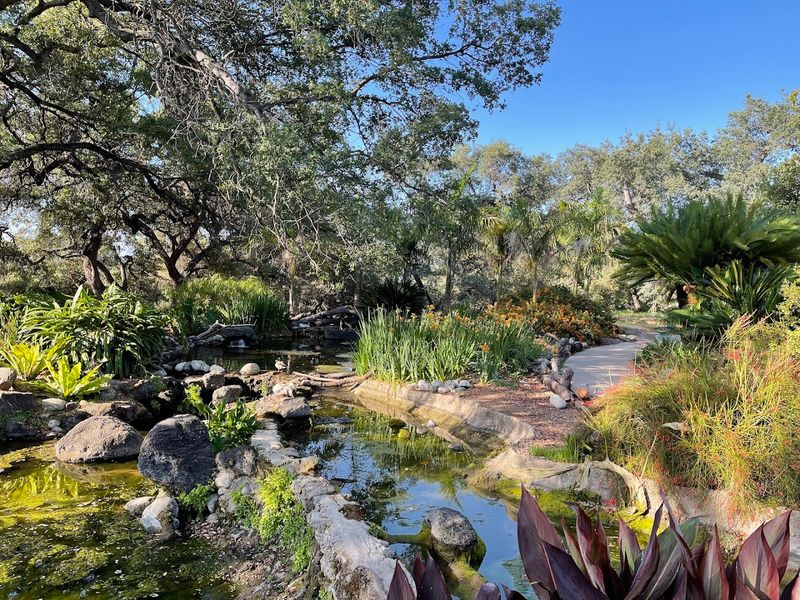
Walking through the arboretum rarely feels repetitive, because the landscape shifts in character with almost every turn.
Themed plant collections representing Africa, Australia, the Mediterranean, and other regions sit alongside prehistoric plant landscapes, perennial gardens, and a redwood grove, giving the grounds a range of textures.
Open lawns invite broad views while shaded corridors offer cool relief on warmer days.
The Bauer Lawn, with its ornate fountain, provides a grand open space that contrasts with the intimacy of the lily ponds and the Meyberg Waterfall area.
Moving between these different zones creates a natural rhythm to the visit, where the pace can speed up across open areas and slow down in spots that invite closer inspection of individual plants or wildlife.
The variety makes the arboretum accessible to visitors with different interests, from serious plant enthusiasts to families looking for a pleasant outdoor afternoon.
No hard hiking is required to experience this variety, since the paths are generally manageable for most fitness levels.
Comfortable shoes are always a practical choice given the amount of ground covered, and bringing water helps maintain energy across the different sections.
The constantly changing environment is genuinely one of the arboretum’s strongest qualities as a destination.
Arrive With Enough Time Before Last Entry
The arboretum covers 127 acres, and doing it justice requires more than a quick pass through the front section.
Current official hours place the garden open from 9:00 a.m. to 7:00 p.m. daily, with last entry accepted at 6:30 p.m.
Arriving early, particularly on weekends, tends to mean smaller crowds, easier parking, and more active peafowl near the entrance and main lawns.
On select Saturdays during the summer, the garden may close earlier than usual due to the Pasadena Pops concert series, with last entry shifted to 3:30 p.m. and grounds closing at 4:00 p.m.
Checking the official website at arboretum.org before visiting is the most reliable way to confirm current hours and any special event closures that might affect the day.
Purchasing tickets in advance is also worth considering, since it streamlines entry and avoids any uncertainty at the gate.
Planning for at least two to three hours gives enough time to cover the main themed gardens, the historic core, and the lake area without feeling rushed.
Visitors who want to add a tram tour or a café stop should factor in additional time accordingly.
A well-timed arrival makes the difference between a relaxed exploration and a hurried loop through only a fraction of what the property has to offer.
Make The Gift Shop Or Cafe Your Cool-Down Stop
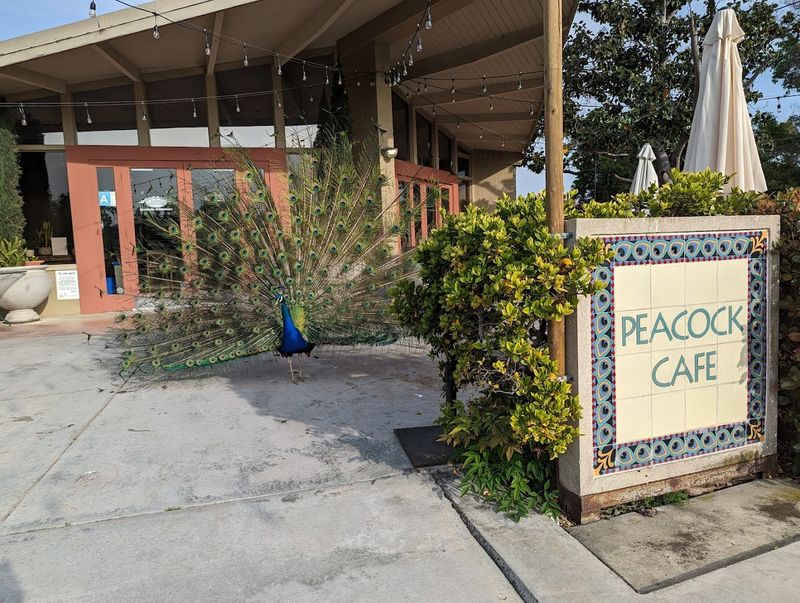
After several hours of walking through themed gardens and tracking peacocks across the property, the visitor amenities near the entrance offer a genuinely welcome pause.
The Peacock Cafe operates seven days a week, serving breakfast and lunch items that include freshly made sandwiches, salads, snacks, and a range of beverages.
Outdoor seating surrounded by garden views makes the stop feel like a natural extension of the visit rather than a retreat indoors.
The grill portion of the cafe closes daily at 3:30 p.m. and remains closed on Mondays, so timing the food stop accordingly helps avoid arriving after service has ended.
Outside food is not permitted within the arboretum, making the cafe the primary option for on-site refreshments. The menu is described as light and reasonably priced, suited to a midday break rather than a formal dining experience.
For visitors interested in taking something home, the Gift Shop opens daily from 10 a.m. to 5 p.m. and features arboretum gear alongside products from Southern California artists and makers.
A garden admission ticket is not required to visit the Gift Shop, making it accessible for a standalone stop.
Browsing the shop after a long walk through the grounds gives the outing a relaxed and unhurried conclusion without adding significant time to the overall visit.