This Nebraska Steakhouse Serves Onion Rings With A Following Nearly As Strong As The Main Dish
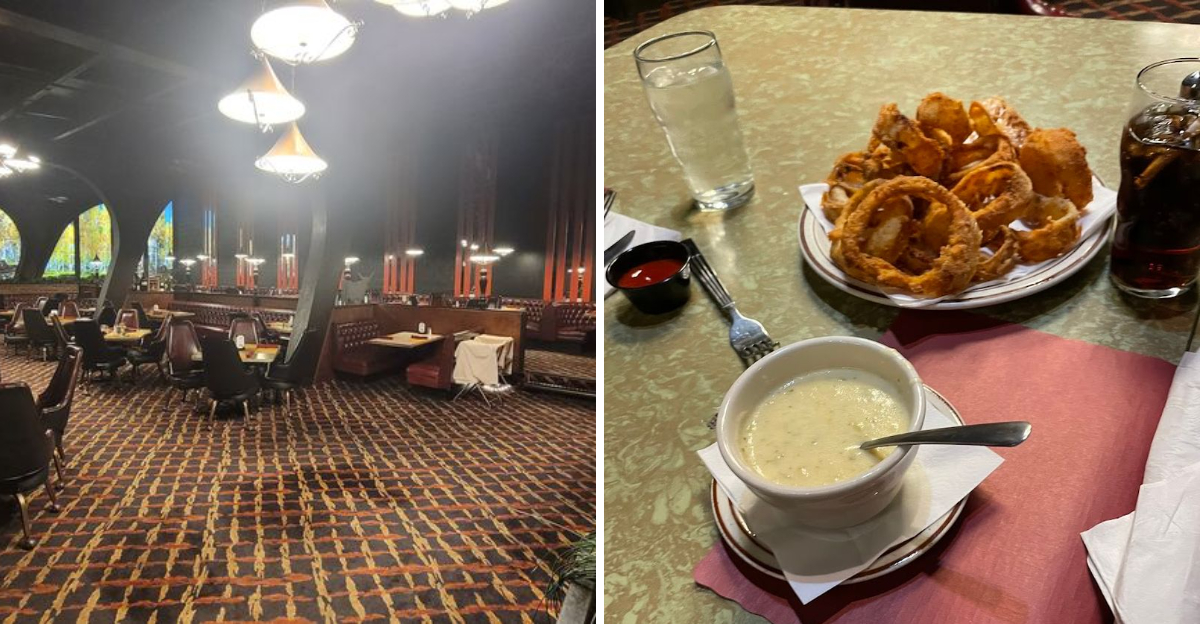
Onion rings are supposed to know their place. Sit beside the steak. Add crunch. Behave like a side dish.
Then some restaurants make them so crisp, golden, and ridiculously craveable that the steak starts sharing the spotlight whether it likes it or not.
That is the situation here. People may come in thinking about beef and an old-school dining room, but those onion rings have their own fanbase for a reason.
A steakhouse side this beloved gives Nebraska dinner plans a little extra drama.
The appeal is wonderfully straightforward. Big plates, a room with decades of character, and a menu that understands comfort does not need a makeover.
The steak still matters, of course. It is the anchor, after all.
But the onion rings bring that rare kind of table energy where everyone immediately reaches for one.
Some meals are remembered for the main dish. This one makes room for the side order that refuses to stay quiet.
Onion Rings Deserve First-Bite Attention
Few side dishes anywhere in Omaha carry the kind of street credibility that the hand-breaded onion rings at Johnny’s Cafe have quietly accumulated over the years.
The preparation is labor-intensive and deliberately old-school, starting with fresh onions that are sliced in-house and dredged twice in a cracker meal batter before being chilled prior to frying.
That extra step is what gives each ring its distinct, bronzed crust and tender interior.
The result is a texture that holds up well rather than turning soggy, and a flavor that carries a subtle savory depth uncommon in most steakhouse sides.
Regulars tend to order them before the main course arrives, treating them less like an accompaniment and more like a destination in themselves.
The kitchen’s consistency with these rings over decades has turned a simple appetizer into a point of local pride.
Coverage from food publications has repeatedly called out the onion rings specifically, which is unusual for a side dish at a beef-focused restaurant.
That kind of repeated, unsolicited recognition tends to mean something real. For first-time visitors, ordering them early in the meal is a practical tip worth following without hesitation.
Prime Rib Still Runs The Main Event
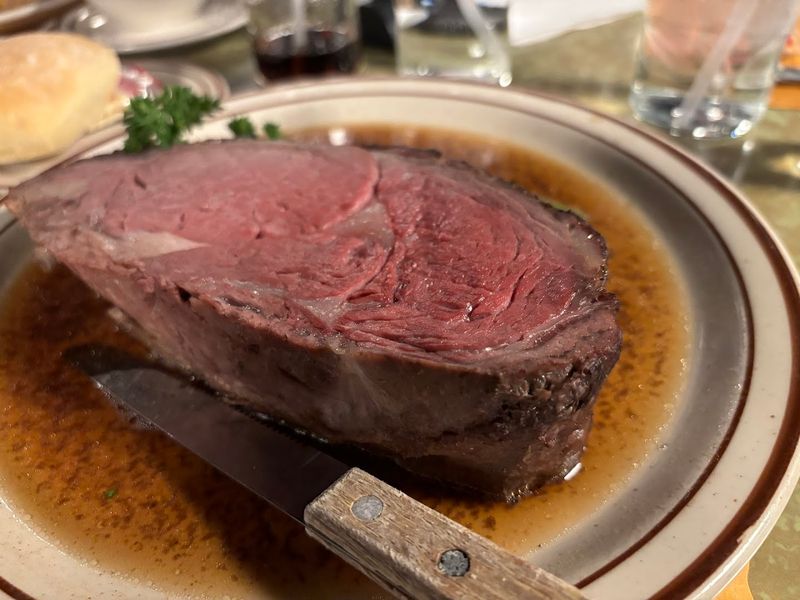
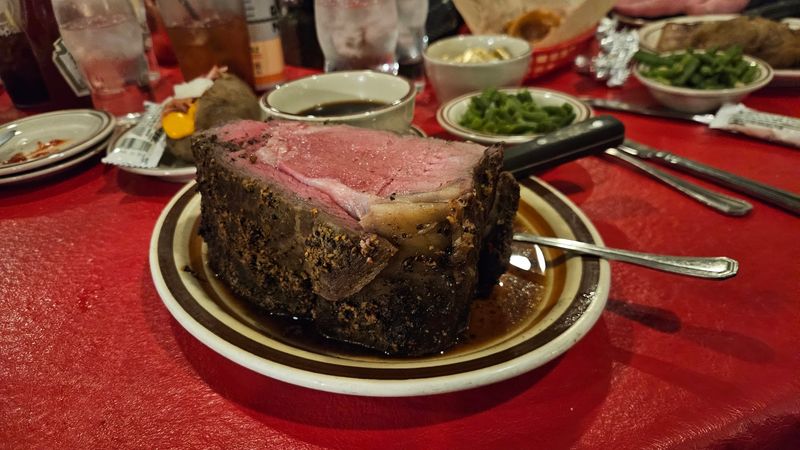
Roast prime rib has anchored the menu at Johnny’s Cafe for decades, and it remains the dish most closely associated with the restaurant’s identity as a true Midwestern steakhouse.
The beef is slow-roasted and sliced to order, which means each cut arrives at the table with its juices still active rather than sitting under a heat lamp. That distinction matters more than it might seem on paper.
Two cut sizes are available, the Junior Cowboy Cut and the Cowboy Cut, giving diners a practical choice depending on appetite.
Each serving comes with a rich au jus that complements rather than overwhelms the natural flavor of the corn-fed Midwestern beef.
The slow-roasting process allows the meat to develop a depth of flavor that faster cooking methods tend to shortcut.
For those visiting for the first time, the prime rib is the clearest entry point into understanding what Johnny’s Cafe is actually about.
The kitchen’s commitment to allowing quality beef to speak for itself, without heavy sauce or unnecessary embellishment, reflects a steakhouse philosophy that has remained consistent across generations of ownership.
It is a straightforward approach that continues to hold up well.
Hand-Cut Beef Keeps The Menu Traditional
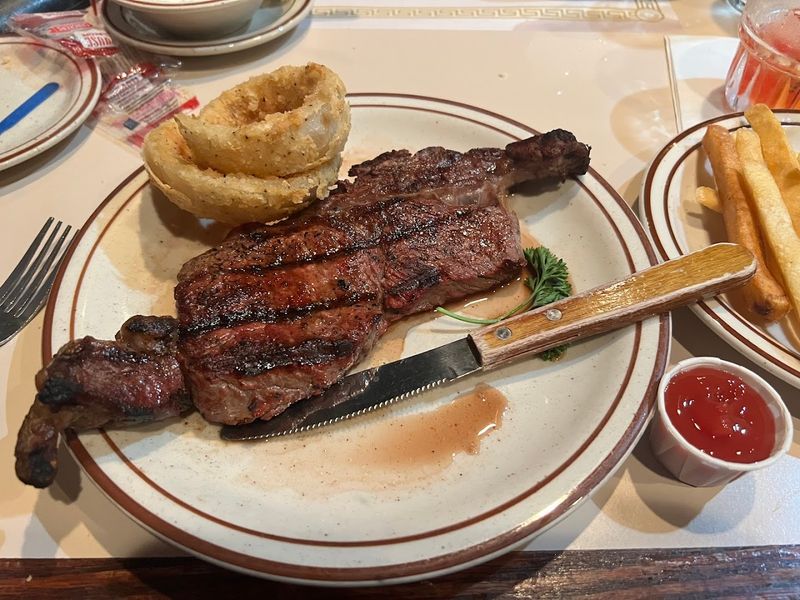
Cutting steaks in-house rather than receiving pre-portioned cuts from a supplier is a choice that reflects a specific set of priorities, and Johnny’s Cafe has maintained that practice as a core part of its kitchen identity.
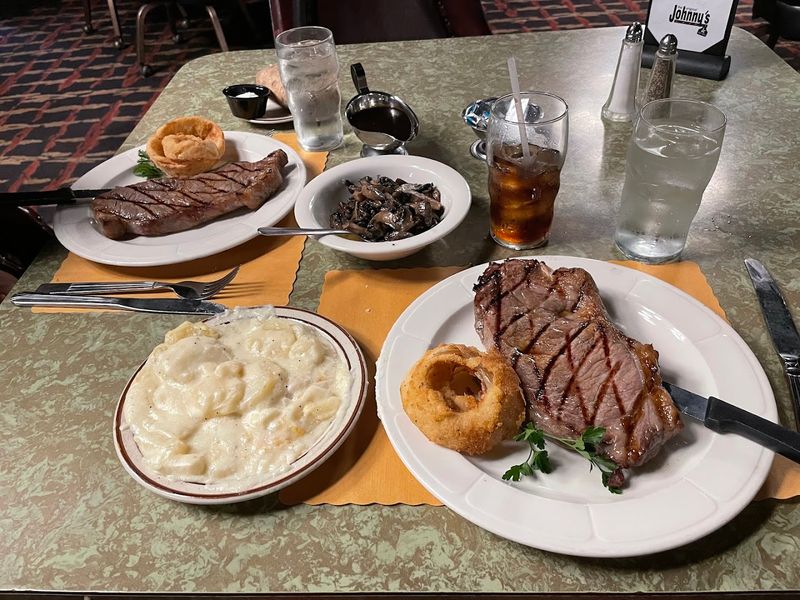
The menu features Midwest corn-fed beef that is aged on-site, with cuts including T-Bone, Ribeye, Omaha Strip, and Filet Mignon, each prepared to order rather than held in advance.
Aging beef on the premises allows the kitchen to control the process more precisely, which tends to produce a more consistent flavor profile across visits.
The fat renders differently in aged beef, and the muscle fibers develop a tenderness that shorter aging periods do not achieve.
For a steakhouse that has been in business for over a century, maintaining this level of in-house preparation signals a refusal to cut corners even when shortcuts are available.
Classic steakhouse plates round out the menu alongside the beef selections, keeping the overall dining experience grounded in familiar, satisfying territory.
The approach is not experimental or trend-driven, and that is entirely the point.
Diners who arrive expecting innovation may be surprised, but those who come for a reliably well-executed traditional steakhouse meal tend to find exactly what they were looking for at Johnny’s Cafe.
Lunch And Dinner Both Work For The Visit
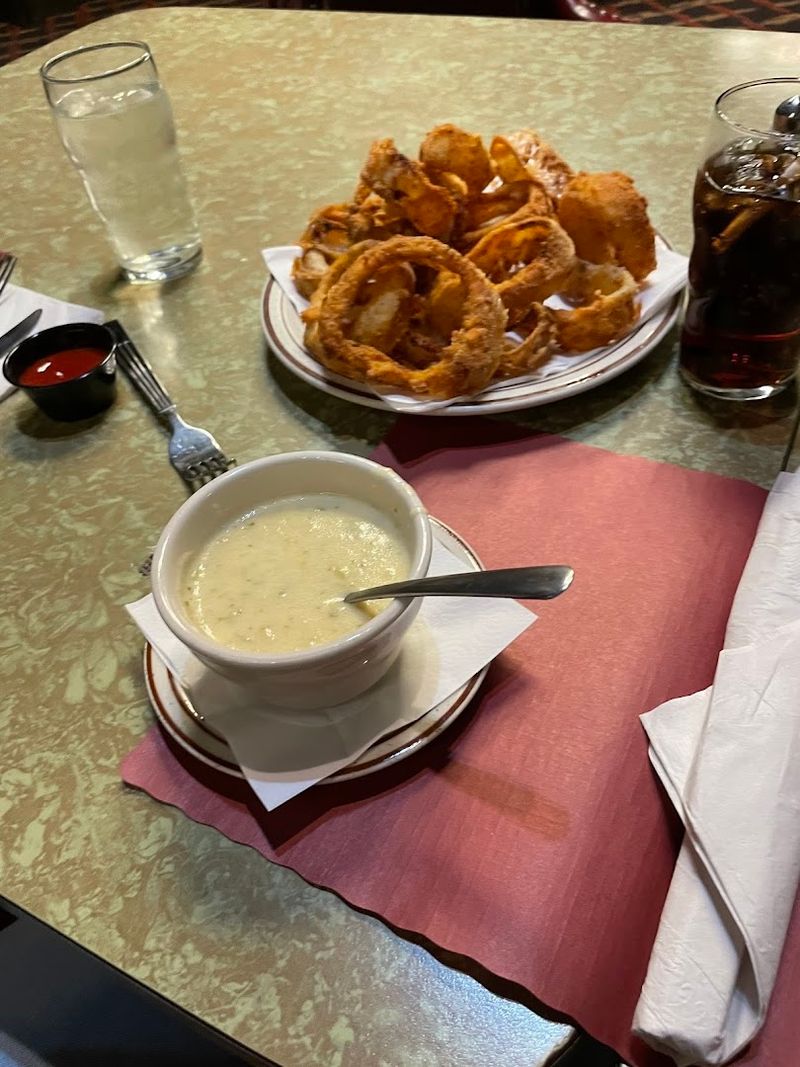
A steakhouse that only rewards visitors willing to commit to a full dinner experience is a steakhouse with a limited audience.
Johnny’s Cafe operates on a more flexible model, offering lunch service Tuesday through Friday with a dedicated lunch menu that includes specials at more accessible price points alongside the core steakhouse offerings.
That accessibility matters for diners who want the experience without the full dinner commitment.
The lunch menu includes sandwiches, lighter plates, and daily specials that rotate through the week, giving regulars a reason to return frequently without ordering the same thing each time.
Fish and chicken options appear alongside the beef selections, which broadens the menu’s reach beyond the core steak audience.
Saturday dinner service runs from 5 to 9 PM, making it the primary option for those specifically seeking the full prime rib and onion ring experience in an evening setting.
Checking the current hours before visiting is practical advice worth following, since the schedule is more limited than a typical full-service restaurant.
Calling ahead at 402-731-4774 or checking johnnyscafe.com takes less than a minute and prevents an unnecessary trip.
Reservations are recommended, particularly for dinner on Saturday, when the dining room tends to fill with guests who have planned their visit specifically around the evening menu.
A Century Of Steakhouse Loyalty Helps The Story
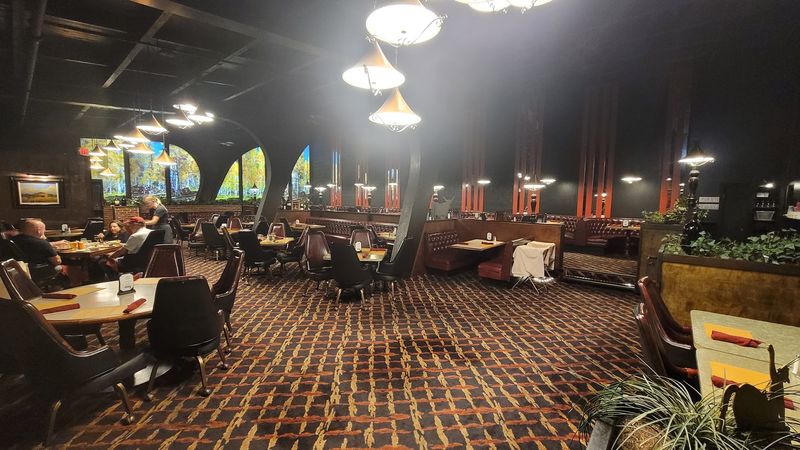
Opening in 1922 as a modest eight-seat saloon near the Omaha Stockyards, Johnny’s Cafe has grown steadily without ever losing sight of where it started.
The restaurant sits at 4702 S 27th St, Omaha, NE 68107, and has remained under the same family’s ownership across multiple generations, which is a rarity in any industry and nearly unheard of in the restaurant business.
Now in its 104th year of operation, the establishment carries the kind of institutional memory that cannot be manufactured or marketed into existence.
The Kawa family, founded by Polish immigrant Frank Kawa, built the business alongside the surrounding community, and that foundational relationship still shapes how the restaurant feels to visitors today.
There is a continuity here that goes beyond nostalgia. Staying open and relevant for over a century requires more than good food alone.
It demands consistent standards, a willingness to adapt on the margins while protecting the core, and a genuine connection to the neighborhood that surrounds the building.
Johnny’s Cafe has managed all three across changing decades, economic shifts, and evolving dining trends, which gives its story a credibility that newer establishments simply cannot replicate.
The longevity itself becomes part of the dining experience.
South Omaha Gives The Setting Extra Flavor
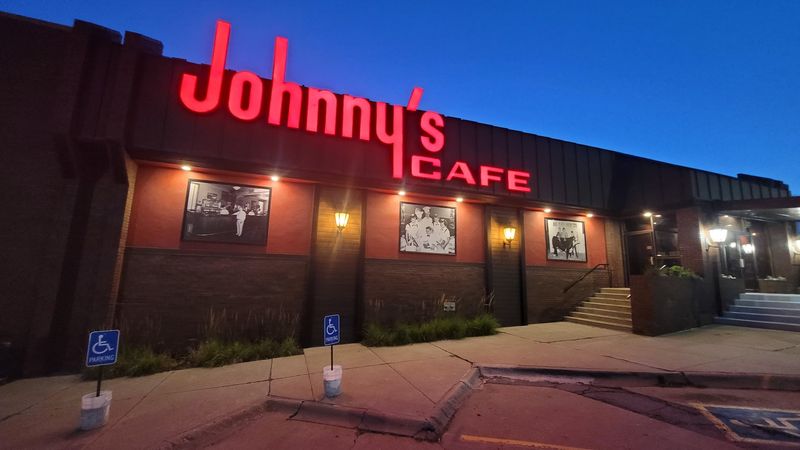
The Omaha Stockyards once made this city one of the most significant cattle-processing centers in the entire country, and Johnny’s Cafe grew up directly in that environment.
The restaurant’s location in South Omaha is not incidental; it reflects a deliberate and organic connection to the industry that shaped the neighborhood’s identity for generations.
That history gives the steakhouse a grounding that feels earned rather than curated.
Dining at a restaurant that literally grew alongside the cattle trade adds a layer of context to the meal that changes how the food tastes, at least in the way it is understood.
The beef on the plate is not just a menu item but a continuation of a regional tradition that defined South Omaha’s economic and cultural character for most of the twentieth century.
That connection is still palpable when walking through the doors.
South Omaha has evolved considerably since the Stockyards’ peak years, but the neighborhood retains a working-class authenticity that complements the restaurant’s unpretentious approach to dining.
Visitors who take a few minutes to understand the area before sitting down tend to leave with a fuller appreciation of what Johnny’s Cafe actually represents within the broader story of Omaha’s food culture and history.
James Beard Attention Gives It Fresh Credibility
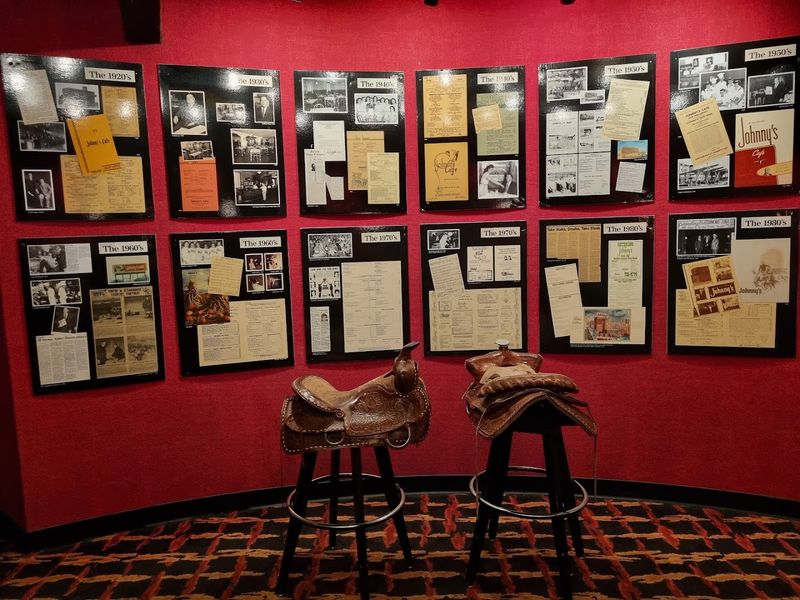
Being named a 2026 James Beard America’s Classics Award winner is not a distinction handed out casually.
The award specifically recognizes independent restaurants with deep community roots and a timeless, enduring appeal that extends beyond trends or temporary popularity.
Johnny’s Cafe was named one of only six establishments nationwide to receive the honor for 2026, placing it in genuinely selective company.
The America’s Classics category carries a particular weight because it is not about culinary innovation or fine dining credentials.
It is about longevity, authenticity, and the kind of community relationship that takes generations to build.
For a restaurant that opened in 1922 and has remained in the same family ever since, the recognition lands as a natural acknowledgment of something that has been true for a long time rather than a sudden discovery.
For diners who may have overlooked Johnny’s Cafe in favor of newer or more visible Omaha restaurants, the James Beard recognition provides a useful signal worth paying attention to.
National culinary organizations do not typically single out century-old neighborhood steakhouses without reason.
The award adds a layer of external validation to what local diners have understood for decades, and it may well bring new visitors through those famous brass front doors for the first time.
Omaha Nostalgia Makes The Food Feel Bigger
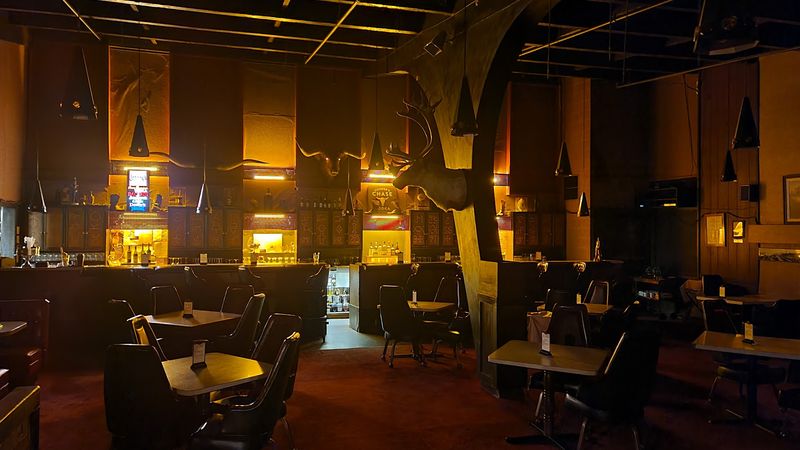
Food tastes different when it comes with a story, and the story at Johnny’s Cafe is one of the more compelling ones available anywhere in Nebraska’s dining landscape.
The onion rings are not just crispy and well-made; they are part of a preparation tradition that has continued largely unchanged through decades of ownership transitions, neighborhood shifts, and evolving restaurant culture.
That continuity gives them a flavor dimension that technique alone cannot provide.
The prime rib carries similar weight, arriving at the table as the product of a slow-roasting process that the kitchen has refined over generations rather than seasons.
South Omaha’s cattle-industry heritage wraps around both dishes like a context that deepens their meaning without requiring explanation.
Diners who know a little of the history tend to eat a little more slowly, which is probably the intended effect.
Nostalgia is a powerful dining companion, but it only works when the food can hold its own without leaning on sentiment as a crutch.
At Johnny’s Cafe, the history and the quality reinforce each other rather than one compensating for the other.
The result is a dining experience where the setting, the story, and the plate all point in the same direction, making the meal feel larger than the sum of its individual parts.