These 10 Nebraska Towns Have Architecture So Charming A Quick Stop Turns Into A Long Walk
Pretty architecture has a sneaky way of ruining a quick stop.
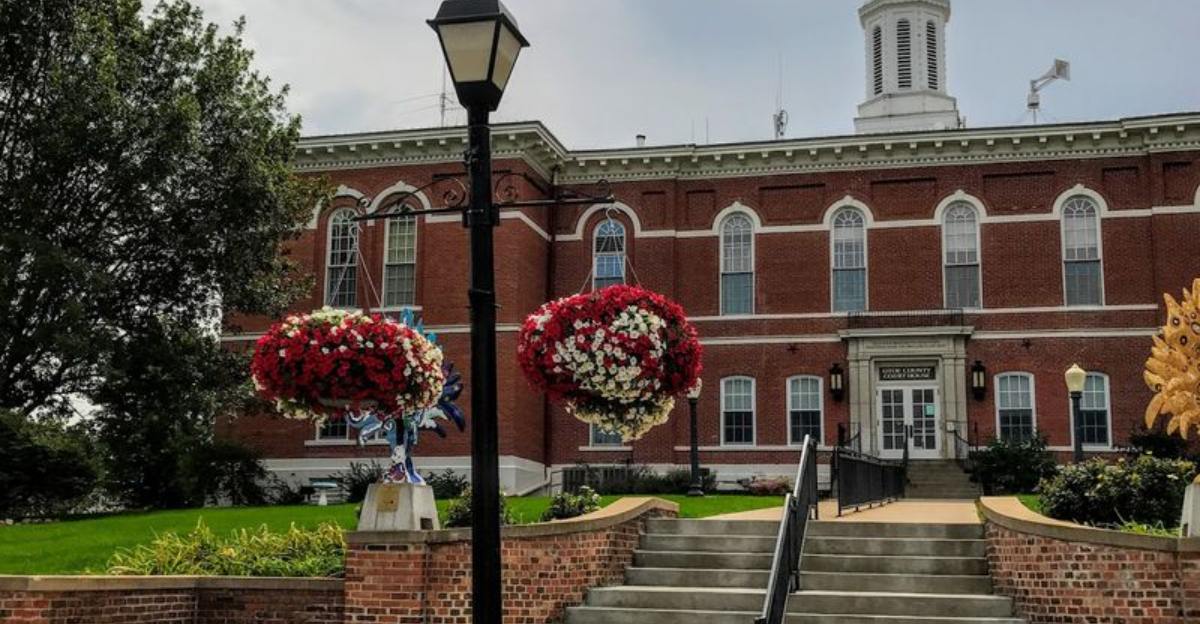
You park for five minutes. Then a brick storefront catches your eye. A courthouse dome pulls you closer.
Before long, the car is still sitting there, and your “quick look” has turned into a full sidewalk investigation.
That is the fun of towns with real visual character. The buildings give you a reason to slow down.
They make every corner feel a little more worth checking.
Nebraska has towns where the architecture does not just sit in the background. It sets the whole mood.
Historic main streets, charming squares, and grand old public buildings can make a simple walk feel surprisingly rich.
Nothing needs to be overplanned. You just follow the interesting roofline and keep finding reasons to stay.
1. Red Cloud, Webster County
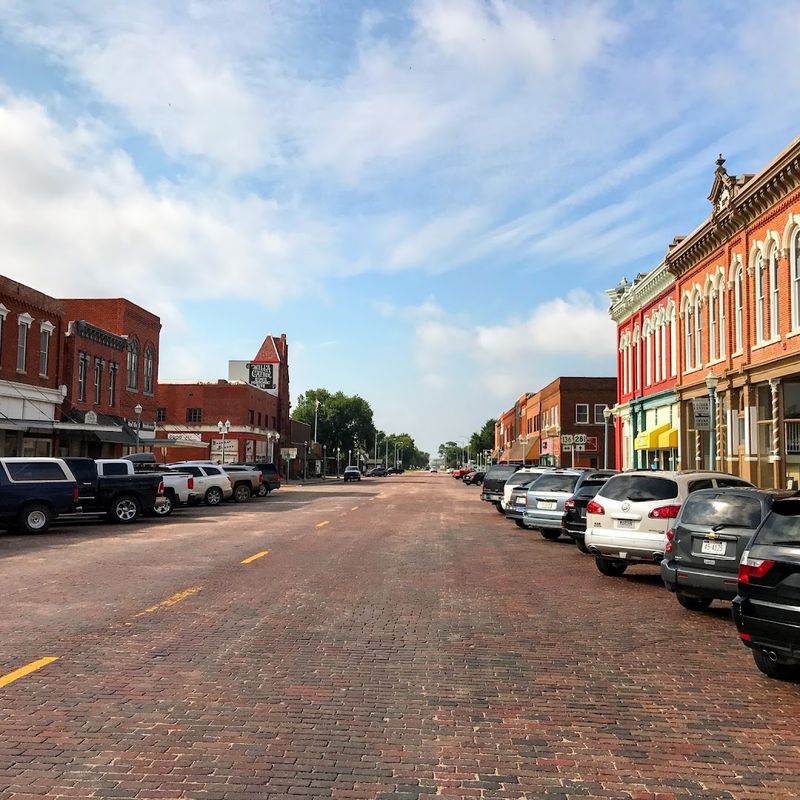
Brick streets have a way of slowing people down, and Red Cloud’s main street does exactly that. The pavement itself feels like a relic worth studying before you even glance at the buildings surrounding it.
Late Victorian storefronts line the corridor with decorative facades that have been carefully maintained over the decades.
The Willa Cather Foundation oversees a network of preserved sites scattered across town, including a childhood home, a historic church, and the restored Red Cloud Opera House.
Each stop on the walking route adds another layer to the story of what this small Webster County town used to be and still is.
The opera house in particular anchors the downtown with a presence that feels larger than its footprint.
Residential streets branch off from the commercial core with late Victorian homes tucked behind mature trees.
Walking those side streets gives a fuller picture of how the town was built and how much of it has survived intact.
Red Cloud rewards slow walkers who pay attention to details like window trim, porch columns, and the patina of aged brick.
2. Brownville, Nemaha County
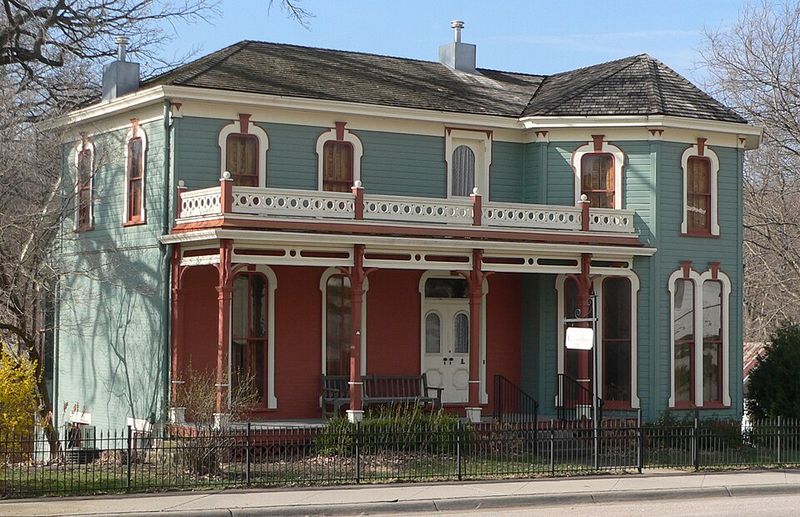
Perched along the Missouri River, Brownville carries the kind of quiet that only comes from a town that stopped growing and started preserving.
The streets here are narrow and shaded, lined with simple storefronts and brick buildings that feel more like a Central European river village than a typical Midwestern small town.
That comparison is not accidental since the town was platted in the 1850s and many of its structures date to that era.
The Brown-Carson House, built in 1860 with Italianate detailing, stands as one of the most photographed landmarks in Brownville.
Antique shops occupy several of the historic buildings, which means browsing the architecture and browsing the merchandise often happen at the same time.
The blend of retail and preservation gives the town a lived-in energy that feels genuine rather than staged.
Designated as a Preserve America Community, Brownville takes its historic identity seriously without making it feel like a museum.
Visitors tend to arrive expecting a quick look and leave having spent considerably more time than planned.
The old brick streets, the river views, and the layered 19th-century character all work together to make leaving feel abrupt.
3. Nebraska City, Otoe County
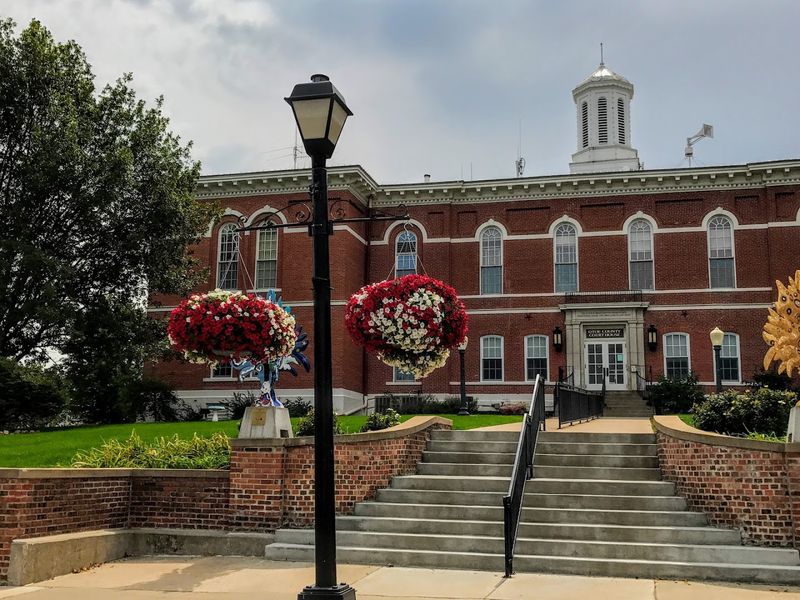
Few Nebraska downtowns offer as much architectural range in a single walkable stretch as Nebraska City.
The creative district here runs through roughly 18 historic blocks, mixing Victorian and Classical Revival styles in a way that keeps the eye moving from one facade to the next.
Brick buildings with decorative cornices and arched windows appear around nearly every corner.
The Otoe County Courthouse stands as a particularly strong anchor for the downtown area, its historic government architecture giving the whole district a civic weight that smaller towns sometimes lack.
Nearby, the 1857 Taylor-Wessel-Bickel-Nelson House offers a glimpse into the town’s territorial era through its preserved rooms and period details.
Both sites sit within walking distance of the commercial core, which makes a self-guided loop feel natural and unhurried.
Nebraska City also benefits from a surrounding landscape of orchards and greenery that softens the edges of the urban grid.
Arriving in autumn, when the trees along the historic streets shift color, adds a sensory layer that photographs rarely capture fully.
The combination of architectural density and natural setting makes Nebraska City one of the more complete walking experiences in the state.
4. Plattsmouth, Cass County
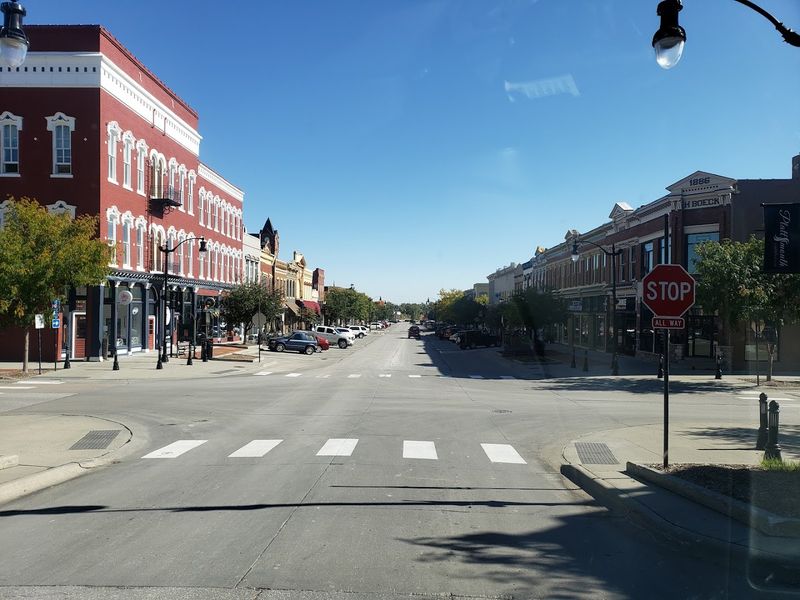
Walking into Plattsmouth’s Main Street Historic District feels like stepping into a well-preserved snapshot of late-19th-century commercial life.
The buildings here are substantial, built from brick with the kind of solid ornamentation that was common when towns were trying to signal permanence and prosperity.
Many of the storefronts retain original facades that have not been covered or altered significantly over the decades.
The Cass County Courthouse anchors the district with authority, its historic architecture giving the surrounding commercial blocks a civic backbone that strengthens the overall character of the walk.
The courthouse sits at a scale that commands attention from several blocks away, and approaching it on foot through the historic district makes the experience feel genuinely earned.
Plattsmouth rewards walkers who take time to look upward at the upper-story detailing that street-level glances tend to miss.
Cass County has a geography that adds to the appeal since Plattsmouth sits near the confluence of the Platte and Missouri Rivers, giving it a strategic history that shaped its downtown growth.
The layered commercial architecture reflects that history honestly. A morning walk through the district when foot traffic is light tends to offer the clearest view of the buildings without distraction.
5. Seward, Seward County
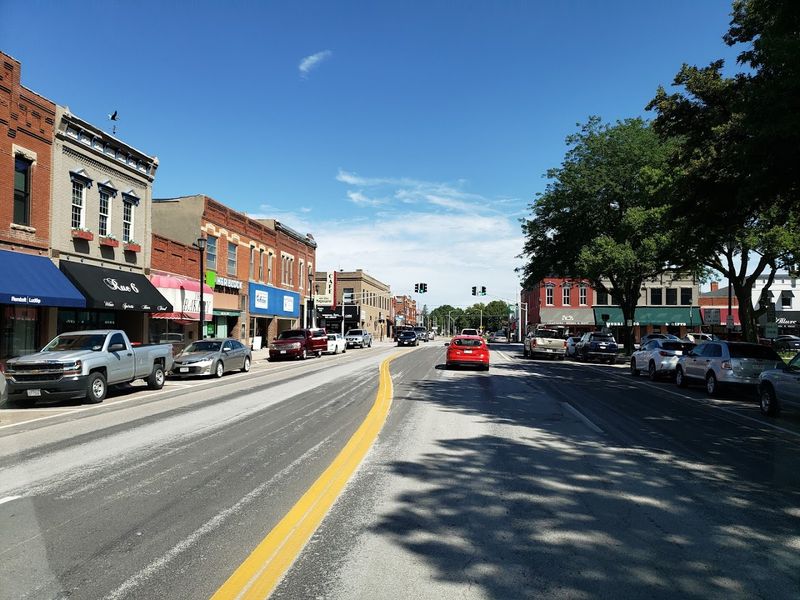
Courthouse-square towns have a particular rhythm to them, and Seward has perfected it.
The layout places the historic courthouse at the center of the town’s grid, with commercial buildings radiating outward in a pattern that naturally invites a loop walk.
That built-for-wandering feeling is not accidental since it reflects 19th-century town planning that prioritized civic visibility and pedestrian flow.
The architecture surrounding the square in Seward tends toward the practical and the decorative in equal measure, with brick storefronts that have aged well and retained much of their original character.
Upper-story windows, cast-iron details, and corbeled cornices appear frequently enough to reward a slow pace.
The square itself provides a natural resting point mid-walk, making the experience feel comfortable rather than demanding.
Seward carries the nickname of Nebraska’s Fourth of July City, which says something about how the community uses its public spaces and how the downtown functions as a gathering place.
That civic identity reinforces the architectural investment visible throughout the square.
Visiting on a weekday tends to offer a quieter experience, while weekends bring more activity around the central green and the surrounding storefronts.
6. Wayne, Wayne County
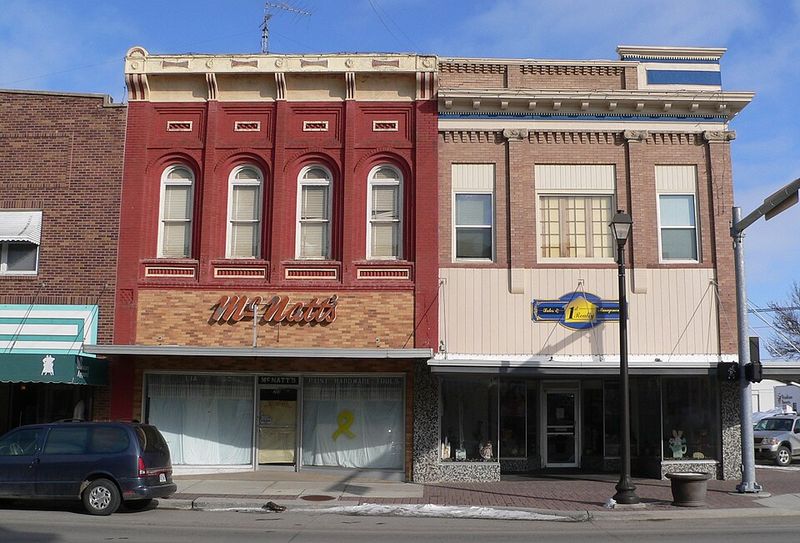
Sixty-eight buildings in a single commercial historic district is not a small number for any Nebraska town, and Wayne’s central business district earns that count honestly.
The buildings here span several decades of commercial construction, giving the district a layered quality that reflects the town’s gradual growth rather than a single boom period.
Walking through it feels like reading an architectural timeline without needing a guidebook.
Wayne’s Commercial Historic District holds together visually because most of the buildings share a commitment to brick construction and street-level retail proportions that keep the pedestrian scale intact.
Upper-story facades vary in ornamentation, which gives the eye something different to find on each block.
The consistency of materials combined with the variety of detail is what makes longer walks through the district feel rewarding rather than repetitive.
Wayne County sits in the northeastern corner of Nebraska, a part of the state that sees fewer tourists than the Platte River corridor but has plenty to offer architecturally.
The town itself functions as a regional hub, which means the downtown has stayed active enough to support the preservation of its historic fabric.
That ongoing activity is part of what keeps the district feeling genuine rather than frozen.
7. Chadron, Dawes County
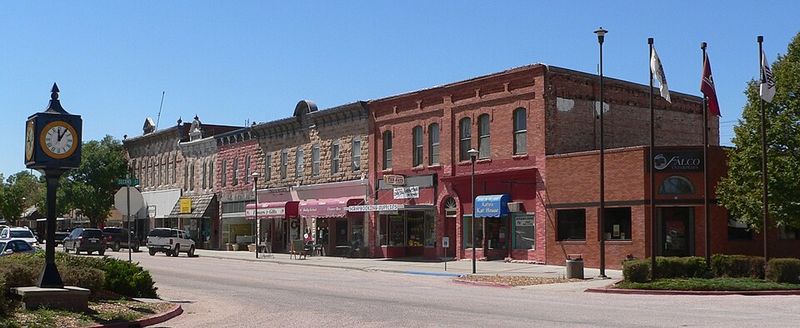
Having more than 40 architectural stops on a self-guided walking tour is a serious commitment, and Chadron’s downtown historic district delivers on that promise with buildings that span from the 1880s through the early 20th century.
The tour winds through a National Register historic district where brick and stone facades appear in a variety of commercial and civic styles. Each stop on the route adds a specific story rather than a generic description.
The Hotel Chadron, built in 1890 in an Italianate style, stands as one of the most visually distinctive stops on the walking tour.
Its detailing reflects the ambition of a town that was growing quickly during the late railroad era and wanted its architecture to say so.
Colorful awnings along the street add a layer of visual interest that contrasts pleasantly with the aged brick and stone behind them.
Chadron sits in the Pine Ridge region of northwestern Nebraska, which gives the surrounding landscape a dramatic quality that most of the state’s plains towns cannot offer.
Arriving from the south through rolling hills and ponderosa pines before entering a historic downtown creates a transition that feels memorable.
The architectural character of the district pairs well with the wider regional setting.
8. Fairbury, Jefferson County
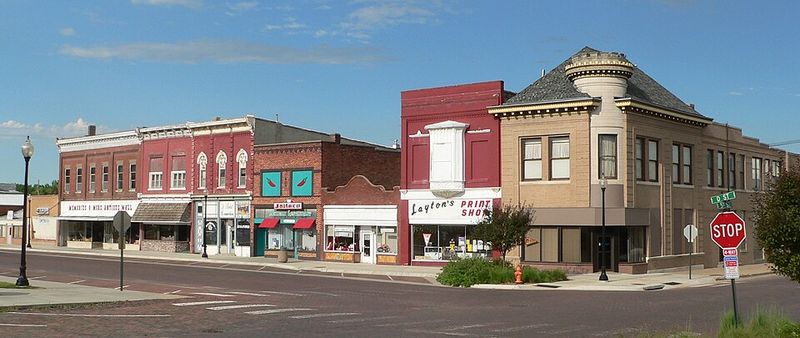
Brick streets and courthouse-square energy give Fairbury a downtown character that feels both rooted and walkable.
The district is listed on the National Register of Historic Places, which reflects the integrity of the buildings rather than just their age.
Facades here have largely avoided the kind of mid-century alterations that stripped the character from many similar small-town downtowns across the region.
Murals appear on several building walls throughout the downtown area, adding a visual storytelling layer that complements the architectural history rather than competing with it.
The courthouse square layout gives walkers a natural orientation point, making it easy to explore outward in any direction and still find the way back.
Jefferson County’s agricultural history shows up in some of the commercial architecture, particularly in the scale of the buildings that once served a busy trade economy.
Fairbury sits along the historic Oregon Trail corridor, which adds a layer of historical context that extends beyond the downtown architecture itself.
That broader story enriches the experience of walking the brick streets because the town was not just a farming hub but a waypoint in a much larger American migration narrative.
The combination of trail history and preserved commercial architecture makes Fairbury a more layered stop than its size might suggest.
9. Minden, Kearney County
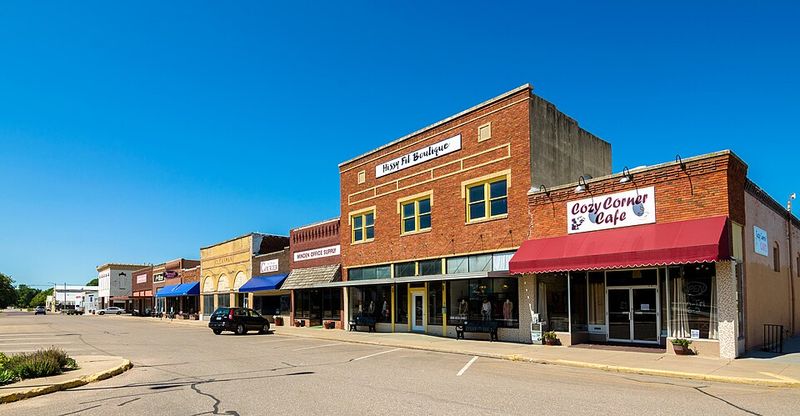
An 1891 opera house in a small prairie town is not something to walk past quickly.
The Minden Opera House gives downtown a strong architectural anchor that immediately signals how seriously the community once invested in its public buildings.
The structure’s presence on the main street sets a tone that the surrounding commercial blocks tend to follow, with brick facades and modest ornamentation that feel consistent rather than competing.
Minden is perhaps best known statewide as Nebraska’s Christmas City, a designation tied to its elaborate holiday light displays.
Outside of that season, the downtown reveals a quieter architectural character that rewards unhurried exploration.
The courthouse square layout gives the center of town a clear focal point and a natural walking circuit that covers most of the historic district without requiring significant backtracking.
Kearney County sits in the south-central part of the state, an area that sees steady traffic along the Interstate 80 corridor but where many travelers bypass the smaller historic towns just off the main route.
Minden is worth the short detour for the opera house alone, and the surrounding downtown blocks add enough architectural interest to extend a visit well beyond a single building.
The scale of the town keeps the walk manageable and unhurried.
10. Falls City, Richardson County
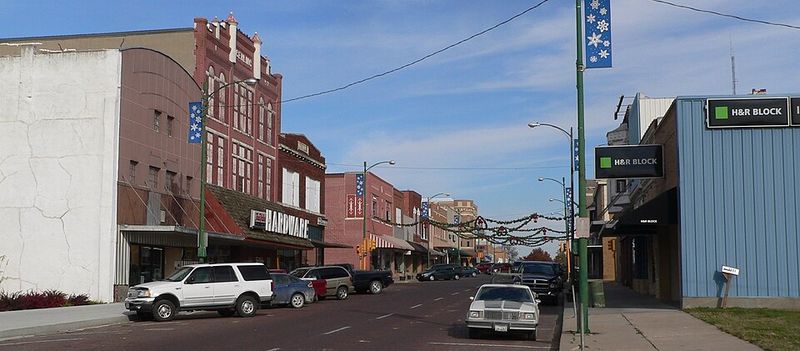
Richardson County’s county seat carries a downtown that reflects the ambition of the late 19th and early 20th centuries in a part of Nebraska that was once more economically active than it is today.
Falls City’s commercial buildings are substantial in scale, built from brick with the kind of detailing that suggests a community that expected to keep growing.
The fact that much of that architecture has survived gives the downtown a density that feels uncommon for a town of its current size.
Historic civic landmarks punctuate the commercial streetscape, adding variety to a walk that might otherwise focus entirely on storefronts.
The mix of commercial and civic architecture across the downtown area creates a more complete picture of how the town functioned at its peak.
Upper-story windows, decorative cornices, and original masonry details appear frequently enough to reward a slow and attentive pace.
Falls City sits near the Kansas and Missouri borders, which gives it a regional crossroads character that shows up in its architectural influences.
The town draws on building traditions from several surrounding states, and that variety is visible in the downtown if you know what to look for.
A walk through the historic district tends to feel longer than the actual distance covered, which is usually the best sign that the architecture is doing its job.